Sig'na-türe, n.
(53), n. [Fr. signature, It. signatura, Sp. & L. Lat. signatura, from Lat. signare, signatum. See SIGN, v. t.]
- A sign, stamp, or mark impressed. “The brain, being well furnished with various traces, signatures, and images.” Watts. “The natural and indelible signature of God, stamped on the human soul.” Bentley.
- Especially, the name of any person written with his own hand, employed to signify that the writing which precedes accords with his wishes or intentions; a sign-manual.
- (Physiol.) An outward mark by which internal characteristics were supposed to be indicated.
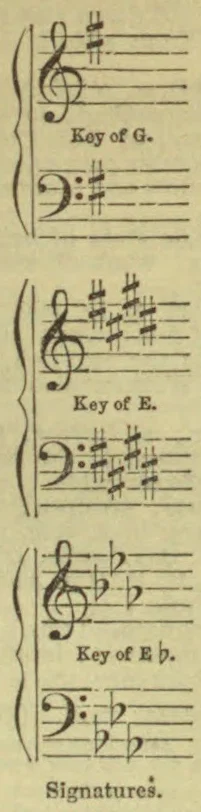
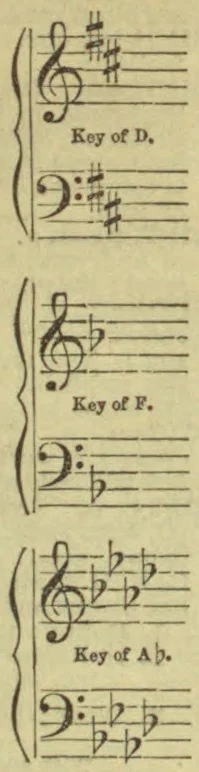
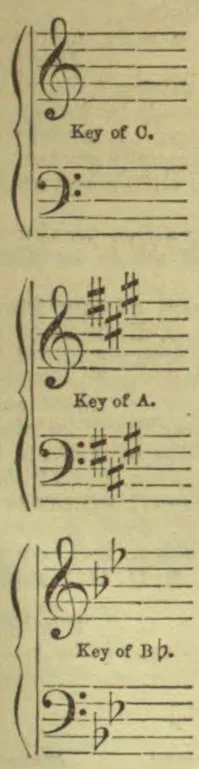
Some plants bear a very evident signature of their nature and use. More. 4. (Mus.) The flats or sharps at the beginning of a composition, which indicate the key or scale. Key of C. Key of G. Key of D. Key of A. Key of E. Key of F. Key of B♭. Key of E♭. Key of A♭. Signatures. 5. (Print.) One of a number of signs, or tokens, used at the bottom of certain pages of a book or pamphlet, by which the sheets are distinguished and their order designated, as a direction to the binder in arranging and folding them. Such signatures are composed of letters or figures, either singly or combined; as, A, B, C, or Aa, Bb, or 3 A, 3 B, or 1, 1, 2, 2, and the like.