Skĕl'e-ton, n.
n. [Gr. σκελετόν (sc. σῶμα), a dried body, a mummy, from σκελετός, dried up, parched, from σκέλλειν, to dry, to dry up, parch; It. scheletro, Sp. esqueleto, Fr. squelette.]
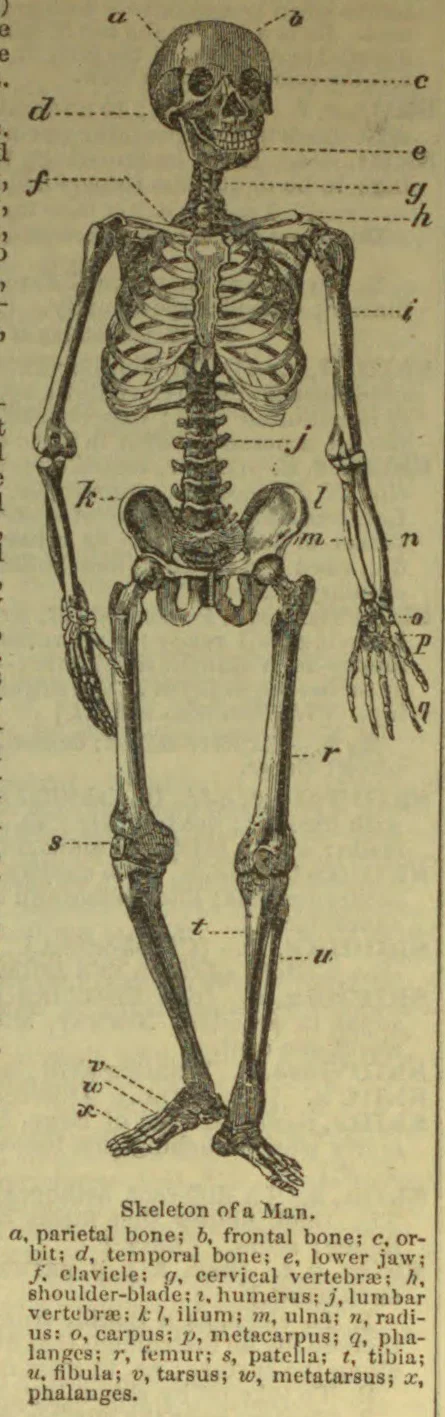
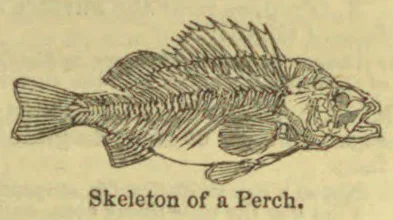
Sense 1. (Physiol.) The united system of tissues that give support and protection to the softer parts, and transfer motion, in an organized body, as bones, shells, the woody tissue of leaves, and the like. When the bones are connected by the natural ligaments, it is called a natural skeleton; when by wires, or any foreign substance, an artificial skeleton.
Sense 2. (Anat.) The bony structure in its natural relation.
Sense 3. Hence, a very thin or lean person.
Sense 4. The compages, general structure, or frame of any thing; the principal parts that support the rest, but without the appendages. “The great skeleton of the world.” Hale.
Sense 5. The heads and outline of a literary performance, especially of a sermon.
Dermo-skeleton, Endo-skeleton, Exo-skeleton, Neuro-skeleton, Sclero-skeleton, Splanchnoskeleton. See these words.