Snōw1, n.
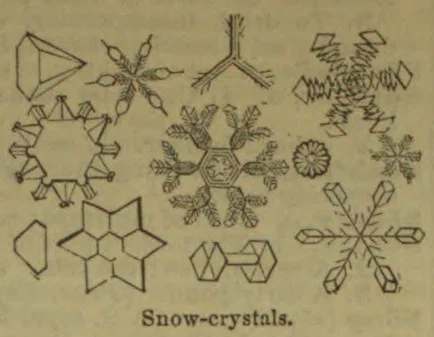
n. [A-S. snāw, Goth. snaivs, D. sneeuw, L. Ger. snee, O. Sax. snêo, snêu, O. H. Ger. snêo, snio, N. H. Ger. schnee, Dan. snee, Sw. snö, Icel. sníór, sníár, allied to Ir. & Gael. sneachd, Lith. snēgas, O. Slav. snieg, Bohemian snĕh, Lat. nīx, Gr. nīph, acc. nīpha, W. nyf.] Watery particles—congealed into white or transparent crystals, or flakes, in the air, and falling to the earth, exhibiting a great variety of very beautiful and perfect forms.
Snow-crystals.
Snow is often used to form compounds, most of which are of very obvious meaning: as, snow-capped, snow-clad, snow-cold, snow-crowned, snow-fed, snow-flake, snow-haired, snow-like, snow-mantled, snow-nodding, snow-track, snow-water, snow-wreath, snow-wrought, and the like.
Red snow, snow of a red color, tinged by minute organisms which multiply and diffuse themselves rapidly through it. Various genera of microscopic plants, as Palmella, Protococcus, &c., have been described.—Snow-line, the lowest limit of perpetual snow.