Swan, n.
(swŏn), n. [A-S. swun, D. zwaan, O. H. Ger. swan, M. H. Ger. swane, N. H. Ger. schwan, Icel. svanr, Sw. svan, Dan. svane.]
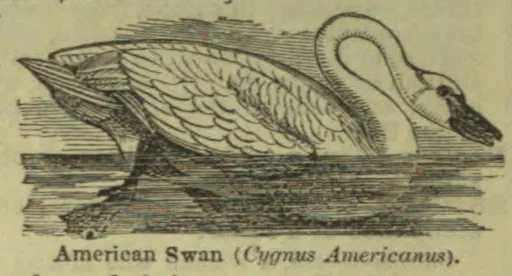
Sense 1. (Or-nith.) A large web-footed bird, like the goose, but handsomer, and more graceful, having also a longer neck and beak, and being generally larger and stronger. It is usually of a white color when mature. The common whistling swan of America is Cygnus Americanus. The trumpeter-swan of the Western States is C. buccinator. The European swan, or hooper, is C. ferus, and is also called whistling swan. The black swan is the C. Atratus of Australia.
Sense 2. Swans, taken together; a flock of swans;—used as a collective noun. [Rare.]
The swan, on still St. Mary's Lake, Float double, swan and shadow. Wordsworth.
Swan-supping, the taking of swans performed annually by the swan companies, with the lord mayor of London at their head, for the purpose of marking them. This was formerly a very popular amusement, and the modern term swan-hopping is merely a corruption of it. Halliwell.