Tīe1, v. t.
v. t. [imp. & p. p. TIED (TIGHT, obs.); p. pr. & vb. n. TYING.] [A-S. tēgean, tygan, contracted tyan, tian.]
Sense 1. To fasten with a band or cord and knot; to bind.
My son, keep thy father's commandments . . . bind them continually upon thy heart, and tie them about thy neck. Prov. vi. 20, 21.
Sense 2. To fold and make fast; to knit; to complicate.
We do not tie this knot with an intention to puzzle the argument. Burnet.
Sense 3. To unite so as not to be easily parted; to fasten; to hold. “In bond of virtuous love together tied.” Fairfax.
Sense 4. To hold or constrain by authority or moral influence; to oblige; to constrain; to restrain; to confine.
Not tied to rules of policy, you find Revenge less sweet than a forgiving mind. Dryden.
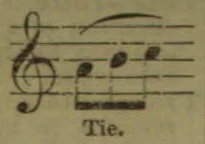
Sense 5. (Mus.) To unite, as notes, by a cross line, or by a curve line drawn over them.
To tie down. (a.) To fasten so as to prevent from rising. (b.) To restrain; to confine; to hinder from action.—To tie up, to confine; to restrain; to hinder from motion or action; as, to tie up the tongue; to tie up the hands.