Ti’ger, n.
n. [Fr., Pr., Sp., Pg., & It. tigre, Lat. tigris, Gr. τίγρις.]
Sense 1. (Zoöl.) A fierce and rapacious animal of the genus Tigris, which includes but a single species, T. regalis (Felis tigris of Linnæus), found in the warmer parts of Asia, chiefly in India, and the Indian islands.
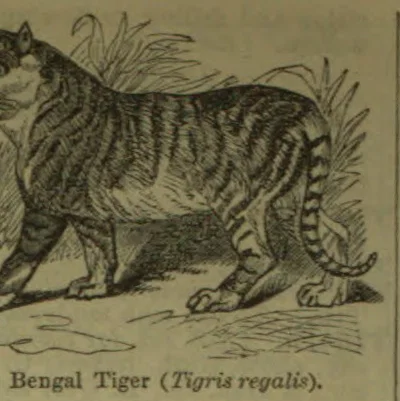
Bengal Tiger (Tigris regalis).
The color of the tiger is of a bright orange-yellow ground; the face, throat, and under side of the belly being nearly white; the whole elegantly striped by a series of transverse black bands or bars. He has no mane, and his whole frame, though less elevated than the lion, is of a more graceful make. The animal is possessed of great strength, and in the East is considered as the emblem of power. Baird.
Sense 2. A servant in livery, who rides with his master or mistress. Dickens.
Sense 3. A kind of growl or screech, after cheering; as, three cheers and a tiger. [Colloq. U. S.]
Sense 4. A pneumatic box or pan used in sugar-refining. Simmonds.
American tiger (Zoöl.), the jaguar; Felis onca. See JAGUAR.