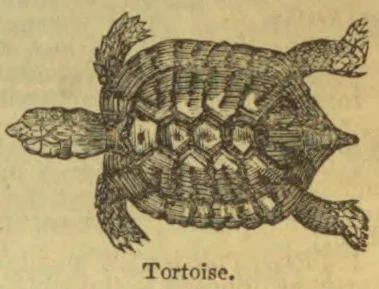
Tōr'toise, n.
(tôr/tis) (Synop., § 130), n. [O. Fr. as if tortoise, tortise, from tortis, tortisse, crooked, from Lat. tortus, twisted, crooked, contorted, p. p. of torquere, tortum, to twist, to wind; — so called from its crooked feet; N. Fr. tortue, Pr. tortuga, tartuga, Sp. tortuga, Pg. & It. tartaruga, L. Lat. tortuca, tartuca. Cf. Pr. tortesa, crookedness, tortis, crooked.]
Sense 1. (Zoöl.) A reptile more or less flattened from above, and inclosed in a case formed by two leathery or scaly shields, and having horny jaws in the place of teeth. The upper shield is called the carapax, and the lower the plastron.
The name is sometimes restricted to the land tortoises, the term turtle being applied to the marine species.
Sense 2. (Antiq.) A defense used by the ancients, formed by the troops arranging themselves in close order and placing their bucklers over their heads, making a cover resembling a tortoise-shell; a testudo.