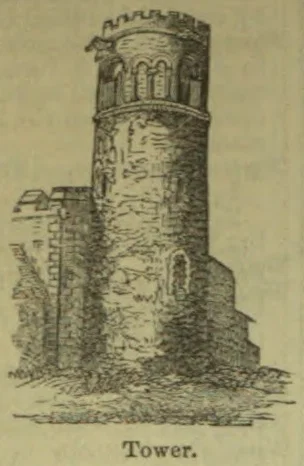
Tow'er1, n.
n. [A-S. torr, O. Fr. tor, tur, N. Fr. tour, Pr. tor', torre, Sp., Pg., & It. torre, Lat. turris, Gr. τύρρις, τύρσις, D. toren, L. Ger. toorn, toren, O. Sax. & Icel. turn, Sw. torn, Dan. taarn, Up. Ger. turn, thurn, O. H. Ger. turri, turra, turn, N. H. Ger. thurm.]
Sense 1. A lofty building much higher than it is broad, and variously shaped, as round, square, or polygonal, standing alone or forming part of another edifice, as of a church, castle, and the like. “Stately and air-braving towers.” Shak.
Sense 2. A citadel; a fortress; hence, a defender.
Then hast been a shelter for me, and a strong tower from the enemy. Ps. lxi. 3.
Sense 3. A style of dressing women’s hair in a high or tower-like form, fashionable about the end of the seventeenth century; also, a high head-dress.
Amorous intrigues In towers, and curls, and periwigs. Hudibras.
Sense 4. High flight; elevation. [Obs.] Johnson.
Round tower. See ROUND, a.—Tower bastion (Fort.), a small tower in the form of a bastion, with rooms or cells underneath for men and guns.—Tower of London, a collection of buildings in the eastern part of London, formerly containing a state prison, and now used as an arsenal and repository of various objects of public interest.