2 entries under this word

Turtle

Tûr'tle, n.

noun

(tûr'tl), n. [A-S. turtle, N. H. Ger. turtel, turteltaube, M. H. Ger. turteltûbe, O. H. Ger. turtulatûba, D. tortel, tortelduif, Icel. turtildúfa, Dan. turteldue, Sw. turturdufva, Lat. turtur, diminutive turturilla, O. Fr. tourtre, N. Fr. tourterelle, tourtereau, Pr. tortre, tortret, tordola, Sp. tortola, tortolo, It. tortore, tortora, tortola, tortolella, tortorella, tortoletta, tortoretta.] (Ornith.) A gallinaceous bird, of the genus Turtur, or Columba;—called also turtle-dove and turtle-pigeon. It is a wild species, frequenting the thickest parts of the woods, and its note is plaintive and tender. It is celebrated for the constancy of its affection, and is regarded as the most perfect emblem of connubial attachment. Baird.
Tŭr'tle, n.

noun

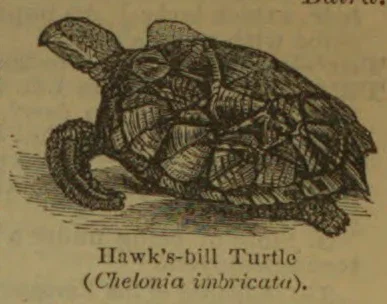
n. [Probably corrupted from tortoise, but thought by some to be the same word as the preceding, transferred to the sea-tortoise on account of its affection for its mate in pairing-time. See TORTOISE; Fr. tortue.] (Zoöl.) A tortoise;—often restricted to the large sea-tortoise. The flesh of the marine species is esteemed a great delicacy, and the eggs are highly valued for food. See TORTOISE. Hawk's-bill Turtle (Chelonia imbricata). “The word turtle in Saxon meant turtle-dove, a bird, and not a reptile; and the English word had the same signification until the discovery of America, when sailors gave the name of turtle, or turkle, to the marine chelonians of the West Indies.” New Am. Cyc.

An engraving of a hawksbill turtle viewed from the side.
Hawk's-bill Turtle (Chelonia imbricata).