Ū'ni-vērs'al1, a.
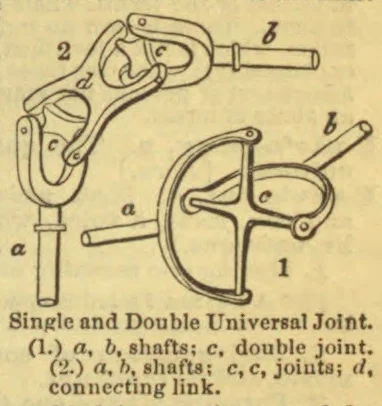
a. [Lat. universalis, It. universale, Sp., Pg., Pr., & O. Fr. universal, N. Fr. universel. See UNIVERSE.] 1. Extending to, or affecting, the whole number, quantity, or space; unlimited; all-reaching; as, universal ruin; universal good; universal benevolence. “Anointed universal King.” Milton. The universal Cause Acts not by partial, but by general, laws. Pope. 2. Constituting or considered as a whole; total; whole. At which the universal host up sent A shout. Milton. From harmony, from heavenly harmony, This universal frame began. Dryden. 3. Comprising particulars, or all the particulars; as, universal kinds; universal terms; universal propositions. Universal church, the whole church of God in the world. — Universal dial, a dial by which the hour may be found in any part of the world, or under any elevation of the pole. — Universal instrument, a species of altitude and azimuth instrument used in Europe, the peculiarity of which is, that the object-end of the telescope is placed at right angles to the eye-end, with a prism of total reflection at the angle, and the eye-end constitutes a portion of the horizontal axis of the instrument, having the eye-piece at the pivot and in the center of the altitude circle, so that the eye has convenient access to both at the same time. — Universal joint (Mach.), a contrivance used for joining two shafts or parts of a machine endwise, so that the one may give rotary motion to the other when forming an angle with it, or may move freely in all directions with respect to the other, as by means of a cross connecting the forked ends of the two shafts (Fig. 1). Since this joint can not act when the angle of the shafts is less than 140°, a double joint of the same kind is sometimes used for giving rotary motion at angles less than 140° (Fig. 2). — Universal lever, a lever turning upon a pivot, and having a hook attached to it on each side of the latter, so as to take hold upon the teeth of a wheel or double rack, and thus cause continuous motion of these when the lever is moved. — Universal proposition (Logic), one in which the subject is taken in its widest extent, and the predicate applies to every thing which the subject can denote. Whately. — Universal umbel (Bot.), a primary or general umbel; the first or largest set of rays in a compound umbel; — opposed to partial umbel. A universal involucre is not unfrequently placed at the foot of a universal umbel. Syn.—General; all; whole; total. See GENERAL.