Wōlf, n.
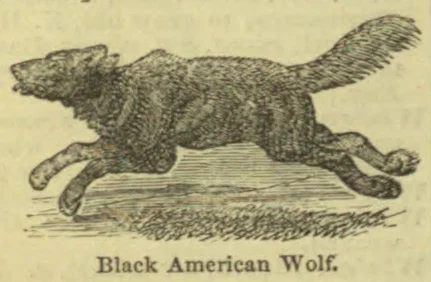
(wŭlf), n. [A-S., O. Sax., & L. Ger. wulf, Goth. vulfs, O. Fries., D., & Ger. wolf, Icel. úlfr, Sw. ulf, Dan. ulv, allied to Lat. vulpes, a fox; Russ. wolli, Skr. vrika, a wolf.] 1. (Zoöl.) A carnivorous animal of the genus Canis, noted for killing sheep and other small domestic animals. The common wolf of Europe is Canis Lupus; the common American wolf is Canis occidentalis; the prairie wolf, Canis latrans. Black American Wolf. 2. Hence, any thing very ravenous, dangerous, or destructive. Advance our waving colors on the walls; Rescued is Orleans from the English wolves. Shak.
- A small white worm or maggot, which infests granaries.
- An eating ulcer or sore. [Obs.] “If God should send a cancer upon thy face, or a wolf into thy side.” Bp. Taylor.
- (Mus.) (a.) The harshness of the worst major fifth in a piano, organ, or similar instrument, when tuned by unequal temperament. (b.) The interval from the false octave by the fifth to the true one. N. Am. Cyc.
To keep the wolf from the door, to keep away poverty; to prevent starvation.