The Youth’s Instructor, Vol. LII, No. 46

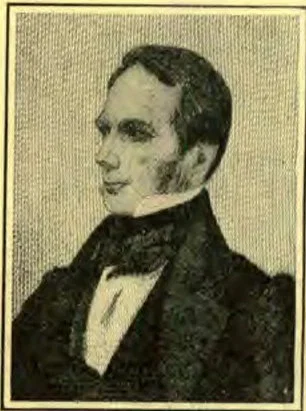
Henry Clay

The Youth’s Instructor

November 15, 1904

Review and Herald Publishing Assn. · Washington, D. C. · November 15, 1904

Henry Clay

THERE was born April 12, 1777, in a low, swampy district in Hanover County, Virginia, a baby boy, the fifth child of a poor Baptist preacher.
In 1900, one hundred twenty-three years after his birth, there assembled in New York a committee of one hundred representative men to choose fifty men worthy of a place in America’s Hall of Fame. Only twenty-nine of the famous sons of America received the required number of votes to secure the place.
Henry Clay, the son of the poor Baptist preacher, was one of the chosen twenty-nine, receiving seventy-four votes for his name to be inscribed on one of the monumental tablets.
CLAY’S EARLY ATTEMPTS AT ORATORY
When he was four years old his father died, leaving his mother a widow with seven children, and scarcely any means for their support. The children were taught early to be self-supporting, and Henry was kept busy doing the chores around the farm. One of his duties was to carry the grain to the mill. The low, marshy country in which his home was situated was called the “slashes.” Mr. Colton, one of his biographers, says: “Henry Clay, after he was old enough, was seen whenever the meal barrel was low, going to and fro on the road between his mother’s house and Mrs. Darricott’s mill on the Pamunkey River, mounted on a bag thrown across a pony that was guided by a rope bridle. Thus he became familiarly known by the people living on the line of his travel as the ‘mill boy of the slashes.’” Years after, when Henry Clay was a candidate for the presidency, this title, earned when a boy, was the sentimental watchword used in three political campaigns.
In his boyhood, Henry Clay made up his mind that he would become an orator. In this he was discouraged by his parents and those who worked with him on the old plantation, but his ideal was so strongly impressed upon him that nothing could shake it. Some one gave him a reader, and his first effort was to memorize a number of selections. He asked his friends to hear him recite them, but they laughed at the idea of a barefooted boy’s being an orator.
HENRY CLAY
HENRY CLAY
Young Clay, undaunted, went into the barn almost every day, and, with the horses and cows for an audience, recited and practised oratory. These were his first audiences; and, as a great statesman, he remarked, in later years, that they were his most patient, earnest listeners. The experience, which now seems ridiculous, was, in fact, a very helpful one for the brilliant young Virginian, who later became one of America’s greatest orators.
He began his education in a rude log cabin schoolhouse, where only the simplest studies were taught. When he was fourteen, his mother married a worthy gentleman, Mr. Watkins, and moved with her husband to Kentucky, first obtaining a situation for Henry in a retail store in Richmond.
The next year, through the influence of his stepfather, who appears to have appreciated the lad’s native talent, he was engaged in the office of Mr. Peter Tinsley, clerk of the high court of chancery.
Henry’s industrious and studious habits, when working for Mr. Tinsley, attracted the attention of the venerable Chancellor Wythe, and so pleased him that he asked him to become his private secretary.
When this awkward country lad first entered the law office, the other boys in the office made fun of him. They soon found out that he was able to take his own part, and that it was better to have him for a friend than an enemy.
His association with Chancellor Wythe was an advantage to him in many ways. It placed him under the influence of one of the most refined and cultivated minds in Virginia. The chancellor was a good linguist, and eminently skilled in composition. He was fond of Henry, and taught him a great deal. Although the work was only copying, Henry managed to gather much knowledge of law from it. In a little while, he began to read law. From this office he went to reside with Mr. Robert Brooke, at that time attorney-general of the State. Under him he advanced sufficiently in law to secure a license from the court of appeals to practise. With nothing but this license, he went to Kentucky, and located in Lexington, then a small village. He lost no opportunity to associate with good men and women from whom he could gain both wisdom and knowledge. One of his rules was to do well whatever he undertook, and in a few years he was widely known, and had plenty of business.
On April 11, 1799, he married in Lexington, Miss Lucretia Hart. She was born in Hagerstown town, Md., and was not quite eighteen years of age. She was a woman of strength of character, and made an excellent wife. “A marvel of good and thrifty housewifery, who, while her distinguished husband was battling in the council of the nation, remained at home ‘selling her butter and eggs, milk and vegetables’ from the famed Ashland farm, where she reared eleven children, and died, respected and mourned, April 8, 1864.”
His political career began in 1799, in the canvass for members of a convention to revise the State constitution. He advised the gradual emancipation of the slaves. In 1803 he was elected to the Legislature, and so popular was he that before he reached the required age he was elected to the United States Senate, where he took a leading part in all debates on important questions. In 1807 he was again elected to the Kentucky Legislature and made speaker of the House.
In 1809 he was sent to the United States Senate to fill the unexpired term of another member. Three years later he was sent to the House of Representatives. So high a reputation had he won in the Senate that, on taking his seat, he was at once chosen speaker, and became the leader of his party. He was re-elected speaker in 1813, but resigned that he might go to Europe with John Quincy Adams and other peace commissioners. After the treaty of peace was signed he returned home, and declined the mission to Russia.
For thirteen years he was successively elected to Congress, and each time filled the speaker’s chair, and during all that time not one of his decisions was reversed. One of the most brilliant speeches ever made in Congress was the one he delivered in favor of recognizing the Republic of South America. He was chief supporter of the famous Missouri Compromise, and was Secretary of State under John Quincy Adams.
From the time he ran against Jackson his party was always wanting to make him president, and nominated him in convention at Baltimore. He was defeated by Polk. So near did he come to the presidency that his friends rallied about him in 1848, but General Taylor received the nomination over him, and was elected to the presidency.
The last great effort of his life is known in history as the Compromise Act of 1850, which postponed the conflict between freedom and slavery for another ten years.
Clay was now an old man, but his courteous manner, affable disposition, personal magnetism, and sterling integrity still won new friends as they kept the old ones. His matchless voice, sweeping gestures, and majestic presence still held foremost place among the splendid talents of the younger men of the House and Senate.
He was as striking, physically, as Daniel Webster, though in a different way. He wore the same size hat, was six feet one and one-half inches tall, of broad frame, but spare, with long arms and small hands.
This amiable, high-minded old man longed for rest, but again the Senate claimed him. He had grown too feeble to longer rule Senates, and the touching eloquence of his voice must cease. June 29, 1852, he died at the age of seventy-five, in the National Hotel at Washington.—Elisabeth Meriwether.

One of Russia’s Young People

[At our General European Conference in Friedensau, Germany, last summer, I met a sister from Russia, a young woman who is taking the nurses’ course at the Friedensau Sanitarium. She hopes to go back to Russia soon as a nurse, and so be able to spread a knowledge of the Sabbath truth. I asked her to tell me how the truth came to her. Her story is given below.—W. A. SPICER.]
IN THE years 1900 and 1901, mother and I were introduced to the truth through a Lettish sister, who, at that time, lived in the same house with us, as housekeeper. We became acquainted, and in that way received a knowledge of the truth.
Having been at one time in Germany, and having had opportunity to read the German Bible, mother and I readily became interested in its study. We also procured a Russian Bible, which was very difficult to get in Russia; but the Lord knows his children, and provides for those who are honest. One day a man came to our door, and wanted to sell us some tracts and papers. My mother improved the opportunity, and asked him if he did not have a Russian Bible. “Yes,” he replied, “I have just one left.” Mother did not then have the money to buy the Bible, and was about to send the man away. Just then, however, a woman came, and kindly loaned mother the money to procure the book. At that time there was no canvassing done in Russia with Bibles. This was the first agent of the Bible society in that country. In this way the Lord provided us a book in our mother tongue. Even our neighbors were glad to hear of this, and regularly came to hear my mother read the Bible.
We later heard of the religious sect which claimed that Sabbath, and not Sunday, was the correct day for worship. We became acquainted with the truth; for the people came to us and asked my mother whether the Sabbath was really the right day to keep. They thought she must know because she read the Bible. This caused mother to spend several days and nights in looking for Sunday in the Bible. One morning she said, “Olga, I am now going to keep the Sabbath, because I see that that is the day that the Lord sanctified. We can, however, also keep Sunday, because the Lord rose on that day, that is, we can do this if we desire; but, concerning the Sabbath day, the Lord definitely says, ‘Remember the Sabbath day to keep it holy.’”
When the sister who was housekeeper in our house heard this, she brought us a Herold der Wahrheit. This we read with great interest. Afterward she asked us to come to see her. She said her brother was visiting her, and could tell us of the truth a great deal better than she could. This was Brother Wildgrube. He soon explained the situation to us, and gave us a number of tracts. We partially kept the Sabbath, but it was not clear in some ways. I worked five years in a telegraph station, and was given two Sabbaths in the month free; on the other two, I had to work. I did this only as long as I was not perfectly clear on the subject, which was about a year and a half. We kept on praying and struggling, and we became more and more acquainted with Brother Wildgrube, who visited and held Bible studies with us on Sundays.
Then my mother had an operation performed, and she prayed, “Lord, if this is an error, let me die during the operation.” She stood the operation much better than we or the doctors expected, and the Lord completely convinced us.
We had still many difficulties to meet. My aunt, who is a nun in a Greek cloister, persuaded us to consult a priest. As the priest had a right even to punish us, we went to him with trembling hearts. But to everything that my mother said, he answered, “Go in peace; for your faith makes you saved.” We were sued in Petersburg by the senate, and the detectives followed us wherever we went, even coming into our house and asking us a great many questions, but they never touched the subject of the Sabbath. The police always followed us to the meetings, but the Lord kept us.
In September, 1902, Brother Conradi visited Petersburg, and held several lectures, treating also the Sabbath question, and then it became perfectly clear to me that I had been a Sabbath-breaker so far; but when he delivered the sermon on the Sabbath, I could not be present.
Sunday I spoke to my director about the matter. He told me that as a private man he had great respect for my faith, but as a business man he could not give me the Sabbath free; so I was obliged to look for other work. This was very difficult for me; for my mother was in debt, and I could not earn anything. We believed in the Lord. About that time I received a copy of the Herold with the picture of the Friedensau Sanitarium, and as Brother Conradi then happened to be with us, I was led to make an offer to him and the mission concerning myself. It was very hard for mother to consent for me to go so far away, as I was the only daughter. She said she would give me as a part of the tithe. In November I was received as a student in Friedensau, for which I thank my Lord most gratefully. OLGA PANCHEN.

Training for the Field

I COUNT it a privilege to talk over the work before us with those who are preparing for the work, and again I thank God for the privileges that you have. I thank God for the inspirations that are set before you in your school work to-day. I can remember the time when I went to school when it seemed to me there was very little said about the work. About the only thing before the young people was preaching or teaching in the public schools. What a change to-day, when from every part of the earth, the calls come for helpers. And so I thank God this morning in your behalf, and in behalf of his work, for the time in which we live, and for the privileges that are yours. You are rich indeed. I have just been across the water, and I know how the eyes of our French young people sparkle as we talk of a school. Ever since they were little children they have heard that sometime there would be a school. This year we laid plans for it, and the work is begun, and seventeen young people came forward to give themselves to the school work to train and to receive a training for service. And now they have secured a beautiful place on the shores of Lake Geneva, and the house which I suppose the school will start out in is Voltaire's old house. So that the house of that infidel will be a Seventh-day Adventist school, turning out workers into the French-Latin field, that has been so long cursed by Romanism and infidelity.
At Friedensau I saw a band of young people gathered in their schoolroom. Their eyes are on the fields, and they are thanking God that in Germany we have a school where they may receive a training for the work.
Eighteen years ago I went to England. I worked about ten years in London, and we used to dream of a school in Great Britain. Now they have it. Now they have there a band of seventy-three young persons who have entered that school to secure a preparation for the work, and while they are studying, they are working. In fact, in that land, and it is a blessing to them, most of those young people must work to pay their way through school, and they pay their way by canvassing. I want to tell you that those who stood highest in their classes during the last year—the four who came out with honors—were the four who had the least help from outside during their school term; they had worked their way through. They go to school through the morning hours. As soon as school closes they are off canvassing till evening. Then they come back and study during the evening to get ready for the next morning's school work. They are comrades of ours in this work.
I thank God for Union College, and for the work it has done, for the work it is doing to-day, and I want to say this, that we count these teachers who shall stand before you morning by morning and day by day in the class rooms—we count them in the front ranks of our missionary army. They are the ones who are preparing the recruits who must go forward into the fields, and I know that their hearts are in this work. It was only a few months ago that I felt that personally I gave, in my heart, Professor Lewis for this work; for we had him for Africa, and then this call came, and although interested in Africa, my heart said he ought to stop here, and help you get ready to go, and so just remember that you have not to wait until you go off a long way before you get in touch with the missionary inspiration and the missionary work. You are to be missionaries here, and these teachers of yours are to train you under God to help you to become fitted to bear the part of men and women in the great fields beyond.
The other day one of the young ladies told me she had just begun to feel the first touch of homesickness. Sometimes the workers go into distant fields and they become homesick and unqualify themselves for real thorough work. Here is the place to overcome that little weakness. It is like seasickness, it never kills anybody, and you are really better for it after you get over it. That is a lesson I have to charge myself with; for there is nothing in the world so desperate as homesickness. Let us overcome right here on that. When workers go out into the fields they can not have their hearts at home. We are facing the home to come in just a little from now. For that home we turn our backs upon the loved ones for a little time that soon we may gather round Jesus' feet in his kingdom.
Down in the East Indies there is a great rubber business. A man engaged in the rubber commerce was telling about the country up the river. Some one said, “But isn't it lonely?” “Yes,” he said, “but that is the place for rubber.” Let us be just as energetic about God's work as men in the world are about commercial work. Out in these distant fields there may be a chance for loneliness, but there is the place to find souls, to win victories for God, so let us learn this lesson, and in all this work let us learn precision, let us learn promptness that we may move together. That is the secret of the success of the Japanese in the present war. The whole world is admiring the precision of movement of the little Japs. They have learned it and they are drilled. Here is the drilling ground. These teachers are drill masters, and we are to learn to move with decision, and promptness, and order, and discipline, and then when we get out into fields we shall know how to organize the work in our hands, and to move in harmony with the whole battle plan. This thing about Japan has not come up in a moment. In 1854 it was that the ships of Commodore Perry entered a harbor of Japan and made a treaty that opened Japan for the first time to the western world.
When he was about to sail two young Japanese boys swam out to the ship and said they wanted to go to the New World to learn their ways. They were young men of high birth. He dared not take them, and he said so. They begged of him to let them go. At last they said, “If you turn us back it will be to death, they will execute us.” But he sent them back. They were condemned to death, and turned over to the lord of their clan to be held. For five years they were allowed to live, and during that five years the leader of the two was allowed to live in a little cottage under a pine tree, and there, as he was given some liberty, he gathered the young men of the clan about him, and conducted a little school in the cottage under the pine tree. The young men who received their education in the little rude hut with that young man giving to them the inspiration of his own heart—the men who received their training there have been on the front stage in our day. They are the men who have led that nation. One of his old scholars said, “He did not so much teach us as he gave himself to us.” That is the work for these teachers—to minister themselves, their own lives. O, be you only faithful, loyal receivers of the help given, and your attitude shall be an inspiration to these teachers; for it takes more than a faculty to make a school. It takes loyal-hearted students. Then teachers and students work together to receive a training and equipment for God's work. What may not our schools give to the world in just a few years? We thank God for those who have gone out from this place into the far corners of the earth. I have met them in other lands—true, loyal souls, God's heroes and heroines.—W. A. Spicer.

Dress as Harmony with the Indwelling Spirit

Dress

“Know ye not that ye are the temple of God, and that the Spirit of God dwelleth in you?” He who realizes that his body is the temple of God, will readily see the fitness of having the outward appearance in harmony with the Holy Spirit that abides in the heart of every true follower of Christ. Good manners in appearance can not be overlooked by him who would have his life in harmony with the divine admonition, “Whatsoever ye do, do all to the glory of God.”
Ps. 51:10 says, “Create in me a clean heart.” And a clean heart demands that the exterior of the body also shall be clean. One must be clean if he would present his body “a living sacrifice, holy, acceptable unto God, which is your reasonable service.” Rom. 12:1. “In the tabernacle service God specified every detail concerning the garments of those who ministered before him. Thus we are taught that he has a preference in regard to the dress of those who serve him.” In addition to cleanliness, proper dress reveals the harmonious combination of modesty and a becoming fit. “In like manner also that women adorn themselves in modest apparel, with shamefacedness and sobriety; not with broidered hair, or gold, or pearls, or costly array; but (which becometh women professing godliness) with good works.” 1 Tim. 2:9, 10.
“The truly refined always have brains and hearts, always have consideration for others. True refinement does not find satisfaction in the adornment and display of the body. True refinement and nobility of soul will be seen in efforts to bless and elevate others.” We are further instructed that “there should be no carelessness in dress. For Christ’s sake, whose witnesses we are, we should seek to make the best of our appearance.” In harmony with cleanliness in dress, the surface of the body should be kept clean. The hands and face, and especially the neck and ears, will require extra efforts to keep them in proper condition. The scalp and hair should be kept free from dandruff, and the hair always should be neatly combed in a becoming manner. The finger-nails, and by all means the teeth, should not be neglected. Every child who is old enough to brush his teeth ought to own a tooth-brush, and use it at least once a day whether his parents set the example or not. Much ill health is due to neglect in this respect, to say nothing of the repulsive appearance and the suffering which must be endured on account of decayed teeth. Never lose a tooth if you can avoid it; no matter if it is somewhat ill shaped, it is better than anything you can ever get to fill its place. False teeth are better than no teeth at all; but the natural teeth are to be prized, and their proper care adds much to one’s appearance, and is a most economical measure in saving dental bills.
Care should be taken to keep the clothing clean and free from rents. The sleeve should never be used as a handkerchief, nor the dress skirt as a towel. The hand should not be employed as an eraser, nor the fingers as a pen-wiper. Such practices are exceedingly ill-mannered. Carry a handkerchief, if nothing more than a clean bit of old muslin; and a scrap of cloth from the rag-bag, if you have nothing better, will serve as a chalk-eraser or a pen-wiper.
Personal neatness is made up of little details, each of which may seem to be of minor importance. But the degree of influence for good which one exerts in the world, is largely determined by the degree of thoroughness with which he attends to the little details which constitute the sum of good manners in appearance. On rising in the morning, learn to dress quickly. Time needlessly spent is wasted. School dresses should not be put on until after the morning work is completed.
The best clothing should not be worn every day, but should be reserved for the Sabbath, and for special occasions. Many persons always look shabby simply because they wear the best they have every day, or have never learned the secret of taking proper care of their clothes. The boy who habitually throws his hat and coat on the floor, need not be surprised that he never receives the commendable mark of “very neat” on his report card at school. “Straws tell which way the wind blows;” and the child who throws his clothing on the floor is not likely to worry very much over the wrinkles and dust which are visible in consequence. Wrinkles in garments are very unsightly, and with a little care they may be avoided. Hair ribbons kept folded neatly when not in use, will be strikingly free from wrinkles until they are worn out. The careful little girl remembers to remove and fold her ribbons on retiring. Collars, cuffs, neckties, gloves, handkerchiefs, as well as all garments, should be put away in an orderly manner when not in use. Hats, coats, cloaks, dresses, etc., should be handled with care, that they may not become prematurely shabby. Remove the traces of dust from them as soon as they are taken off.
By taking proper care of the clothing which you now possess, you may be surprised how long it will be before you will require any more. When the task to be performed is such as will soil the clothing, something should be worn that is in keeping with the occasion. Sleeve aprons for young and old are a most economical investment, reducing the laundry to an amazing degree, and thereby causing the garments to last longer. Remember it is just as important to know how to save your clothes as it is to know how to earn them.
Every garment should be kept in repair. Boys and girls can learn to do common mending, and such knowledge never comes amiss. The exertion is comparatively little if the wardrobe is looked after every week. A torn garment, a ripped glove, a missing button, an unpolished shoe are evidences of slackness which one can ill-afford to display. Never practise wearing unneeded hosiery or underwear. It detracts from one’s own self-respect, and lessens the personal dignity which should be cultivated.
Children should be taught to have pity for the poor; to take pains to show them deference; to respect Mary in her clean but faded calico dress, just as much as Susie in her more expensive gown. The true standard of excellence is measured by character, not by fine clothes. “Man looketh on the outward appearance, but the Lord looketh on the heart.” Encourage poor people to go to Sabbath-school, and see to it that they receive a welcome at your church. Believe down deep in your heart that Jesus loves them in their tatters, just as much as he loves you; that he expects you to kindly and cautiously instruct them in cleanliness and neatness, and to assist them in a practical way to improve. This may require some self-denial on your part, some sacrifice of time and money; but it may mean the salvation of souls.
Never look down upon any one simply because his clothing is inferior to your own. “If there come into your assembly a man with a gold ring, in goodly apparel, and there come in also a poor man in vile raiment; and ye have respect to him that weareth the gay clothing, and say unto him, Sit thou here in a good place; and say to the poor, Stand thou there, or sit here under my footstool; are ye not then partial in yourselves, and are become judges of evil thoughts? Harken, my beloved brethren, hath not God chosen the poor of this world rich in faith and heirs of the kingdom which he hath promised to them that love him?” James 2:2-5. It is an evidence of lack of culture and true politeness when one seeks through “costly array” to arouse the envy of others. Such a person lacks the inward adorning, which is always revealed in outward modesty and simplicity. “Whose adorning, let it not be that outward adorning of plaiting the hair, and of wearing of gold, or of putting on apparel; but let it be the hidden man of the heart, in that which is not corruptible, even the ornament of a meek and quiet spirit, which is in the sight of God of great price. For after this manner, in the old time, the holy women also, who trusted in God, adorned themselves.” I Peter 3:3-5.
There is an art in knowing how to dress so as not to attract attention. The cause of God is dishonored by both extravagance and slackness in appearance. “That ring encircling your finger may be very plain, but it is useless, and the wearing of it has a wrong influence upon others.” That aperture between your dress skirt and waist is unnecessary, and tends to degrade the blessed gospel in the estimation of those around you. Satan cares not by what means perishing souls are prevented from accepting salvation. It serves his purpose whether they refuse to believe because of the extravagance in dress of those who profess to be looking for the soon coming of Christ, or whether they become disgusted because of the slackness of appearance manifested. Truly, “we are made a spectacle unto the world, and to angels, and to men.” Mrs. M. A. Loper.
(To be concluded)

Sower of the Immortal Seed

Sower of the immortal seed, Faint not in thy sacred toil, Leave results to Him who knows Both the sower and the soil.
In that day, God’s harvest-home, Thou shalt at the Master’s feet Lay thy sheaf of gold, and hear His “well done,” thy labor greet.
— Selected.

The Weekly Study

Paul Begins His Second Missionary Journey

Opening Exercises.
Scripture Lesson: Acts 15: 36-41; 16: 1-10.
Reference Study: “Sketches from the Life of Paul, pages 72, 73; Conybeare and Howson; or other good reference works.”
Review: Devote some time to a review of Paul’s first missionary journey, giving the places visited, and some of the leading events recorded. Why was a council called at Jerusalem? State the decision reached. Have a number take part in this exercise.
Outline of Topics:—
Journey suggested by Paul.
City from which they started.
Contention between Paul and Barnabas.
Result.
Destination of Barnabas.
Companions chosen by Paul.
Visit churches in Syria and Cilicia.
Arrive at Derbe and Lystra.
Meet Timothy.
Visit other cities.
Go through Phrygia and Galatia.
Directed by the Spirit.
Directed to Macedonia by vision.
Reach Troas.

Notes

Paul’s second missionary journey is given in Acts, chapters fifteen to eighteen. The record begins with an account of the dissension between himself and Barnabas, concerning Mark. Paul chose Silas, and at Lystra he met Timothy and took him with him on the journey.
“Paul found that Timothy was closely bound to him by the ties of Christian union. This man had been instructed in the Holy Scriptures from his childhood, and educated for a strictly religious life. Paul accordingly thought best to take Timothy with him to assist in his labors. . . . He had refused the companionship of Mark, because he dared not trust him in an emergency. . . . Yet he did not venture to accept Timothy, an untried youth, without diligent inquiry with regard to his life and character.”—Sketches from the Life of Paul.
This outbreak of human frailty between Paul and Barnabas, only proves them to be what they had told the Lystrans, “men of like passions” with them. It should encourage us to see how the Lord can mightily work with instruments, though they be compassed with human weakness. It resulted, however, in these two laborers of experience being separated, and each was thus enabled to take with him for training a younger and less experienced laborer. Barnabas took Mark, and went to Cyprus. Paul chose Silas and Timothy. Two streams of missionary operations were thus started instead of one. The fact that Paul, in departing, was “recommended by the brethren unto the grace of God” seems to indicate that the sympathy of the church was with him. We have no further account in the book of Acts concerning the work of Barnabas.
Paul was afterward reconciled to Mark, and said he was “profitable to me for the ministry.” 2 Tim. 4: 11. See also Philemon 24; Col. 4: 10. Silas was a Hebrew, a Roman citizen, and a prophet of the Lord. Acts 15: 22, 32; 16: 37. This is the only missionary journey we read that Silas made.
Among the believers Paul delivered the resolutions adopted by the council at Jerusalem. They were received with joy, and the churches were strengthened.
Note the direction of the Holy Spirit which attended Paul and his companions in their work. They seemed to have been planning to labor in the Roman province of Asia, of which Ephesus was the capital, but the mind of the Spirit was otherwise. They were “forbidden” to do this. When they essayed to go into Bithynia the “Spirit suffered them not.” They, however, traveled through a portion of Phrygia and Galatia, arriving finally at Troas. Here in the vision of the night, Paul was instructed to cross the Ægean Sea, into Macedonia. That this was a movement pregnant with important results in the labors of Paul is evinced from the brief narration given of events from the time he left Antioch up to this time. It is the privilege of God’s servants now to be as truly guided in the work as was Paul, and to be sent to fields especially ripe for the message, where souls are waiting to hear the gospel.
Acts 16: 6 in the American Revised Version reads, “And they went through the region of Phrygia and Galatia, having been forbidden of the Holy Spirit to speak the word in Asia.” The narrative is shrouded somewhat in geographical obscurity. The exact route traveled by Paul and his companions in their journey to Troas can not be accurately determined. Particulars are not given, owing, perhaps, in part, to the fact that the writer of the Acts, Luke, was not with them during this part of the journey. It seems likely, however, that Paul went through Galatia, and that he was detained there by sickness. Gal. 4: 13. Paul had the experience of being sick in a foreign field. But while detained through illness he did not fail to labor “out of season.” He made known to them the gospel with which he was entrusted, and in this way the work was started in Galatia. This conveys to us a lesson of much importance. His delay through illness was a blessing in disguise.
Paul seemed to have no burden to settle down as many do to the quiet life of that of pastor of a church like Antioch. Campaigning among the heathen, with all the trials and vicissitudes of such a life, was the work to which he dedicated his life. If, like Paul, we have seen Christ crucified, this will be our joy also. He thought, too, of his converts exposed to the wiles of the enemy, and for these he was burdened. 2 Cor. 2: 11; 1 Thess. 3: 5; Gal. 4: 20.
“It was at Troas that Luke met St. Paul, and joined his company. (Ramsey conjectures Luke himself to have been the ‘Macedonian man’ of Acts 16: 9).”—Bible Dictionary.
“Troas is the name either of a district or a town. As a district it has a history of its own. Though geographically a part of Mysia, and politically a part of the province of Asia, it was yet usually spoken of as distinguished from both. This region extending from Mount Ida to the plain watered by the Simois and Scamander, was the scene of the Trojan war. . . . Xerxes passed this way when he undertook to conquer Greece. Julius Cæsar was here after the battle of Pharsalia. But, above all, we associate the spot with a European conqueror of Asia and an Asiatic conqueror of Europe—with Alexander of Macedon and Paul of Tarsus. For here it was that the enthusiasm of Alexander was kindled at the tomb of Achilles, by the memory of his heroic ancestors; here he girded on their armor; and from this goal he started to overthrow the august dynasties of the East. And now the great apostle rests in his triumphal progress upon the same poetic shore; here he is armed by heavenly visitants with the weapons of a warfare that is not carnal.”—Conybeare and Howson.
G. B. T.

Report from Arcadia, Nebraska

BECAUSE of the busy season our Young People's Society has not a large report to make, but we hope to do better this quarter. We are again having weekly meetings. We study the lessons outlined in the INSTRUCTOR. The Lord has blessed us in the past, and, if we do our part, he will continue to bless and help us.
For quarter ending September 30, 1904, we report 598 pages of tracts given away; 51 papers distributed; 6 missionary letters written; 2 missionary talks given; 2 books sold; 2 mottoes sold to help the blind; 3 days of charity work done; and 6 pieces of clothing given away.
MILLIE HAHN, Secretary.
Continue reading: Report from Bellingham, Washington