The Youth’s Instructor, Vol. L, No. 15

Under the Stones

The Youth’s Instructor

April 10, 1902

Review and Herald Publishing Company · Battle Creek, Mich. · April 10, 1902

Under the Stones

IN any pasture or other uncultivated piece of ground, or by the roadside, you may find many pretty buried stones, of all sizes, from small pebbles up to great boulders.
No one who has not explored would guess how much life goes on under these stones. Here a multitude of little creatures—snakes, newts, snails, and many insects—live all the year round, or take refuge from their enemies or from the cold. Besides this, these rocks form doors which you can open, and then you can catch glimpses of the life of the underground world, which goes on everywhere beneath the surface of the soil.
If you turn over one of these stones quickly, you sometimes find nothing at all; often an ants’ nest, occasionally a colony of snails, or sometimes a tiny snake coiled in a ball like a marble.
Once in a while you find a glossy red-brown creature about an inch long. This little fellow seems to be mostly legs, and he scampers and wriggles away so quickly that it is almost impossible to seize him before he disappears down some minute hole. He is often called an “ear-wig,” but incorrectly; he is really a centipede, which, as young students of Latin already know, means “hundred-legs.” But this little fellow is only a second cousin of the foot-long centipede of hot countries, whose bite is as painful and dangerous as that of a scorpion. This little centipede, however (Lithobius, the naturalists call him), is perfectly safe to handle, for though formidable enough to the creatures of his own size, he can not bite through the human skin. You see how quick he is, and can imagine how fierce and terrible he must seem to the sluggish worms and insect larvæ on which he feeds. In spite of his name, he doesn’t really have a hundred legs, but only fifteen pairs, jointed like an insects; and, like all centipedes, he has only one pair to each segment, as the parts of the body-between the joints are called. Besides his thirty legs he has a pair of big poison claws, which he carries folded forward, one on each side of his head. His prey he kills with these claws, their wound being instantly fatal to small animals.
Very unlike the fierce and active centipede is another creature about as long, but with a slender, round, dark body and very short legs. Some young folks call this a worm; but he is not a worm at all, but a milliped, or “thousand-legs,” and is called Julius by naturalists. Actually he does not have a thousand legs, but only about a hundred; and, unlike the centipedes, he has two pairs of legs on every segment except the first three. Unlike the centipedes, too, he has no poison claws, and is not venomous; he is a timid, gentle creature that crawls about slowly, in spite of his numerous legs. He is, however, somewhat injurious to vegetation, because he bites off the roots of plants for food; but for the most part he feeds on decaying vegetation. If you frighten him, he will coil up quickly; but if you handle him gently, he will crawl over your hands, touching his short antennae, first one and then the other, to the surface in front of him, like a blind man tapping the ground with his stick. As he crawls along, it is interesting to watch the curious wave which, starting behind, runs forward along the fence of legs on each side.
The lithobius is the only centipede which one is likely to find. There are, however, two or three other millipeds which, though not so common as Julius, are not infrequently encountered. Like all millipeds, they may be recognized by their general resemblance to Julius, and in particular by the two jointed legs to each segment.
Far more common than either the millipeds or centipedes are the little animals called “wood-lice.” These are small, brownish, turtle-shaped creatures, from one eighth to one half an inch in length, and half as broad, with long antennae, and seven pairs of rather short, jointed legs. Like the millipeds, they live upon vegetable matter, eating it even after it has begun to decay; thus they dispose of much which might become offensive or harmful to man. But they are very different from the millipeds and centipedes, though they live in the same kind of places. For while these other creatures breathe by taking the air into the body, very much as we do, the wood-lice have gills like animals that live in the water. For this reason they are found only in damp places. All these creatures may be found late in the fall, and even in mild days in winter, not only under stones, but also under leaves and logs. They may be kept alive through the winter if they are placed in a box of moist earth in which grass is growing. But earthworms must be included for lithobius, and plenty of water for all. Some of the millipeds, when in captivity, will drink milk also.
All these little creatures are very interesting to find and to watch, but still I am sure that most boys and girls will care more for their old friends the crickets than for all the other queer little animals that live under the stones.—Selected.

Why Plants Improve with Culture

On the hills of China, men once found a little flower, so unlovely and unnoticeable that no one would care for it as it was; but they took that plant, a mere weed, and watched over it, and studied it, and planted the seed, for generations giving it all the care a florist knows how to bestow. And what do you think?—The poor little weed has become a magnificent chrysanthemum! But why? This has long been a puzzle to the world.
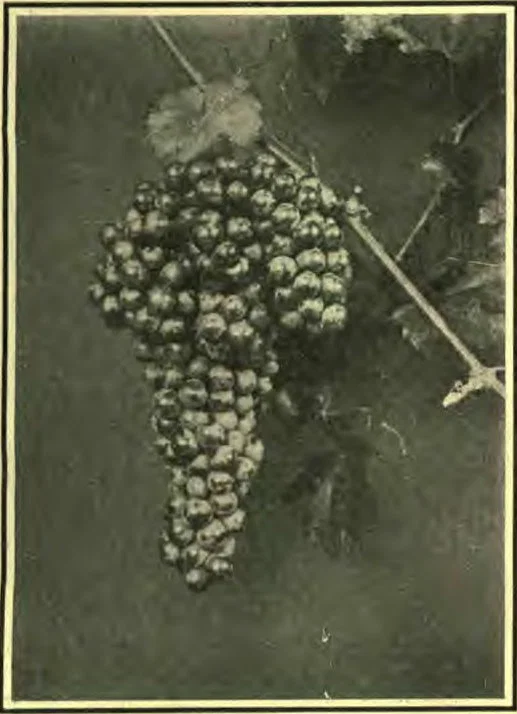
Here is another instance: When the seeds of a wild grape are planted in a fertile soil, and warmed, and sheltered from injury, some of the vines growing from this seed will bear fruit of a better quality than the original, and of a different kind. Some of the results so obtained are surprising. A famous nurseryman says: “I planted the seed of a wild grape growing near my home. In five or six years the seedlings bore fruit; the seeds of these were planted again, and from these I obtained the Concord. And from the Concord in the third generation I have grapes of great variety. The original wild habit seems broken up. For from stock as black as night I have obtained grapes as white as the Chasselas, delicate in texture and flavor.”
Almost all the fruits we have have been thus improved. The cherry, the apple, the peach, the pear, the plum, the melon, and many others, to say nothing of flowers, owe their present value to that peculiarity which plants have of surpassing themselves under right conditions.
A BEAUTIFUL CLUSTER
A BEAUTIFUL CLUSTER
And the reason? We see in the Bible that all the wild, worthless things are the result of the curse. God did not make them worthless in the beginning; for when his work was finished, he saw that it was “very good.” Now no fountain can rise higher than its source; but if the conditions are favorable, it will rise very nearly as high: and the chrysanthemum, the delicious grape, and all the other fruits and flowers in their improved condition are simply the results of a force within themselves put there by the Creator at the beginning, when the “earth brought forth grass, and herb yielding seed after his kind, and the tree yielding fruit, whose seed was in itself, after his kind; and God saw that it was good.” Still the seed strives to obey the command of God, and produce fruits and flowers after the kind that “was good.” All life is now being held down and crushed under a load of broken laws and adverse conditions. It is trying to rise. As Paul says (Rom. 8:22): “The whole creation groaneth and travaileth in pain.” But when man in some little degree adjusts the wrong conditions, and gives the plant a chance to rise, it is a marvel to him that it should do so. Straightway he sets forth some wild theory to explain the mystery; but, after all, the mystery is in himself, that his dull ears can not hear the creatures which he has partly liberated from bondage, as they speak distinctly of God and Eden. EDISON DRIVER.
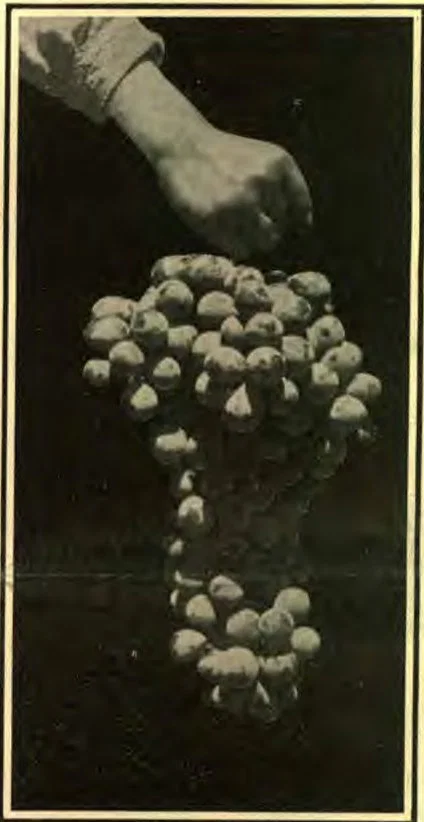
ALL A CHILD CAN GRASP

Shut out from Home

It was a very silly thing to do, but I did it, and I had to take the consequences. In the first place, I was all alone in the house. In the second place, I had on neither my coat nor my vest. In the third place, the postman rang the front-door bell; and after ten minutes or so, I went out on the porch to see what he had left in the box. And in the fourth place, I gave the front door a little swing, and it shut behind me with a bang.
I knew in a minute what I had done. The spring lock was down, my keys were all in my vest pocket, and I was locked out.
The mail instantly lost all its interest for me. The problem was, how could I get back into my own house? Every window was fast, as I well knew. But hold! There were the windows of the summer kitchen. I went around the house, managed to open the blinds from the outside, propped up a settee against the side of the house, and climbed in. With the air of a conqueror I was about to enter my summarily abandoned castle when I discovered—what I might as well have remembered—that the door of the regular kitchen was locked, and I might as well be on the porch again.
Outdoors once more, I skirmished around till I found a heavy grape trellis, which I propped against the porch roof, knowing that the up-stairs windows were open. I climbed up the trellis, and looked longingly over the roof toward the open window; but the trellis was too short, and the roof was too slippery with last night's rain, to allow me safely to pull myself up on it.
Well, what next? I plodded through the wet grass to a neighbor's, and rang the front doorbell. When the lady of the house appeared, I asked her help in burglarizing my own house. Inwardly amused, I doubt not, but outwardly very sympathetic, she took me down cellar, and I hauled out a long step-ladder, which I carried off in huge delight. I found that, by standing on the top step, I could manage to pull myself up into one of the second-story windows.
How good it seemed to be home once more! How enjoyable was each familiar object! I had been gone half an hour; it seemed an age.
As I carried home the step-ladder, and as I put the grape trellis and settee back in their places, and as I removed from my trousers the evidences of their attacks on the porch roof, I had time to think of a few things. As, for instance, how easy it is to shut one's self out of one's home. As easy as that swing of the door. Just a cross word will do it. Just a mean suspicion will answer. Just one bit of injustice, or one act of selfishness. The door slams behind you. You rattle fiercely at it, but the latch is down. Sullenly, angrily, you try this way and that way to get in. It is your own house. You can peep through the windows and see all the dear household objects. There is the pleasant book you just laid down. There is the couch from which you arose only an hour ago. There are even the rest of your clothes. But all the delights and comforts of your home are shut away from you by that instant's wrong-doing as thoroughly as if you had flung yourself into another planet. Like a thief you are compelled to “climb up some other way.” With soul-bruises and spirit-toil you slowly win back again what you have lost, and you are at home again.
But how much better it would have been not to have slammed that door!—Christian Endeavor World.

Young Harper’s Way

THE Chicago Record-Herald tells a pleasant story of President Harper’s son.
Young Harper wanted money for some charitable work, and he did not care to use some one else’s money: he preferred to earn it himself. So he and his comrades put their heads together, secured shoe-blacking outfits, and set to work blacking the university students’ shoes. They had plenty of custom, and soon the desired amount was in their hands, and the needs of their protégés were relieved.
It is an example worthy of being followed by other boys—and girls, too, for that matter.
The giving of that which we do not earn is no sacrifice. It counts nothing with the dear Heavenly Father. He wants something from us as individuals. He wants us to understand and respect his rights as the great Husbandman, the renters of whose vineyard we are,—to remember him, our Creator, “in the days of our youth.” Those are the fresh, bright, pure days when habits are formed that will endure through life, and lessons are learned that will never be forgotten.
“Here’s my tithe, mother,” said a bright boy-reporter, as he handed his mother a crisp five-dollar bill. “And all saved in the last month, too! How glad I am that you taught me to give! I am surprised to think how much I have been earning: the Lord is surely blessing me, as he has promised to bless those who obey him, in handling faithfully that which is another man’s. Being honest with God helps me to be honest with everybody.”
“Indeed it does, Chester,” replied the wise mother. “Keep yourself right with God, and you will find it no trouble to walk in the land of uprightness when dealing with others.”
Pay your tithe, young people. It is for your own good. It will keep you honest and reverent, make you large-hearted and loving, and bring great increase to your store.
S. ROXANA WINCE.

A Miracle

The winter had been a hard one. Long-continued financial depression had reduced the ability of people to give, and at the same time had increased the frequency of the calls for money. The minister was troubled. He feared lest people should dread to come to church on account of the constant appeals for aid; yet on the other hand there was the great and growing need. One morning he gave out the notices for the week, and then, after a pause, continued:—
“I have said to myself a dozen times of late that I would bring to you no special appeals, no matter how pressing; for our regular charities must be maintained, and many of you are already overburdened.
“I am not willing that you should think me unmindful of the burdens you are bearing, or needlessly insistent in pressing other claims upon your benevolence. But I have just received an appeal, signed by the secretary of our local board of charities, calling attention to the case of a poor boy in the village of Millburn. Two years ago he lost both feet by freezing. He has been abused all his life, and since his misfortune he has been treated with added inhumanity by his parents. At last he has been sent to the almshouse to protect him from those who should be his protectors. If he had artificial feet, he could become self-supporting; as it is, the only way in which he can move about is by creeping on his hands and knees.
“My brethren, I ask you to work a modern miracle. The gospel of Christ is given to men that they may be lifted up, and made to stand erect. Let us put this young man on his feet. One day when Peter found a man at the temple gate, lame and unable to walk, he said to him, ‘Silver and gold have I none; but such as I have give I thee: In the name of Jesus Christ of Nazareth rise up and walk!’
“This boy whom we have never seen sits at our temple door to-day. With us is the God-given power of helping him. Let us say to him, ‘Silver and gold have we, one hundred dollars. In the name of Jesus Christ of Nazareth, rise up and walk!’”
Then came the sermon, and after that the closing hymn and benediction; and the morning was blessed to many a man because of his purpose to help in so good a work.
When the service was over, four women took positions at the doors; and as the congregation passed out, the hands of these volunteer collectors were heaped with silver. The pastor had made the request that no one should give more than fifty cents, but there were many bills in the generous offering that was brought to him when the last of his hearers had gone.
“I thought,” said one man, “that I had given the last cent I could afford for charity, but the suggestion that by our little gifts we could work a miracle made me see it in another light. I am glad to think that we could do so great a thing so easily, and I am glad, too, that I could have my part in it.”
It was really a simple little matter—a few people contributing each a half-dollar, and the whole sum to be paid over in a matter-of-fact way to a dealer in artificial limbs; yet the minister had called it a miracle, and the man at the door was glad to have had a part in “so great a thing.”
The minister and his hearer were right. It was not from their own point of view that they had spoken, but from that of the cripple. They had lifted him up, and made him walk erect. To him, at least, the deed was in very truth a miracle. And here is the thought for every giver in the name of Christ to keep in his heart—not “What does this gift mean to me?” but “What does it mean to the suffering brother to whom I give it?” It is a thought that will work other miracles.—Companion.

All Things Are Yours

Go, weary one, burdened with sorrow and care, Go carry thy burden to Jesus in prayer: He knows all thy sorrow, he shares all thy grief, And is lovingly waiting to give thee relief. He is pleading, in accents so gentle and mild: “Whatever you need—take it now, O my child!”
Is it strength to bear weakness or bodily pain? Or courage o’er self some victory to gain? Does something perplex thee, and trouble thee sore? Go tell it to Jesus; ’twill vex thee no more. He is pleading, in accents so gentle and mild: “Whatever you need—take it now, O my child!”
Whatever you need! Is it cleansing from sin? Or a sense of the dwelling of Jesus within? Or faith just to trust that whatever befall, His right hand upholds in the midst of it all? Then still he is pleading, in accents so mild: “Whatever you need—take it now, O my child!”
Whatever you need! Perchance ’tis a friend, On whom you may lean, and in sorrow depend. Go claim, then, the friendship Christ offers to you; None other so constant, so tender, so true. With thee he is pleading, in accents so mild: “If this be thy need, take my friendship, my child!”
Whatever I need! Dear Lord, I believe In Jesus all fulness is mine to receive; I’ll trust thee in sickness, in sorrow, or death, And praise thee as long as thou lendest me breath, Till in glory I’ll hear, in those accents so mild, “Whate’er thy desire, it is yours, O my child!”
AGNES H. BROWN.

Success in Failure

“WHAT is failure?—Nothing but education; nothing but the first steps to something better.” It is evil only when it turns us aside from duty; and even then the evil is found not in the mistake or failure, but in yielding to it.
A young art student, who had just finished a picture, declared, with tears in her eyes, that it was “another awful failure”! Just then the instructor, seeing what she had done, took a brush and palette, and put a few quick strokes of light here and there; and lo! the “failure” was a thing of beauty. The young woman learned to put the finishing touches to her own “failures,” and they won prize after prize.
There are many failures which are but unfinished successes. Wherever you go, men will tell you that their greatest achievements are the golden crowns, built by perseverance, on pyramids of seeming failure. EDISON DRIVER.

The Crow

THE Crow is a bird that every one knows by sight, I think, though few seem to know him for what he is. He has some bad traits,—there seems to be little question of that,—but, then, he has some excellent qualities as well.
Men employed by the government have made an exhaustive study of the Crow’s life and habits. They tell us that he does pull up some corn. They also tell us that he devours thousands and even millions of grubs, insects, mice, and other small creatures, which, if they were allowed to live, would do far more damage to the crops than the little that the Crows do.
Dr. Merriam, after examining the stomachs of nine hundred crows, says that the amount of good done by these birds in destroying grasshoppers, cutworms, May-beetles, and other injurious insects, is greater than the loss occasioned by the destruction of the corn. But it is not difficult to prevent the crows from eating the corn after it is planted. If the corn be first soaked in water overnight, then placed in a vessel containing enough soft tar to coat each kernel, and afterward rolled in plaster of Paris or wood ashes, so that it may be more easily handled, Crows will touch neither the kernel nor the young sprout. A good authority says that tarred corn scattered on the borders of the field is a sure protection against crows. A few quarts used this way will protect a field of eight to ten acres. It will cost but little to try the experiment.
Olive Thorne
Miller relates an incident which shows that farmers sometimes make a serious mistake in being too hard on the Crows. One year the farmers out West were startled to see so many Crows around their fields. They could not remember seeing so many there before. Thinking that the Crows had come to eat the corn, they began to kill off all the birds they could. After they had been killing the Crows for some time, they discovered that they had other visitors. A new grub, which they had never seen before, was eating their young corn. There were literally millions of these grubs; and when they had eaten all the corn, they began to eat the grass.
But still the farmers kept killing off the Crows, never noticing that the birds were eating the grubs. They did not seem to realize that if they would leave the Crows alone, they would soon finish the grubs. And this went on for several years, until somebody had eyes sufficiently sharp to see that the Crows were after the grubs. He at once told the farmers, and then they were sorry enough that they had been killing the Crows.
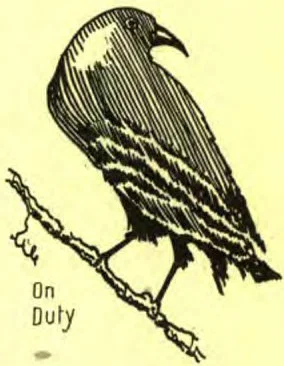
On Duty
On Duty
Suddenly it was discovered that the Crows were the farmers’ best friends, and they began to coax them back. They even had Crows caught and brought to their fields. As soon as the Crows were given a chance, they made short work of the little corn-eating grubs. The farmers in that section of the country learned a lesson that they will not soon forget.
Crows mate in March, and early in April they build their nests. The nest is large and bulky, made mostly of sticks, and lined with strips of grape-vine bark, grasses, moss, etc. In the winter, Crows travel in flocks, and roost in large colonies. They select a certain place, and here thousands of them—sometimes as many as three hundred thousand—retire for the night. It is interesting to know how they do this. They come to the roosting-place in small flocks from all the surrounding country. One might think they would act on the principle so common among the boastedly intelligent and unselfish human race, “First come, first served,” and that the first one to get to the spot would choose his place to sleep, and let the last one take what he could find.
The Last Straggler.
The Last Straggler.
But not so! Each flock, as it comes, alights in some place near the roost. Here all patiently wait until the last straggler has arrived. Then at a given signal, they rise on wing together, circle around for a while, and finally settle down for the night. They often use the same roosting-place year after year.
Crows are very intelligent. It is affirmed by some that they talk to one another, and there is no question that they have an elaborate system of signals. It has been stated on good authority that each flock has a watcher, or sentinel, who gives the order to fly, and warns the troop at every approach of danger. If a man appears a long distance away, the birds act very much afraid, and fly off, only to settle down in another part of the field, until the sentinel gives the signal to move on again.
The tricks and pranks related of tame Crows are many and amusing. A writer in a late number of Success tells of a tame Crow that mimicked the hens. He would scratch about and find a worm, then he would call the hens by imitating the call of the rooster. The hens would come flying across the yard, only to see the Crow gobble up the food. This Crow imitated the notes of the chickadee, and even learned to say, “Hello.” When the woman of the house hung out clothes, she carried the clothes-pins in a bright tin pail. The Crow would watch for an opportunity when she was not looking, hurry over to the pail, snatch a pin, and run off to hide it in the grass.
This story reminds us of another Crow we have read about. He liked to get out in the yard when the washed clothes hung on the line. He would walk along on the clothes-line, and pull out each one of the pins, letting the wet garments fall down in the dirt. He carried the pins, one by one, to the roof of the house, and laid them safely away. Of course he was always well scolded for his mischief. At this, he would fly up to the roof, pick up every pin, and throw it to the ground, as much as to say, “Well, if you are going to make so much fuss about it, just take your old pins.”
L. A. REED.

Why the Horse-Chestnut Was Named

MANY of us know how very interesting is the study of words. Sometimes a whole story can be found simply in a name. So we very often turn the pages of our dictionaries to find what the wise men have written there. One day I had been looking at a great horse-chestnut tree that grows near my door. I watched the great buds, which have a thick covering which is overlaid with some sticky substance that keeps it closed so tightly that not a single drop of the winter’s rain can touch the tender buds. Now that May was near, I knew they would soon open.
But I was curious to know why it was called horse-chestnut, so I went to books for help. They told that the tree had been brought from Constantinople hundreds of years ago, and that long ago the nuts used to be ground and fed to horses, and so the tree was called horse-chestnut tree. That seemed so good a reason that I never doubted it until one day a student of the great outdoor world, which is the very best place to learn nature’s secrets, showed me another and a better reason.
If any of you would like to know it, take a small branch from a horse-chestnut tree. You will see at short distances along it small ridges, and close beside them small dots raised in the bark. With a sharp penknife cut a twig from between two of these ridges, which mark a year’s growth. Cut the wood carefully away from around this ridge, sloping it back diagonally. Now, if you hold this stick up, it will look very like a horse’s leg. The bend for the knee-joint is there; the ridge forms the outline of the hoof; the small dots are nine in number, and arranged like horseshoe nails; and inside is the small, dark spot, called the “frog,” that is always to be found in the foot of a real horse. Then you, too, will think for once the dictionary-makers have been caught napping, and that we have a far better reason than theirs for naming this the horse-chestnut tree.—The Epworth Herald.

Bird Notes

Bit of sunshine taken wings, Or a spray of goldenrod? On thistle top he sways and swings, Or flung high to the sun, he sings: Perdita — Perdita — Perdita — ’Dita! Sweet! Sweet!
Good morning trolled, then all the day, From thicket-hidden bramble bush, This recluse croons his roundelay. But startle him,—a flash of gray, And, Hush! Hush! Hush! Hush! Go ’way! Go ’way!
Wild cherry bough and hanging nest, And calls amid the apple bloom, No need to tell whose flaming breast And fluting note lead all the rest, Glory — Glory — Glory — Glory — Glory! Come-O! Come-O! — Mary Hefferan.

A Definite Work

When God spoke to Moses that day so long ago in the desert of Midian, he called him to a definite work. It was not sufficient for Moses to testify that he was a child of God, that he wished to serve him faithfully, that he hoped to be saved, or even that he was willing to be used by him. No; Moses was asked to do something—to go and deliver Israel. And he accepted the call. So with Gideon, threshing wheat by his father’s wine-press; so with Esther in the palace of Shushan; so with the shepherd boy David, when he went out to meet the Philistine who defied Israel; so with the little captive girl in Syria; so with Daniel and his associates; so with the Twelve; so with Paul,—all were called to a definite work; and so, dear young friends, are we. As surely as we have named the name of Jesus, so surely have we been called to his service,—a service that is for each one just as definite as for any who have lived before us; for God has appointed “to every man his work.”
The call does not come to all in the same way. To Moses, to Gideon, to Paul, God spoke with his own voice; Samuel, and John, the forerunner of Jesus, were set apart from earliest childhood to a distinctive work; Joseph and Daniel, torn from the homes they loved, yet conforming their lives to principle in the smallest particular, heard and accepted the call to service in the corrupt courts of Egypt and Babylon. The thing is not that the call must come in some specified way, but that we be able to recognize it when it does come.
To-day we are called, and our call is in our opportunity. What is our answer? Is it that of the traitor son who said, “I go, sir,” but went not? Do we assent when the call comes, the plea is made, and then turn away, with closed ears, hard hearts, and close-shut hands? Remember, then, that a call does not carry with it salvation. Many are called, indeed, but only those will be chosen who not only take the cup of salvation themselves, but rejoice to carry it to others.
In our work as young people, and in our Young People’s Societies, let us not for a moment forget our responsibility as those who have been called to a definite, special service. Somewhere, unless we have already taken it up, our appointed work waits for us. If we really wish to know what it is, we may know, as truly as any servant of God whose experiences are set down in his Book for our comfort and encouragement. Therefore let us seek him, that he may show us the way; let us go to him for a message of comfort and life to the world; and then let us do our part faithfully, in the way he appoints, in carrying “the Advent Message to all the world in this generation.”
Continue reading: Studies in the Message