TUESDAY, November 21, was the last day of the conference. At the morning meeting the first business was, that the Committee on Correspondence reported the draft of a letter from the conference to the churches that were represented in the conference. This letter was rather a report in brief that the design of the conference had been attained, that federation had been accomplished, and asking their ratification of the action of the conference. The letter took particular pains to reiterate that it is only by federation of the churches that the evils of the liquor traffic, divorce, and the desecration of the Lord's day, can be corrected. The letter was adopted.
The Business Committee made an additional report,—on resolutions; on the family; uniform divorce laws; urging ministers to guard the family; on the liquor traffic; on labor and capital; on "graft;" to set aside the idea that corporations have no souls, and inculcate the idea that corporations are moral persons; on gambling; for laws against impurity—to make it hard as possible to do wrong and easy as possible to do right; and on international affairs.
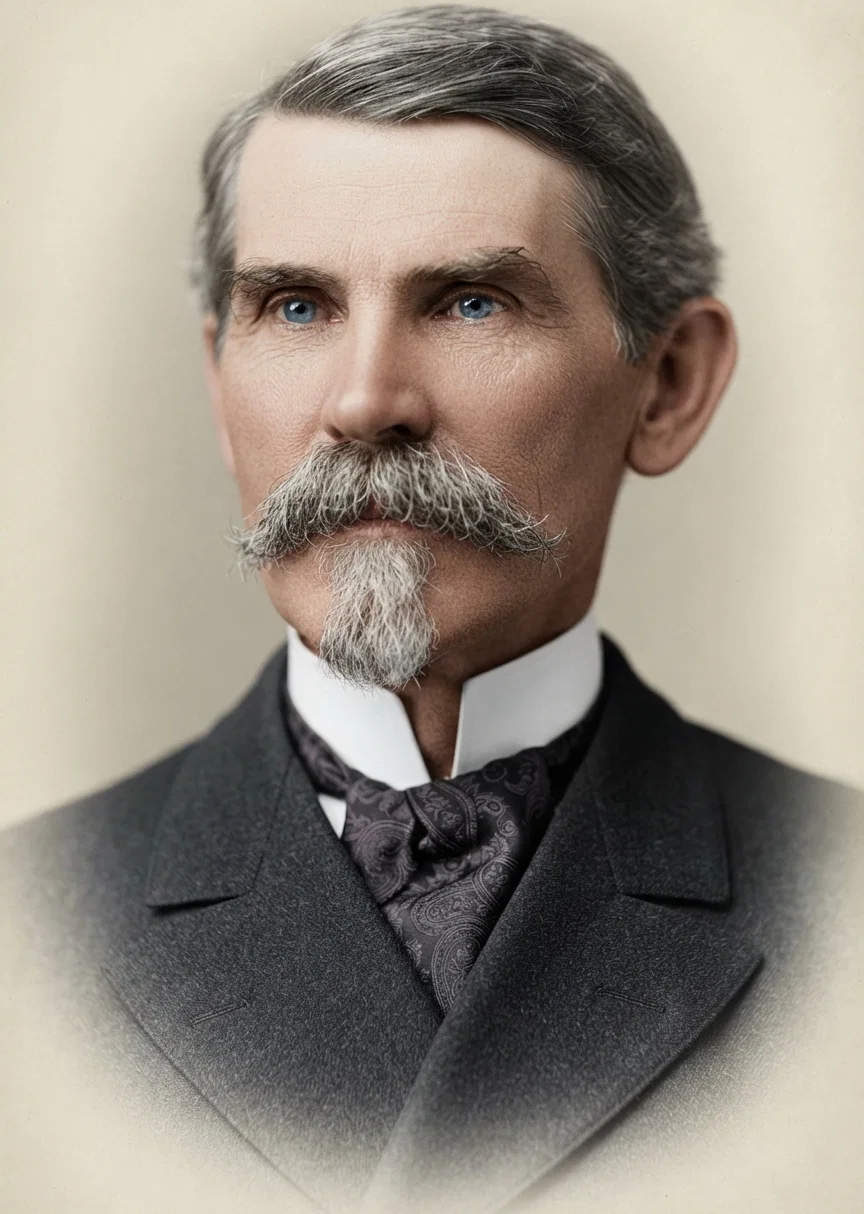
Robert R. MacBurney.
A motion was made to substitute the word "dishonesty" in place of the word "graft." The chairman suggested that it might be well to educate the world on that word. The motion was seemingly lost, and division was called for, and it was overwhelmingly lost.
The recommendation of the liquor traffic brought out a discussion on prohibition or license. A motion was made for prohibition. The chairman of the committee stated that just seventeen resolutions, on all phases of the subject, from Carrie Nation up, had been referred to the committee, and that what had been presented by the committee was that which seemed to the committee most feasible. It was moved to recommit; lost. It was adopted; one vote "No." The whole report was adopted. All other matters were referred to the Committee on Correspondence.
Next was presented the final report of the Committee on Correspondence, recommending that the eighteen million people represented in this conference express their appreciation of the newspaper press, and extend to it an invitation for co-operation; that since the national government is already under pledge to the Five Civilized Tribes of the Indian Territory to exclude from the territory all traffic in intoxicating liquors; that when that territory shall be admitted to statehood this pledge shall be continued; and that a letter from this federation shall be sent to the Congress reminding it of this obligation; all other subjects referred to the General Executive Council.
FOURTEENTH MEETING.
The Kingdom of God the Transcendent Aim of a United Church.
In the final session, Tuesday afternoon, November 21, 1905, the first thing was the passing of a resolution of greeting to foreign missionaries; and a resolution to publish in pamphlet form the plan of federation and connected official matter. The general subject for the meeting was, "The Kingdom of God the Transcendent Aim of a United Church." The first address was by Bishop Hendrix, of the Methodist Episcopal Church, South, on "The Ideal State." The state is the most complete, as well as the most universal, of all the associations of man. The petition, "Thy kingdom come," is interpreted by the words that follow, "Thy will be done on earth, as it is in heaven." This is the ideal state, and to this end we labor. Every true prayer looks to the perfect government on earth as in heaven. The kingdoms of this world seem very little things, as compared with the kingdom of this world. The nation is the last product of the church. A nation is a spiritual fact, more than a physical fact. Our Lord is not the Saviour from the world, implying separation from the world. He is the Saviour of the world. Jesus Christ is the world's first citizen. He commanded Peter to put up his sword,—that the kingdom of God comes not by violent force, but by the quiet processes of civic righteousness and social upbuilding. God never gave to man dominion till He had made him in His own likeness. And as man has lost that likeness, he has lost the dominion of the world. Our Lord distinctly taught a universal kingdom. Nations, like the individual who seeks first the kingdom of God and His righteousness, will equally find that all other things shall be added. We rejoice in every attempted realization of the ideal state, as that of Calvin in Geneva, and John Knox in Scotland. We are less concerned for the Bible in the public schools than we are for the Bible in the teacher in the public schools. Our concern is not for the state to establish a religion, but for religion to establish the state. What we need in our country is not an established church, but an established state. Part of the general mission of the church is thus to establish the state.
Mr. John Seely Ward, Jr.
The Ideal Church.
Coadjutor-bishop Greer, Episcopalian, spoke on "The Ideal Church." The Christian Church should be God manifest in the flesh; so that in their search for God, men might be able to find Him as a living Presence, dwelling in their midst, whom their eyes can see, whom their hands can touch and handle, in the church. Our Roman Catholic brethren, who are not with us in this conference (and I am sorry they are not), have something to teach us here. In the world the mission of the church is to extend that incarnation of God, and to try more and more to help all human life, all human flesh, to be it, and in that way to extend God's kingdom in the world.
At 3:30 P.M. a resolution was presented embodying the views of the Lutheran speaker, to get the authorities to dismiss the public schools Wednesday afternoon of each week for religious instruction supplementary to that of the Sunday-school. It was passed without any discussion, and without any dissenting votes.
Samuel B. Capen, president A. B. C. F. M., Congregationalist, said: We have passed out of the age of individualism into that of federation; and combination, not competition, is moulding methods of action. Co-operation, through closer federation, is the need of the hour.
Rev. Charles Cuthbert Hall, D.D., LL.D.
Rev. Josiah Strong, D.D.
The Federation a Fact.
Bishop Vincent, of the Methodist Episcopal Church, gave the closing address of the conference: It is moving with us. The sunrise is past, and the day has begun. The federation has become a fact, and this is a pledge of power. The federation is a pledge of unity, in faith, in doctrine, and in spirit.7This federation will greatly promote the activity of an aggressive Protestantism. A Roman priest can be an acceptable adviser in sorrow or at death, but is not a safe adviser in politics. Let Protestant ministers qualify for that position. Let us have freedom of speech, and let us give warning to politicians that they can not dictate to us what we shall declare on the platform or in the pulpit. The manifold forms of Sabbath desecration call for careful attention and greater devotion, more energy, more positiveness. We need not a will that waits on public sentiment, but that will go to, and make, public sentiment.
A. T. J.
THE QUESTION OF A STATE RELIGION IN HAWAII.
By C. D. M. Williams
[The Honolulu Commercial Advertiser gives place to an article by C. D. M. Williams, replying to an editorial on the subject of a moral code for the Territory. Following is a part of the article by Mr. Williams, which very clearly states the principles involved.]
THE proper sphere of civil government is to secure to men their rights. This is the fundamental principle upon which the Federal Government of the United States was established. For in the Declaration of Independence we read: "We hold these truths to be self-evident, that all men are created equal; that they are endowed by their Creator with certain unalienable rights; that among these are life, liberty and the pursuit of happiness. That to secure these rights, governments are instituted among men."
But when it comes to teaching any form of religion, either sectarian or national, by the government, then you take up a line of teaching with which governments have no business and for which this government was never established. You speak of this nation resting "on the unities of all the religions compatible with advanced civilization." This government rests alone upon the rights of the people, and to secure these was it established. But that your articles were for the purpose of establishing some form of religion it is very evident; for you speak of getting some point where Protestant and Catholic, Jew and Gentile, could stand in harmony. If you do not wish to establish a religion, why do you name these different sects and try to find some point in which they are in harmony? They are not out of harmony on any particular essential except their religion. Therefore, from this and other portions of these articles, we are forced to the conclusion that you wish to establish a state religion and teach it in our public schools.
Whenever a system of state religion is established, even tho you and I and every Christian may accord in it, then and there the foundation is laid for all state religions that any people whatever wish to have. In 1776 the Presbytery of Hanover, with the Quakers and Baptists, sent a memorial to the general assembly of Virginia in which they said: "Certain it is that every argument for civil liberty gains additional strength when applied to liberty in the concerns of religion; and there is no argument in favor of establishing the Christian religion but may be pleaded with equal propriety for establishing the tenets of Mahomet by those who believe in the Alcoran." "Neither can it be made to appear that the Gospel needs any such civil aid. We rather conceive that when our blessed Saviour declares His kingdom is not of this world, He renounces all dependence upon state power." James Madison and the citizens of the country presented the following: "We, the subscribers, citizens of said commonwealth, having taken into serious consideration a bill establishing a provision for teachers of the Christian religion,' conceive that the same, if finally armed with the sanctions of law, will be a dangerous abuse of power."
You may call this state religion that you wish to establish a man of straw if you wish, but it is the infant cry of a giant which is crystallizing into youth with all his swagger of importance, in the United States in the form of Sunday laws and other religious legislation. And for the terrible crime of not believing and following this state religion, men, women, and children are arrested and cast into the felon's cell in the land that was once known as a land of freedom. It is this same principle a little larger grown in England where every property holder is compelled to contribute to its coffers to support the clergy of this state church. This man of straw, this state religion that you wish to establish here, is the incipiency of the fiendish giant that is now stalking abroad in Russia, and with the state troops protecting the murderers of the Jews because they do not believe in the state religion.
I have no idea that you think to carry this to the extremes named, but when the principle is once established, who can tell where it will stop? It is the principle that we oppose. Not that we think that you intend anything but what you think is for the best interest of the state. The true religion of Jesus Christ needs no national power behind it; all the power it needs is the power of the Holy Spirit. It needs no law to compel men to teach it; all it needs is a heart cleansed by the blood of Christ and consecrated to His service, and the burden of souls impelling them to service. All law-enforced teaching in this line will forever be a dead weight upon both teacher and pupil. Then, unless you can by examination test the hearts of the teachers to see that the Holy Spirit is dwelling there, you will be liable to get some hypocritical teaching which will drive all who receive it farther from the source to which you wish to draw them.
It is not because religion is not taught in our public schools that infidelity is coming in like a flood; it is because the popular religion of to-day makes no impression on, or change in, the lives of the mass, those who profess it; it is because many religious teachers have left the Bible and taken man-made theology and higher criticism for their standard; it is because they have rejected the Spirit and power of God, and are now seeking the power and laws of the state to enforce their religious dogmas.
Let them return to the Word of God and follow its teachings in such a way that the world may know that they have been with Jesus; let them humble themselves before God in such a manner that He can fill them with His Spirit, and you will need no law to have religion taught in the public schools.
"Not by an army, nor by power, but by My Spirit, saith the Lord."
The Up-to-Date Church
The "up-to-date church" is now talked of by that class of religionists who want to be somewhat spectacular and have the church take a hand in everything. The prevalent idea of an up-to-date church is a church that keeps even with the world—in politics, sociology, and science, "falsely so called." But a church can only be up-to-date in its legitimate sphere by following in the footsteps of Christ, who is "the same yesterday, and to-day; and forever;" following in the light of His prophetic Word, and receiving views of current events and their portent which the world can not comprehend. The really up-to-date church is giving heed to the "more sure Word of prophecy," "as unto a light that shineth in a dark place." It is heeding the signs by which the Lord has told us we may know that His coming is "near, even at the doors." The church that aims only to keep abreast with the world, and to be foremost only in the world's enterprises, is far behind as a church pretending to represent the kingdom of God on earth. When the Lord shall appear in the clouds of heaven, and all the holy angels with Him, the true up-to-date church, now scoffed at by the world and its religious imitators, will be found looking for Him and ready to receive Him. Their glad salutation will be, "Lo, this is our God; we have waited for Him, and He will save us; this is the Lord; we have waited for Him, we will be glad and rejoice in His salvation."
SUNDAY ENFORCEMENT NEWS AND COMMENT.
By Editor
At the beginning of a term of the district court at Roswell, N. M., recently, Judge Wm. H. Pope, in his charge to the grand jury, told them that he wanted them to pay particular attention to any violators of the Sunday-closing law.
ON a charge of pursuing their avocation on the Sabbath, 200 members of a construction crew of the Big Four Railroad Company, in charge of C. A. Placquette, superintendent of the Chicago division, were arrested at Lafayette, Ind., on Sunday, November 12, while laying a switch from Main to Alabama Streets.
"FOR doing carpentering work on a house on Sunday," two Russian Jews were arrested in Brooklyn, N. Y., November 19, and the next day were arraigned in the police court. On pleading not guilty, they were held in $300 bail for examination.
STRICT orders in regard to enforcing the Sunday-closing law were given by Chief of Police Vinzant of Jacksonville, Fla., on the morning of Sunday, November 5, and as a result, two arrests were made during the day. Chief Vinzant says that he intends to see that the Sunday-closing law is rigidly enforced, and that all people found with their places of business open will be promptly arrested and made to appear before the municipal court for trial.
THE Sunday agitation has reached Pietermaritzburg, Natal, Africa, where there has been a great agitation. Brother George Claver, representing the International Tract Society, writes that there has been an extended discussion of the subject in the papers, and the people have been hearing both sides. The "Appeal to Ministers," which was widely circulated in this country, has been revised and adapted to the situation there.
IN Brooklyn, N. Y., a man was arrested for selling half a pound of coffee on Sunday. Two others were arrested for working on a house. The men were discharged by Magistrate Voorhees, who asked the arresting officers why they didn't arrest the employees of the Transit Company for running street-cars on Sunday. It is refreshing, in these days of discrimination, to find an occasional official who deems the rights of the poor equal to those of the rich.
ACCORDING to press despatches from Japan, one of the reasons given by government officers and the better class of Japanese citizens for the attacks upon and destruction of several Christian churches and schools during the late riots in Tokyo and elsewhere over the peace terms, was that "there has been local feeling over the efforts of the 'Christians' to secure the closing of business houses on Sunday." To go among the heathen with a compulsory religion purporting to be the religion of Christ, is a decided misrepresentation of the Master and His cause. Nothing could be more farcical than to set up an institution which Christ never recognized, and ask the heathen to not only accept it as Christian, but to enforce it by their civil law. Christ has not sent His ambassadors into the world for any such purpose.
SCIENTIFIC SPECULATION.
THE entire worthlessness of scientific speculations as to the future of this world is shown by the two latest predictions, placed together in the Daily News. Both were contained in lectures delivered at Cambridge. The first by M. Martel was that "through erosion and corrosion of the earth's surface, the water-level was being continually lowered, and unless measures for preventing this were adopted, a large part of the world would a few centuries hence die of thirst."
On the other hand, Sir Archibald Geikie stated that "a universal decay of the land was going on at such a rate that, should its progress not be accelerated, a comparatively short period would suffice to reduce most of the dry land to the level of the sea, and threaten another flood."
The fact that scientists can thus arrive at exactly opposite conclusions should serve to prove that geology is by no means an exact science, and should suggest grave doubts as to whether, looking backward, the geologists have been any happier in their interpretation of the earth's past history. It should always be borne in mind that, when men reject the book of Genesis because it does not agree with the conclusions of our modern geologists, they are not turning from proved myths to solid facts, but from a record which has never yet been proved incorrect to a mass of diverse and contradictory speculations. This is not, strictly speaking, a scientific manner of proceeding.—London Present Truth.
THE WILL OF GOD
By W. A. Sweany
BY W. A. SWEANY
A Definite Purpose in Creation.
ALTHO denied by some (Ps. 14:1), the existence of God is known by all, being clearly revealed and manifested in the works of His hands. Rom. 1:18-21. Creation, therefore, was not an aimless pastime, but the outworking of a definite purpose of the Creator. Isa. 45:18; 43:6, 7; Rev. 4:11; Prov. 16:4. Each and every atom, therefore, is a part of God's great plan, and He has a definite purpose concerning each individual. Jer. 29:11.
It is furthermore evident that Jehovah's plan and purpose concerning each object is His will concerning that object. It is also evident that this will must be brought to bear upon every object, animate and inanimate, sentient and insentient. And so, in obedience to His command (the expression of His will concerning them), the celestial orbs pursue their allotted course (Gen. 1:14-18; Isa. 40:26; 45:12); the tempest rages and the billows foam, or the zephyrs play and the ripples dance (Ps. 107:23-30); clouds gather and raindrops fall; seeds germinate and plants grow (Ps. 147:8).
God Glorified in His Works.
Thus the creation and manipulation of even the insentient and the inanimate glorify the Creator, and reveal His wisdom and power. Ps. 19:1-6. But intelligent and willing cooperation with His revealed will on the part of sentient beings displays His glory in greatest measure, and affords Him pleasure in the highest degree. Jer. 9:23, 24; 1 Sam. 15:22, 23.
However, for the complete accomplishment of the will of Jehovah concerning intelligent beings, it is necessary that there be expression thereof by the Creator, together with understanding of, and voluntary submission to, such will by the creature. Since the third condition is dependent on the second, and the second upon the first, it is clear that the whole matter depends primarily upon the plain, clear statement of His will by Jehovah Himself. And since His own glory and pleasure, and the temporal and eternal welfare of His creatures are involved, we may be sure that His will is expressed in the plainest possible manner. Isa. 5:3, 4.
But, altho it is so plainly and simply expressed, it is evident that but few understand the will of God (Isa. 1:3; Hosea 4:6), and but few of those who do know it are willing to submit themselves thereto (Rom. 1:21, 28; John 15:22-25.) In fact, "All have sinned, and come short of the glory of God." Rom. 3:23. Then, since "the wages of sin is death" (Rom. 6:23; James 1:15), and the result of obedience is life (Heb. 5:8, 9; Rev. 22:14), it behooves every one to give more earnest heed to the voice of the Lord which says, "Incline your ear, and come unto Me; hear, and your soul shall live." Isa. 55:3.
The will of God concerning the insentient objects and creatures of earth, sea, and sky may be ascertained by considering them; for their movements and actions are but the outworking of His will concerning them. He plans for them whatever movements and sphere will best illustrate His attributes and character; and the accomplishment thereof is produced by the motive power transmitted to them in the expression of His will, as they do not possess the power of choice or resistance. Heb. 1:3.
Man Chooses His Own Destiny.
But God's definite plan, purpose, or will concerning man is, in various ways to be hereinafter considered, made known to him; for his acceptance thereof, and obedience thereto, are optional with him, as he is endowed with the power of choice. Deut. 30:10-20; Micah 6:8. Let it be known, however, and always remembered, that it is the will of God that all who submit thereto shall continue to exist, while all who reject it must cease to exist. Isa. 1:19, 20. His commandment is life everlasting to those who obey it (Luke 10:25-28); but condemnation to those who disobey (John 12:47-50). And so it is that His word never returns to Him void, but always accomplishes His purpose. Isa. 55:10, 11.
Thus "He worketh all things after the counsel of His own will;" for His counsel shall stand forever, and He will do all His pleasure. Eph. 1:11; Isa. 46:9, 10; Ps. 33:11; 115:3; Prov. 19:21; 16:4; 21:30. Like the potter among his vessels, He, as Creator, has the power and the right to preserve or to destroy any or every vessel according to His own will. Jer. 18:1-10; Isa. 29:13-16; 45:9-12; 64:8; Rom. 9:19-23. The entire ninth, tenth, and eleventh chapters of Romans, with parallel and connecting passages, should be carefully and prayerfully studied in this connection, for therein it is very plainly shown that God's decision, with reference to the preservation or destruction of any object or individual, is always in strict accordance with its fitness or unfitness for continued existence.
God's Law in Nature.
It is self-evident that the expression of the plan, purpose, desire, or will of the Creator concerning any object or being is His law for the government and control of that object or being, and compliance therewith is the condition of continued existence. Furthermore, every form and manifestation of law and authority, whether it be natural or spiritual, political or ecclesiastical, human or divine, expresses the nature, character, and attributes of its author.
It has been truly said that "the laws of nature are the habits of God." Count the notches on the border of a leaf, or the scales on a fish, and you know the number on each and every unmarred specimen of the same species. A young artist who proudly submitted his masterpiece—a painting of a partridge—to an experienced ornithologist, was much crestfallen when told that it was not true to nature; there was not the correct number of scales on the legs. The careful student had learned that the plan, will, or law of the Creator required a certain number.
While following the stars in their courses, Kepler, realizing that they move in obedience to the Creator's will or law, exclaimed, "O God, I think Thy thoughts after Thee." And so it is that the skill, wisdom, power, order, system, and unchanging faithfulness of the Creator are expressed in the laws that regulate motion, number, color, and form, in the works of His hands. How passing strange that so many of the beings to whom He has given the power of choice, and to whom "He makes known the good pleasure of His will," "for the obedience of faith," should reject it to their own destruction, when acceptance of, and obedience thereto, would secure to themselves "pleasures forevermore."
(To be continued.)
OUR BROTHER'S KEEPER.
By Alexander MacLaren
(Alexander MacLaren, in S. S. Times.)
WE are all bound together by a mystical chain of solidarity. Since every man is my neighbor, I am bound to think of him, and not only of myself, in deciding what I may do or refrain from doing. I must abstain from lawful things if, by doing them, I should be likely to harm my neighbor's building up of a strong character. I can, or I believe that I can, pursue some course of conduct, engage in some enterprise, follow some line of life, without damage to myself, either in regard to worldly position, or in regard to my religious life. Be it so, but I have to take some one else into account. Will my example call out imitation in others, to whom it may be harmful or fatal to do as I can do with real or supposed impunity? If so, I am guilty of something very like murder if I do not abstain.
"What harm is there in betting a dollar? I can well afford to lose it, and I can keep myself from the feverish wish to risk more." Yes, and you are thereby helping to hold up that gambling habit which is ruining thousands.
"I can take alcohol in moderation, and it does me no harm, and I can go to a prayer-meeting after my dinner and temperate glass, and I am within my Christian liberty in doing so." Yes, and you are part thereby in the greatest curse that besets our country, and are, by countenancing the drink habit, guilty of the blood of souls. How any Christian man can read these two verses and not abstain from all intoxicants is a mystery. They cut clean through all the pleas for moderate drinking, and bring into play another set of principles which limit liberty by regard to other's good. Surely, if there was ever a subject to which these words apply, it is the use of alcohol, the proved cause of almost all the crime and poverty on both sides of the Atlantic. To the Christians who plead their "liberty" we can only say, "Happy is he that condemneth not himself in that thing which he alloweth."
The same general considerations reappear in the verses following the specific precept, but with a difference. The neighbor's profit is still put forth as the limiting consideration, but it is elevated to a higher sacredness of obligation by being set in connection with the "glory of God" and the example of Christ. "Do all to the glory of God." To put the thought here into modern English, Could you ask a blessing over a glass of spirits when you think that, tho it should do you no harm, your taking it may, as it were, tip some weak brother over the precipice? Can you drink to God's glory when you know that drink is slaying thousands, body and soul,9and that hopeless drunkards are made by wholesale out of moderate drinkers?
"Give no occasion of stumbling;" do not by your example tempt others into risky courses. And remember that "neighbor" (verse 24) resolves itself into "Jews," and "Greeks" and the "Church of God"—that is, substantially to your own race and other races—to men with whom you have affinities, and to men with whom you have none.
A Christian man is bound to shape his life so that no man shall be able to say of him that he was the occasion of that one's fall. He is so bound because every man is his neighbor. He is so bound because he is bound to live to the glory of God, which can never be advanced by laying stumbling-blocks in the way for feeble feet. He is so bound because, unless Christ had limited himself within the bound of manhood, and had sought not his own profit or pleasure, we should have had neither life nor hope. For all these reasons, the duty of thinking of others, and of abstaining, for their sakes, from what one might do, is laid on all Christians. How do they discharge that duty who will not forswear alcohol for their neighbor's sake?