The Youth’s Instructor, Vol. 27, No. 51.

REAL CHRISTMAS PRESENTS

The Youth’s Instructor

Dec 1879

S. D. A. Publishing Association · Battle Creek, Mich. · Dec 1879

REAL CHRISTMAS PRESENTS.
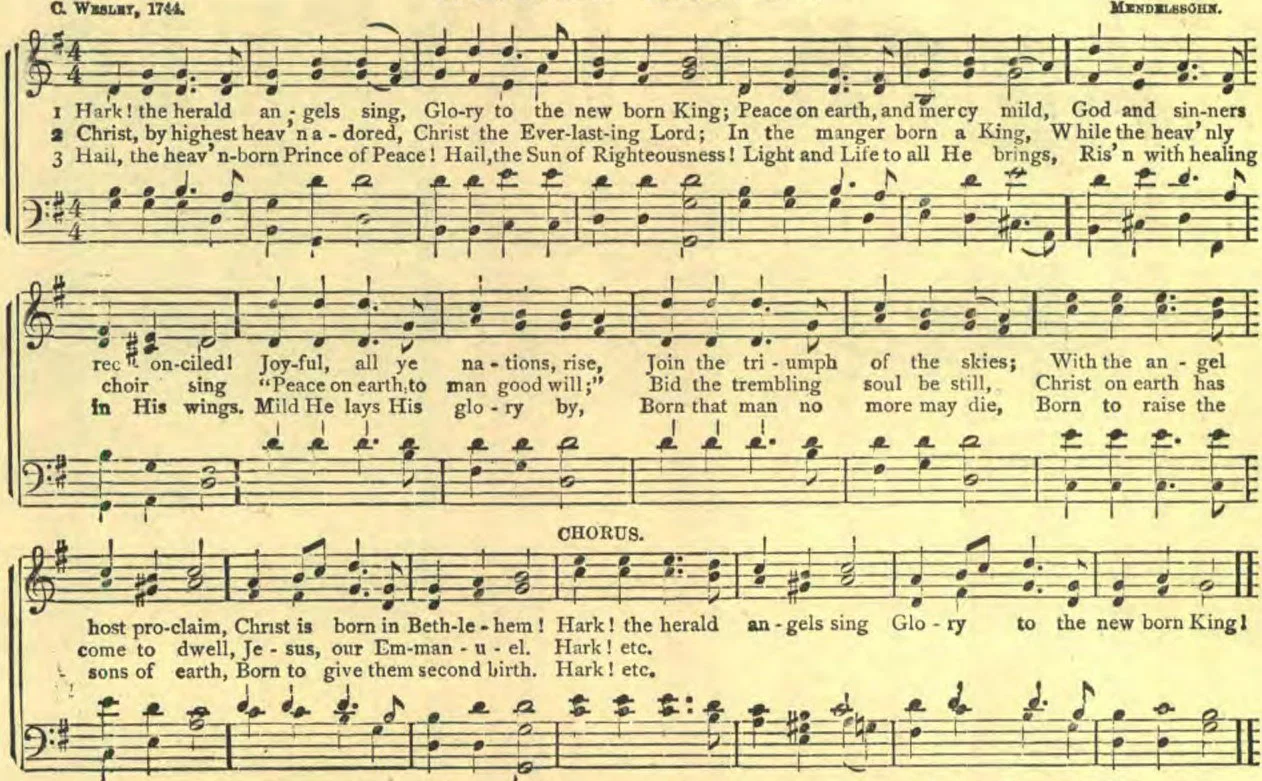
It was the week before Christmas, and the children at Farmer Brown’s had gathered in the cheerful sitting-room to practice some of their Christmas songs, so as to be ready to join in singing when they went to church on Christmas day. They had sung, “Hark, the Herald Angels Sing,” “While Shepherds Watched their Flocks by Night,” and a “Christmas Jubilee,” when suddenly little Katie looked up to her mother, and said, “Christmas is Christ’s birthday, isn’t it?”
“Yes, Katie; Christmas is the day universally agreed upon in which to celebrate Christ’s birth, but the exact day on which he was born is not positively known. But, Katie, why do you ask that question? You have just been singing about it, and you certainly have known it for a long time.”
“But, mother, I’ve thought of something now that I never thought of before. Why do we give each other presents on Christmas day? It’s Christ’s birthday, and we ought to give him presents. If he were only here now! O mamma! I would give him just the nicest and best thing I could. You see, when my birthday comes, you give presents to me, and not to baby Robert, nor to Alice, nor to Joe; and when Christmas comes I think we ought to give presents to Jesus; but I don’t see how we can.”
“I think,” replied her mother with a smile, “if my little girl would read her Bible more carefully she would find several ways in which she could make Christmas presents to Jesus.”
“How? mother; please to tell us; we would all like to know,” broke in Alice.
“If you will draw your chairs up this way, I will tell you about some children who once made Jesus a very nice Christmas present. They all attended school in the town of B—. None of them had very wealthy parents; but there was one girl in the school whose father was dead, and her mother was very poor. Her mother tried hard to keep Mary neat and clean; but could not possibly provide her with comfortable clothing for cold weather. Her schoolmates saw this, and several of them resolved that if they could get enough money, they would buy her a nice warm hood and a pair of mittens for a Christmas present.”
“But money was scarce; and the girls, disliking to ask their parents for any, had almost given up trying to make the present, when Nellie, one of their number, was called to go with her mother to buy a new hat for herself. The hat was soon selected; and was to be trimmed with black and red ribbon, and a little red wing on one side. It would make a beautiful hat;—but a thought had struck Nellie. Why could she not just as well wear the hat without the wing, and save half a dollar to give toward Mary’s hood and mittens.”
“Nellie told her mother the plan, and she, smiling, nodded assent, and so the feather was left in the store, and the half-dollar was put in Nellie’s pocket. When she got home, she ran immediately to see the other girls, and her success inspired them with new courage, so that the day before Christmas, Mary’s hood and mittens had been bought and left with her mother.”
“But I thought you said that they made a present to Jesus,” said Katie, when her mother had concluded.
“And so they did; for Christ said when he was on earth that if we did kind deeds to the poor it was the same as though we did it to him.”
“I never thought of it in just that light before,” said Joe; “but you said there were several ways in which we could give presents to Jesus. Tell us another way, for boys don’t wear feathers on their hats, so they can’t take them off.”
“Well, there is Mrs. Williams, who has had hard work to get along ever since her husband was killed in the army. Last fall she did not have as much sewing to do as usual, and yesterday, when Delia asked her why she was splitting wood, she said that if she hired it done it would take all the small sum she had saved to buy her little boy a new reader. Now, if you will split her wood nights and mornings, so that Charlie can have his reader for a Christmas present, the Lord Jesus will count it the same as if done for him.”
“Again, if you will turn to the twenty-fifth chapter of Genesis, you will there read about some presents which the people made to the Lord; and of course if they had been given to him on Christmas they would have been Christmas presents.”
“Yes, I know,” said Joe, “but they were building the tabernacle in those days, and the Lord wanted all who could do so willingly, to help; but we want to know how we can make the Lord a present this year.”
“Well, the tabernacle was to be built so that the people might have a place in which to worship God. His people still have to build houses in which to worship, and gifts to help in that work are just as acceptable now as then.”
“Then, too, there are his missionaries who are carrying his word to those who are in darkness. These he has called to do the work which he began while here on earth. And if we give to these faithful men who sacrifice so much to tell the people about Jesus and what he taught, we shall certainly be giving to Jesus, for he has said, ‘Inasmuch as ye have done it unto one of the least of these, my brethren, ye have done it unto me.’”
“You all see now, do you not, that there are several ways in which to make presents to Jesus, and I hope you will always remember to make him a Christmas present whether you make any one else one or not.”

DECEMBER

The fading year its mellowing tint has cast O'er wayside flower, and woodlands gorgeous scene, The wild bird pipes; we say “He is the last.” The snow sifts downward like a friendly screen On pine-clad hill, gray rocks, and meadows dun, Though it shuts out the pale rays of the sun.
Yet to this month is greatest honor given Outlasting time, a glory lent from Heaven.
For there breaks in on nature's dusky night, A radiance full, around, above, below, Outstretching far its swift heart-warming light, Till sea and earth and sky give back the glow 'Tis Christmas time; with joy the fact proclaim, And breathe with thankful heart the blessed name.
—Mrs. Annie A. Preston.

THE MICROSCOPE.

The microscope is a wonderful little instrument, and is used for many purposes. There are two kinds of microscopes, simple and compound. By the aid of the compound microscope of the present day we have become acquainted with myriads of little wonders, of which people who lived in ancient times knew little or nothing.
The most powerful microscopes magnify about two thousand times. Lewenboeck says that “there is an insect to be seen through the microscope of which 27,000,000 would only equal a “mite,” and that the cavities of a single grain of sand, contain insects of various kinds. Even mold, under a microscope, appears like a beautiful forest of trees, and butterflies seem to possess feathers like birds.
The surface of the human body appears to be covered with scales so minute that one hundred and fifty could be covered by a grain of sand; and yet one of these scales covers five hundred pores through which sweat oozes in little drops.
The leaves of trees have little insects feeding upon them like cows on a meadow. Hairs appear like hollow tubes, about six inches in diameter. A grain of sand appears like a rock, and a cambric needle looks like a post. A single drop of stagnant water is filled with numerous creatures which swim about with as much freedom, and seem as much at home, as fish in the sea.
Who would think that the body of a mosquito was covered with perfectly formed feathers? but so it is. Indeed, we might enumerate almost a countless number of objects which it would be interesting and instructive to examine.
Among other curiosities which the microscope has produced are micro-photographs mounted on glass slides. Among these is the Lord’s prayer, containing 268 perfect letters, with chapter and verse, all condensed within a space half as large as a pin’s head. In order that you may better understand how extremely small these photographs appear to the naked eye, we inclose, between these brackets [.], a little dot about the size of one of the wonderful microscopic views; but when brought in focus under the lens, each letter is perfectly distinct, and about half as large as the letters now before you.
Children, save your pennies which you spend for useless toys, purchase one of these instruments, learn how to use it that you may thus become acquainted with the wonderful works of God. The mind is filled with reverence and wonder at the skill of Him who made the little creatures that sport unseen in the dust at our feet, as well as the great elephant that wanders in the jungles of Asia and the forests of Africa.
As we behold the wonders and beauties revealed by the microscope, we can but exclaim with the psalmist, “O Lord, how manifold are thy works! in wisdom hast thou made them all.”
C. N. STUTTLE.

LIFE'S GREAT OBJECT.

EVERY one to make life a success must have some object in view. The question with us is what shall we take for our life object. If this life were all, if we were to go down into the grave as the beast goes, never to rise, then we might take for our object, fame, or riches, or honor, etc. But there is an hereafter. We are here moral probationers for the life to come. To seek for the future life should then be our great object.
That which makes the question concerning the life to come of so great importance to us, is our capacity for happiness or misery. That these depend upon our actions here, is in a measure realized by all, though often combined with gross error. The savage in his wigwam, the pagan in the midst of his idolatries, in short, religionists of all types, at the highest and lowest points of culture, have attached to moral conduct here, a mysterious power of reaching to the hereafter.
Eternal life is not forced upon us, but rather held out for our acquisition, as the prize to be gained or lost by our conduct Action comes first, consequences afterward. We cannot fold our arms in indifference, but must act. The Scriptures plainly teach that our present life will determine our future one for weal or woe; and the whole Bible from Genesis to Revelation looks as though something were at stake. True, oh true! our happiness or misery.
“Be not deceived; God is not mocked; for whatsoever a man soweth, that shall he also reap.” These words clearly state our condition in regard to the future. We are free in sowing, free in the formation of our characters, free in accepting or rejecting Christ; but when we have completed the period of our actions on earth, we shall have to reap what we have sown—it will be beyond our power to evade or reverse it.
What folly to chase the bubbles of the world, and neglect our future happiness! Let us aim high—to life's great object; nothing less will suffice. Let there be no side issues, but let everything tend to the one point—eternal life. If we fail to attain to this, all is lost, and we shall have lived in vain. V. A. M.

MINISTERING

“Pure religion and undefiled before God,” is “ministering,” not “being ministered unto.” It is vacating a pleasant seat by the fire for one who comes in chilled. It is giving up the most restful arm-chair or sofa-corner for one who is weary. It is “moving up” in the pew to let the newcomer sit down by the entrance. It is rising from your place to darken the blind when the sun’s rays stream in too brightly upon some face in the circle. It is giving your own comfort for the comfort of another. This is at once true courtesy and real Christianity.

LESSONS FOR CHILDREN.

LESSON LI.— SOLOMON BUILDS THE TEMPLE.

Now the Lord gave Solomon peace with all nations, that he might build the house of the Lord.
Far to the north of Jerusalem is a range of mountains called Lebanon, and upon these mountains are large forests of fir and cedar trees. Now Hiram, king of Tyre, ruled in that country. He had always been a lover of David, and was very friendly to Solomon. Moreover, he was anxious to have the temple built; so he let Solomon have all the timber he wanted, and furnished men to work with Solomon’s men in cutting and hewing it; for none of the men of Israel could hew so well as the Sidonians. In return for this, Solomon gave Hiram, every year, twenty thousand measures of wheat, and twenty measures of pure oil.
Besides the men that Hiram furnished, Solomon sent one hundred and eighty thousand, to work in the mountains of Lebanon. They not only hewed timber, but they dug great stones from the mountains, and shaped them for their place in the foundation of the house. Every piece of timber and every stone was so fitted for its place that, when the temple was built, no sound of ax or hammer was heard. The stones and timber had to be brought a great distance, and some of the stones were very large. They were brought down from the mountains to the great sea, and floated on rafts to that part of the coast which was nearest to Jerusalem.
In seven years and a half from the time of beginning, the temple was finished. It was sixty cubits long, and thirty cubits high, or about thirty-six feet in width, by one hundred and eighty in length, and fifty-four in height. It had two rooms,—one, called the most holy place, was twenty cubits every way; the other, called the holy place, was twenty cubits wide and forty cubits long. The whole inside of the building was lined with cedar, carved into forms of cherubim, palm-trees, and flowers, and overlaid with gold. The most holy place was made to contain the ark of God. In the holy place were ten golden candlesticks, ten tables of shew-bread, and the golden altar of incense. In the court, or yard, in front of the temple, were ten lavers, made of brass, and set upon wheels. Each contained water for the priests to use. Besides these, there was a large one, called the brazen sea. This was about eighteen feet broad, and nine feet deep, and contained water for the priests to bathe in. It was very beautiful, and stood upon twelve brass oxen.
There have been many larger buildings than this temple, but probably none so beautiful. It was called the glory of the whole earth.

QUESTIONS.

  1. How did the Lord favor Solomon, so that he might be able to build a house for him? 1 Kings 5: 4, 5.
  2. Where are the mountains of Lebanon?
  3. What kind of forests cover those mountains?
  4. Who ruled over Lebanon in the days of David and Solomon? Verse 1.
  5. What did he let Solomon have for the building of the temple? Verse 8.
  6. Why was he so willing to do this?
  7. Why did Solomon need some of Hiram’s men to help in the work? Verse 6.
  8. How many men did Solomon send out to work in the forests of Lebanon? Verses 13–16.
  9. What did they do besides to cut and hew timber?
  10. What was there remarkable about the building of the temple? 1 Kings 6: 7.
  11. How were the men able to build it without using axes, saws, and hammers?
  12. How were the stones and timber brought so great a distance? Chap. 5: 9.
  13. How long did it take to build the temple? Chap. 6: 1, 38.
  14. How large was it?
  15. How many principal rooms did it contain?
  16. How large was the most holy place?
  17. How large was the holy place? 18. What was kept in each of these rooms?
  18. How was the whole inside of the temple lined?
  19. How was the cedar wrought?
  20. How was it overlaid?
  21. What was set in the court of the temple?
  22. How large was the brazen sea?
  23. On what did it stand?
  24. For what were the lavers used? The brazen sea?

BIBLE LESSONS FOR YOUTH.

LESSON LXXVII.—THE KINGS OF ISRAEL FROM JEHU TO HOSHEA.

  1. How long did Jehu reign? 2 Kings 10:36.
  2. Upon whom did he execute the judgments of God?
  3. Did he serve God?
  4. What did he worship?
  5. What was his general character?
  6. Who succeeded Jehu on the throne of Israel?
  7. Who distressed Israel during the reign of this king?
  8. What course did Jehoahaz pursue? Chap. 13:1, 2.
  9. What honor did he confer upon his son during the last two years of his reign?
  10. How many years did Jehoahaz reign?
  11. By whom was he succeeded?
  12. How long did he reign after his father's death?
  13. How did his character compare with that of his father?
  14. What successes did he gain?
  15. By whom were these victories predicted?
  16. Under what circumstances were these predictions made?
  17. What did king Jehoash seem to realize to some degree?
  18. How was this made manifest?
  19. By whom was he provoked to war? Chap. 14.
  20. Where was a battle fought?
  21. With what result?
  22. What ravages did Jehoash make in Jerusalem?
  23. Who reigned in Israel next after Jehoash?
  24. Why was he called Jeroboam the Second?
  25. How long did he reign?
  26. What was the condition of the kingdom during his reign?
  27. What was the character of this king?
  28. What condition of the kingdom followed his death?
  29. Who was the first king after this Jeroboam?
  30. How was he deposed?
  31. How long did each of these men reign?
  32. By whom was Shallum succeeded?
  33. How did he obtain the throne?
  34. Give the name and history of the next king.
  35. How long did Pekah reign?
  36. What took place in the latter part of his reign?
  37. How did Pekah’s reign come to an end?
  38. When did Hoshea begin his reign? Ch. 17.
  39. How long did it continue?
  40. How was it terminated?
  41. Where may we find a full account of the reasons why the Lord gave Israel into the hands of their enemies?

SYNOPSIS.

Jehu reigned twenty-eight years. Although he executed the judgments of God upon Ahab and the prophets of Baal, he continued the worship of the images set up by Jeroboam, and was in most respects a bad man.
Jehoahaz, who succeeded his father Jehu, pursued the same evil course. During the reign of this king, Israel was greatly oppressed by the Syrians, under Hazael. For the last two years of his reign, Jehoahaz associated his son Jehoash with him in the government of the kingdom. He reigned seventeen years in all.
Jehoash succeeded his father as sole ruler of the kingdom, and reigned fourteen years after his father's death. He was more resolute than his father, and recovered the cities which the Syrians had taken and held during his father's reign. His victories over the Syrians were predicted by Elisha, when Jehoash came to visit him on his death-bed. This king seemed to have realized, to some degree, that the defense of Israel lay in God and his prophets; for he wept over Elisha, and said, “O my father, my father! the chariot of Israel and the horsemen thereof!”
Having been provoked to war by Amaziah, the king of Judah, Jehoash defeated him, broke down four hundred cubits of the wall of Jerusalem, and robbed the temple and the palace of their richest treasures.
Jeroboam succeeded his father Jehoash, and reigned forty-one years. Since another king of the same name had reigned in Israel, this one is called Jeroboam the Second. During his reign the kingdom reached its highest pitch of prosperity; yet he was a wicked king, and did not serve the true God. After his death, there seems to have been a space of about eleven years when there was no king in Israel.
After this, Zachariah reigned six months, when he was killed by Shallum, who reigned only one month; for as soon as Menahem, one of Zachariah's generals, heard what Shallum had done, he marched from Tirzah, captured Shallum in the city of Samaria, and slew him. Menahem then reigned ten years.
Pekahiah, the son of Menahem, was a wicked king. He reigned but two years, when he was slain in his own palace by Pekah, one of his generals.
Pekah's wicked reign continued twenty years. In the latter part of his reign, aided by the Syrians, he attacked Ahaz, king of Judah; but Ahaz was assisted by the Assyrians, and before the contest was over, Tiglath-pileser, king of Assyria, took Damascus, the capital of Syria, and with it all that part of Israel east of the Jordan and north of the Sea of Galilee, carrying away the inhabitants as captives.
Hoshea killed Pekah, but it was nearly ten years before he could establish himself as king. After reigning about nine years, he and all the people of his kingdom were carried away captives by Shalmaneser, king of Assyria. Thus the kingdom of Israel came to an end. The reasons why the Lord gave Israel into the hands of their enemies are fully given in 2 Kings 17.

Nominating Committees and Changing School Officers

NOMINATING COMMITTEES.—A Nominating Committee should be appointed by each school on the twelfth Sabbath in each quarter, so that the election, which should always be on the last Sabbath in the quarter, may pass off smoothly and without any delay.
CHANGE OF OFFICERS.—In some places, the feeling prevails that the officers should be changed at each election so as to give everybody a chance. This is often embarrassing to those who have no desire or qualification to fill these offices, and results in discouragement to the school. In other places, officers are re-elected who have long since lost their interest and love for the work. This is a mistake equally bad. The offices of the school should not be considered as complimentary, to be passed around to every one, or to be given to the ones who will feel bad if they do not get them.
There is hard work to be done in every school. The officers should all be workers, and we should always endeavor to elect those persons who will most willingly, thoroughly, and efficiently do this work. If it is the old officers who will do this work best, re-elect them; if there are others who would work with greater interest and efficiency, give them a chance; but do not re-elect any one simply because he has held an office a long time.
DUTIES OF NOMINATING COMMITTEES.—Some one ought to write a book about Nominating Committees. The future interests of the school, its success or failure, often depend upon the faithfulness or negligence with which they do their work. Sometimes their work is entirely neglected till the morning of the day for election, then some one makes a hasty proposition and the others consent because for lack of thought they have no plans of their own. Then the school, thinking these men had some good reason to sustain their proposition, elect this hastily prepared ticket, to the injury of the school.
The Nominating Committee, as soon as appointed, should, if not already posted, thoroughly investigate, as to the thoroughness and efficiency of the present officers. Consult each as to his willingness to serve the school longer, and then carefully and prayerfully select the names to be proposed for election. Always consult the one proposed for Superintendent about who shall be chosen to work with him as Assistant Superintendent and Secretary. W. C. W.

THE FIRST SNOW.

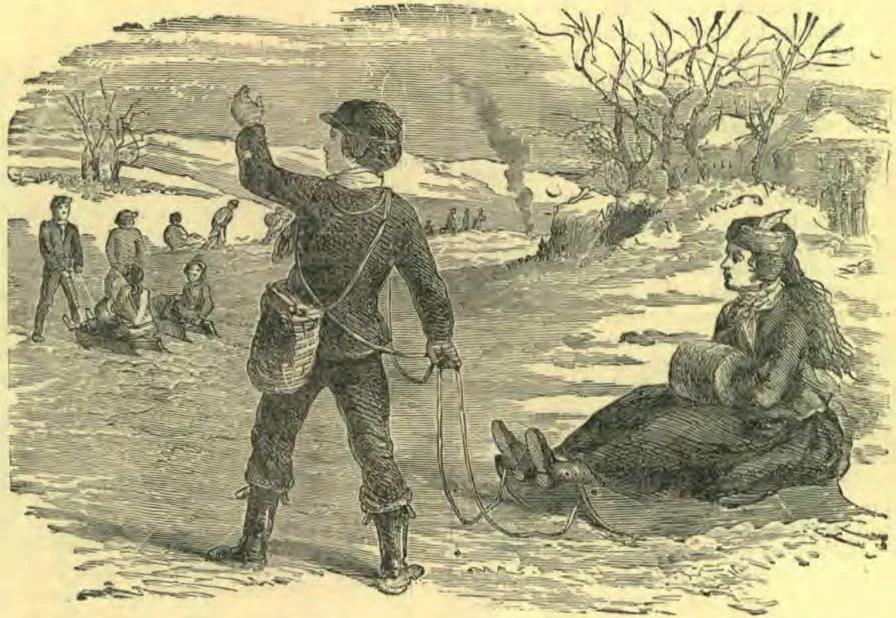
The cold wind had been blowing all day, and the sky was covered with heavy clouds. The boys were watching them anxiously, for surely it was too cold to rain, and perhaps it would snow. The teacher had great difficulty to keep the eyes of the scholars fastened on their books. The boys had long had their sleds all ready for the snow, but as yet they had been disappointed.
That night when school was out, the question eagerly asked by every boy was, “Do you think it will snow before morning?”
Sure enough that night there was a heavy fall of snow, and when morning came the ground was all white.
Fred Newton did his morning chores in an unusually short time, and soon had his sled at the door, waiting for his sister Helen to get bundled up so that he could draw her to school. A fine ride she had; but on the way they passed by Mrs. Hay’s, and saw May, one of their school-mates, sitting by the window. She was a delicate child, and having no good shoes, her mother did not dare to let her go to school through the deep snow.
The next morning, when Fred and Helen came to Mrs. Hay’s, Helen asked Fred to stop; she went in and told Mrs. H. that she wanted May to take her place on the sled, because she was better able to walk than May.
To this May objected; but Helen finally persuaded her to go, and so both of the girls were found in their places; and May looked so happy all day that Helen felt fully repaid for having given up her ride.
How many of the INSTRUCTOR family will try this winter and see how many of their school-mates they can make happy, by denying themselves a little pleasure?

LETTER BUDGET.

We wish you all a merry Christmas, dear children. You can all have one if you will. You may not have as many nice presents as some other little boy or girl that you know; but if you can do something to make others happy, you will have the happy in your own heart. Here is a letter from a little boy living in Birmingham, Mich. We are quite sure he will have a merry Christmas if he does as he intends:—
Dear Editors: I go to Sabbath-school every Sabbath. My little brother Leo fell from an apple tree last October and broke his arm; but he is doing well now. I have taken the INSTRUCTOR almost a year. My little brother and I like to keep the Sabbath. I wish you would pray for me, but I am very unworthy. I know a little boy whose name is Bertie, and he does not get any Christmas presents. I am sorry. I guess I will give him something this Christmas.
Yours truly, Ezra Mathewson.
Boulder, Col.
Dear Editors: I receive the INSTRUCTOR from week to week, and it is always welcome. I love to read it, especially the Letter Budget. We have a nice Sabbath-school here of about forty-five members. I want to be a true overcomer and meet the INSTRUCTOR family in the earth made new.
Yours truly, Carrie Hamilton.

THE USEFUL PLANT.

The main-stay of Chinese life is the bamboo. In fact, the bamboos of the Celestial Empire are more valuable than her mines, and, next to rice and silk, yield the greatest revenue. Let us enter a Chinese dwelling. Within, hanging upon the rafters, we see a number of hooks of prickly bamboo, on which hang pieces of dried meat and other provisions. In one corner are a water-proof coat and hat, each wrought out of leaves of bamboo. Elsewhere we observe agricultural implements, chiefly fashioned from this plant; and except a deal-top of the table, all the furniture of the simple abode is of the same material. The fishing-net, the baskets of diverse shapes, the paper and pens, the grain-measures, the wine-cups, the water-ladles, the chopsticks, are all of bamboo. The man who dwells here is feasting on the tender shoots of the plant. Ask him of his earliest impressions, and he will tell you that they came to him through the basket-work of a bamboo cradle. Speak of the end to which we are all hastening, and he will express a wish to sleep beneath some bamboo brake on a green hillside.—Cassel.

SURNAMES

Did you ever notice how few surnames there are in the Bible? That is because they had not come into fashion then. Until the eleventh century after Christ, surnames were not used in England. Some of them originated on this wise: They first had the single names, John, Andrew, James, etc. By and by, to distinguish Andrew, the son of John, they said, Andrew, John's son, and then made the last two words one; so in process of time we have Andrew Johnson, John Anderson, and Andrew Jameson.
Others were named from their occupations. There were Matthew the baker, and Timothy the barber, and Tom the smith, and James the butler, and John the carpenter.
In due time the names of their occupations became their surnames, and while the given name changed with each generation, the children have brought down the surnames derived from the pursuit of some remote ancestor.

NEBUCHADNEZZAR'S HUNTING DIARY.

Among the discoveries made by Col. Rawlinson, in the excavations of Babylon, was Nebuchadnezzar's hunting diary, with notes, and here and there a portrait of his dogs, sketched by himself, with his name under it. He mentions in it his having been ill; and while he was delirious he thought he had been out to graze like the beasts of the field. Is not this a wonderful corroboration of Scripture? Rawlinson also found a pot of preserves in an excellent state, and gave some to Queen Victoria to taste. How little Nebuchadnezzar's cook dreamed when making them, that twenty-five centuries after, the Queen of England would eat some of the identical preserves that figured at his master's table!—National Repository.

DON'T FORGET THE PENNY.

Little children, bring your penny Every Sabbath-day; Do not say you haven't any; Do not keep away. Many littles make a many, Don't forget to bring your penny.
HERALD ANGELS.
HERALD ANGELS.

You have reached the end of this edition.

The Youth’s Instructor · Dec 1879