The Youth’s Instructor, Vol. 35, No. 14.

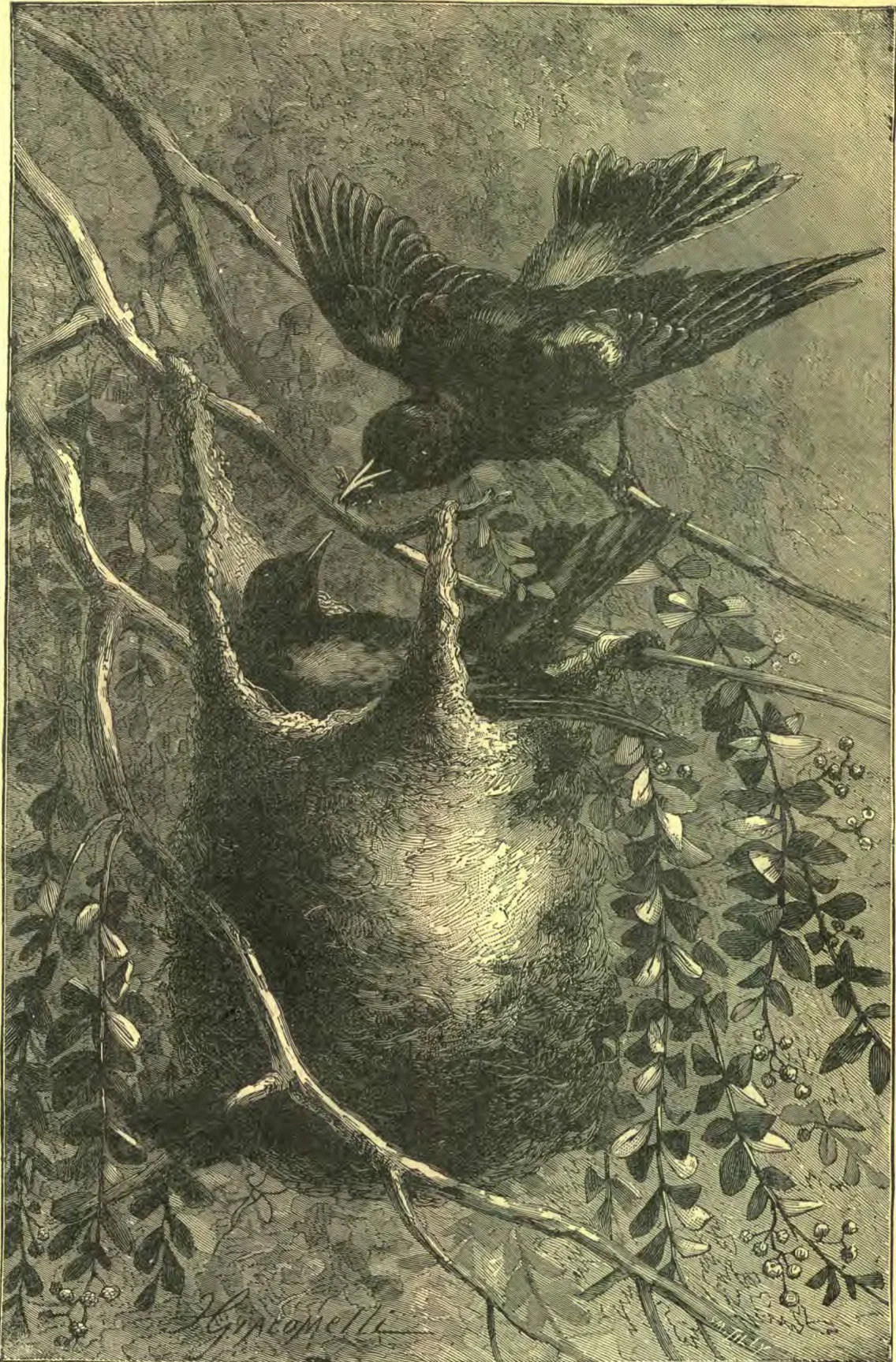
THE BALTIMORE ORIOLE
Earlier text: THE BALTIMORE ORIOLE

CHRONOMETERS

AN ILLUSTRATION.

Here is an engineer on a railroad line. He is furnished by the railroad company with a time-table and a watch. He is ordered by these to run his train. Trifling with his watch while on the road, he lets it fall. Lifting it, and listening to it, he finds the works are moving still. It may have been damaged, it doubtless has been; but just how much he cannot tell. He must run his train by his watch, and yet even if he does, he is liable, by reason of the damage it sustained when it fell, to wreck it somewhere upon the road. The company, anticipating such a possibility, has hung up a chronometer at every station where the train stops, and has enjoined upon the engineer at every such pause, to make comparison between the time that he carries in his pocket, and the other time that is indicated on the wall; and this precaution he neglects at his peril. And yet even that chronometer on the wall is not absolutely infallible. It has to be regulated by telegraph from Washington, and the Washington regulator takes its time from the stars; for nothing below the stars runs always right.
Even so our human consciences are like watches or chronometers that cannot be always implicitly relied upon; and hence God has given us the Bible, and it comes from away beyond the stars; and by this we must correct our consciences, or we shall be sadly out of our reckoning. To correct the Bible by our consciences is as preposterous as to presume to regulate the stars that God has made, by a watch of man's construction.—Baptist Teacher.

WHAT THEY SAY.

THE call for reports from schools outside of any State organization has met with several responses. A small but prosperous school is held at Marthaville, La.; also two in Manatee county, Southern Florida, one being held at Palma Sola, and the other at Palmetto. We are glad to learn of these schools in the far South, and hope next quarter to give a report from them.
Occasionally a cheering word comes from some Sunday-school organized by our people. Bro. D. C. Babcock writes from Frederica, Delaware: “Five weeks ago we started a little school here of four members, and it has now swelled to over fifty. We have a splendid interest. There are no Sabbath-keepers here, and only my wife and myself to teach. If the interest continues, we will be obliged to obtain a larger room. Almost all our scholars are young, and all study in Book No. 1.”
Whatever tends to make the youth more thoughtful, considerate, conscientious, and reverential may be considered true missionary work; and the Sunday-school is an admirable place for just such efforts. But to conduct one successfully will require time out of our working-days, and some self-sacrifice. Yet we believe it may grow to be a pleasure to the workers and a source of profit to all who attend.
Sr. E. H. Whitney sends an encouraging letter with her report from Basle, relating some of the difficulties they have had to overcome in starting this work in a foreign field, and speaking of the good outlook for the future. The Association is slowly growing, and all are trying to do earnest work. W. E. L.

Crooked Timber in the Lord's Hands

No doubt if we could have our way, we would have every one of the Lord’s trees as straight as an arrow, for we are apt to be out of patience with any crookedness—except our own—and yet the Lord has use for every stick of timber that grows; and some sticks, for aught we know, may be all the more useful, just because of the crooks which seem to us so seriously objectionable.—Selected.

THE REPORTS.

WE are glad to be able to go press with the most complete report we have had for several quarters. Every Association is represented; but some of the reports came so late that if it had not been for an accidental delay in the type-room, those reports would not have appeared. What can we say more than has been said to urge the secretaries of the schools to be prompt in reporting to the State secretary? Occasionally it happens that a blank fails to reach the school secretary. But that should be no valid excuse for not making a report; you should ask your State secretary for another.
From time to time the addresses of the secretaries are given, so that no school may be left to plead ignorance on that point. These blanks should reach you the week before the election takes place; then on the week following the election, let the one who has acted as secretary for the past quarter fill out the blank, and return it immediately to the State secretary. Do not put it off until you lose the report, or forget entirely about it. Do not make it necessary for the secretary to write three or four times before she can get your report. Let her have a chance to spend her time in other work that will benefit your school.
We want every State secretary's report in next quarter by the first of May, and in order to accomplish it, all must be prompt.

GENERAL SUMMARY OF S. S. REPORTS

For Quarter Ending Dec. 31, 1886.
NAMES OF STATES NAMES OF STATE SECRETARIES No. Schools reported Membership Average Attendance New Members Enrolled Dropped from Record Scholars Church Members Number of Classes Number of Members in Senior Division Lesson Book No. One Number Two Number Three Number Four Number Five Number Six Number Seven Number of INSTRUCTORS Taken Contributions Received Amount Sent State Association Amount State Sent Inter. Association
Canada Emma Dingman 6 142 88 3 6 61 20 77 181 23 11 2 55 $4 76 $.55 $3 30
California Jessie F. Waggoner 58 3033 1585 389 204 958 309 1002 314 159 102 72 70 98 1397 $526 35 $35 89 $16 55
Colorado Cora M. Jones 10 274 208 61 48 142 40 141 53 44 18 4 6 144 $68 58 $23 19
Dakota S. La. Ransom 14 453 346 27 38 243 62 189 77 50 50 24 25 23 199 $71 97 $3 04
Brit. Mis'n Mrs. J. H. Durland 8 141 121 12 6 62 20 73 15 37 46 $1 87 $1 50
Indiana Alice Lewis 46 1225 847 100 59 668 166 590 248 156 67 29 7 570 $93 68 $8 43 $75
Illinois Mrs. A. B. Tait 30 883 610 86 69 412 124 369 166 55 55 43 22 18 339 $120 43 $23 81 $5 00
Iowa Mrs. J. S. Hart 50 1599 1102 208 165 766 201 860 249 138 87 54 22 30 617 $146 15 $9 27 $1 00
Kansas Josephine Gibbs 57 1850 1349 259 161 1042 259 1000 342 119 75 29 4 481 $148 95 $17 81 $1 78
Kentucky Anna B. Coombs 7 101 73 9 27 40 14 63 30 40 $3 74
Michigan Vesta D. Miller 105 5985 2860 641 368 1042 588 2059 488 368 215 146 124 70 2288 $557 95 $60 52 $6 05
Missouri Vita Morrow 28 790 599 70 73 120 114 428 128 77 83 18 31 4 349 $71 83 $5 19 $8 80
Maine A. K. Hersum 14 202 144 4 3 5 32 53 109 $16 25 $2 46 $.20
Minnesota E. S. Babcock 67 1947 1416 264 188 979 255 1044 344 190 135 80 43 28 729 $219 59 $16 53 $1 65
New York Mary W. Keim 18 398 279 35 37 223 59 228 37 20 25 19 7 1 5 182 $51 03 $4 06 $1 57
N. Pacific Carrie L. Brooks 15 356 273 85 64 175 66 177 85 37 33 16 6 147 $69 78 $5 83 $2 00
N. England E. D. Robinson 23 615 458 118 87 357 89 382 82 43 38 7 15 17 485 $149 84 $15 00 $1 50
Nebraska W. D. Chapman 24 706 505 75 62 328 91 324 108 71 43 30 264 $75 17 $5 97 $.60
Ohio Nellie L. Bebe 48 1161 775 115 117 559 167 580 195 102 75 44 12 9 586 $129 97 $11 24 $1 10
Penn. Mrs. F. C. Oviatt 44 826 553 54 59 230 128 408 161 77 55 21 14 5 5 342 $73 18 $7 04 $.70
Switzerland E. H. Whitney 13 298 227 37 44 $23 23 $2 61
Tennessee W. T. Dorch 3 108 70 1 15 59 13 66 4 11 44 $5 96 $.48 $.50
Texas Mrs. Lee Gregory 9 319 203 26 20 144 37 149 50 15 37 38 20 103 $7 40 $1 10 $15
Vermont Mrs. F. S. Porter 21 428 275 35 37 194 58 207 51 30 10 20 5 10 173 $31 41 $2 12 $18
Virginia Amy A. Neff 5 120 68 4 2 59 16 44 38 12 8 36 $3 62 $.05
Wisconsin Nellie C. Taylor 66 1607 1160 171 154 723 231 670 258 169 94 77 32 36 11 579 $119 30 $9 64 $5 89
U. Columbia Mrs. M. A. Kerr 5 144 106 20 20 80 19 80 15 16 17 1 3 82 $32 00 $1 35
Isolated 1 18 14 5 2 3 6 12 $7 17 $.76
Totals 795 22729 16304 2767 2091 10671 3168 11269 3563 2019 1283 774 457 351 38 10886 $2830 61 $274 68 $57 78
WINNIE E. LOUGHBOROUGH, Secretary International S. S. Association.

RUINED CITIES OF CEYLON.

Not alone the extensive ruins of artificial waterworks attest the vast amount of population that anciently peopled the island of Ceylon, but equally so do the remains of great ruined cities in the interior of the island. There are many of these, some of them, in their description, as wonderful as are the buried cities of Central America. To give the readers of the INSTRUCTOR some idea of their magnitude, we will give a few extracts from the writings of Sir S. W. Baker, from whom we quoted in the last INSTRUCTOR. He says:—
“The ruins of ‘Anaradupoora,’ which cover 256 square miles of ground, are all that remain of the noble city which stood within its walls in a square of sixteen miles. Some idea of the amount of population may be arrived at, when we consider how very many inhabitants occupy all houses and towns in India. Millions must, therefore, have streamed from the gates of a city to which our modern London is comparatively a village.
“The ruins of ‘Anaradupoora’ are the largest in extent, and the buildings appear to have been more lofty, the great dagoha having exceeded 400 feet in height; but the ruins do not exhibit the same ‘finish’ in the style of architecture which is seen in the remains of other towns.”
“‘Toparé,’ anciently called ‘Pollanarua,’ stands first among the ruined cities. It appears to have been laid out with a degree of taste which would have done credit to our modern towns. Before its principal gate stretched a beautiful lake of about fifteen miles in circumference (now only nine). The approach to this gate was by a broad road, upon the top of a stone causeway, of between two and three miles in length, which formed a massive dam to the waters of the Lake which washed its base. To the right of this dam stretched many miles of cultivation; to the left, on the farther shores of the lake, lay park-like grass-lands, studded with forest trees, some of whose mighty descendants still exist.”
His description of the scene from the causeway, as it must have appeared to one approaching the city, is beautiful indeed. After the gates are entered, he says:—
“A broad street, straight as an arrow, lies before us, shaded on either side by rows of palms. Here stand, on either hand, the dwellings of the principal inhabitants, bordering the wide space, which continues its straight and shady course for about four miles in length. In the center, standing in a spacious circle is the great Dagoha, forming a grand coup d’œil, from the entrance gate. It rears its lofty head 260 feet from the base.
“This dagoha forms the main center of the city, from which streets branch off in all directions, radiating from the circular space in which it stands. The main street from the entrance-gate continues to the further extremity of the city, being crossed at right angles in the center by a similar street, thus forming two great main streets through the city, terminating in four great gates or entrances to the town,—north, south, east, and west.
“Continuing along the main street from the great Dagoha for about a mile, we face another Dagoha of similar appearance, but of smaller dimensions, also standing in a spacious circle. Near this rises the king’s palace, a noble building of great height, edged at the corner by narrow octagon towers. At the further extremity of this main street, close to the opposite entrance-gate, is the rock temple, with the massive idols of Buddha flanking the entrance.
“There are innumerable relics, all interesting and worthy of individual attention, throughout the ruins on a surface of many miles, but they are mostly overgrown with jungle or covered with rank grass. The most interesting, as being the most perfect specimen, is the small rock temple, which, being hewn out of the solid rock, is still in complete preservation.”
“This, from the form and position of the existing ruins, we may conceive to have been the appearance of Pollanarua in its days of prosperity. But it has passed away like a dream; the palaces are dust; the grassy sod has grown in mounds over the ruins of streets and fallen houses: nature has turfed them in one common grave with their inhabitants. There is their hand-writing upon the temple wall, upon the granite slab which has mocked at Time; but there is no man to decipher it. There are the gigantic idols before whom millions have bowed; there is the same vacant stare upon their features of rock which gazed upon the multitudes of yore; but they no longer stare upon the pomp of the glorious city, but upon ruin, and rank weeds, and desolation. No mortal can say what fate befell those hosts of heathens, nor when they vanished from the earth.”
But the following historical facts make it seem most plausible that the decay of the great cities of this island were caused by famine:—
“In those days the kings of Ceylon were perpetually at war with each other. The Queen of the South, from the great city of Mahagam in the Hambantotte district, made constant war with the kings of Pollanarua. They again made war with the Arabs and Malabars, who had invaded the northern districts of Ceylon; and as in modern warfare the great art consists in cutting off the enemy’s supplies, so in those days the first and most decisive blow to be inflicted was the cutting off the ‘water.’ Thus, by simply turning the course of a river which supplied a principal tank, not only would that tank lose its supply, but the whole of the connected chain of lakes dependent upon the principal would in like manner be deprived of water. A population of some millions wholly dependent upon the supply of rice for their existence would be thrown into sudden starvation by the withdrawal of the water.”

SUGAR FROM CLOTH FIBER.

No doubt you have often heard it remarked that sugar may be made from rags; but you did not believe it, as you did not know how it could be true. It is true, nevertheless, and here is the process as given by the publishers of the Chicago Inter Ocean:—
“The chemical composition of a molecule of sugar is, twelve atoms of carbon, twenty-two of hydrogen, and eleven of oxygen. Cellulose, or vegetable fiber, has in each molecule six atoms of carbon, ten of hydrogen, and five of oxygen. The same elements are used, it will be noted, but in slightly differing proportions. Cellulose constitutes the woody portion of all vegetable substances, and linen and cotton are almost pure cellulose, other vegetable matters having been altogether thrown off in the process of manufacture. This substance, by being combined with sulphuric acid, is susceptible of a change which alters the proportion of its elemental atoms, and converts it into dextrin [a substance which readily turns into sugar], or into grape sugar, according to the mode of treatment. If a quantity of lint or any linen or cotton rags shredded small is placed in a glass vessel and twice its weight of sulphuric acid is gradually added to it, at the same time constantly grinding, or rubbing the rags to pieces, the fibers slowly swell up and disappear without liberating any gas, and a tenacious mucilage is formed. This contains a large quantity of dextrin, and if it is diluted and boiled four or five hours, it becomes converted into grape sugar.”
“Afterward chalk is added to it, when it is thoroughly filtered, and then evaporated by a gentle heat to the consistence of syrup. This, by standing a few days, will become a firm, candied mass. If it is now passed between folds of porous paper or linen, dissolved in water, then clarified with animal charcoal, it crystallizes again into perfectly white grape sugar, or glucose.”
“Hemp, linen, or cotton treated in this way will give one per cent of its weight in grape sugar. We do not think the process is extensively used in making sugar or syrups, as the yield is too small to give a profit. The glucose generally used for the adulteration of cane sugar is obtained from Indian corn, potatoes, or wheat, by the conversion of the starch in these substances into sugar.”

FAITH

LESSON 1.—THE SIMPLICITY OF FAITH.

1. Does God take an interest in even the humblest of his creatures? Luke 12:6; Matt. 10:29.
2. If God thus regards dumb animals, how would we expect that he would regard man, made in his own image?
3. What does our Saviour say upon this point? Luke 12:7.
4. How does he teach the same truth by referring to inanimate nature? Verses 27, 28.
5. What practical lesson does the Saviour teach from this manifestation of God’s care for his creatures? Verses 29, 30, margin.
6. What will make these promises of temporal blessings sure? Matt. 6:33.
7. In what other way does Christ illustrate his care for his people? John 10:11.
8. What intimate relations exist between the shepherd and his sheep? John 10:14.
9. What has the good shepherd done for his sheep? John 10:15.
10. Of what is this a pledge? Rom. 8:32.
11. By whom are the promises of God made sure to his people? 2 Cor. 1:19, 20.
12. Of what would we be guilty should we doubt the truthfulness of these promises? 1 John 5:10.
13. What is it to accept them without question or doubt?—Faith.
14. What is faith?—Belief; the assent of the mind to the truth of what is declared by another, resting solely and implicitly upon his authority and veracity; reliance on testimony.—Webster.

NOTES

THE multiplicity of precious promises in the Bible, and those especially which relate to matters of everyday occurrence, should impress the mind with God's tender and merciful care over all of his creatures. No being created is beneath his notice; and when we can see God in everything, a sense of his providential care becomes so interwoven in our natures that we can but trust him in all things. He would have us look for Divine providence in every event with which we are connected in life.
THE shepherd always manifests particular care for the lambs and those sheep which become exhausted and weary. It is those alone which he takes in his arms and bears to a place of safety. So God, when his people are torn and wearied with the buffetings of Satan until strength is gone, and their ability to cope with the enemy fails, does not leave them to be destroyed, but bears them to a place of safety from the wily foe.

CAN BIRDS TALK?

A party of ladies and gentlemen, sitting on the piazza of a house near the sea-coast, noticed that there was a great disturbance among a number of fish-hawks which had lodged upon a tree some distance off. On investigation, the gentlemen found that some sportsman had wounded a hawk, and the loud screaming and shrieking proceeded from a party of others who had gathered around their suffering comrade. The proposition was made to kill the wounded bird and get it out of its misery, but the conduct of the others was so strange that it was decided to wait awhile and see what would happen.
All night long the noise continued, the cries of the wounded bird mingling with the screams of the others, who seemed to be encouraging and consoling it. In the morning, nearly all the other birds retired, but it was noticed that at intervals during the day one hawk after another would appear, and that each brought something in the way of food for the sufferer. Finally at night-fall a whole delegation arrived, and the noise and confusion increased tenfold.
By the aid of a field-glass the observers were able to distinguish one bird larger than the rest, a perfect hawk giant, in fact. Presently there was silence. The giant hawk rose in the air to a good height; then circling downward, as hawks do when about to seize their prey, he descended upon the wounded bird, and seizing it in his claws, bore it away.
What can we conclude? Animals and birds never prey on their own species. Where was the giant hawk in the beginning? What did he want to do with his wounded relative? Can we think but that the other hawks discovered their comrade’s plight, pitied him and fed him, and sent messengers from among the party to find the giant hawk, and bid him come to the rescue?
Surely we ought not to think or say that birds and beasts have not an amount of intelligence of which we can know nothing, and that they have not powers of communication with each other equal to our own.—Selected.

COTTON SPINNING.

Since Hargreaves invented the “spinning-jenny,” cotton spinning has become an important industry. This man was a weaver near Blackburn, and one day, when his spinning machine was overturned, he noticed that the wheel and spindle continued to revolve; he caught a bright idea, and soon he invented a machine which would spin twenty threads with no more labor than was required to spin one before. The thread lacked firmness, however, and the invention was completed by Arkwright, who gave to the world the spinning frame, which spins a vast number of threads of any degree of firmness and hardness. The machine has now been vastly improved, but the principle remains the same, which is to make rollers do the work of human fingers, and do it better and with far less cost. The value of Arkwright’s invention to England and to the rest of the world is beyond estimate. The inventor had a hard time of it. The mob of weavers arose, for they feared they would be thrown out of work, and destroyed the machines wherever found, and only ceased through fear of the sword and the halter. Then a mob of rivals arose who invaded his monopoly, and vexatious lawsuits ensued, but Arkwright won a triumph and was honored in his age.
About this time another inventor, by the name of Crompton, was busily at work and gave to the world the spinning-mule. He worked it in a secluded room of an old mansion. Suspicion was aroused, for the yarn which he offered for sale was finer and firmer than had ever been produced, and the price which he received for it was high. Every effort was made to find out his secret, and he saw that he must either destroy his machine or give it to the public. He chose the latter alternative, and others were enriched by it while he remained poor.—S. S. Classmate.

TO KEEP THEM FROM STICKING.

To keep postage stamps in the pocket or memorandum-book without sticking, a New Orleans post-office clerk advises people to rub the sticky side over the hair two or three times. The oil of the hair coats the mucilage and prevents it from sticking.

A MEXICAN INDUSTRY.

The cactus plant is to be worked up systematically by a company which is forming in Mexico, the oil to be used for lubricating purposes, the fiber for cordage, the leaf for paper, and the fruit for eating.

UNDER THE LEAVES.

Violet! Violet! I wonder how you knew! All the earth is cold and wet; Not a tree has budded yet; Tell me, will you?—tell me true! Did God whisper “Spring” to you?
Violet! Violet! I never should have known. “No,” I said,—“no flowers yet!” Then, beneath the brown leaves wet, Hiding near a mossy stone, There I found you all alone!
Violet! Violet! Do you not feel afraid? Do you never frown or fret At the spring-time cold and wet? Do you like this quiet shade, Where the dead brown leaves are laid?
Violet! Violet! I wish that I could be Just as free from fear and fret, Patient through the cold and wet; For the dear Lord sends, I see, Spring-time sure to you and me.
Violet! Violet! Lift up your little head. Why, your pretty face is wet! Not with tears,—you’re smiling yet. Do you know what I have said? By your trust I will be led!
—Jennie Harrison.

DANIEL IN THE LION'S DEN.

THERE is a very interesting story in the Bible about how the Lord delivered one of his servants from death. A good man by the name of Daniel once lived in the court of a heathen king. The king loved him very much, for Daniel was faithful in all his work, so that no fault could be found with him. But some wicked men were envious of Daniel, and wanted to kill him. So they laid a plan to have Daniel slain. They made a decree, or law, that no one should ask a petition of any one but the king for thirty days; and that if he did, he should be cast into a den of hungry lions. Now Daniel made a practice of asking God three times a day for the things he needed. So at this he did not stop praying. He kneeled right down with his window open, as he had always done, and prayed to God.
These wicked men watched him. When they saw him pray, they were glad. They thought they had caught Daniel now. They went and told the king. You may believe the king felt very sorry for Daniel; but as he could not change the law, he had to do what he said he would.
Daniel was brought, the den was opened, and he was thrust right down among those fierce lions. Of course it looked as though he would be eaten up at once. The lions were very fierce, and they were accustomed to tear to pieces anything that was thrown to them. The stone was rolled upon the mouth of the den, and there Daniel was left all night.
In the morning the king went to the den with a very sad heart. He had just a little hope that Daniel might be alive, that in some way the Lord would protect him. So he called to Daniel, and then listened. “Then said Daniel unto the king, O king, live forever. My God hath sent his angel and hath shut the lions’ mouths that they have not hurt me.” The king was rejoiced, and his servants took Daniel out unharmed.
What a remarkable thing that was! There Daniel sat among those fierce lions. Perhaps he lay down and slept all night; but they did not touch him. An angel of God was sent from heaven and protected Daniel.
Thus the Lord always watches over his children, and many and many a time he has saved them by his angels, just like this. After Daniel was taken out, those wicked men were cast into the lions’ den; but they did not fare so well. There were no angels of God there to take care of them, and they were soon devoured by those ferocious beasts. This teaches us, children, that it is always safe to obey God and trust in him. D. M. CARRIGHT.

Letter Budget.

ORPHA SOULE, a little girl eight years old, writes a letter from Montcalm Co., Mich. She says: “I enjoy reading the letters in the Budget so much I thought perhaps some would like to hear from me. I have two sisters, one six, and the other two years old. We attend Sabbath-school. We have a good school, in which we sing every Sabbath. I study Book No. 2. I am trying to do something for the Lord. I am going to save all my pennies for the South African Mission. I raised a missionary garden year before last, and did most all the work in it myself. I sold what I raised in it to papa for one dollar, and gave it for a Christmas offering. This year I washed dishes for mamma, and my sister carried water to earn our money for a Christmas offering. Mamma said we must work and earn our money for the Lord, and then he would be pleased. I want to be a good little girl, and at last be saved.”
Shall you not try gardening again, Orpha? May be you could raise some chickens too, or sell some eggs. After awhile there will be small fruits to pick, and little boys and girls who are willing to sacrifice some of their playtime, can most all find some way to earn money.
ALMA GRAF, of Blue Earth Co., Minn., writes: “Having been much interested in reading the Budget, I thought I would write a letter myself. I am eleven years old. I have a brother eight years old, and one three years old. We live only a few rods from the church, which we can attend every Sabbath. Our Sabbath-school numbers eighty. I study Book No. 3. Only about five years ago there was only one family in this place keeping the Sabbath, and now we have a large church. Grandma is staying with us. I persuaded two of my school-mates, aged eleven and twelve years, to come to Sabbath-school with me, and now they are keeping the Sabbath far away in Ohio, although their parents do not keep it. I am trying to overcome evil, so that when Jesus comes I may be saved in the new earth.”
That is the best kind of missionary work,—to get the children interested in the Sabbath-school. We wish there might be very much more of it done. Those who would have some sheaves to their credit when the final rewards are distributed, must lay them up now. How many of our little people are doing this?
ELLA MANLEY writes from Snohomish Co., Wash. Territory. She says: “Will you allow a poor little girl to join your large circle of good children? I am trying to be good also. I am twelve years old. I have one sister and two brothers. We do not go to church or Sunday-school, as we live far out in the country, and have no chance to go. I should like to go to Sunday-school and read in a numbered book, such as the other children tell about in their letters. I have the Holy Bible to read, and I am trying to be happy and contented. We have the INSTRUCTOR to read also, and we all like it very much. I hope I may meet all the INSTRUCTOR family in the new earth.”
You are thrice welcome to our circle, dear Ella; and so are any others who are trying to be good, or have the least desire to be good. All such we would twine our arms about, and lead heavenward. It is commendable in any one to be contented with what seems best for him, even as Ella is trying to do. Does it not become us to feel an interest in those who have fewer blessings than we have? and in this instance, if any one has an extra copy of a Lesson Book, would it not be a kindly act to send one to this little girl? We think she would make good use of it.
LAURA J. TROWBRIDGE, a little girl eleven years old, of Multnomah Co., Oregon, writes her first letter to the Budget. She says: “I study in Book No. 4. I keep the Sabbath with mamma and my sisters. I was baptized last May, at the close of the camp-meeting. I am trying to be a good girl, and want to meet you all in heaven. Papa is not a Sabbath-keeper, and I ask all the readers of the INSTRUCTOR to pray that he may see the truth and accept it. My sister helped me compose my letter, and copied it for me.”
Yes, we must all remember Laura’s papa, and the requests of others, that their friends may obey the truth.
LILLY BELL ANDRUS, of Todd Co., Minn., writes: “I am a little girl almost six years old. I go to Sabbath-school almost every Sabbath, but to-day it was so cold I could not go. I study in Book No. 1. My aunt is my teacher. I live with my sister. I can help her work. I can wash dishes, sweep, sew, and take care of my nephews, Walter and Orville. Walter is two years old. I try to be good to him so he will learn to be good. I send my love to all. My sister wrote this for me.”
A useful little girl, truly. May Walter and Orville be like her in all that is lovely.
LINNIE GOWELL writes from Newaygo Co., Mich. She says: “I am eleven years old. We take the INSTRUCTOR, and I go to Sabbath-school. I learn my lessons in Book No. 3. I am trying to be a good girl so I may have a home in heaven.”

You have reached the end of this edition.

The Youth’s Instructor · Apr 6, 1887