Your ShelfYour Projects

Signs of the Times, Vol. 27, No. 22.

LIGHT—RECEIVED OR REJECTED
Earlier text: Drilling for the Great Boycott

A PLEA FOR HOME MUSIC.

“Play something for us, Maude.”
“O mother, don’t ask me. I’m out of practise. I haven’t touched the piano in a month.”
“But any little simple thing will please your father, child. He likes to hear his old favorites, the tunes and variations you knew before you went away to study. Often since we’ve been alone he’s looked at the piano, shut up there cold and dumb, and said, ‘It won’t be like that when Maude comes home.’”
The young girl shrugged her shoulders irritably, a trick she had learned from her music master, and answered positively, “I have forgotten those silly jingling things, mother, and I wouldn’t play them if I could. As soon as I’ve gathered myself together and feel that I can do myself justice, I’ll play, but not just yet.”
The mother sighed. She and her husband had made many sacrifices that Maude’s musical education should be complete. The cost of her lessons, of keeping her in town, of buying her the new instrument, and furnishing her not only with music but with opportunities to hear great performances, had been a severe tax on their resources and on their strength. Now she was acknowledged to be an accomplished musician, wonderful for an amateur, aspiring to be a professional, yet Mr. Burrows shook his gray head sorrowfully as he confided to his wife: “We never get any good from it at all. Seems as if Maude doesn’t get any good from it herself.”
At prayer-meeting, the week after her return from a year’s absence, it happened that the pastor’s wife, who usually played the hymns, was absent. The minister asked whether some of the young ladies would not take her place for the evening, and had pointedly addressed Maude, after a pause of silence and waiting: “Will you not help us, Miss Burrows?”
Maude had declined, to the deep disappointment of the old people, to whom it appeared incomprehensible that after all her study she should not be able to render so small a service. Fortunately, the pastor played a little himself, and was not, therefore, entirely dependent upon others; but he said to his wife later, and she agreed with him, that he thought any young woman who played at all might learn to play simple sacred melodies so that at a moment’s notice, if the occasion arose, she could be of use in a Gospel meeting. In this opinion the minister does not stand alone. There are many who share it with him.
A thorough musical training, with its discipline of ear and hand, its marvelous technique and its intellectual breadth, need not wholly exclude the less while it gives the freedom of the large. The girl whose own refinement of taste is satisfied only with classical music may still, if she chooses, give rare pleasure to a homely audience of her own people and her neighbors to whom the harmonies she prefers are an enigma to which they have no clue.—Margaret E. Sangster.

MISSION FIELDS AT OUR DOORS.

The Indians.
The war with Spain resulted in the United States acquiring several island possessions, thus placing some needy mission fields under the American flag. But we do not have to enter these islands to find heathen to be labored for; they are not at, but within, our doors.
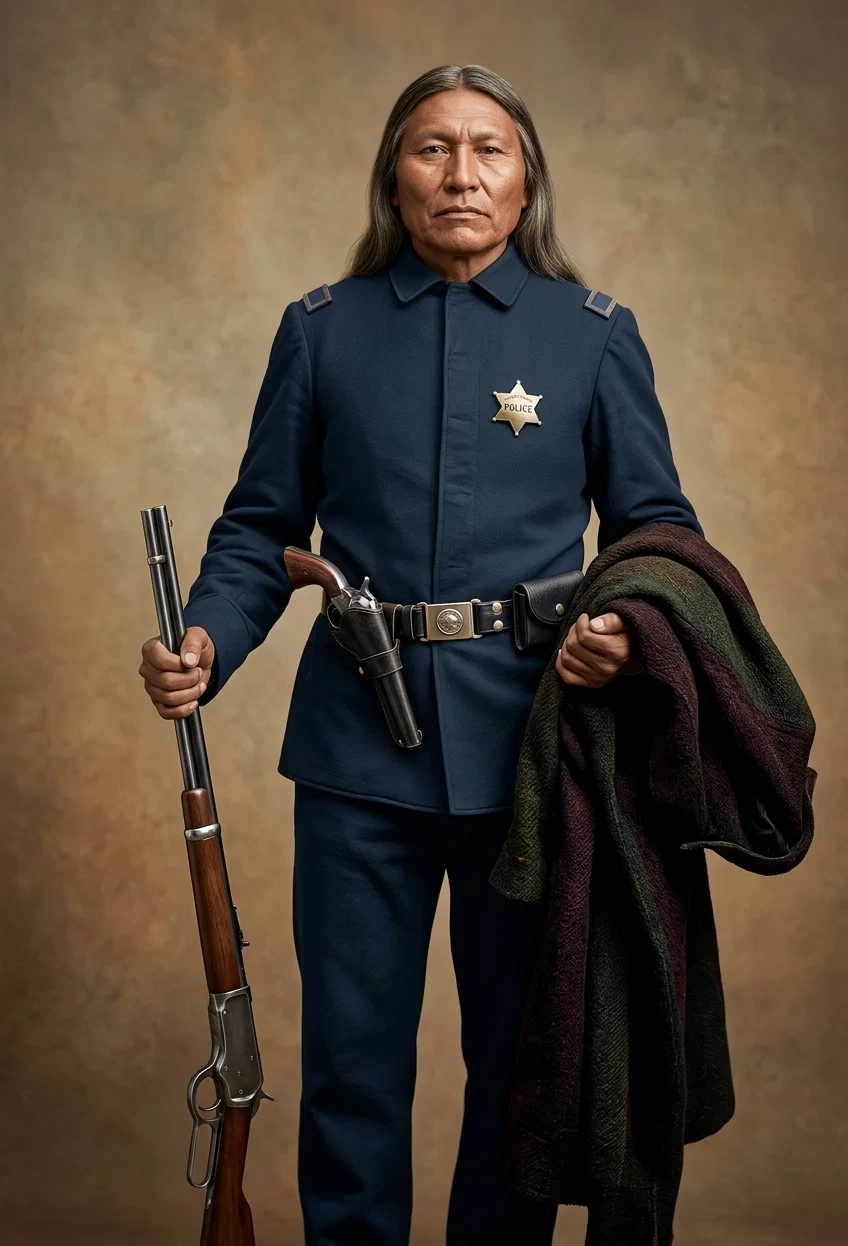
Black Coyote, Chief of Police.
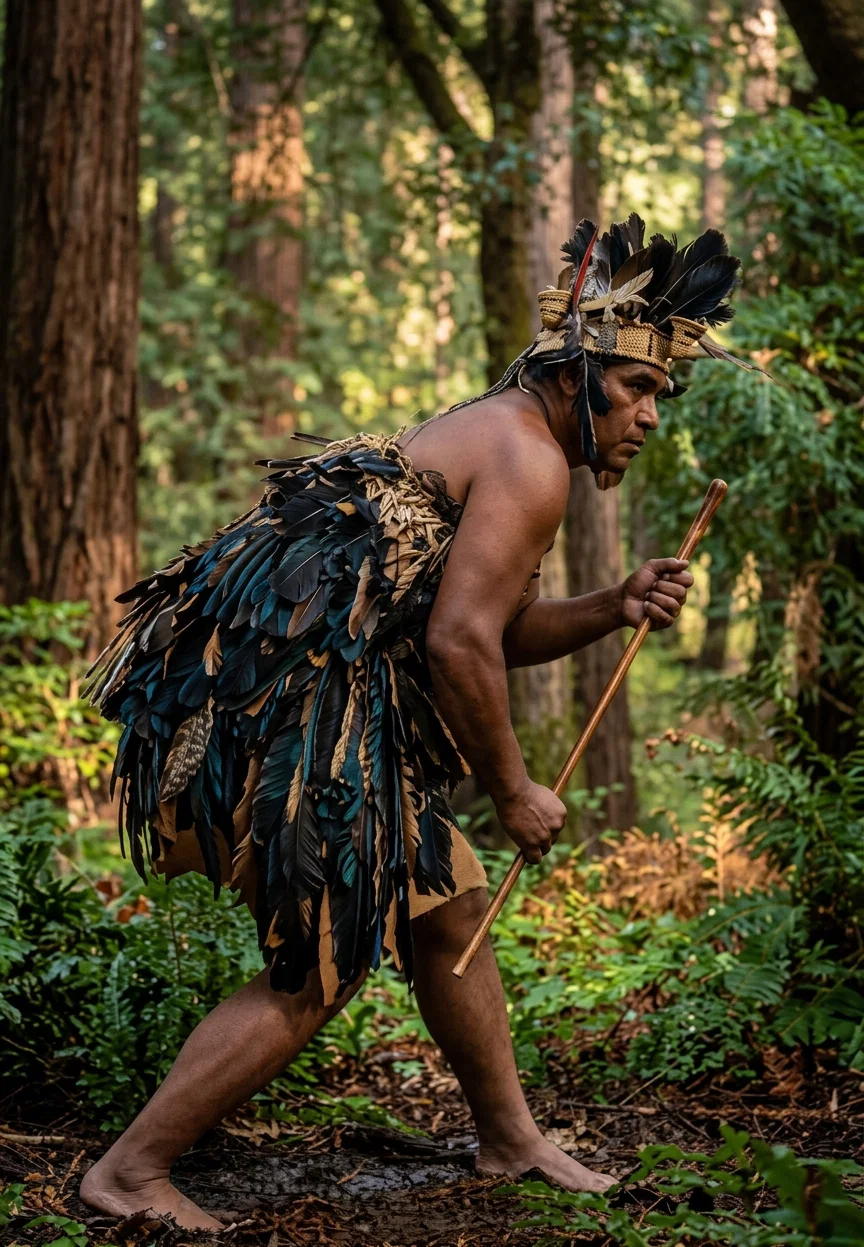
Pomo Indian in Dancing Costume made from Eagles' Feathers.
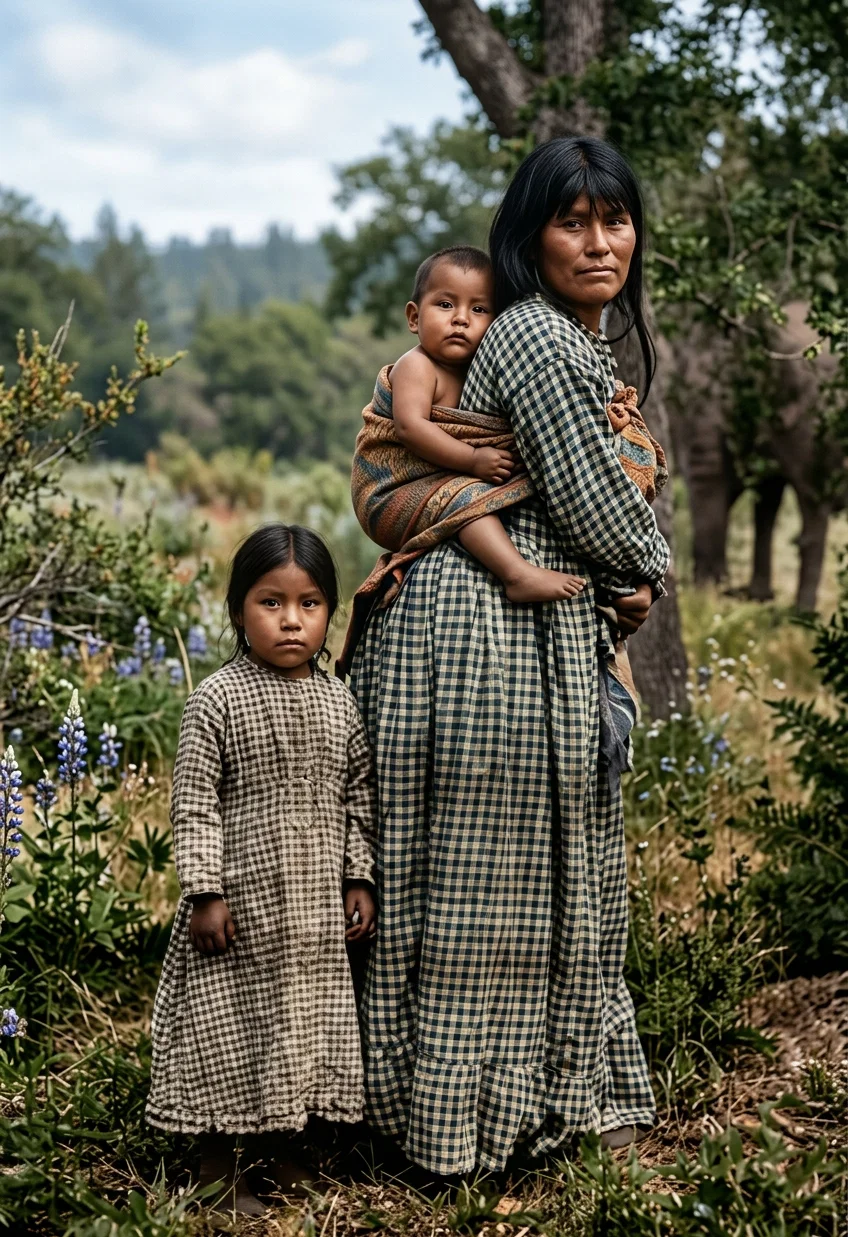
Pomo Indians, near Ukiah, Cal.
In crossing the plains by the Santa Fe route, one is almost sure, at some of the desert stations, to see companies of Indians. Their scanty dress is not over-clean, and their long, matted hair seems never to have made the acquaintance of comb, brush, or water; and what wild, unkempt creatures they are!
The wistful faces of the women and children appear at the car windows, at the doors, anywhere where they can gain access to the passengers. The squaws offer for sale quaint, grotesque, not to say hideous, wares, specimens of Indian pottery; and they will willingly take any food the passengers may have to spare. While the squaws are begging or bargaining, the “braves” stand in the background. Poor and degraded as these desert tribes are, Christ died for them; and how much they need the uplifting, refining influence of the Gospel.
At other places along the line are the low adobe huts of the Mexicans, and occasionally groups of swarthy laborers are to be seen. These, too, need Christ and the pure Gospel.

Indians in the United States.

The census of 1890 showed the entire Indian population of the country to be 250,000. Of these, 96,000 were civilized. In 1900 there were 134,158 untaxed, or uncivilized, Indians. These figures do not include the natives of Alaska, nor the many thousands of civilized Indians, who own and cultivate farms, or engage in other industries, pay taxes, and are reckoned as citizens.
It is frequently said that the Indians are dying out; but the “Encyclopedia of Missions” quotes figures and authorities to show that this is not the case. There were 12,593 Cherokees in 1809; in 1884 the tribe had increased to 24,100; and this gain was made notwithstanding the high death-rate when in 1838 the tribe was removed to the Indian Territory. The Navajo tribe doubled its population in fifteen years, from 1873 to 1888. These are marked instances; but careful estimates show that the people as a whole are increasing in numbers.

Early Missions.

Roman Catholic missionaries were first in this field. The Jesuits entered Nova Scotia and Maine in 1612; and there are still many Catholic Indians in Canada and Maine. A bishop and five priests minister to the Catholic Indians of Michigan. The Catholic bishop of Indian Territory has more than 5,000 native communicants in his diocese. But in most places the work of the Spanish priests in the southern part of the United States has been much less fruitful of permanent results.
In 1643 the first Protestant mission work among the Indians was begun in Martha’s Vineyard, by a son of Governor Mayhew. This young missionary was lost at sea in 1657; and altho Governor Mayhew was then seventy years old, he studied the Indian language, and took up his son’s work. “He spared himself no pains, often walking twenty miles thru the woods in order to preach or to visit the Indians.” He continued to preach until his death, in the ninety-third year of his age; and with the assistance of native helpers, he was enabled greatly to extend the influence of the Gospel.
Four generations of Mayhews labored among the Indians, their ministrations extending over a period of seventy-seven years, from 1643 to 1720. In 1651, when there were 190 converts, the first school for the Indians was established. In 1670 the first Indian church with a native pastor was organized. There were 3,000 adult believers at this time. In 1709, Experience Mayhew, a great-grandson of the governor, translated the Psalms into the Indian language, and later he translated John’s Gospel.
John Eliot, “the apostle to the Indians,” began missionary work in Eastern Massachusetts in 1646. Christian Indians were gathered into towns, which were governed by native magistrates; schools were started, and the industries of civilization were taught. By 1674 fourteen “praying-Indian towns” had been established. Previous to this the entire Bible had been given to the Indians in their own language. The first edition was issued in 1663, and this was the first Bible printed in America. Its translation was the crowning work of Eliot’s life.
In the year 1675 King Philip’s War broke out. This bloody war has been called “the last great struggle of the native tribes of New England against the race of foreigners who were gradually, but surely, crowding them out of the land of their fathers.” The Christian Indians were loyal to the whites, and rendered them invaluable aid. But the exasperated authorities looked upon them with suspicion. They made cruel war upon them, and their communities were nearly or quite destroyed.
After King Philip’s War, efforts to Christianize the Indians were made at different times by various churches and individuals, often with a good degree of success for a time. But the frequent wars interfered seriously with missionary work. The Christian Indians were great sufferers in these wars. Again and again their communities were broken up and their villages burned. No doubt many, in these trying times, remained faithful to the light they had received; but many others, in their discouragement, returned to heathenism, or became drunken vagabonds.

Later Missions.

In 1810 the American Board of Commissioners for Foreign Missions was organized. Five years later it began work among the Cherokees. From this time to 1883, when its Indian missions were transferred to the American Missionary Association, 512 of its 1,600 missionaries had been sent to the Indians. Its work had been interrupted by Indian wars and massacres, and by the roving habits of the people; but up to this time the board had had, “among the Indians, 15 different missions, 500 missionaries, 45 churches, 3,700 church-members, and had reached 100,000 Indians.”
Work among the Indians is still continued by the leading Protestant churches and several unsectarian societies. As a result of the efforts put forth in their behalf, five tribes of the Indian Territory—the Cherokees, Choctaws, Creeks, Chickasaws, and Seminoles—have made such progress that they are reckoned as civilized. They live in houses, and cultivate farms, and carry on other industrial pursuits. They have churches, and support their own schools. These tribes are self-governing. They have, “besides the principal and subordinate chiefs, a council, which corresponds in many respects to the legislature of a State. They also have simple codes of laws, and courts to enforce them.”
Exclusive of these tribes, there were, in 1889, 163 missionaries laboring among the Indians, having under their care 21,922 church-members. Mission and training schools have been established, where the pupils are taught, not only from books, but agriculture and other industries that make them self-supporting.
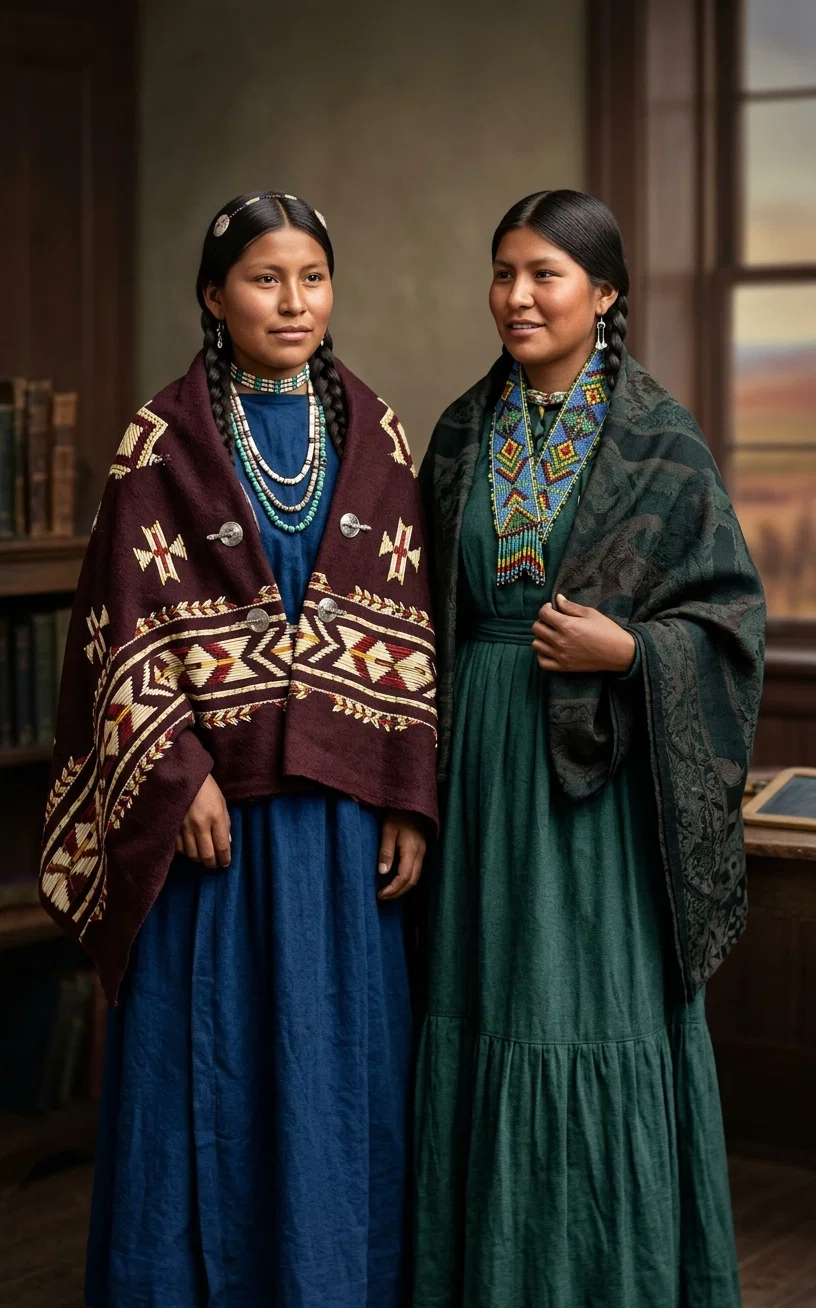
Pupils from the Arapahoe School.
But notwithstanding all that has been done, there is still, among these children of the forest, a wide field for the Christian worker. The latest reliable statistics at hand show that there are within the United States fifty-six tribes or portions of tribes destitute of missionary aid; and when all mission, contract, and government schools are filled, there are still 20,000 Indian children unprovided for.
To many readers of the Signs it will be interesting to know that the Sabbath truth has gained some adherents among the Indians. The Mohawks, one of the tribes comprising the famous confederacy known as the “six nations,” have lands in Canada. In one of their settlements twelve persons have accepted the special truths of the advent doctrine, and one of their number represented them in the good conference recently held in Battle Creek.
E. J. B.

PERFECT TRUST.

O, FOR the peace of a perfect trust, My loving God, in Thee; Unwavering faith that never doubts Thou choosest best for me.
Best, tho my plans be all upset, Best, tho the way be rough, Best, tho my earthly store be scant; In Thee I have enough.
Best, tho my health and strength be gone; Tho weary days be mine, Shut out from much that others have, Not my will, Lord, but Thine.
And e’en tho disappointments come, They too are best for me, To wean me from this changing world, And bring me nearer Thee.
O, for the peace of a perfect trust, That looks away from all; That sees Thy hand in everything— In great events or small.
That hears Thy voice—a Father’s voice— Directing for the best; O, for the peace of a perfect trust, A heart with Thee at rest.
—Selected.

INDIAN PRIESTS.

The priesthood of the country has been considered by those long familiar with the subject to have done more than any other agency to keep the tribes from becoming civilized. They are often spoken of as medicine-men. They tried to frighten the demon that possessed the patient; they sucked and blew upon the diseased organ, sprinkled it with water, rubbed the parts with their hands, and made an image representative of the spirit of sickness, and knocked it to pieces.
They were much skilled in tricks of legerdemain, setting fire to articles of clothing, and instantly extinguishing the flames by magic. They summoned spirits to answer questions about the future, and possessed clairvoyant powers. They consecrated amulets, interpreted dreams, cast horoscopes, rehearsed legends, performed sacrifices, and, in short, constituted the chief center of the intellectual force of the people. They are thus a kind of priests, doctors, and charlatans, who perform penance, and submit to mutilation, fasting, and self-mortification.—McClintock and Strong.

OUR WORK AND WORKERS.

AS THIS paper goes to press, a local camp-meeting is progressing at McPherson, Kansas.
THE Iowa State camp-meeting and conference session will be held at Des Moines, May 30 to June 9.
MRS. E. G. WHITE spent Monday, May 6, at Des Moines, Iowa, while on her way West. She spoke at 3 o’clock P.M., and at 5:30 Tuesday morning.
A NEW meeting-house was dedicated at Clay Center, Kansas, on the 19th inst. Brethren J. W. Westphal, president of the conference, and I. A. Crane, were present and conducted the services.
THE Sanitarium at Battle Creek, Mich., is enjoying the largest patronage at this season of the year in its history. The management has found it necessary to rent eighty cottages to accommodate patrons and helpers.
THE Ohio Conference furnishes and pays an experienced Bible-worker for Memphis, Tenn. Hereafter it is expected that all State conferences will furnish more or less help for needy fields outside of their special territory.
ON the date of this paper, Brother George A. Snyder and wife, of California, and Prof. C. W. Irwin and wife, of Tennessee, will sail from San Francisco for Australia. Brother Wm. Woodford and wife, of Alabama, are also assigned to the Australian field.
ONE of the recommendations of the late General Conference was that the SIGNS OF THE TIMES and Good Health be used in pioneer city mission work in this country. As this has been done to some extent heretofore, the inference is that a more extended use is to be made of them. It is also an indorsement of the past work of these efficient agencies.
ARE church-schools practicable? is answered in the affirmative by our San Francisco brethren. Twenty-five children for baptism at one time—aged from nine to sixteen years—mainly the result of the church-school work, is the argument upon which the decision is based. The school now comprises about fifty pupils. Brother George E. Johnstone is principal with Miss Luella Reed as assistant.
THE following testimonial is from a Baptist minister in Waverly, Iowa: “I have carefully examined the book entitled ‘Christ’s Object Lessons,’ and take pleasure in speaking a warm word in its favor. It is a book particularly adapted to the home, as it presents the teachings in a plain and interesting manner. It is free from difficult words, so that the children will especially enjoy reading it and hearing it read.”

PERIODICALS WANTED.

LATE clean copies of the SIGNS, Review, Sentinel, Instructor, and Our Little Friend, by E. Walton, Huntsville, Ala. Send post-paid.
ANY of our periodicals, clean late copies, and tracts, post-paid, for missionary work, by John Reid, 1018 South O Street, Tacoma, Wash.
ANY of our denominational literature is desired for missionary work in San Jose, Cal. Send, post-paid, to L. M. Hodge, 467 Minor Avenue.

ADDRESS WANTED.

Any one knowing the address of Mrs. Wm. Wiles will confer a favor by sending the same to No. 807 S. Main Street, Butte, Mont.

Help Wanted

HELP WANTED.—A man to care for cows and do chores. Good home for single man, an elderly man preferred. Not an invalid. Must be S. D. A. in good standing. Address G. C. Sanitarium, San Jose, Cal.

CALIFORNIA CONFERENCE AND CAMP-MEETING.

The thirtieth annual session of the California Conference of Seventh-day Adventists, and the state camp-meeting, will be held at Oakland, Thirtieth and Grove streets, June 4-16, 1901.
It is earnestly desired that all delegates arrange to be at the first meeting of the Conference, which will be called June 5 at 9 A.M.
Many important questions relating to different branches of the work, must be considered, and we hope so to arrange the business that it will be out of the way early in the meeting, so that the time can be given entirely to the camp-meeting.
We are assured of acceptable laborers in the different languages at this meeting.
Mrs. E. G. White expects to be with us if her health will permit.
All come expecting the blessing of the Lord, and you will not be disappointed.
CLARENCE SANTEE, President of California Conference.

ANNUAL MEETINGS.

The thirtieth annual meeting of the California Conference of Seventh-day Adventists, and the fifth annual meeting of the California Conference Association of the Seventh-day Adventists, a corporation, will convene at 9 A.M. June 5, 1901, on the camp-ground of the California Conference of Seventh-day Adventists, Thirtieth and Grove Streets, Oakland, Cal., for the purpose of electing the officers of the Conference, a board of seven directors of the California Conference Association of the Seventh-day Adventists, and the transacting of such other business as may properly come before the meeting. Each organized church will be entitled to one delegate and an additional delegate for every twenty members.
CLARENCE SANTEE, President.
J. J. IRELAND, Secretary.

NOTICE OF ANNUAL MEETING.

The Fourth Annual Meeting of the California Medical Missionary and Benevolent Association, for the purpose of electing four or more members of the Board of Directors, and transacting such other business as may properly come before the meeting, will be held at Crystal Springs, St. Helena, Napa County, Cal., Wednesday, June 19, 1901, at the hour of 12 o'clock M.
For the California Medical Missionary and Benevolent Association.
W. T. KNOX, President.
E. E. PARLIN, Secretary.

A LIBERAL OFFER.

By reason of a business transfer, we are prepared, temporarily, to furnish “Cof-farin” to SIGNS OF THE TIMES readers at one-half of retail price, which has been 25 cts. per 1½ lb. package. We will fill orders received at once at $3.00 per case, each case containing 24 packages; or we will supply half cases for $1.75, or quarter cases for $1.20. “Cof-farin” is so well known as a pure, delicious, healthful, and nutritious beverage that many will undoubtedly avail themselves of this liberal offer. Therefore order early. Special prices for larger quantities.
Address, H. P. RUE, Pacific Press, Oakland, Cal.

SOMETHING GOOD

The PACIFIC HEALTH JOURNAL for JUNE
Theme: DIET and DIGESTION
Among the articles by the best authorities are:
Relation of Diet to Nutrition
Flesh as Food
Resources of the Vegetable Kingdom
Dextrinized Foods
Diet and Endurance
Liquid Foods
Diet in Fevers
Feeding and Rheumatism
Best Diet for Neurasthenics
Mental Influences over Digestive Forces
Effect of Tobacco on Nutrition
Influence of Clothing on Digestion
Practical Hints
Cooking School and Suggestions
Query Department
Association Notes, Etc.
A Very Practical, Interesting and Instructive Number
EVERYONE SHOULD HAVE IT
Send 5c in Stamps to PACIFIC HEALTH JOURNAL.
ST. HELENA, CAL.
Order at Once—Number Limited

BABY'S FIRST WARDROBE

(Hygienic Patterns)
Complete outfit based on healthful principles—22 neat patterns—together with everything needed to clothe baby healthfully and happily, with full instructions for making, and an illustrated booklet on baby's care and clothing. All sent in a plain envelope for 50c in stamps or silver. If interested in the best books, patterns, materials, garments, and accessories for mothers and children, send stamp for information, or remit for patterns to Mrs. F. M. Kellogg, 38 Washington Ave., Battle Creek, Mich.

Musical Instruments at a Discount

Brother L. I. Sage, who is in the music business at Ventura, California, has agreed to sell pianos, organs, and small instruments on easy payments at one-third discount to all readers of the SIGNS OF THE TIMES. Direct all correspondence to L. I. Sage, Ventura, California.

FUNERAL RITES OF THE INDIANS.

The customs observed in the burial of the dead differ in the different tribes. They all, however, paint the corpse black, and the feet are turned to the rising sun. The Omahas swathe the bodies with bandages made of skins, and place them on the branches of a tree, with a wooden vase filled with dried meat by their side, which is renewed from time to time. The Sioux bury their dead on the summit of a hill or mountain, and plant on the tomb a cedar-tree, which may be seen from a distance. The Chinooks wrap the bodies of their dead in skins, bind their eyes, put little shells in their nostrils, and dress them in most beautiful clothes, and then place them in a canoe, which is allowed to drift on a lake, a river, or the Pacific Ocean. The Shoshones burn their dead, with everything belonging to them. Among other tribes of the West the warriors are buried on horseback, with bow, and buckler, and quiver, and medicine-bag, and pipe, and tobacco, and dried meats. . . . When a tribe emigrates, they carry with them, if possible, the bones of their dead which have been preserved, or bury them in a cave, or hill, or wood.—Biblical and Theological Encyclopedia.

The Highest Inhabited Spot on Earth

“THE highest spot inhabited by human beings on this globe, is the Buddhist cloister of Hanle, Tibet, where twenty-one monks live at an altitude of 16,000 feet.”

Wanted

WANTED—Salesmen or Ladies—Do you want to make more money? You can do it by working for the largest manufacturing company in our line, in the country. Salary guaranteed; expenses advanced weekly. Write Monarch Co., 608-46 Jackson St., Chicago, Ill.

LESSON 10.—JUNE 8.—THE OFFERINGS.

(Continued)

The Burnt-Offering.

[Note to the Student.—These lessons are not designed to be exhaustive, but suggestive. In references to the “Desire of Ages,” in the lessons, the subscription edition is referred to. Those who have only the trade edition will find the matter in chapters 1, 4, 11, 27, 71, 77, 78; also read “Patriarchs and Prophets,” chapters 5 and 30; “Christ Our Advocate,” Bible Students’ Library No. 129 (price, 10 cents), and “Looking unto Jesus” (price, $1.00) will be found a great help. The SIGNS OF THE TIMES will have an article on the subject of each lesson this quarter by J. O. Corliss. Read these articles in connection with the study of the lesson. We have not space to print all the scriptures. Let the student study them carefully from the Bible. Those printed are from the Revised Version.]

SUGGESTIVE QUESTIONS.

1. What must the burnt-offering be? How must it be offered?
“If his oblation be a burnt-offering of the herd, he shall offer it a male without blemish: he shall offer it at the door of the tent of meeting, that he may be accepted before the Lord.” Lev. 1:3.
2. How does the worshiper identify himself with this offering? What promise is connected with it?
“And he shall lay his hand upon the head of the burnt-offering; and it shall be accepted for him to make atonement for him.” Verse 4.
3. What is then done with the offering? How much of it is accepted?
“And he shall kill the bullock before the Lord; and Aaron’s sons, the priests, shall present the blood, and sprinkle the blood round about upon the altar that is at the door of the tent of meeting. And he shall flay the burnt-offering, and cut it into its pieces. And the sons of Aaron the priest shall put fire upon the altar, and lay wood in order upon the fire; and Aaron’s sons, the priests, shall lay the pieces, the head, and the fat, in order upon the wood that is on the fire which is upon the altar; but its inwards and its legs shall he wash with water; and the priest shall burn the whole on the altar, for a burnt-offering, an offering made by fire, of a sweet savor unto the Lord.” Verses 5-9.
4. Were the daily offerings burnt-offerings or sin-offerings? What did they symbolize? Ans.—They were burnt-offerings (Ex. 29:38-42), and they symbolized “the daily consecration of the nation to Jehovah, and their constant dependence upon the atoning blood of Christ.”—Patriarchs and Prophets, p. 354.
5. How was the acceptance of this offering shown?
“And Abel, he also brought of the firstlings of his flock and of the fat thereof. And the Lord had respect unto Abel and to his offering.” Gen. 4:4. (Heb. 11:4; Ps. 20:3, margin: “Fire flashed from heaven and consumed the sacrifice.”)—Patriarchs and Prophets, p. 71.
6. The fire having once been kindled by the Lord, what command was given concerning it?
“And the fire upon the altar shall be kept burning thereon, it shall not go out; and the priest shall burn wood on it every morning; and he shall lay the burnt-offering in order upon it, and shall burn thereon the fat of the peace-offerings. Fire shall be kept burning upon the altar continually; it shall not go out.” Lev. 6:12, 13.
7. How are we to present ourselves to the Lord?
“I beseech you therefore, brethren, by the mercies of God, to present your bodies a living sacrifice, holy, acceptable to God, which is your reasonable service.” Rom. 12:1.
8. How do we find acceptance?
“To the praise of the glory of His grace, which He freely bestowed on us in the Beloved.” Eph. 1:6.

The Meat-Offering.

9. Of what materials was the meat (meal) offering composed?
“And when any one offereth an oblation of a meal-offering unto the Lord, his oblation shall be of fine flour; and he shall pour oil upon it, and put frankincense thereon.”
“And every oblation of thy meal-offering shalt thou season with salt; neither shalt thou suffer the salt of the covenant of thy God to be lacking from thy meal-offering: with all thine oblations thou shalt offer salt.” Lev. 2:1, 13.
10. What was represented by the flour?
“I am the Bread of life.” John 6:48.
11. What was poured upon the flour? Lev. 2:1. What was poured upon Christ? John 3:34. What, then, is represented by the oil? Acts 10:38, 39.
“For he whom God hath sent speaketh the words of God; for He giveth not the Spirit by measure.” John 3:34.
“How that God anointed Him with the Holy Ghost and with power; who went about doing good, and healing all that were oppressed of the devil; for God was with Him. And we are witnesses of all things which He did both in the country of the Jews and in Jerusalem; whom also they slew, hanging Him on a tree.” Acts 10:38, 39. (Rom. 8:9.)
12. With what was the offering seasoned? Lev. 2:13. What are we exhorted to have?
“Salt is good; but if the salt have lost its saltness, wherewith will ye season it? Have salt in yourselves, and be at peace one with another.” Mark 9:50.
“Let your speech be always with grace, seasoned with salt, that ye may know how ye ought to answer each one.” Col. 4:6. (By thus using salt in their sacrifices the people were bound to Jehovah in most solemn covenant. Read Num. 18:19; 2 Chron. 13:5.)
13. Everything in Christ’s outer and inner life was a sweet odor to God; hence how much of the frankincense was to be burnt on God’s altar? Lev. 2:16. Repeat 2 Cor. 2:14-16. How much of the oil and flour was burnt? Lev. 2:2, 3. What was done with the rest of the offering? What kind of offering was it?
“And the priest shall burn the memorial of it, part of the bruised corn thereof, and part of the oil thereof, with all the frankincense thereof; it is an offering made by fire unto the Lord.” Lev. 2:2, 3.
“And he shall bring it to Aaron’s sons the priests; and he shall take thereout his handful of the fine flour thereof, and of the oil thereof, with all the frankincense thereof; and the priest shall burn it as the memorial thereof upon the altar, an offering made by fire, of a sweet savor unto the Lord; and that which is left of the meal-offering shall be Aaron’s and his sons’: it is a thing most holy of the offerings of the Lord made by fire.” Lev. 2:2, 3.
14. In what different ways could it be prepared? Ans.—Baked or fried. Lev. 2:4, 5, 7. What must be excluded from it? Ans.—Leaven and honey. Lev. 2:11; Ex. 12:18-20; Luke 12:1; 1 Cor. 5:6-8; Gal. 5:9. What is represented by leaven? Honey would not stand the fire, hence was excluded.

NOTES.

Continue reading: THE SUNDAY SCHOOL