The Youth’s Instructor, Vol. 48, No. 41.

ON THE TROPIC OF CAPRICORN

The Youth’s Instructor

Oct 18, 1900

Review and Herald Publishing Company · Battle Creek, Mich. · Oct 18, 1900

ON THE TROPIC OF CAPRICORN
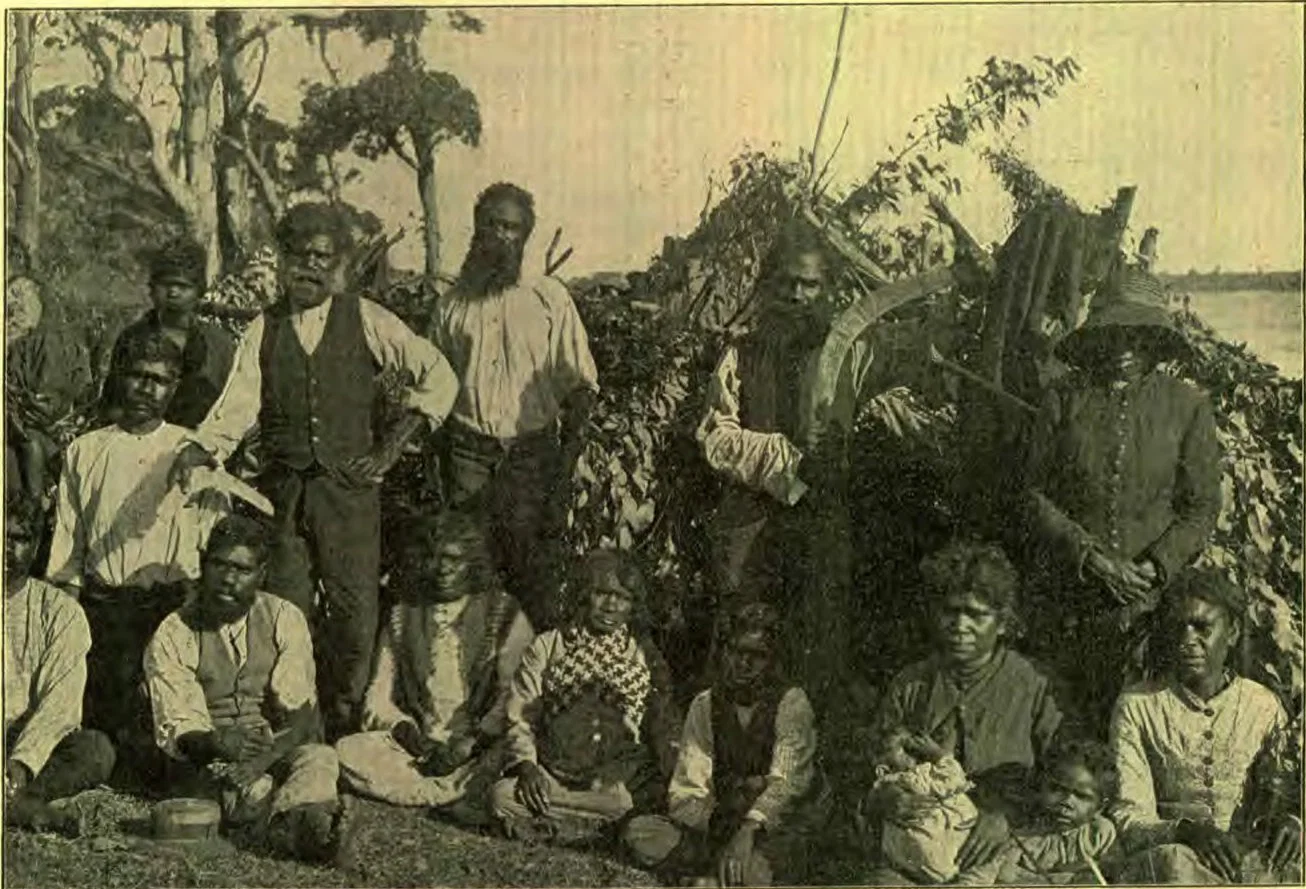
The southern tropical line passes through the midst of the Australian continent a distance of nearly three thousand miles. It is quite safe to say that few, if any, have ever traced its entire course, as the country is uninhabited and uninhabitable. Ten thousand pounds’ reward was offered to the one who would first penetrate the country from north to south; and it was only on the third attempt that it was accomplished. A telegraph-line followed the track thus opened. But there has as yet been no call for a consecutive transcontinental journey from east to west.
Starting at the city of Rockhampton, Queensland, where the tropical line strikes the eastern coast, a railway follows it for nearly five hundred miles westward. The interior of Australia is in appearance a monotonous plain, arid, and burning with heat. Rains seldom fall, and flowing streams are unknown. Between this great desert region and the more genial coast lies a wide expanse of country, generally appropriated by sheep- and cattle-raisers. Much of the land is fertile, and would be exceedingly fruitful but for the want of rain.
The vastness of this section may be understood when it is stated that Queensland, one of the five colonies, covers an area of six hundred and sixty-eight thousand square miles,—territory equal to a large number of the United States combined.
For four years the western districts have been experiencing the worst drought in the history of the country. Some rains have fallen recently, reviving hope in the hearts of settlers and squatters. But it is said that in Queensland fifteen million sheep have perished by starvation, and over half the cattle have been consumed.
Journeying through this region, one tires of the changeless scenery. But upon stopping to examine more closely its minute details, the traveler discovers much of interest. Occasionally a pair, or even a drove, of emus are seen stalking away as on stilts. Kangaroos will be seen sitting on their haunches, or leaping away with tremendous bounds. The wallaby, a diminutive kangaroo, is altogether too common, being a nuisance wherever gardens or fields are attempted. Flying foxes haunt “the scrub” in great numbers. They hang pendant from trees through the daytime. In some places the scrub timber is literally covered with these great, bat-like creatures. At night they make havoc with fruit-trees.
Wherever a lagoon is found, its waters and muddy borders are inhabited by great black swans with red beaks; flamingoes with beautiful plumage and long, pipe-stem legs; pelicans with their ugly pouch bills; ibises in droves, with long, crooked beaks; and plenty of ducks and geese. The larger timber regions are the home of cockatoos, parrots, magpies, laughing jackasses, and a numerous variety of smaller birds.
Insects and reptiles are not lacking. There is a variety of snakes, all venomous, and myriads of ants of every kind. Ant-hills in many places stand thick as hay-cocks, and about as large. Once in a while the sight of a tarantula, centipede, or iguana gives a stranger a start, and causes his teeth to grind together for a moment. Beneath our feet a few modest purple daisies blossom, varied with buttercups; while overhead various trees are from time to time in bloom.
It is in this country that the few remains of aboriginal life are seen. We visited a native camp near a railway station, and what we saw is well shown in the illustration. Parents and children were outnumbered two to one by ugly, ill-fed dogs, which barked and growled around us. The wretched people live on anything they can get that is at all eatable,—snakes, slugs, grubs, beetles, roots, leaves, carrion, and whatever they can beg. A lady friend who will not see this told me that once, in company with a friend, she visited a black fellow’s camp, where one of the women (“gins”) was known as an excellent cook. She was even then engaged in preparing a meal for the men who were lying about the hut. Spying some dainty-looking food just prepared, the friend asked the cook for a sample. It was given, on green leaves, to each of the ladies, and by each was pronounced “delicious,” “lovely,” “exquisite,” etc. Just before leaving, the visitor asked the cook what that particular food might be. “Snake!” said the black woman, with her arms akimbo. There was a violent effort on the part of the ladies to unswallow what they had just eaten. They were both violently sick, much to the amusement of the men on the grass. But the snake did not come back.
At the time I visited this region, it was a common sight to see horses and cattle in the last stages of starvation left to perish where they finally staggered and fell. For days the poor creatures would lie there with no one to pity them, no one to offer a drop of water or a mouthful of food. The crows would pick out their eyes, and mangle their heads, and at last death would come slowly along. In many places, piggeries have been established, and a still more horrible chapter is thus added to the awful story. For when it became certain that the creatures would soon die, they were driven into the inclosure, and pigs and crows vied with each other in the horrible feast. What was done with the pigs? Don’t ask! We know what is done with pigs.
Sin and the curse hang heavily over a large portion of our fair world. What a change will take place when He comes whose right it is to reign! G. C. TENNEY.

LOVE NOT THE WORLD

“Behold, what manner of love the Father hath bestowed upon us, that we should be called the sons of God; therefore the world knoweth us not, because it knew him not.”
Christ’s life on earth was the embodiment of purity and holiness. He was in the world, but not of the world. The world did not understand him. His life of self-sacrifice was to them a mystery. He lived a life apart from them. Had he united with them in eager pursuit for applause, for riches, for worldly honor, they would have known him; for he would have been of them.
Christ was the Light of the world, but the world knew him not; and because it knew him not, it knows not his followers. We can not follow Jesus, and keep the friendship of the world. True Christians will take Christ as their pattern, loving him with the whole heart, and serving him with the entire being.
“Ye can not serve God and mammon.”
“Know ye not that the friendship of the world is enmity with God? Whosoever therefore will be a friend of the world is the enemy of God.” There must be an entire surrender on the part of the Christian, a complete forsaking and turning away from the things of the world. God’s word declares, “If any man love the world, the love of the Father is not in him.”
Christ has given us an example of how we should work. He did not come to this world to save the righteous: there were no righteous. He came to call sinners to repentance, to save those who felt their need of a Saviour. He identifies his interests with the interests of all who will receive his grace.
Christ labored to save men from delusion. To this end his servants must work. God has given to every man a measure of light, and he is to let this light shine forth to others. No Christian lives to himself. He who is devoted to self-serving is not learning of the divine Teacher, though he may profess to be a Christian.
Unless truth leads to right actions, it proves only the condemnation of the hearer. Truth is to be woven into the daily experience, controlling the life, making us pure, even as Christ is pure. We may know without doubt who are the true sons and daughters of God. And “every man that hath this hope in him purifieth himself, even as he is pure.” As Christ is pure in his sphere, so man may be pure in his sphere.
Conformity to the world is decidedly forbidden in the word of God. Paul writes: “I beseech you therefore, brethren, by the mercies of God, that ye present your bodies a living sacrifice, holy, acceptable unto God, which is your reasonable service. And be not conformed to this world: but be ye transformed by the renewing of your mind.”
The mighty power of the Holy Spirit is a cleaver which separates men from the world, and sends them forth as missionaries for God into the highways and byways of life, to seek and to save lost, perishing souls, to minister to the physical and spiritual needs of suffering humanity. Thus Christ worked, and he says to us, “Learn of me.” “Love not the world, neither the things that are in the world. . . . For all that is in the world, the lust of the flesh, and the lust of the eyes, and the pride of life, is not of the Father, but is of the world.”
We can either honor or deny Christ. His work was to reveal to the world the glorious perfection of God. This is also our work. We are not to shut ourselves away from the world to escape from it. Christ’s prayer to God in behalf of his disciples was, “Not that thou shouldest take them out of the world, but that thou shouldest keep them from the evil.” We have a work to do—the work of seeking for lost souls. If you are necessarily associated with worldlings, remember that Christ is to be honored as your companion, your leader, your wisdom and sanctification. He says, “I am at your right hand to help you.” The child of God must not allow himself to be guided or governed by human wisdom; for this always leads from the path of self-denial and cross-bearing cast up for the ransomed of the Lord to walk in. The undivided affections must be given to God. It is for our eternal welfare to stand with him who is “the way, the truth, and the life.” “Whosoever will come after me,” Christ said, “let him deny himself, and take up his cross, and follow me.”
John thought it an honor of infinite importance for men to be called the sons of God, to be acknowledged by the Creator of the universe as his children. In comparison with this, all other honor sinks into insignificance. If our names are even mentioned with favor by the great men of this earth, we think it a matter of sufficient importance to cherish, yes, and tell again and again, that others may see how we have been honored. But the lips that give us this supposed honor are only mortal. Dust they are, and to dust they must return. Our names may be uttered with joy by the lips of Christ. It is our privilege to be honored by him who is King over all kings. If we are faithful, the eternal God will claim us as his sons and daughters. Then is it any condescension on our part to receive Christ?
John holds up before us the infinite sacrifice made in our behalf, and points us to the infinite possibilities that lie before us. “Behold, what manner of love the Father hath bestowed upon us, that we should be called the sons of God.” We may enter into this sacred relationship. No pen can describe the honor this will bring to us. Many act as if it were a great humiliation to accept Christ as their Saviour. But there is no true honor except that which comes through Christ. Our highest good is found in following his example. We meet with many failures because we do not realize this. If we lift the cross cheerfully, Christ will guide us by his counsel, and afterward receive us into glory. “It doth not yet appear what we shall be: but we know that when he shall appear, we shall be like him; for we shall see him as he is.”
MRS. E. G. WHITE.

The Sure Cure for Bitter Experiences

When Moses came to the bitter waters of Marah, he held a prayer-meeting; but the children of Israel turned the occasion into a fault-finding meeting, and tried to find some one to blame for this trying experience. The Lord showed Moses a branch that would sweeten the water, while the devil showed the people that Moses was to blame for all their trouble. There is a branch in Rom. 8:28 (“We know that all things work together for good to them that love God”) that will sweeten the most bitter experiences that we shall be called upon to pass through; but it must be applied whenever the occasion demands. It is well for us to know that God never sends us any trouble without previously seeking to whisper to us some truth, which, if accepted, would save us the after-pain and sorrow. Job 33:14, 19.
Ordinary germs can be destroyed at a boiling temperature; by adding sufficient salt to convert the water into brine, it can be heated eighteen degrees hotter before it begins to boil, so it will destroy more virulent germs than simple boiling water; but when we wish to be absolutely sure that the fluid is sterile, we subject it to live steam under pressure. This surely and certainly kills all germs and spores, provided the vessel does not burst. This may illustrate how God allows various circumstances to purify us: when ordinary opportunities do not have sufficient effect, he brings us through an experience that produces briny tears. If this does not spiritually sterilize us, he subjects us to greater pressure. The devil comes in at this point, and tempts the individual to say, “I won’t stand it;” and he feels as if he should “fly all to pieces,” and that he is “going to give it all up;” thus the process is all spoiled, because he lives by feeling instead of principle. “Despise not thou the chastening of the Lord, nor faint when thou art rebuked of him.” Heb. 12: 5.
A true conception of God’s plans for us makes heaven bud and blossom, even here below. It sheds light into the dark corners of life, and blows leaves of happiness into the pathway of the Christian; all this is a part of the Christian’s heritage this side the River Jordan.
One of our workers interested herself in the spiritual welfare of a young woman who was unconverted. When asked if she was happy, the latter replied: “No, I am most miserable, but not quite so much so as my sister, who is a good Christian.” The Christian should be a reflector on this earth of the joys of a glorious heaven. 1 John 4:17.
Many Christian homes are so dark, cold, and cheerless that the devil has no difficulty whatever in producing a more attractive counterfeit; but the true Christian home has the privilege of being a sample of heaven on earth; and if it is so, all the devil’s schemes will come far short of successfully competing with it.
When we are determined to have our own way, in spite of God’s admonitions, the only thing that the Lord can consistently send to us is trouble, which will tend to obstruct our path, and thus save us from going to destruction. Therefore let us cease to work against God’s providences, and say, “Here am I; send me.” On this point we may learn wonderful lessons from Jonah’s experience. The Lord prepared a gourd to protect him from the fierce rays of the sun, and he was “exceedingly glad” for it, and undoubtedly felt that he deserved such favors. But directly, God, in his infinite wisdom, prepared a worm, which destroyed the vine to the extent that it withered; then he prepared a vehement east wind. God knew that Jonah needed to pass through these two latter experiences just as much as to sit in the shade; for with the scorching sun beating upon his head, and a furnace-like wind wilting his body, he had a better opportunity to sympathize with suffering humanity,—a lesson that he would not learn in any other way. When God has permitted some worm (perhaps in one form, perhaps in another) to spoil some of your cherished plans, do you get angry at the worm? or do you recognize that God permitted the circumstance to occur for some wise purpose, and thank him for it, whether or not you can discern the object to be attained?
David Paulson, M. D.

LOOK UP

THERE is hope in the world for you and me; There is joy in a thousand things that be; There is fruit to gather from every tree; Look up, my friend, look up!
There's a place in the land for you to fill, There is work to do with an iron will,— The river comes from the tiny rill,— Look up, my friend, look up!
There are bridges to cross, and the way is long, But a purpose in life will make you strong; Keep e'er on your lips a cheerful song; Look up, my friend, look up!
— Selected.

UNTIDINESS A SYMPTOM OF CHARACTER WEAKNESS

God is a God of order, not the author of confusion; and if we would develop characters after the divine likeness, we shall carefully avoid habits and practices that will lead to untidiness, confusion, and disorder. The unerring accuracy with which the astronomer tells the time of the stars’ appearance, the uniformity with which the earth keeps up its march around the sun, as well as the great law of cause and effect, sowing and reaping, whose operations may be daily observed in both the physical and the spiritual world, teach us that regularity, punctuality, faithfulness, and reliability are attributes of the divine character. The infinite care with which God arranges all things in nature, the carefulness with which each little particle of starch in a kernel of wheat is wrapped in a separate envelope, and each little globule of fat in milk is surrounded with its covering of casein,—all these things are evidences of the painstaking care with which the Creator attends to even the smallest details of his great work.
That boy or girl, young man or young woman, who comes into the house, and throws down hat and coat anywhere; whose room is ever in a state of disorder and confusion; who, instead of having a place for everything, has no place for anything, may be sure that the character they are building will be but reflections of these habits of confusion and disorder. Such persons will think in a disconnected manner. Their conversation will be lacking in soundness and sobriety. Their Christian experience is likely to be fitful and unsatisfactory,—one day extremely hopeful and buoyant, the next disheartened and discouraged. Carefulness all along the line, even in the smallest matters in our experience, is required, to insure having it in more important events.
W. S. SADLER.

Abide with Me

In the glorious golden morning, When my heart with peace is filled; When my feet are on the mountain, And my soul with joy is thrilled; When thy grace is all-sufficient, And thy love a boundless sea,— Then, in peace and joy and gladness, Lord, dear Lord, abide with me.
When the fields are ripe for harvest In the noontide’s blinding heat; While I bear my sheaves, and lay them Meekly at thy blessed feet; When in weariness I labor, Glad thy servant, Lord, to be, Let me feel thy presence near me: Lord, dear Lord, abide with me.
When the evening shadows lengthen, And I wander to and fro, Groping blindly through the valley Where the bitter waters flow; When my eyes with tears are blinded, And thy face no more I see, Then I need thee, sorely need thee,— Lord, dear Lord, abide with me.
When the stepping-stones to heaven, Shining bright before me rise; When, with all thy ransomed children, I am lifted to the skies; When my cup of joy o’erfloweth, Or thy chastening grievous be,— Cometh joy, or cometh sorrow, Lord, dear Lord, abide with me.
— Lizzie Clark Hardy.

THE REAL COWBOY'S LIFE

II

WHEN the different “outfits” meet in a general round-up, thousands upon thousands of cattle, belonging to ranches situated perhaps hundreds of miles apart, will be gathered together. Then the work of separating them begins.
A herd is surrounded by a sufficient number of men to keep them from scattering, while a few others ride into the herd, select the cattle bearing their employer’s brand, and drive them out one by one. Once away from the herd, they are taken in charge by other men, whose duty it is to look after the cattle bearing that particular brand, and keep them away from the others.
Separating the cattle is a rather difficult task, but the “cow ponies” soon become adepts at it. Sometimes a steer is determined not to leave the herd; but though he runs ever so fast, stops ever so short, and turns ever so quickly, he will find the tough little broncho just before him, ever crowding him farther and farther from the herd, until he gives up, and trots off to join the other cattle that wear his brand.
After the cattle have been separated, each outfit handles only its own. The beeves are driven to the nearest railroad station to be shipped to market. The others are driven back to some range, usually near the home ranch, where the feed and water are good; the calves are branded; and the herd is then left to its own resources until time for the fall round-up.
Branding is hard work for both men and horses, but their suffering can not be compared to that of the calves. They are lassoed, and dragged to a near-by fire, where their sides are deeply burned with a hot iron. The burn soon heals, but the scar remains as long as the animal lives. No matter how long afterward, no matter in what part of the country the creature is found, the brand will show to whom it belongs.
After the spring round-up, the men usually have a month or six weeks to do general work around the ranch. There are fences to build or repair, hay to put up, and sometimes stray horses to find.
The fall round-up is never so extensive as the one held in the spring. The principal object is to gather the beeves for shipment to the Eastern market; but before this work is finished, cold weather usually sets in, and makes camp-life extremely disagreeable. No tents are carried on the round-up; but the men have large pieces of heavy canvas to cover their beds, as a protection from storms as well as to keep them from getting soiled and torn. Cowboys usually take great pride in their beds, and the more fastidious often have more than a hundred dollars invested in eider-down quilts and Navajos blankets.
After the fall round-up, most of the men are paid off, and their work for the season ends, though two or three may be left at the ranch, and sometimes a few “winter riders” may be kept at work throughout the season.
The duties of these winter riders are various. Sometimes they are given a certain line to guard. They are then expected to turn back all cattle, of whatever brand, that come to that line. This keeps the animals from drifting too far from their accustomed range. Sometimes a stream has a good many bogs, where cattle are liable to become mired. The winter riders are expected to keep watch over these bogs, turn back all cattle that approach them, and render timely assistance to any that do get caught. During the severe snowstorms, some of the feebler cattle, especially the old cows, get so weak and stiff that when they lie down, they are unable to get up again. To help these cows to their feet is another duty of the winter riders; and so far as the animals are concerned, it is a thankless task. No sooner do they regain their feet than they seem to possess supernatural strength and energy, which they promptly use to attack their benefactor. Once the animal is sure to regain its feet without further assistance, the cowboy mounts his horse, and rides away as quickly as possible.
Sheepmen and farmers have gradually crowded the cowboy back, until now the “cattle range” occupies less than a tithe of the country it once did. Every advance step of the newcomers has been bitterly opposed by the cattlemen, who have not stopped at theft, arson, and even murder, but all to no purpose. In a few years the occupation of the cowboy will be gone; and he, like the trapper and Indian scout, will be remembered only by the romance that clings about his name.
J. Edgar Ross.

REMEMBERING WHAT WE READ

IN the story of an Eastern king, who was also a philosopher, a young man at a certain royal entertainment had forgotten part of his recitation.
“Now,” said the irate ruler, when the guests had departed, “what have you to say in excuse for such a performance?”
“Most gracious majesty,” the youth replied, “I could not remember it: I tried very hard, but some of the parts escaped my memory.”
The king made no reply, but handing the young man a cup brimful of oil, he told him to carry it through the city streets to the house of a noble, a mile distant. “And remember,” he said, “if one drop is spilt, it costs you your life.”
The streets were thronged with people, but the young man carried his cup so carefully that every drop of oil was safely delivered.
Each day a similar task was imposed upon him. With attention riveted upon the cup and its contents, he passed through the long, winding streets without noticing another thing. Thus he gained power to fix his attention on whatever he undertook. This was just the power he had lacked. And now, with practice, his memory became so tenacious that he could commit whatever he chose at one reading.
Is there not here a lesson for us? If you make the subject a study, you will notice that attention is the keynote of every strong, receptive memory: and every defective memory is due mainly to what has been called “scatteration.”
By “scatteration” I mean the indiscriminate, unthinking perusal of books and papers. Often people read simply for the moment’s pleasure, with no attempt to store away the impressions that pass through their brains. In this way, habits of reading and thinking are formed which soon wreck the memory, making it uncertain and unreliable. And what can be more unsatisfactory or distressing than such a memory! It brands its victims as poor talkers, poor thinkers, and, in the field of intellectual life, condemns them to mediocrity and inferiority. It is as true of the intellect as it was of Reuben, “Unstable as water, thou shalt not excel.”
Now you will probably ask, “If my memory has been impaired by such habits of reading and thinking, how shall I strengthen and develop it?”
The answer is: By exercise of the will. Like the young man in the story, keep your mind on the work in hand, and go only as fast as you can be sure of each step. Read to some purpose; and as you work, walk, or ride, think about what you have read, and compare it with what you have read or heard similar to it. Thus, by the law of association, it will become anchored in the mind.
One day a college student complained to his instructor that while he could learn his lessons easily, he could not retain them long. “I will show you why that is so,” the professor said; “come this way.” They entered a room where old schoolbooks, magazines, and newspapers were piled unclassified on the floor. “There is a paper here,” the professor said, “which speaks of Garfield’s nomination, and I wish you would pick it out for me.”
“Why,” exclaimed the young man, “it would take me a week to find it in that mess!”
“Well,” remarked the professor, “that is the condition your mind is in. The last ideas you put into it are on the top of the heap. These you can find. But only a few of the older ones—those that by chance were classified and placed on their mental shelves—can be found. You must learn to arrange your thoughts in classes. Put each in its proper place by association, or comparing it with kindred ideas. Then you will be able both to retain and to revive what you learn.”
While we may employ attention alone to fix an idea in our mind, to recall it—have it literally “at our tongue’s end”—requires association also. The proper application of these two principles constitutes the true art of remembering.
EDISON J. DRIVER.

Etiquette of Borrowing Books From Friends

A WORD about borrowing books. Only from one's intimate friends should one ask the loan of a volume. One has no right in any circumstances to lend without authority a borrowed book, even for a single day. A borrowed book should be treated with scrupulous care, and returned, in good order, after a reasonable time, to its owner. One should never lend nor borrow a book that forms part of a valuable set; there are too many contingencies, and a broken set of books loses its commercial value, as well as its sentimental worth. People should have the courage of their convictions, and dare refuse a loan of this kind, unless they are willing to accept every bit of the risk involved.—Margaret E. Sangster.

ONLY A LITTLE

Only a little tarnish on crowns else fair and bright; Only a little stain-spot on robes else pure and white; Only a little folly in the wisdom of the wise; In sweetly fragrant ointment, only a few dead flies;
A very little blemish, the very smallest speck,— Ah, yes; but one small blunder may lead to total wreck!
Only a little canker will mar the luscious fruit; Only a little discord destroy the sound of lute; Only a little curve will change a sweet expression.
A little step aside may lead to great transgression.
So let us in our service all aim to perfect be (For as the twig inclineth, so stands the full-grown tree), And seek to be, in all things, whether called small or great, Conformed to His good pleasure on whom the angels wait.
— Selected.

NO THOROUGHFARE HERE

For many years the winding road along the little tumbling river had run through Farmer Grant's land. People who were more interested in having a pretty view than in getting somewhere at a particular time were very likely to choose this route. At length travel grew so common that Farmer Grant became tired of the continued passing and repassing, and resolved to close the road.
All at once a locked gate barred out those who wished to take the way by the stream, and a placard in big letters announced that it was not a thoroughfare. But the public was not disposed to submit quietly to the loss of this privilege; and in the discussion that followed, Farmer Grant made a discovery. In allowing the townspeople the right of way through his land year after year, he had lost his right to shut them out. The public, which had traveled this road so long, had come to have a claim upon it. The putting up of the gates was declared illegal, the placards were taken down, and again carriages followed the winding road by the river.
Farmer Grant is not the only one who has made such a mistake. A great many times when young people give wrong thoughts the right of way through their hearts, they flatter themselves that their journey there will only be temporary. They give way to fits of impatience; they speak unkindly and irritably; they allow gloomy fancies to linger in their minds. And all the time they make themselves believe that when they get ready to turn the intruders out, they have only to set up a barrier at the entrance of their hearts, and the trouble will be ended.
Nature's law is very much like that which surprised the New England farmer. The habits which, year after year, are given the right of way in the heart, grow in time to have a certain claim upon the road. They are not frightened at the sight of a good resolution warning them away. It is very difficult to set up a barrier that will keep them out. They have made a highway of the heart so long that, in one sense, it has become theirs.
“No Thoroughfare Here,” is a good sign to set up in our hearts early in life. The only safe way is to keep wrong thoughts and unlovely words from using us as a highway. The rights of habit can not be altogether disregarded; and if we succeed in having them set aside, it is only after a payment so heavy that in nine cases out of ten it leaves us bankrupt.—Young People's Weekly.

BEREAN LIBRARY STUDY

Revelation 2: “Thoughts on Revelation,” pages 345-362

NOTES ON LESSON 2

(October 21-27)
Ephesus.— This church was pure; it had received the gospel in its purity from Christ and the disciples. From the baptism, A. D. 27, to the close of the first century, the church stands forth before the world as a conquering power. Ephesus means “first, or desirable.” The overcomer was promised a part in the tree of life. “All that have connection with Christ have access to the tree of life, a source of knowledge of which the world is ignorant. After sin entered this world, the heavenly Husbandman transplanted the tree of life to the paradise above, but its branches hang over the wall to the lower world. Through the redemption purchased by the Son of God, man may now partake of its life-giving fruit.”
Smyrna.— Satan’s wrath waxed hot as he saw the triumph of the church of God, and he sought to destroy the church by persecution. Many sacrificed their lives for the sake of the gospel. The name that God gave to this period, extending from the close of the first century to the nominal conversion of Constantine, in 323 A. D., shows how he regarded their sacrifice. Smyrna means “myrrh, or sweet-smelling savor.” That period was a bloody one; but God was pleased with his people, and sent them the message that although they might be overcome by the first death, the second death should not hurt them,—that he which was dead and is alive would rescue them from the power of the grave. “Jesus is not in Joseph’s new tomb. He has risen. He has burst the fetters of the grave. He has led captivity captive, and given gifts unto men. He has given us an evidence of what he will do for those whom Satan has placed in the prisonhouses of death. At his resurrection he opened the tombs of many righteous, took the captives out of the narrow cells, and led them away in triumph to his kingdom. Those who have fallen asleep in Christ . . . shall be rescued from the grave, and restored to life.”
Pergamos.— Christianity became popular at this time. Persecution did not destroy the church; therefore Satan tried exaltation and flattery, and by this means was more successful in his evil work. Pergamos means “height, or elevation.” This was a corrupt church, and covers a period from 323 to the setting up of the papacy in 538 A. D. God refers them to the work of Balaam and Balac, who enticed Israel, even on the borders of the promised land, to mix in worldly pleasures and sins, and separate themselves from God. “And he employs the same agents now as he employed three thousand years ago. By worldly friendships, by the charms of beauty, by pleasure-seeking, mirth, feasting, or the wine-cup, he tempts to the violation of the seventh commandment.” “Many of the amusements popular in the world to-day, even with those who claim to be Christians, tend to the same end as did those of the heathen. There are indeed few among them that Satan does not turn to account in destroying souls. Through the drama he has worked for ages to excite passion and glorify vice. The opera, with its fascinating display and bewildering music, the masquerade, the dance, the card-table, Satan employs to break down the barriers of principle, and open the door to sensual indulgence. In every gathering for pleasure where pride is fostered, or appetite indulged, where one is led to forget God and lose sight of eternal interests, there Satan is binding his chains about the soul.” We should profit by the example of the past, and keep a distinct line of demarcation between us and the world; for God is about to lead his people over into the promised land.
Thyatira.— We are now brought down to the Dark Ages, extending from 538 to 1798 A. D., when the papacy held sway, and millions of God’s people sealed their testimony with their blood. Thyatira means “savor of labor, or sacrifice of contrition.” While studying of this period, when God’s holy law was set aside, his Sabbath trampled underfoot, and his people slain, do not forget that while “a day of great intellectual darkness has been shown to be favorable to the success of the papacy, it will yet be demonstrated that a day of great intellectual light is equally favorable to its success.” “She [the papacy] is silently growing into power. Her doctrines are exerting their influence in legislative halls, in the churches, and in the hearts of men. Throughout the land she is piling up her lofty and massive structures, in the secret recesses of which her former persecutions will be repeated. She is stealthily and unsuspectedly strengthening her forces to further her own ends when the time comes for her to strike.”

DAILY LIFE

Are you watching for the Master Day by day? As each golden morn is breaking, Does this thought your spirit cheer— “Lo, the day of his appearing Draweth near”?
Are you walking with the Master Day by day? Simply walking on with Jesus, Trusting him for one step more; Thankful that he veils the future Yet in store?
Are you working for the Master Day by day? Are you gathering in the lost ones, Following in the Saviour’s track, Till the keeper of the vineyard Cometh back?
Go on watching, waiting, working, Day by day. In the little time that’s left you, Even though the way be dark, Press still onward, upward, heavenward, Toward the mark! —Maud Bussell.
Continue reading: ONE RAINY DAY