Your ShelfYour Projects

Review and Herald, Vol. 64, No. 45.

THE CHRISTIAN'S PRIVILEGE
Earlier text: TENNESSEE CONFERENCE PROCEEDINGS

SANNINGENS HAROLD.

A 16-page Swedish Religious Semi-Monthly.—Published at Battle Creek, Mich., and Christiania, Norway.
SANNINGENS HAROLD is devoted to the proclamation of the Second Coming of Christ, the explanation of Prophecy and Bible doctrines in general, and the defense of the commandments of God and the faith of Jesus.

ITS FAMILY DEPARTMENT

Is filled with instructive reading, accompanied by beautiful illustrations, and also contains graphic news items of the most important events transpiring from time to time.

TERMS, INVARIABLY IN ADVANCE.

To American and European Subscribers, 1 copy, one year, $1 00
To new subscribers, with Swedish Hand-Book as premium, 1 50
To new subscribers, with Swedish “Sunshine” as premium, 2 00
In Clubs to be used for Missionary purposes, per copy, . 75
Address, SANNINGENS HAROLD, Battle Creek, Mich.

SABBATH SCHOOL HELPS.

Bible Lessons for Little Ones. No. 1, flexible cover, 15 cts. No. 2, flexible cloth, 25 cts.
Bible Lessons for Children. No. 3, 4 (with map), 5, 6, and 7, 25 cts. each.

CHOICE JUVENILE BOOKS.

Sabbath Readings for the Home Circle. In four volumes, containing moral and religious reading for the household; carefully selected and compiled for the use of Sabbath Schools and family libraries. No better books for children in the market. Each 60 cts. Entire set, put up in neat box, $2.50.
Sunshine at Home. A bright, sparkling book for the family circle, brimful of good sense, and perfectly free from “trash.” 112 quarto pages, highly embellished. Price, $1.50.
Golden Grain Series. A choice collection of instructive stories suited to the wants of children from eight to 16 years and older, illustrated and beautifully bound in three volumes.
The Hard Way, 160 pp.; The School boy’s Dinner, 160 pp.; Grumbling Tommy, 160 pp. Each, 30 cts.
The Child’s Poems. Containing Little Will, and other stories, teaching beautiful lessons of temperance and virtue. Bound in cloth, and richly embossed in gold and black. 128 pp. 25 cts.
Golden Grains. In Ten Pamphlets, 32 pages each. 320 pp. 50 cts.
The Sunshine Series. Stories for little ones, in Ten Small Books, adapted to children from the ages of four to ten years. In glazed paper covers, 320 pp. 50 cts.
Any book in this list sent post-paid on receipt of price. Address, REVIEW & HERALD, Battle Creek, Mich.

TESTIMONIES FOR THE CHURCH.

NUMBERS ONE TO THIRTY.
Bound in Four Volumes, about 700 Pages Each.
EACH VOLUME CONTAINS A COMPLETE INDEX OF SUBJECTS.
VOLUME ONE.—This volume contains a brief sketch of the early life and Christian experience of the writer of the Testimonies, Mrs. E. G. White, together with Testimonies numbers 1 to 14. 724 pages.
VOLUME TWO.—Contains Testimonies numbers 15 to 20. 712 pages.
VOLUME THREE.—Contains Testimonies numbers 21 to 25. About 600 pages.
VOLUME FOUR.—Contains Testimonies numbers 26 to 30. About 675 pages.
Bound in Muslin, per volume, $1.50; Sheep, $2.00; Half Morocco, $2.25. Complete Set of Four Volumes, bound in Cloth, $6.00; Sheep, $8.00; Half Morocco, $9.00.
Testimony for the Church, No. 31.—Contains 244 pages of most interesting and important matter. Neatly bound in Muslin. Price, 50 cents.
Testimony for the Church, No. 32.—Contains 242 pages, and is full of warnings, counsels, and reproofs, very important to all Seventh-day Adventists. Bound in Muslin (uniform with No. 31). Price, 50 cents.
Sent post-paid to any address, at the above prices.
Address, REVIEW & HERALD, Battle Creek, Mich.;
Or PACIFIC PRESS, Oakland, Cal.

HISTORY OF THE SABBATH AND THE First Day of the Week.

A MINE OF INFORMATION ON AN IMPORTANT SUBJECT.
By ELD. J. N. ANDREWS,
LATE MISSIONARY AT BASEL, SWITZERLAND.
THE Bible record of the Sabbath, the secular history concerning it, the successive steps by which the change to the first-day was made, and the work of restoration are given in detail.

Every Text of Scripture Concerning the Sabbath

Is commented on at length, and the Complete Testimony of the Fathers in regard to the Sabbath and first-day is given. The comparative merits of the seventh and first-day Sabbaths are fully shown. A copious index enables the reader to find any text, or the statement of any historian. Should be read by everybody.
528 pages. Price, $1.25.
Address, REVIEW & HERALD, Battle Creek, Mich.

MAN'S NATURE AND DESTINY,

—OR—
The State of the Dead, The Reward of the Righteous, and The End of the Wicked.
By ELD. URIAH SMITH.
THIS book is a logical and scriptural treatise concerning man in his present state, his condition in death, and his prospects beyond the resurrection. It also treats very minutely concerning the disposition of the finally impenitent, answers the numerous objections which are usually brought against the different phases of this subject, considers the claims of philosophy, and gives a brief historical view of this great question. The work contains copious indexes of the authors referred to, the passages of Scripture examined, and the contents of the book itself. 444 pages, on tinted paper, in muslin binding, with frontispiece, sent post-paid for $1.50.
A pamphlet edition of the same work, without indexes and frontispiece, on thin paper, per copy, post-paid, 75 cts.
Address, REVIEW & HERALD, Battle Creek, Mich. Or, PACIFIC PRESS, Oakland, Cal.

THOUGHTS on the BOOK of REVELATION.

By ELD. URIAH SMITH.
A CRITICAL and practical exposition of the book of the apocalypse, verse by verse. A harmonious explanation of this wonderful book. It is a companion volume to “Thoughts on Daniel,” and cannot be read without interest and profit.
In muslin covers, 420 pp., sent post-paid for $1.25.
Address, REVIEW & HERALD, Battle Creek, Mich. Or, PACIFIC PRESS, Oakland, Cal.

SCRIPTURE REFERENCES.

A TRACT of 32 pages, containing a careful compilation of proof-texts on twenty-five prominent subjects, such as the Nature of Man, Destiny of the Wicked, Second Advent, Temporal Millennium, etc. A work of great value to all Bible Students. Price, 4 cts.
Address, REVIEW & HERALD, Battle Creek, Mich.

Michigan Railroad Time Table: Detroit, Chicago, and Kalamazoo
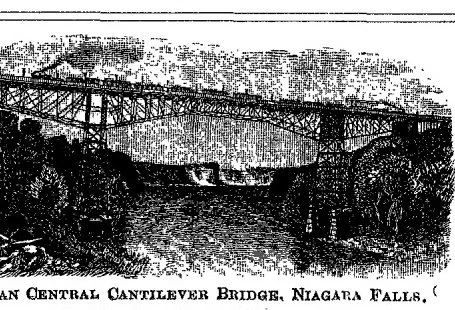
MICHIGAN CENTRAL RAILROAD.
GOING EAST STATIONS GOING WEST
Mail. (p.m.) Day Exp. (a.m.) N.Y. Exp. (a.m.) Atl’n Exp. (a.m.) Nig’t Exp. (a.m.) Ar. / Dep. Pa’c Exp. (p.m.) Ev’g Exp. (p.m.) Day Exp. (p.m.) Chi’o Exp. (p.m.) Mail. (a.m.)
6.00 6.45 10.45 6.00 3.03 Detroit 9.15 3.00 9.10 1.30 7.03
4.33 6.50 9.45 4.35 6.08 Ann Arbor 10.38 9.12 10.25 2.32 8.16
3.15 4.20 8.49 3.15 4.50 Jackson 12.08 10.55 11.35 3.33 9.35
2.00 3.10 7.51 1.58 3.43 Marshall 1.01 11.47 12.50 4.22 10.38
1.12 2.27 7.33 1.30 3.20 Battle Creek 1.35 12.12 1.12 4.40 11.03
12.17 1.50 6.58 12.33 2.35 Kalamazoo 2.35 1.20 1.50 5.15 11.52
10.38 12.15 5.49 11.13 1.55 Niles 4.18 3.03 3.22 6.27 1.40
9.18 11.11 4.55 10.18 1.27 Mich. City 5.40 4.32 4.35 7.32 2.58
6.50 9.00 3.10 8.15 9.10 Chicago 8.05 7.00 6.40 9.30 6.15
Gr. Rap. & Kal. Ex. lvs. Kal’mazoo 6.45 a. m.; Battle Creek 7.31, Marshall 7.57, Jackson 9.15, Ann Arbor 10.30, Ar. Detroit 11.50 a. m. Returning, leaves Detroit 4.00 p. m., Ann Arbor 5.30, Jackson 7.10, Marshall 8.20, Battle Creek 8.52, ar. Kalamazoo 9.45.
All trains run by National Meridian, or Central Standard Time.
Day Express, Grand Rapids and Detroit Express, and Grand Rapids and Kalamazoo Express daily except Sunday. Pacific, Evening, and Chicago Express west, and Atlantic, New York, and Night Express east, daily.
June 5, 1887. O. W. RUGGLES, Gen. Pass., Agt., Chicago.

CHICAGO & GRAND TRUNK R. R.

Time Table, in effect May 15, 1887.
| GOING WEST | | | | | STATIONS | | | | | GOING EAST |
| --- | --- | --- | --- | --- | --- | --- | --- | --- | --- | --- |
| Chigo Pass. | Mail. | Day Exp. | Pacific Exp. | B.Crk Pass. | | Mail. | Ltd Exp. | Atlto Exp. | Sun. Pass. | Pt H’n Pass. |
| | | | | | Port Huron | | | | | |
| …… | am 5.55 | am 7.15 | pm 8.05 | pm 4.10 | Lapeer | 10.20 | 1.15 | 7.35 | …… | 10.50 |
| …… | 7.28 | 8.31 | 9.34 | 5.40 | Flint | 8.42 | 11.57 | 6.17 | …… | 9.17 |
| …… | 8.05 | 9.10 | 10.15 | 6.20 | Durand | 7.55 | 11.27 | 5.41 | …… | 8.40 |
| …… | 8.48 | 9.35 | 10.58 | 7.20 | Lansing | 7.05 | 10.58 | 5.03 | …… | 8.05 |
| …… | 10.00 | 10.50 | 11.53 | 8.26 | Charlotte | 5.05 | 10.07 | 4.00 | …… | 6.45 |
| …… | 10.37 | 11.00 | 12.25 | 9.03 | Battle Creek | 4.20 | 9.37 | 3.25 | …… | 6.15 |
| …… | 11.30 | 11.45 | 1.15 | 10.05 | Vicksburg | 3.45 | 8.55 | 2.35 | …… | 5.30 |
| 6.30 | am 12.05 | 1.20 | pm | | Schoolcraft | 3.40 | 8.50 | 2.30 | …… | am |
| 7.18 | 12.45 | 2.21 | | | Cassopolis | 2.41 | 8.11 | 1.43 | …… | |
| 7.30 | 1.55 | 2.32 | | | South Bend | 2.31 | | 1.27 | …… | Val. |
| 8.17 | Sun. Pass. | 1.45 | 3.19 | V.Ltd. | Haskell’s | 1.45 | 7.26 | 12.43 | …… | Acc. |
| 9.00 | | 2.28 | 4.07 | Acc. | Valparaiso | 1.05 | 6.50 | 12.01 | …… | |
| 10.15 | 3.43 | am | | | Chicago | 11.47 | | 11.21 | pm | pm |
| 11.30 am | 4.05 | 5.52 | 6.05 | | | 11.35 | 5.50 | 10.29 | 3.40 | 8.03 |
| 12.40 pm | 10.00 am | 6.25 pm | 5.10 am | 8.43 am | | 9.05 am | 3.25 pm | 8.15 pm | 1.15 pm | 5.25 pm |
Trains run by Central Standard Time.
Valparaiso Accommodation, Battle Creek Passenger, Chicago Passenger, Ft. Huron Passenger, and Mail trains, daily except Sunday. Pacific, Limited, Day, and Atlantic Expresses, daily. Sunday Passenger, Sunday only.
GEO. B. REEVE, Traffic Manager.
W. J. SPICER, General Manager.

FINAL EXCURSION TO CHICAGO.

The Chicago & Grand Trunk and the Detroit, Grand Haven & Milwaukee Railways announce their last excursion to Chicago for the season, to be run on Nov. 16, the tickets to be good for all trains west bound on that day, and good to return on all trains except limited express, up to and including Monday, Nov. 21. These dates have been chosen to enable excursionists to be present in Chicago during the week in which a large number of special attractions take place. Extra sleeping-car accommodations will be provided for those desiring to take the night trains. The rate from Battle Creek, Mich., will be $4.80. Agents have been supplied with special advertising, giving the details, which will be furnished on application.

PROTESTANT IN THEORY; ROMISH IN PRACTICE.

The watch-word of Protestantism is, “The Bible, and the Bible only”; the precept of Romanism is, “The Bible and tradition.” Which of these do you accept? and which are you putting into practice? Without hesitation you answer, The former. Are you sure of this? Are not many who profess to be Protestant in all respects fondly deceiving themselves on this very point? We believe it can be easily shown that they are.
Why did Protestantism adopt this watch-word?—Because the traditions of the church Fathers were often not in harmony with the Scriptures, and were the channel through which numerous heresies found their way into the church. Human nature has no attributes which are perfect, and divine truth could never be revealed to mankind through such an agency, except by direct inspiration, without danger of perversion, and becoming mixed with error. It must come direct from God, and in such a form that it could undergo no subsequent change. The fountain could thus be kept pure, and from it a pure religion could be maintained, amid all the false systems of superstition and error.
The divine plan is, then, that religious truth should be supplied to mankind through direct communication with this fountain. It is not enough to believe that the Bible, and the Bible alone, contains the truths whence our religious belief must be derived. We must come to the Bible and get these truths, just as we find them given there. Its Author never designed that we should obtain this knowledge in any other way. There is no other way but by tradition.
But what is the custom of the great majority of the Protestant world? Do they, as individuals, make the Scriptures the direct source of their religious belief?—All know that they do not. The great majority know but little about the Scriptures. They rest upon the authority of their minister; their knowledge of the will of God comes to them through him. What is this but tradition, pure and simple? And wherein does this differ from the practice of the Romish Church? Cannot error be introduced by this means, as well as through the traditions of Rome?—It can; and this is just what has been done in the Protestant Church. They profess to have the Bible alone, but in reality they have “the Bible and tradition.” The traditions of the Romish Church teach things which are nowhere taught in the Scriptures; so likewise do the traditions handed down to Protestant congregations through their ministers.
And how is it with us who believe present truth? Is our practice the practice of Rome, or of true Protestantism? Do we assert the truthfulness of any point of our belief because we have read in the Bible that it is true; or because we know it is included in our denominational belief, or has been preached to us from the pulpit, or some of our leading men have written a tract to prove that it is true? If for any reason except the first, then we have need to begin a reform at once, and by making the foundation of our religious faith “the Bible, and the Bible only,” be ready to give to every man that asketh us “a reason of the hope that is in us, with meekness and fear.”
L. A. S.

A VALUABLE WORK.

The Messrs. Harper and Brothers have just issued a voluminous book of 726 double-column quarto pages which bears the following title:—
“A Greek English Lexicon of the New Testament; being Grimm’s Wilke’s Clavis Novi Testamenti, Translated, Revised, and Enlarged, by Joseph Henry Thayer, D. D., Bussey Professor of New Testament Criticism and Interpretation in the Divinity School of Harvard University. New York: Harper and Brothers, Franklin Square. 1887.”
This work, or the Latin original from which it is rendered, has received the highest commendation from scholars on both sides of the Atlantic. Professor Grimm, of Jena, has sanctioned all changes and additions in the present edition that would better adapt this dictionary to the English-speaking public. The translator and editor of this lexicon is a Congregationalist. Having said this much by way of preliminary, we will now quote extended definitions of the Greek words baptizo, baptisma, baptismos, baptistes, and bapto, as found in the above-named work.
“BAPTIZO (verb) I. 1. Properly to dip repeatedly, to immerse, submerge (of vessels sunk, Polyb. 1. 51, 6; 8. 8, 4; of animals, Diod. 1. 36). 2. To cleanse by dipping or submerging, to wash, to make clean with water; in the mid. and 1 aor. pass. to wash one's self, bathe; so Mark 7: 4; Luke 11: 38; 3 Kings 5: 14. 3. Metaphorically, to overwhelm, to be overwhelmed with calamities, of those who must bear them, Matt. 20: 22; Mark 10: 38. II. In the New Testament it is used particularly of the rite of sacred ablution, first instituted by John the Baptist, afterward by Christ’s command received by Christians and adjusted to the contents and nature of their religion, viz., an immersion in water, performed as a sign of the removal of sin, and administered to those who, impelled by a desire for salvation, sought admission to the benefits of the Messiah’s kingdom. a. The word is used absolutely, to administer the rite of ablution, to baptize. b. With prepositions, aa. eis, to mark the element into which the immersion is made; eis ton Jordanen, Mark 1: 9. bb. en, with dative, of the thing in which one is immersed: en tō Jordanē, Mark 1: 5. En pneumati hagiō, to imbue richly with the Holy Spirit; with the addition kai puri, to overwhelm with fire (those who do not repent), i.e., to subject them to the terrible penalties of hell, Matt. 3: 11.”
“BAPTISMA (noun). A word peculiar to New Testament and ecclesiastical writers, immersion, submersion. 1. Used tropically of calamities and afflictions with which one is quite overwhelmed; Matt. 20: 22; Mark 10: 38; Luke 12: 50. 2. Of John’s baptism, that purificatory rite by which men on confessing their sins were bound to a spiritual reformation, obtained the pardon of their past sins, and became qualified for the benefits of the Messiah’s kingdom soon to be set up; Matt. 3: 7; 21: 25; Acts 1: 22; 10: 37. 3. Of Christian baptism; this, according to the view of the apostles, is a rite of sacred immersion, commanded by Christ, by which men confessing their sins and professing their faith in Christ, are born again by the Holy Spirit unto a new life, come into the fellowship of Christ and the church, and are made partakers of eternal salvation.”
“BAPTISMOS. A washing, purification effected by means of water; Mark 7: 4, 8; of the washings prescribed by the Mosaic law, Heb. 9: 10. (Among profane writers, Josephus alone uses the word, and of John’s baptism.)”
“BAPTISTES. A baptizer; one who administers the rite of baptism; the surname of John, the forerunner of Christ. Matt. 3: 1; 11: 11.”
“BAPTO. a. To dip, dip in, immerse; John 13: 26. b. To dip into dye, to dye, color; Rev. 19: 13.”
The above definitions are copied verbatim, with the emphasized words, from Dr. Joseph Henry Thayer’s new Greek-English Lexicon. What a convincing argument on the question of baptism! Could any Seventh-day Adventist have given clearer definitions in favor of immersion? G. W. A.

LEARNING FROM ROME.

The Christian Union of Nov. 3, 1887, contains one remark that is especially significant as indicating a growing sentiment among Protestant denominations generally to pattern after the Roman Catholic Church. In commenting on the late action of the Episcopal Church in forming an association within its own membership for the advancement of the interests of labor, the Union says: “We have a great deal to learn from our Roman Catholic brethren in the direction of open churches, free churches, and churches in constant use.”
Such words of encouragement as these, uttered by so prominent and influential a journal as the Christian Union, will have great weight throughout the country, and do much toward bringing Protestant bodies into closer union and sympathy with the Catholic Church. This is only one of many instances that are continually occurring, indicative of the sentiment we have mentioned. In every case the concessions are made by Protestants; for “Rome never changes.” Meanwhile Rome looks on with satisfaction, content to bide her time, seeing the gradual elevation of herself to a more commanding position in the world. The blindness of Protestants who are thus seeking closer relations with Catholicism is unaccountable.
G. W. M.

DISPOSAL OF THE CHICAGO ANARCHISTS.

THE Chicago anarchists have finally been effectually disposed of. Two of them secured executive clemency, and had their sentences of death commuted to imprisonment for life, one committed suicide, and four were hanged on the 11th inst. Although the process has been necessarily a slow and apparently a tedious one, the law has taken its course with them, and its majesty is vindicated. The perpetrators of that terrible crime which occurred May 4, 1886, have been shown great leniency, and given every possible opportunity to show their innocence, if it could be shown. Their trial virtually occupied eighteen months, and received the consideration of the highest court in the land. This court found no occasion to disagree with the sentence imposed by the lower court. The four who were hanged utterly refused to plead for executive clemency, but to the last their sentiments were, “Long live anarchy!”
It is to the credit of Chicago and Cook county governments that the proceedings of the final day were unaccompanied by any demonstrations of riot or disorder, notwithstanding the very large number of sympathizers with the condemned men. It shows that when properly administered, the authority of the law is respected, even in that proverbially lawless city. The country is to be congratulated upon this example of the safe and sure, although tardy, administration of justice; for the question involved, directly concerns the entire nation. It has to do with the peace and tranquillity of all citizens; for the spirit of anarchy has its adherents all over the land, in greater or less stages of development.
Eminent men who have studied the situation and know the state of unrest and dissatisfaction that is so wide-spread over the land, and who reason from cause to effect, are divided in their opinions as to the ultimate effect that the hanging of the anarchists will have upon the country. No doubt the temporary effect will be to materially lessen the anarchical demonstrations, and doubtless in some cases, to convert those of anarchical tendencies from the evil of their ways. But as the real, underlying cause of anarchism is not rooted out, and as the world is honeycombed, as it were, with the sentiments that lead to anarchism, one cannot with assurance hope for a very long period of freedom from trouble from that source. Indeed, many confidently assert that the blood of the hanged victims will prove but the seed of a more general and determined and successful uprising in the near future, that will overwhelm the country. All sentiments of this nature should be severely frowned down. We can but hope that the country will be spared the further infliction of the terrors of anarchy. G. W. M.

Post-Office Address of Eld. M. C. Wilcox

The post-office address of Eld. M. C. Wilcox is Gouverneur, St. Lawrence Co., N. Y., Box 13. Correspondents will please take notice.

You have reached the end of this edition.

Review and Herald · Nov 15, 1887