Within the last three years a church movement, denominated “Christian Citizenship,” has been organized. Of its growth the Chicago Times-Herald says:—
The marvelous growth and influence of the National Christian Citizenship League challenges universal wonder and admiration. The organization was incorporated under the laws of Illinois last March [1895]. Previous to that date a local organization existed in this city, which had spread to some extent throughout the State. Since the movement has run from city to city and State to State with a rapidity and spontaneity that is amazing even to those who have given it motion.
The object of the league as officially expressed is as follows:—
Christian Citizenship maintains the supreme right of Christ to rule municipal and national as well as private affairs. . . . It is not so much a new organization as a federation, a tying together of existing forces for the purpose of making the will of God to be done on earth.
A call issued by the league in October, 1895, and printed the same month in its official organ, the Christian Citizen, contained the following quotations:—
In the name of the Lord of Hosts. A summons to the followers of Christ to unite against his enemies. . . . With the conviction that the time has come for a great forward movement, and that God will utilize the league to prepare the way of his kingdom, we urge all Christians to take instant steps for the organization of local leagues, and their affiliation with the central body.
This remarkable document is signed by men representing all the prominent Protestant denominations and organizations.
Probably outside the league itself the most potent promoter of its principles is to be found in the Christian Endeavor Society. This society declared in Resolution VI., adopted in the Boston Convention in 1895, that “Christian Endeavor stands always and everywhere for Christian Citizenship.” One department of its work is devoted to “Christian citizenship” by which the principles of this new movement are taught the young people of this mammoth organization. A report of the Boston convention speaks thus of the enthusiasm with which Christian Endeavor indorses the “Christian Citizenship” movement:—
But in nothing was the great gathering more remarkable than in the prominence given to the Christian Citizenship idea, the intense enthusiasm with which every mention of the subject was greeted.
This new movement speaks thus regarding the relation of the Church to politics:—
Taking an interest in politics does not mean that the minister of the gospel should bring politics into the pulpit, but it does emphatically mean that he should take his pulpit into politics. It does not mean that he should bring politics into the church, but it does emphatically mean that the church should be translated into political power.
In order to bring the object of this movement still more clearly before the mind of the reader let one more quotation be submitted:—
From the Latin Fathers and the theologians of the medieval ages we Christians have inherited a false distinction between things secular and sacred that has long retarded the kingdom’s triumphant coming on earth; but the newer conception of the kingdom of God as a reign of righteousness, to be consummated now and here in human society is so leavening the great mass of Christian sentiment that the disciples of the Son of man are again coming to take the place intended by their divine Master in the practical redemption and regeneration of mankind.
The foregoing facts and quotations clearly show that the “Christian Citizenship” movement is an attempt on the part of the Protestant organizations of the country to control civil government with a view to the establishment of the kingdom of God, a reign of righteousness, now and here in human society by means of human law.
The most important questions that can be asked in this connection are, “Is this movement Christian or anti-Christian? Did Christ desire that the Christian Church should possess and use civil power for the redemption of mankind?”
God at one time controlled civil as well as religious affairs through his church. The “church in the wilderness,” or the theocracy of Israel governed by immediate direction of the Lord, both in things temporal and spiritual. But there came a time when the Lord took from his church control in civil matters. He announced this decision through the prophet Ezekiel, in the following words: “And thou profane wicked prince of Israel [king Zedekiah] whose day is come when iniquity shall have an end. . . . Thus saith the Lord God; Remove the diadem, and take off the crown: . . . I will overturn, overturn, overturn, it: and it shall be no more, until he come whose right it is; and I will give it him.”
In fulfillment of this prediction the Israelites were made the civil subjects of the Babylonians, and later turned over to the rule of Medo-Persia, Greece, and Rome, as these nations in turn appeared as rulers of the world; and finally the last vestige of its civil polity was brought to an end and this people scattered throughout all the world at the destruction of Jerusalem by Titus.
When Christ appeared, the Jewish church was thirsting to regain the civil supremacy. This desire overshadowed all else; even his disciples looked forward and planned for this expected event. Matt. 20:21, 22. They were therefore offended because the Lord submitted to the civil authority and allowed himself to be taken and crucified. Matt. 26:31. At one time the people attempted to compel him to usurp civil authority and rule as king. John 6:15.
The Jewish church leaders interrogated him on this point with the question, “Is it lawful to give tribute unto Cæsar or not?” Matt. 22:17. In other words, “Is it right for the Church to submit to the civil power? or should it rule in civil things as it once did? Have you come to restore to the Church its coveted civil supremacy or not?” The Saviour answered, “Render therefore unto Cæsar the things which are Cæsar’s, and unto God the things that are God’s.” In these words the Lord reiterates the decision of Ezekiel and leaves the Church where that decision placed it—subject to the civil authority in civil things; and this was one of the principal reasons why the Lord’s own Church rejected him as the Messiah and crucified him as a malefactor, because he denied to his Church the long-sought civil supremacy.
To the objection that this applies to the rejected Jewish church and not to the Christian church, it is enough to answer in the words of the Saviour, “My kingdom is not of this world: if my kingdom were of this world, then would my servants fight that I should not delivered unto the Jews.” John 18:36. No civil supremacy can be maintained without fighting, or the use of carnal weapons, and since Jesus has forbidden his disciples to fight for the maintenance of his kingdom (John 18:10, 11), therefore his kingdom cannot rule in civil things in a sinful world.
This truth was reiterated through the apostles Paul and Peter. Paul writes, “Let every soul be subject unto the higher powers. . . . For this cause pay ye tribute also. . . . Render therefore to all their dues: tribute to whom tribute is due, custom to whom custom.” Rom. 13:1, 6, 7. Peter gives expression to the same thought in the words, “Submit yourselves to every ordinance of man for the Lord’s sake; whether it be to the king as supreme; or unto governors that are sent by him for the punishment of evil doers.” 1 Peter 2:13, 14.
The New Testament teaches that Christians should submit to the civil power in civil things, but does not teach that his Church should seek to regain civil power. This has been taken from the Church never to be restored, “until he come whose right it is,” and then it shall be given to him. Of this time the prophet speaks thus: “In the days of these kings shall the God of heaven set up a kingdom, which shall never be destroyed; and the kingdom shall not be left to other people, but it shall break in pieces and consume all these kingdoms, and it shall stand forever.”
The kingdom of God is to be realized by the coming of the Son of Man in the clouds of heaven, the destruction of earthly kingdoms, and the purification of the earth by fire (2 Peter 3:13), and not by the usurpation of the civil supremacy of earthly kingdoms by a backslidden church.
Every attempt of the Church to regain the civil power which the Lord has taken from it, has brought ruin to both the Church and the State, and drenched the earth with the blood of the saints. Since it is contrary to the will of Christ that the Church should control in civil affairs, it follows that any movement which attempts to do this, instead of being entitled to the name “Christian Citizenship,” is in truth antichristian in principle, and in the image of the papacy which has always been the advocate of “Christian Citizenship,” and the possessor of, or pretender to, the civil throne.
A WARLIKE PEACE.
[Christian Advocate, October 15, 1896.]
EVERY term is relative. The newspapers are speaking of the Victorian age as one of peace. A woman consulted a lawyer to begin proceedings for a divorce on the ground of intolerable cruelty. But a few weeks later he found it impossible to get from her the facts necessary to enable him to draw up the papers, and on demanding whether she had changed her mind, she replied, “Not exactly342but all is peace with us now. Would you believe it? John has not struck me for four weeks.”
An English paper makes a list of the wars of England since Queen Victoria ascended the throne. Here it is:—
Afghan war, 1838-40; first China war, 1841; Sikh war, 1845-46; Kafir war, 1846; second war with China; second Afghan war, 1849; second Sikh war, 1848-49; Burmese war, 1850; second Kafir war, 1851-52; second Burmese war, 1852-53; Crimea, 1854; third war with China, 1856-58; Indian Mutiny, 1857; Maori war, 1860-61; more wars with China, 1860 and 1862; second Maori war, 1863-66; Ashantee war, 1864; war in Bhootan, 1864; Abyssinian war, 1867-68; war with the Bazotees, 1868; third Maori war, 1868-69; war with the Looshais, 1871; second Ashantee war, 1873-74; third Kafir war, 1877; Zulu war, 1878-79; third Afghan war, 1878-80; war in Basutoland, 1879-81; Transvaal war, 1879-81; Egyptian war, 1882; Soudan, 1884-85 89; third Burmah war, 1885-92; Zanzibar, 1890; India, 1890; Matabele wars, 1894 and 1896; Chitral campaign, 1895; third Ashantee campaign, 1896; second Soudan campaign, 1896.
Yet that is peace compared with any corresponding period in England’s history. War, however, horrible as it is in human history thus far, has considerable to its credit as a peacemaker, and preparation for it is the main defense that any nation has “against sedition, privy conspiracy, and rebellion,” and against the rapacity, envy, treachery, recklessness, and the revenge of other nations.
News and Notes.
The announcement is made that “Thanksgiving Day” will hereafter be observed on the same date in both Canada and the United States.
Every public officer in Corea is now required to keep Sunday as a day of rest. So says the July issue of The Defender, the organ of the New England “Sabbath” League.
The N. Y. Independent, of October 22, publishes a report that a commission has been made or promised on government ground at West Point for the erection of a Catholic church.
The new papal delegate to America, Martinelli, is reported as saying recently that the pope was of the opinion that America would be, in the future, the strongest Catholic country in the world.
At Williamsport, Pa., recently, a petition with 500 signatures asking for the repeal of a city ordinance which forbids open cigar stores and ice cream saloons on Sundays, was defeated by a counter petition having 1,500 signatures.
The public free gymnasium at Douglas Park, Chicago, was opened by several Turner’s societies Sunday, the 11th inst., notwithstanding the resolutions and protests emanating from the ministers’ union of that city. About 10,000 spectators were present on the occasion.
A “Lord’s day bicycle pledge” is being circulated among religious users of the wheel, and is obtaining numerous signatures. It binds the signer not to “use the bicycle on the Lord’s day to attend meets, runs, or races; nor for mere pleasure riding, nor in such a way as to interfere with public quiet, personal rest, and divine worship.”
A Detroit (Mich.) journal of recent date reports that considerable stir is being made among tax payers in that city by the introduction into the public schools of the new book of selected Bible readings, compiled by a committee in Chicago, consisting of a Jew, a Protestant, and a Roman Catholic. The readings are in use in the schools of Chicago and are designed for general use throughout the land. They recognize the Deity, and to a limited extent, Jesus Christ. The book has received the indorsement of many prominent men in religious and educational circles.
A press dispatch from Winnipeg, Manitoba, dated the 19th inst., gives the following news relative to the Manitoba school controversy:— “A hitch has occurred in the conference at Ottawa for the settlement of the parochial school question. Premier Laurier and the Manitoba delegates had agreed to the setting apart of half an hour a day in each school for religious teaching by Catholics, the belief being that this concession would be acceptable to both sides. But when the Protestant leaders here heard of it they made vigorous objection, declaring such a concession a violation of the national school principle. So the Manitoba Premier, Mr. Greenway, had to withdraw from this agreement; and now, as far as can be learned, no other scheme can be devised, and the settlement is as far off as ever.”
A report of the recent Pennsylvania State Christian Endeavor convention, held at Scranton, makes this announcement: “Christian Endeavor citizenship is now beginning a practical program with work for the preservation of the sabbath. The suggestions of Dr. Crafts that petitions be prepared for the closing of all post-offices on the sabbath, met with enthusiastic response, and the State Secretary was instructed to prepare such petitions in blank as soon as possible. Pennsylvania will be found in the lead in this important endeavor. Already Williamsport is moving in the matter with great energy.”
Pope Leo’s commission to Martinelli, the successor of Satolli, concludes thus: “We command all whom it concerns to recognize in you as Apostolic Delegate the supreme power of the delegating pontiff. We command that they give you aid, concurrence and obedience in all things, that they receive with reverence your salutary admonitions and orders. Whatsoever sentence or penalty you shall declare or inflict against those who oppose your authority we will ratify, and with the authority vested in us by the Lord will cause the same to be observed inviolably until condign satisfaction be made, notwithstanding constitutions and apostolic ordinances or any other thing to the contrary.”
Will some enthusiastic advocate of “Christian citizenship” please cite us to the scripture which commands the observance of the first day of the week?
Jesus Christ’s idea of Christian citizenship is expressed in the words, “Whatsoever therefore ye would that men should do to you, do ye even so to them.”
The acquisition by the Church of the control of the civil power, means always religious persecution. Never yet has the Church obtained such control without persecution following.
Human legislation cannot deal with sin; it cannot touch evil in the heart. It cannot draw or force anyone into the kingdom of God. “He that entereth not by the door [Christ] into the sheepfold, but climbeth up some other way, the same is a thief and a robber.”
“Every Christian Endeavor plan begins by consulting the pastor,” is a suggestion made by the Philadelphia Union to local societies. It is well enough to consult the pastor, but we would suggest that every genuinely Christian plan of work begins by consulting God. There is a world of significance in the fact that Christian people to-day are so much more ready to take counsel of the pastor than of God’s Word.
Roman Catholics claim the apostle Peter as the first pope, and the “Christian Endeavor” organizations can with greater truth lay claim to him as the first one who sought to give practical effect to the doctrine for which they stand. Peter and John and other disciples were with the Lord at the sea of Galilee, after his resurrection, and as Peter was following the Lord, after the latter had given him instruction to “feed my sheep,” he turned and saw “the disciple whom Jesus loved following.” “Peter seeing him saith to343Jesus, Lord, and what shall this man do? Jesus saith unto him, If I will that he tarry till I come, what is that to thee? follow thou me.” This cured Peter of the notion that it might be any part of his business to direct other people in religious matters. It taught him that Christian endeavor was simply following in the footsteps of his Lord. Would that all the professed followers of Christ to-day who are so anxious to make laws to regulate the religious conduct of others, might endeavor more earnestly to conform their own walk to the example and precepts of Christ, instead of endeavoring to make others conform to their ideas. Christian endeavor which is truly such cannot mean coercion.
It is apparent from the success which still attends the efforts of Mormon missionaries at home and abroad, that the abandonment of the doctrine of polygamy has in no way lessened the vitality of the Mormon system. Its system is a State-church system, and this constitutes Mormonism’s worst feature—a fact which may become more clearly apparent in the light of future events.
“The Sabbath question is fundamental. It underlies everything.” So we are told, and upon this is built the argument that we must have Sunday laws. The statement is wrong. Not the Sabbath, but faith, underlies everything that is Christian. There may be Sabbath observance—outward and formal, such as can be secured by human laws—without faith; but “whatsoever is not of faith is sin.” And faith cannot be produced by legislation.
“Poverty is the religion of human nature.” It is human nature to ask, rather than to search; to get things in an easy way, rather than in a way which requires persistent effort; to ask the pastor or the priest what is right and what is true, than to delve the mines of spiritual truth contained in the Scripture. It is human nature to be impressed by outward show more than by unseen principles of truth. It is human nature to reverence some visible man more than the unseen God.
The New York Observer, of October 15, asserts that “ministers can so live and so preach that their utterances, even on the eve of a presidential campaign, may influence votes, and yet not be partisan.” This is evidently what a large number of clergymen in some sections of this country have been trying to do for a number of weeks past, without, however, being able in any case to demonstrate its possibility. They have, however, one and all, demonstrated the unfitness of political issues as a theme for what purports to be Christian discourse. The clergyman cannot preach politics without becoming partisan; and in so doing he favors a party which Christianity does not recognize, and recognizes a distinction of which Christianity knows nothing. The only parties in the world which Christianity recognizes are, the sinners, and the righteous; and as a preacher of the gospel, no man can rightfully recognize any others.
THE PHILPOTT INDICTMENT QUASHED.
By D. W. Reavis
Murfreesboro, Tenn., Oct., 21, 1896.
EDITOR SENTINEL: The Philpott indictment was quashed this morning in short order. Whitaker & Sheaff, attorneys for the defendant, made the following plea:—
The defendant for plea says that the indictment pending against him in this county returned by the Grand Jury at the June term, 1896, of this court, charging that he, the said Philpott, “on the 15th day of March, 1896, and divers other days before the finding of this indictment in said county and State of Tennessee, did engage in farm work, viz., plowing, hauling manure, rendering it exceedingly unpleasant to reside in the community of the said Philpott, to the manifest corruption of public morals, and so as to become a public nuisance to a large body of citizens living in the community, against the peace and dignity of the State,” is not a valid indictment for the reason that the name of Byron Freeman appearing thereon as prosecutor was not signed by said Byron Freeman, nor was the signature thereof with his name as such prosecutor authorized by him. Wherefore, said defendant avows that there is no prosecutor upon said indictment, and this he is ready to affirm, and he therefore prays that said alleged indictment be quashed.
SHEAFF & WHITAKER,
ALEXANDER PHILPOTT.
Alexander Philpott makes oath that the matter and things alleged in his plea are true in substance and facts, to the best of his information and belief.
ALEXANDER PHILPOTT.
The State for plea joins issue on the above plea.
GEO. F. CRONOR,
Att. Gen. Pro. Tem.
Mr. Freeman was then put on the stand and testified that he did not sign the indictment, nor did he authorize anyone to sign it for him; that the Grand Jury summoned him to appear before them, and he testified that he had seen Mr. Philpott at work on Sundays, and had signed his name to his testimony only, and that he was not prosecutor in the case. The judge at first suggested that he would make the attorney-general prosecutor ex-officio and proceed with the case, but Attorney Sheaff argued against this procedure, and the judge held the indictment void and ordered the case thrown out of court. The court said that through “mistake” Freeman’s name had been used as prosecutor instead of the proper prosecutor; but it is very evident that the Grand Jury proposed to make Freeman prosecutor in the absence of any other, whether he so desired or not. They exercised inquisitorial power in the sphere prohibited by the law of Tennessee in securing evidence, and were compelled to find a prosecutor to cover up their illegal procedure. No doubt this is not the first case of this kind in the history of persecution of Sabbatarians in this State.
The people at large in this community are opposed to the proceedings against Seventh-day Adventists and it is hoped that this will end further trouble for the present, at least.
Contains ninety-six pages, with twenty full-page illustrations. The work takes up Christ’s vast prophecy of his own second coming, and the signs of the times are clearly pointed out in relation to that greatest of all events.
JUST THE BOOK FOR THE TIMES.
Interesting, Timely, and Instructive.
Price, attractive board cover, - - .25
With Sentinel, one year, - - - $1.10
ADDRESS, AMERICAN SENTINEL,
39 Bond St., New York.
BOOKS FOR THE CHILDREN.
We offer the following three books as the best of their kind we have been able to find. They are profusely illustrated, and the stories are told in a very simple yet highly entertaining manner. The books cannot fail to be exceedingly helpful to children in an educational way, and should be found in every home:—
LITTLE FOLKS’ BIBLE GALLERY
Has nearly 100 pages, and contains 43 Bible stories, each illustrated with a full-page picture. Size, 7x9 inches, bound in board lithograph covers. Price, by mail, post-paid, $1.00
BIBLE PICTURES AND STORIES
Has 45 full-page illustrations and an equal number of well-told Bible stories. Same style and size as “LITTLE FOLKS’ BIBLE GALLERY,” and is really a companion volume to it. Price, post-paid, $1.00
A mother, than whom none can be more careful and particular as to what her children have to read and study, speaking of these two little books, says: “Really it is a pity that any little child should not have the privilege of seeing these beautiful full-page pictures and hearing the well-told stories.”
Both “LITTLE FOLKS’ BIBLE GALLERY” and “BIBLE PICTURES AND STORIES” will be sent to one address, post-paid, for $1.75
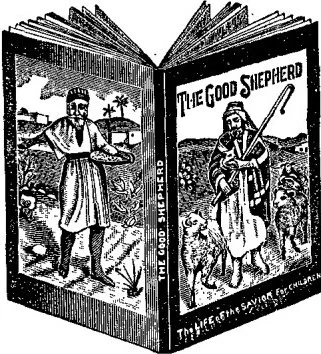
The Good Shepherd:
The Life of the Saviour for Children.
Beautifully Illuminated Covers!
Fifty-three Illustrations!
Interesting Reading!
Ninety-six pages,
Large print,
Good paper,
Strong binding.
This book, which is 8x10½ inches and ½ inch in thickness, tells the story of the life of Christ in a way that cannot fail to interest the little folks. It is exceptionally free from doctrinal errors, and should be in every family where there are children to be taught a Saviour’s love. The illustrations add very much to its educational value. Price, only 50 cents*.
PACIFIC PRESS PUB. CO.,
39 BOND STREET, - - NEW YORK CITY
THE CYCLONE STILL WHIRLS.
Be Sure You Don't Miss the Whirl this Fall and Winter,
For if you do you will miss a chance of a lifetime to make fine wages at a time of the year when nothing else can be accomplished. It will win you friends, and hold its trade as no other article that is now on the market will do.
Give it a trial and your success is certain
See what others say:
Dr. J. H. Kellogg, in Good Health, says: The manufacturers of the Cyclone Washer, Messrs. Coon Bros., are evidently meeting with great success in the manufacture of their very useful invention. Their business has attained such proportions that they have found it necessary to erect a large commodious building for the manufacture of their washers, hundreds of which they are sending out every month to all parts of the United States. That the Cyclone Washer greatly lessens the labor of washing day and may be considered one of the most successful of the numerous devices for accomplishing this purpose, is attested by hundreds of grateful wives. We have every reason to believe that the machine is all that it is claimed to be by the manufacturers.
Agents wanted in every county.
Address, COON BROTHERS, 18-20 Hanover St., Battle Creek, Mich.
Interesting Facts
Is the name of a neat little book of 96 pages, 4½ x 5 inches bound in heavy paper, brim full of “interesting facts,” questions and answers on different subjects, religious and political:
“A Father's Talk to a Careless Daughter,”
“How to Bring Up a Son,”
“How to Bring Down a Son,” etc., etc.
The last 21 pages are an album containing the portraits of 21 different sovereigns of Europe, and is worth alone the price of the book.
Regular price, 25 cents; we will send it post-paid for 20 cents in stamps. Address, PACIFIC PRESS PUB. CO., 39 Bond Street, New York.
THE NATIONAL SUNDAY LAW.
Arguments in behalf of the rights of American citizens, presented by A. T. Jones in opposition to the Blair Sunday Rest Bill. A thorough catechism upon the subject of Church and State. 192 pages. Price, 25 cents. Send for Spring Catalog of Publications.
PACIFIC PRESS PUBLISHING CO.,
39 Bond Street, New York City.
Oakland, Cal.Kansas City, Mo.
YOUNG PEOPLE'S LIBRARY.
SERIES 1.
AMONG THE NORTHERN ICEBERGS. By Emma H. Adams. Interesting sketches of Arctic expeditions of England and America in the nineteenth century. It is a book which will fascinate young folks, and add materially to their stock of knowledge. 12mo, 160 pages, illustrated, cloth, ...60c
FIJI AND SAMOA. By Emma H. Adams. A graphic and interesting description of the Fijian and Samoan Islands, their geographical position, their government and religion, their social and physical peculiarities, and the wonderful productions of these Islands. 12mo, 160 pages, illustrated, cloth, ...60c
JACK THE CONQUEROR, Or Overcoming Difficulties, and other stories. These are not light, trashy, improbable tales, but they present some of the real difficulties which nearly all boys and girls are compelled to encounter, and point out the best way to meet them, so as to make the difficulties aids to higher attainments. 12mo, 160 pages, illustrated, cloth, ...60c
SAVONAROLA. By Emma H. Adams. The little volume is a graphic sketch of the most prominent events of this great preacher's life and experience, the monasticism of the fifteenth century, the iniquities that prevailed, the political influence of Savonarola, his trial and death. 12mo, 160 pages, illustrated, cloth, ...60c
THE TONGA ISLANDS AND OTHER GROUPS. By Emma H. Adams. This volume is for the Tonga Islands what “Fiji and Samoa” is for those groups. But there is no sameness in the two. The islands, people, customs, and products are sufficiently varied to make another volume equal to or exceeding in interest the first. 12mo, 160 pages, illustrated, cloth, ...60c
LETTERS FROM THE HOLY LAND. By Henry A. Harper. Illustrates many customs and practices, people, and things, so different from those of our own land. The reading of the book will make more interesting the study and reading of the word of God. 12mo, 160 pages, illustrated, cloth, ...60c
Either volume of this series will be sent postpaid on receipt of price. The complete series, six volumes put up in a neat box, will be sent postpaid for, ...$2.95.
PACIFIC PRESS PUB. CO., 39 Bond St., New York
18 W. Fifth St., Kansas City, Mo.
12th & Castro Sts. Oakland, Cal.
BIBLES
IBLES
A LARGE AND VARIED STOCK.
Pacific Press Publishing Co., 39 Bond St., New York.
Gospel Work Versus Uniting Against Christ's Enemies
The gospel is the wisdom of God embodied in a plan to win back the human enemies of Christ to a state of loyalty to him. Therefore a summons sent forth “in the name of the Lord of hosts,” “to the followers of Christ, to unite against his enemies,” is not a summons to gospel work, but to the opposite of that work. God and Christ are not “against” their enemies, as the representatives of the “Christian citizenship” idea would teach by their “summons” to Christ’s followers. “For God so loved the world [his enemies] that he gave his only begotten Son, that whosoever believeth in him should not perish, but have everlasting life.” John 3:16. And “God commendeth his love toward us, in that, while we were yet sinners, Christ died for us.” Romans 5:8. Those who unite in a confederacy now against the enemies of Christ, or those whom they may deem such, may rest assured that they are working at cross purposes with the world’s Redeemer.
The Christian Ambassador and Earthly Government
By Editor
Apropos to our first-page article is this thought: It is contended by some that “the Christian being an ambassador for Christ can have no more part in the affairs of an earthly government than the English ambassador could have in the affairs of the United States.” But to us it does not seem that the cases are at all parallel. The ambassador of Christ is not accredited to nations, but to individuals. His mission is not to induce men to turn from the governments of this world to God, but from Satan to God. Neither is it the business of an ambassador of an earthly government to induce men to transfer their allegiance from one government to another; but his business is to adjust differences between his government and that to which he is accredited, and to see that the rights of the citizens of his own government temporarily living under the government to which he is sent are protected. But surely the duty of the Christian is not to adjust differences between the governments of earth and the government of God. To so assert would be to deny the former proposition that the Christian could have nothing to do with the affairs of earthly governments. Neither can we believe that it is the duty of the Christian to concern himself chiefly with the rights of Christians as such. His mission is, pre-eminently, to beseech men to be reconciled to God.
Court Ruling on Appointing an Ex-Officio Prosecutor
THE suggestion of the judge to appoint the attorney general prosecutor ex-officio was likewise contrary to law. The court has power to appoint the attorney general prosecutor ex-officio when he is satisfied that a crime has been committed, and no one appears to prosecute; but the appointment must be made before the indictment has been found and for the purpose of securing it, and not afterwards. It is too late to make such appointment when the case comes up for trial. However, we do not wish to censure the judge. It does not appear from the record that he was at all disposed to persist in this matter, and indeed we have private information that he made the suggestion only to give the attorneys an opportunity to argue the question, as he wished to hear what they had to say upon it. He is said to be a fair-minded, honorable man.
Christ Enthroned in the Hearts of Citizens
WHAT our country needs is not the enthronement of Christ in political parties or in the civil government, but his enthronement in the hearts of individual citizens. “The kingdom of God is within you.” The body is the temple of God, and the heart is his throne. The kingdom is now the “kingdom of grace.” It will not be the kingdom of glory on this earth until Christ comes in glory to set it up, and the new Jerusalem, its capital, descends in glory from God out of heaven, as set forth in Rev. 21: 2, 10, 11.
Can Men Destroy the Sabbath or the Church
“DESTROY the Sabbath and you abolish the church,” says the advocate of Sunday laws. But no man or organization of men can either destroy the Sabbath or the church. For fifty years the seventh-day Sabbath has been making steady headway against all opposition, and is to-day gaining ground more rapidly than ever, though contrary to the popular practice, and without the aid of a single human law, and even against that law in many places. What the Lord is back of, man cannot destroy; and if he is not back of a religious institution, the sooner it is destroyed the better:
Catholic Archbishops Meeting and Cardinal Gibbons's Statement
THE recent annual meeting of the Roman Catholic archbishops of the United States at Washington, D. C., was precluded by a statement issued by Cardinal Gibbons on the morning of 22nd inst., to the effect that the utmost harmony exists among their members, inclusive of the Catholic University directors, and there are absolutely no factional or sectional differences; adding: “The election of the candidates for the rectorship was practically unanimous. To speak of the triumph of this or that party, of conservatism or liberalism, Americanism or nationalism, is to entirely misrepresent the whole situation.”
The cardinal added that “all the members are equally American in spirit;” which is not saying much, however, since Romanism is utterly opposed to the principles of free government.
Reavis Letter on the Philpott Indictment
THE letter on page 342, from D. W. Reavis concerning the Philpott indictment, is interesting matter. The facts as stated in the letter show clearly that the Grand Jury in indicting Mr. Philpott as they did, for violation of the “law,” were themselves guilty of violating law.
Grand Jury Overreach in Tennessee Indictments
By Editor
As stated by us some weeks ago, the law of Tennessee gives grand juries inquisitorial powers only in certain cases. In all other cases some citizen must take the initiative, furnish the evidence, and sign the indictment as prosecutor. It is evident that in this case the grand jurors themselves took the initiative, summoned witnesses, and then without any authority endorsed upon the indictment the name of one of these witnesses as prosecutor. We believe that there have been other similar cases in Tennessee. We know that at the July session of court in Lake County, the grand jury summoned witnesses, and took every step in the finding of indictments up to the point of endorsing some name upon them as prosecutor. No one was willing to appear in that role, and so the indictments were not returned into court. The proceeding, however, was not the less illegal, simply because it was not fully carried out. Grand juries in Tennessee have no business to institute such proceedings in “nuisance” cases.