Pacific Press Publishing Company · New York · Jul 9, 1896
IS SUNDAY A CIVIL INSTITUTION?
That Sunday is primarily a religious institution nobody will deny.
In the case of Hennington vs. the State of Georgia, the Supreme Court of that State said:—
With respect to the selection of the particular day in each week which has been set apart by our statute as the rest day of the people, religious views and feelings may have had a controlling influence. We doubt not that they did have; and it is probable that the same views and feelings had a very powerful influence in dictating the policy of setting apart any day whatever as a day of enforced rest.
But notwithstanding this admission, the Georgia court, as our readers know, sustained the statute on the ground that it could “fairly and rationally be treated as a legitimate police regulation.” In reviewing the case the Supreme Court of the United States, as our readers are also aware, adopted both the reasoning and the conclusions of the State court, thus sustaining a confessedly religious statute, Justices Fuller and White only dissenting.
Let us analyze this confession of the religious origin and character of Sunday laws, and see just what is admitted by the high tribunals making it. (1) “Religious views and feelings” had “a controlling influence” in selecting the day of rest. (2) The same views and feelings “had a very powerful influence in dictating the policy of setting apart any day whatever as a day of enforced rest.”
It is difficult to see how, in the face of such admissions, any court could hold, as did the Supreme Courts of Georgia and of the United States, that a Sunday statute is “a legitimate police regulation.”
Enforced Sunday rest can have no justification except on the hypothesis that Sunday labor is immoral; and such labor can be held to be immoral only on the ground that it is irreligious. But it ought not to require any argument to show that no such question can become “a legitimate” subject of “police regulation.” It is to be feared that the same “religious views and feelings” which confessedly “had a controlling influence” in the making of the Georgia Sunday statute had a like influence in sustaining it in the State and Federal courts.
The police power is “hard to define,” but it will be admitted that it has its limitations. A law writer of some note has well said of this power that it is “unquestionably limited to the prevention of interference by one man with another.” “The fact,” continues the same author, “that a man’s conduct, his behavior, or his manner of living, may be unwise, in view of his own position, or his health, and may result in injury to himself alone, physically or morally, affords no ground whatever for the interference of the ‘police power’ with his proceedings. It is settled that the State may compel an unwilling citizen to be vaccinated. But on what ground?
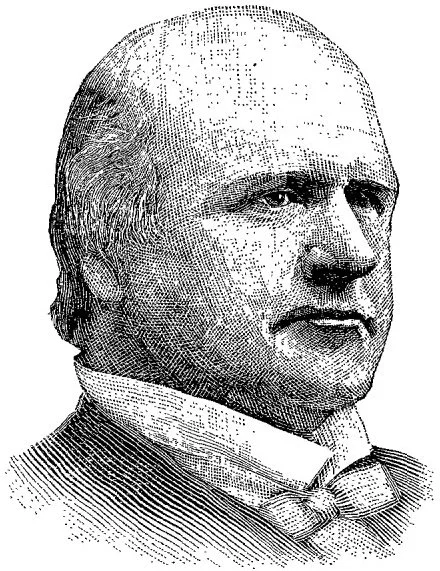
Chief-Justice Melville W. Fuller.
Not because if he remains unvaccinated, he would be liable to catch the smallpox; nor yet because if he did catch it, he would probably die; but solely because his unvaccinated condition renders him specially liable to become a source of contagion to others. This is an extreme case. But beyond this the police power certainly could not go in this country. It could not, for example, compel a man with a weak back to wear a porous plaster, a man with caries to submit to amputation, a man with dyspepsia to take exercise, or a tired man to rest, because the suggested proceeding may be an advisable one in each case for the individual’s own interest.”
These observations are so apt and the truth stated so evident and the application of the principle to Sunday legislation so easy, that but for the exceedingly potent “religious views and feelings” to which Sunday statutes owe both their existence and maintenance, they must certainly ere this have been relegated to that period of the world’s history when “the church” was supreme over the State and the Pope set up and deposed kings at his will.
The opinions of both the courts to which we have referred make mention of the “health” of the people as guarded by compulsory Sunday rest, but the idea is absurd. Even if it were demonstrated that a regular weekly period of rest was essential to health, it certainly could not be shown that that rest could not be had just as well on some other day as on Sunday. It is a fact that about one million persons in the United States do not take this rest upon Sunday, but upon the seventh day of the week; and they are not only not more unhealthful than those who rest on Sunday, but they are on an average actually even more healthful, but, it must be admitted, from causes quite aside from their weekly rest.
As we have seen in the very outset of this article, the Supreme Courts of the State of Georgia and of the United States of America, both confess the religious character of Sunday laws; but it may be of interest to add some additional testimony to the same effect. Says Mr. Tiedeman: “The most common form of legal interference in matters of religion is that which requires the observance of Sunday as a holy day. In these days the legal requirements do not usually extend beyond the compulsory cessation of labor, the maintenance of quiet upon the streets and the closing of all places of amusements; but the public spirit which calls for the compulsory observance of these regulations is the same which in the colonial days of New England imposed a fine for an unexcused absence from divine worship. Although other reasons have been assigned for the State regulation of the observance of Sunday in order to escape the constitutional objections that can be raised against it if it takes the form of a religious institution, those who are most active in securing the enforcement of the Sunday laws do so because of the religious character of the day, and not for any economical reason. . . . The effectiveness of the laws is measured by the influence of the Christian idea of Sunday as a religious institution.”
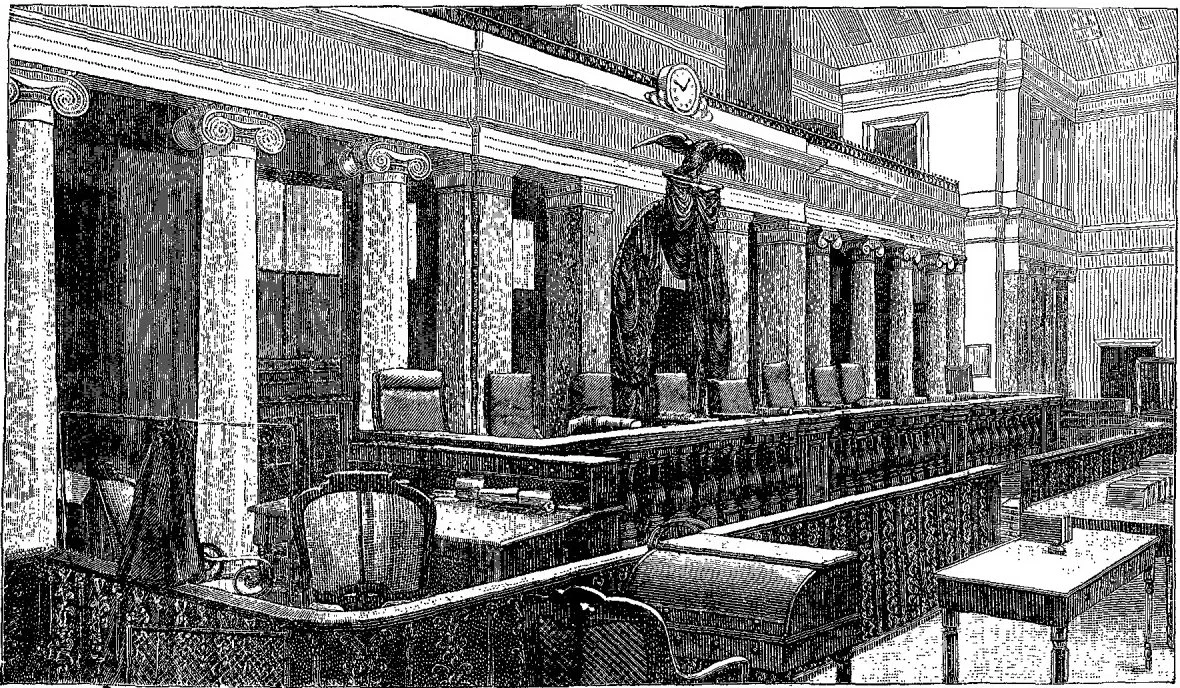
View of U. S. Supreme Court Rooms.
In like manner Judge Cooley remarks that “it is clear that these laws are supportable on authority notwithstanding the inconvenience which they occasion to those whose religious sentiments do not recognize the sacred character of the first day of the week.”
Scores of authorities and of cases might be cited to prove that which is so patent in the Georgia case that it would be readily seen, even had the State and Federal courts not both admitted it, namely, that Sunday laws originate in, and are sustained by, “religious views and feelings,” and that they are therefore “civil” only in the sense that they are made a part of the legislation of the State. A State “law” requiring the subject to be baptized or to partake of the Lord’s supper, or to do any other religious act, would be “civil” in just the same sense.
The idea that “religious views and feelings,” where strong enough and held by a sufficiently large number of the people, can be crystallized into civil statutes and be enforced upon all the people by the civil power, is utterly subversive of the principles of both civil and religious liberty. It ignores and even practically denies the existence of natural rights, and casts to the winds constitutional guarantees of freedom of conscience, which, to be of any value, must carry with it freedom to act in accordance with the dictates of conscience. To say that a man is free to believe as he will, means nothing unless he is also free to act upon his faith, limited not by the faith of the majority, but by the equal rights of his fellowmen, be they many or be they few.
But mischievous as is this idea which subordinates the individual conscience to the will of the majority, or to the will of those having control of legislation and of the courts, it has in this Georgia case been fully adopted by the Supreme Court of the United States as it was adopted and declared by a United States Circuit Court, in the King case, in Western Tennessee, August 1, 1891.
JESUS CHRIST AND THE KINGDOMS OF THIS WORLD.
By S.
The National Reform theory of “Christian” civil government sets forth Jesus Christ as the present civil ruler over the nations. Says the Christian Statesman of June 20:—
God rules over men in the person of his son, Jesus Christ. This is the testimony of the Word. “And Jesus came and spake unto them, saying, all power is given unto me in heaven and in earth.” “Jesus Christ, he is Lord of all.” “Our Lord Jesus Christ . . . who is the blessed and only Potentate, King of kings and Lord of Lords.” “Jesus Christ . . . the prince of the kings of the earth.” “He is Lord of lords and King of kings.”
The “clear testimony of the Word,” however, comes very far from justifying any man-made theocracy, which is what is demanded by the theory that Jesus Christ should rule the nations to-day through human agents. In ancient times God established a theocracy, and he could do the same again if he so chose to-day. But the people had nothing to do with it, except to acquiesce in his arrangements. A true theocracy cannot be set up by fallible, erring mortals.
But it is not God’s plan that another theocracy should be established while the earth remains in its present state. The “clear testimony of the Word” is explicit upon this point. Those who appeal to Scripture should not ignore plain Scripture declarations.
It is true that the Lord sits upon the throne of universal dominion, and “his kingdom ruleth over all.” But it is true that in this present world his authority is almost universally ignored and his laws trampled under foot. We cannot look around us anywhere without seeing this. Must we conclude then that God is unable to enforce his laws? No; certainly not. If he chose to compel men to keep them,—to use force, as is done in civil government—he could terrify men into submission, or could annihilate in a moment every transgressor of his precepts. And by the rule of civil government something like this would be necessary; for in civil government the penalty of the law must be executed, and the penalty for transgression of God’s law is death.
But now, we are living under the merciful regime established by God himself, for the salvation of transgressors from sin and death. God is dealing with men through the provisions of the gospel, and will continue thus to do until the period of human probation is ended. And therefore, while he is the supreme ruler over all, and while Jesus Christ is exalted to a position of power and authority far above that of any earthly ruler, his power is manifested in his divine providences which overrule the purposes of man, rather than by the direct agency of earthly potentates.
God has ordained civil government upon the earth. “The powers that be are ordained of God.” Rom. 13:1. No sensible person could suppose that God would have the world in confusion and anarchy. But because he has ordained that there should be civil rulers, it does not follow that we are bound by every decree or “law” which they may enact. King Nebuchadnezzar was a civil ruler ordained of God, but the three Hebrews were justified in disobeying his “law” concerning worship of his golden image. The divine rule was given by Peter and John: “We ought to obey God rather than men.” Civil government was not ordained to take the place of conscience or be its guide. The ordinances of men sometimes come in conflict with the requirements of God; and we are never justified in disobeying God.
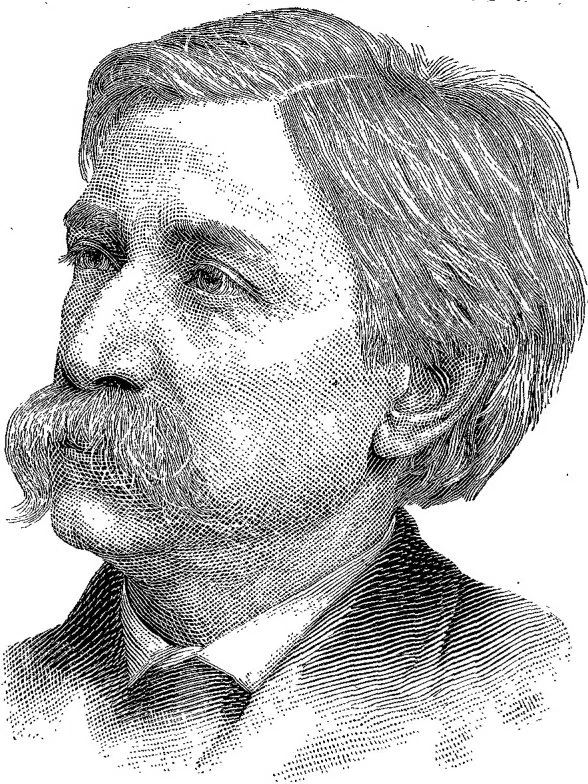
Justice Harlan. (Who wrote the recent U. S. Supreme Court decision sustaining Sunday "laws.")
As before stated, it is very clear from the testimony of the inspired Word that the purpose of God does not contemplate any reestablishment in this age of his ancient theocratic government. To arrive at a different211conclusion it is necessary to ignore some very prominent and important Scriptural truths.
1. Christ’s kingdom is not of this world. This the Saviour plainly stated when he stood before Pilate, and the meaning of his words is not doubtful. “If my kingdom were of this world,” he added, “then would my servants fight, that I should not be delivered to the Jews.” John 18:36. His kingdom therefore does not pertain to the domain of civil authority; for the exercise of such authority is inseparable from force of arms. If Christ were a civil ruler over men, force would be everywhere exercised for the suppression of wrong, and there would be no such thing as persecution of Christians. But he permitted the Jews to seize him, rebuking Peter for drawing the sword in his defense, and suffered himself to be put to death upon the cross. And he has never instructed his followers to use force against those who would deprive them of life or property.
2. The “prince of this world” who “worketh in the children of disobedience,” is Satan. John 14:30; Eph. 2:2. The devil is now permitted to work out his evil purposes among men, not because God has not the power to stop him, but because the exercise of preventive force does not pertain to his present method of dealing with sinners. He will manifest his power as sovereign ruler over all things the moment that mercy ceases to be held out to sinners through the provisions of the gospel.
3. Christ refused to be made a king by the people. John 6:15.
4. He refused to receive the kingdoms of this world as a gift from the devil. Matt. 4:8–10. The Saviour knew that the possession which Adam had lost by becoming the servant of Satan, must be purchased back by the blood of the cross. The kingship of this world can no more be put in the hands of Christ by the act of sinful man than by the gift of Satan.
5. This present world is not reserved to be the abode of righteousness and the visible kingdom of Christ, but is reserved unto fire, which shall consume it at the great day of destruction and perdition of ungodly men. 2 Pet. 3:7.
6. The “kingdom, and dominion, and the greatness of the kingdom under the whole heaven,” is finally to be given to “the people of the saints of the Most High.” Dan. 7:27. This necessitates the destruction of the wicked, by whom the world is now filled.
7. In this world the many go in the broad road that leads to destruction, and but few walk in the path that leads to life. Under such a condition of things no Christian civil government on earth could be possible.
8. When God sets up his kingdom on the earth, all earthly kingdoms will be swept away like chaff before it; they will be visited with eternal destruction. Dan. 2:34, 35, 44, 45.
9. The kingdoms of this world are not given into the hands of Christ until the time comes when God will judge the dead and bestow the rewards upon his servants. Rev. 11:15, 18. This takes place in connection with the second coming of Christ in the clouds of heaven. Matt. 16:27.
10. When Christ takes the kingdoms of this earth, it is only to “dash them in pieces like a potter’s vessel.” Ps. 2:8, 9. This is the only thing that can be done with unrighteous kingdoms.
11. The actual scene which this earth will present when Christ comes will be that of “the beast [Papacy], and the kings of the earth, and their armies, gathered together to make war against Him [Christ] that sat on the horse, and against his army.” Rev. 19:19. And the outcome is that the former are utterly destroyed before him. Verses 20, 21.
All these are truths of great scriptural prominence and of the utmost consequence, which the party who are trying to reform this present world by religious legislation entirely ignore. Yet they talk to us about the “plain teaching of the Scriptures,” and the “clear testimony of the word,” as being in harmony with their unchristian and impossible undertaking.
The only purpose of the gospel of Christ in our world to-day is to save individuals. For this purpose let the gospel be preached in all the world, as “the power of God unto salvation to every one that believeth.” Salvation can come only through faith, which is individual belief. As for the earth and the kingdoms and governments upon it, they are reserved unto the day of destruction and perdition of ungodly men, when they will utterly pass away, just as the word of God has said. S.
PLANS TO UNITE CHRISTENDOM.
By S.
Two plans for the “reunion of Christendom” are now before the religious world for consideration.
One is the old familiar plan of Rome, elucidated by the popes and set forth again in the recent encyclical of Leo XIII., which amounts simply to an invitation to the Protestant and Greek churches to surrender to the church of Rome. The question of the validity of anglican orders has brought the papal plan of reunion into much prominence of late as a theme of discussion by leading minds in the opposing churches, but no definite action seems likely to result in the direction of the end sought. The pope is willing to receive all dissenting bodies graciously back into the fold of Rome as soon as they will come to him in humble submission. But they must come all the way to him; he will make no material advance toward them.
The other plan is not altogether new, having been foreshadowed at times in the proceedings of certain Protestant bodies; but not until the recent session of the General Assembly of the Southern Presbyterian Church at Memphis, Tenn., has it assumed a definite shape. At that gathering, during the consideration of the report of the Committee on Sabbath Observance, the following was proposed as a part of the report, and “heartily adopted:”—
The permanent committee on the sabbath is authorized and directed to take such steps as may be necessary to arrange preliminaries for securing a united and simultaneous effort on the part of the different denominations of Christians in the United States to get up a mammoth petition to the civil authorities for the enactment and enforcement of laws to stop all unnecessary State and inter-State travel and traffic on the sabbath day.
Under the inspiration of this thought, the Christian Statesman turns its vision upon the near future and exclaims: “What a magnificent illustration would this be of the real unity of churches of Christ. In such practical work as this for the kingdom of our Lord will be reached the complete fulfillment of his prayer that all his people may be one.”
The Presbyterian Assembly has struck the key-note of union for the clashing religious sects; not, indeed, such union as that for which Christ prayed in his memorable petition for unity among his followers, but a union which will admit of a united expenditure of effort for a common purpose, that purpose being the exaltation of Sunday. Whatever else the churches cannot agree on, there is general unity upon the idea that Sunday is the Christian sabbath, and ought to be observed as such by all individuals. The plan proposed at the Presbyterian Assembly aims to set the churches into a grand concert of action upon this basis. We look for definite results in the line of “Christian unity”—man-made—from this beginning.
S.
SUNDAY IN GERMANY—THE OLD STORY.
By F. W. Spies
BY F. W. SPIES.
A close observer cannot fail to discover the similarity of procedure on the part of many religious leaders of the nineteenth century, as compared with the procedure of the so-called leaders in religious thought of the fourth and fifth centuries. We see in either case, an endeavor, to bolster up institutions, the reason for whose existence cannot be found in the Word of God. But, as these religious leaders profess to minister in the things of God, it is not at all strange that we should see them claiming divine origin for these institutions, if not by attempting to bring biblical proof of such origin, at least by attaching such names to them, as would lead the less well-informed persons to think they are really such.
But while the gospel is the power of God unto salvation to every one that believeth (Rom. 1:16), and hence all divinely-ordained institutions possess this power in themselves, it is just as evident that the power of God does not sanction and lend its aid to promulgate212these man-made institutions. Of this important truth, these religious leaders are painfully conscious; but as they do not see the need of coming back to the Lord’s way, and are determined to make the whole world recognize and bow to their way; and as they cannot, of course, have the coöperation of the Lord’s power to help them in their way, they seek for the only power available, the power of the State, to supply this lack.
Glancing back to the beginning of the fourth century, we see the bishops working for laws to secure the better observance of Sunday. About the first law enacted along this line, dates as is supposed from A. D. 314, and it requires that on Friday and on Sunday “there should be a suspension of business at the courts and civil offices, so that the day might be devoted with less interruption to purposes of devotion.” This was something gained, but not enough; and in A. D. 321 Constantine enacted his famous Sunday-law, which was broad enough to compel all “magistrates and people residing in the cities,” as also “all workshops,” to cease work on Sundays.
But as there were some who still observed the Bible Sabbath, this could not satisfy the bishops, and so accordingly we find in A. D. 363 the Council of Laodicea enacting a canon to the effect that “Christians shall not Judaize, and be idle on Saturday, but work on that day, but the Lord’s day [Sunday] they shall especially honor, and if possible, do no work on that day. If, however, they are found Judaizing, they shall be shut out from Christ.” But this did not suffice, and in the year A. D. 386 the older laws were more rigidly enforced, and, “in general, civil transactions of every kind on Sunday were strictly forbidden.”
But Sunday laws having from the beginning been enacted with the idea that the people might spend the day “with less interruption to the purposes of devotion,” the promoters of such legislation must have been considerably disappointed to see that the “faithful” were not disposed to go to church on that day; but being free, they chose rather to visit the public shows and the circus. So next came the complaint that the circus “proved a great hindrance to the devotion of the Christians,” and so the most natural step now was for the church-leaders to enact a canon, which they did at the council held at Carthage in A. D. 401, that “on Sundays and feast-days no plays may be performed;” the reason assigned being that “the people congregate more to the circus than to the church.”
But as the “faithful” did not have love enough for that which they professed to believe was right to do it, another step logically followed those already taken, and this was the doctrine that “it is indeed better that men should be brought to serve God by instruction rather than by fear of punishment or pain. But because the former means are better, the latter must not therefore be neglected.” And thus the Inquisition was the logical outgrowth of such a system of church government and doctrine. This is an illustration of how the church worked in the fourth and fifth centuries. But we ask, How is it to-day?
As early as 1850, the subject of a better observance of Sunday began to be agitated in Germany, and since then, different organizations have here been working to this end. In 1891 the first Sunday-closing bill passed the Reichstag and became a law. This law closed nearly all the business places on Sunday, stopping also all agricultural pursuits on that day. The milk stores, bakeries, groceries and butcher shops were permitted to open on certain hours, and hotels and beer saloons could be open all day. In April, 1895, another measure went into effect, closing all workshops on Sunday and permitting no work whatever in them. So if enforced idleness on Sunday can make a “Christian nation,” Germany ought certainly to be one. But although they have now come a good ways along the line of compulsory Sunday observance in Germany, what do they discover?
In a tract published in the beginning of the present year by the “Sonntagsschutzverein,” of Stuttgart, entitled, “Sunday Greeting for the New Year,” the author laments that they are compelled to hear the bitter word, “the greatest profit of the recent Sunday legislation comes to the hotels and beer saloons.” But this is not all they have observed. The writer continues: “It is well known that the greatest damage to persons and property occur between Saturday and Monday. This fact is only the plainest evidence of the incalculable evil, which has its origin in the beer shops, and especially on Sunday.”
It would almost seem, that after realizing such results, these men would cease working on this line, for such a confession as to the results of Sunday legislation is surely anything but a flattering promise of raising the moral standing of a nation. But what do we hear? Do these men who profess to know the Scriptures realize that the carnal mind is enmity to the law of God? Do they realize that to compel such men to be idle on Sundays, or any other days for that matter, is only to place them in the way of temptation and bring them into just such a condition? Will they view it thus and abandon their evil scheme? No! that will never do. Listen to what is now proposed: “It is a difficult matter to successfully combat this evil, but a truly discerning legislation and administration will find it necessary to work with all earnestness against the aberration of soul and body which results from this unbounded saloon life on Sunday.”
Here we have it. It is the old story, of forgetting God’s way, and trying to convert men by the power of the State. From the first Sunday law until the Inquisition was a number of centuries anciently, but at the progress things are taking in this nineteenth century, how long will it be until we will see the same results? May the Lord help those who do these things to see whither they are drifting.
Cassel, Germany.
MISREPRESENTING THE GOSPEL.
By S.
THE colored supplement of the Sunday World, of June 28, devotes a page to illustrations, picturing “the busy life of a great preacher,” under the “reform” régime of the present day. The illustrations present the well-known face and figure of a prominent New York City clergyman, and cover the principal events of one day’s work. He appears at 9:30 o’clock, A. M., seated at his desk, “giving out his views to the press.” At 10:30 he is shown inspecting the street-cleaners. At 11:30 he appears as prosecutor of a female delinquent in a police court. At 12:30 he interviews a prominent politician of the city. At 1:30 he takes tea and discusses matters of city government with the mayor in the latter’s office. At 2:30 he is in the criminal court to witness the proceedings in a prominent murder trial. At 4:30 he inspects a police parade, and at 8:30 appears in the final scene of the day as umpire at a prize fight.
There would be nothing about this worth mentioning were it not for the amount of truth which the illustrations represent. For the most part, they have been suggested by actual occurrences in the experience of the prominent clergyman before mentioned. And the worst of it is that the general public know that such illustrations do not fall far short of the truth. They get the idea that such exercises constitute a legitimate part of the work of a minister of the gospel; and thus the divine calling is lowered to a level where it is shorn of its beauty and power, and forfeits not only the reverence but even the respect of very many whom it should reach and save. S.
RELIGIOUS PERSECUTIONS.
[Red Wing (Minn.) Argus, June 18, 1896.]
Let it still be kept in mind that “eternal vigilance is the price of liberty,” and that in Tennessee, Mr. Lewis is still in durance vile, in Tiptonville jail, for doing quiet work on Sunday after resting on the seventh day of the week.
He writes that he is now kindly treated by the sheriff, but that when first arrested last November he was locked in an iron cage, in a room without fire and without sufficient clothing, and was nearly frozen to death, and may never recover from the effects. He makes no complaint. But all this will not make amends for the injustice and barbarity which may be laid at the door of the Sunday laws. While the Sunday laws are rigidly enforced, no person seems to be interested in the enforcement of the law for the proper care of prisoners, which is very explicit, providing for being comfortably housed and given good and sufficient food.
In Alabama a Mr. W. J. Hasty was condemned to the mines, recently, where he was to work out the fine and costs, amounting to $51.70, at 30 cents per day. This because his son, under age, plowed on Sunday, and testified that he did this work voluntarily. Mr. Hasty was found guilty by the jury, contrary to all evidence, contrary to the charge of the judge, and contrary to public sentiment. Yet they tell us that Sunday laws are just!
One of the ministers in Ontario, who was prosecuted for quiet work on Sunday, is now confined in Chatham jail, and fed on bread and water. In addition to this prisoners are allowed a dish of skilly—old-fashioned oatmeal gruel. But Mr. Simpson can’t bear even the smell of this dish. Yet he complains not, but is thankful for bread and water, and rejoices that he is accounted worthy to suffer for truth and right.
But where are we in this world’s history? Are we just entering the Dark Ages? Is this in “free” America?