The Youth’s Instructor, Vol. 32, No. 24.

WHO WAS LINNÆUS?

The Youth’s Instructor

Jun 11, 1884

S. D. A. Publishing Association · Battle Creek, Mich. · Jun 11, 1884
WHO WAS LINNÆUS?

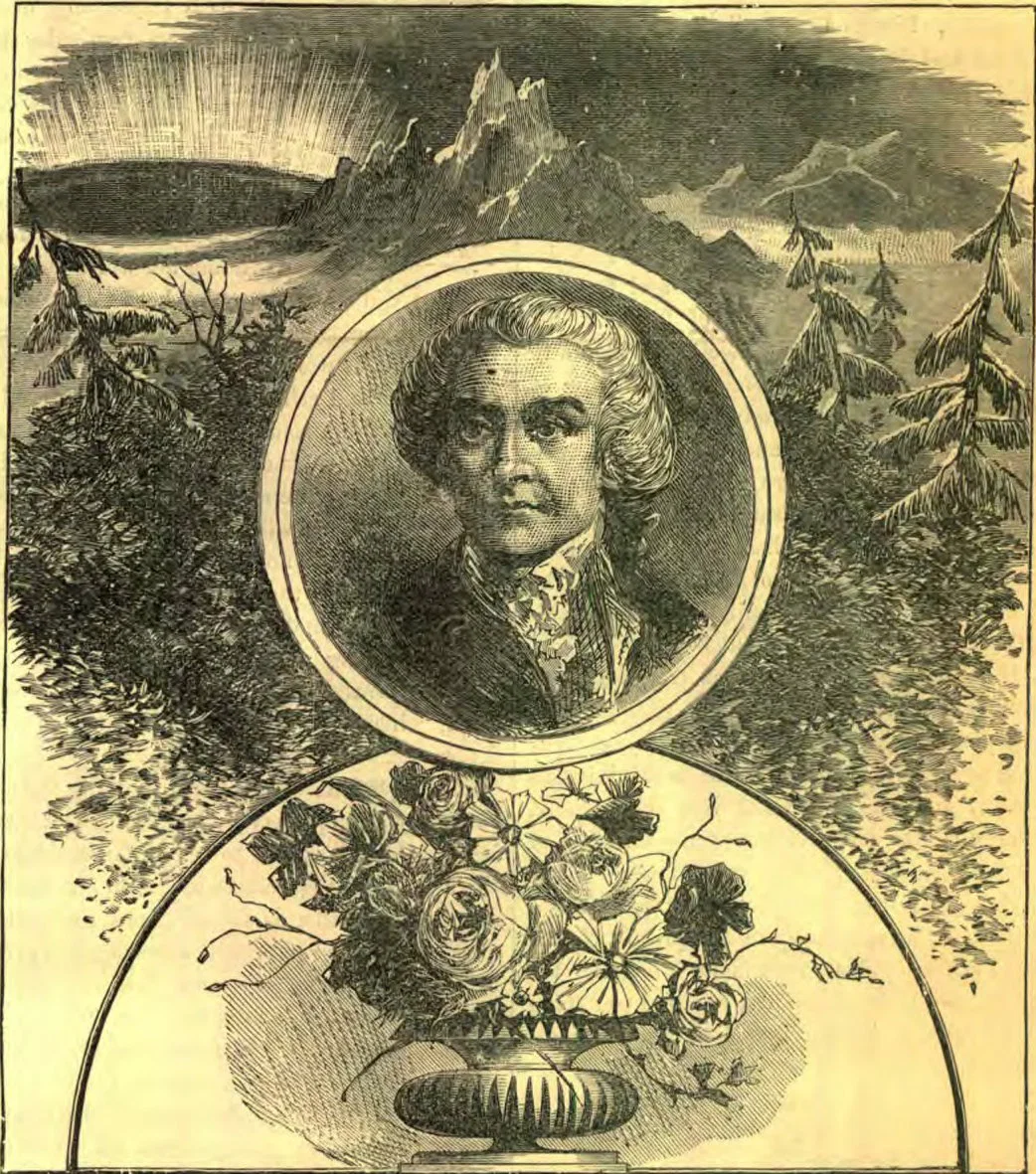
In an obscure little Swedish village, at the beginning of the last century, was born a boy who was destined to teach men more of the nature of plants than had been gathered by all the observers since the time when Solomon, with curious eye, noted the ways of the “hyssop on the wall.” This was Karl Linné, the son of a poor Swedish clergyman. As Linné he was known by his boyhood comrades, but when he came to address the learned world through books, he followed the custom of the old scholars, and wrote his name, as he wrote his works, Latin-wise; so that it is as Linnæus that we speak of the illustrious Swede.
Linnæus seems to have been born a botanist, and according to his own declaration, he was at once transferred from his cradle to a garden. His father had some knowledge of plants, and his uncle, who was his first teacher, had still more. In his diary he records that when he was four years old, he went to a garden-party with his father, and heard the guests discussing the names and properties of plants. He listened carefully to all he heard, and “from that time never ceased harassing his father about the name, quality, and nature of every plant he met with,” so that his parent was sometimes quite put out of humor by his constant questioning.
The lad was taught in a small grammar-school, where he showed so little taste for books that his father would have apprenticed him to a shoemaker, if a physician named Rothmann, who saw the boy’s love of natural history, had not taken him into his own house, and taught him botany and physiology. At one-and-twenty we find him, with an allowance of eight pounds a year from his father, a struggling student at the University of Upsala, putting folded paper into the soles of his old shoes to keep out the damp and cold, and trusting to chance for a meal. Nevertheless, he diligently persevered in attendance upon the courses of lectures—the more diligently, perhaps, because of his poverty.
In 1736, after meeting with many kind friends in his straitened circumstances, and making a long botanical journey to Lapland, he went to Holland, where he formed the acquaintance of a rich banker named Cliffort, who was also a great botanist. This was the turning-point of Linnæus’s life. Mr. Cliffort invited him to live with him, treated him like a son, and allowed him to make free use of his magnificent horticultural garden. He also sent him to England to procure rare plants, and gave him a liberal income. This continued for some time, till Linnæus’s health began to fail, and he found, besides, that he had learned all he could in this place, so he resolved to leave his kind friend, and pursue his travels.
At last he settled down as professor of medicine and natural history at Upsala, where he founded a splendid botanical garden, which served as a model for many such gardens in other countries. His struggles with poverty were now over forever, and his fame as a botanist became world-wide. He used to go out in the summer days with more than two hundred pupils to gather plants in the surrounding country, and many celebrated people came to Stockholm to attend Linnæus’s “excursions.” Then, as his pupils spread over the world, he employed them to collect specimens of plants from distant countries, and he himself worked incessantly to classify them into one great system.
In 1774, while lecturing on botany, he was seized with apoplexy, and two years later a second attack paralyzed him and impaired his faculties; so that the remaining months of his life were passed in mental darkness, which the sight of the flowers and opening buds and other familiar and beloved objects could never wholly dispel. His death, in 1778, was the signal for a general mourning in Upsala; a medal was struck, and a monument erected to his memory, and the king of Sweden pronounced a eulogy on him in a speech from the throne.
In stature, Linnæus was diminutive, with a large head and bright, piercing eyes. It is said that his temper was quick, but he was easily appeased, and he had pleasant relations with his scientific friends and associates. His was indeed a noble life. Truth-loving and enthusiastic, he had toiled, even when poor, for science and not for wealth; and when he became famous and rich, he helped his pupils, and lived simply and frugally till his death. After the death of Linnæus, his mother and sisters sold his collection of plants to an Englishman named Dr. Smith. The king of Sweden was at this time away from Stockholm, but as soon as he returned, and learned that such a valuable national treasure was on its way to England, he sent a man-of-war to try and bring it back. A very amusing chase then took place. Dr. Smith did not mean to lose his prize if he could help it; so he set full sail, and by good seamanship reached London without being overtaken. Thus the Linnæan collection was transported to England, where it still is.
Some persons suppose Linnæus to have been the founder, or father, of botany. But to think in this way about any man is to think very superficially. No science is ever the creation of any one man or of any one age, but of many men through many ages. Every science “cometh from afar,” and is a plant that has its roots deep in antiquity. Nevertheless Linnæus did a great many things for the science he loved. And the first and greatest thing of all was that he gave a second or specific name to every plant.
Before the time of Linnæus, botanists had given but one name to a set of plants; calling all roses, for example, by the name rosa, and then adding a description to show which particular kind of rose was meant. This was, of course, extremely inconvenient. It was as if all the children in a family were called only by their father’s name, and we were obliged to describe each particular child every time we mentioned him; as, “Smith with the dark hair,” or “Smith with the long nose and short fingers.”
The other useful point in Linnæus’s system was the accurate and precise terms he invented for describing plants. Before his time, naturalists used any words which suited them, and, as different people have often very different ideas as to what is meant by long or short, round or pointed, etc., the descriptions were often of very little value. But Linnæus could not work out his system without using very clear terms, and explaining beforehand what he meant by them; and as his system of names was soon followed in other countries, botanists in all parts of the world were able to recognize at once what was meant by the description of any particular plant.
Since the death of Linnæus, very great advances have been made in the study of plants, and his artificial system has been for the most part replaced by the natural system of later botanists. Nevertheless, his glory can never fade. If they are the greatest philosophers who bring together the largest number of separate facts under a common law, then does Linnæus rank high in this illustrious company; for his mighty hand it was that first seized the infinitely varied forms of vegetable life, from tropic palm to Arctic lichen,—that seized them, and, binding them together by the band of a great generalization, gave to the world, in one colossal bouquet, all the children of Flora.—A. B. Buckley, as adapted for Readings in Nature’s Book.

FLOWERS

Speak full well, in language quaint and olden, One who dwelleth by the castled Rhine, When he called the flowers, so blue and golden, Stars, that in earth’s firmament do shine.
Stars they are, wherein we read our history, As astrologers and seers of eld; Yet not wrapped about with awful mystery, Like the burning stars which they beheld.
Wondrous truths, and manifold as wondrous, God hath written in those stars above; But not less in the bright flowerets under us Stands the revelation of his love.
Bright and glorious is that revelation, Written all over this great world of ours; Making evident our own creation, In these stars of earth, these golden flowers.
Everywhere about us they are glowing,— Some like stars, to tell us Spring is born; Others, their blue eyes with tears o’erflowing, Stand like Ruth amid the golden corn;
Not alone in Spring’s armorial bearing, And in Summer’s green-emblazoned field, But in arms of brave old Autumn’s wearing, In the center of his brazen shield;
Not alone in meadows and green alleys, On the mountain top, and by the brink Of sequestered pools in woodland valleys, Where the slaves of nature stoop to drink;
Not alone in her vast dome of glory, Not on graves of bird and beast alone, But in old cathedrals, high and hoary, On the tombs of heroes, carved in stone;
In the cottage of the rudest peasant; In ancestral homes, whose crumbling towers, Speaking of the Past unto the Present, Tell us of the ancient Games of Flowers;
In all places, then, and in all seasons, Flowers expand their light and soul-like wings, Teaching us by most persuasive reasons, How akin they are to human things.
And with childlike, credulous affection We behold their tender buds expand; Emblems of our own great resurrection, Emblems of the bright and better land.
—Longfellow.

EDITOR'S CORNER.

DON'T see any need of being so particular about this work, mother; no one will ever see how it is done.” Thus spoke a little girl about twelve years of age, when her mother was correcting her for not doing her work well.
What did mother say to her? Just what all good mothers would say, “Whatever is worth doing at all, is worth doing well.”
The boys and girls who do their work well only when they think somebody will examine it, and do it in a shabby, slipshod manner when they think it will not be seen, are quite likely to be exposed at a time when they will appear to great disadvantage. But this is not the worst that comes from the practice; for those who continue it are really learning lessons in dishonesty; and in a little while, instead of doing anything from principle, it will be their constant study to know where they can shirk, which, in the sight of God, is just as dishonest as any other trickery.
Many persons see no harm in doing their work carelessly or imperfectly; but Paul, after instructing the Colossians how to render faithful service in their home duties, sums up, “And whatsoever ye do, do it heartily, as to the Lord, and not unto men.” The Lord especially warns against eye-service,—that is, doing our work just to please men. He desires our best efforts in all we do; so we must do no sham work. Whatever the girls have to do, they should make it a point to do the best kind of work; the boys should do the same with their daily tasks. The better you perform all your duties, the better service you will render to God.
How quickly the shirk can be detected, when she takes hold to help. The dishes are not half dried, the floors are carelessly swept, the table-cloth must be refolded, and so with all that is touched,—it is all botch work; and it is pretty certain that unless a reform is begun, the efforts of such to gain eternal life will be counterfeit.
You have no doubt heard of the celebrated David Maydole, the best hammer-smith in the world. He was no shirk. He remarked to a visitor at his establishment that he had made hammers for twenty-eight years. “Then,” said the visitor, “you must be able to make a pretty good hammer.”
“No, sir,” said Mr. Maydole, “I never made a pretty good hammer. I make the best hammer that is made in the United States.”
It is said that the old cathedral builders finished the smallest parts of their great buildings “as conscientiously as the most massive parts. The gilded spires, far away in the clouds, which no human eye could ever inspect, were made with as much care as the altar-moldings, or the carvings on the great doors, which all would see. They slighted nothing because it was not to be exposed to human gaze. They worked for the great Taskmaster’s eye.”
An ancient sculptor was once asked why he carved so carefully some parts of his work which would be hidden in the wall. “Ah! the gods will see it,” was his answer. Thus it should be with us,—whatever our hands find to do, should be done as unto the Lord, who inspects all our work, and will reward us according as we have done well or ill.
“Nothing useless is, or low; Each thing in its place is best; And what seems but idle show, Strengthens and supports the rest. “In the elder days of art, Builders wrought with greatest care Each minute and unseen part; For the gods see everywhere. “Let us do our work as well, Both the unseen and the seen; Make the house where gods may dwell, Beautiful, entire, and clean.”
M. J. C.

A BOY'S POUND.

MORRIS sat on the roof of the old corn crib, looking down on a load of wood to be cut and put away in the wood-house. Beyond was the garden, overgrown with weeds, and close to the garden gate was the kitchen door.
From his high seat, Morris could look in at the open door, and see his mother, as she walked with quick step, back and forth, preparing supper for the harvest men.
“Mother must be warm and tired,” he thought. He wondered if any other family in the country had as much trouble as their family? His father was ill,—there came the doctor round a turn in the road, to see him; his brother Dick had broken his arm; Hannah, the housemaid, was gone,—there was no one to help his mother now in the busy harvest time! If only his sister were home from school! Morris had never before wished so earnestly for a man's strength. “I could chop the wood, and put the garden in order, and get things straight,” he said. Then he looked at his feet and hands, and sighed to think that they were only a boy's feet and hands!
But wishes and sighs could do no good. He was tired of his high seat, and tired, too, of the sight of the lazy turkeys strutting up and down across the lawn. He scrambled down some way or other, putting his hands in and out of the lattice-work, breaking the strips in one or two places, thus helping to make the general appearance of things more forlorn.
Morris ran by the kitchen, and jumped in through the window into the sitting-room. If he could not work, he could read, and drive the thought of all those stupid things out of mind. He found just such a story as he liked. It was about the building of a ship. He read every word: how, day after day, the workmen were busy on the several parts; and how the time came, at last, when the noble thing was to be launched and to begin its work.
He read how the crowd began to gather. How great strength was put forth, and how every one expected to see the ship pushed into the water. It all seemed so real to Morris that he felt himself one of the crowd, ready to shout as loud as any one.
But what was the trouble? Why was so much strength put out in vain? The vessel would not move! People wondered. Just then a boy came pushing through the crowd, crying: “Let me try, captain, I am small, but I can push a pound, at least.”
The people laughed at the boy. Some even tried to push him back. But he was a brave little fellow. He ran with all his might against the ship, and lo! off it glided into the water.
Then there went up a shout of triumph. The men who had laughed at the boy a moment before, now praised him, and declared that it was just his pound of help that was needed to launch the ship.
“He was only a boy!” exclaimed Morris. Then, quick as a flash came the thought; “I am only a boy, too; but I might try to do something to help mother push our ship along.”
He jumped out of the window, and ran round to the kitchen door. There he stopped a moment, to consider what he meant by “our ship.”
“All the farm work, of course,” he said. “I might push, with my might, and resolve to get some of this wood split, and piled up, and some of those weeds out of the vegetable garden.”
He looked in at the door just then, and nodded his head, and smiled, and said:—
“As there is no ‘big sister’ about, mother, would you like me to set up the chairs, and stir the fire, and bring in a few armfuls of wood?”
“Thank you, Morris,” his mother said, a look of pleased surprise coming into her face.
“I do not feel as tired as I did a little while ago,” she said, an hour afterward, when Morris had been going in and out, drawing water, and bringing in wood, humming, meanwhile, two or three of his school songs.
“Why, Morris, you are as helpful as a ‘big sister,’” she added.
“O mother, I am glad! I see now how foolish it was to waste time wishing that I were a man. It was just that ship story, though, that opened my eyes.”
But his mother did not know what he meant by the ship story till she found time, an evening or two after, to talk the matter over with Morris.
—S. S. Times.

AN INDIAN COUNCIL

Written for the INSTRUCTOR.

AN INDIAN COUNCIL.

No doubt many of the INSTRUCTOR readers have heard of the councils that were held between the white men and the Indians in the early history of our country; but only a few have ever attended such an assembly. The writer has often read of these meetings with much interest, but little thought that he would ever be privileged to attend a council, however much he might wish for such an opportunity. However, the coveted occasion came at last, and we were invited to be present at a veritable Indian council.
In the far north-west, near where the Snake River empties into the noble Columbia, is a large tract of country that has long been the home of a band of Indians called the Wash-tuk-nas. It is not one of the regular tribes of that country, but is formed of fragments of the Snake, Umatilla, Spokane, and Yakimaw tribes. With them are also some of the Moses Reservation Indians. For some reason, best known to themselves perhaps, these have seen fit to leave their own people, and form a separate tribe.
These Indians claim the land upon which they have lived so long; but the country is settling up so fast that the white man has pushed his settlements in upon the Indians’ hunting and grazing lands. A statement of their grievances was written out and forwarded to Washington; and then the Government sent a special Indian agent, Mr. Beede, of Iowa, to talk with them about the matter. The council was to be held on the lot where our tent is pitched for meetings. As the hour approached, the dusky forms of twenty or more of their leading men appeared in the grove, and seated themselves in a semicircle on the ground, their chief occupying about the center of the group.
Nearly all had blankets around them, some arranged in one way and some in another. A few of the blankets were green, some red, and others striped. A part of the men had shell ornaments hung in their ears. Others had shells around their necks, and a few had bracelets of the same material on their arms. All had long, black hair hanging down their shoulders, while a few had braids in front of their ears, wound with bright red cloth.
A part of the young and middle-aged men had their cheeks stained with red; some had it on their necks and arms; and still others had stained their scalps with the same coloring-stuff. No two were dressed or ornamented just alike. One man, who sat very near the chief, and talked considerably in the council, had his forehead stained a bright yellow, and his face below the eyes a deep red. He was a very strong, robust man; and from his dress and ornaments, one would have supposed him in some way related to the chief, though the latter was very modest, and plainly dressed.
The subject under discussion was one of deep interest to them, yet only one talked at a time. While one talked, all the others listened with respectful silence. One singular custom, however, prevailed at intervals during the council. One of their number would fill a pipe with tobacco. After lighting it, and drawing a whiff or two, and blowing it through the nose, he would silently pass it to his next neighbor, who, after blowing the customary whiff through his nose, would pass it to the next, and so on till all had been given the opportunity of smoking. Only one interruption occurred during the time. This was occasioned by a drunken Indian’s walking through the company muttering a maudlin jargon. None spoke to him, but all seemed heartily ashamed of his conduct. We heard only one express himself about the affair. He simply said, “Cut-tus si-wash” (good-for-nothing Indian).
After several had talked with the agent through the interpreter, the old chief quietly arose to his feet. Putting his hand in his bosom, he drew forth a small roll, which he unwrapped, displaying his regalia, or badge of authority. It was made of some red material, and bound on the edges with yellow. In front, where the parts joined, it was fastened with a rosette of white and red. Fastened on the left side was a large silver ornament of triangular form, artistically finished. This the old man slowly and solemnly hung around his neck, and then, like a crowned king, addressed the council. His words were few, and apparently well studied. His remarks closed, he removed his ensign of royalty, carefully wrapped it again in the cloth, and returned it to his bosom.
After a few more words between him and the agent in regard to the deceptions often practiced by the whites upon the Indians, the council was declared at an end. The chief and his principal men then came to le-mák hul-hul (hand-shake) with the boston (white, or American) men, after which all the Indians mounted their ponies, and in a body rode away to their camp on the river.
J. O. CORLISS.

Hope Like the Sun Behind Us

HOPE is like the sun, which, as we journey toward it, casts the shadow of our burden behind us.

NEW-TESTAMENT HISTORY.

LESSON 191.—REVIEW OF ACTS 19, 20, AND 21.
1. What caused Demetrius to raise an uproar at Ephesus? Acts 19: 23-27.
2. How did his speech affect the people? Verse 28.
3. What did they do? Verse 29.
4. Describe the confusion which took place in the theater. Verses 32-34.
5. How was the uproar ended? Verses 35-41.
6. Trace Paul's movements from the time of the uproar until he came to Troas. Acts 20: 1-6.
7. Describe the meeting at Troas. Verses 7, 8.
8. What accident occurred during the meeting? Verse 9.
9. What miracle did Paul perform? Verses 10, 12.
10. Trace Paul's voyage from Troas to Miletus. Verses 13-15.
11. Why did he not stop at Ephesus? Verse 16.
12. What is the distance from Miletus to Ephesus?
—About twenty-eight miles.
13. How did Paul obtain an interview with the elders of Ephesus? Verse 17.
14. What did Paul say had been his manner of labor among the Ephesians? Verses 18-21.
15. In what frame of mind did he journey toward Jerusalem? Verses 22, 23.
16. How did Paul's afflictions and bonds affect him? Verse 24.
17. How did he exhort the elders? Verse 28.
18. What prophecy and warning did he give them? Verses 29, 30.
19. How did he cite them to his own manner of life while among them? Verses 31-35.
20. How did they separate? Verses 36-38.
21. Describe Paul's course from Miletus to Tyre. Acts 21: 1-3.
22. How long did he tarry at Tyre? Verse 4.
23. Describe the parting scene. Verse 5.
24. With whom did he stop at Caesarea? Verse 8.
25. What prophet at this time came down from Judea? Verse 10.
26. What did Agabus prophecy concerning Paul? Verse 11.
27. How did he bring more forcibly to the minds of his hearers the fate that awaited Paul?
28. How was Paul received by the elders at Jerusalem? Verse 17.
29. Why did the Jewish converts look with distrust and suspicion on Paul? Verse 21.
30. What plan did they propose to have Paul follow in order to conciliate the Jewish believers? Verses 23, 24.
31. How did Paul favor this plan? Verse 26.
32. Under what circumstances was Paul arrested in the temple? Verses 27-30.
33. How was he rescued from the mob? Verses 31-33.
34. What action did the chief captain take? Verses 33, 34.
35. What request did Paul make of the chief captain, as he led him into the castle? Verses 37, 39.
36. Who did the chief captain think Paul was? Verse 38.
37. Where did Paul stand while speaking to the people? Verse 40.

Holding Sabbath-School Scholars: Keeping Those Who Come

THERE are Sabbath-schools which are always drawing in new scholars, without increasing the number of their scholars; just as there are preachers who are always drawing in new hearers, without increasing the size of their congregations. It is one thing to have; it is another thing to hold. In the long run, holding has quite as much to do with making a good Sabbath-school as having. Looking after the scholars who belong to the Sabbath-school is one of the most important features of Sabbath-school effort. Unless this is attended to, the scholars will suffer; so also with the school. Yet scholars are constantly coming into our Sabbath-schools to be neglected, and to drift out again unnoticed and uncared for. Can you show a good account of all the scholars who have been brought into your Sabbath-school during the past year? If any of them have left your school, do you know just when and why? Are you now following up the absent scholars, week by week, in order to bring them back again?—Sel.
Continue reading: AMONG LIONS