The Youth’s Instructor, Vol. 38, No. 22.

SPRING

The Youth’s Instructor

May 28, 1890

S. D. A. Publishing Association · Battle Creek, Mich. · May 28, 1890

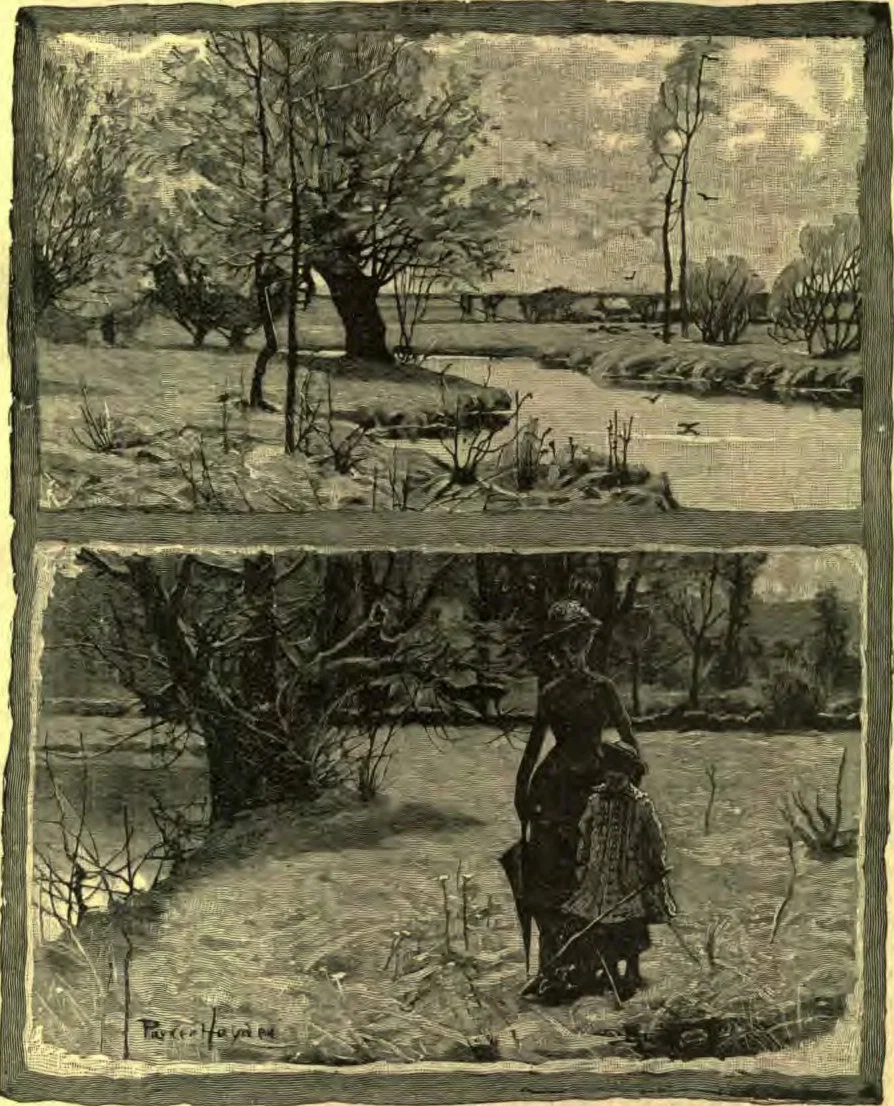
SPRING

A WEALTH of bloom on cherry boughs, A blush of red on peach-blow tips, A thrill of life in fresh oak leaves,— For spring has come.
A glad song trilled from robin’s throat, A soft, sweet murmur of content, That steals from new-made swallow’s nest, For spring has come.
The ripple of a sunny brook, A dash of sudden water-fall, A bit of rain, a bit of sun, Now spring has come.
All nature voices hallowed praise To Him whose will all things obey, And God looks down again and smiles, That spring has come.
MARY STEWARD.

DRIVING OUT THE CANAANITES.

“What are you dreaming about, Amy? You haven’t spoken for the last half-hour.”
“Oh, excuse me, Ada,” said Amy, with a start; “I didn’t know I was so impolite.”
“I’ll excuse you,” replied Ada, “on condition you share your thoughts with me.”
“I am afraid they are not worth sharing with any one,” said Amy.
“I’m to be the judge of that,” replied Ada. “So begin at once.”
“I hardly know where to begin,” said Amy, musingly. Then, after a moment’s thought, she said, “You remember the sermon of last Sabbath?”
“Why, no, I don’t,” replied Ada. “I can’t even remember the text. The most I remember is, I thought it exceedingly dull.”
“Why,” said Amy, “I thought it very interesting. “I’ve been thinking about it all the week.”
“What a queer girl you are, Amy. I believe you would find something good, even in the poorest sermon.”
“Of course I would; but this was far from being a poor sermon. It was about the Israelites driving the Canaanites out of the promised land.”
“Oh, yes,” said Ada, “I do remember now. It does seem strange that the Israelites, after all their experiences in the wilderness, and after God had done so much for them, should so soon forget him.”
“Yes,” said Amy, “the minister said that was what we were very apt to think; but that too many Christians were like them. God led the Israelites into the promised land, and told them to drive out the Canaanites. Of course they couldn’t do it alone, but if they obeyed him, he would help them. They disobeyed him again and again, and then he told them that the Canaanites should remain to be a snare and a trouble to them. The minister compared our old nature to the Canaanites. God would help us to overcome it, if we obeyed him, but we were apt to forget our covenant with him and disobey him; then our old nature would overcome us, and that was the reason there were so many inconsistent Christians.
“I was thinking this morning about one and another that I thought hadn’t driven out their Canaanites. There was an old deacon I used to know. He always wanted everything his own way in church matters. If the church opposed him, he would get up in meeting, and say he would resign. Rather than have him do that, the others would give up; but after awhile they got tired of yielding, and one day, to his astonishment, they accepted his resignation, and a new deacon was chosen. He was offended, and would not go to meeting for a long time.”
“Then there’s Miss Polly Patterson (you’ve seen her); when we had our meeting-house fixed over, her pew was moved a little, so she couldn’t have quite as good a view from the window, and she hasn’t been to meeting since. And there’s Mrs. Landers, who got offended with the minister, and won’t give a cent for preaching, though she has more money than she knows what to do with. Then how many there are who won’t do anything for missions. And at conference how few there are in comparison to the number at communion. And I’ve really known people to stay away from that ordinance, because they couldn’t fellowship with all who were there. I thought of these and a great many more, when it occurred to me that I’d better look after my own Canaanites, and let other people’s alone, and just then you interrupted my thoughts.”
“Well,” said Ada, who had listened with interest, “that’s the best sermon I’ve heard for a long while. If the minister had put it that way, I think I should have remembered. Guess you have driven out all your Canaanites long ago; but as for me,” she added with a sigh, “I fear they have full possession of the land. I shouldn’t know where to begin.”
“Begin with the first you encounter,” said Amy, with a smile.
“I wish I liked housework better,” said Ada, half to herself. Then jumping up, she exclaimed, “There’s that dear little mother out in that hot kitchen all this long forenoon, and here’s her great lazy daughter doing nothing. I ought to be ashamed of myself. There’s a big giant of a Canaanite; I’ll tackle him at once.”
She rushed into the kitchen, and, catching her mother around her waist, whirled her into the cool sitting-room, and seated her in the easy-chair she had just left.
“There, now! sit still and rest your weary limbs. No, no, I’ll attend to the dinner. When daughters get bigger than their mothers, they ought to be minded, sometimes. Now, Amy, you can preach to her, though I don’t think she’ll need the kind of sermon I did.”
“What’s come over the girl?” said the mother, as Ada left the room. “It’s the first time she’s offered to get dinner since she came home. But there, I suppose it’s my fault. She used to be handy about the house, but since she’s been away to school, I’ve sort of made company of her vacations; and then with her music and drawing and fancy work, there isn’t much time for housework. I was just about ready to drop down, though, it is so hot and sultry. But this is comfortable,” and the weary woman leaned back, and closing her eyes, was soon fast asleep.
Amy drew down the shades, and went out to help Ada about the dinner.
That night, as the girls were preparing for bed, Ada said: “I’ve been thinking about that sermon all the afternoon. I’ve been a church member for six years, but for the last two or three years I fear I’ve been a Christian only in name. I was only twelve years old when I joined the church. Yes, I think I was really converted, and I lived a Christian life for awhile, even after I went away to school; but my associates, though nice, pleasant girls, were not Christians, and they influenced me more than I did them, and so gradually I drifted away. I can see it now, though I did not realize it then. I haven’t entirely given up prayer or reading the Bible; but I fear there hasn’t been much heart in it. I go to prayer meeting sometimes, but take no part except in the singing, and that has been more for my own pleasure than to do God’s service. O Amy! I wish I could live these past years over again. It seems as though I had been asleep, but I’m fairly awake now. I mean to begin over again. It won’t be easy work. You who have kept right along in the Christian way can’t realize how hard it will be; for I fear, as I said this morning, that the Canaanites have full possession; but with God’s help I’ll drive them out.”
“And you’ll be sure to conquer,” said Amy; “for you know whenever the Israelites repented and returned to God, he always forgave them, and helped them overcome their enemies.”—Our Dayspring.

ROUND THE WORLD.—14.

FAREWELL TO CAPE COLONY.

Stage traveling in fair weather is something by no means enviable, but when it is wet, in South Africa at least, it is not only unpleasant but positively dangerous. Bridges are scarce, and almost all the rivers have to be forded. These are short, and the altitude of their source considerable, so that in dry seasons there is hardly any water flowing, and in rainy weather there is a flood.
It had been raining for a few days previous to our leaving Lovedale, and on the morning when we expected to start, the clouds looked very dubious, and we were informed that it would be hardly safe to go, as the Chumie and Keiskamma rivers would in all probability be “down.” The term was puzzling, but an explanation showed that what an African called “down” an American would call “up.” The expression is drawn from the fact that when there has been a rain up country, the water comes rushing down like a straight wall fifteen or twenty feet high. People have been crossing rivers where there was only a foot or two of water, when suddenly they heard a roaring noise, and with hardly a moment’s warning the torrent has been down upon them. Many lives have been lost in this way.
But start we must, or we were liable to miss the steamer at East London, the southeastern port, which we could not afford to do, as time, when one is traveling, slips rapidly away. So despite the unpleasantness of “trekking,” as the Dutch style it, in a drizzling rain, we determined to start. The Chumie was crossed, the water reaching to the step of the carriage, the force being so great that for awhile the conveyance was carried by the current, but to no great extent. The horses, realizing the danger, pulled with a will, and soon reached the opposite bank in safety. The Keiskamma was also forded, and only just in time; for all the next night it rained torrents, and it was three days before the crossing could be made again.
A few miles from King William’s Town, the road winds along near the base of the Pere range. This place is famous in colonial history for a battle once fought there between the natives and Col. Warren with his Diamond Field Horse, as the regiment in his charge was called. The British had taken refuge within a wayside inn, known as the Green Hotel, whose walls are still covered with marks and holes made by the assegais of the natives. At evening the Buffalo River was crossed on a fine iron bridge, and King William’s Town entered. Our stay there was short. The town is the head-quarters of the colonial troops, but beyond that, there does not seem to be much to keep it alive. A short trip by rail brings the traveler to East London, where the steamers call for passengers for Durban, Natal, the seaport town of the growing little colony on the eastern coast.
On December 23, the good ship German arrived, and cast anchor outside the bar of Buffalo River, as there was not enough water for her to cross. The tug went off to take in her passengers and the mails, but leaving those who wished to embark for a second trip. The sea was running very high, and it was with considerable difficulty that the little Midge crossed the breakers, and gained the vessel’s side. But to come in again was another thing, as the waves were increasing in size every moment; and even had her commander wished to enter, he was prohibited from doing so at sight of the black ball on the yardarm of the harbor flagstaff, which signifies that the port-captain forbids any ship to leave or enter. For several hours she tossed to and fro outside, looking like some pilgrim seeking admittance to a city of refuge, and denied it.
Toward noon the storm abated somewhat, and the passage was safely made; then came the turn of those wishing to disembark. We steamed down the river, which was as calm as a sheet of glass; the sky was clear and blue above, but ahead was the ominous bar. The huge green waves were leaping over the breakwater, seemingly threatening at every moment to wash it away. The captain said it was the worst sea they had had since ’74. All the passengers were ordered below, and the hatches battened down overhead. This is an unpleasant sensation at any time, but especially so when, added to the stuffiness of a launch cabin, there is a vague feeling that “she may go down.” It was easy to tell when the first sea struck her; with a bang it came over the decks, washing them fore and aft, at the same moment lifting her high on its crest, and then with a whirl she went down into the trough on the leeward side. Sea after sea came over the deck, and it seemed sometimes as if nothing could save her from being washed up against the breakwater. In cases of this kind, the helmsman never tries to steer his course, but devotes all his energies to running away from the waves, and dodging in and out between the swells, so as to avoid being capsized. Once across, the motion was not so rapid, and the hatchways were opened, and passengers permitted on deck again.
The next thing was to get on board the German, and the way she was rolling made it no easy matter. It took a long time to get the tug made fast to her side, and then a basket was lowered over the side by means of a derrick from the mast. Into this, two at a time, we were placed, and then hoisted up and let down with a bump on the deck.
At set of sun the good ship was under way, and running close to the coast, with her bows toward the east, under full steam, she sped along. At break of day we were off the borders of Pondoland. There was but little to be seen on the shore that was of interest. Hardly a house, or sign of life of any kind, although the hills looked green, as if there was good pasturage for cattle. By the middle of the afternoon, the Durban bluff was in sight, with the white light-house on its summit, and after rounding it, anchor was dropped in the bay.
P. T. M.

ELSIE'S “I WILL.”

The sun shone brightly into Mrs. Lindsay's neat kitchen one fair morning in October. Elsie and her mother were hastening about the morning's work, for this was to be an especially busy day. After stepping into the yard for a few minutes, Elsie returned to the kitchen with a look of dismay upon her face, a few minutes before so happy and sunny.
“O mother! here comes Aunt Patty, and with all this work to be done, and her to watch every step I take, I shall die before night. She'll be sure to stay all day; she never goes anywhere for an hour or two, like any one else.”
“Be patient, Elsie dear, and welcome Aunt Patty with a kind word and a cheerful smile. It will cost you but little, and may mean a great deal to her.”
“But, mother, you will have to sit right down with her, and listen to all her troubles. We know every one of them by heart now, and how can I ever get through this work by myself?”
Elsie's blue eyes filled with tears.
“Keep calm. Don't let Aunt Patty see those tears, daughter. I will help you what I can, and what we can't conveniently do, we will let slip by for some other day.”
“But, mother,”—Just here a slow, infirm step was heard approaching the door. Elsie tried quickly to master herself, and succeeded in giving the old lady a truly cordial greeting. Then, leaving her mother to wait upon her, she went by herself to try to conquer wholly her unruly spirit.
“He that ruleth his spirit is greater than he that taketh a city,” and “I will rule mine this morning,” thought she. In a short time she was able to return to the kitchen, bearing a happy face for an unhappy old lady to look upon. The spirit was conquered for the time, but every little while during the busy forenoon, as Elsie listened to the trials of Aunt Patty, which, if only new, would have been some relief, the old feeling of rebellion arose. It was a constant fight with self that day; but after each battle, Elsie gained the victory.
“What a pleasure to have a daughter like Elsie,” said Aunt Patty to Mrs. Lindsay. “It does me good to look at her face; it is always so cheerful.”
After dinner, Mrs. Lindsay led the way to her room, where, for three long hours, she and Aunt Patty were closeted. And Elsie, who was seldom forced from her mother's society for even an hour, felt something like a feeling of jealousy creep into her heart.
“Oh dear, I would rather listen to all Aunt Patty's mournful tales than to be kept from mother all the afternoon,” said she.
“He that ruleth his spirit,” a soft voice seemed to remonstrate.
Just before leaving, Aunt Patty clasped Elsie's mother by the hand, and said, “God bless you, Mrs. Lindsay. You have helped me in one of the darkest days of my life, to see that I have still something to live for. Through the falsity of one friend, I have found the worth of another.”
Then, placing her hand upon Elsie's shoulder, she said, “I have been a selfish old woman, to keep your mamma away from you all the afternoon. God bless you for your patience with me, and may you ever be worthy of such a mother.”
“O mother,” said Elsie, after Aunt Patty had gone, “you don't know how ashamed I felt, all the time she was talking to me; for I have not been patient to-day, but have had to fight all day long, in order to appear happy.”
“And you succeeded well,” said Mrs. Lindsay.
“Poor Aunt Patty looked so sad and yet smiled so kindly when she came out of your room that I thought she must have some new trouble. Has she, mamma?”
Mrs. Lindsay's eyes quickly dimmed with tears. “Poor soul!” she said; “it seems as though she has more than her share of trouble. The death of her husband left her alone in the world, with a little son to educate. She was a kind mother to him—too indulgent, perhaps. We all know how he rewarded her. When now he should be taking care of his aged mother, he is worse than dead. Besides her home, she had a little property, which she intrusted to the care of a New York banker, an old schoolmate of hers, in whom she has always placed perfect confidence. Last night she received news of the ruin of this banking establishment, through the dishonesty of this old friend. She will probably lose everything, and be left in her old age with no means of taking care of herself.”
“O mamma! And to think that while you were trying to be a little comfort to her, I was wishing she would go home!”
“But I am glad my daughter conquered self. You have helped to lighten a few hours of what was to this old lady a dark, almost unendurable day. And what a little sacrifice it was to you, compared to the pleasure your happy face gave her. With how little effort we may help our fellow-creatures! It is cowardly and selfish to mope and be surly and cross because things are not just as we want them. All the time we are fretting, we might be making life pleasanter for some one else.”
“How glad I am that I was pleasant to Aunt Patty! The next time she comes, I know I shall not have to fight so hard to be cheerful. I shall want to do all I can to please her.”
“That is my brave girl,” said Mrs. Lindsay.
“Every time to-day when I wanted to look cross, I thought of the verse that says, ‘He that ruleth his spirit is greater than he that taketh a city,’ and I said, ‘I will rule mine.’ That is how I kept pleasant, just by saying, ‘I will.’”
MARION N. CARR.

THE RAIN THAT FALLS INTO OUR LIVES.

A few weeks ago the children were singing,— “April showers Bring May flowers,”
and now it is May, and the flowers are here,—the crocuses and daffodils in the garden, and out in the woods the beautiful blue liverwort and the delicate anemones, and the fragile spring beauty, and best and loveliest of all, hidden away under the dead leaves, but betraying itself by its delicious fragrance, the exquisite trailing arbutus, which some people call Mayflower. These lovely things are what the April showers helped to bring.
And yet some of the children pouted and fretted when it was raining, and said they wished it would stop and let them play. Suppose it had stopped, and had not rained any more all through the month of April; where would the flowers be now?
There are trials that come into the lives of children, that are very much like the rain; they make the days dark, and hinder the children from doing what they want to do. Perhaps it is illness, and they are obliged to stay in bed when they long to be out at play. Or perhaps it is a harder trial still—a father or mother ill, or laid away in death, and the child's heart is very, very sore with grief and loneliness. Ah, this is far worse to bear than a rainy day!
But God knows just why the trouble comes. Great troubles or little troubles, illness or death, or only the petty trials that come every day even into happy homes—it is God who sends them, and he does not send them without a reason. Can we tell what the reason is?
The reason of our trials is the same as for the rain: they come to soften our hearts, and make beautiful conduct grow out of our lives, just as the rain softens the earth, and makes the flowers grow. When we learn patience and gentleness and submission to God's will, when we learn to be cheerful even though things go wrong, and kind even to those who are not kind to us, then our lives are as beautiful as a garden of flowers. It is flowers like these that God looks for in us.
But he sends the pleasant days too, does he not? After all, how much more sunshine than rain has fallen into our lives! How bright the flowers should be that we produce for Him!—The Child's Paper.

HOW THE ARAB CHILDREN HELP TO TAME THE CAMELS.
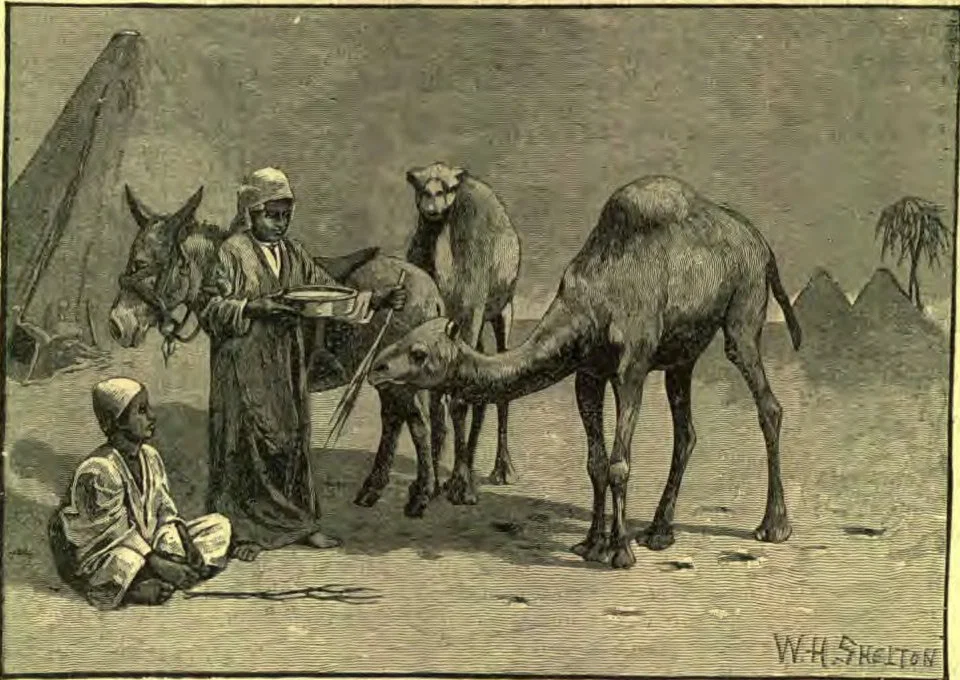
THERE are two kinds of camels. The Bactrian, which lives in Turkey and some parts of China, has two humps on its back. The dromedary lives in Arabia, and has only one hump.
The baby dromedaries are about two feet high. They grow so fast that when two weeks old, they are often three feet high.
Camels, when full-grown, have to carry very heavy burdens over the hot, sandy deserts of Arabia. They are so tall that they must kneel down to be loaded.
When the little dromedaries are about two months old, their owner begins to train them for their future work. He makes them kneel down every day for several hours. He covers them with a piece of carpet, so you can see only their head and neck. He puts heavy weights along the edge of the covering, to prevent them from getting up. This is done every day for four months. After this training they are all put together into a large inclosure. The little Arab children then become their teachers and keepers.
It is a pretty sight to see them, twice a day, going to feed the little camels. In one hand they carry an earthen vessel filled with camel’s milk, diluted with water; in the other, a tiny switch. After the hungry little creatures have emptied their bowls of milk, the children give them a touch on the legs with the switch. Down they all drop on their knees. They are so easily trained and so obedient that in a few days, at only a signal from the switch, they will kneel or lie down, just as their little keepers wish.
The education of the little dromedaries goes on week after week and month after month, until the Arab children and the little camels become very fond of each other.—Our Little Ones.

WHATSOEVER THINGS ARE PURE.

Mattie Weller had been trying to do “whatsoever things are true, honest, and just,” and she came at length to the “whatsoever things are pure.” This she especially wished to act upon; for she had read Christ’s words, “Blessed are the pure in heart; for they shall see God.”
“Auntie,” she asked, “what is it to be pure?”
Auntie answered, “We speak of pure gold or silver, pure air, pure water. What does this mean?”
“It means,” said Mattie, thoughtfully, “free from anything like a mixture, just one thing, doesn’t it?”
“Yes, my dear, and when we say pure white, we mean free from all stain or color. When it is promised that God’s people shall be clothed in white robes, it means that they shall be pure, free from all stain of sin. Therefore to be pure we must carefully watch against every kind of sin. We make clothes pure by washing, but how can a character be made pure?”
“By being washed in Jesus’ blood,” answered Mattie. “Oh, auntie, do you think I can become pure? I do want to be.”
“How do you manage to keep your white aprons clean when you wear them to school?”
“Why, auntie, I watch all the time lest a drop of ink or a dusty book or any kind of stain should touch them; for it is so pleasant to be clean, and it does not hinder my enjoying myself to be careful about it.”
“And do you make your clothes clean when they are washed, my dear?”
“No auntie, somebody else has to wash them.”
“Neither can you make your soul clean and pure; it is done for you by Christ; but he commands you to watch against all defilement.”
“I understand,” said Mattie thoughtfully, “and I do mean to seek for whatsoever things are pure.”—The Child’s Paper.

PAYING BACK.

“Please, mother, call Jessie in; we want to go down to the mill and come home by the race, and we don’t want to be bothered with Jessie.”
Nettie Wallace stood at her mother’s open window, holding the little five-year-old by the hand; Virginia waited at a little distance.
“But I want to go too,” sobbed the little one; “I has walked to the mill often, and I wants to go too.”
“Why don’t you take her, Nettie?” asked her mother, stopping the whirr of her busy machine wheel to settle this trouble.
“Oh, she is such a bother!” cried Nettie fretfully; “she has to be lifted over the fences, and led by the hand, and she is in the way.”
“Come here, Virginia,” called the mother, turning away from the machine and leaning out of the window. “Sit down there on the grass, all of you. I want to tell you a little bit of a story, but it is a short one, and won’t keep you back long.
“Thirteen years ago, there came into a certain house that I know of, a wee little pink baby. She was a great joy to everybody in the house, but she was also a great deal of trouble. She was washed, and dressed, and fed, and put to sleep, and nursed, and carried around, and nobody ever once complained of the trouble. In two years more another little baby came, and then, of course, the mother had her hands full. Then there were two little maids to be washed, and dressed, and fed, and put to sleep, and nursed, and carried around, and played with, and sewed for. Still, nobody ever thought of complaining, or once called them a trouble.
“When father and mother went to walk, babies went too; their little hands were held, their little feet lifted over rough places, and everything was done to make them happy.
“As the years went by, these two little maids grew tall and strong and independent, while other little ones took their places in the family to be cared for and helped. Now, if you had been those maidens, my daughters, how would you have behaved to the little ones? Would you have said, ‘Go away, children, and don’t bother,’ or would you have tried to pay back some of the care and love and trouble?”
“O mother,” said Virginia, “were those little maidens named Nettie and Virginia?”
“It is strange, but I think they were,” said mother, smiling.
“Come, Jess,” interrupted Nettie, taking this way to answer her mother’s question, “it’s time we were off on our walk.”
And dear little Jessie, who had not been able to make out the story, sprang from the grass with a happy bound, clouds all gone, rain-drops, too, and her sun shining brightly.—Sunday School Advocate.

HOW THREE WENT MAYING.

POLLY was cross. She stood at the window, and squeaked her finger up and down the glass, and said slowly,—
“I don’t care; I think Aunt Marcia is real, real bigotried!”
Dolly was cross too, but such a dreadful sounding word as that frightened her, though she had no more idea what it meant than Polly had.
“O my, Polly! I’m afraid that’s bearin’ false witness, or something. Let’s just say she’s mean and hateful; so she is.”
“Not to let us go Maying,” added Jolly, kicking his cap into the corner. “Why, that’s just what we came out here for; no use living in the country if you can’t do anything.”
“I know mamma would let us,” said Polly.
“She always lets us do things,” said Dolly.
“Tell ye what; let’s go anyhow,” said Jolly.
“So we will,” said the three; and so they did.
It was scarcely light on May-day morning when they started. They dressed very quietly, and Polly pinned a paper on the door, which said:—
WEE AR GOING MAING.
That was so Aunt Marcia would not think they were all stolen. They had a basket for flowers, and three molasses cookies saved from supper, though Jolly had taken one bite out of his. The place where they were going was across the river, and that was why they went there. They knew all about the woods on this side of the river, but they were all sure there must be something wonderful, fairies, or a treasure cave, or at least a little hut, with an old, old woman, in Dorr’s woods.
The grass was like a river with dew, and the dew made them very wet, though it never seems to damage the young ladies who go tripping through it in stories and poems. The dust in the road was very deep, and dust and dew together make mud, which is not at all nice to have on your shoes and stockings and the bottom of your dress. The sun did not shine, and so the fog could not go away; or else the fog did not go away, and so the sun could not shine.
Dolly began to shiver; but Polly said it would be warmer in the woods. They got over a fence, and ran across a beautiful green meadow toward the wood. Jolly ran first. Presently he began to take very long steps, and at every step the water splashed up through the beautiful green grass.
“Oh, dear!” said Polly. But when she stopped, a little puddle of water oozed up around her feet.
“You’ve got to run,” said Jolly; “this is a quagmire, and if you stop, you’ll just go down, down, to China.”
Dolly and Polly both said “Oh!” and ran as fast as they could.
When they got to the woods, there were no flowers, after all; and under the trees it was black and dirty, where the pigs had rooted up the turf. By and by they found a kind of cart-path, and started to follow it, but it ended in another swamp, where they could only draw out logs in winter when the ground was frozen very hard.
So they went back, and this time they found a footpath. It went on and on, clear through the woods. Just at the very edge was a house,—not exactly a hut, but a house of boards and logs, with a chimney made of two drain tiles and a piece of stove-pipe. The children stood looking at it, and just then it began to rain. They were cold and wet and hungry, and very, very cross. A fat, jolly black woman came to the door, and looked at them. A fat baby clung to her apron with one hand.
“Come in yere out’n the rain,” said the woman. And the three went in.
They made very muddy tracks, but the woman did not seem to mind them.
“What was yer huntin’ fer, chillen?” she asked, as they all sat on a bench by a greasy little stove.
“We went a-Maying,” said Polly, faintly.
“Lawful sakes!” said the woman. And she laughed until she shook like a great mold of blackberry jelly.
The baby sat on the floor, and sucked its thumb, and stared at them. The woman pulled out a big basket of clothes, and went to ironing. The rain came faster and faster, and Dolly laid her head in Polly’s lap, and cried softly. Jolly stood at the window with both hands in his pockets, and tried to whistle. Suddenly he cried, “Hi!” and darted at the door. Polly jumped, too, and Dolly rolled on to the floor.
A man was going past with a wagon covered with shiny black oil-cloth. The man had on an oil-cloth coat and hat, and the rain ran off from him in little streams; but Polly knew him, and so did Dolly. It was Aunt Marcia’s hired man coming home from mill with a load of bran for the cows. He put the children in among the bags, and spread the oil-cloth over them, and away they went, rattling and bumping over the road.
Aunt Marcia was in the kitchen, slicing apples for pies. She looked up at the three children as they stood on the rag mat before the door, and said, very pleasantly,—
“Well, so you have got back. Did you have a nice time? Come right upstairs, and get some dry clothes.”
She rubbed them with coarse towels, and helped them dress, and then brought them a nice breakfast in the warm, clean kitchen, and never scolded a word. Polly took one mouthful, and then stopped; so did Dolly; but Jolly kept on eating very fast.
“O Aunt Marcia!” said Polly, “I’m just as ’shamed of myself, and I don’t deserve a bit of breakfast!”
“Nor I, too,” sobbed Dolly; but Jolly didn’t say a word.
“And I never, never will disobey you again, ’cause you’re just as good as you can be. And won’t you please to leave this day out of your rememberin’ book that you write things in for mamma?”
“I’ve written in it already,” said Aunt Marcia, gravely.
Polly and Dolly both screamed, and Jolly winked his eyes hard.
“But you shall rub it out,” said Aunt Marcia, pleasantly. “Go and bring the book, Polly.”
Polly brought the book, and Aunt Marcia found the page.
“Now,” she said, “I will write over it, ‘I am sorry I was disobedient,’ and you shall all sign your names.”
They all signed their names, Polly and Dolly and Jolly, and then Aunt Marcia told them they might rub the page clean.
“But it isn’t quite clean,” said Polly, with a little sigh, after she had done her best. “You can’t make it.”
“The writing don’t show, but the rubbing out does,” said Dolly.
“No,” said Aunt Marcia; “it is never quite clean; for the rubbing out always shows; and then, you know, some things cannot be rubbed out, so we must be very careful about our days.”—Emily Huntington Miller.

KATIE'S PART.

“WHAT have you done, dear children?” The mother gently said, As she kissed her white-robed babes at night, And tucked them up in bed; “What have you done through all this day To help some one along the way?”
Then each one told of some kind deed: A loving word just spoken, Some sacrifice for others’ wants, Or gift of friendly token. But when ’t was Katie’s turn to speak, A tear-drop glistened on her cheek.
“I cannot think of anything So very good to-day.” She sadly said, “only I helped A chicken find its way Back to its mother—that was all, But it was lost, and oh, so small!”
The children hid their smiles beneath The bed’s white coverlet; But the mother kissed her Katie Just where the cheek was wet. “Your part,” she said, “you too have done; God is well pleased, my little one.”
—Mrs. Susan Teall Perry.
Continue reading: TAKE YOUR CHOICE