The Youth's Instructor, Vol. LI, No. 30

A May Morning Drive

The Youth's Instructor

July 30, 1903

Review and Herald Publishing Company · Battle Creek, Michigan · July 30, 1903

A May Morning Drive
A short time ago, as the writer arose to greet the beautiful sunshine of a delightful May morning, he was invited by a friend to take a ride into the country. Without waiting for breakfast, we were soon beyond the confines of the town, coursing along one of the finest country roads I have ever seen in “merrie” old England. The ancient, arching elms by the roadside, with mellow gleams of sunshine penetrating their full-leaved branches; the sweet-scented clover of the fields, shining with clinging dewdrops; together with the balmy atmosphere of the morning, delighted the senses, and made a gratifying change from the narrow, walled streets left behind in the manufacturing town of Kettering.
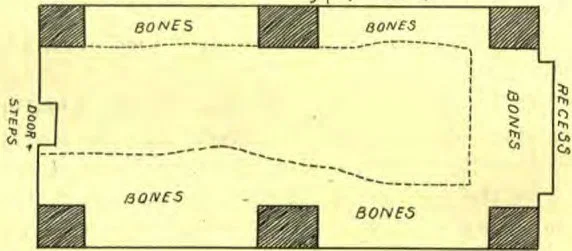
Rothwell Bone Crypt, 30 FT., 3 IN. X 15 FT.
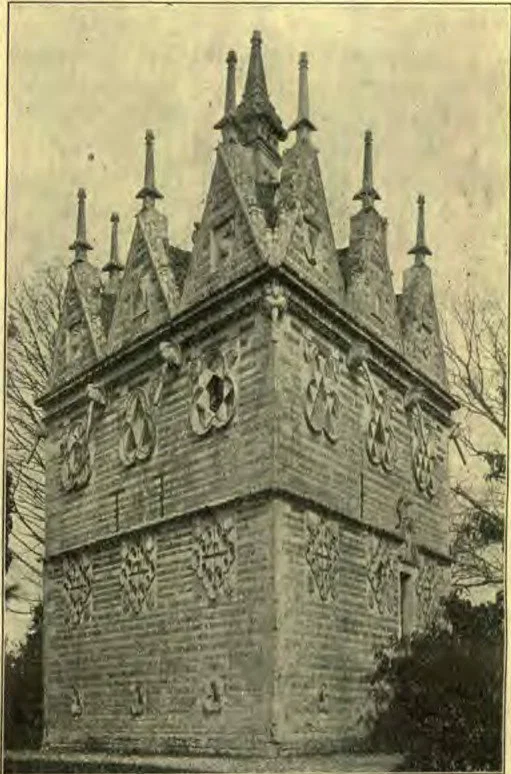
The course taken by the brother who drove was by the side of a sleepy little hamlet, the name of which I have forgotten, but which nestles among the trees on the bank of a brooklet that runs through a vast walled estate near by. On this estate stands a triangular-shaped building in which, so it is said, the notable “gunpowder plot” of the sixteenth century was hatched. This was a scheme by which Parliament was to be blown up with gunpowder. One Guy Fawkes was engaged to place the powder, and lay the train by which the explosive was to be fired. Everything was made ready for the terrible deed, and the time was set for its execution. The plot, however, was exposed just before the day set, by one of the conspirators revealing it to a personal friend in Parliament, whom he attempted to dissuade from attending the House of Commons on the would-be fateful day.
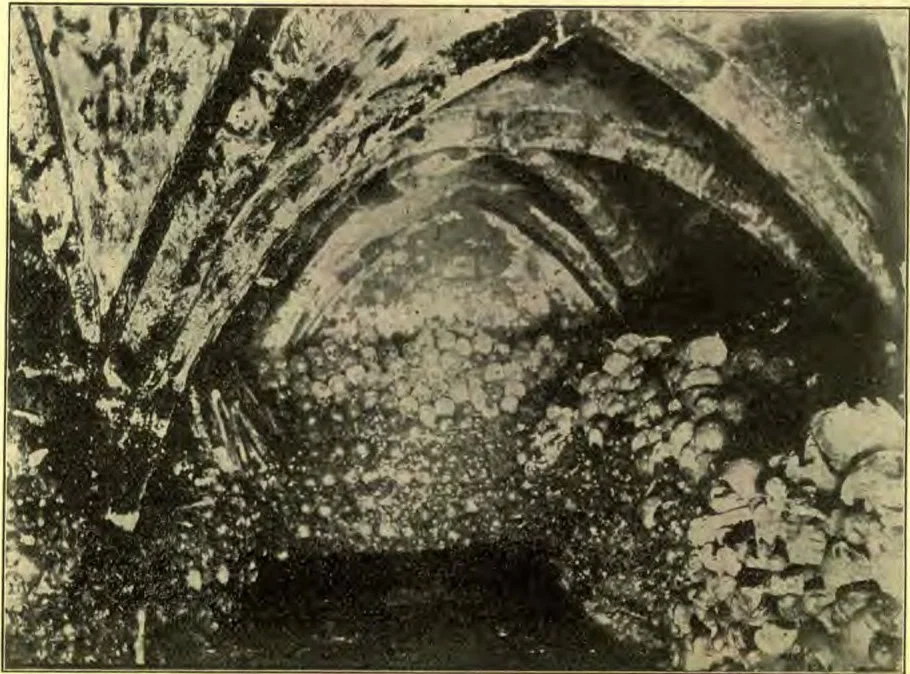
Making a detour through another small town, we soon came to the ancient village of Rothwell. Here we halted to view an old church, supposed to have been two or three hundred years in building, and which was completed about 1055 A. D. It certainly looks hoary enough to be as old as it is thought to be. It was originally built in the form of a cross, but one of the side extensions has gone to decay, and been removed. The other wing is now undergoing repairs in order to preserve it. This one has a great mystery connected with it. In the year 1820 the sexton tore up a piece of its pavement, for the purpose of burying one who was to be placed under the church, when by a smart stroke of his pickax, he broke through a cemented vault, from which issued a smell like that from a charnel-house. Upon lowering a lighted candle through the opening, he was horrified by the sight of a vast heap of human bones.
No one could be found who even knew of the existence of the newly discovered crypt below the church, to say nothing of the mystery attending the deposit of bones it contained. No way was found to enter the place, except by digging through the outer wall, but upon entering, an old passageway was discovered, which had been walled up for time out of mind. The kindly old parish clerk conducted me into the place, where I had a view of the gruesome sight. The accompanying diagram gives the form of the crypt, which is thirty feet three inches long, by fifteen feet in width. The dotted lines trace the dimensions of the bone heaps around the room, and the six squares in the diagram represent the stone pillars supporting that part of the church.
The bones were evidently all placed in the crypt at the same time, since they are all in about the same state of preservation, and were stacked, apparently, by the same person, as the same order of stacking is observed throughout. The bones have all been separated from each other, and closely corded in a way to take up as little space as possible. The measurements of the tiers show them to occupy 1275 cubic feet of space. Assigning three skeletons to each cubic foot, there are nearly four thousand dead persons represented in these heaps of bones.
INTERIOR VIEW OF THE BONE CRYPT
It is useless to speculate as to how they came there, because there is not even a tradition concerning them. Had they been removed from some deserted burial-ground, a record would likely have been kept of the transaction; but no such record is extant. From the general condition of the bones, it would appear that the people they represent died during the same generation at least. Only the day of judgment can reveal their history; and what a record that will be! All the dark deeds of the darkest days of earth’s annals will then be brought to light, together with the life-work of the writer, and of those who read these lines. May it then appear that ours are approved, and that we are permitted to pass into that country where none shall die, nor any say, “I am sick.” J. O. CORLISS.
BUILDING IN WHICH WAS HATCHED THE FAMOUS GUNPOWDER PLOT
Leicester, England.

A Medical Missionary to China

An interesting bit of history is the life of John Kenneth Mackenzie. A short life, only thirty-seven brief years, and yet weighted with a devotion, self-sacrifice, and earnestness which led many of the Chinese to the feet of the Saviour whom he adored.
Born in a Christian home, and familiar with Christian truth from childhood, he did not openly declare his allegiance to the Master until 1867, in his seventeenth year. He was led to take this step by a visit of D. L. Moody to his home in Bristol, England. On this occasion a companion, who is now laboring in connection with the China Inland Mission, made the same decision with him. Writing of this memorable afternoon, that friend says:—
“It was a solemn moment for all; but thank God, we had fully counted the cost, and I recall with much joy how, after we had left the service that afternoon, three of us walked with our brother toward his home, and on the hill there, with clasped hands, we dedicated ourselves to be whole-hearted followers of the Lamb.”
Although of a diffident and retiring nature, John Mackenzie soon became engaged in earnest, aggressive Christian service. “Open-air preaching, lodging-house visitation, ragged-school teaching, theater services, and midnight rescue work gave expression to the passion for souls with which the love of Christ had inspired him.”
He had been educated at a private school, and after spending two years in a merchant’s office, decided that his distaste for commercial life would make his work a failure. Having a desire to enter the medical profession, he became a student in a medical school in Bristol, from which he was graduated in 1874.

A Call to China

Professionally and spiritually he was equipped for medical missionary service, but the idea had never suggested itself to him. The reading of the lives of two men who had devoted themselves to the Chinese directed his thoughts toward the needy empire of China, but it remained for Griffith John, that devoted Chinese friend, to be used of God in helping him to make a final decision. As the great need that existed for medical missionaries was opened up before him, he decided to go forth as a missionary, and through treating men’s suffering bodies seek to lead them to the Great Physician of the sin-sick soul.
Having passed his final examination at Edinburgh, whither he had gone to complete his preparation, he retired to his room to thank God for his success and seek guidance for the future. His attention was attracted to a letter calling for a physician for Hankow, China, where a new hospital had just been completed, and without delay he offered himself to the London Missionary Society. He was gladly accepted by the Board, and set sail for China in April, 1875. He reached his destination in safety just two months after leaving home, and was cordially welcomed by Griffith John and his wife. He found his work ready to his hand, and he entered into it with characteristic enthusiasm and earnestness.
The hospital had been completed almost a year. A physician of Hankow had generously rendered medical services until the arrival of the missionary. The building was commodious and well-equipped, and Mackenzie wrote most hopefully of his work. He had in his first ten months ninety-three in- and 3,128 out-patients. Opium smokers had come in, and several had been successfully treated. One especially cheered the doctor’s heart; for the victim was not only cured, but became a most devout Christian.
The many cures made the doctor famous, and patients came from far and near. One man traveled over one thousand miles, in the hope of being cured of a harelip. He had to appear before the emperor, and was distressed at the thought of doing so in such a disfigured condition. His journey was not in vain, and he went away further to spread the fame of the missionary.
Mackenzie, with a heart aglow with love to Christ, never forgot for one moment that he was “a missionary first—a man called, commissioned, sent by the King himself—and a doctor second. He never in the medical side of his work lost sight of the evangelistic,” but entered heartily into all the plans by which his colleagues were seeking to lead the people to their Saviour.

Labor in Tientsin

Much as he loved Hankow and the people whom he had been privileged to serve, the failure of his wife’s health drove him to seek a more bracing climate. Rather would he have gone farther inland than return to the coast; but Tientsin, whither he directed his steps, was then in even greater need than Hankow. A small dispensary, and that in debt, and without supplies, was the extent of its equipment.
He set himself to seek the Lord earnestly for a much-needed hospital, at the same time laying his needs before the viceroy, Li Hung Chang. This royal gentleman politely neglected his appeal, but God was not unmindful of his servant’s needs. How his prayer was answered is best told in Mackenzie’s own words:—
“One day we had our meeting with the native converts, and among other subjects, we were remembering the medical mission needs. While we were praying, the Lord was already answering. On that morning a member of the English legation was closeted with the viceroy, and observed that he was very sad. He asked the reason. ‘My wife is seriously ill—dying. The doctors have told me this morning she can not live.’ ‘Well,’ said the Englishman, ‘why not get the help of the foreign doctors?’ In the end he was persuaded to send down a courier for me and for the physician in charge of the station, and, just as our prayer-meeting was breaking up, and I was going into my house, the courier came with this message. Here was the answer to prayer.”

Operating before the Viceroy

Through the blessing of God the distinguished patient recovered. The news of such an event rapidly spread throughout Tientsin, and on his daily visits to the viceroy’s palace Dr. Mackenzie was beset by crowds of people seeking surgical and medical attention.
One day a chair-coolie, with a fatty tumor as large as a child’s head on his back, presented himself. The doctor persuaded the viceroy to let him operate upon the man in his presence, and the next day, in the court facing the grand reception room of the palace, in the presence of Li Hung Chang and his staff, the operation was successfully performed after the administration of chloroform. Two other cases were operated upon at the same time. The viceroy and his officials were convinced, and from that time began to patronize Western surgery.
Very soon afterward the viceroy placed at Mackenzie’s disposal, for use as a dispensary, the main court of a beautiful memorial temple, the finest in Tientsin. He also advanced money for drugs and supplies, and authorized the doctor to send all bills to him for settlement.
But a hospital was needed, not only because the doctor could not treat successfully the more serious physical cases, but because he could better grapple with the sin-sick souls. The Chinese themselves soon provided the money for this institution, a leading mandarin heading the list with one hundred and fifty pounds. The viceroy as his share of the enterprise proposed to pay the current expenses of the hospital when built, as well as those of the dispensary.
A beautiful set of Chinese buildings was erected, and remain a permanent monument to Dr. Mackenzie’s skill and devotion.
During the progress of this work, a cloud overshadowed the doctor’s home. His wife fell ill, returned to England, and after one year rejoined her husband in China. But failing again on her voyage out, he was compelled to accompany her to England immediately. After a few months he was again at his post to resume his work for his adopted people, but never again was he privileged to see his wife and child.
As his medical mission grew, the demand came for a medical school, and twelve students were placed under him for instruction. Some turned aside, but several, the majority of whom were Christians, finished their course with credit to the doctor and themselves. For nine years he labored. Each annual report told of out-patients by the thousand and in-patients numbering four or five hundred, but no report was complete without the record of conversions to God, his collaborators joyously acknowledging that a large proportion, sometimes nearly half, of those baptized were brought to the Saviour in the wards of the hospital.

Laying Down the Armor

Only thirteen years were allotted to him in this precious service. Apparently in the height of his usefulness, he was called to lay down his armor and rest. But what was crowded in these brief years only eternity will reveal in its fulness, and still his works do follow him, for others are going in to take up the threads where he dropped them. In a very short time we shall have four medical missionaries representing the third angel’s message in the interior of China. Pray that a spirit like Mackenzie’s may mark their course.
The power which made his life a success is thus described by one who knew him: “The secret is found in his Christ-centered, Christ-forgotten, Christlike life. He was a skilful surgeon and physician; he spoke Chinese easily and well; these qualifications made him a power. But more than these was the subtle charm of his mature and sanctified Christian character. He was a diligent student of the word. He was emphatically a man of prayer. He was wholly consecrated to his Lord.”
Missionaries of this type are still in demand abroad and at home,—even in the home while we are seeking that preparation for service abroad which we are sometimes tempted to look upon as greater service. ESTELLA HOUSER.

A Love-Inspiring Face

A YOUNG girl often saw a certain old Quaker lady when she was riding on the street-cars. One day, acting on a sudden impulse, she said, “Won’t you let me kiss you?”
“Yes, dear, certainly,” was the response.
Afterward, when she became better acquainted with her, the young lady asked, “Weren’t you surprised that time in the car when I asked you to let me kiss you?”
“Oh, no, dear,” was the reply, “they often ask me that.”
It is not said that the face of the Quaker woman was beautiful. It might have been very handsome without calling forth the least desire upon the part of the young girl to kiss her. The homeliest of faces may be so illuminated by the beauty of the soul within that people will be greatly attracted by it. Some quite handsome faces are very repulsive. Pride, arrogance, bad temper, plainly show in them, and it is only a question of time when even their physical loveliness will be entirely lost, and then all that excites admiration will be gone. On the other hand there are faces that physically are homely, which grow in grace of expression all the while because the souls that shine through them grow in grace. They inspire love in others because they radiate love. It was a great testimony to the evident inward goodness of the Quaker woman when the young lady desired to kiss her. Asked to describe her Sunday-school teacher, a little girl groped for a while for some fitting terms, but finally said, “She looks like a prayer!” In what way could purity and peace of face be better expressed? Be the face handsome or ugly, the spirit indicates upon it what its character is.—Selected.

Making the Most of Life in Christ's Work

“Do we make the most and the best possible of our life in the work of Christ? The possibilities of Christian service are incalculable. Say, nothing of the formal Christian work in which many may engage, every day’s life is full of occasions where good may be done by simple deeds or words of kindness. Think what kind of Christian, one would be who should realize all the possibilities of faith in Christ, and truly find the best things in all life’s ways. It certainly is our privilege and our duty to make all we can of the opportunities we have. Ever before us shines the ideal, calling us to better things.”

When Things Go Wrong

Do not spend your time in fretting; Spend it, rather, in forgetting Little things that wound you so. Do not let the whole world know That you'd rather sit a-grieving When you might be out relieving Pain and care. Rise up, be true! Just find something good to do.
When your days are full of sighing, Don't give up, but keep on trying Some good cause to help along. You will soon forget the wrong That the dismal days are bringing, If you time your work to singing. When your skies are dark in hue, Just find something good to do.
When your life seems full of trouble, Pain and care will always double If you talk about your woes; Also will your skies disclose Brighter tints upon the morrow, When the lessons taught by sorrow Help instead of hinder you. Just find something good to do.
Spend no time in dull repining; Everywhere the sun is shining, And the future ways are bright, If we only see aright. Life is what we make it, truly, And 'twill seldom go unruly If the right course we pursue,— Just find something good to do.
BENJAMIN B. KEECH.

A Novel Arch

The arch, so familiar to us all in the architecture of the present day, had its mysterious origin in the mists of bygone centuries. Ruins of ancient buildings have seemed to reveal the brick arch as far back as 1540 B. C., and the arch of stone at about 600 B. C., while paintings have seemed to place the origin even prior to the former date.
The arch proves of very valuable assistance in the construction of both buildings and bridges, being artistic in appearance, and at the same time capable of supporting great weight. Its form admits of indefinite variations. The semicircle, the segment, and the ellipse of the ancients were the only forms used in medieval times, up to the introduction of the pointed arch, so largely employed in Gothic architecture. Arabian architecture reveals the horseshoe arch, a form belonging particularly to that people.
The Greeks made little or no use of the arch, but the Romans employed it extensively. To the latter belongs the introduction of the triumphal arch, erected across roads or at the entrance of cities, in honor of some victorious general, the original one being the Porta Triumphalis, one of the gates of Rome through which the triumphal procession entered the city. One of the first “detached arches” at Rome was erected in 190 B. C., by Scipio Africanus, on the famous Capitoline Hill. While Rome was under emperors, many magnificent arches, ornamented with bas-reliefs, and bearing inscriptions, were erected. In Rome to-day may still be seen the triumphal arches of Titus, Septimius Severus, and Constantine.
The accompanying illustration presents a vague shadow of what was a pleasing reality in the form of an arch extending across one of the principal avenues of Pasadena, California, when President Roosevelt visited this city upon his recent visit to the Pacific Coast. This arch was erected as an evidence of the loyalty and patriotism of the public and high schools of Pasadena. Instead of massive masonry, embellished with bas-reliefs and inscriptions, there was the surpassing beauty and mute eloquence of nature, as seen in the pure calla lilies, interspersed with graceful branches from the pepper-trees and other evergreens, the whole surmounted by a keystone of scarlet geraniums, beautifully wrought in the form of a shield, in the center of which was a picture of our nation's chief. The entire framework was hidden amid a wealth of flowers, the lengthened perspective revealing a double row of standards, each bearing a banner and a wreath, while from the base rose long, graceful leaves from the luxuriant date-palm.
The Bible says: “Ye are God’s building.” How like this floral arch is the triumphal arch of Christianity, which stands to-day as an evidence of infinite love to fallen man,—of eternal victory over Satan, sin, and death! Every soul may occupy a niche in that living arch, whose great keystone is Jesus Christ, by whose matchless love the entire structure is so firmly held together that not one need fall from his place. This great arch is covered with the flowers of unselfishness, which exhale the fragrance of his righteousness. The stones themselves—the individuals—are hidden from view: only the flowers of a beautiful character are visible.
Dear young friends, it is a great thing to have self obscured by the sweet blossoms of unselfish efforts—to “let not thy left hand know what thy right hand doeth.” It is a great thing so to hide in Christ that the world will see only the beauty of his love, and perceive only the fragrance of his life. Let the individual stone in the arch become conspicuous, and the flowers are gone.
O let me hide behind the cross, My life be full of faith and prayer And deeds of love; come gain or loss, May others see but Jesus there.
If bright prosperity befriend Life’s way, it comes from only thee: Or if adversity attend, May others still but Jesus see.
Yes, let me hide behind the cross, Where’er my little niche may be, And counting self as only loss, Poor wandering souls may Jesus see.
MRS. M. A. LOPER.

The Open Spaces of Life

I ONCE owned a lawn which was a fair specimen of the style of lawn-making in vogue everywhere a few decades ago, and still followed in most homes. Trees and bushes entirely filled the quarter-acre. The nurseryman had evidently laid off the yard in a checkerboard fashion, and had placed one tree on each of the squares. It was a forest of saplings, and would always remain a forest of saplings, because no tree had room to grow.
Well, I did not own the place long before something I read gave me the idea of the landscape architect that for small grounds the thing to do is to make a border — an irregular border — of the shrubbery, leaving in the center a large open space given up to lawn — just the smoothest, grandest lawn that could be contrived. . .
I acted upon the idea. Up came the pears and the cherries, the mountain ashes and the spruce, the cut-leaf birches and the fringe trees and the hawthorns, and a level expanse of flawless turf took their place. And then around the edge sprung up a delightful hedge of flowering shrubs, sweeping in graceful curves that left here and there fairy-like bays of greenness and color. There were flowering almond, bridal-wreath spiraea, weigelia, snowball, Japanese quince, and all the rest of the lavish blossomers.
At once my lawn gained unity out of confusion. It was restful to look upon. It gave a sense of largeness, of scope. It was a genuine landscape, though only a quarter of an acre. And all because of that empty space in the center.
And now, my brother, try a little landscape gardening in your life. Vacant spaces are quite as necessary there as in your front yard. A higglety-pigglety mixture of occupations is as bad for your spirit as a hodge-podge of trees for your premises. Mass things. Take wide views. When you work, work in great sweeps. When you play, play generously. Do not cram your life full of petty undertakings. The course of ordinary living will see that you get quite as many of these as is good for you. When you plan for yourself, do not plan for these, but plan for great things, for the things worth while.
I mean courses of reading that really pay, and not this chance novel and that haphazard essay. I mean some charity that has wide outreaches and long results. I mean some system of training of eye, or hand, or voice, or person that will invigor and enrich your entire being. No dab at this and that.
And when you play, play as fully and boldly. Achieve long vacations. And if not that — as that is not always possible — at any rate make thorough vacations of your evenings and your holidays. Do not stick them full of petty occupations. Do not set out in them all sorts of fretting tasks and postponed jobs. There is no restfulness to be won in that way.
Put work where it belongs, and play where it should go; work your work with all your might, play your play with all your soul, and you will find yourself gaining, as the years go by, a life that is more and more harmonious, a fine piece of landscape, on which other men as well as yourself will look with joy and serenity. —Caleb Cobweb, in Christian Endeavor World.

God's Gift of Life and the Hundredfold Harvest

God bends out from the deep, and says: “I gave thee the great gift of life: Wast thou not called in many ways? Are not my earth and heaven at strife? I gave thee of my seed to sow, Bringest thou me my hundredfold?” Can I look up with face aglow, And answer: “Father, here is gold”? — James Russell Lowell.

Every Thing Must Be Tested Before Use

Everything must be tested before it is safe to put it to use,—the ship, the cannon, the engine, the bridge, the Christian. The larger the use, the stronger the test.

B. G. WILKINSON

France

Five have accepted the truth in Paris. One is a young man from South America, who has since returned to his home in Uruguay. An American lady who has been a missionary in Japan for several years has taken hold of the truth with her whole soul. The three others are Parisians. There are four more to be baptized here at Valence. There will be six or seven in the south of France soon, six in Suisse, and four more in Belgium. Doors are open everywhere.

B. G. WILKINSON

West Africa

The chief of Mansu, who is very wealthy and influential, is anxious for us to establish a school in his village. When we visited him the other day, he called his leading men, and we placed before them our intention. He and his men expressed an earnest desire for us to come there and establish a school. I told them that we would need land, so they gave me a beautiful place to build on, a high hill just outside the village. I think it will be quite healthful for my family. It will take over a thousand dollars to put up proper buildings for the workers and the school. This village has never had any missionary work done in it.
The work here requires haste, as the way is opening for the message to go faster than we are able to fill the calls. D. U. HALE.

Our Influence in the Family Circle

In the family circle, among our friends and acquaintances, our influence is strongest for good or evil.

The Peace That Passeth All Understanding

Is it not strange that we should ever have sad hearts, or be discouraged or restless, when that peace “which passeth all understanding” may be had for the taking?

Too Busy to Pray

Martin Luther upon one occasion declared that he had so much to do, was so weighted down with many responsibilities, that he could not go through the day without spending two or three hours in prayer. It certainly is a most extravagant waste of time to get too busy to pray. How often we hear the excuse, No time to study the Bible, no time to seek the Lord. Yet how utterly ineffective every effort is without “effectual, fervent prayer.” L. F. P.

AUGUST STUDY OF THE FIELD

In the Far East

(August 8)

Suggestive Program

1. OPENING EXERCISES:—
Scripture Reading—Isa. 49: 1-13.
Prayer, remembering especially Elder F. W. Field and workers associated with him in Japan; Elder J. N. Anderson and workers in China; and J. L. Shaw and workers in India.
Singing.
2. Field Study:—
(a) An Interesting Brahman Family. (Review, June 30.)
(b) Wang’s Choice. (Review, June 30.)
(c) Our Work in Central China. (Review, July 14.)
(d) First News from Far Assam. (Review, July 21.)
(e) A Letter from Brother Pilquist. (Review, July 21.)
3. Nuggets from the Field, in which as many as there are fields may participate.
4. A Medical Missionary in China. (A paper. See page 1 of this number of the INSTRUCTOR.)
5. Closing Exercises.

Nuggets from the Field

Basutoland

God has blessed the work of the little mission. When the work began, the people were heathen, but now there is a nice company of all ages, who have an intelligent faith in Jesus. They understand all the leading points of present truth, and it is a real pleasure to preach the word to them, and hear them sing songs of praise to our God.
There are thirty-five in attendance at the school, and several of these are young men.
W. S. HYATT.

England: Church Organized in Pontypridd, Wales

England

I have organized a church in Pontypridd, Wales, of nineteen members. Last evening I baptized five in Plymouth, and we shall organize a church in a few days. O. A. OLSEN.

Matabele Mission

The school work at the mission is onward, and the spiritual interest is increasing. We have some severe battles to fight, but we trust in Christ, who is the victor.
M. C. STURDEVANT.

Hayti

We rejoice that we are no longer the two lone witnesses in Cape Haytien, but that we are now seven. A mother and her four children joined with us about six weeks ago in keeping the Sabbath. HENRY WILLIAMS.

Baptisms and a Santal School in India

India

Last week three were baptized in the Hugli River at Chandernagor. There was a company of not less than one hundred and fifty at the riverside to see the baptism.
A small school has been started for the Santals. I never saw any more interested to learn than some of the Santal boys. Brother Barlow has had to turn away several, because he had no funds to support more pupils. One dollar a month will pay the tuition of a young man in school. These students come ten, fifteen, or twenty miles to attend the school. The plan is to teach them the word of God, and as they return to their homes, they will disseminate what they have learned. J. L. SHAW.

Jamaica: Over One Hundred Baptized in Six Months

Jamaica

Over one hundred have been baptized here during the last six months. It is impossible to fill a tithe of the invitations to “come and teach us the truth.” In many places the lay members are urged to tell what they know about the soon coming of the Saviour. A spirit of devotion has taken possession of the majority of the members. A condition of mind seems to be coming in that I have thought would exist under the outpouring of the latter rain. F. I. RICHARDSON.

St. Vincent, West Indies

The church at Antigua has just been dedicated. We are made glad by the many who have recently yielded to the claims of the living God, by obeying his truth for this time. The Lord be praised for it all. E. VAN DEUSEN.

South Africa

After traveling by bicycles seventy miles beyond Pietersburg, whither we had gone on the train, Brother De Beer and I reached the home of Brother De Jagers. We found two families rejoicing in the truth. They had been waiting for several years for some one to come and administer baptism. The Lord came very near, and we had a blessed time together. They are all earnest, devoted Christians, walking in all the commandments of the Lord. A. W. KUEHL.

Young People's Missionary Society in Marion, Ohio

From Marion, Ohio

THE evidence of the Father's love and tender care for his children has been revealed through his blessings to the small company of Sabbath-keepers here. When the spirit of the forward movement came, every member felt it his duty to do a greater work for the One who gave all for us. At every opening, Bible readings were given, literature distributed, and earnest efforts made to present the truth to some one. The younger members took an active part in this work, and were zealous to do more.
As the field broadened, the need of unity was felt, and it was decided that we form a band of workers. Accordingly, a meeting was held early in March, which resulted in the organization of our Young People's Missionary Society. Notwithstanding our membership was only six, the usual officers were elected, and plans made for carrying on the work systematically. The meetings, held on Friday evenings, have proved a source of great help to all. Once a month the hour is devoted to the Bible readings given in the Bible Training-School, which are what we need to make us more efficient workers. At other meetings we study the need in foreign fields, and home work, or give the time for consecration services, just as the Lord directs.
The town was divided into districts, which were assigned different members to work. Papers and tracts were secured, and have awakened a deep interest among all classes in whose hands they have been placed. One young girl has already united with us, and we expect others will take this step ere long.
We are certain of seeing good results from a cause which has its foundation in, and is being led by, such a leader as Christ. Realizing our utter helplessness in laboring for him, we follow humbly and meekly as we are shown the way.
The following is a report of what has been done by five of us since our organization. One member has been away, and as yet has handed in no report:—
Pages of papers and tracts distributed................4,180 Bible readings given........................................21 Books loaned....................................................8 Missionary calls made......................................17 Missionary letters sent....................................10 Letters received................................................3
We have endeavored to see and seize every opportunity, knowing that our faithfulness at home is a preparation for greater work elsewhere, and many blessings have been ours for so doing. There is plenty to do all around us; none need lament because they have not the means nor the education to enlighten some foreign field.
May the Lord arouse the young everywhere to sense the meaning of life in this age. Let us show by our words and actions that we love our Saviour's appearing, and are willing to do anything to hasten it.
We ask the prayers of our people for the work here, and would be glad for any suggestions from those who are more experienced. Contributions of literature will also be thankfully received.
PEARLE APT.

The True Happiness of Doing Good

DOING good to others is the only true happiness. It is good, even though the others may not know it.—George Horace Latimer.
Continue reading: The Boy Who Muttered