A VALUED correspondent expresses himself as surprised and shocked at my calling Mr. Justice Blackstone a blunderer for imagining that law has something to do with morals. He demands with expressed grief, evidently mingled with some suppressed indignation, to know whether I do not recognize law “as the embodied expression of the moral sense of the community.” We must start the answer with a definition.
“MORALS” comes from a Latin word, mos, genitive, moris. The original, radical, etymological significance of mos is “manners” or “customs.” Every tribe and every nation in the world has its own peculiar mos—that is to say, its body of manners, customs, usages. But among the lowest grades of savages, where society, properly speaking, does not exist, it is perfectly immaterial to the rest that now and then some individual arises who does not like any or all of the established methods of conduct, and chooses to behave himself in a fashion that is new and peculiar. He goes his way, and the others go theirs, and nobody is injured in the slightest. It is otherwise with more highly developed social organisms. To the intercourse of people composing these last—that is to say, to the very existence of the organism itself—uniformity of conduct under given circumstances, on the part of every constituent atom going to make up the whole is absolutely necessary. This necessity is at once the origin of human law, and its only justification. The organized whole is fighting for its life against the disintegrating tendencies of its parts, when it expresses its will in a law; it undertakes to extort compliance therewith by the exercise of its composite force, whenever necessary, and punishes, by virtue of that same force the open defiance of its will, when once expressed.
THUS we see that human law is properly and neatly described as “crystalized custom.” And we also see that it has to do with manners, conduct, behavior, and nothing else. The “morality” of a people, if we understand by that term, their sense of public utility, their conception of what it is expedient that men should do, from a purely social standpoint, their ideas of the line of personal action which is best adapted to secure and promote the general welfare—this, indeed, their laws will always represent to some extent, at least. But this is not the morality of which my correspondent speaks, nor is it the morality which Mr. Justice Blackstone had in his mind when he spoke of “law”—meaning human law—as having “her seat in the bosom of God,” and credited law—human law—with “prescribing what is right and prohibiting what is wrong.”
FOR, with us, “morals” has gotten far away from its etymological significance. It is no longer essentially connected with manners, the sole business of human law. It has come to signify an internal condition, a mental state, a feeling, a sentiment, an emotion, call it what you will, which may or may not find expression in accordance with the requirements of human law, but which never depends in the slightest degree on human law, written or unwritten, common or statute, for its existence or its sanction. It has thus become a matter of individual experience and individual concern, and, being removed altogether from the world of matter to the world of mind, it has escaped forever from the jurisdiction, the cognizance, the dominion of human law.
THERE is no vain transcendentalism about all this, no useless, wandering, groping metaphysics or mysticism. Neither is there any covert preaching, or exhorting designedly concealed within it. The purpose is not to argue for right-doing, to extol morality, to make anybody esteem it a good thing who does not wish to esteem or follow it. The whole business is with a matter of definition. But definitions, be it observed, are the life of words, and it is only through words that the work of the intellect can be done. If the tools are not the right ones, the production is monstrous, and men are made to follow false lights, and to sail in rotten vessels on the ocean of thought.
ONCE we dissociate “morals” completely from mos or “manners,” we prick the bubbles of many fads. The unspeakable absurdity of all attempts to legislate folks into righteousness becomes glaringly apparent. Nobody will maintain for an instant that it is possible even if it were advisable, to control the thoughts or minds of men by any system of legislation. It was formerly a notion, universally accepted, and acted on with calamitous results to the race, that certain opinions could be knocked, or racked, or burned out of people, and other opinions gotten into them, as substitutes, by similar processes. But this psychological theory is now discarded as hardly consistent with the facts. And that the soul, the mind, the intellect are beyond the reach of legal machinery is, with us, an axiom. If morality, then, in the modern sense, is a matter of internal state, as distinguished from a matter of external behavior, or conduct, law and morality in our day are and must, remain entirely distinct and apart. For want of observing this distinction, Mr. Justice Blackstone permits himself to speak of law—human law, be it repeated—as something which commands what is right and prohibits what is wrong. Right and wrong, by whatever standard they may be discriminated, are things which belong to the domain of morals, and have nothing whatever to do with manners, except in so far as good manners follow from good morals. It may be true that the first always follow from the last; but it is certainly true that manners of a high and practically perfect kind may exist, and do, in fact, very often exist without a perceptible trace of genuine morality. Many297put on good manners, out of deference to the law of the State; they put them on out of deference to the laws of society, for the reason that they want to “get along” in the world. They do right for fear of legal and of social penalties. They obey the civil law, and the laws or customs of polite intercourse for what there is in it. Such persons are good citizens, and law-abiding, but such are not moral.
THERE has never yet been a State or country whose laws, sometime or other, have not forbidden what was right, and commanded what was wrong. The history of Mr. Justice Blackstone’s own country has been repeatedly stained, at no great intervals of time, with legislation of the vilest character. Some of the greatest infamies ever embodied in human law were upon the statute book when that distinguished commentator delivered those famous lectures of his. He did not disdain to trifle with his own conscience, and tamper with the moral welfare of his pupils’ souls, by pitiful special pleading in behalf of such Acts of Parliament, and by the shabbiest Charlatanism of logic, to disguise their true inspiration and purpose. But he is still very highly recommended to the admiration and confidence of American youth in many law schools.
The object of law—however wildly and disastrously for the race it often blunders in reaching out after the same—is to make good citizens. The business of morality is to make good men. The difference between the good citizen in his relation to law, and the good man, as the product of morality, may be well compared to the difference between a gentleman and a genteel man. The gentleman behaves as such under the influence of an inward monitor, whose orders find expression in his course of life. He is not gentlemanly because it pays. He is just as much a gentleman when he is alone in the forest, “far from the madding crowd’s ignoble strife,” as when he is in the church, the forum, the political meeting, the reception parlor. He is good-mannered, if you choose, at heart. But it is by no means so with the man who is merely genteel. Perfect gentility has frequently been found associated with almost total depravity. Fine ball-room behavior, elaborate courtesy on the bustling thoroughfare, the street car, the railway, the steamboat, at the home and the office—these are practiced by hundreds who not only care nothing for what they should express, but actually make themselves adepts in such matters for the express purpose of accomplishing nefarious schemes. They are perfectly genteel, and at the same time, perfectly villainous. They are the creatures of law. Only morality can change them for the better.
REV. DR. NEWMAN SMITH, of New Haven, Connecticut, “startled” his congregation by refusing to read the Governor’s proclamation appointing “Good Friday” as a day of fasting. He explained that he refused to do so because the day was already hallowed by a higher authority than the chief executive of his State.
I AM not concerned with the aspect of Good Friday, as “hallowed” or otherwise, in making these notes. To each his own “sacred day,” or days. But I am always surprised anew when I find State intermeddling in religious matters of this sort going unrebuked, and its occasional repudiation “startling” people in this latter part of the nineteenth century of “Christian civilization.” Why, the startling thing about this audacious proceeding among us “free” Americans is that any executive, Federal or State, should dream of undertaking it—should dare to undertake it. What is this act of “setting apart” a day for either thanksgiving or fasting but an impertinent invasion by the civil power where religion alone has place? What is it but an attempt of President or governor to play the part of pope? Who made either of them a judge or a ruler over the people, that either ventures to decide for us whether it is good to give thanks, or to go without food at any time, and what are they who presume to fix a time when others are to do these things? Thomas Jefferson, clear-sighted, sincere, true-hearted man that he was, steered clear of this affront to his fellows, this transcendent absurdity. Grover Cleveland out-Heroded Herod in his last Thanksgiving proclamation. A portion of that extraordinary document was rather in the nature of a dogmatical exposition of the True Faith, such as, in the Roman Catholic Church, not even a pope can utter, but which needs, for its proper formulation, the solemn process of Ecumenical Council.
Clergyman's Proposal to Arm Greece Against Turkey
The following is part of an editorial paragraph appearing in the N. Y. Independent, of May 6:—
“A clergyman writes us to ask if it would be in violation of the neutrality laws for individuals to present money to King George for the support of his war against the Turk. He believes that ‘the fame of Greece at Marathon, in heaven’s eyes, has been eclipsed by her fame at Reveni Pass,’ and that it is ‘a service to the extension298of the kingdom of Christ as much to send just now rifles and ammunition to Greece as it is to send Bibles and hymn books to the Congo.’ He wants himself to send money enough to buy a few bullets; and he does not believe ‘that it would be wrong to pray that if it be God’s will each one of them might be an instrument for righteousness.’ ”
And this clergyman professes to stand before the people as the representative of Him whose doctrine is, “Love your enemies.” If the general sentiment of Christendom were not grossly perverted on this point from the teaching of the gospel, would it be possible for a Christian clergyman seriously to give utterance to such utterly heathen sentiments in the name of Christianity?
Church Influence on Municipal Politics Criticized
It is an unfortunate statement of truth that is made by the president of the Portland (Oregon) branch of the “National Municipal League,” in the following:—
“The church membership and following is sufficiently numerous to impose its united will upon any political or municipal party in any city of the United States. It could, if united and determined, set up a political or a municipal ideal and compel politicians of every party to conform to it.”
The unfortunate thing about it is that the “church membership and following” are being wheeled into line to accomplish this very thing.
Precedents Against Government Concessions to a Church.
By William Birney
EDITOR AMERICAN SENTINEL: Please put on record in your valuable paper the following from the Veto Messages of the Presidents of the United States.
February 27, 1811, President James Madison sent to the House of Representatives the following veto:—
“Having examined and considered the bill entitled ‘An Act incorporating the Protestant Episcopal church in the town of Alexandria, in the District of Columbia, I now return the bill to the House of Representatives, in which it originated, with the following objections:—
“Because the bill exceeds the rightful authority to which governments are limited by the essential distinction between civil and religious functions, and violates in particular the article of the Constitution of the United States, which declares that ‘Congress shall make no law respecting a religious establishment.’ This bill enacts into and establishes by law sundry rules and proceedings relative purely to the organization and policy of the church incorporated. . . . This particular church, therefore, would so far be a religious establishment by law, a legal force and sanction being given to certain articles in its constitution and administration. . . . Because the bill vests in the said incorporated church an authority to provide for the support of the poor and the education of poor children of the same; an authority which, being altogether superfluous, if provision is to be the result of pious charity, would be a precedent for giving to religious societies as such, a legal agency in carrying into effect a public and civil duty.
“JAMES MADISON.”
February 23, 1811, the above veto message was sustained by the House by a vote of 74 to 29 (see “Veto Messages,” page 11).
February 28, 1811, the President sent to the House the following veto:—
“Having examined and considered the bill entitled ‘An Act for the relief of Richard Ferom, William Coleman, Robert Lewis, Samuel Mimms, Joseph Wilson, and the Baptist church at Salem meeting house in the Mississippi territory,’ I now return the same to the House of Representatives in which it originated, with the following objections:—
“Because the bill, in reserving a certain parcel of land of the United States for the use of said Baptist church, comprises a principle and precedent for the appropriation of funds of the United States for the use and support of religious societies, contrary to the article of the Constitution which declares that Congress shall make no law respecting a religious establishment.
“JAMES MADISON.”
March 3, 1811, the House sustained the President’s veto by a vote of 55 to 33.
In view of these precedents, the Secretary of War should immediately rescind his recent inconsiderate and unlawful order granting the Roman Catholic church the privilege of erecting a church on ground at West Point, belonging to the United States. Can a cabinet officer do what Congress could not do? WILLIAM BIRNEY.
Washington, May 6, 1897.
Rome, the Anglo-Saxons, and the World.
From “Present Truth,” London, Eng.
In the Catholic Times, of April 9, the Rev. William Barry, D. D. tells the reason why the authorities of the Roman Catholic church gave permission not only to the laity, but also to the younger clergy, to attend the English universities. He says:—
“It was felt that if we aimed at a wide diffusion of our principles and doctrines among the cultivated classes, we could not any more stand aloof from them; we must take our place in English society, gain some experience of the men whom we desired to influence, and no longer stay within the intrenchments that, most serviceable or necessary in their day, had still kept us at a distance from the social life of our fellow-countrymen.”
A little further on in the same article comes the following frank and bold statement of Rome’s aims and hopes with regard to England:—
“There are at least one hundred millions of people who speak the English tongue; some three hundred millions more fall under their influence; almost a third of the earth’s surface lies within the English sphere; and, as we are proud of reminding one another, ‘Britannia rules the waves.’ In a letter which is now lying before me, signed by one of the most eminent dignitaries in Christendom, I find the conviction set down that ‘the English-speaking nations will dominate the world, and that if the Church is to exercise her proper sway in gaining the ear and the heart of the English and American people, her supremacy will be secured.’ Impressive words, which carry with them a high privilege and a momentous duty!”
“Instead of the Imperial Romans, whom Christianity made its own fifteen hundred years ago, have come the world-subduing Britons. Their genius, literature, laws and methods are peculiar to themselves, yet have not a little in common with the mediæval spirit, while they furnish an amazing contrast to the despotic, centralising,299pseudo-classical, and altogether illiberal administration of modern States abroad. Rome, as it appeared to me, might well stretch out a hand to England across the deadly Napoleonic régime that, by the confession of men like M. Taine, is strangling the life out of France and Italy.
“The very fact that Leo XIII. had recognized through his legate in America the free Constitution of the United States with eulogy and admiration, was to me a proof of the kinship between the old English and the Catholic way of dealing with men. Could there be anything more desirable than to encourage a genuine understanding between these two powers, one the supreme spiritual power, the other as truly progressive as conservative, and both alike opposed to anarchic revolution no less than to bureaucratic despotism? England was beginning to recover the elements of the Catholic religion; she had turned her feet into a pathway at the end of which was the apostles’ shrine. Could not Rome hasten forth to meet her?”
The fact that Rome’s agents speak out so plainly is very significant, showing that she is now sure of her ground.
Religion in Politics: A Warning Against Papal Influence
RELIGION in politics means the Church in politics, and the Church in politics means a facsimile of the papacy.
Whose Authority Do They Acknowledge?
By A. F. B.
THE Elizabeth (New Jersey) News, of March 18, prints a sermon delivered by “Father” James H. Brady, curate of St. Mary’s Church of Elizabeth, delivered March 14, from which we quote the following:—
“Right here it is necessary for me to remind you that the day which you observe as Catholic Christians, and in fact which all others who claim to be Christians do observe, is not the same day which is spoken of in this third commandment. If you look to the Bible as an authority for the observance of the day you will not find it. The Sabbath day spoken of in the Book of Exodus or in the Book of Deuteronomy, as well as the word ‘Sabbath,’ mentioned in the New Testament, has relation to the seventh day in the week and not to the first.
“It is well to remind the Presbyterians, Methodists, Baptists, and all other Christians outside of the pale of Mother Church that the Bible, the only authority which they recognize in matters of religion, does not support them anywhere in the observance of the Christian day, namely, Sunday. For them to call Sunday the Sabbath and speak of ‘Sabbath-school,’ is arrant nonsense. The Seventh-day Baptists are the only ones who properly employ the term Sabbath, because they also observe the seventh and not the first day of the week as the day of rest.
“The Christian Sunday is an institution of the Roman Catholic church, and those who observe the day observe a commandment of the Catholic church, and thus indirectly acknowledge the authority of that church to legislate in the name of God in all religious matters and her superiority over the Bible. For those who believe in the divine authority of the church the observance of Sunday is but natural. Those, however, who otherwise refuse to acknowledge the authority of the Catholic church and yet observe Sunday and regard it as a Sabbath are foolishly inconsistent.”
Our Sunday-keeping brethren sometimes grow impatient when these oft-repeated statements of Roman Catholics are brought to their attention. They say, because Roman Catholics assert that to keep Sunday is to “indirectly acknowledge the authority of that church to legislate in the name of God,” does not make it so. This is quite true. But the assertion is supported by the following facts:—
The Bible says, the “seventh day is the Sabbath of the Lord thy God.”
It nowhere says the first day is the Sabbath.
With the Protestant the Bible is the sole and only authority.
The Bible furnishes no authority for the sanctification of the first day and the desecration of the seventh day.
The Roman Catholic church professes to furnish this authority on the ground of “her superiority over the Bible.”
When Protestants therefore desecrate the Sabbath day contrary to the command of God, and in harmony with the command of the Roman Catholic church, whose authority do they really acknowledge? They may assert that they do not acknowledge the authority of the Roman Catholic church, but whose authority do they acknowledge?
It will not do to assert that the change from the seventh to the first day occurred before the Roman Catholic church came into existence. The principles of the papacy were manifesting themselves in Paul’s day, for he declared “the mystery of iniquity doth already work.”
There are some Protestants of prominence who admit the absence of a scriptural command for Sunday observance.
“Binney’s Theological Compend,” published by the Methodist Book Concern, of this city, has this to say on this point:—
“This law [ten commandments] is spiritual and perfect, extending to all the inward creations and outward acts of men, and can never be changed or annulled.”—P. 153.
“The seventh-day Sabbath was strictly observed by Christ and his apostles previous to his resurrection.”—P. 170.
“Jesus, after his resurrection, changed the Sabbath from the seventh to the first day of the week.”—P. 171.
“When Jesus gave instruction for this change, we are not told, but likely during the time when he spoke to his apostles of the things pertaining to his kingdom. Acts 1:3. This is probably one of the many unrecorded things which Jesus did.”—P. 171.
The reader will observe that this is the ground on which the Roman Catholic rests prayers for the dead, adoration of saints, purgatory, etc., etc. When asked to furnish a command of the Lord for these practices, the answer is made that the Lord instructed his church concerning these things, and consequently it was not necessary to record them in the Bible; they come to us by tradition.300This is the separating line between the Protestant and the Catholic.
Here is another frank acknowledgment from a prominent member of the Protestant Episcopal church:—
“There are some points of great difficulty respecting the fourth commandment. . . .
“In the first place we are commanded to keep holy the seventh day; but yet we do not think it necessary to keep the seventh day holy; for the seventh day is Saturday. It may be said that we keep the first day instead; but surely this is not the same thing; the first day cannot be the seventh day; and where are we told in Scripture that we are to keep the first day at all? We are commanded to keep the seventh; but we are nowhere commanded to keep the first day. There is another difficulty on this subject: We Christians in considering each of the ten commandments, turn to what our Lord says in explanation of them; for in the sermon on the mount he says, that ‘not one jot or tittle’ of the law shall fail; that he has come ‘not to destroy but to fulfill’ the law; and then he shows in the instance of the sixth, seventh, and third commandments, how he will require them to be fulfilled by Christians, not in the letter only, but in the spirit, the heart, and thought. . . .
“The reason why we keep the first day of the week holy instead of the seventh is for the same reason that we observe many other things, not because the Bible, but because the Church has enjoined it.”
Here is another from a Baptist clergyman:—
“There was and is a commandment to keep holy the Sabbath day, but that Sabbath day is not Sunday. It will, however, be readily said, with some show of triumph, that the Sabbath was transferred from the seventh to the first day of the week, with all its duties, privileges, and sanctions. Earnestly desiring information on this subject, which I have studied for so many years, I ask, Where can the record of such a transaction be found?—Not in the New Testament,—absolutely not. There is no scriptural evidence of the change of the Sabbath institution from the seventh to the first day of the week.”
“Of course I quite well know that Sunday did come into use in early Christian history as a religious day, as we learn from the Christian fathers and other sources. But what a pity it comes branded with the mark of paganism and christened with the name of the sun-god, when adopted and sanctified by the papal apostasy, and bequeathed as a sacred legacy to Protestantism and the Christian world!”—From a paper read by Dr. Hiscox, before the Baptist Pastors’ Conference, New York City, Nov. 5, 1893.
In the face of all this is it not at least dangerous to try to compel by civil law a Seventh-day Adventist or Baptist to observe the first day of the week? Seventh-day Adventists believe that in observing Sunday men dishonor God and do honor to the papacy. Before this can be denied it must be shown from Scripture that God has removed his blessing from the seventh-day Sabbath and given men permission to desecrate it; that He has revoked his permission to men to work on that day and commanded them to keep it holy. Where are these commands?
A. F. B.
Religious Liberty in Washington.
By J. L. Wilson
BY J. L. WILSON.
“Absolute freedom of conscience in all matters of religious sentiment, belief, and worship, shall be guaranteed to every individual, and no one shall be molested or disturbed in person or property, on account of religion; but the liberty of conscience hereby secured shall not be so construed as to excuse acts of licentiousness, or justify practices inconsistent with the peace and safety of the State. No public money or property shall be appropriated for, or applied to, religious establishment. No religious qualification shall be required for any public office or employment, nor shall any person be incompetent as a witness or juror, in consequence of his opinion on matters of religion, nor be questioned in any court of justice touching his religious belief to affect the weight of his testimony.” So reads Section 11 of Article 1 of the “Declaration of Rights,” of the constitution of the State of Washington (ratified 1889).
Again, we read from Article 26, the “Compact With the United States”:—
“First, That perfect toleration of religious sentiment shall be secured, and that no inhabitant of this State shall ever be molested in person or property on account of his or her mode of religious worship.”
These articles would seem to give to every person in this State freedom to worship God according to the dictates of his own conscience; but though their language is so plain, there are some who are deprived of the liberty granted them under this constitution, as the following will show:—
“At 11:30 o’clock last night the agreement was reached; and under instructions from the court a sealed verdict was permitted and the jurors were allowed to go home. . . . At 9 o’clock this morning they were again brought into court, when a call of the jury developed that one of the jurymen was missing. This juror was D. A. Webb, a devout Seventh-day Adventist, who last night had asked to be excused until Monday before the verdict had been received and whose request was refused. In ascertaining who was missing, the court sent the sheriff after him and dismissed the jury.
“In a short time Deputy Sheriff McClelland located the missing juror at Sabbath-school and brought him to the court. Then the verdict of the jury was announced. . . . The result of the jury’s findings was not near so interesting to the audience by this time as what the court would do with the recalcitrant juryman. The suspense was not of any length, however, for as soon as the clerk had read the verdict, the court asked Mr. Webb what excuse he had to offer for his action in not reporting with the rest of the jury. The juryman replied: ‘The Constitution of the United States allows every man to worship in any manner he sees fit.’ That was as far as he got.301The court took a hand then, and said: ‘The Constitution of the United States and the laws of this State say that you are fined $5, and you will be committed until it is paid. Mr. Sheriff, take charge of this man.’
“Mr. Webb started a long speech, in which he quoted Scripture liberally, but the court tired in short order, and Mr. Webb was taken under the care of the sheriff and locked up in the County Jail. Mr. Webb was under restraint about three quarters of an hour, when some of his friends called on the sheriff and deposited the amount of the fine. The juryman would not himself pay it, saying to do so would be inconsistent with the stand he had taken and with his religious convictions.”
This is taken from the Daily Olympian, of April 24, last. Mr. Webb was summoned to appear on the jury April 13; he appeared as requested, and begged Judge Ayre to excuse him from the jury altogether, as he kept the seventh day, and could not act on that day. The judge said, “You can act until that time, then you will be excused.” The first Friday came, and a few hours before the Sabbath began the judge said, “Mr. Webb, you are excused.” The next week Judge Jacobs, from Seattle, acted in Judge Ayre’s place.
When the Sabbath hours were drawing nigh, Mr. W. presented his request to the judge to be excused from serving on the jury during the hours of his day of worship. This the judge would not grant. Mr. Webb, with rest of the jurymen, was locked up in the jury-room until 11:30 Friday evening. When they were dismissed Mr. W. told them he would not appear again on Sabbath morning; but on Sabbath morning the sheriff came after him and took him from the church, where he had met with others of like faith to worship his God. (Is that the liberty that the constitution of the State of Washington grants, without any hearing more than is stated above?)
When Judge Jacobs imposed the fine of $5 and ordered Mr. Webb committed until the fine was paid, Mr. Webb asked for a few minutes to give a reason for his action. So he began by reading, “Remember the Sabbath day to keep it holy; six days shalt thou labor, and do all thy work: but the seventh day is the Sabbath of the Lord thy God: in it thou shalt not do any work, thou, nor thy son, nor thy daughter, thy manservant, nor thy maidservant, nor thy cattle, nor thy stranger that is within thy gates: for in six days the Lord made heaven and earth, the sea, and all that in them is, and rested the seventh day: wherefore the Lord blessed the Sabbath day, and hallowed it.” The judge then interrupted by saying, “Sheriff, take this man and lock him up; we want no long sermons.”
Mr. Webb was then locked up as stated; but a lawyer, Mr. Falkner, paid the fine of his own accord, and Mr. Webb was then set at liberty.
But where is the justice in such treatment at the hands of those that are claiming to mete out justice to the people? Truly, the Lord says: “And judgment is turned away backward, and justice standeth afar off: for truth is fallen in the street, and equity cannot enter. Yea, truth faileth; and he that departeth from evil maketh himself a prey: and the Lord saw it, and it displeased him that there was no judgment.”
How Pius II Became Pope: Cabals and Intrigue
In the April issue of the Nineteenth Century appears an article on “How I Became Pope,” which is extracted from the autobiographical commentaries of Pius the Second. History refers to the latter as a person of no small literary ability, which appeared in his authorship of society verse, novelettes, and books of history and travels. Of the circumstances which attended the casting of the vote which elevated him to the pontifical throne, he says:—
“We adjourned to luncheon, and from that moment, what cabals! The more powerful members of the college, whether their strength lay in reputation or wealth, beckoned others to their side. They promised, they threatened. They were even some who without a blush, without a shred of modesty, pleaded their own merits, and demanded the supreme pontificate qualifications. . . . Each man boasted of his qualifications. The bickering of these claimants was something extraordinary; through a day and a sleepless night it raged with unabated virulence.”
Such is the testimony of the pope himself as to the character of the proceedings which resulted in the elevation of Pius II. before Christendom as the supreme visible head of the Christian church. But the cause of Christ knows nothing of intrigue.
TO OUR PATRONS:
By Editor
1. Write names plainly.
2. Remit by P. O. Money Order, or Express Order, or by Bank Draft on New York. Personal checks are not desired.
3. Make all Orders and Drafts payable to Pacific Press Publishing Co., not to the editor or any other individual.
4. We will receive Postage Stamp in small quantities and any kind of good money. Defaced coins will not be taken. If paper money or coin is sent, register the letter.
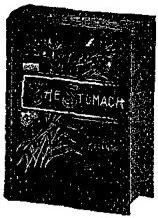
The Stomach: Its Disorders and How to Cure Them.
By John Harvey Kellogg
By J. H. KELLOGG, M. D.,
SUPERINTENDENT OF THE BATTLE CREEK (MICH.) SANITARIUM.
This book presents in a nutshell what every person ought to know about the stomach, its functions in health, the symptoms produced by disease, and the best methods of cure. The long experience of the already well-known author in the treatment of stomach disorders, in his supervision of the Battle Creek Sanitarium, makes this a work of inestimable value, not only for the sick but those who desire to keep well.
THE FOLLOWING ARE LEADING CHAPTER HEADINGS:
The Organs of Digestion. The Maladies of the Modern Stomach, The Systematic Treatment of Indigestion, Foods, The Digestive Fluids Important and New Discoveries Relating to Digestion, Treatment of Dyspepsia, Remedies for the Home Treatment of Dyspepsia, The Symptoms Dyspepsia, General View of the Digestive Process, Quacks and Nostrums.
The work is illustrated with more than one hundred and thirty cuts, including eleven full-page plates, three colored plates, etc.
This work ought to be in the hands of every dyspeptic.
PRICE, Cloth, $1.50. — — Half Buffing, $2.00.
MODERN MEDICINE PUBLISHING COMPANY, Battle Creek, Mich.
THE “COMBINATION” BIBLE
Something New Under the Sun is
THE “COMBINATION” BIBLE.
All the changes which occur in the Revised Version appear in foot-notes, thus escaping the awkward and cumbersome parallel versions.
RV just before a word or passage shows how the same word or passage is rendered in the Revised Version as seen in the corresponding foot-note.
RO before a word or passage in the text indicates that the words inclosed in parentheses in the foot-notes are omitted in the Revised Version.
Clear type, helps, maps, concordance, etc.
Published by the National Publishing Co., Philadelphia, Pa.
Send for circulars.
Address, PACIFIC PRESS PUB. CO., 39 Bond St., New York.
Invaluable to Bible and History Students
THE EMPIRES OF THE BIBLE
FROM THE TIME OF THE FLOOD TO THE BABYLONIAN CAPTIVITY.
By ALONZO T. JONES.
Recent research in Babylon and Egypt has brought to light many valuable historical records that were inscribed in stone by the very men living in those ancient times. These records and the Bible history of the same time are woven together in one connected story. Another important feature of the book is the tracing in a series of twenty-one maps, the course of those empires. The design of the book is unique, and every student either of Bible or of history will find it invaluable.
410 Pages. Cloth, Post-paid, $1.50.
PACIFIC PRESS PUBLISHING COMPANY,39 Bond Street, New York City, N. Y.