A MAN’S dwelling in one country, and holding citizenship in another and far remote country, is not an unknown circumstance. In such a case, we may have the singular anomaly of one being most a stranger in the land in which he is present, and most at home in the land from which he is absent. Our blessed Lord was the first perfectly to realize this idea respecting the heavenly country. For he speaks of himself as “He that came down from heaven, even the Son of Man who is in heaven.” So truly a citizen of the other world was he, that even while walking and talking with men he regarded himself as there, not here. And this saying of his occurs in that discourse where, with an emphatic “verily, verily,” he declares that “except a man be born [margin] from above he cannot see the kingdom of God.”
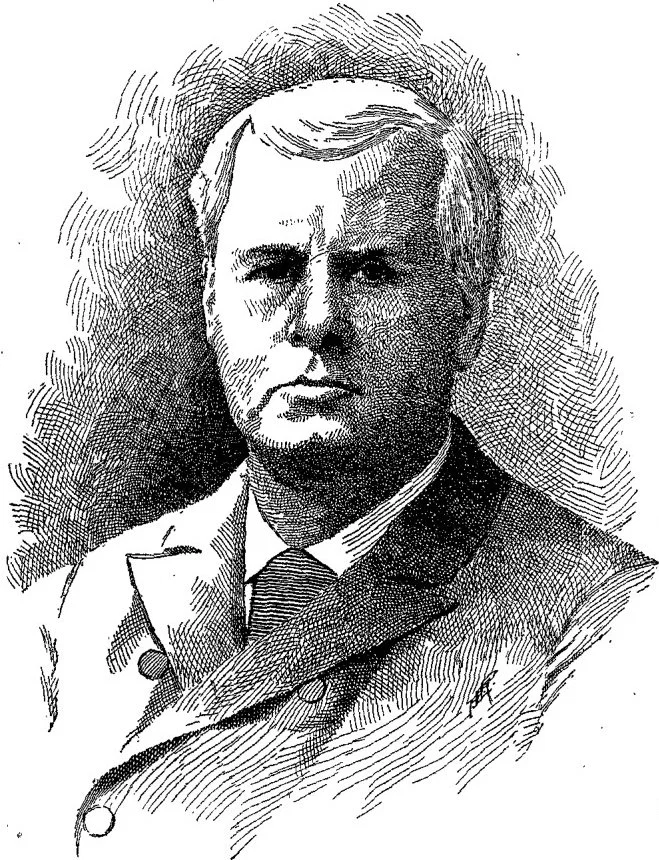
THE LATE DR. A. J. GORDON.
Here is the key to the whole mystery. As the only begotten of the Father, Christ’s native country was above; and during all the days of his flesh he neither relinquished his heavenly citizenship nor acquired an earthly residence. “Blessed be the Lord God of Israel; for he hath visited and redeemed his people,” is a significant note in the prophecy of his birth. And four times in the Gospels is our Lord’s advent to earth spoken of as a visit. But it was a visit which never for a moment looked toward a permanent abiding. At his birth he was laid in a borrowed manger, because there was no room for him in the inn; at his burial he was laid in a borrowed tomb, because he owned no foot of earth; and between the cradle and the grave was a sojourn in which “the Son of man had not where to lay his head.” The mountain top whither he constantly withdrew to commune with his Father, was the nearest to his home. And hence there is a strange, pathetic meaning in that saying, “And every man went unto his own house; Jesus went unto the Mount of Olives.”
Now, as it was with the Lord, so it is to be with his disciples. “For our citizenship is in heaven,” says the apostle. Herein is the saying of Lady Powerscourt true: “The Christian is not one who looks up from earth to heaven, but one who looks down from heaven to earth.” A celestial nativity implies a celestial residence; and with a certain divine condescension may the Christian contemplate the sordid, self-seeking children of this present evil age and say, with his Lord: “Ye are from beneath; I am from above: ye are of this world; I am not of this world.”
Let us be admonished, however, that to say this truly and to live it really, may subject us to the experience indicated by the apostle: “Therefore the world knoweth us not, because it knew him not.” There is a certain quaint beauty in the apology which an old reformer made for the hard treatment which he and his friends received from the men of this world. “Why, brethren,” he would say, “they do not understand court manners or the etiquette of heaven, never having been in that country from whence we come; therefore it is that our ways seem strange to them.” Would that in the Christians of to-day celestial traits were so conspicuous as to occasion like remark! Perhaps it is because there are so few high saints in the Church that there are so many low sinners outside the Church, since the ungodly can never be powerfully lifted up except by a church that reaches down from an exalted spiritual plane.
What means that lofty address of the apostle, “Wherefore, holy brethren, partakers of the heavenly calling”? (Heb. 3:1.) The reference is not merely to our final destiny as those who are to be called up to heaven, but to our present service as those who have come down from heaven: sons of God rejoicing in a celestial birth, bringing the air and manners of glory into a world that knows not God. As such we are exhorted to “consider the Apostle and High Priest of our profession, Christ Jesus;” an apostle being one who comes forth from God, and an high priest one who goes in unto God. And Christ Jesus not only fulfils both these offices in himself, as he says, “I came forth from the Father, and am come into the world: again I leave the world, and go to the Father,” but he makes us partakers with him of the same heavenly calling, sending us into the world, as the Father has sent him, and permitting us “to enter into the holiest by the blood of Jesus,” as he has entered in by his own blood.
Confessing that our citizenship is in heaven, it should be easily determined what our conduct and bearing towards441the world must be. One is expected to pay taxes and make investments where he holds residence. Therefore all calls to bountiful giving and all demands for rigid self-denial are to be esteemed as reasonable assessments, not as gratuities. Christianity is no paradox, in which believers are required to do peculiar things for the sake of being peculiar, and to exhibit startling contradictions for the sake of arousing the contradiction of sinners against themselves. When we are called to lay up treasures in heaven, it is because that is our country; when we are enjoined not to love the world, neither the things that are in the world, it is because this is not our country.
Two practical errors spring from an earthly theology: viz., that the world is the Christian’s home, and the grave the Christian’s hope. On the contrary, one possessed of a clear advent faith would choose for himself such an epitaph as that which Dean Alford composed for his tomb: “The inn of a traveler on his way to Jerusalem.” Ah, yes, that is it! A pilgrim’s portion, food and raiment and contentment therewith; the mansion which fortune has provided, or the cabin which penury has reared, each alike counted a hospice where one lodges as “a pilgrim and stranger in the earth;” and the grave a narrow inn whose windows look towards the sunrising, where the sojourner sleeps till break of day,—this, without question, is the ideal of the Christian life as outlined in the Gospel.
An impracticable ideal, it will be said. But it was not so in the beginning. To say nothing of apostolic Christianity, let us ask what it was that gave the Christianity of the first two centuries such extraordinary vigor in its conflict with heathenism. An eminent writer, Gerhard Uhlhorn, has shown with a graphic hand that it was just this quality of absolute unworldliness which constituted the secret of its power. The men who conquered the Roman Empire for Christ bore the aspect of invaders from another world, who absolutely refused to be naturalized to this world. Their conduct filled their heathen neighbors with the strangest perplexity; they were so careless of life, so careful of conscience, so prodigal of their own blood, so confident of the overcoming power of the blood of the Lamb, so unsubdued to the customs of the country in which they sojourned, so mindful of the manners of “that country from whence they came out.”
The help of the world, the patronage of its rulers, the loan of its resources, the use of its methods, they utterly refused, lest by employing these they might compromise their King. An invading army maintained from an invisible base, and placing more confidence in the leadership of an unseen Commander than in all imperial help that might be proffered,—this was what so bewildered and angered the heathen, who often desired to make friends with the Christians without abandoning their own gods. But there can be no reasonable doubt that that age in which the Church was most completely separated from the world was the age in which Christianity was the most victorious in the world. It was also the era of undimmed hope of the Lord’s imminent return from glory, so that it illustrated and enforced both clauses of the great text: “For our citizenship [R. V.] is in heaven, from whence also we look for the Saviour, the Lord Jesus.” (Phil. 3:20.)
Our Lord set forth his departure from the world under the parable of “a certain nobleman who went into a far country to receive for himself a kingdom, and to return.” (Luke 19:12.) As a Roman, living in Judea, on appointment to the governorship of that province, would go to Rome to be invested with office, and then return to rule, so Christ has gone to heaven to be invested with the kingship of this world, and now he and his watchful servants are eagerly waiting for the same thing; he, sitting at God’s right hand “expecting till his enemies be made his footstool,” and they expecting till he shall return to reign over the earth. Of the kingdom, the King and his kinsmen, the same avowal of unearthly origin is made by Christ: “My kingdom is not of this world, even as I am not of this world;” “They are not of the world, even as I am not of the world.”
The kingdom is the “kingdom of God,” the “kingdom of heaven;” its constituency are those who are “begotten of God,” and “born from above.” True, this kingdom is now in the world in its rudiments and principles, in its citizens and representatives: those who, like their Lord, have been sent hither to accomplish the work of gathering out a people for his name.
But, lest we fall into fatal error, let us not imagine that we are now reigning with Christ on the earth, or that the kingdom of God has been set up in the world. The church’s earthly career during the present age is the exact fac-simile of her Lord’s—a career of exile rather than of exaltation; of rejection rather than rule; of cross-bearing rather than of scepter bearing. Grasping at earthly sovereignty for the Church while the Sovereign himself is still absent has proved, as we shall show hereafter, the most fruitful root of apostasy. It may be said that this picture of the Church, as despised and rejected in the world, suffering, outcast, and in exile, does not correspond to the facts. Not to the facts of our own generation, we admit, wherein the world is on such excellent terms with Christians. But that it represents the character of the dispensation as a whole cannot be questioned, when we recall the Dark Ages and martyr ages of the Christian era; the prisons, and racks, and dungeons, and stakes, which stretch on through so large a portion of this age. And the pictures of prophecy are composite pictures, gathering up the main features of the entire dispensation and presenting them in one. Viewed thus, prediction and history perfectly accord.
“The kingdom is now here in mystery, and to be here hereafter in manifestation,” one has tersely put it. And to this the predicted destiny of believers corresponds. “Your life is hid with Christ in God; when Christ, who is our life, shall appear, then shall ye also appear with him in glory” (Col. 3:4). “Sons of God, therefore the world knoweth us not, because it knew him not” (1 John 3:1).442
“The earnest expectation of the creature waiteth for the manifestation of the sons of God” (Rom. 8:19). “If we suffer, we shall reign with him” (2 Tim. 2:12). Obscurity, rejection, exile, and trial in the world now; manifestation, vindication, enthronement, when the King comes,—this is the foretold calling of the children of the kingdom.
The unprecedented exemption of the church from persecution, and the extraordinary triumphs of the gospel which have characterized this nineteenth century, may tend to seduce us into the notion that the kingdom has already come, though the nobleman who had gone into a far country has not yet returned. That we may think truly on this subject, let us hear our Lord’s voice, saying: “Fear not, little flock, for it is your Father’s good pleasure to give you the kingdom” (Luke 12:32).
In spite of widespread conquests of the gospel the church is still “a little flock,” amid the vast populations of Pagans, Mohammedans, Infidels, and Apostates. This flock in every age has been branded with opprobrium, and torn by persecution, and beaten by hireling shepherds, and the end is not yet; for, as good Samuel Rutherford says, “So long as any portion of Christ’s mystical body is out of heaven, Satan will strike at it.” However favored in our times, this flock is not the kingdom; but it has the promise of the kingdom, in which rejection shall give place to rule, and crucifixion to coronation. When? “And when the Chief Shepherd shall appear, ye shall receive a crown of glory that fadeth not away” (1 Peter 5:4). What temporary respite from persecution we may enjoy, so that for the time it may be said as of old, “Then had the churches rest,” no permanent peace is guaranteed until the Lord’s return. “And to you who are troubled, rest with us when the Lord Jesus shall be revealed from heaven” (2 Thess. 1:7).
Persecution in Moncton, N. B.
By D. G. Scott
Moncton, N. B., July 8, 1897.
EDITOR AMERICAN SENTINEL: Bro. Andrew Turner was to-day brought before Justice Grant, of this city, for violation of the Sunday law. The complaint was laid by one Smith H. Brown, who runs a milk wagon on every day of the week.
The complaint was for doing servile labor on the “Lord’s day, commonly called Sunday.”
The complainant did not appear, and the magistrate dismissed the case, taxing the costs of the court upon Mr. Brown, and ordering that his goods and chattels be seized to pay the costs.
It was very evident that had any one appeared against Brother Turner, he would have had to suffer the full penalty of the law, as the magistrate stated emphatically that men may keep any, or as many days as they wish, but the law says that they must keep Sunday. He also declared that “it was fitting that one day in seven should be set apart by the law of the land as a universal Sabbath.”
The neighbors and friends of Brother Turner were present and testified in a marked manner to the high esteem in which he is held by all who know him. It should be a source of joy to him, that the Lord has chosen him to bring the light of the message of Rev. 14:9–12 before magistrates in this place. D. G. SCOTT.
Religion and the State in Japan.
By John A. Brunson
BY JOHN A. BRUNSON.
In order to reach just and accurate conclusions in reference to the relation existing between religion and the State in Japan, it will be necessary to take a brief survey of the prevailing religious systems of the country.
The religious beliefs of the Japanese people may be divided into two classes—Shinto and Buddhist. It is not easy to define clearly either of these systems of religious belief, or the relation that they sustain to each other; for many of the Japanese exhibit a spirit of tolerance in matters theological that amounts to indifference, worshiping indiscriminately at either Shinto or Buddhist shrines. As a matter of fact, the two religions are so thoroughly interfused in practice that the number of pure Shintoists or pure Buddhists is exceedingly small. This rather remarkable and somewhat anomalous condition of things may be explained by the fact that Buddhism, after its introduction into Japan in the sixth century generously received into its pantheon all the native Shinto deities, explaining that they were only avatars or visible manifestations of some Indian god, and therefore it would be proper for converts to Buddhism to continue to worship their ancient gods as before. By this compromise discontent among the Shintoists was allayed, and the Buddhist propagandists found their work of gaining adherents to their faith greatly facilitated. But mark the result—an instance of ecclesiastical hybridism, a corrupt system creditable to neither, so that the Buddhist gains were of rather doubtful nature.
Shinto is the native cult of the Japanese, being indigenous. Strictly speaking, it hardly deserves the title of religion, since it has neither creed, sacred books, nor code of morals. Certain modern Japanese writers, in their over-weening vanity, account for the absence of ethical teachings on the ground, that the innate purity of the Japanese people render such teachings entirely superfluous. Say they, only such depraved peoples as Chinese and Westerners need the restraining and constraining influences of a formulated ethical code.
Shinto recognizes a continued existence beyond the grave, but fails to teach whether it is one of joy or pain. Hence the doctrine of rewards and punishments is not443inculcated as an incentive to right conduct. Its services are few and simple, demanding little more of its votaries than a visit to the local temple on the occasion of the annual festival. It is a combination of ancestor-worship and nature-worship. Homage is paid to the departed ancestors of the imperial family, who are supposed to be direct descendants of the sun goddess, and to the names of other distinguished dead. In the realm of nature there are gods and goddesses of fire, wind, ocean, rivers, etc.
The priests enjoy an unusual degree of freedom. They are not bound by any vows of celibacy, neither are they prohibited from seeking other professions, if preference so dictates. They are not distinguishable by their costume from other men, save when engaged in offering the morning and evening sacrifices, at which time they wear a robe peculiar to themselves. In short, the sum of man’s duty as taught by Shinto may be expressed in a single line: “Follow your natural impulses, and obey the Mikado.” As a religious system, it is vague and shadowy.
Buddhism, on the contrary, with its profound metaphysics, its gorgeous ritual and exalted ethics, powerfully appeals to the religious instincts of the people. It was introduced into Japan from Corea and China in the year 550 A. D. At first it was rejected by the emperor, and was more or less opposed for half a century or longer. But gradually it won its way to general acceptance by dint of prudent concessions and ardent, persistent labor. It soon became the predominant religion of the country, the Mikados themselves, the supposed descendants of the Shinto sun goddess, adopting it. Having once gained the ascendancy, it was comparatively easy to hold it, and it is to-day the prevailing religion of Japan.
As propounded by Shaka Muni, its founder, Buddhism may be called an atheistic philosophy. It teaches that ignorance is the genesis of all misery and suffering, and enlightenment the way of escape therefrom; that happiness and salvation come from within—from recognizing the impermanence of all phenomena, from the extinction of desire, the root of life. The salvation to be obtained is Nirvana, which Colonel Olcott, the modern apostle of Buddhism, defines as “A condition of total cessation of changes, of perfect rest; of absence of desire and illusion and sorrow; of the total obliteration of everything that goes to make up the physical man.” It contains its decalogue, the precepts of which are as follows: refrain (1) from destroying the life of beings, (2) from stealing, (3) from unlawful sexual intercourse, (4) from falsehood, (5) from intoxicating liquors and drugs, (6) from eating at unseasonable times, (7) from dancing, singing, and unbecoming shows, (8) from using garlands, scents, perfumes, cosmetics, ointments and ornaments, (9) from using high and broad beds, (10) from receiving silver and gold. It is needless to add that priests and people live in constant violation of these moral precepts. Lying and licentiousness are prevailing sins of Japan, and frequently the priests set the example.
Numerically the Buddhists of Japan are strong. They are also active and aggressive, and vigorously oppose the advance of Christianity among the people. They are divided among themselves into various sects which detracts somewhat from their power, but nevertheless their hostility is the devil’s most potent factor in retarding the progress of the gospel in Japan. They have learned, in recent years, lessons in propagandism from Christian missionaries, and are advocating the establishment of schools and kindergartens, the founding of orphans’ homes and the education of women as indirect methods of spreading their tenets. They also make use of the printing press, sending out large quantities of tracts, papers and magazines, and are urging the priests to devote more time to viva voce preaching.
Special Offer Coming in the Sentinel Next Week
THE SENTINEL will have an offer to make next week that will interest every reader of the paper. Look for it.
The Power of Choice.
By Jesse Jared
BY JESSE JARED.
AMONG the many blessings of our beneficent Father the power of exercising the will in all our actions is one of the strongest manifestations of an all-wise Creator. When we consider this subject in its great magnitude, it seems strange indeed that finite man should attempt a work that is so entirely foreign to our Creator, and still have it in mind to do honor to a Being of supreme love.
In contemplating this, as with most themes of God’s dealings with man, our minds revert to the period in human history when all was as the mind of infinite Love only could devise. At that time when an all-wise Creator, who took in ages at a glance, placed man—the crowning being of his creation—in the position of ruler of the world, it must certainly have been that all was done which an all-wise Creator could consistently do to preserve him in perfect accord with the will of the Sovereign of the universe. Certainly if it were at all in keeping with God’s nature to enact laws to restrain man from going contrary to the divine will, it would be expected that man would be placed under restraint sufficient to forever prevent him from reaping the fruits of a course of rebellion, which the Eye that beholds the end from the beginning, assuredly took in.
But what do we find to be God’s plan of dealing with the creatures of his hand? Do we find such restrictions as would make it impossible for them to do other than what their Creator marked out as best? No; we find man made the recipient of the needed instruction, and444warned of the fruits of transgression, but still left as free as the zephyrs that stirred the foliage in their Eden home. How easy it would have been to have prevented all that sin has wrought, had it been just in God’s sight to enact even one measure to restrict man’s will in regard to the service due the Lord. But a Being of love, as God is (1 John 4:8, 16) could accept only a service of love, and this could be rendered only by beings capable of serving the Creator from choice.
When man was placed in this position, there was a possibility that his choice would fall on the wrong side. What a short step it would have been to have deprived man of the power of going wrong! But He that “spake and it was done,” did not deviate from the ways of righteousness. After man fell through the influence of the wily tempter, and was no longer the free being that he was before, God pledged the sacrifice of heaven’s best Gift that he might again liberate man’s will. Gen. 3:15.
Passing through the centuries, we come to the time when God saw the wickedness of man was so great in the earth, that every imagination of the thoughts of his heart was only evil continually; and we find that God bore with their unbridled iniquity for one hundred and twenty years.
If ever there was need of a “national reform movement,” certainly there was need of it then. But do we find the divinely-instructed Noah trying to effect the passage and enforcement of laws that would restrain that noble race from their course of immorality? No; we find only the record of his life of faith, and his preaching of righteousness. And after the great ark was finished, do we read that God caused man to go into the ark with the beasts? No; man was free to do as he pleased, and God could but close the great door on those that had obeyed the call of mercy.
We find all through the Scriptures striking evidences of God’s plan to leave man free. He would devise ways almost without number to cause man to turn from the ways of death. When one servant was maltreated and the covenant people strayed from the ways of life, the yearning heart of infinite Love would institute other means whereby those that would might see and turn from the ways of death. And finally, the treasures of the universe were poured out in the gift of the only-begotten Son.
He came to a people that were in daily expectation of the Messiah, whom they thought would so reform the nation that the Jewish people might compel all to conform to the principles of the religion for which they were such ardent sticklers. But in all of the life of Christ do we find one instance of trying to reform the nation as such? He wrestled with the woes of this life for upwards of thirty-three years, and proclaimed the good news of salvation throughout the length and breadth of Judea in such divine power that the hardened officer returned word to the bigoted priests that “never man spake like this man.” Whenever the touch or cry of distressed humanity reached him, his divine virtue went out to them in a degree that filled them with unutterable love and restored the stricken form to a condition of perfect health. All this was the manifestation of the life of God in mortal clay.
In all those years of our Saviour, who had all power in heaven and earth, can we point out one instance where he favored compulsion in the least degree. No; never do we detect the slightest indication of a spirit to use other than persuasive means to cause men to accept the offers of redeeming love. Amid a scene of universal rejoicing, that noble spirit was overcome by grief at the sight of the city that would not yield to the gentle pleadings of infinite Love.
If our divine Pattern would not compel even an assent to the doctrine he came from the throne of the universe to promulgate, how can fallen, sinful men engage in a work of judging and condemning their fellow-mortals? “If any man have not the spirit of Christ, he is none of his.”
Does God Depend on State Law for Sabbath Obedience?
At the last annual meeting of the California State Sabbath Association, a prominent clergyman from San José said in a speech that about thirty members of his church could not keep the Sabbath because there was no State Sunday law. Do professed ministers of the gospel really believe that the Lord is dependent on a State law for securing obedience to one of his requirements?
Religion in the Schools in Australia.
In Australia there exists a “National Scripture Education League,” the purpose of which is to secure the teaching of religion in the public schools. In pursuance of this object, a meeting of the League was held in Melbourne, May 20, which was attended by about one hundred clergymen of the city and suburbs. Bishop Goe, of the Church of England, presided. The following comments relating to the occasion are from the Bible Echo (Melbourne), of June 7:—
“The object which the League has in view, as stated by the chairman, is ‘the introduction of religion into our State schools.’ And a communication read by the secretary stated that ‘it is only through the ballot box that we can succeed.’ The League, therefore, is evidently a religio-political organization. In view of this, it is not strange that the following resolution was introduced, and, with the exception of the negative vote of the writer, unanimously passed:—
“‘That the ministers of religion and laymen here present pledge themselves to make every exertion to stir up the people in their districts so as to secure the return of members of Parliament favorable to the restoration of Scripture teaching in our State schools, and for this purpose pledge themselves to vote for no candidate whose opinions are not in harmony with the programme of the League.’
“This, as must be apparent to all, contemplates a purely political campaign. It means that both ministers and laymen shall engage actively in the business of political engineering, and shall ‘make every exertion’ to control the votes of the people, even by going to the length of obtaining beforehand a distinct ‘pledge’ from the electors that they will vote only as the League wishes them to vote. This is politics straight.
“And how purely political this movement is may be better appreciated from statements made by Professor Harper in introducing the foregoing resolution. He said, ‘We are going to have some power.’ Of course he meant445political power, State power. But to seek such power in religious work is to deny the gospel. In the gospel there is all the power any Christian needs for the successful accomplishment of Christian work. Paul says the gospel is ‘the power of God.’ More than this, when Christians seek to accomplish their ends through the ‘ballot box,’ they thereby limit their power to numbers, and place their strength upon a purely numerical basis; for there vote simply stands against vote. On such lines they cannot succeed unless they are in the majority. But God’s method of reckoning the strength of His people is very different. When they are connected with Him, and depend upon His power for the performance of their allotted work, He says ‘One man of you shall chase a thousand,’ ‘and two put ten thousand to flight.’ Josh. 23:10; Deut. 32:30.
“Again, Professor Harper said they intended to take such an attitude that politicians and men running for office would understand that the churches were ‘a body of voters to be reckoned with.’ This again degrades the church to a mere political level, and estimates its influence by the intimidating threat of how many votes it can cast in a political campaign.
“We are in hearty sympathy with the idea that the children need religious instruction, that no education is complete without such instruction, and that there is a lamentable want in this respect at the present time, as evidenced by the moral corruption and irreligious tendencies characteristic of the rising generation. But we are not in sympathy with the League’s proposed method for remedying the evil. Religion, pure religion, the religion of Jesus Christ, cannot be inculcated through political measures and acts of Parliament. Neither has God made it incumbent on the State to see that men are brought up in faith. That is the work of the Church. And when the church endeavors to make the State do this work it is shirking its own responsibility. God never said to the State:—
“‘And these words, which I command thee this day, shall be in thine heart: and thou shalt teach them diligently unto thy children, and shalt talk of them when thou sittest in thine house, and when thou walkest by the way, and when thou liest down, and when thou risest up.’ Deut. 6:6, 7.
“No; this is God’s instruction to His people, to the church, to parents. Here rests the responsibility; here is the tap-root of the whole question; here is the solution of the whole difficulty. Let parents do their duty in this respect, and the problem is solved. But if they fail, if they are not religious themselves, if they do not fear God and obey his commands, where is the hope for their children? We hear a great deal about our ‘godless State schools;’ but the difficulty is not with the State schools, but with the ‘godless homes’ in which the children are brought up.”
Sunday Laws and the True Rest of Manhood
The “New England Sabbath Protective League,” says its organ, the Defender, bases its conviction that “all classes and conditions of labor” ought to be made to take a weekly day of rest, upon “the great principle so felicitously expressed by Henry Ward Beecher, when he declared of Sunday: ‘It is meant to be the one day in which a man shall feel, I am not a toiler, I am not a worker, I am not an underling, I am not an apprentice, nor a journeyman; I am not a man on wages; I am not a hired man,—I am a MAN!’” This is very well so far as it goes; but the Lord wants an individual to be “a MAN” every day in the week, by becoming a son of God. Why not become reconciled to the Lord’s way, and trust in the power of divine grace to make us what we ought to be, instead of in the power of a human statute?
Marquette Friend Secures Six Sentinel Subscriptions
A WARM friend of the SENTINEL at Marquette, Kansas, writes: “To test whether subscribers could be secured for the SENTINEL here, I went out and in two hours received six subscriptions, the money for which I enclose. I am sixty-nine years old and not able to do much, but I simply wanted to learn whether or not the people here were willing to buy and read on the subject matter of the SENTINEL, and have found that they are. I shall do more soon.”
Particulars of the Sentinel's Unprecedented Offer
By Editor
FULL particulars of the unprecedented offer of the SENTINEL will appear next week, and we trust our friends everywhere will prepare to take advantage of it.
Religion and the State in Japan
“RELIGION and the State in Japan,” by J. A. Brunson (see page 442), comprises two articles, the second of which will appear next week.
Numbering Error in Previous Issue
By mistake, last week’s issue was sent out as No. 28, which is the number of the present issue.
TO OUR PATRONS:
By Editor
Write names plainly.
Remit by P. O. Money Order, or Express Order, or by Bank Draft on New York. Personal checks are not desired.
Make all Orders and Drafts payable to Pacific Press Publishing Co., not to the editor or any other individual.
We will receive Postage Stamps in small quantities and any kind of good money. Defaced coins will not be taken. If paper money or coin is sent, register the letter.
The Gospel Primer.
A Book for the Children.
Contains 160 pages of matter, which will interest the old as well as the young. There are thirty-three full-page illustrations, which, in themselves, teach many gospel truths.
PRICE - - - - .25
Address this Office.
A Greek-English Lexicon to The New Testament.
Revised and Enlarged by
THOMAS SHELDON GREEN, M. A.
WITH A PREFACE BY
H. L. HASTINGS,
Editor of the Christian, Boston, Mass.
AND A SUPPLEMENT BY
J. H. THAYER, D. D., LITT. D.
Professor of New-Testament Criticism and Interpretation in the Divinity School of —Harvard University.—
Containing additional Words and Forms to be found in one or another of the Greek Texts in current use, especially those of Lachmann, Tischendorf, Tregelles, Westcott, and Hort, and the Revisers of 1881.
“The best thing of the kind for the money.”
PAPER BINDING, Postpaid, 35c.
Address
Pacific Press Publishing Co.,
39 BOND ST., NEW YORK CITY, N. Y.
THE WHIRL of the CYCLONE CONTINUES.
The people are looking for a perfect washing machine. It is found only in the Cyclone, and it is so easy to demonstrate the fact to intending purchasers that agents for it are reaping a rich harvest. Write for terms and territory to Coon Bros., 18-20 Hanover St., Battle Creek, Mich.
Contains ninety-six pages, with twenty full-page illustrations. The work takes up Christ's great prophecy of his own second coming, and the signs of the times are clearly pointed out in relation to that greatest of all events.
JUST THE BOOK FOR THE TIMES.
Interesting, Timely, and Instructive.
Price, attractive board cover, .25
PACIFIC PRESS PUBLISHING CO.,
39 Bond st., New York City.
FIGHTING AGAINST GOD
Is the Title of a sixteen-page tract just issued as No. 41 of the Religious Liberty Library, In which PICTURE, POETRY, and PROSE unite in teaching Christian principles of freedom of conscience.
7 Fine Half-Tone Illustrations 7
Printed on highly-finished paper.
Its attractiveness will insure perusal by the most prejudiced or indifferent reader.
PRICE—3 Cents each.
Usual discounts in quantities
PACIFIC PRESS PUBLISHING CO., 39 Bond Street, New York City. Kansas City, Mo. Oakland, Cal.
DON'T TAKE
an agency until you find out what we have to offer. If already engaged or in business, send for our “Side-line Specialties.” Begin, now where you are, and turn spare moments into cash. $75 per month. Particulars free. Write to-day. Address,
E.E. MILES, Manuf’r and Pub., 5136 State St., Chicago, Ill.
WITH OUR ADVERTISERS.
—DON'T forget to look on our last page next week for the unprecedented SENTINEL offer which will appear there.
—EVERY child should have the “Gospel Primer.” The only book of the kind published. Price, 25 cents. Order from the publishers.
—THE “National Sunday Law,” being the arguments of A. T. Jones before the House Committee, in opposition to the Blair Sunday Rest Bill—is a thorough catechism upon the subject of Church and State. Price, 25 cents. See advertisement and send for it.
—“THE Empires of the Bible” is a book invaluable to Bible and history students. The late discoveries of valuable historical records in Babylon and Egypt are placed side by side with the Bible account of the same time, and together they form a story of thrilling interest. Price, $1.50. Address as per the advertisement on another page.
—THOSE who contemplate taking a business or short-hand course this year should investigate the merits of the Capital City Commercial College, Des Moines, Iowa, an advertisement of which appears in another column. This institution has fitted hundreds of young men and women for usefulness in practical life, among them being quite a goodly number of SENTINEL readers. Write to Messrs. Mehan & McCaully for their elegant catalogue giving full particulars, saying that you do so at our suggestion.