From Sea to Sea: Weber Canyon and the Devil's Gate
Page 1
The Youth’s Instructor
Jun 25, 1879
S. D. A. Publishing Association · Battle Creek, Mich. · Jun 25, 1879
From Sea to Sea: Weber Canyon and the Devil's Gate
By John Norton Loughborough
FROM SEA TO SEA.—NO. 10.
HAVING completed our changes and preparations we leave Ogden and are again on our onward journey. After two hours’ ride we enter the valley of the famous Weber River. This is a deep canyon through which the clear, rapid stream is passing toward the Pacific Ocean as we go up the stream toward the Atlantic. Here, indeed, is beautiful scenery. On our left are high rocks, like a great wall; to our right, some fifty feet down the ledge, is the real channel of the river. Suddenly, we cross the stream twice in the space of a very few rods; we have come to the “Devil’s Gate.” It is strange that nearly every terrific looking place in America has been named after his Satanic majesty; but so it is.
This is a romantic spot. The river cuts a channel around a point of the mountain which is in shape like a horseshoe. The rocks are some two hundred feet high on either side of the river in this curve. As we cross this chasm, the river is for a minute hid from view by the point of the mountain; then, as we again cross the river and look back, to our left, into this gap in the mountain, it appears like a gate or opening into some vast abyss. Such is the “Devil’s Gate.”
We wish the train would make a stop here, that we might longer view this sublime scenery; but there can be no delay, and on we speed, up the beautiful Weber Canyon. The appearance of the country here is entirely different from that west of Ogden; instead of sage brush and sand, we see high, rocky, fantastically shaped mountains on either side of a narrow valley; and we are told that this continues until we reach the Territory of Wyoming. But here we come to another sight. This time it is the “Devil’s Slide.” From a point some eight hundred feet up the side of the mountain, two strips of flat rock, standing edgewise, extend down to the bed of the stream. These strips are about fourteen feet apart, and project out of the ground in places fifty feet, forming a sort of trough down the mountain. This is one106of the most singular formations to be seen in the entire route from ocean to ocean.
Not far from the slide is a tree on which is placed a sign-board with this inscription: “One-thousand-mile tree.” This tree does not differ materially from others near by, only it happens to be just one thousand miles from the Missouri River, and serves as a token of progress, telling us we have performed very nearly one-half the journey from San Francisco to Omaha.
There are some fruit orchards and verdant spots in this valley, and as we stop at the stations we are greeted by fruit and sweet-apple cider peddlers, all anxious to pick up a few pennies from the passing train.
This afternoon seems to be one of interest in our journey. We pass from Weber Valley, and soon enter “Echo Canyon.” Here on our left is a ledge of rocks resembling a straight wall of masonry some two hundred feet high, and extending several miles along the railroad. At the entrance of this canyon is a prominence called “Pulpit Rock.” A speaker would need a very strong voice to address an audience in the valley from this great elevation.
I thought I had “seen rocks before,” but these curiously shaped ones, towering toward heaven, looking like a huge piece of masonry, or the ruins of some old castle, of such gigantic proportions that our train was but a mere speck compared with them, have riveted our gaze while we have traversed the entire length of this valley.
As we leave, with some regret, this canyon, we can but say, Here are some of the wonders of God’s creation, inspiring us with solemn thoughts of the greatness of His power who made the massive rocks, and who sustains our world and all other planets in their courses, by the power of his will. But night is coming on, as we pass out of Utah into the Territory of Wyoming. We will retire to our berths for sleep, that we may be prepared to view the new scenes of the morrow.
J. N. LOUGHBOROUGH.
GOD PROVIDES.
By Myrtle
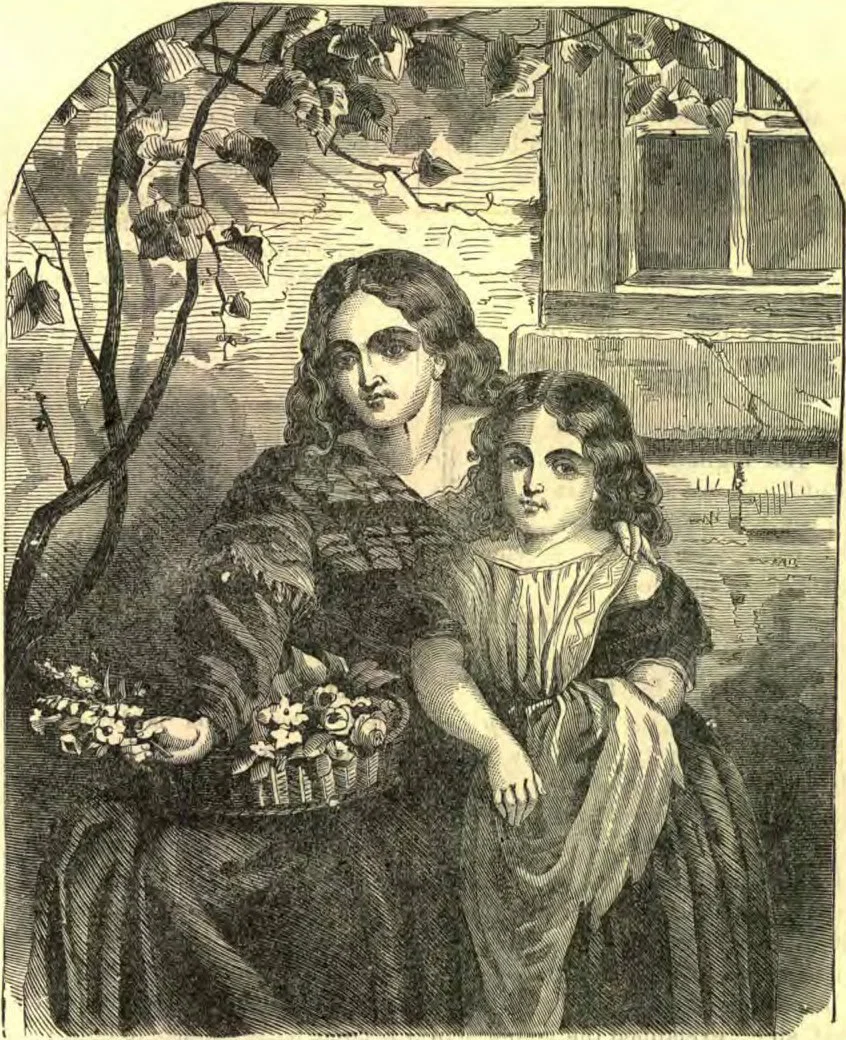
The world calls us lonely and friendless, And pities our orphaned estate, Not dreaming what sweetness of blessing, May often on poverty wait.
For God in his mercy is teaching Such lessons of trust in our need, We daily are led to remember, That he is a Father indeed.
Each morning we wake to new mercies, As we from his bounty are fed, And feel how directly his watch-care Provides for each day's daily bread.
For while we are quietly sleeping, In night's holy ministrant hours, He breathes with his life-giving spirit, Above all the beautiful flowers.
He paints with the rose-blush the roses, Beneath the embrace of the night, And blanches the heart of the lily, To purest and snowiest white.
The violets too, and the daisies, Come out from the brown, lifeless sod, And answer in fragrance and beauty, The call of the life-giving God,
That we, when the day with its glory Has banished the night with its gloom, May gather these tokens of mercy, And live by their beauty and bloom.
But while we are holding the treasures, And crying, “Come buy of my flowers,” We know that they only are loaned us, They all are God's treasures, not ours.
—Myrtle.
A RICH MAN ON RICHES.
THE following story, says The Wayside, is told of Jacob Ridgway, a wealthy citizen of Philadelphia who died many years ago, leaving a fortune of several million dollars.
“Mr. Ridgway,” said a young man with whom he was conversing, “you are more to be envied than any gentleman I know.”
“Why so?” responded Mr. Ridgway. “I am not aware of any cause for which I should be particularly envied.”
“What, sir!” exclaimed the young man. “Are you not a millionaire? Think of the thousands your income brings you every month!”
“Well, what of that?” replied Mr. Ridgway. “All I get out of it is my food and clothes, and I can’t eat more than one man’s allowance, or wear more than one suit at a time. Pray, can’t you do as much?”
“Ah, but,” said the youth, “think of the hundreds of fine houses you own, and the rental they bring you!”
“What better am I off for that?” replied the rich man. “I can only live in one house at a time; as for the money I receive for rents, why, I can’t eat it or wear it; I can only use it to buy other houses for other people to live in; they are the beneficiaries, not I.”
“But you can buy splendid furniture and costly pictures, and fine carriages and horses—in fact, anything you desire.”
“And after I have bought them,” responded Mr. Ridgway, “what then? I can only look at the furniture and pictures, and the poorest man who is not blind can do the same. I can ride no easier in a fine carriage than you can in an omnibus for five cents, without the trouble of attending to drivers, footmen, and hostlers; and as to anything I ‘desire,’ I can tell you, young man, that the less we desire in this world the happier we shall be. All my wealth cannot buy me a single day more of life—cannot buy back my youth—cannot purchase exemption from sickness and pain—cannot procure me power to keep afar off the hour of death; and then, what will all avail when, in a few short years, I lie down in the grave and leave it all forever? Young man, you have no cause to envy me.”
THE MAGNET.
By M. J. C.
How many of our young readers know what a magnet is? For the benefit of any who may not, we will say that a natural magnet, or loadstone, is a piece of iron ore which has the wonderful property of attracting iron to itself. An artificial magnet is a piece of iron or steel which has been rubbed against the magnetic ore until it has a similar power of attraction. You may have seen a magnet in the form of a horseshoe or a bar or pencil of iron; and perhaps you have made use of one in attracting pieces of iron or steel. No doubt many of the children have amused themselves in fishing with a magnet. Little toy fishes are made with a bit of iron at the nose; by placing them in a vessel of water and pointing a magnet a little distance from the nose, they can be attracted all over the surface of the water.
There are some persons who possess the power, magnet-like, to attract others toward themselves. It requires great effort sometimes to resist their influence. If it was only the good who possess this power, individuals and society would be greatly benefited; but unfortunately, the wicked possess it very largely, and delight themselves in drawing the innocent and pure into the downward road to ruin.
It often happens that children of good parents and good home-training, at school or elsewhere come under the baneful influence of vicious associates, and being easily persuaded, swerve little by little from the right, until they acquire habits which eventually lead them to the State’s Prison or the gallows.
From every side, powerful magnets are pointed toward you, dear reader, and your only safety is in utterly resisting every evil influence. No matter how smooth-tongued the tempter may be, nor how pleasantly he may approach you, be influenced only by purity, truthfulness, and right.
When the influence exerted is only for purposes of good, wonderful results frequently follow. Men and women are converted, and sometimes even little children bring their parents and associates to accept of Christ and be saved.
Christ himself is the most wonderful magnet. “And I, if I be lifted up from the earth, will draw all men unto me.” Acquaint yourselves with his life and character and you will be astonished that any can resist his efforts to draw the human family to himself.
There is great attractive power in his teachings, and since his ascension to Heaven he is constantly striving by his Holy Spirit with the hearts of men, urging all to look to him and be saved. He pleads with the Father to spare them until every effort has been made to attract them heavenward. Oh! may none of us resist his efforts to save us; and may we be of the number who shall be invited up higher, to dwell with him forever. M. J. C.
WHEN YOUTH IS PAST.
By Mrs. Osgood
BEAUTIFUL! yes; but the blush will fade,
The light grow dim which the blue eyes wear;
The gloss will vanish from curl and braid,
And the sunbeam die in the waving hair.
Turn from the mirror, and strive to win
Treasures of loveliness still to last;
Gather earth’s glory and bloom within,
That the soul may be bright when youth is past.
—Mrs. Osgood.
CHEERFUL OBEDIENCE.
By I. Sanborn
“Even a child is known by his doings, whether his work be pure, and whether it be right.” Prov. 20:11. And here is the rule by which it is known. The fifth commandment says, “Honor thy father and thy mother.” That is, obey them cheerfully, with a smiling face, which will convince every one that you do honor them.
As I travel from place to place, I often find children that have a sour, ugly look on their faces. This is because they have formed the habit of looking sour when their parents tell them to do anything, and then when they wish to look pretty, they cannot, because the muscles of their faces have grown into that ugly shape. Should these children grow to be men and women, most of them would then look ugly, and act ugly, while those who always obey their parents with a cheerful smile will become more handsome both in appearance and actions as they grow older. Then how wise it was in the Lord to require children to cheerfully obey their parents. Children, do you always do this? Here is what the Lord says about it. “A merry heart maketh a cheerful countenance.” Prov. 15:13. “Hear, O my son, and receive my sayings; and the years of thy life shall be many.” Prov. 4:10. Children, never try to deceive your parents, for you always show guilt on your faces when you do it; but do just right and the Lord will bless you.
I. SANBORN.
LESSONS FOR CHILDREN.
LESSON XXVI.—DEATH OF ELI.
Now the armies of Israel went out, and fought against the Philistines at a place called Ebenezer; and the men of Israel were beaten by the Philistines. Then they sent to Shiloh for the ark of God, and Hophni and Phinehas brought it down to the camp.
The Lord was greatly displeased to have his sacred ark, containing his holy commandments, treated in this way; so when the Israelites went out to battle, they were again beaten, and thirty thousand of them were slain. Hophni and Phinehas were also killed, and the ark of God was taken by the Philistines.
Now Eli was ninety-eight years old; and when he heard what had been done, and how the ark of God had been taken by the enemies of Israel, he fell backward from his seat, broke his neck, and died.
The Philistines took the ark of God to Ashdod, and put it into the house of Dagon their god. The next morning, when they looked in, they found that Dagon had fallen upon his face before the ark of the Lord. Then they raised up Dagon, and put him in his place; but on the morning after, they found him fallen again, and this time, his head and both his hands were broken off.
The Lord troubled the men of Ashdod with painful diseases, so that they cried out saying they could not have the ark of God there. So it was carried about from place to place, but everywhere it went the people were afflicted, and many of them died.
After keeping the ark seven months, the Philistines were glad to send it back to the children of Israel. So they put it on a cart drawn by two cows, and let the cows go where they would. Now the cows had young calves at home; but they went right off away from them, and took the ark to Beth-shemesh. The men of Beth-shemesh were astonished, and a multitude of people came from the country round about to see the ark. Finally they were so curious that they opened the ark, and looked into it; and for this, fifty thousand were smitten of God. After this, the ark was taken to Kirjath-jearim, and kept in the house of Abinadab twenty years.
QUESTIONS.
With whom did the Israelites have a battle at Eben-ezer? 1 Sam. 4:1.
Which army was victorious?
For what did the Israelites then send?
Who brought the ark to the camp?
What did the men of Israel do when the ark of God came into the camp? 1 Sam. 4:5.
What did the Philistines think when they heard the noise of the shout?
What did they say?
Which army gained the victory in the battle that followed?
How many of the Israelites were slain?
What became of the ark?
What was the fate of the sons of Eli?
What happened to Eli when he heard that his sons were slain, and that the ark of God was taken?
What did the Philistines do with the ark? 1 Sam. 5:2.
What befell their god Dagon?
In what other way did the ark prove troublesome to them?
How long was it kept in the house of Abinadab? 1 Sam. 7:2.
PENNIES
By M. B. Miller
What pennies? Those to put into the Sabbath-school contribution box. This part of the work should not be overlooked, but it should be carried forward in the most careful manner. Like all other gifts to the Lord’s cause, this should be a matter of liberality, and not of covetousness. Means are needed to advance the interests of the Sabbath-school, and if given with proper motives, will be blessed of the Lord.
We are not particular just what method is adopted to raise this means; but as the penny contribution is the usual plan, we wish to say a few words about it. Is there not danger that it will sometimes be neglected?
Officers, teachers, and parents should look after this matter. First, they should be punctual themselves in giving, thus setting a good example; and then they should provide some way whereby the children may obtain something to give.
Here the question arises, How shall this provision be made? By giving to our children pennies for this special object? We answer, Yes, if no better way can be provided; but we think there are other ways much better.
It is well at times that children be rewarded for their labor. This will help them to form habits of cheerful industry and to obtain means of their own. And when they have money to give which they have earned themselves, they will not feel as though they were giving something that belonged to some one else, but that which belongs to them. On their part a real sacrifice will be made which the Lord will accept for this good work.
When small sums of money are given to children it too often happens that their covetousness is cultivated by hoarding these gifts, or their pride or lusts are gratified by an improper spending of the same. How much better it would be to call their young minds and hearts to the fact that they could do good and help the Sabbath-school by helping in these weekly contributions.
This kind of work should not be fitful, but constant; not for a few months or a year, but continual. Let us see what the result would be in a school of forty members, if the plan was followed for one year, supposing there was an average attendance of seventy-five per cent, or thirty scholars, each Sabbath. If all these paid, we would have at the end of the year fifteen dollars and sixty cents. How many things this would purchase that would be interesting and beneficial to a school.
All schools that are faithful in this plan will have proportionate sums, according to the size of the school and the per cent of attendance. Soon the Sabbath-school treasury will have means in it. Then maps, books, and papers can be purchased for the general benefit of the school. Every Sabbath-school should have a good club of INSTRUCTORS. After each family has paid for one or more numbers of these for its own use, the remainder could be paid for out of this fund. The extra copies should be used for missionary work. Neighbors’ children who can be induced to attend the school and get a lesson, could be furnished with a paper each week.
The results of carrying out this plan would be the strengthening of our children in the right, an increase of interest and of numbers in our Sabbath-schools, and some souls saved in the kingdom of God. M. B. MILLER.
BIBLE LESSONS FOR YOUTH.
LESSON LII.—REVIEW.
1. Who were the leaders in the rebellion described in Numbers sixteen?
2. Who joined them in their rebellion?
3. What did they say about Moses and Aaron?
4. How did Moses expostulate with them?
5. To what test were they subjected?
6. What was the fate of the leaders of this rebellion?
7. What was the fate of the princes that offered incense?
8. What was done to keep the memory of this sad experience ever in the minds of the people?
9. What terrible sin did the people commit next day?
10. How did the Lord punish them?
11. How many perished by this plague?
12. By what sign did the Lord show that he had chosen Aaron to be priest?
13. What was done with Aaron’s rod that budded, blossomed, and yielded almonds?
14. Where was Miriam buried?
15. Describe the murmuring of the people at Kadesh.
16. How did Moses disobey God in bringing forth water from the rock?
17. In what way did Moses take the glory to himself?
18. What did the Lord say should be the consequence of this rashness?
19. What request did Moses make to the king of Edom?
20. How did the king of Edom answer this request?
21. Describe the death of Aaron.
22. How did the people again manifest their impatience and rebellion, as they were compassing the land of Edom?
23. How were the people punished for their rebellion?
24. What course did Moses pursue to stay this terrible infliction of the wrath of God?
25. Describe this war with Sihon, king of the Amorites.
26. Give an account of the war with Og, king of Bashan.
28. How many cities did the region of Argob contain?
29. How are the ancient inhabitants of these countries described?
30. Who was king of Moab at this time?
31. How did he seek to prevail against the Israelites?
32. What success had the messengers who were first sent to Balaam?
33. How was Balaam finally induced to come?
34. What was the result of his attempts to curse Israel?
35. How was the curse of God finally brought upon the men of Israel?
36. By whom were they led to worship Baal-peor, the god of the Midianites?
37. Who counseled them to do so?
38. How did the Lord punish the men of Israel for this great wickedness?
39. How many died of the plague?
40. How were the Midianites punished?
41. What was the fate of Balaam?
STUDY THE LESSON.
ARE you a scholar in the Sabbath-school? You answer, Yes. But I think you are not much of a scholar if you do not study your lessons during the week. You study your lessons for the week-day school, and why not for the Sabbath-school? The Bible is a great storehouse of the best and most interesting knowledge, and it requires long and close study to gain it. Therefore study your lessons, and pray over them.
Obstacles and Difficulties That Make Men
It cannot be too often repeated that it is not helps, but obstacles, not facilities, but difficulties, that make men. Beethoven said of Rossini, that he had the stuff in him to make a good musician, if he had only been well flogged when a boy; but he was spoiled by the ease with which he composed.—Matthews.
LETTER BUDGET.
SHERMAN E. EVANS writes from Spring Mills, N. Y.,
DEAR EDITORS: I am one of the INSTRUCTOR family, and am trying to keep the Sabbath with my parents. There is no church near here, but we attend meeting sometimes. I would like to see all the INSTRUCTOR family. I want to live so that I can meet them all in the new earth. May God bless you all.
Some of the INSTRUCTOR family will meet in the new earth, and they will know each other there. Others, no doubt, will be left behind. Dear Sherman, strive for eternal life.
HARRISONVILLE, KAN.
DEAR EDITORS: I read the children's letters with more interest than any other matter published in the paper, and thought I would try my hand at writing. I am fourteen years old; have been taking the INSTRUCTOR two years. There are eight of us, and we are all keeping the Sabbath; we began about one year ago. It looks a little odd to keep the seventh day when everybody else keeps Sunday; but the Bible says the seventh day is the Sabbath, and I think the Bible tells the truth. We have a little Sabbath-school, and take six copies of the INSTRUCTOR.
MELVILLE DANA.
Dear Melville, it does look odd to be so out of joint with the world; but the Scriptures say that Christians are a peculiar people. Let us not only appear unto man as peculiar, but unto God, having all the graces and virtues, yes, and all the peculiarities, of those whose names are written in the Lamb's book of life.
THE THREE SIEVES.
“O MAMMA!” cried little Emma, “I’ve heard such a story about Mary Brown. I didn’t think she would be so naughty. One”—
“My dear,” interrupted Mrs. White, “before you continue, we will see if your story will pass the three sieves.”
“What does that mean, mamma?” inquired Emma.
“I will explain it. In the first place, is it true?”
“I suppose so; I got it from Ella Thompson, and she is a great friend of Mary’s.”
“And does she show her friendship by telling tales of her? In the next place, though you can prove it true, is it kind?”
“I did not mean it to be unkind, mamma; but I am afraid it was. I would not like to have Mary speak of me as I did of her.”
“And thirdly, is it necessary?”
“No, of course not, mamma; there was no need for me to mention it at all.”
“Then put a bridle on your tongue, my child. If we cannot speak well of our friends, let us not speak of them at all.”
Chinese Politeness
Politeness in China is a science, and gracefulness of manners a study and discipline. The successful effort of a retiring visitor to pass from a reception room through two or three courts without turning his back upon the host, backing, bowing, and going sideways, by turns, and his oft-repeated wish that the host should not take the trouble to accompany him to the outer door, and the as oft-repeated reply of the host that his feelings of gratitude and respect oblige him to do so, excite in a foreigner feelings of both surprise and amusement.
This excessive politeness is also amusingly manifest in their language, as well as their manners. A Chinaman, inquiring of a friend his place of residence, though he knows him to be poor, and probably living in an inferior house, asks,
“Where is your mansion?”
He replies,
“My hut” or “hovel” is in such a place.
Rich men, living in fine, costly houses, use the same language in reply to such an inquiry. Mr. Nevins, an American missionary now in China, gives the following, as specimens of the complimentary expressions on one side, and the self-depreciating on the other, which may be constantly heard in the intercourse of the Chinese with each other:—
“What is your honorable age?”
“My empty or worthless age is forty-five.”
“Is your honorable wife living?”
“The mean person in the inner apartment is still in life.”
“Is your noble son doing well at school?”
“The contemptible dog has learned a few characters.”—Little Star.
THE SHARK'S FIN.
I was once sailing on the broad Pacific. One day, when the sea was very calm, I looked out upon the water on the Mexican coast, and saw what seemed to be a long, sharp, pointed knife, rising above the surface and cutting the water, while it kept along with the ship for an hour or more. On looking narrowly, I saw that it was a fin rising from a shark’s back.
This creature was following us, ready to catch any one who might fall overboard. It was very large, and had cold, murderous eyes. Thus it was gliding noiselessly along, watching for a chance to do some awful work of blood.
So, thought I, that great enemy of souls, Satan, follows men, hoping to seize them in some unguarded moment, and drag them down to destruction. He is in the waters of sin; however pleasant they may seem, it is dangerous to try them. There is no safety, only as one keeps on the good, stanch ship of Christian integrity.
Origin of the Word Humbug
“Humbug” is from Hamburg; “a piece of Hamburg news” was in Germany a proverbial expression for false political rumors.
Little Crosses, Little Cares
LITTLE crosses, little cares,
Little things that give us pain,
As we bear them ill or well,
Turn to endless loss or gain.