The Youth's Instructor, Vol. LIII, No. 2

Discontent

The Youth's Instructor

January 10, 1905

Review and Herald Publishing Assn. · Washington, D.C. · January 10, 1905

Discontent

THERE is no day so dark But through the murk some ray of hope may steal, Some blessed touch from heaven that we might feel, If we but chose to mark.
We shut the portals fast, And turn the key, and let no sunshine in; Yet to the worst despair that comes through sin God’s light shall rule at last.
We slight our daily joy, Make much of our vexations, thickly set Our path with thorns of discontent, and fret At our fine gold’s alloy,
Till bounteous Heaven might frown At such ingratitude, and, turning, lay On our impatience burdens that would weigh Our aching shoulders down.
We shed too many tears, And sigh too sore, and yield us up to woe, As if God had not planned the way to go, And counted out our years.
Can we not be content, And light our foreheads from the ignoble dust Of these complaining lives, and wait with trust, Fulfilling Heaven’s intent? — Celia Thaxter.

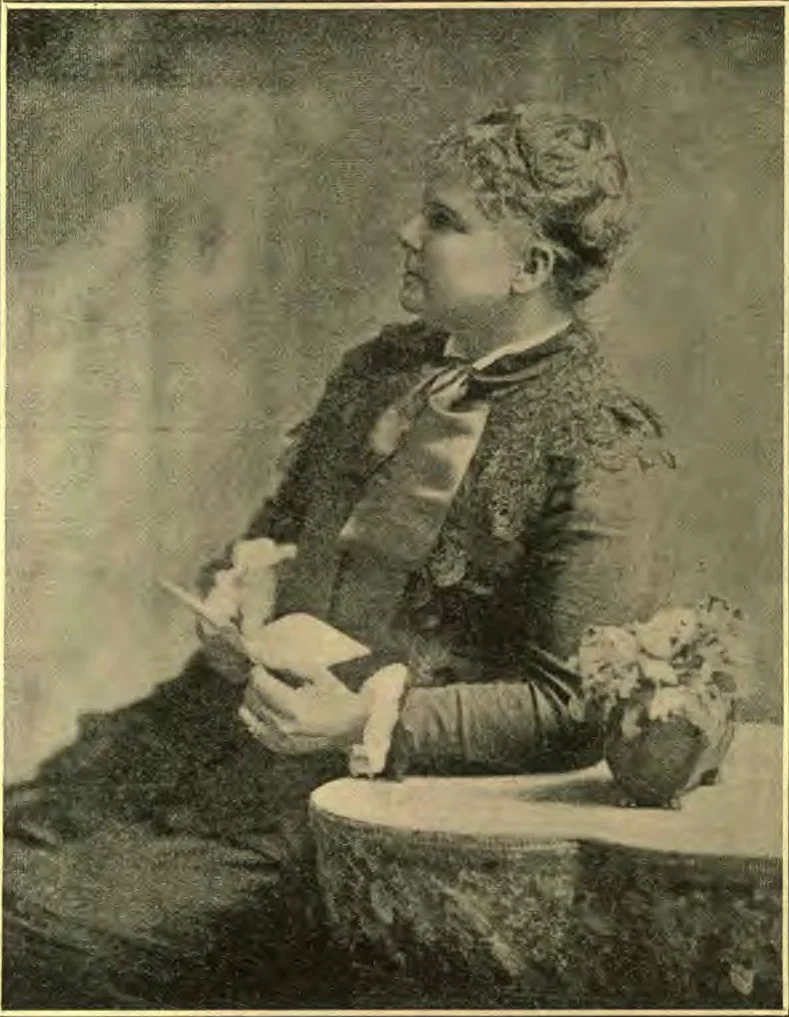
Celia Thaxter

ONE of the ocean's best gifts to us is Celia Thaxter. She was indeed the ocean sprite so beautifully described in one of her many charming stories for little folk.
From babyhood to womanhood on a lonely lighthouse rock in the great blue Atlantic lived Celia Leighton, afterward Mrs. Thaxter. “Every wave that whitened the face of the vast sea was dear to her, every bird that floated over, every sail that glided across,—all brought her a thrill of joy. And what a keen delight came to her with the thunder, lightning, and the rain!”
Hers it was to watch for the beautiful in earth, sea, and sky. Her eye was a burning glass that concentrated all gathered glory upon her own soul. There it was pictured in splendor and in living colors, again to flash forth in conversation, story, poem, painting, or song, for the pleasure and instruction of others.
She beguiled from flower, tree, and bird, their soul secrets,—yes, and from the great sea and all it gave to her, until, as she says herself, “Sleeping or waking, year after year, she kept in her ears the sad, mysterious murmur of the sea, just like a hollow shell.”
Her tender sympathetic love for the things of nature seemed unlike that of the scientist, however enthusiastic and ardent his may be. As there were no flowers like those born and nurtured under the breath of the sea, so there was no love like hers,—deep, constant, spontaneous. Each added bit of knowledge, beauty of color or sound was quickly acknowledged by a happier smile and a fuller life.
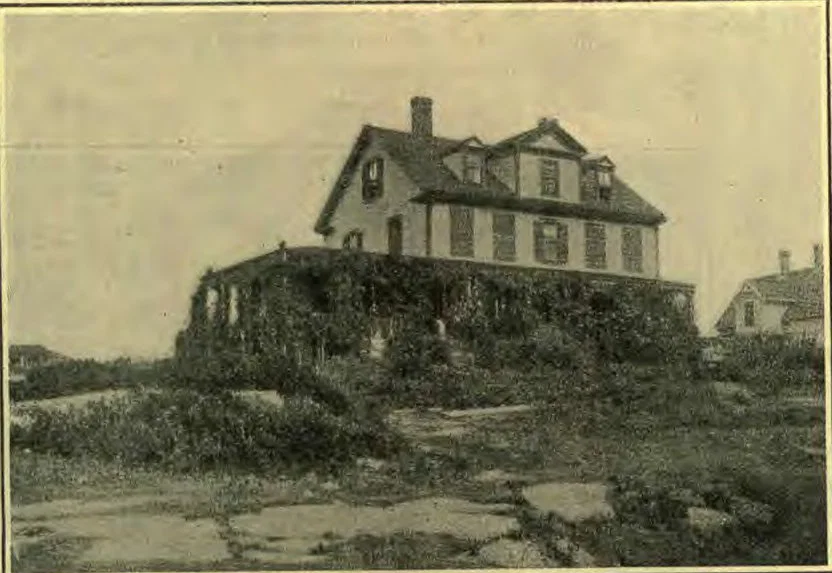
The old town of Portsmouth, New Hampshire, proudly accepts the honor of being the birthplace of the nature lover and poet, Celia Leighton. However, at a very early age, her father, owing to some political disappointment, it is said, left Portsmouth for the desolate Isles of Shoals, having decided to spend the remainder of his days apart from his fellow men. To him, after his removal, even the horizon line that marked the mainland nine miles away was regarded with disfavor.
The Isles of Shoals are described as “stern, bleak, and forbidding, yet having a charm about them, an indescribable influence in their atmosphere, that causes one to forget the hurry and worry and fret of life.” They are supposed to have received their name from the “shoaling,” or schooling, of fish about them, which at some seasons is remarkable. Their hard, jagged, jutting ledges have gored the side of many an unwary vessel; for, although Mr. Leighton kept the bright rays from the lighthouse constantly streaming out into the treacherous darkness, many were his gruesome finds along the shore after severe storms.
The islands are said to be inhospitable, and after reading the glimpse Mrs. Thaxter has given of one evening's experience in time of storm, it is not difficult to believe them so. “The snow and sleet are beating against the windows, and we can have no fire; for the wind blows it all straight out of stove or fireplace, gas, flame, ashes, even brands and coal. We are sitting with the window open, choked with gas and half frozen, wrapped in all our winter garments, and the snow blowing over our heads.”
This girl of the sea was fondly attached to her island home, yet a young man, Levi P. Thaxter, of Watertown, Massachusetts, who had sought the quiet of her father's home for summer study and reflection, early persuaded her to make a home with him on the mainland. But the love of the sea did not forsake her on her departure; for her first printed poem was but an outburst of her soul on experiencing, one day, an unusual longing for the sea. She scribbled the verses on the back of an envelope, and sent them to a friend. They fell into the hands of James Russell Lowell, who christened them “Land-locked,” and printed them in his magazine, The Atlantic, which fact alone tells their worth.
This marked the beginning of Mrs. Thaxter's work as an author. Her domestic duties as wife and mother forbade her giving to the world all that was in her heart; but she produced enough to make her name known and loved throughout the country.
Her letters were so bright and entertaining that they proved to be golden cords that bound many men and women of rare intelligence to her in a strong friendship. Her appreciation of nature and art drew around her a host of authors, musicians, artists, and nature lovers. She had so much company at times that once in writing to a friend she referred to her “Gulf Stream of company.” Whittier, Paine, William Mason, Appleton Brown, Sarah Orne Jewett, Bradford Torrey, Thoreau, and many more as noted persons, were glad to be numbered among her especial friends.
Mrs. Thaxter, who was born in 1835, lived until 1894. She writes in a letter to a friend of an added happiness that came to her in her last days,—a grandson. “Oh, I never meant in my old age to become the subject of the thrall of a love like this; it is almost dreadful,—so absorbing, so stirring down to the deeps. For the tiny creature is so old and wise and sweet, and so fascinating in his sturdy common sense and clear intelligence; and his affection for me is wonderful, exquisite thing! the sweetest flower that has bloomed for me in all my life through.”
Her oft-expressed desire to be permitted to lay down the armor without prolonged suffering, was granted . After a pleasant evening with friends, reading, and listening to music, she retired, but did not again waken with the morning hours. The perpetual murmur of the sea about her grave bespeaks the heart murmur of her friends.

Landlocked

BLACK lie the hills; swiftly doth daylight flee; And, catching gleams of sunset's dying smile, Through the dusk land for many a changing mile The river runneth softly to the sea.
O happy river, could I follow thee! O yearning heart, that never can be still! O wistful eyes, that watch the steadfast hill, Longing for level line of solemn sea!
Have patience; here are flowers and songs of birds, Beauty and fragrance, wealth of sound and sight, All summer's glory thine from morn till night, And life too full of joy for uttered words.
Neither am I ungrateful; but I dream Deliciously how twilight falls to-night Over the glimmering water, how the light Dies blissfully away, until I seem
To feel the wind, sea-scented, on my cheek, To catch the sound of dusky flapping sail And dip of oars and voices on the gale Afar off, calling low,—my name they speak!
O Earth! thy summer song of joy may soar, Ringing to heaven in triumph. I but crave The sad, caressing murmur of the wave That breaks in tender music on the shore. —Celia Thaxter.

Milk or Meat

EVERY age has its special charm. We delight in the simple, artless actions of the babe; we rejoice in his growing strength, and take pleasure in his frolics, when he has become a boy; and we admire and reverence his power and resourcefulness when he has reached manhood. But for a man to act like a baby, to coo, to grimace, to caper, would disgust us. We want him to show his manhood, to be a man.
Neither would we expect him to eat the food of a child. His development depends largely upon his using the food that is adapted to his age. As a babe, he needs food which he can easily receive and assimilate; and that food is furnished in the form of milk. As he grows, he is able to take solid food; and he abandons, to a more or less degree, the food of babyhood.
As it is in the physical, so it is in the mental life. The child requires mental food which he can easily assimilate and use; but as he grows older, his mind, if it has been properly developed, requires more solid food, which will exercise as well as sustain. He who feeds largely on the mental food of childhood will remain a child, useless alike to himself and others. “For when for the time ye ought to be teachers, ye have need that one teach you again which be the first principles of the oracles of God; and are become such as have need of milk, and not of strong meat. For every one that useth milk is unskilful in the word of righteousness: for he is a babe. But strong meat belongeth to them that are of full age, even those who by reason of use have their senses exercised to discern both good and evil.”
If we enquire what is the food suited to either age, we need to consult both the natures and the duties of the different ages. First, then, the nature of the child is to receive and confidingly to believe what is told him. The receptive faculties are the most fully developed in him; memory is his strong point. The nature of the man is to reason; receiving certain facts, he weighs them, compares them, unites them, and forms conclusions. He constructs. Second, the work of the child is just to develop, by the assimilation of the truth which he learns. The work of the man is to create, to put the impress of his mind and hand upon the structure of the world's progress. In so far as he fails to do this, he declares himself a babe. And we may see to what extent his mental food is responsible for his failure.
MRS. THAXTER'S ISLAND HOME
It is by every one recognized that the story is the natural form in which to give truth to children. The child’s mind delights in the story, and, quite unconsciously to himself, he receives in the story the food of truth that makes him grow. It may be said that children are to learn by observation as much as by story. That is true, if we limit the story to the telling of things which the child does not see. But note how much more eagerly the little one observes that tiny red and black bug if you tell the story of what it eats, where it flies, and how it sleeps its long sleep through the winter. He will watch for and talk about the “waking up” of the buds and leaves and flowers for weeks before they appear, and his sharp eyes will ever be spying about for the green things coming, because he has been told stories of their sleep. The world is all a poem to him, and the story makes it so. The story is the natural food of the child-mind; it is the milk.
But come now to the boy and the girl of twelve and fifteen years of age. If that boy has had a healthful education, you will find his mind beginning to seek far below the surface of things for causes. He has a more intense desire to try his hand at things; he feels a power stirring within him that calls for greater activity, and this new life requires stronger food. He wants to know more about machines, about the management of crops and the secrets of plants; he wants to have the mastery of something, to fit the tone of command which has crept into his voice.
So with the girl. If she has had a free, open-air life before, and if she is not now loaded with cautions about propriety and with directions which compel a sedentary life, she takes delight in the new duties and the responsibilities that begin to crowd her life. Away now with stories! The boy is likely to feel a half contempt for the telling of stories; at least he can not spend long time in the reading of them; and the girl has use for them only to give to younger ones. Not that the love of reading is lost; but it comes to be centered more and more upon the lives of historical personages and their achievements in statecraft, science, and adventure, and bears a maturer fruit in emulation of their oratory, their inventions, and their endurance. The romanticism of the child-mind develops into the beautiful realism of the new mind of man and woman. The delight of entertainment is succeeded by the delight of accomplishment and the joy of searching out things which are needed to secure certain ends. This is the natural state.
But some will say, “My experience disproves all that.” Ah, it is true that they who experience all this are comparatively few. Too many are they to whom the fascination of the story clings through life; if interrupted at this period, yet resuming its sway very quickly, as the barely awakened new faculties are starved or stifled. Story reading has gained so firm a hold upon them that, without heroic effort, it can not be broken.
But that is not natural: what has caused it? There was poison in the milk! There are some mothers—monsters—who feed their babes milk saturated with the poison of alcohol. The child learns to love its taste, and he can not rid himself of the appetite for it. If alcohol were furnished only, or mainly, in a milk concoction, he would always drink alcoholic milk, until he sank into a drunkard’s grave. So has the story been poisoned to many. The fictitious story which “teaches a good lesson,” and which is fed to the child in less or greater proportion, along with the stories of men of the Bible and of history, and the stories of nature, contains the poison of the lie. Watch the children; see if such stories do not grasp and distort their fancies as the simple, true stories do not. There is created the mania for story reading. And until the author, the teacher, and the parent have learned the deadly danger of lying to their readers or their hearers, even to teach morality, the crime of poisoning our children’s mental food will continue.
Observe for a while, and you will find that Bible stories, history stories, nature stories, and some stories of travel, properly made and told, do not create that craze for story reading which fictitious stories do. They feed, but do not inflame the mind; and when the time for further development comes, the child is able to take the steps he should; his mind grasps the realities of life; he wrestles with them manfully, and becomes what he should,—a rational, reliable being whom God can trust with responsibilities.
But now, young men and women, though we may not have had the advantages of a perfect training in this respect, let us face the situation. Shall we be babes, who depend for their food upon the milk of stories? or shall we begin to do the work, to study the problems, to surmount the difficulties, that confront us? Life is real, life is earnest; and right before us lies the most terribly earnest work that ever young men and women were given to do. Never so tremendous a work was ever before put upon mortal men and women. Cords will strain, thews will crack, brains will reel, in the awful struggle. Perfect development, perfect training, perfect command of mind and soul, will be required in that crisis. Now is the training time.
Some thoughts in regard to what we should read, in the course of training needed, will be given in a following article.
A. W. SPAULDING.

Our Shadow

EVERY one of us casts a shadow. There hangs about us a sort of penumbra,—a strange, indefinable something,—which we call personal influence, which has its effect on every other life on which it falls. It goes with us wherever we go. It is not something we can have when we want to have it, and then lay aside as a garment. It is something that always pours out from our life, like light from a lamp, like heat from flame, like perfume from a flower.
Continue reading: Germs as Friends and Enemies