The Youth’s Instructor, Vol. 32, No. 43.

OF WHOM THE WORLD WAS NOT WORTHY

The Youth’s Instructor

Oct 22, 1884

S. D. A. Publishing Association · Battle Creek, Mich. · Oct 22, 1884

OF WHOM THE WORLD WAS NOT WORTHY.
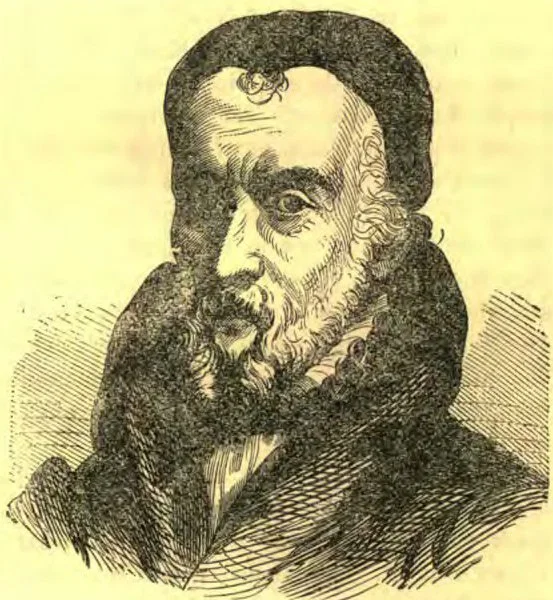
ABOUT the time of the Great Reformation, when Luther was diligently at work in the castle at Wittemberg, translating the Bible from the Latin into the German, the Lord put it into the heart of an honest and pious young priest of England to do a similar work for the benefit of the English people. This man was William Tyndale. He was born at North Nibley, Gloucestershire, England, somewhere between the years 1480 and 1484, though the exact date of his birth is unknown. About this time, Luther was born in Germany.
Tyndale received his first education at Oxford. He afterward went to Cambridge, where he made great progress in his studies. After he took the order of priest, he engaged himself as tutor in the house of Mr. Welch, a knight of Gloucestershire.
Mr. Welch was a very hospitable gentleman, and used frequently to invite to his table, abbots, deans, and other clergymen. The sun of the Reformation had already shed its first clear beams athwart the land, exposing the foul unsightliness of the Romish church and her prelates. The conversation of the day very naturally turned on religious subjects; and especially at such gatherings as these that met at Mr. Welch’s table would the Scriptures and other religious themes be considered. Tyndale entered warmly into these discussions, heartily upholding the doctrines advanced by Luther, and always bringing forward Scripture to confirm his position. As he was a learned man, and well versed in the Bible, these abbots could not gainsay his words, and finally they became very envious of him. They talked bitterly about Tyndale in the ale-houses and other public places, and tried to convince Mr. and Mrs. Welch that he was wrong.
Not a great while after this, he got into a dispute with a very learned doctor. As Tyndale was continuing the argument, getting the better of the doctor, the old divine burst out in a passion, and said, “We had better be without God’s laws than the pope’s.” Tyndale was shocked at such a blasphemous speech, and boldly replied, “I defy the pope and all his laws. If God spare my life, ere many years, I will cause a boy that driveth the plow to know more of the Scriptures than you do.”
After this, the priests grew more and more bitter, until Tyndale decided it was unsafe to remain longer in that place; and taking leave of his kind friends, Mr. and Mrs. Welch, he went to London, where he preached awhile. Here he began the work of translating the New Testament. But he was again compelled to flee; and judging that in England there was no place for him to continue this work, he went to Germany. He made a short stay here, and finally went to the Netherlands, taking up his abode in the town of Antwerp.
In the year 1525 the first two editions of the New Testament were put to press at Worms, the same place where, but a little while before, Luther had been called before the Diet. These editions had a rapid circulation in England. So incensed were the bishops and clergy, when they found out about it, that they cried out against the work, saying there were a thousand errors in it, and that it was not possible to translate the Scriptures into English. They did not rest until they had got the king to issue a proclamation that all Tyndale’s works should be suppressed and burnt.
Nothing daunted, the good man set to work to make a more correct translation, which was printed at Antwerp in 1534. He also translated the first five books of the Bible.
This translation formed the basis for King James’s version, the one we now use. You will see by the following quotation from Tyndale’s Testament, that, aside from the quaint spelling of that day, very little change has been made in the text: “Oure Father which arte in heven, holowed be thy name. Let thy kingdom come. Thy wyll be fulfilled, as well in erth, as hit ys in heven. Geve vs this daye oure dayly breade. And forgeve vs oure treaspases, even as we forgeve them which treaspas vs. Leede vs not into temptacion, but delyvre vs from yvell. Amen.”
Tyndale’s translation is justly considered the grandest literary work of that age. It greatly enriched the language of the common people, by introducing into homely English the apt figures and phrases of the Bible.
However, the clergy were not contented to have Tyndale’s works burned; they thirsted for the blood of the good man himself. Through the treachery of a man whom Tyndale had supposed a good friend, he was arrested and carried to Velvoorden, where there was a strong prison. In the year 1536 he was led from the prison to the stake, where he was first strangled and then burned. As he was about to die, he cried with a loud voice, “Lord, open the king of England’s eyes!” Thus perished a learned and godly man, to whom, more than to any other, is due the light and liberty now enjoyed by the English-speaking people.
W. E. L.

WILD OATS.

In olden times, people who wanted to know beforehand what was going to happen, or who wished to have their fortunes told, used to go to jugglers. These jugglers had many ways of answering questions. One of the most common was to bring out the leg of an Arabian spider, or the leg of an enchanted fly, and put the questions to it. As the leg could not reply in words, it used to twist and jump; of course the juggler pretended he knew what these twists and jumps meant, and made a great deal of money by answering questions so well that the people always believed what he told them.
Perhaps you would like to have the leg of an enchanted fly. Well, then, go and look in the fields or by the roadside until you find some wild oats; take off one of those long prickers which are called awns, and you have what the old jugglers used to call the leg of an enchanted fly, for it was nothing more or less than the awn of a wild oat.
But will it jump and twist?
Indeed it will, but, as a rule, it is very slow in its movements, and you will want plenty of patience if you are to see it. When people found out what it was the jugglers used, they were very curious to know what made the awn jump. Some clever men discovered the secret by looking carefully at the awn through a strong magnifying glass. The reason is, because the awn feels the damp very much. It is made of two kinds of material; one kind is loose, very like a sponge; the other kind is hard and close, and will not let water through.
You know when you buy a small sponge at a shop, and take it home and put it in water, it swells out with the wet, and becomes quite large. Just so the loose, spongy part of the awn swells out when it gets damp, and makes the whole awn move, because it presses against the hard material which will not let water through. Then, when it is put into a dry place, it untwists, because the spongy part goes back to its natural size.
Sometimes, if oats that are wet are laid in a dry place, the awns will move them so much that, if left over night on the edge of a table, in the morning they might be found to have dropped off upon the floor. Every power possessed by man is of some use, and it is the same with plants; so now we must ask of what use it is for plants to be able to move and walk about like this? The use of it is very plainly shown by looking at some of the wild geraniums, or, as they are generally called, crane’s-bill, because when the fruit is ripe, it is exactly like the bill of a stork or crane. One kind of crane’s-bill is very common, and may be found in almost any hedge.
When the petals fall off, the seeds are left at the top of the stalk in strong little boxes, the long bill composed of five little lobes firmly fastened together rising up from the middle of them.
How are the seeds to get out of the boxes, and sow themselves?
Go out early and get one of these bills, when it is still wet with the dew, bring it into a warm room, and watch it.
After a little time you will hear a cracking sound.
What has happened?
Why, the long bill is made of two sorts of material, just like wild oats; the spongy part has begun to dry in the warm room, and in consequence to contract; so it is moving just as the wild oats did. It has bent over to one side so far that one of the five lobes has separated itself from the rest (except just at the top, where it is still fastened to its companions), and has torn up with it one of the seed-boxes, which it holds at its loose end.
In another minute another crack, and then another, till all the lobes are loose at the bottom, and held together at the top, so that they look like five little shepherd’s crooks fastened together, and each holding a seed at the point of the crook.
Of course, when the last one breaks at the bottom, the whole thing falls to the ground, as there is nothing to hold it to the stalk. But though the long bill is on the ground, it keeps fidgeting about, as it gets wet or dry.
If it is out of doors, the wind blows it about, the seed end always falling to the ground, because it is the heavier.
When it falls on some loose soil, the long bill twists round and round, till, with its fidgeting, it pushes the seed-box right into the ground, then the damp ground rots it, and the whole thing falls to pieces.
Then the long bill dies, for its work is done; but the little seed it so cleverly planted, now that the box that held it is gone, can get to the earth, where it will live and grow, and come up to make our hedges bright and pretty the following year.—Selected.

TO THE FRINGED GENTIAN.

Thou blossom bright with autumn dew, And colored with the heaven’s own blue, That openest when the quiet light Succeeds the keen and frosty night,
Thou comest not when violets lean O’er wandering brooks and springs unseen, Or columbines, in purple dressed, Nod o’er the ground-bird’s hidden nest.
Thou waitest late and com’st alone, When woods are bare, and birds are flown, And frosts and shortening days portend The aged year is near his end.
Then doth thy sweet and quiet eye Look through its fringes to the sky, Blue—blue—as if that sky let fall A flower from its cerulean wall.
I would that thus, when I shall see The hour of death draw near to me, Hope, blossoming within my heart, May look to heaven as I depart. —Bryant.

The Halls of Snow.

On the southern part of Asia is a great peninsula called Hindoo-stan’, which means Hin-doo land, or “the land of the Hindoos;” just as Afghanistan means “the land of the Afghans,” Turkistan “the land of the Turks,” etc. This peninsula projects far into the Indian Ocean, and is often called India.
On the northern boundary of Hindoostan is a very extensive range of mountains, the highest in the world. They are called the Him-a-lā-yas, which means the “halls of snow.” They are also called Him-mā-leh, and Him-a-chal. All these words mean about the same in the language of the people of that country. These mountains do not consist of a single chain, but of range after range, and peak upon peak, piled in wild confusion, and rising one above another in sublime grandeur, till their summits are lost in the clouds. Some of them rise nearly six miles above the level of the sea, and forty-five of the peaks are known to be over 23,000 feet high, which, as you see, is between four and five miles. The slope of the mountains, from the foot to the highest part of the range, is not less than one hundred miles.
A large part of this great mountain region has never been explored, and probably never will be; yet it would take a large volume to tell what is known about it. The Hindoos regard it as a sacred spot. Even the streams formed by the melting of its snows are thought to have the power to heal all diseases, and to cleanse from sin. The nearer you come to the source of these streams, the more sacred they are supposed to be. The Hindoos have their religious books, or bibles. One of these books says, “He who thinks on Himachal, although he should not behold him, is greater than he who performs all worship at Kashi. In a hundred ages of the gods, I could not tell of the glories of Himachal. As the dew is dried up by the morning sun, so are the sins of mankind by the sight of Himachal.” Near a little lake in the south-western part of Thibet, is a snowy peak that is pointed out by the sacred books as the center of the world. It is due north of the island of Ceylon. At the source of the Ganges and the Junna, where their head waters trickle from under immense glaciers of ice and snow, great temples are built, so that the gods may be worshiped as near as possible to the place of their abode.
While we may wonder that such false ideas can be held by intelligent men, it is not strange that this mysterious region should strike the beholder with awe, or that these sublime summits should appear to have a closer relation to heaven than other parts of the earth. A recent traveler says, “One gazes with amazement at the peaks, and almost doubts that they belong to the earth on which he stands.”
In all ages, mountain scenery has impressed the mind with solemnity, and fitted it to appreciate sacred things. The Lord himself has recognized this principle in his dealings with men. Abram was called to go three days’ journey to offer his son on a mountain. When the Lord would commune with Moses, he called him up into a mountain. It was upon a mountain that the God of heaven descended, and spoke the ten commandments. On a mountain the angel appeared to David; on a mountain the temple was built; on a mountain the Samaritans worshiped; on a mountain the transfiguration took place; on a mountain our Saviour was crucified; and from the top of Olivet he was seen going up to glory.
The lofty grandeur and vast solitudes of the Himalayas affect not only the imaginative Hindoo, but the thoughtful Christian as well. Says an able writer, “The wondrous snowclad peaks of the Himalaya, though seen through the atmosphere of the nineteenth century, seem to be surrounded with the same halo of glory as of old.”
The following extract may also give some idea of the sublime feelings awakened by these stupendous peaks and ranges, extending, as they appear to do, from the earth to the skies: “The extraordinary scale on which every part of the mountains is developed, the actual vast dimensions of the main features, the apparently endless succession of range after range, of ascent and descent, of valley and mountain-top, of river, torrent, and brook, of precipitous rock and grassy slope, of forest and cultivated land, cannot fail to produce impressions of wonder which are not likely to be equaled and certainly will not be exceeded on any other chain.
“Upon these mountains alone, of all on the earth, can the traveler, as he climbs their slopes, obtain at a glance a range of vision extending five miles in vertical height, from two to three thousand feet to twenty-nine thousand feet above the sea, and see spread out before him a compendium of the entire vegetation of the globe from the tropics to the poles. Here may the eye, as it sweeps along the horizon, embrace a line of snow-clad mountains such as exist in no other part of the world, stretching over one-third of the entire circle at a distance of forty or fifty miles, their peaks towering over a sea of intervening ranges, piled one behind another, whose extent on either hand is lost in the remote distance, and of which the nearest rises from a gulf far down beneath the spectator’s feet, where may be seen the silver line that marks a river’s course, or crimson fields of amaranth and the dwellings of man.
“Sole representative of animal life, some great eagle floats high overhead in the pure dark-blue sky, or, unused to man, fearlessly sweeps down within a few yards to gaze at the stranger who intrudes among these solitudes of nature.
“As the sun sinks, the cold, gray shadow of the summit where we stand is thrown forward, slowly stealing over the distant hills, and veiling their glowing purples as it goes, carries the night up to the feet of the great snowy peaks, which still rise radiant in rosy light above the now darkening world. From east to west in succession the splendor fades away from one point after another, and the vast shadow of the earth is rapidly drawn across the whole vault of heaven. One more departing day is added to the countless series which has silently witnessed the death-like change that passes over the eternal snows as they are left raising their cold, pale fronts against the now leaden sky; till slowly, with the deepening night, the world of mountains rises again, as it were to a new life, under the changed light of the thousand stars which stud the firmament, and shine with a brilliancy unknown except in the clear, rarified air of these sublime heights.”
It is not probable that any of us will ever look upon this grand display of snow-covered mountains; but we may all stand on the purple hills of paradise, and behold glories which will far eclipse the most gorgeous scenes of earth. A. B.

Steadying the Mind Above and Beyond Present Turmoil

NOTHING does so establish the mind amid the railings and turbulence of present things, as both a look above them and a look beyond them—above them to the steady Hand by which they are ruled; beyond them to the sweet and beautiful end to which by that Hand they will be brought.

GIVE ME THE PEOPLE.

Some love the glow of outward show, The shine of wealth, and try to win it; The house to me may lowly be, If I but like the people in it. What’s all the gold that glitters cold, When linked to hard and haughty feeling? Whate’er we’re told, the noblest gold Is truth of heart and honest dealing!
A humble roof may give us proof That simple flowers are often fairest; And trees whose bark is hard and dark May yield us fruit, and bloom the rarest! There’s worth as sure among the poor As e’er adorned the highest station; And minds as just as theirs, we trust, Whose claim is but of rank’s creation! Then let them seek, whose minds are weak, Mere fashion’s smile, and try to win it; The house to me may lowly be, If I but like the people in it!
—Selected.

IMPORTANT BIBLE SUBJECTS.

LESSON 17.—NATURE OF MAN.

[NOTE TO THE STUDENT.—Do not consider the lesson learned until you can give at least the substance of every text, with the correct reference for each. The references in black letters indicate those texts that should be committed to memory. A little diligent application each day will enable you to do this.]
“For that which befalleth the sons of men befalleth beasts; even one thing befalleth them: as the one dieth, so dieth the other; yea, they have all one breath; so that a man hath no pre-eminence above a beast; for all is vanity. All go unto one place; all are of the dust, and all turn to dust again.” Eccl. 3:19, 20.
“For he seeth that wise men die, likewise the fool and the brutish person perish, and leave their wealth to others. . . . Like sheep they are laid in the grave; death shall feed on them; and the upright shall have dominion over them in the morning; and their beauty shall consume in the grave from their dwelling.” Ps. 49:10, 14.

QUESTIONS.

1. Of what substance did God create man? Quote proof, and give reference.
2. What was given him to make him live?
3. In what part of man is this breath of life located?
4. When man’s breath is taken away, what takes place? Job 34:14, 15.
5. What then becomes of the breath which caused him to live? Eccl. 12:7.
6. Is man the only creature that has this breath or spirit of life? Gen. 7:14, 15.
7. In what part of the beast is this breath placed? Gen. 7:21, 22.
8. When God takes away their breath, what becomes of them? Ps. 104:29.
9. Is the breath of the man any different from that of the beast? Eccl. 3:19.
10. Of what are both beasts and men composed? Verse 20.
11. To what do both classes alike return at death?
12. Is there any difference between the wise man and the fool in the matter of death? Ps. 49:10.
13. Does David agree with Solomon in saying that the death of men is the same as that of beasts? Ps. 49:14.
14. If this is the case, what hope can a man have in life? Isa. 26:19; Job 19:25–27.
15. If there were to be no resurrection, would man be justified in living as the beast does? 1 Cor. 15:32.
16. Then in what does man have pre-eminence above the beast?
17. Where do we find a graphic description of the resurrection? Eze. 37:1–12.
18. What did the prophet see? Eze. 37:1.
19. Were the bones living? Verses 2, 3.
20. By what means did the Lord say he would cause them to live? Verses 5, 6.
21. When the prophet prophesied, what took place? Verses 7, 8.
22. When the bones, sinews, flesh, and skin were all in their proper place, what was still lacking? Verse 8.
23. What was the prophet next directed to say? Verse 9.
24. How were the bodies made to live? Verse 10.
25. Then for what purpose does God receive a man’s breath or spirit of life when he dies?

NOTE.

WHEN Solomon says that “a man hath no pre-eminence above a beast,” he is speaking of death. Since both men and beasts are composed of precisely the same material (dust), and both at death go to the same place (to the dust), it follows that so far as death is concerned, a man is no better off than the beast. But here the parallel ends; for there is a resurrection promised to man, and by that means he may, if he pursue the proper course in this life, have eternal life. That which makes this present life of so much value, is the possibility that in it a man may prepare for a future eternal life. It is this which makes the life of a man so much more valuable than that of a beast, which has no promise of a future life. Therefore when at the death of man, God receives his breath of life, it is for the purpose of restoring it to him again at the resurrection.

BREAD CAST UPON THE WATERS.

THE late Thomas Tegg left a name in the book-selling trade for enterprise and success in his calling. When a lad, coming to London in search of employment, he met on the coach some other young men who were bent on the same errand. On reaching their place of destination, the young men thought that before searching for a situation, they would like to spend a few days in seeing the sights of the metropolis. Tegg, on the contrary, went straightway to the point, and entered the first book shop he saw in quest of work.
“What can you do?” he was asked.
“My best,” was his reply.
“Do you wear an apron?”
Tegg produced one, and tied it on.
“Go to work,” said his new master; and thus, as he himself afterward said, “In less than half an hour after my arrival, I was at work in one of the best houses in London.”
The young man’s application to business was marked; but on one occasion, when in another situation, he asked for a holiday.
“We have no objection; but where art thou going?” said his employer, a member of the Society of Friends.
“To Greenwich fair, sir.”
“Then we think thou hadst better not go. Thou wilt lose half a day’s wages. Thou wilt spend, at least, the amount of two days’ wages more, and thou wilt get into bad company.”
At two o’clock, however, he was told that he might go; but as soon as he reached London Bridge, his heart smote him, and he returned.
“Why, Thomas, is this thee?” his employer exclaimed. “Thou art a prudent lad;” and when Saturday came, a guinea was added to his wages.
This incident, we may add, led Tegg, when he came to be a master, to be kind though strict; and during fifty years of a business life, his biographer tells us, he never used a harsh word to a servant, and dismissed but three. Equally judicious was a resolution he made, that he would visit a place of worship every Sunday, read no loose or infidel books, would frequent no public houses, would devote his leisure to profitable studies, and would form no friendships till he knew the parties well.
With such principles, success in business was but a question of time. He inspired confidence, which subsequent experience justified, and started in trade on his own account. Some difficulties, however, followed, in the course of which occurred the following incident:—
“He had purchased,” says Mr. Curwen, in his interesting history of booksellers, “a hundred pounds’ worth of books from Mr. Hunt, who, hearing of his struggles, bade him pay for them when he pleased. Tegg, in the fulness of his gratitude, told him that should he in his turn ever need aid, he should have it; but the wealthy bookseller smiled at the young struggler’s evident simplicity.” We will tell the rest of the story in Mr. Tegg’s own words:—
“Thirty years afterward I was in my counting-house, when Mr. Hunt, with a queer looking companion, came and reminded me of my promise. He was under arrest, and must go to prison unless I would be his bail. I acknowledged the obligation, but I would first take my wife’s opinion.
“‘Yes, my dear,’ was her answer, ‘by all means help Mr. Hunt. He aided us in trouble; you can do no less for him.’
“Next morning I found I had become his surety for thirty thousand pounds.”
The hundred pounds which Mr. Hunt had lent Tegg so many years before, was thus found by him after many days.—Sunday at Home.

A SOUTHERN INDUSTRY.

THE popular peanut grows so well throughout the South, that it is thought their large importation from Africa will soon cease.
In Virginia the nuts are called “peanuts;” in North Carolina, “ground-peas;” in South Carolina, Georgia, and Mississippi, “pinders;” in Alabama, “ground-nuts;” and in Tennessee, “goobers.”
They are first put into an immense cylinder, from which they enter the brushes, where each nut receives fifteen or sixteen feet of brushing before it becomes free.
After this cleansing process, the nuts drop on to an endless belt, which revolves very slowly.
On each side of this belt is a row of girls, whose duty it is to separate the poor nuts from the good ones.
Those of the nuts that “pass” go on to the next room, where more girls await their arrival, and put them in bags which, when filled, are sewed up and branded as “cocks,” with the figure of a rooster prominent on each sack. These are the “No. 1” peanuts.
The poorer nuts, which were separated by the girls at the endless belt, are all picked over again; the best are singled out and branded, after being put in the sack, as “ships.”
The “ships” are not so large nor so fine in appearance as the “cocks,” but are just as good for eating.
The third grade of nuts is known as “eagles,” and the cullings that are left from the “eagles” are bagged and sent to a building where the little meat that is in them is extracted by a patent sheller.
This “meat”—for by this name it is known to the dealers—is put up, clean and nice, in two-hundred-pound bags, and shipped for the use of confectioners and manufacturers of peanut candy.
There is also an oil made from some of the nuts, and in this specialty, I am told, a large trade is done by wholesale druggists.
Of the peanuts there is nothing wasted, for even the shells are made useful, being put in immense sacks, and sold to livery men for horse bedding, and a very comfortable, healthful bed they make.—Youth’s Companion.

FINISH WHAT YOU BEGIN.

My old great-grandmother Knox had a way of making her children finish their work. If they began a thing, they must complete it. If they undertook to build a cob-house, they must not leave it until it was done, and nothing of work or play to which they set their hands would she allow them to abandon incomplete. I sometimes wish I had been trained in this way. How much of life is wasted in unfinished work! Many a man uses up his time in splendid beginnings. The labor devoted to commence ten things and leave them useless would finish five of them and make them profitable and useful. Finish your work. Life is brief; time is short. Stop beginning forty things, and go back and finish four. Put patient, persistent toil into the matter, and, be assured, one completed undertaking will yield yourself more pleasure, and the world more profit, than a dozen fair plans of which people say, “This man began to build, and was not able to finish.”
“Whatsoever thy hand findeth to do, do it with thy might.”

SUNBEAMS

“What shall we do next, Gertie,—play with our dolls?”
“No; I’m tired of dolls. Let’s get our puzzles,” answered Gertie Bruce.
“Oh, no. I can’t do the puzzles. You might as well play at dolls,” said Nelly.
“Well, I’ll play with them for half an hour, and no more, there.” And Gertie began her game with a cloud on her face, and a bigger one in her heart; and so, of course, they did not long agree.
“I’ll be the mother, and you be the nurse.”
“No, I don’t want to be the nurse. It’s my turn to be the doll’s mother.”
“Then I sha’n’t play.”
“Very well, I don’t want you.”
These were the sounds which went to grandfather’s ears as he sat in his easy chair in the farther end of the room, trying to read his paper.
He looked around. Gertie stood gloomily looking out of the window; Nellie sat drumming her fingers on the table. Both were unhappy, and both too proud to make friends.
“What a dull day!” exclaimed grandfather, wheeling around his chair. “You little folk must be tired of play, and there’s no going out. Suppose I tell you a story.”
Now a story from grandfather was one of their greatest pleasures, but the little girls felt so much ashamed of themselves, and so afraid lest something of their squabbling had reached to that end of the room, that they were less eager than usual, and went very soberly to their usual places by grandfather’s knee, wishing most heartily they had not been so foolish.
“When I was a little boy, ever so many years ago,” began grandfather, “I had one sister for a playmate. She was younger than I, and I am afraid I wasn’t always kind to her, for I teased her dreadfully. It was not because I meant to be ill-natured, but I was selfish enough to wish Bessie always to do what I pleased, and give up to me; and when she didn’t do this, I plagued her in every way I could think of. One day I remember well—a wet April day like this, and we were obliged to be in-doors. There was no walking, no play in our little garden, no change out of the nursery, and at last we both got sadly out of temper. I was going to say that one was as bad as the other, only, as I was the older, of course I was worse for not setting a better example.” Here grandfather paused, and Gertie colored very deeply.
“We both were very unhappy. We separated our toys, and took opposite corners of the room, and tried to pretend that we didn’t want to play with each other a bit, though we really did. The clock struck once; I looked at Bessie, and Bessie looked at me. Two more hours to dinner, and nothing fresh to do! Together we could have shops, or trains, or many other things, and it was so stupid to play alone; yet I did not choose to say so.
“At last the clouds cleared away, and the sun shone out and lighted up the faded pattern on the nursery carpet, and tinted Bessie’s fair hair with gold; and it seemed as if a ray of it had shone into her heart, for she ran out of her corner, and taking my hand in hers, said, ‘O Donald, the sunbeams have come out to play! Let us be sunbeams.’”
“I said she was ‘a little silly,’ but I didn’t think so; I was only too glad to lay aside my pride, and join Bessie’s play. And then the time flew by so quickly that we were quite surprised when dinner was ready. I’m afraid that wasn’t the last of our foolish tiffs and quarrels, but I am bound to confess that Bessie was always the first to ‘make it up,’ always the little home sunbeam.”
Gertie and Nellie looked at grandfather, and then at each other. Had he done his tale, then, or was he going to say more to them? But he only smiled, and, laying a hand on each head, said,—
“I’m afraid, my dear little ones, that no brightness will come from out-doors to-day; suppose you try and make sunbeams yourselves.”
They knew what he meant, and they went back to the end of the room, where they fixed themselves and their playthings; and no more cross looks, or words spoiled the day. Gertie gave up to Nellie and Nellie to Gertie, and so there was happiness in their hearts and joy in their voices and merry laugh, which the dear old grandfather heard from his easy chair, and said, “God bless them!”—Selected.

Letter Budget.

O. W. JACOX, of Linn Co., Kan., writes: “I have never written but one letter to the INSTRUCTOR from this place. I am twelve years old. I have no brothers or sisters. I am trying to be good, but I do wrong many times, which makes mamma feel bad. I keep the Sabbath with my father and mother. I love to read the INSTRUCTOR. I have begun to read through ‘Sketches of the Life of St. Paul.’ I have read to where Paul was struck blind. I want to live so I can meet all the INSTRUCTOR family in the kingdom of God. Will you pray for me?”
The INSTRUCTOR family will also remember Ora. The Bible instructs us to pray one for another.
GILBERT and CHARLIE STATES, one aged seven and the other eight years, write from Muskegon Co., Mich., that they are trying to be good boys. They have no meeting or Sabbath-school to attend, but they hope to move where there is a church. They are very lonely without their father, who is away preaching most of the time.
The above letter was written in July. Probably these boys are now members of a Sabbath-school, and we hope they are faithfully helping to add interest to the school.
ERNEST MAXSON writes from Meeker Co., Minn. He says: “I go to Sabbath-school nearly every Sabbath, and my little brother ten years old goes with me. I study in Bible Lessons No. 3. We have had no Sabbath-school for two weeks; for week ago to-day was camp-meeting, and to-day is quarterly meeting. We miss our Sabbath-school very much, and I think how lonely the little ones must be who never have any Sabbath-school. I am twelve years old. I like the INSTRUCTOR very much, and I want to meet the INSTRUCTOR family in heaven.”
Ernest’s experience in having no Sabbath-school did him good. It drew out his sympathies for those less favored, and it may enable him to value his blessings even more highly. His letter was written in July.
MARTHA JOHNSON writes from Webster Co., Iowa. She says: “This is the first time I have written to the Letter Budget. I am fourteen years old. I have two brothers and two sisters. I like to read the INSTRUCTOR, and I am trying to get subscribers for it. There are but two families of Sabbath-keepers here, but we have meeting every Sabbath, and have a good Sabbath-school. I was at the Iowa camp-meeting, which was a very good one. I there made a start for the first time to serve the Lord; and I am glad I have found my Saviour. I was baptized by Eld. O. A. Olsen. Children’s meetings were held every day, and we had a precious time together. I wish all the INSTRUCTOR family had been there. I am trying to be obedient to my parents and to God, and to do something for my Saviour, who has done so much for me. Pray for me, that I may be faithful till Jesus comes, and then meet you all in heaven. I send my love to you, dear editors, and to all the INSTRUCTOR family.”
Martha does well to try to do something for the Saviour. We can never pay the great debt of love we owe him, but we should try our best to do it.
Continue reading: The Kitten Tamer