The American Sentinel, Vol. 9, No. 43.

Separation of Church and State in the Constitution
Earlier text: Separation of Church and State in the Constitution

Roman Catholics and Liberty of Conscience.

What government has ever existed which has recognized freedom of religious belief and worship while submissive to the authority of the papacy? In all history there is no account of any such. Wheresoever it has been done, the popes have considered it an act of disobedience to them, and dealt with it accordingly. In all the forms of bulls and briefs, they have condemned and denounced it as heresy. Pius IX. has done so in his Syllabus and other official papers. When the Austrian government, in 1855, abolished the Concordat, allowing liberty for all opinions—liberty of the press, of faith, and of instruction in the schools—he characterized the act as inimical to the church, as “in flagrant contradiction with the doctrines of the Catholic religion;” and, by virtue of power which he claimed to have derived directly from Christ, he declared all the acts and decrees in that respect “null and powerless in themselves and in their effect, both as regards the present and the future.” And he threatened all engaged in their execution with the censures of the church and with excommunication. These threats have been executed by the proclamation of excommunication, in 1869, of all heretics, “whatever their name, and to what sect soever belonging, and those who believe in them, and their receivers, promoters and defenders;” so that the pontifical curse is now resting upon all the institutions of Protestantism, and upon all liberal and tolerant opinions, wheresoever they are to be found in the world. When, therefore, we talk about what the Church of Rome teaches and allows in reference to freedom of religion, of the press, and of speech, such as is secured by the Constitution of the United States, we must look, not to what is done and said by exceptional individuals, or even by communities of liberal tendencies, but to the pope alone. He is the church, and absorbs in himself whatsoever power it possesses, in all its height, depth, length, and breadth. The pen of inspiration has instructed us that “God is not a man,” but the pope tells us that he, of all the earth, possesses the attributes of God, and must therefore prescribe the faith, reward the faithful, and punish the disobedient.

THE FOUNDATION OF THE PAPAL CLAIM.

There are two memorable events in history which are sometimes referred to by defenders of the papacy to show that such accusations as the foregoing are unjust and unmerited: the granting of Magna Charta; and the introduction of religious liberty into the colony of Maryland. If this defense were designed only to show that there had been, and yet existed, numbers of Roman Catholics who approved the principles involved in these great measures, it would be perfectly legitimate, and nobody could object, for that is an undoubted fact. But it is not so limited. On the other hand, it is placed to the credit of the papacy, which is not in any sense entitled to it. As to Magna Charta, the barons of England incurred the displeasure of Pope Innocent III. for extorting it from King John, and he excommunicated them for doing so; and released the king from his sworn obligation to observe it, as he also did several of his successors. We have seen the direct conflict between the principles it expressed and those which pertain to the papal system. The other inquiry—whether the papacy is entitled to any credit for religious toleration in Maryland—comes more directly home to the people of the United States; which makes the investigation of it of more immediate concern to us.
The colony of Virginia was settled under several royal charters. That which erected it into “a corporation and body politic” was dated May 23rd, 1609, and was granted by James I. The district of country included within the colonial limits extended “from sea to sea, west and northwest,” and included all of what afterward became the colony, and is now the State, of Maryland. One of the purposes expressed in this charter was “the conversion and reduction of the people in those parts unto the true worship of God and Christian religion.” And inasmuch as the true worship was at that time in England considered to be that provided by the Established Church, in opposition to that of Rome, King James further said, “We should be loath that any person should be permitted to pass that we suspected to affect the superstitions of the Church of Rome.” It required also that the English oath of supremacy should be taken by all the colonists. By these provisions of the charter, therefore, Roman Catholics were positively prohibited from settling in any part of the colony. Other and subsequent provisions were designed to enforce this exclusion. By royal instructions issued to the governor in 1621, the colony was required “to keep up the religion of the Church of England as near as may be.” In obedience to these instructions, the General Assembly of Virginia—the first that ever met in the United States—enacted a law providing “that there be uniformity in our church as neere as may be to the canons in England, both in substance and circumstance; and that all persons yield readie obedience unto them under pains of censure.” This was also repeated in 1629 and 1631, before the charter to colonize Maryland had been granted to Lord Baltimore.

THE COLONISTS ANTAGONIZE THE KING.

The condition of things existing in the colony of Virginia was not at all satisfactory to the king. The first legislative assembly had met at Jamestown in 1619, each borough sending a representative. The impulse given to popular freedom by this means excited his apprehension that the monarchical principles he desired to plant in the New World might be endangered. He manifestly feared that if the right of representation in the Colonial Legislature were granted to the people, it would, in the end, result in organizing a formidable opposition to his own authority. And being a monarchist in the strictest sense, he therefore resolved at once to bring the colonists into complete subjugation. For this purpose he resorted to several wrongful and oppressive measures. He commanded that a number of felons, unfit to remain in England, should be transported to the colony; and also made the most grinding exactions upon the people in order to draw off their wealth, and thereby to supply his own treasury. This injustice, which violated the chartered rights of the colonists, they could not endure without remonstrance; and when they did undertake to set forth their grievances, and to appeal to the settled principles of the law of England for protection, they were regarded as seditious. This furnished a pretext, in 1623, for an attempt to destroy the charter. The first step to this end was to establish in England the entire governing power of the colony, and thus deprive the people of all agency in making their own laws and managing their own affairs, which was secured to them in the charter as pertaining to “the privileges, franchises, liberties, and immunities” which belonged to all Englishmen. This scheme of government, as a substitute for the charter, was laid before the colonists, who were told that if they did not accept it, they would be crushed by the power of the king. Not at all intimidated by this threat, they rejected the proposition with indignation, being resolved to cling to their chartered rights. The king, therefore, found it necessary to resort to a more direct measure. He caused a writ of quo warranto to be issued from the Court of King’s Bench in England to declare the charter forfeited. The colonists could not, of course, make any successful defense to this, for the king could easily find the means, in those days, to bring the judges over to the royal side if they were otherwise inclined. The English law gave the court no jurisdiction over the whole body of colonists, and they rightfully decided to treat whatever judgment should be pronounced against them as null and void. The judgment of forfeiture was arbitrarily rendered in 1625, just before the death of King James, but no steps were taken toward its execution before that event. Charles I., who succeeded him, took up the matter where his father had left it, and in one of his proclamations assigned all the misfortunes in the colony to what he called “corporate democracy.” His principal effort, therefore, was to destroy entirely the representative form of government inaugurated in 1619. To this end he appointed a governor and council with powers as royal as he himself possessed. But the people were determined not to give up their General Assembly, and it continued to meet at regular periods, passing such laws as we have seen, in strict conformity to those of England. They cherished the rights of Englishmen too fervently to surrender them at the mere dictation of the royal power, or in obedience to the illegal judgment of a court subservient to it.

WHY A CHARTER WAS GRANTED TO LORD BALTIMORE.

In 1628, Lord Baltimore visited Virginia. This nobleman was a monarchist both from inclination and education. He was so devoted to the interests of the king as to have become a special favorite of both James I. and Charles I. He had many excellent and ennobling qualities, which made him exceedingly popular. In 1624—only four years before—he had become a Roman Catholic. When he reached Virginia he found the English Episcopal Church established by law, and also a legal requirement that, in becoming a citizen, he should take the English oath of supremacy. This he could not do consistently with his new religious convictions. He was willing, as all the papists in England were, to take the oath of allegiance, which involved merely the support of the kingly prerogative, but not that of supremacy, which denied the authority of the pope. Consequently he did not unite himself with the colonists. But being delighted with the climate, soil, and scenery about the Chesapeake Bay and Potomac River, he formed the design of obtaining a charter from King Charles authorizing him to make a settlement there, in entire disregard of the rights of the Virginia colony. Upon that question, being a monarchist, he, of course, took sides with the king—both having an equal disregard for the rights of the people when they came in conflict with the prerogatives of royalty. He relied manifestly upon his well-known devotion to these principles for his success with the king. And in this he was not disappointed; for Charles was not only disposed to oblige him personally, but was resolved upon punishing the seditious colonists of Virginia, notwithstanding they rigidly maintained the religious worship established by the laws of England.

RELIGIOUS TOLERATION A MATTER OF NECESSITY.

The charter to Lord Baltimore was granted in 1632; but in consequence of his death it was transferred to his son, who took his title. It granted the tract of country lying on both sides of the Chesapeake Bay and north of the Potomac, up to the fortieth parallel of latitude—the whole of which was within the limits of the Virginia colony. This charter contained the celebrated provision that while Christianity was made the law of the colony, yet no preference should be given “to any sect,” but “equality in religious rights, not less than in civil freedom,” was secured. This constitutes the groundwork of the Roman Catholic claim of toleration in the United States. A critical examination of it will demonstrate not only that this claim is groundless, but also what was understood by Charles I. and the elder Lord Baltimore by giving security to civil freedom in Maryland—in other words, by granting the right of legislation to those Roman Catholics who should emigrate to the colony.
The English oath of supremacy had been established one hundred years before the date of this charter. This oath required that every subject should recognize the king as the supreme head of the Church of England; that the pope of Rome had no more jurisdiction than any other bishop; and that obedience to him should be renounced. This was not only the law in England, but it was also the law in the colony of Virginia. It was because of this that Lord Baltimore could not become a citizen of the latter colony. Now when this, and the further fact that the territory granted to him was within the limits of the Virginia colony, are observed, it will be seen that he could have accomplished no possible object designed by him without a provision for religious toleration in his charter. He was about to undertake a settlement in a region of the New World where there was an existing form of religion established by law, which, in his conscience, he entirely repudiated—which he had renounced only four years before as contrary to the law of God, and which, if he remained true to his religious convictions and papal obedience, he would feel it his duty not merely to oppose, but to exterminate. Like other papists of that day, and the advocates of the pope’s infallibility now, he favored religious toleration in a Protestant country—that is, such toleration as would enable him to maintain the cause of the papacy in the midst of Protestantism as the means of rooting out the Protestant religion, and securing the establishment of the Roman Catholic by law. His only means of getting rid of the oath of supremacy in the colony of Virginia was to get the king so far to set it aside, without authority of law and by his royal will alone, as to allow him to colonize part of the territory with Roman Catholics—this being, at that time, the only possible means of introducing that class of population into the colonies. Hence, the provision for religious toleration was a matter of necessity, not choice, with Lord Baltimore.
On the part of the king there was one principal object to be attained by the establishment of the new colony. As Lord Baltimore was a thorough monarchist, it was expected of him that he would check the tendency among the Virginia colonists toward popular liberty, and so employ the right of legislation granted to the Maryland colonists as to preserve the monarchical principle; which Charles well understood to be an established feature of the papal system. This object was so near the heart of Charles that he was quite willing that the established religion should be sacrificed, if it could be done in no other way. Although he had no power by the law of England to set aside the oath of supremacy, yet he could even venture to defy the authority of Parliament in order to punish the Virginia colonists for daring to assert their just rights as Englishmen. He may, indeed, have had, and possibly did have, another motive beyond this; the subversion of the English Church in the colonies and the establishment of the Roman Catholic by law. It is very well known to the readers of English history that both Charles I. and his father, James I., while professedly Protestants, were inclined to favor the papists as far as they dared to go. During the reign of Charles the laws were not executed against them, and they were allowed to go unpunished for refusing to take the oath of supremacy, whenever they consented to swear allegiance to him. By this latter oath they assured themselves of his royal favor to such an extent that they contributed greatly toward the general policy of his administration. They were allowed publicly to celebrate mass at Somerset-house, especially under the royal protection. A papal nuncio resided in London, and his house was their general rendezvous. The queen was an acknowledged and fanatical papist. It is, therefore, quite certain that they materially aided the convocation and Archbishop Laud in implanting in the mind of Charles an intense hatred of the Presbyterians and Puritans. And as the influence of the latter was beginning, about that time, to create a sentiment in the Plymouth colony, like that in Virginia, in favor of the principles of popular government, it was probably an easy matter for Lord Baltimore to obtain from Charles the charter of 1632. Both of them thought alike upon the political questions likely to be involved in the settlement of the new colony; and these were considered by Charles as of more consequence than the religious worship established by the English law.
Thus, when all these facts are taken into account, the conclusion is a natural if not unavoidable one—that the insertion of the provision in favor of religious toleration in the Maryland charter was alone for the objects and purposes already suggested. So far as Lord Baltimore himself was concerned, it was undoubtedly a necessity with him. He did not take it in that form because he favored religious toleration in a broad and liberal sense, even if he did so favor it, but because it was the only mode by which he could maintain Roman Catholicism in opposition to the existing law of the Virginia colony. By precisely the same process of reasoning as may have influenced him, Pope Pius IX. is in favor of religious toleration in the United States, but not at Rome; and so with his hierarchy all over the world.—The Papacy and the Civil Power, pp. 672–680; Nelson & Phillips, New York, 1876.

Not Even Toleration.

THE people of the State of Maryland seem to have made up their minds that liberty to worship God according to the dictates of the individual conscience is a thing of the past. Oct. 6 and 7, in the year of our Lord, 1894, some Seventh-day Adventists were worshiping in their own house of worship, in the village of Shady Side, not far from the capital, when their place was surrounded by a mob of men who threw bricks and stones against the house, and through the windows, making such a noise that it was impossible for the minister to go on with the service. The house of worship was considerably damaged, and one of the brethren was very roughly handled by some of the men engaged in making the disturbance. The minister was informed that if he did not leave the place, he would be treated to a rope around his neck; and many other like things.
All this occurred on the first date mentioned, which was the Sabbath, and the Adventist people were informed that their meetings must be discontinued or they would be broken up. They attempted to hold meeting again on Sunday evening, and the mob again appeared, some of the men going into the house and publicly insulting the minister. On this occasion the brethren took the precaution to secure the names of fifteen or twenty of the leaders of the mob, and they were reported to the authorities. Fifteen of the men were arrested and brought before the court on Monday, the 8th, but were immediately discharged on a technicality. Many of the men implicated in this lawless business were members of so-called Protestant churches of the place; but while these men escape justice, the poor Adventist minister will probably have to serve a term in jail for picking up a few tent stakes on Sunday morning, one of these good people having been stationed to watch him. Truly, “justice standeth afar off; . . . and equity cannot enter.”—Allen Moon, in Advent Review and Sabbath Herald.

Significant Paragraphs.

[We publish under this heading paragraphs more or less significant, without either approval or dissent, and without comment. The careful observer of the signs of the times will readily discern the pertinent facts and opinions, and will know how to turn them to account in the great controversy between truth and error.]

An Evil Disease Upon Them.

OCCASIONALLY we have had occasion to condemn the misconduct of Methodist churches in the matter of improper exhibitions. This time we notice the following: “An Entertainment entitled Living Pictures Copied from Famous Paintings of the World and a very Amusing French Farce, will be Given in an Inclosed Tent for the Benefit of the Building Fund of the Fourth Presbyterian Church.” This is in an Indiana city. A corrupting disease seems to attack the churches indiscriminately. Let every genuine Christian frown upon its manifestations.—Christian Advocate, New York; Oct. 18.

Whose Image Is Here?

THE September issue of the Sunday Reform Leaflets lets light upon the inside of the case of Private Cedarquist, who was released from punishment for refusing Sunday duty by order of President Cleveland. The President was prompted to the action by the manager of the Sunday League, who, upon learning of the case, sent a vigorous letter calling Mr. Cleveland’s attention to it and calling for a remission of the penalty. The reasons for asking for the pardon were stated to be that Sunday target practice, which the man had refused, was a violation of the law of Nebraska, of Cedarquist’s religious convictions, and of Christian civilization. The letter continues: “Since the Supreme Court of the United States decided in the ‘Holy Trinity’ case on the 29th day of February, 1892, that ‘this is a Christian nation,’ and said opinion, rendered by Justice Brewer, was concurred in by every other justice, the said Private Cedarquist had a right to expect that no regulation or requirements would be made in the army of this nation out of harmony with the general laws and customs of that type of Christianity which our history has illustrated.” That is, this is a Christian nation; and we have a right to expect it to enforce that type of Christianity which we believe in—the Sunday institution.
The leaflet goes on to state that “President Cleveland was very prompt and vigorous in his attention to the case.”
But the circumstance proves clearly that the importance of Justice Brewer’s decision in its bearings on the fulfillment of prophecy, has not been overestimated. It is the sense of the National Reform party that by its decision the Supreme Court has placed Christian usages and institutions upon so strong a legal basis that the army must respect them, even in emergencies of civil law. Not only so, but the executive department fully coincides in this opinion, and leaps with alacrity at the opportunity thus to place itself on record. The Supreme Court being beyond appeal, the national Constitution and laws being subject to its dicta, its sentiments upheld by a strong popular sentiment controlling the executive and legislative departments of the Government, who can withstand the force of its decrees?
The Supreme Court says that this nation is built on Christian lines, it is modeled after religious ideas, and bears the impress and superscription of the religion of its founders—IT IS A CHRISTIAN NATION. The people shout, Amen; make it so. The President overleaps his prerogative in his anxiety to patronize public demand, and Congress was even more ready to respond to the call of the church. But a nation constructed on religious lines, bearing that impress, pledged to the maintenance of religious dogmas, and accepting the appellation of “Christian,” is an exact image of the papacy. The Supreme Court says that all this is so. What more remains to make it so?—Advent Review and Sabbath Herald.

Ritualistic Extremes in England.

THERE seems to be abundant warrant for the existence of such a society in England as the National Protestant Church Union. Its main object is to antagonize the ultra ritualistic tendencies which prevail so widely in the Anglican Church.
A memorial lately presented by this association to the English archbishops and bishops gives some startling facts. High-church service books are shown to contain teaching of the most un-Protestant and unscriptural sort. Confession, penance, and absolution; the mass and priestly sacrifices; the adoration of the Virgin Mary and prayers to the saints—these are among the doctrines and practices unequivocally advocated. An extract is given regarding the communion, which sufficiently indicates the general tone: “When the priest begins the prayer, that which is on the altar is bread and wine. When the priest ends the prayer, that which is on the altar is Christ’s body and blood; it is Jesus; it is God. Who does this? The priest acting for Jesus in the power of the Holy Ghost.” The tolerance which would make room in the same church for all shades of religious opinion becomes a reductio ad absurdum when it allows such undisguised popery as this under the shelter of so-called Protestantism.—The Examiner, Baptist.

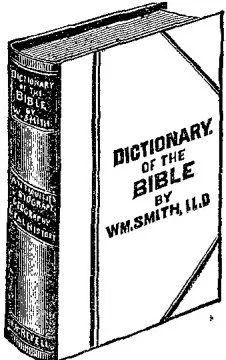
SMITH’S DICTIONARY of the BIBLE.

EDITED BY WM. SMITH, L.L.D.
COMPRISING ITS ANTIQUITIES, BIOGRAPHY, GEOGRAPHY, AND NATURAL HISTORY.
PRICE, $2.00.
This work contains every name in the Bible respecting which anything can be said; over 500 engravings, and is a complete guide to the pronunciation and signification of scriptural names; the solution of difficulties of interpretation, authority, and harmony; also a history and description of Biblical customs, manners, events, places, persons, animals, plants, minerals, etc., and comprises a most complete encyclopedia of Biblical information.
PACIFIC PRESS, 43 Bond Street, New York City.

BOOKS FOR THE CHILDREN.

We offer the following three books as the best of their kind we have been able to find. They are profusely illustrated, and the stories are told in a very simple yet highly entertaining manner. The books cannot fail to be exceedingly helpful to children in an educational way, and should be found in every home:—

LITTLE FOLKS’ BIBLE GALLERY

Has nearly 100 pages, and contains 43 Bible stories, each illustrated with a full-page picture. Size, 7x9 inches, bound in board lithograph covers. Price, by mail, post-paid, $1.00

BIBLE PICTURES AND STORIES

Has 45 full-page illustrations and an equal number of well-told Bible stories. Same style and size as “LITTLE FOLKS’ BIBLE GALLERY,” and is really a companion volume to it. Price, post-paid, $1.00
A mother, than whom none can be more careful and particular as to what her children have to read and study, speaking of these two little books, says: “Really it is a pity that any little child should not have the privilege of seeing these beautiful full-page pictures and hearing the well-told stories.”
Both “LITTLE FOLKS’ BIBLE GALLERY” and “BIBLE PICTURES AND STORIES” will be sent to one address, post-paid, for $1.75

The Good Shepherd:

The Life of the Saviour for Children.
Beautifully Illuminated Covers!
Fifty-three Illustrations!
Interesting Reading!
Ninety-six pages,
Large print,
Good paper,
Strong binding.
This book, which is 8x10½ inches and ½ inch in thickness, tells the story of the life of Christ in a way that cannot fail to interest the little folks. It is exceptionally free from doctrinal errors, and should be in every family where there are children to be taught a Saviour’s love. The illustrations add very much to its educational value. Price, only 50 cents.

—ADDRESS—

PACIFIC PRESS PUBLISHING COMPANY,
43 BOND STREET, NEW YORK CITY.

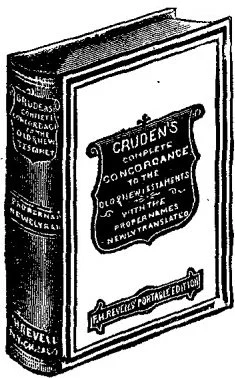
Cruden's Concordance,

A DICTIONARY, And Alphabetical Index TO THE BIBLE.
CLOTH, $1.25. SHEEP $2.50.
ADDRESS, PACIFIC PRESS, 43 BOND STREET, NEW YORK CITY. Kansas City. Mo. Oakland, Cal.

OUR PRISON LIGHT

Edited by one sending the Third Angel’s Message to the perishing in prisons all over the land. Agents wanted, 50 per cent. commission. Trial year 20 cents. Terms and sample copy 2 cent stamp. Indorsed by the SENTINEL. PRISON LIGHT, 40 Green Street, Brattleboro, Vt.

Greek and Latin Churches Reunion Conference at Rome

A CONFERENCE convened at Rome on the 24th of October, the purpose of which was to bring about a reunion of the Greek and Latin churches. The pope addressed the prelates on the subject of the return of the Eastern Church into Catholic unity, and invited Cardinal Langenieux and the patriarchs to state their views.
THE Lexow Committee continues to unearth police corruption in this city to an extent that is almost past belief, and it is evident that the end is not yet. It has already been shown that almost every line of business in the city has been compelled to pay tribute to the corrupt ring which for years has ruled New York for the money that was in it.
BEFORE another copy of the paper reaches our readers, two Seventh-day Adventists will be imprisoned in the county jail at Centreville, Queen Anne’s County, Maryland. All similar cases which have been appealed have been lost. These men, following the instruction of their Master, will plead their own cases as the Lord gives them utterance. The offenses with which these honest men are charged is in one case hoeing in the garden, and in the other chopping wood, on Sunday.
Do not fail to read the article on page 341, entitled, “Roman Catholics and Liberty of Conscience.” It is somewhat long, and some parts of it may seem dry, but every Protestant ought to be perfectly familiar with all the facts connected with the Maryland Charter. Upon the provision in that charter guaranteeing religious toleration, the Roman Catholics build their claim to have been “the first in the New World—the first, indeed, in all the world—to make freedom of conscience an organic part of the constitution of a State.” The article referred to clearly reveals the fact that Roman Catholics granted religious toleration to others, in Maryland, as the only means of securing it for themselves. Even a Loyola or a Dominic would have done as much.
Some weeks ago, in calling attention to the grant of an alley in Washington, D. C., to a Roman Catholic institution, we said:—
The SENTINEL has protested, and will continue to protest, against all such donations, whether of land or of money, and whether made by the Government of the United States or by the Governor of Mashonaland; for if the principle is worth anything, it is just as good in the wilds of Africa as on the plains of our own fair West or in the alleys of our Capital City.
At the time we had in mind certain grants of land made in Africa for mission purposes by the British South African Company. It was thought and urged by some that these grants were legitimate because made by a company. But we now have in our possession the annual reports of said company from 1890 to 1893, inclusive, and are in a position to prove conclusively, that the British South African Company is nothing less than a British Colonial government, and that grants of land from it differ in no sense from similar grants from any other civil government.
THE Examiner (Baptist), in its issue of October 25, referring to “contract schools,” which it defines as “schools carried on by the various Christian denominations, through aid received from the United States Treasury,” says: “The Baptists have never received this aid.” How the Examiner can make this statement we cannot understand, since we sent the editor a marked copy of the AMERICAN SENTINEL several weeks ago, containing positive evidence that from 1879 to 1884, inclusive, the Baptists did receive through Mr. Henry L. Morehouse, of this city, secretary of the American Baptist Home Missionary Society, the sum of $8,075 for maintaining schools for the freedmen of the Choctaw and Chickasaw Indians in the Indian Territory. True the amount was small, but does that affect the principle?
POPE LEO XIII. has published an encyclical on devotion to the rosary. The encyclical is occasioned, says the pope, by the attempt of the impious to bring into derision the worship of Mary. The rosary consists of a string of larger and smaller beads used by Roman Catholics when praying. There are various forms of the rosary, but the one most generally used has fifty-five beads—five large ones and fifty small ones—all of which are used to keep a tally of the number of prayers said. The Lord’s prayer is said on reaching a large bead, and a prayer to Mary at every small bead. Thus it is seen that to every prayer offered to God, ten prayers are offered to Mary; hence the pope’s object in urging devotion to the rosary in order to maintain faith in the papal goddess Mary.
IN the “marked copy” of the Christian Statesman announcing the centennial anniversary of the Pennsylvania Sunday law to be celebrated by the Pennsylvania Sabbath Association, Oct. 30, 31, the secretary says:—
The Sabbath [Sunday] is imperilled in our land. Its sanctity is passing away. It is being rapidly converted into a holiday. The laws which protect it are being removed from the statute books. Our own law is in danger. . . . Fellow-citizens! let us rally for the Sabbath law.
Its (Sunday’s) sanctity is passing away because the civil law sanctifying it is said to be passing away, and citizens are exhorted to rally for the Sabbath law in order to save its sanctity. This is a candid admission. All the sanctity which Sunday ever had was the result of civil law. Not so with the Sabbath of the Lord, the seventh day; God blessed the seventh day and sanctified it.
A FACT, significant of the despotic tendency of our Government is, that a writ of habeas corpus is impotent to secure the release of a man charged with being a contract laborer. At this writing an English coachman is imprisoned on Ellis Island, in New York Bay, awaiting the decision of the Treasury Department, notwithstanding the fact that a United States judge, before whom he was brought on writ of habeas corpus, decided that, being a personal servant, he was clearly exempt under the law. But, added the judge, this court has no jurisdiction in this case. Final decision rests with the secretary of the treasury. And so it is within the power of one man to deport from this country whom he will if only a charge of being a contract laborer can be trumped up against him. Probably in this case the secretary will do right, but what shall be said of the law which makes abuse of such power possible?

Books for the Children.

MOTHERS and others who have the care of small children are often at their wits’ end to know what to get in the shape of books which will at once interest and instruct the little ones in the first and simple principles of the Bible, and give them a knowledge of the Saviour. With this thought in mind we have examined and can heartily recommend the books advertised in another column of this paper under the above heading.
“Bible Pictures and Stories,” and “Little Folks’ Bible Gallery,” are companion volumes, although either one is complete without the other. They are similar in make-up, but the same story or picture is not repeated. The language of the books is such as to commend it to the good sense of older folks; for while it is simple it is not silly.
“The Good Shepherd” is of the same class of books, but confines itself particularly to the life of the Lord, which it narrates in a style most pleasing and dignified, yet so plain and easy, that the youngest can readily understand it. It is, withal, quite free from doctrinal errors. The book is fully illustrated, many of the pictures occupying a full page. The most of the illustrations are new and are not to be found in any other book.
The little ones cannot fail to be interested in the nice pictures, and learn many good things from them. These books will make most acceptable presents to the little tots for birth-days, etc.

You have reached the end of this edition.

The American Sentinel · Nov 1, 1894