Your ShelfYour Projects

Signs of the Times, Vol. 21, No. 38.

THE SCRIPTURE CANON

Signs of the Times

Sep 26, 1895

Pacific Press Publishing Company · Oakland, California · Sep 26, 1895

THE SCRIPTURE CANON.
BY PROF. C. C. LEWIS.
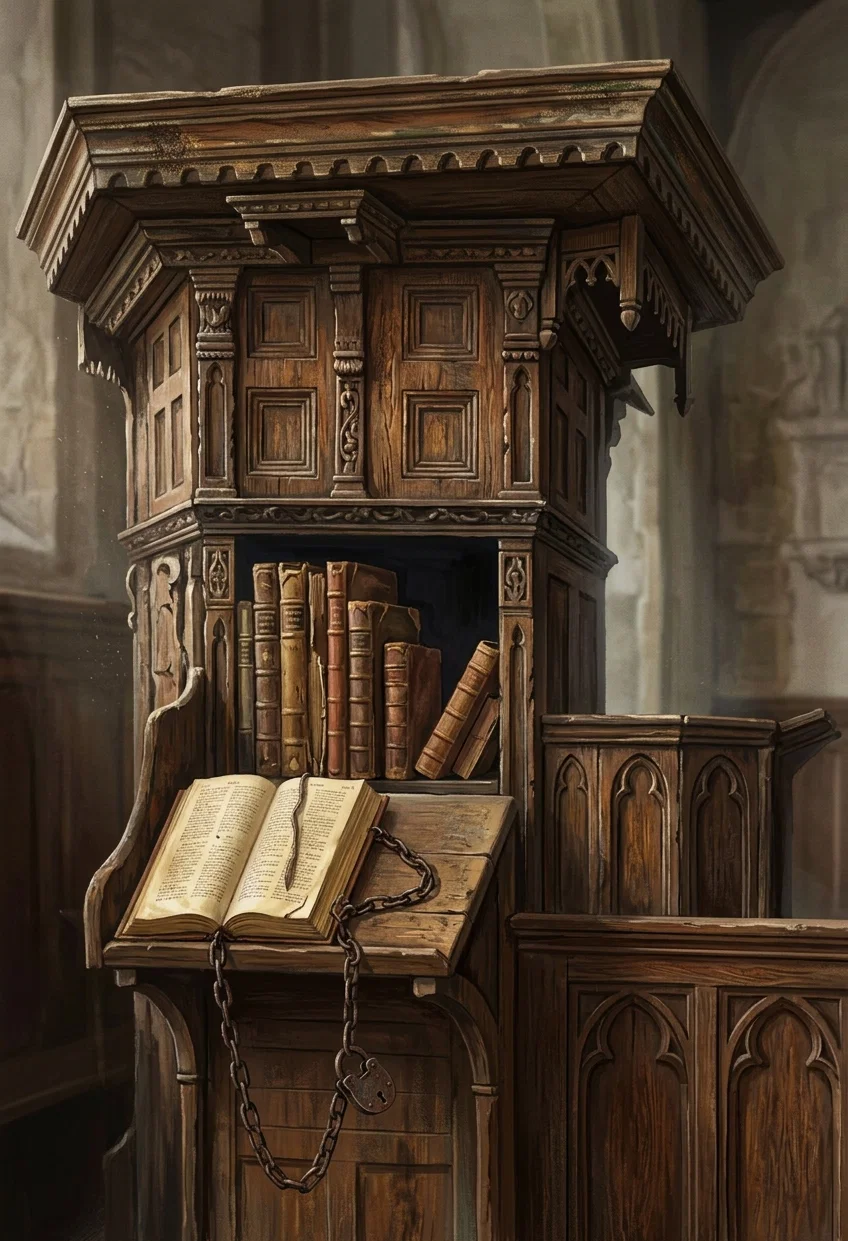
A CHAINED BIBLE.
A CHAINED BIBLE.
Many people read their Bible without considering whence it came or how it assumed its present form. But others are bound to think, and their thoughts run somewhat as follows:—
This book, called the Bible, was not received by me directly from the Supreme Being; I bought my copy at the book store. Its title-page says it was “printed at the University Press, London, by Henry Froude,” but when, it does not reveal. After the title-page is an address by “the translators of the Bible” to “James, king of Great Britain, France, and Ireland,” etc. King James ruled from 1567 to 1625, and the translators finished their work A.D. 1611. What I have then is not the original, but a translation.
Turning another leaf, I learn that this book is not a continuous treatise written by one author, but a series of 66 books, 39 of which are grouped under the general title of “The Old Testament,” and the remaining 27 books, under the title “The New Testament.” Moreover, these 66 books seem to have been written by nearly as many authors, at times varying from about 1,500 years before Christ to nearly 100 years after Christ, or during a period covering roughly 1,600 years, and ending 1,700 years ago.
Who got these books together?
When were they brought together?
How was the work accomplished?
These are pertinent questions; they deserve a straightforward answer. There must be no equivocation, no ambiguity, no suppression of facts, no assumptions. And here it may be observed that no man living, no man who has lived during the past 1,500 years or more, can answer these questions from his own knowledge. Appeal must be made to the records of the past, to history.
The discussion, then, has to do with what is called the “Canon of Scripture.” “Canon” is a Greek word, meaning literally “a straight rod.” It is used figuratively of a testing rule in art, logic, grammar, or ethics. “In the early days of Christianity the term was used generally to denote a standard of opinion and practice.” It was first directly applied to the Holy Scriptures toward the close of the fourth century A.D.
The question of the canon necessarily involves the question of inspiration; for to decide what books belong to the canon is to determine first what books are inspired.
The canon, then, is the complete list of books of divine authority, and is the authoritative standard of religion and morals. Books divinely inspired are canonical; books not inspired are uncanonical; books of doubtful inspiration are called apocryphal. The object of this article is not to decide what books are canonical, but to ascertain when, how, and by whom the present canon was determined.
There are only traces of the mode of preserving the sacred writings before the captivity. Moses ordered the “Book of the Law” to be placed “in the side of the ark.” But Ezra is universally regarded as the man who laid the foundation of the Old Testament canon, about the middle of the fifth century B.C. He is described as “a ready scribe in the law of Moses, which the Lord God of Israel had given,” who “had prepared his heart to seek the law of the Lord, and to do it, and to teach in Israel statutes and judgments.” (See Ezra 7:6, 10.) Ezra went up to Jerusalem from Babylon after the exile, taking with him the law, which had fallen into disuse. Ezra 7:14. His object was to lead the people to return to the practice of the laws and the forms of worship enjoined by the writings of Moses. His entire success is recorded in Nehemiah, chapters 8 to 10. The people entered into a solemn covenant to keep the law of Moses, which Ezra had brought home with him. That was the establishment of the Pentateuch as the canonical and authoritative book of the Jews, and so it has remained to the present time. Whatever discussion may have taken place with reference to the admission of subsequent books, there never has been any question about this portion.
“After the first collection was made,” says the Encyclopedia Britannica, “attention was directed to other national documents. Of these the prophetic books were the most conspicuous, because many of their predictions had been fulfilled. Exhortations and warnings, which had often fallen upon listless ears, had been verified by experience. Hence these historical books of the nation, which described the divine guidance of the people, as well as the kings under whom the earliest prophets lived, were first adopted.” This second canon originated with Nehemiah, of whom it is said in Maccabees 2:13 that “when founding a library, he collected the acts of the Kings and the prophets and the [writings] of David, and the letters of Kings concerning sacred offerings.” This canon was partly guarded in its formation, and was not completed till the close of the fourth century B.C.
The third collection was made during the space of 150 years. It embraced some of the Psalms, Proverbs, Job, Canticles, and Chronicles. The first collection was called “The Law;” the second, “The Prophets;” and the third, on account of its miscellaneous character, “The Writings.”
Not till near the close of the first century A.D. do we have definite testimony concerning the canon. Josephus says:—
For we have not an innumerable multitude of books among us, but only twenty-two books, which contain the records of all the past times, which are justly believed to be divine. And of them five belong to Moses. . . . But as to the time from the death of Moses till the reign of Artaxerxes, king of Persia, the prophets who were after Moses wrote down what was done in their times in thirteen books. The remaining four books contain hymns to God and precepts for the conduct of human life. It is true our history has been written since Artaxerxes very particularly, but has not been esteemed of the like authority with the former by our forefathers, because there has not been an exact succession of prophets since that time; and how firmly we have given credit to these books of our own nation is evident by what we do; for during so many ages as have already passed, no one has been so bold as either to add anything to them, to take anything from them, or to make any change in them; but it has become natural to all Jews, immediately and from their very birth, to esteem these books to contain divine doctrines, and to persist in them, and, if occasion be, willingly to die for them.—Josephus, contra Apion, 1:8.
Josephus’ list agrees with our present Old Testament canon in matter, though not in the number of books, several books separated at present having been joined by the Jews, evidently to make their number agree with the number of letters in the Hebrew alphabet—twenty-two.
Although Josephus declares that no one had dared to change this canon for ages, there are, nevertheless, records of controversy concerning the admission of certain portions, as Ecclesiastes, Canticles, Esther, and Proverbs, which books were once excluded, but were restored about 32 B.C. The controversy revived in 65 A.D., and was finally settled at the Jewish council of Jamnia, about A.D. 90, the result restoring the books and confirming the tradition which had been so long current.
This Old Testament collection constituted the Scriptures constantly quoted by Christ and his apostles during their ministry, and thus became the canon of Scripture to the first Christians. They relied on it as their chief religious book. They regarded it as of divine origin and authority. The New Testament writings came into gradual use by the side of the older Jewish documents. Naturally the letters of the apostles to the local churches, with their more general accounts of the life of Christ, were copied and circulated among the believers, so that when Marcion came from Pontus to Rome (144 A.D.), he brought with him a Scripture collection consisting of ten Pauline epistles. A collection of Paul’s writings is implied in 2 Peter 3:16.
The earliest trace of canonical authority’s being transferred from the Old Testament to Christian writings occurs about 119 A.D., in a passage from Barnabas, where a quotation, apparently from Matt. 20:16, is introduced by, “It is written.”
Toward the close of the second century A.D. a canon, consisting of two parts, had been established and generally accepted. The first part was complete, containing the four Gospels alone. The second part was still forming; it contained the Acts, thirteen letters of Paul, one of John, one of Peter, and the Revelation. How and where this canon originated is uncertain. It may have grown up about the same time in Asia Minor, Alexandria, and Western Africa; for Irenaeus, Clement of Alexandria, and Tertullian recognize its existence and speak of its two parts. Origen’s testimony, about 250 A.D., is regarded as of great value. He recognizes the foregoing list as generally admitted to be of apostolic origin, and classes Hebrews, James, Jude, 2 Peter, and 2 and 3 John as books concerning which opinion wavered.
A century later the historian Eusebius was commissioned by the Emperor Constantine to make out a complete list of the sacred Christian writings. He inquired diligently into the prevailing opinions of the Christian churches and writers, also concerning the views held by others before him and by those living in his own time. The result was about the same as that reached by Origen, though the tradition concerning certain books was still wavering, and he was unable to fix it.
From this time onward the combined canon was subjected to the criticism and decrees of various councils of the Catholic Church; but the results did not affect materially the list of books which constitutes our present Bible, and the limits of this article make it impossible to go into the details of a discussion which has continued at intervals almost to the present time.
Moreover, we are not greatly concerned about the controversies of the Roman Catholic Church over the canon, for the canon was virtually fixed before that church existed. In the language of Dr. Davidson, in the “Encyclopedia Britannica,” “the preservation of the early Christian writings was owing, in the first instance, to the congregations to whom they were sent and the neighboring ones with whom such congregations had friendly connection. The care of them devolved on the most influential teachers. The canon had been made before the first general council of the Catholic Church by a few leading fathers towards the end of the second century in different countries.” The three leading names of these fathers have already been mentioned. They reflected the general sentiment of the Christians of those countries where they lived. “A certain consciousness manifested itself throughout the east and west in the matter of the canon. Tolerable unanimity ensued. The result was a remarkable one, and calls for our gratitude. Though the development was pervaded by no critical or definite principle, it ended in a canon which has maintained its validity for centuries.”
If it be asked what definite principles guided the early Christians in the formation of the canon, it would be difficult to give an exact answer. My own conviction is that they were guided by their confidence in the character of the men who wrote the Scriptures, by their belief that God wrought through those men while they lived, and by their inherent perception that God was speaking to their hearts through the books which those men had written. Thus canonical authority does not depend on the church or its councils; it lies in the Scriptures themselves. It is inherent in those books which contain a revelation or declaration of the divine will.
If to this view it be objected that the scribes and Pharisees and councils of the Jewish church, together with their counterparts in the more modern church, constitute a safer guide than to leave the recognition of inspiration to the intuition of the common people, I reply in the eloquent language of another:—
“The judgment which theological prejudice might pass on the several books of the record of revelation was controlled by the practical experience of those who found in the Scriptures food for their own daily life; and so, in God’s providence, a result was attained which rested on sounder principles than those of the schools. Throughout the history of the church, it has always been found that the silent experience of the pious people of God has been truer, and has led the church in a safer path, than the public decrees of those who claim to be authoritative leaders of theological thought.”
College View, Neb.

Some Internal Evidences of the Scripture Canon

Some Internal Evidences.—The foregoing article is based on the historical evidences of the correctness of the Scripture canon. That in the traditions that have come down to us there are expressed doubts concerning parts of the canon we are free to admit, and in fact should suspect them even from the learned. Jesus Christ and his mission were doubted even in the healing of the palsied and at the grave of Lazarus; and unbelief plotted to kill not only the Life-giver, but the one who was given life. What wonder then that there should be learned men in all ages who have attempted to crucify Christ in his truth! It may not be amiss, therefore, to consider briefly some of the internal tracings of the divine hand which sealed as genuine the present Scripture canon.
A Great Touchstone.—There is one part of the Scripture canon concerning which there is historically no question, namely, the Pentateuch. Even the skeptical Sadducees, the higher critics of our Lord’s time, accepted that portion of Holy Writ. In the Pentateuch—the first five books of the Old Testament—is found the germ of all God’s promises and blessings to his people—the everlasting covenant—and the summary of all morality, the expression of God’s will—the Decalogue. In them we listen to God’s voice, see God’s mighty power, behold his wondrous love. These books therefore become a great touchstone by which to try all subsequent writings. The writings of Moses were so intimately connected with Christ and his work that to reject the former was to reject the latter. Jesus said: “For had ye believed Moses, ye would have believed me; for he wrote of me. But if ye believe not his writings, how shall ye believe my words?” John 5:46, 47. The writings of Moses became a great test of all subsequent writings.
God’s Will.—God’s will is expressed in his holy law. (Ps. 40:7, 8.) That prophet who taught anything which led away from the worship of God, from obedience to the precepts of the Decalogue, was a false prophet, even though matters which he predicted came to pass. (Deut. 13:1–5.) Such a prophet was to be known to be false. Our Lord brings the same test as regards profession: “Not every one that saith unto me, Lord, Lord, shall enter into the kingdom of heaven; but he that doeth the will of my Father which is in heaven.” Matt. 7:21. To this law all the prophets and writers of the Bible defer as the one standard. Jesus declared that it could not be changed or fail in one single jot or tittle. (Matt. 5:17–20; Luke 16:17.) To its observance he points as the way of life (Matt. 19:17), and in his own life that law was worked out in its fullness (John 4:34; 6:38). Tested by God’s law, the books of the Scripture canon stand.
Christ and His Apostles.—As shown by Josephus, the authoritative Scripture canon of the Jews in Christ’s time is identical with our Old Testament. This collection is emphatically indorsed by Jesus and the New Testament writers. Nearly three hundred times they quote from the Old Testament scriptures as authority without question; but they never quote from the Apocrypha. Over and over it is said, “It is written,” “as saith the Scriptures,” “as the Holy Ghost saith,” “the Holy Scriptures,” “the Scriptures can not be broken.” What greater indorsement do we want of the Old Testament, the Scripture canon in our Lord’s day? And the “New Testament” writings are the complement of the Old. They teach the same things, hold the same standard of morality, present the same Gospel, all of which are more fully developed.
Prophecy.—Another great evidence of the divine stamp upon the Scripture canon is that furnished by the prophecies and their fulfillment. Read all the future history of the Hebrews, in Leviticus 26 and Deuteronomy 28. Note the fulfillment of the prophecies of our Lord given in Matthew 24, Mark 13, Luke 21, and of Paul in 2 Thessalonians 2. Among the most remarkable books of the Bible are Daniel and the Revelation. The former is considered by the critics as among one of the most questionable books of the Old Testament canon, the latter of the New; and yet in the remarkable prophecies of these books the pen of divinity has traced the rise and fall of nations and the history of the church. He who desires may know this. Where the historical critics and carpers have found weakness, God himself has put strength.
The Fruits.—Another great evidence of intrinsic authority of the book of God is the fruit which it has borne. The Bible has changed the face of the world. Although in sixty-six parts, it is, after all, one Book, one building. Brick by brick has the edifice risen, volume by volume has the Gospel of Jesus Christ grown; seemingly different purposes have been dominant in the minds of the writers, various qualities of tone have been heard from the instruments God used, yet nevertheless it is the product of the one Mind, the one Purpose, the one Musician; it is the one rule or canon. To all this its fruits—the great test of prophets, false and true (Matt. 7:15, 16)—have ever borne witness. Light, hope, cleansing, righteousness, life, gladness, joy, have sprung up wherever its seed has been sown.
The Ultimate Test.—There is one more test of the authority of the Book of God, and that will never fail to any one. Jesus thus states it: “If any man willeth to do His will, he shall know of the teaching, whether it be of God.” John 7:17, R. V. This may be said to pertain to the matter and not to the books themselves, but we reply that the books and the matter are so bound together that we can not separate them. He, therefore, who will with submissive heart and teachable spirit come to God’s word, that he may know and do the truth, will find light and life. The longing of his life will be met, his thirsty soul will be refreshed, his hungry heart will be fed, and he will rest satisfied in the love of God.

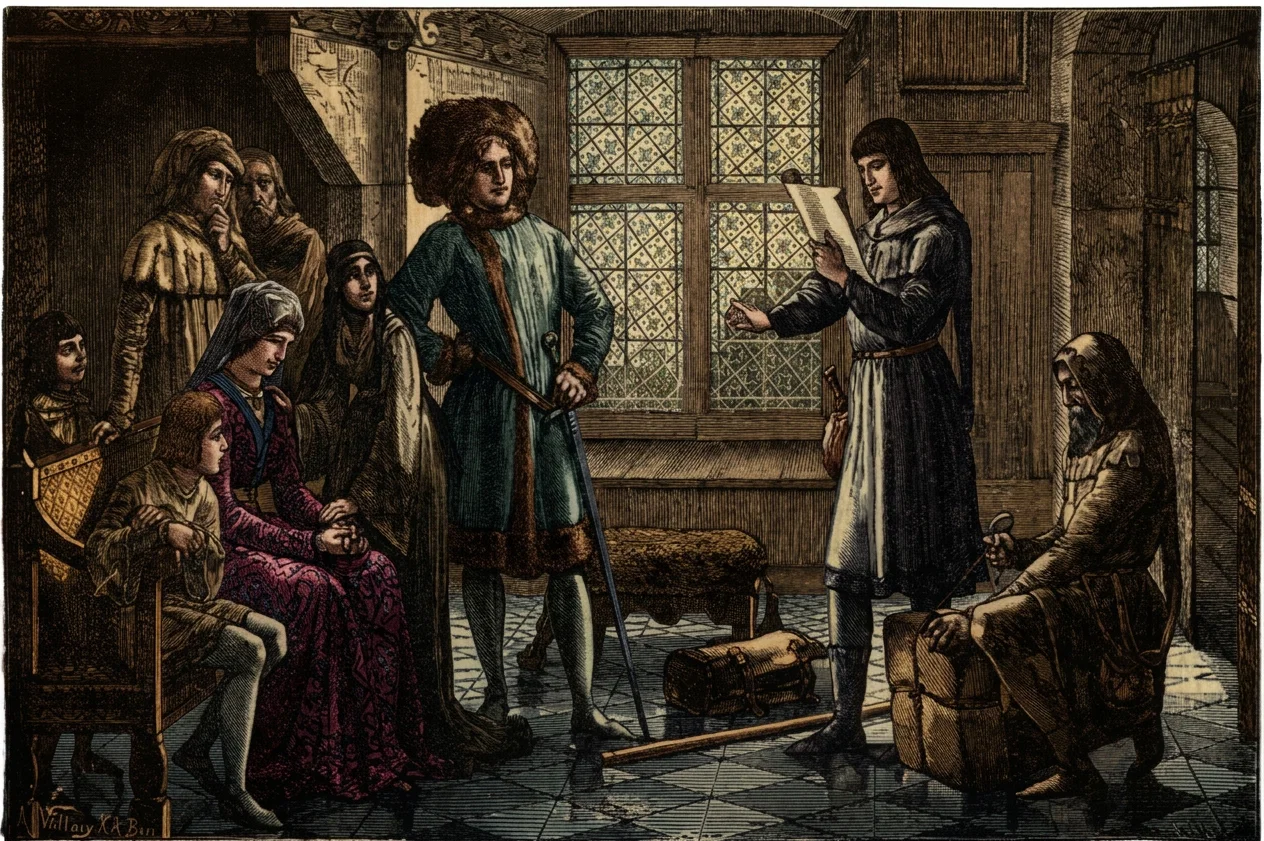
THE WALDENSIAN MISSIONARY.

“O LADY fair, these silks of mine are beautiful and rare,— The richest web of the Indian loom, which beauty’s queen might wear; And my pearls are pure as thy own fair neck, with whose radiant light they vie; I have brought them with me a weary way,—will my gentle lady buy?”
And the lady smiled on the worn old man through the dark and clustering curls Which veiled her brow as she bent to view his silks and glittering pearls; And she placed their price in the old man’s hand, and lightly turned away, But she paused at the wanderer’s earnest call,—“My gentle lady, stay!”
“O lady fair, I have yet a gem which a purer luster flings Than the diamond flash of the jeweled crown on the lofty brow of kings,— A wonderful pearl of exceeding price, whose virtue shall not decay, Whose light shall be as a spell to thee and a blessing on thy way!”
WALDENSIAN MISSIONARIES.
The lady glanced at the mirroring steel where her form of grace was seen, Where her eye shone clear, and her dark locks waved their clasping pearls between: “Bring forth thy pearl of exceeding worth, thou traveler gray and old,— And name the price of thy precious gem, and my page shall count thy gold.”
The cloud went off from the pilgrim’s brow, as a small and meager book, Unchased with gold or gem of cost, from his folding robe he took. “Here, lady fair, is the pearl of price, may it prove as such to thee. Nay—keep thy gold—I ask it not, for the word of God is free.”
—Whittier.

INSPIRATION OF THE HOLY SCRIPTURES.

BY F. M. W.
That the Bible bears the stamp of High Divinity, its study will demonstrate. It possesses many characteristics which serve to point to an authority higher than man. Unlike other books, it is written in a style which, while it appeals direct to the heart, stirring to action the emotions of the soul, likewise convinces the judgment of the wisdom and truthfulness of its utterances. Evidences both external and internal go to show that He who spake as never man spake has traced in the Holy Scriptures His own divine will concerning the children of men.

External Evidences.

Of the many that may be called external evidences that the Scriptures are of God only a few can be mentioned in this brief space. For convenience, these may be enumerated as follows:—
1. Its Unity.—There is no discord nor dissonance in its utterances. In its sixty-six great divisions, not one of its writers utters sentiments contrary to the teachings of his fellows. True, these writers did not all write on the same things in detail; each bears a Gospel message of his own. Some are historical in their work, others exegetical, and still others deal with futurity. In the work of all, many great questions of philosophy and morals are considered; but all of these principles, these utterances of many minds, form a beautiful and harmonious whole. This is all the more remarkable when we come to consider that these writers lived in different ages, in widely separated countries, and under greatly varying conditions so far as their civil, social, and religious environments were concerned. The fact that men scattered all along the stream of time from Moses, the writer of the Pentateuch, to John, who penned the Revelation, a period of nearly three thousand years, should write on such a variety of topics, preserving in all of their work such unity of sentiment and teaching, shows that One Master Mind directed the utterances. The unity of the word points to God as its author.
2. Its Simplicity and Sublimity.—The loftiest ideas are expressed in the simplest terms; the grandest truths are told with a simple directness that appeals to the heart; the lives of its characters are described without false coloring or prejudice. It has truly been said that the two sublimest utterances ever expressed are the words found in the first chapter of Genesis, “And God said, Let there be light; and there was light,” and the prayer of our Saviour on Calvary’s cross, “Father, forgive them, for they know not what they do.” The style employed throughout is worthy of a divine being. In it there is no cheapness. The language is simple and free from affectation. A simple, positive directness permeates the word which directs the thoughts of the reader to the Divine Being instead of to fallible man.
3. Its Adaptability.—Although written in part more than four thousand years ago, it is as applicable to the present inhabitants of the earth as when first bestowed upon man as a heritage. It is adapted to all ages, all conditions of society, all climates, all nationalities, high and low, rich and poor, learned and illiterate,—all of every nation under heaven may find instruction precisely suited to their needs.
4. Its Impartiality.—It has among men no heroes, nor heroines, whose misdeeds are glossed over. The sins of the noblest and the best are pointed out. Unlike profane history, its writers exhibit no national prejudices. The sins of David, the king of Israel, are pointed out and rebuked. The faltering weakness of the wise man is faithfully portrayed. The sin of the one who talked to God face to face, as friend talks with friend, is not passed by in silence. In its impartial but faithful record, it stands without a peer in all the literature of the ages.
5. Its Mysteries.—Its depths are unsearchable; no amount of study can fathom its broadest meaning. David the shepherd, Amos the herdsman, and Peter the fisherman, have written truths so wonderful that the science and wisdom of all the ages have been unable to fathom their full significance. In these mysteries is enshrouded divinity. They reveal not the feeble intellect of man, but the mind of the great Infinite One.
6. Its Predictions.—The prophecies of the Scriptures stand as unimpeachable evidence of its heaven-born origin. No man nor any company of men had ever mind so great, nor had they perceptions so clear, as to correctly forecast the future. None living to-day can predict with certainty the events of to-morrow. Not so with God. To him the past and the future are as the present. He can declare the end from the beginning. Prophecies pertaining to the past have faithfully met their fulfillment; prophecy pertaining to present events is turning to history to-day. God only could look down the stream of time and predict with exactitude the rise and fall of nations, and the important changes in the history of the race, as are brought to view in the sacred writings.
7. Its Endurance.—“All flesh is as grass, and all the glory of man as the flower of grass. . . . But the word of the Lord endureth forever.” God, the Author of the word, has put within it his own enduring nature. For ages it has stood the assault of bigoted fanatic and infidel zealot, but still it lives. Rome burned it; France crushed it in the dust; but the word of God’s witness arose, as it were from its own ashes, to wield a more mighty influence than ever before. In it is the power of Infinity, and that power exists as long as eternity.

Internal Evidences.

For the internal evidence that the Bible is the book of God, recourse must be had to the Scriptures themselves. Proof from this source is not lacking, for many references to the subject can be cited. The great apostle to the gentiles declares:—
“All Scripture is given by inspiration of God, and is profitable for doctrine, for reproof, for correction, for instruction in righteousness; that the man of God may be perfect, thoroughly furnished unto all good works.” 2 Tim. 3: 16, 17.
Reference is here had to the Old Testament writings, as when Paul penned these words, the New Testament canon was not compiled. None of the prophets are excluded; all that was embraced in the Scriptures up to that time is declared to be inspired—“God-breathed.” The apostle Peter emphasizes this point. In speaking of the salvation that comes to us through our Lord and Saviour, he tells us:—
“Of which salvation the prophets have inquired and searched diligently, who prophesied of the grace that should come unto you; searching what, or what manner of time the Spirit of Christ which was in them did signify, when it testified beforehand the sufferings of Christ, and the glory that should follow.” 1 Peter 1: 10, 11.
Here is revealed the manner in which the Scriptures were given. The Spirit of Christ in the prophets testified through them. Then it was not David alone who spoke, not Isaiah, not Daniel, but Christ speaking through them. Nor was it the instrument through which the message came that was inspired; it was the message itself. Indeed, as proven in the above scripture, the prophets ofttimes failed to understand their own prophecies, and with others had to search what God had revealed through them, to find that salvation of which they prophesied. The Spirit carried them out of themselves, and beyond their own finite understanding. The prophets prophesied not at will. The Spirit of Christ was not theirs to use at pleasure. Simon Magus thus sought to use the Spirit’s power, but suffered rebuke for his blasphemous audacity. See Acts 8: 9–24. Again the apostle Peter says:—
“Knowing this first, that no prophecy of the Scripture is of any private interpretation. For the prophecy came not in old time by the will of man; but holy men of God spake as they were moved by the Holy Ghost.” 2 Peter 1: 20, 21.
If the prophecy came not by their own will, but they spake only as they were moved by the Holy Spirit, then it was not they that spake, but the Spirit of Christ speaking through them. They might be sinful men, and the circumstances under which they labored might be most forbidding, but that did not invalidate their message. It makes the rarest pearls none the less precious if they are encased in worthless caskets; so with God’s message; it has been given through instruments of clay, but the message is of God, however frail may be the instrument. See 2 Cor. 4: 7.
The same general principles adduced for the Old Testament Scriptures apply with equal force to the New. It is safe to conclude that the same Spirit of Christ which was with his prophets would likewise direct his apostles, and that if God directed in the prophecies pertaining to Christ’s mission, he would likewise guide in the writing of the history of his Son’s earthly work. The truthfulness of the Gospel record is attested by the concurrent and harmonious agreement of the four evangelists, who write at different times and from different points of view, and probably without reference to each other’s work. In many respects the Revelation is so nearly parallel with Daniel that to believe the one must be to accept the other.
Paul wrote the larger part of the epistles, and of him Peter says he wrote “according to the wisdom given unto him,” and classes his epistles with the “other Scriptures.” 2 Peter 3: 15, 16. And of his own epistles the apostle Paul says, “Which things also we speak, not in the words which man’s wisdom teacheth, but which the Holy Ghost teacheth.” 1 Cor. 2: 13. Then, as we turn to the sacred book of God, we do not read the words of Paul, or Peter, or Samuel, or any of the prophets, we read the word of the Lord through them. Each in the giving of his message could truly say, as did David, “The Spirit of the Lord spake by me, and his word was in my tongue.” 2 Sam. 23: 2. No, it is not David that has spoken, but, as Peter declares in Acts 1: 16, they are “the words which the Holy Ghost by the mouth of David spake.”
In view of this great truth, shall we not turn to the Scriptures with greater reverence than before, seeking the Spirit to enlighten our understanding, and laboring earnestly for the hidden treasure, even life eternal, through the name and grace of our blessed Master? Truly with such an infallible guidebook, we should not walk in darkness. By the Spirit’s aid, we may make the Scriptures of truth a lamp unto our feet, and a light to our pathway in our journey to the Celestial City of our King.

Finding the Literal Meaning of Scripture

“LET the Christian reader’s first object always be to find out the literal meaning of the word of God; for this, and this alone, is the whole foundation of faith and of Christian theology. It is the very substance of Christianity.”—Martin Luther, quoted in Milner’s History, vol. 5, p. 460.

Inspiration, Not Illumination

Inspiration, Not Illumination.—The men through whom God gave his word may have been as enlightened as was the apostle Paul, or as ignorant of what God revealed as was Daniel; their knowledge or lack of knowledge did not affect the word. Each writing is equally the word of God. One person, like Peter, may have naturally held his “Jewish prejudices;” nevertheless, the Spirit declared through him that “God is no respecter of persons.” It may have been the learned priest, the son of Buzi, with his visions of glory, or the herdsman of Tekoa who spoke, but the word was equally the word of God.

The Word, Not Men

The Word, Not Men.—As stated above, the inspiration is of the word, not of the man, or the writer. It is nowhere said that the man is inspired. In an accommodated sense we speak of inspired men, as men through whom God has spoken, but it is not a Bible expression. The word is inspired—God-breathed—the men are moved upon by the Holy Ghost. In the world it is men that are exalted, but in the Scriptures it is the word which God breathed through them.

The Difference in Style

The Difference in Style.— “But if the word is all equally the word of God, what makes the difference in style of composition among the different writers?” is often asked. Well, why should the Spirit of God always use the one style? Many of our best and prolific writers do not at different periods of their life, or in the same periods. We have the grave, the solemn, the pathetic, the argumentative, the lively, the poetic, the prosaic. It is the same mind speaking in each style. Here is the master musician. He plays the violin, the piano, the harp, the guitar, the organ, the cornet, the bagpipe, and the jew’s-harp. We find the evidences of the superior mind in them all. One is loud and harsh, one is soft and sweet, but the touch of the trained hand, the soul of the artist, is revealed in each and all. So God has used, that he might better reach all classes of people, men from all the walks of life. They have submitted oftentimes unconsciously, perhaps, their personality to the Spirit of God, and the Lord has used them to reach other personalities. The melody of heaven is heard in each and all. Praise God for his manifold truth, revealed in his manifold way.
Continue reading: The Word of God