The Youth’s Instructor, Vol. 28, No. 24.

A GUILTY CONSCIENCE

The Youth’s Instructor

Jun 9, 1880

S. D. A. Publishing Association · Battle Creek, Mich. · Jun 9, 1880

A GUILTY CONSCIENCE.
Tumble up, Ben,—tumble up!
“What for, Harry?”
“A pretty question to ask. Don’t you remember that we were to go fishing this morning?”
“Oh, it is too early yet.”
“Too early? Why, just see, it is almost sunrise.”
But Ben turned over and settled himself for another nap. “Benjamin Armstrong, if you are not up in one second, I’ll sprinkle this basin of water over you.”
“You had just better try that game, old fellow!” replied Ben, starting up in bed, his hair at sixes and sevens, and his eyes glaring with an angry expression.
“There, I’ve done it now! I’ve done it!” exclaimed Harry, stooping over, with both hands resting upon his knees, and laughing immoderately. “Turn your feet out, Ben, and then you’ll be ‘right side up, with care.’”
At Harry’s comical words and manner, the angry look vanished from Ben’s face, and he joined in the laugh.
“Well, now, Harry, since you have fairly got me up,—though I can’t say with much care,—I’ll have my clothes on in a jiffy. Have you any worms?”
“To be sure,—I’ve lots of them!”
“Glad of it; for I detest digging for the wriggling things.”
With bait and fishing-rods in hand, the boys started off to the stream, where they hoped to catch some fine bass for dinner.
“Mr. Whipple and several other gentlemen from the city are to dine with us, Ben; and father says he will pay us for all the fish we catch. Some of the gentlemen who are coming are especially fond of fish, and father wants those set before them to be as fresh as possible,—better than those he usually gets in market.”
“That accounts for your early rising. Why did you not tell a fellow sooner that there was a prospect of making a fortune by being up with the lark?”
“I did not think of it in time, Ben; and the basin of water, which I caught sight of, finished the job for me finely.”
“I tell you what, Harry, I was real angry when you threatened to spatter it over me; but somehow your good-nature got the better of me, as it always does. Can’t you tell me how to be always good-natured?”
“Oh, you are not wanting in good-nature, Ben, when it comes to the tug. But come, I know where there are some old logs reaching out into the river. It is the very place to drop our lines.”
The brothers were soon seated upon the log, with lines dropped into the water. Erelong, Harry’s line gave a jerk. With eyes full of excitement and an eager, yet careful hand, he gave it a gentle toss out of the water; and sure enough, there was attached to it a fine large fish. Harry was so delighted at his success that he could scarcely take his eyes off from it. Then his line was once more silently dropped into the stream.
Ben, in the meantime, was trying his luck, and succeeded in capturing a fine fellow, nearly as large as Harry’s. As the fish seemed so ready to bite, the boys were now all enthusiasm to catch as many as they could before breakfast. For three hours they quietly dropped their lines, Harry not even stopping to count his fish, or to watch Ben’s success; but when it was time to go home, his basket did not seem quite as heavy as he thought it would be.
“Why, Ben, how strange!” he wonderingly exclaimed. “I thought I had made a pretty heavy haul, and yet I don’t seem to have more than three or four fish in my basket, and not extra large ones either.”
Ben made no reply; but a close observer might have noticed the blood suddenly mount to his face while his brother was speaking.
“What makes you so glum, Ben? Let’s see if you have had any better success. Why, you have more than I, and beauties, too! Well, it’s queer that I’ve no more. I really thought I had caught and unhooked ever so many. But perhaps, in my excitement, I exaggerated my good fortune.”
“Are you sure you put them directly in your basket?” asked Ben, with a somewhat downcast look.
“There, that’s just it! What a careless fellow I am. I remember now, in my eagerness to throw in the line as fast as possible, I now and then laid one on the logs; and just as likely as not their fishships bounced back again into their native element. Well, there is no use in crying,” said the good-natured boy, and he whistled off his disappointment.
The family were descending for breakfast when the boys entered the house. Catching sight of them, Mr. Armstrong called out,
“Well, boys, what success? Must I be prepared for bankruptcy? My port-monnaie is not a very heavy one this morning.”
“I think you will be fully able to meet your engagement, father. If I had managed as well as Ben, though, in keeping what I had secured, your port-monnaie might have been still lighter.”
“How is that, Harry?”
In reply, Harry told his father of his great success in capturing the finny tribe, and the poor result in his basket to show for his enterprise.
“Well, my son, don’t worry about it. You’ll be more careful next time, I’m sure.”
“I rather think I shall; but future prudence won’t mend matters now. Besides, I wanted the money for an especial object.”
“Ah! I am sorry for your disappointment. Now, Ben, what have you to say for yourself? Your sober looks seem to speak of disappointment too, or else sympathy for your brother in his losses.”
At these kind words, Ben winced, and quietly opened his basket.
“Hurrah! we are to have a grand feast of fresh fish, after all. What beauties! I don’t wonder you have kept still, Ben; for it would hardly have been either noble or kind to exult while poor Harry was feeling his loss so keenly. Now I will settle with my young fishermen; then you must wash your hands and hasten down to breakfast, for it is past eight, and your mother and sister are waiting.”
(To be Continued.)

JUNE

SWEETEST daughter of the year, Sunny, flower-wreathed June is here. In her foot-prints, wet with dew, Violets spring, with eyes of blue. Tangled song of wren and thrush Greet us from the lilac bush. Like scattered pearl the clover-bloom Encrowns the brow of smiling June; Roses in her hand she brings; In the hedge the robin sings. The dandelion's curls of gold Are mingled, in a mazy fold, With the strawberry's crimson sheen, And waving grasses cool and green. O'er tiny lake, 'neath cypress tall, Sunlight and shadows shifting fall; Embosomed on the waters deep, The white-souled lily falls asleep. From mossy glade and bosky dell Steals music like a fairy bell,— In joyous notes the feathered throng Are thanking God for gift of song.

WHEN

WHEN will you give your heart to Christ? You have long been thinking the matter over. For a number of years you have felt it to be your duty to renounce sin, and accept Christ; but you have hesitated and faltered, and failed to take the great step. When will you make the decision? Will you make it now?
When will you give your heart to Christ? He stands at the door waiting, pleading. He has pleaded often, and waited long, sometimes in hope, and again in fear. He has followed you night and day with the blessed influences of his grace. When will you yield to him?
When will you give your heart to Christ? He has purchased you with his blood, and has a rightful claim upon your body, soul, and spirit. You acknowledge this claim, and feel the obligation it imposes, and yet withhold the gift. When will you give yourself in solemn and entire consecration to him?
When will you give your heart to Christ? One season of mercy after another drifts away from you, and you are still unsaved. You have been convicted, you have been troubled in heart, you have been alarmed, and, like Felix, trembled. You have even wept over your sins; and yet these seasons of mercy have come and gone, and you are still out of Christ. By and by the last call will come, the last invitation be given, the last offer of salvation rejected; and then, oh! what then? When will you give your heart to Christ? Do it now.—S. S. Messenger.

The Atlantic Coast: Salem and the Witchcraft Trials

THE ATLANTIC COAST.—NO. 2.
As intimated in our last, Salem, Massachusetts, was for some length of time the seat of government of that colony, although Boston afterward became, and still is, the capital of the State.
There are some curious circumstances connected with the early history of Salem. In 1688 a child thirteen years old, living in the family of John Goodwin, was taken with fits. An Irish woman was charged with bewitching the child. She finally made a confession in which she claimed that she made children have fits by means of an image made of rags and stuffed with goat’s hair. Silly as this was, some devout persons, and even ministers, indorsed it and proclaimed against witchery.
In 1691 and 1692, a daughter of Mr. Paris, and also a niece, neither of them yet in their teens, had convulsions, and complained of being pinched and beaten by invisible agents. The ministers of the gospel claimed that these children were bewitched by Tituba, an Indian girl, and two English women. When brought before the magistrates for trial, Tituba confessed that she did it, and bore witness against the other two. After she was liberated she said that she had told in the trial just what Mr. Paris, the minister, wanted her to say. Soon Tituba had fits, as did many others in town. This raised a great excitement, and in a few weeks the prisons were full of those accused of witchery.
June 2d, 1692, a court of Oyer and Terminer was opened at Salem, by Wm. Phipps, for the trial of witches. Bridget Bishop, an old woman, was sentenced and hung on the 10th of June. Next, five women were sentenced. By the close of September, 1692, twenty persons had been put to death, and fifty-five had been tortured or threatened into making confession. One hundred and fifty persons were in prison, and above two hundred more were under accusation. Several of the accused managed to make their escape. The lives of those who confessed were invariably spared. This “Salem witchcraft” was an exciting theme for a time, and many innocent persons were put to death. Finally, judges of the courts ceased to allow trials to proceed, and the excitement soon passed away.
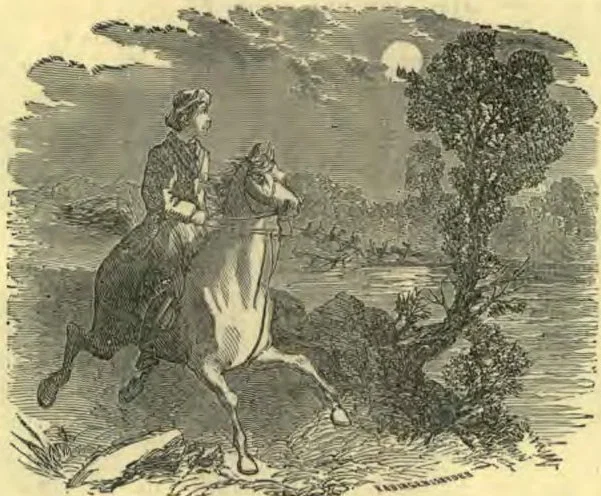
In and around Charlestown and Boston are spots memorable for the struggle made by the colonists in seeking freedom from the rule of the British crown. As the British troops, on April 18, 1775, were preparing to attack the colonists, Paul Revere went flying on the back of his steed through Medford, Lexington, etc., on his way to Concord to rally the forces of the colonists for the struggle. It was on the 17th of June of the same year that the noted battle of Bunker Hill was fought. Though this battle was not of itself a great victory for either side, it gave the English to understand the character of the foe they had to meet, and gave the colonists some idea of their own power of endurance, and so was one of the most important events of the early times of the Revolution. This event has been commemorated by the erection of the Bunker Hill Monument. This shaft is of granite and is 223 feet in height. From its top, which can be reached by a winding stairway on the inside, a good view can be obtained of Boston, and the scenery for many miles around. The corner-stone of this monument was laid on the anniversary of the battle, June 17, 1825, by General Lafayette.
Copp’s Hill, Boston, is another point of much interest. On this hill a cemetery was opened in 1660. In this cemetery are many of Boston’s early illustrious dead. Here are the tombs of the three Mathers,—Increase, Cotton, and Samuel. This cemetery was a point occupied by a portion of the British forces at the time of the battle of Bunker Hill. On some of the tombstones are still seen marks of bullets, caused by the soldiers amusing themselves in “firing at the mark.”
But we must prepare for our voyage over the deep blue Atlantic.
J. N. L.

The Chinese Equivalent of Amen

THE Chinese have no single word which will compare with our English word, “Amen;” they say instead four words meaning, “The heart wishes exactly so.”

STORY FOR BOYS.

I READ a very pretty story the other day about a little boy who was sailing a boat with a playmate much larger than he was. The boat had sailed a long way out into the pond, and the big boy said,
“Go in, Jim, and get her. It isn’t over your ankles, and I’ve been in after her every time.”
“I dare not,” said Jim. “I’ll carry her all the way home for you, but I can’t go in there; she told me not to.”
“Who’s she?”
“My mother,” said Jim softly.
“Your mother! Why, I thought she was dead,” said the big boy.
“That was before she died. Eddie and I used to come here and sail boats, and she never let us come unless we had strings enough to haul in with. I am not afraid, you know I’m not; only she didn’t want me to, and I can’t do it.”
Wasn’t that a beautiful spirit that made little Jim obedient to his mother even after she was dead?

BIBLE LESSONS FOR YOUTH.

LESSON CII.—THE JEWS UNDER ALEXANDER.

“It was B. C. 335 that Alexander began his memorable twelve years' reign. After quelling the attempts at rebellion in Macedonia, he entered Greece, and defeated the Thebans in decisive engagements. Passing over into Asia, he encountered and defeated the forces of Darius, in the memorable battles of Granicus in Mysia, and Issus in Cilicia. Proceeding toward Egypt, which had long been in a troubled condition, he passed through Syria and Palestine. Tyre withstood him for several months, but at last fell, being reached by a remarkable mole, which he constructed between the ruins of the old city on the mainland, and the modern one on the adjacent island. Alexander then marched to Jerusalem. There is a tradition that, as he approached the city, he was met by a procession of priests in their robes of office, and that the impression made on him was such, that he spared the city, and granted favorable terms to the Jews. It is quite likely that the priests showed him the prophecies of Daniel, which foretold his conquests; and this may be the explanation of the story, that when he saw the high priest, he recognized in him the person who had told him in a dream that he should conquer the world. From Jerusalem he proceeded to Egypt, which he rapidly subdued; and while there, he founded the city of Alexandria, which still bears his name.
“Returning to Asia, Alexander encountered Darius in the plains of Assyria, and in the battle of Arbela not far from ancient Nineveh, gave its death-blow to the Persian empire, which had existed about two hundred years. Not content with the limits of that mighty domain, he pushed eastward into India; and had not his Macedonians positively refused to go farther, he would have penetrated far beyond the countries of the Indus. He was occupied with various new projects, when he was cut off at Babylon, by a fever brought on or aggravated by drinking to excess at a banquet. He died at the age of thirty-two.”—Blaikie's Bible History.
Thus we see that from the time of Malachi the Jews were under Persian rulers for about eighty-five years, and under Alexander ten years. Very few important events marked their history during this period of nearly a century. After the death of Nehemiah, they were placed nominally under the authority of the governor of Syria, but were really left almost entirely to the control of the high priest. Thus the office of high priest became an object of ambition, and the cause of many disgraceful contests, some of which ended in murder. On the whole, however, the Jewish people led a quiet and prosperous life.
The favor at first shown them by Alexander appears to have been continued throughout his reign; for he allowed them to be governed by their own laws, and to be exempt from tribute every seventh, or sabbatical, year. The author last quoted says: “Alexander the Great appears to have formed a highly favorable estimate of the Jews, and to have discovered, in their intelligence, steadiness, industry, and zeal, the elements that make good citizens everywhere. Accordingly, when he founded Alexandria in Egypt, he encouraged the Jews to settle there, and gave them the privileges of citizens of the first class. He also encouraged them to settle in other newly founded cities, and generally throughout his empire.”

QUESTIONS.

  1. When did Alexander begin his reign?
  2. How long did it continue?
  3. What first claimed the attention of the youthful monarch?
  4. To what country did he turn his attention as soon as affairs were settled in Macedonia?
  5. With what success?
  6. After entering Asia, what great victories did he gain over the Persians?
  7. Toward what countries did he then turn, instead of going on to the Persian capital?
  8. What city gave him most trouble?
  9. How was it finally taken?
  10. By whom was Alexander met as he marched to Jerusalem?
  11. What effect did this meeting have upon him?
  12. What story accounts for his being thus affected?
  13. After arriving at Jerusalem, what did the high priest probably read to him?
  14. Upon leaving Jerusalem, whither did he proceed?
  15. What success attended his expedition into Egypt?
  16. What city was there founded by him?
  17. Where was the battle fought which gave the death-blow to the Persian empire?
  18. Where did he push his conquests after subduing Persia?
  19. What finally put an end to his career?
  20. How long were the Jews under the control of Alexander?
  21. How long from the time of Malachi were they under Persian rule?
  22. After the death of Nehemiah, under what authority were they nominally placed?
  23. By whom were they really controlled?
  24. What did the office of high priest thus become?
  25. What disgraceful consequences followed?
  26. On the whole, what kind of life did the Jewish people lead during this long period of nearly a century?
  27. What attitude does Alexander seem to have maintained toward them throughout his reign?
  28. How did he allow them to be governed?
  29. How did he favor them in regard to tribute?
  30. What kind of estimate did he form of the Jews?
  31. What did he discover in them?
  32. What did he encourage them to do?
  33. What privileges did he grant them?
G. H. BELL.

LESSONS FOR CHILDREN.

LESSON LXXVI.—REVIEW OF LESSONS LXXII—LXXV.

  1. TELL how the sons of the prophets obtained a mess of pottage during the famine.
  2. How were their lives endangered?
  3. How were they preserved?
  4. What man came from Syria to Israel to be healed of his leprosy?
  5. What rank did this man hold in his own country?
  6. How did he learn that there was a prophet in Israel that could heal him?
  7. How was he disappointed when he came to Elisha?
  8. How did he manifest his haughty spirit?
  9. How was he finally persuaded to obey the prophet?
  10. What had he been told to do?
  11. How was he rewarded for his humility and obedience?
  12. How did he show his gratitude?
  13. What course was pursued by Gehazi, the servant of Elisha?
  14. How was his wickedness found out?
  15. How was he punished?
  16. Tell how Elisha made iron to swim.
  17. When war broke out again between Syria and Israel, how did Elisha spoil all the plans of the Syrians?
  18. How did the king of Syria think that the Israelites found out all he intended to do?
  19. What did one of his servants tell him about it?
  20. How did the king then try to get Elisha into his hands?
  21. How did Elisha take the army instead of being taken by it?
  22. What wonderful sight was Elisha’s servant permitted to see?
  23. To what place did Elisha lead the Syrian army?
  24. What did he then do with them?
  25. How did he tell the king of Israel to treat them?
  26. What effect had this upon the war between the two nations?

DIRECTORY OF S. S. STATE SECRETARIES.

CALIFORNIA.—W. J. Bostwick, Oakland. Box 707.
DAKOTA.—M. M. Olsen, Canton.
INDIANA.—Mrs. Viola Shrock, Ligonier, Noble Co.
ILLINOIS.—Lizzie S. Campbell, Belvidere.
IOWA.—L. T. Nicola, Richmond.
KANSAS.—Mrs. Ada A. Dawson, Walnut City, Rush Co.
KENTUCKY.—L. M. Williams, Nolin.
MICHIGAN.—Eva Bell, Battle Creek.
MISSOURI.—D. C. Hunter, Nevada.
MAINE.—Isadore A. Baker, Norridgewock.
MINNESOTA.—Lucius A. Curtis, Kingston.
N. PACIFIC.—Adna Johns, Walla Walla, W. T.
NEW YORK.—Mrs. N. J. Walsworth, Syracuse, 46 East Water St.
NEW ENGLAND.—Mrs. E. D. Robinson, South Lancaster, Mass.
NEBRASKA.—Mary V. Burke, Waverly.
OHIO.—Ida Sharpe, Clyde.
PENNSYLVANIA.—Mrs. F. C. Oviatt, Wellsville, N. Y.
TEXAS.—Rosa Chrisman, Cleburne.
TENNESSEE.—Mary A. Remley, Edgefield Junction.
VERMONT.—Frank S. Porter, North Fayston.
WISCONSIN.—Mrs. Nellie C. Taylor, Neillsville, Clark Co.

CONSECRATION

THERE is danger that we lose sight of the true idea of consecration. There is a supposed consecration, whose chief end is self-enjoyment. It consists in dwelling much upon one's own spiritual state, in ecstatic frames of mind, in religious self-indulgence. There is a great difference between self-enjoyment and enjoying Christ. To enjoy Christ, the whole being—body, soul, and spirit—must be set apart for real, honest service. Christ “came not to be ministered unto, but to minister,” and we can enjoy him only as we walk in his steps. Any consecration, therefore, that is not a consecration to rigorous service, is a failure. There is also great danger that a constant dwelling upon one's spiritual attitudes, upon his perfect trust and his abiding peace, instead of helping him to be an efficient worker, will rather promote egotism and vanity.
There is great danger, too, that we take our own wills for the will of the Lord, and that we elevate our own whims, and the vagaries of our own imaginations, into revelations from Heaven. We may come to think ourselves perfect, when really we are only vain. Whatever we do may seem right, chiefly because we do it. This egotism, with the unthinking, often passes for sanctity. There is great difference between sanctification and self-satisfaction. Paul gave very little attention to frames of mind. He was so wholly intent upon preaching Christ, that he had no time for such musings. This Pauline type of consecration, this that makes men ready to do and to suffer for Christ, is what is needed. We can do with fewer Christians who luxuriate in “good meetings,” and who dwell much upon states of mind; but we need many more who are ready to engage in the tug and toil of unnoticed work.—Baptist Teacher.

The Robbed Wren's Nest

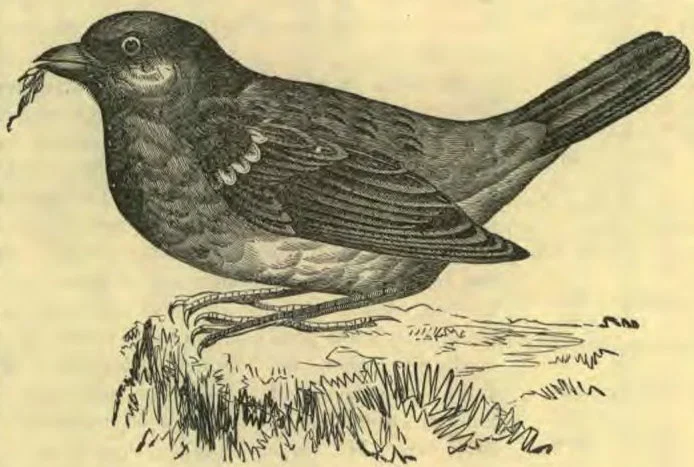
I frightened away the poor little bird And robbed the nest; and nobody heard, Although she fluttered and flapped her wings And called for her mate, and the two poor things Flew in their trouble to and fro. Nobody heard their cry of pain; And nobody saw me. Letty and Jane, Stringing their lilacs, never guessed That I was stealing the eggs from the nest.
Next day I met them going to school, And they made me feel—well, worse than a fool When I saw their eyes all swelled and pink, And heard their words that came with a sob; “O Tom! what do you, do you think? Somebody’s been mean enough to rob The poor little wrens!” And then they cried, And I longed for a chance to run and hide! “The poor little wrens that took no rest,” Said Letty, “until they made that nest And laid the eggs,—and there isn’t one Left for the mother to sit upon! Some boy has done it, of course,” she said, “Not you,” with a shake of her curly head, “I know you would never, never do it! But the boy that did, will be found out Some day, and punished, beyond a doubt,— God saw him, and he will make him rue it!”
So here I sit to-night by myself, And if Letty and Jane could only see Those speckled eggs up there on the shelf, I wonder what they would think of me! Nothing worse, I’ll venture to say, Than I think,—oh, if I only could but push The whole world back into yesterday, And those wren’s eggs into the barberry bush! But the wrong that’s done in a minute or two, Forever and ever won’t undo.
One thing I’ve heard: that a wrong confessed (Of your own accord it means, I suppose, And when it’s a thing that nobody knows, Like this affair) is half redressed. I wonder which, after all, is best,— To carry the secret fear about That Letty and Jane will find me out, And to feel my face burn hot and red Whenever I think of what they said, And to be afraid, as I am to-night, Of going to bed without a light . . . Or, to take the eggs in my hand to-morrow And say like a man, “I robbed the nest, And here is the proof to my shame and sorrow”! —I think on the whole that’s easiest— I’ll do it! . . . Now I can put out my light (God hears in the dark, I guess), and pray To be forgiven for yesterday.
—Mary E. Bradley, in Wide Awake

LETTER BUDGET.

WEST HALLOCK, ILL.
DEAR EDITORS: I have been thinking for some time of writing a letter for the “Budget.” I have not been taking the INSTRUCTOR very long, but like it ever so much, so far.
I was twelve years old last February. I keep the Sabbath with my parents, and attend church and Sabbath-school. We have young people's prayer-meeting here every Wednesday night.
I am trying to live better every day, and hope I shall have the pleasure of meeting you in Heaven. The INSTRUCTOR'S friend, BELLE BUTTS.
WARSAW, IND.
DEAR EDITORS: I have been taking the INSTRUCTOR about three years, and like it very much. I like to read the letters in it. I am keeping the Sabbath with papa and mamma. I have one brother and two sisters. We live so far from Sabbath-school that we have a little school at home of ourselves and our neighbors' children. There are about a dozen pupils, and papa is the teacher. I am trying to be a good girl. Pray for me.
MARY T. YEAGER.
DEBELLO, WIS.
DEAR EDITORS: My sister and I keep the Sabbath. Our mother, who died about a year ago, kept the Sabbath, and I want to so live that I can meet her on the new earth. Our father is not a Sabbath-keeper, but tries to help us keep it, and we hope that he will keep it sometime.
I am sixteen years old, and my sister is thirteen. I haven't been baptized yet, but am going to be soon, perhaps next Sabbath. I love to read the INSTRUCTOR. I attend church and Sabbath-school almost every week. I am trying to live a Christian life. Pray for me.
ARMINDA C. SHREVE.

HOW SLATE PENCILS ARE MADE.

BROKEN slate from the slate quarries is put into a mortar run by steam, and pounded into small particles. Thence it goes into the hopper of a mill, which runs into a “bolting machine,” such as are used in flouring mills, where it is “bolted.” The fine, almost impalpable flour that results is taken to a mixing tub, where a small quantity of steatite flour, similarly manufactured, is added, together with other materials, and the whole is made into a stiff dough.
This dough is kneaded thoroughly by passing it several times between iron rollers. Thence it is conveyed to a table where it is made into “charges,”—that is, short cylinders, four or five inches thick, and containing eight to twelve pounds each. Four of these are placed in a strong iron chamber, or “retort,” with a changeable nozzle so as to regulate the size of the pencil, and subjected to tremendous hydraulic pressure, under which the composition is pushed through the nozzle in a long cord, like a slender snake sliding out of a hole, and passes over a sloping table slit at right angles with the cords to give passage to a knife which cuts them into lengths.
They are then laid on boards to dry, and after a few hours are removed to sheets of corrugated zinc. The corrugation serves to prevent the pencils from warping during the process of baking, to which they are next subjected in a kiln, into which superheated steam is introduced in pipes, the temperature being regulated according to the requirements of the articles exposed to its influence.
From the kiln the articles go to the finishing and packing room, where the ends are thrust for a second under rapidly revolving emery wheels, and withdrawn neatly and smoothly pointed, ready for use. They are then packed in pasteboard boxes, each containing one hundred pencils, and these boxes are in turn packed for shipment in wooden boxes, containing one hundred each, or ten thousand pencils. Nearly all the work is done by boys, and the cost, therefore, is light.—Classmate.

BIRDS AND FISHERMEN.

In a certain lake region of Lapland, there is a very curious joint company, consisting of men and birds. They have organized for fishing purposes. Early every morning the hungry birds come out and sing, so to speak, though a more correct term might perhaps be, come out and scream, at the fishermen, telling them plainly enough that it is time to get up. The sleepy fishers leave their huts at the summons of these faithful servants, and they need no other alarm clocks. The boats are unmoored, and then the swallows “strike out.” The men guide their movements entirely by the course of the swallows, who very likely have been out scenting early that morning. When they pause and hover over a spot, redoubling their cries, then the fishermen know that this is the place for them. They hasten forward and cast in their nets, and are rewarded by finding them well filled.—Sel.

AFTERWARD

IT was I that did it. Letty and Jane Were busy stringing a lilac chain, And never noticed which way I went; So I walked down to the garden gate Where hid in the barberry bush she sat,— The little brown wren upon her nest, Warming her eggs beneath her breast, And half asleep in her safe content.
The girls had told me all about it,— How the birds had built there every year, And what a pleasure it was to hear Their cheery chirp and chatter, and see Them working together so busily.
It was half the joy of the spring, said Jane, When the dear little nest was built again, And the place wouldn’t seem the same without it. I did not forget that; and I knew It was a mean, mean thing to do; But still, I wanted the eggs; and so

You have reached the end of this edition.

The Youth’s Instructor · Jun 9, 1880