Your ShelfYour Projects

The Youth’s Instructor, Vol. 65, No. 3.

Miscellaneous News Items from the Periodical

The Youth’s Instructor

Jan 16, 1917

Review and Herald Publishing Assn. · Takoma Park Station, Washington, D. C. · Jan 16, 1917

Miscellaneous News Items from the Periodical

A post card was recently carried from Chicago to New York by aeroplane, and thence to Bremen, Germany, by the submarine “Deutschland.”
Mrs. James Boggs has been made a member of the Inaugural Committee. She has the honor of being the first woman member of an inaugural committee.
Mr. Carnegie recently gave $17,500 to Wilberforce University, Ohio, the oldest Negro school in America, to aid in the erection of their new $50,000 dormitory for girls.
“One ship in every two hundred that start on a long journey is either never reported, or is salvaged under trying circumstances. This record does not take into account the hazard of war.”
Colonel Goethals, who built the Panama Canal, is known as a “finisher.” His motto seems to be, “Don’t start anything you can’t—or don’t—finish.” This is a good rule for others than Colonel Goethals. Test it for yourself.
The Smithsonian Institution, Washington, D. C., is launching an important scientific expedition to the French Kongo. The object is to obtain zoological specimens for the Smithsonian Institution and to make ethnological collections.
The recent annual report of the New York Bible Society, of which Rev. Dr. George William Carter is secretary, shows that 320,715 Bibles were distributed during the year, and that the society has furnished the Scriptures in fifty-three languages and in the raised type for the blind.
Preparedness is the state of being ready to seize an opportunity when it first presents itself. This is not altogether a military term. Mary Garden, at the age of twenty-three, found herself in Paris penniless, having divided a borrowed capital of $20,000 among her singing masters. She was being charitably entertained while waiting for an engagement as an opera singer. She haunted the theater where rehearsals of the opera “Louise” were being held, bought the score, and studied it. One night the leading lady became ill at the end of the first act. Mary arrived just in time to rush on and sing the rôle. The audience fell in love at first sight, and next day Mary signed a contract. This is preparedness, and every Christian needs to be as alert in watching for the opportune moment to sow the seeds of truth.
Eleven fully matured tomatoes and as many good-sized potatoes growing on the same plant in the vegetable garden of the Pennsylvania State College, mark the advent of the newest freak plants in the vegetable world. If further experimentation proves its commercial value, the latest creation in plant life is expected to revolutionize vegetable growing by combining economy of space with productiveness of the plant. C. E. Meyers, professor of vegetable growth in the Pennsylvania State College, planted a potato. Upon the strong stalk that grew up he grafted a young tomato sprout, using the grafting wax and binding as in fruit trees. About a dozen ordinary-sized tomatoes grew to ripeness, and about the same number of healthy potatoes grew in the ground. Strange to say, the potatoes fed the tomato vines, and the tomato vines helped make the potatoes.

For the Finding-Out Club

First Part

  1. WHAT was the Lewis and Clark Expedition?
  2. Who founded Detroit?
  3. What was the Society of the Cincinnati?
  4. Who was the first Western President?
  5. How many Presidents were born in Virginia?
  6. Where is the oldest town in America?
  7. Where was the Battle Above the Clouds?

Second Part

  1. Who was chosen to take the place of Judas, and how?
  2. With what man did Paul lodge while preaching at Corinth?
  3. What damsel brought the news that Peter was at the gate?
  4. What child was put under some shrubs and left to die?
  5. What widow left her mother-in-law and returned to her own people?
  6. Who was Ishmael’s first child?

The League to Enforce Peace

THIS league was organized in June of 1915, with ex-President Taft as president. President Wilson addressed its first annual meeting. British statesmen have commended the object of the league, and the German chancellor in a speech to the Reichstag declared that at the end of the war Germany would coöperate with other nations to prevent a recurrence of war. The league, therefore, has already made itself of international importance.
The aim of the organization is to form a league of the nations that shall agree to the following propositions:—
1. To submit all justiciable questions, that is, all questions which come within the scope of recognized international law, — if they cannot be settled by ordinary diplomacy, to a duly constituted international court.
2. To submit all other questions that may not be settled by mutual agreement to a council of conciliation, in order that they may be examined and a peaceful solution recommended before the nations concerned shall declare war upon each other.
3. In case any nation in the league shall declare war without thus submitting its case to such a court or council, the economic, and if necessary the military, forces of the league shall be called upon to constrain that nation to keep the peace.
4. From time to time the powers that make up the league shall hold conferences to formulate and codify rules of international law.

The Worst Wheel of the Cart

“THE worst wheel of the cart makes the most noise.”

Home of the English Pilgrims in Leiden
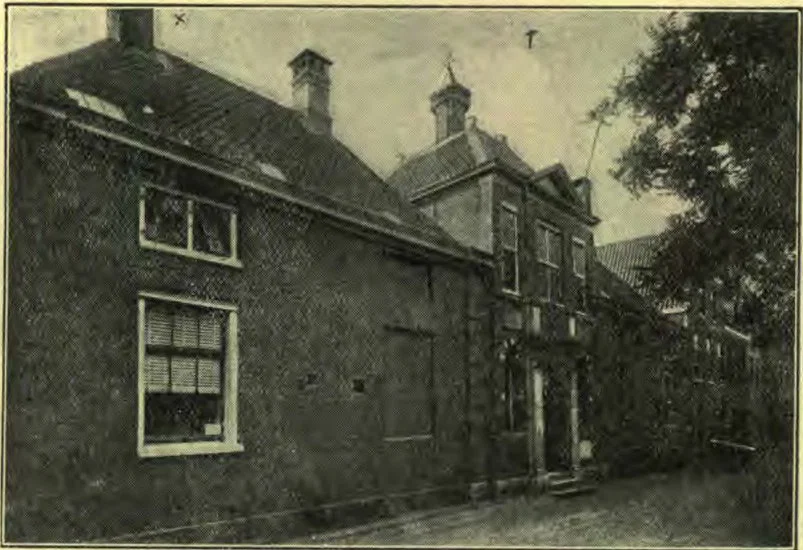
J. WIBBENS
The house in Leiden, Holland, where lived John Robinson, leader of the English company from whom went out the Pilgrim Fathers to New England, is still one of the sights dear to American visitors. Accompanying this article is a picture of the house where Mr. Robinson lived and died. The little horizontal window marks the chamber-room which was his study and workroom, and the place of his death.
THE JOHN ROBINSON HOME, LEIDEN
The property secured by the English exiles in Leiden was bought with a view to supplying living quarters for others than the pastor, and a meeting hall for the congregation. The house was a large one, and doubtless a churchroom once stood in the rear of the main entrance. Here it was that they held a solemn fast in July, 1620, as the younger and stronger members offered themselves for the venturesome journey to the New World. “Let us seek God,” they said, “a right way for us, and for our little ones, and for all our substance.” “When all was ready,” wrote one of them, “the brethren that stayed at Leiden, having again solemnly sought the Lord with us and for us, feasted us that were to go, at our pastor’s house, being large; where we refreshed ourselves, after tears, with singing of psalms, making a joyful melody in our hearts, as well as with the voice, there being many of the congregation very expert in music; and, indeed, it was the sweetest melody that ever mine ears heard. After this they accompanied us to Delfshaven, where we went to embark, and then feasted us again; and, after prayer, performed by our pastor, when a flood of tears was poured out, they accompanied us to the ship, but were not able to speak to one another for the abundance of sorrow to part. But we only, going aboard, gave them a volley of small shot and three pieces of ordnance; and so, lifting up our hands to each other, and our hearts for each other to the Lord our God, we departed.”
The charge which John Robinson gave to these pilgrims seeking refuge from religious oppression voices sentiments that we should not forget. He said: “Brethren, we are now quickly to part from one another, and whether I may live to see you face to face on earth any more, the God of heaven only knows; but whether the Lord hath appointed that or not, I charge you before God and his blessed angels, that you follow me no farther than you have seen me follow the Lord Jesus Christ. If God reveals anything to you by any other instrument, be as ready to receive it as you ever were to receive any truth by my ministry; for I am verily persuaded, I am very confident, that the Lord hath more truth yet to break forth out of his Holy Word. For my part I cannot sufficiently bewail the condition of the Reformed Churches, who are come to a period in religion, and will go at present no farther than the instruments of their reformation. The Lutherans cannot be drawn to go beyond what Luther saw. Whatever part of his will our Lord revealed to Calvin, they will rather die than embrace; and the Calvinists, you see, stick fast where they were left by that great man of God, who yet saw not all things. “This is a misery much to be lamented; for though they were burning and shining lights in their time, yet they penetrated not into the whole counsel of God, but were they now living, would be as willing to embrace further light as that which they first received. I beseech you, remember it as an article of your church covenant that you be ready to receive whatever truth shall be made known to you from the written Word of God. “But I must herewith exhort you to take heed what you receive as truth. Examine it, consider it, compare it with other scriptures of truth before you receive it; for it is not possible that the Christian world should come so lately out of such thick antichristian darkness, and that perfection of knowledge should break forth at once.”
Above the doorway of Robinson’s house are two stones set, one containing four lines of poetry in the Dutch language, the other the English inscription: “On this spot lived, taught, and died John Robinson, 1611-1625.”
Over against this building is a church. Facing the house of Mr. Robinson, a great bronze plate is set into the wall of the church, on which the following can be read:—
THE MAYFLOWER 1620. In memory of Rev. John Robinson, M. A., Pastor of the English Church over against this spot, A. D. 1609-1625, where at his prompting, went forth the Pilgrim Fathers to settle New England 1620. Buried under this house of worship 4 March 1625 Æ XLIX years. In memoria aeterna erit justus. Erected by the National Council of the Congregational Churches of the United States of America A. D. 1891.
We are glad that Holland furnished a place of refuge to those Pilgrim Fathers on their way to plant the light of the Protestant faith, and of religious liberty as they understood it, on the New England shores.
The Hague.

The Bookman’s Creed

THY BOOK have I hid in my heart, that I might triumph before heaven and men. “I will to do His will,” that I may know how to give the world a strong, clear, personal, living reproduction of the Life of lives, coveting only divine guidance for every step of the way, that I may live what I teach.
To honor and magnify my profession, and to think of it as a high and royal calling, that I may act as a trustworthy representative of heaven; to be one whose work is as good as gold to the full amount bargained for; to be a doer as well as a sower; to glory in the hardness of the way and not growl at all.
To base my expectations of reward on a solid foundation of service rendered; to be willing to pay the price of success in honest effort; to remember that the greatest evidence of integrity is true loyal endeavor.
To look upon my work as an appointment of heaven, a service freighted with providential opportunity, to be seized with joy and made the most of; to remember that success lies in reckoning the old man of self dead, ever counting it possible to do all things through Him that strengtheneth me; and this means I am to use all the powers of my God-given brain, untiring energy, courage, and determination to win souls for heaven.
I am to expect temptation, difficulty, and trial, but every one of these must be turned into stepping-stones for triumph and victory; to believe in God’s proposition to men; to know by a personal experience what that proposition is, and how to pass it on to others.
To make a study of the King’s business, and as his appointed messenger I am to know the business in every detail, from the first insinuation of Lucifer up to now.
To find time to do everything needful, by never letting time find me doing nothing; to hoard days as a miser hoards dollars, that every moment and motive in life may be enriched and purified with holy purposes; to work at least forty hours a week.
To shun debt, as one who would avoid man’s greatest enemy; to treasure my well-earned savings by depositing with the bank of heaven, and remember that this bank pays interest through all eternity.
Finally, to take a good solid grip on the joy of life, accept hard knocks with cheerfulness, keep on the job, and play the entire game like a gentleman, believing in that kind of gentleness that tends to true greatness; to fight nothing so hard as my own weakness; ever endeavoring to grow as a good soldier that needeth not to be ashamed, until time shall have finished the story of humanity, and eternal victory is won, the King’s seal “well done” fixed at the close of life’s record.
This is the creed of the Northern Illinois colporteurs.

The Messenger’s Prayer

Now I get me up to work, I pray thee, Lord, I will not shirk; Should I be called before the night, I pray thee, Lord, my work be right.
C. J. TOLF.

The Experiences of Peter and Judas Contrasted

WHEN Judas decided to follow Christ, he did it for the purpose of benefiting himself. Christ assured him from the beginning that to follow him was not to gain riches. “The foxes have holes, and the birds of the air have nests; but the Son of man hath not where to lay his head.” But Judas believed that when Christ came into the kingdom about which he had been preaching, he would have power and money; and Judas wanted to be known as the one who had helped him to this seat of glory, and he also hoped to be a sharer of it.
Peter was called to follow Christ; he accepted, relinquished fishing, and with love in his heart joined the disciples.
Peter made a sacrifice to follow Jesus; Judas made none, unless it was to sacrifice his pride as he thought he did.
All through the years of Christ’s ministry, from the words and actions of these two men one would not have known that there was much difference at heart. But Peter was receptive; Judas, repelling. Peter was warm-hearted and impulsive, outspoken and thoughtless; Judas was a deep thinker, of keen foresight, a worldly business man, with a sharp lookout for anything that would benefit or injure himself.
For these reasons Judas every day hardened his heart a little more to the teachings of Christ, until one night, because of one reproachful look of Jesus, that seemed to see and read the secrets of his heart, he went to the Sanhedrin, and betrayed his Lord for thirty pieces of silver.
But Peter every day was learning of the love and beauty of the Saviour’s character. By beholding he was being changed. Although he did not clearly understand all of Jesus’ teachings, he was willing to learn, and so remembered and understood them later.
When Judas gave Jesus the kiss of betrayal in Gethsemane, it was a long-contemplated act that came from a sinful heart. When Peter drew his sword and cut off the ear of a servant of the high priest, it was the act of impulse, done on the spur of the moment.
Peter later denied his Master three times, the last time with cursing and swearing. When the cock crew, Jesus turned and gave Peter a long, pitying, sorrowful, forgiving look, and Peter remembered with bitter agony how he had declared he would follow Jesus anywhere, even to death. Peter then, in anguish of mind and spirit, went to the garden of Gethsemane where a little time before his Saviour had prayed for him.
Meanwhile Judas had seen his Lord condemned to death. He soon had a terrible realization that in the condemnation of Jesus, he himself was condemned forever. In terror of an inevitable fate, he fled to the high priest, and throwing down the pieces of silver; exclaimed that he had betrayed innocent blood. Then casting himself at the feet of Jesus, Judas acknowledged him to be the Son of God, and entreated him to deliver himself. Jesus was not able to forgive Judas, for the latter had grieved away the Holy Spirit, which alone can convict of sin. He did not repent, but merely feared the future result of his sin; he did not recognize in Christ a remedy. So in an agony of remorse Judas went out and hanged himself.
But Peter had an experience out in the garden that changed his whole life and character. He fell on the Rock and was broken. He realized that Christ was the only One who could keep him from falling. He realized as never before, how very weak he was. Peter accepted Christ as his personal Saviour, and he was saved to be a strong, reliable, self-possessed worker.
“A new heart also will I give you, and a new spirit will I put within you.” Eze. 36:26. Peter had been given a new spirit,—the Spirit of Christ. And it worked within him “to will and to do of his good pleasure.” MARGARET ROSSITER.

“Let Us Go Hence”

“Arise, let us go hence.” John 14:31.
“Let us go hence”—from out the quiet chamber Where soul with soul could meet, From peace and safety, love and deep communion, From tender counsel sweet; “Hence”—to what grief, what terror and confusion, Bewilderment and loss, To shrieking mobs, to furious reviling, The lash, the thorns, the cross.
And hast thou called us, Lord, from peaceful pastures To turmoil and to care, To days of toil and nights of weary waking, To watch with thee in prayer? Then, let us go, be it to shame and scorning, To suffering and loss; Even,—if thou art with us, blessed Master,— Yea, even to a cross. —Annie Johnson Flint.

Triumphing over Opposition

God’s care for his workers has never been confined to any one time or place. In every age and under circumstances the most varied he has turned the opposition of enemies into a triumph for truth. Paul’s arrest and imprisonment at Philippi resulted in the conversion of precious souls who otherwise might have remained indifferent to God’s claims upon them.
During the 1901 General Conference, Elder W. H. Thurston, at that time superintendent of the Brazilian mission field, related an incident (see General Conference Bulletin, 1901, p. 123) that illustrates how God uses even the bitterest opposition to bring about his purposes.
In the early days of Seventh-day Adventist mission work in Brazil, three of our evangelists in an interior town were attacked by a mob with clubs, and one of them, Brother Stauffer, was felled to the ground, apparently dead. His companions rolled him up in a blanket, and carried him to the house of a friend, where he rallied, though unable to walk or to regain mental strength. Before going on to another part of the field, his associate evangelists arranged for his care among friends.
About three weeks later, officers came, summoning him to appear in court to answer charges lodged against him. He protested that he could not walk, whereupon they dragged him out of bed. Finding him unable to walk, “they put him back to bed, but with the promise that he would appear before the court as soon as he was able.
“As soon as he could go about, he took his small satchel and Bible, and went down and presented himself before the court. They began questioning him; and he answered every question right from the Bible, reading to them the word of God. The man that struck Brother Stauffer confessed, and was converted; but during this examination, another man arose, and bore a false testimony to what Brother Stauffer was saying; and right there and then, that man’s tongue was paralyzed, and he has never spoken from that day to this.”
C. C. CRISLER.

JOHN E. NORDQUIST

Urbandale

I TRAVELED, I rode on a car To an Urban village afar. To while away time I scribbled some rhyme; I wrote what I saw from the car.
I wrote of the things on the way; Of the scenery, the beauteous day; Of the green smiling land; Of the wild birdies’ band; Of the squirrels in the trees at play.
If you love old Nature’s theater, There’s not a play that’s greater Than the Urbandale trip— I’ll hand you the tip, Although I’m a tip giving hater.
Take the Urbandale trip today, Leave worry and work for play; The scenery is grand; Give Nature your hand; Take the Urbandale trip today.

JOHN E. NORDQUIST

Happiness Is Always a Homemade Article

“HAPPINESS is always a homemade article.”

Humility

YEARS ago I was often thrown in close touch with one who showed a Christlike spirit under all circumstances. Her environment was the reverse of pleasant. She was forced to live with those who were not only narrow, jealous, and difficult to please, but who had no love for the things she loved. But she bore it all patiently.
“How can you submit, as you do?” queried I, one day, when I chanced upon the scene and saw enough to suggest the thought that patience had ceased to be a virtue. “It is too much for human endurance.”
“You are right, there,” my aged friend replied, sweetly; “it is beyond human endurance; but the Holy Spirit, the divine, enables me to bear patiently what would otherwise crush me. Years have taught me this one lesson, however: If one has the true spirit of humility, there is little room for hurt feelings.”
When next I called upon this saintly one, she handed me the slip of paper which I shall always treasure, saying: “A quotation like this was given to me, years ago. I know not whose words they are, but I looked upon them as so good that I pasted the one given me on the flyleaf of my Bible. To the frequent reading of it I owe so much that I want you too in possession of a copy. Perhaps after reading it, you will better understand the secret of my seeming indifference to what would once have made my life a burden.” Then in tremulous tone, she added: “It is little I can give you, dear, but I copied this with a prayer that you too may be strengthened by it, as I have been. To be, ‘clothed with humility,’ as Peter puts it, has long been my aim; and I do know, by happy experience, that He ‘giveth grace unto the humble.’”
Then, with face illuminated by peace within, she placed in my hand the following apt definition of a virtue which is too little sought after: “Humility is perpetual quietness of heart. It is to have no trouble. It is never to be fretted, or vexed, or irritated, or sore, or disappointed: it is to expect nothing, to wonder at nothing that is done to me, to feel nothing done against me. It is to be at rest when nobody praises me, and when I am blamed and despised. It is to have blessed home in myself where I can go in and shut the door and kneel to my Father in secret and be at peace, as in a deep sea of calmness when all around and above is trouble.”—Selected.

Home-Making in Africa

THE home-making instinct is paramount in most human beings, and those who do not have it are to be pitied. The lower animals have the same instinct, sometimes to one's annoyance in the mission field. The hens make their nests in the most unlikely places, the birds try to select a place out of harm's way, the bees may start a comb in your trunk, and the rats may keep you awake by their efforts at home-making.
A grass hut in the wilds may be more of a home than a fine stone mansion with every convenience, and some natives succeed far better than some of their white brothers.
We may pity the “poor heathen,” but, in his way, he is an expert at home-building. With only two implements, an ax and a hoe, he performs miracles. With his ax he cuts the poles for the sides of his hut, and after digging a trench with the hoe he sinks the poles so that no animals can dig under his home. He strips the bark off a certain kind of tree, and uses the inner bark to tie his house together. He then cuts small saplings about as thick as one’s thumb or wrist, and clamps the poles fast by tying them between the saplings with the rope bark. The roof is made of the poles for rafters, over which are tied the saplings. Upon these is placed the grass, which has been cut down with the hoe.
The wife goes to the stream and gets a certain kind of clay, from which she makes earthen dishes and pots. With the waterpots she carries water to make mud plaster for the house and to smooth off the dirt floor. The man then goes to the stream and cuts some reeds, which are tied together for the door and the top of the bed. He cuts the green bamboo, with which he makes baskets and the porridge dish. He also cuts large strips of bark which can be beaten into cloth or sacks. All this is accomplished by the ax and the hoe.
The Nyasaland boys make neat chairs and tables from the chiwali palm. Machilla pails are made from the same palm. Some natives make very presentable hats and sew them with thread from the chiwali palm.
Educated boys build good huts with windows, and an extra hut for a kitchen.
The Europeans’ houses are made of brick and iron, with cement floors, and grass, iron tile, or shingle roofs. Some have all-iron houses built up off the ground. Decator huts are usually circular huts with either iron or grass for a roof.
Temporary huts are built in a day by using small poles or saplings and grass. Some throw boughs together in such a way as to make quite a comfortable place in which to live.
The Mashikilumbwe make large earthen doorways, and shelves of earth overlaid with skins for beds. The walls of the huts are made of all poles, poles with grass in between, or bamboo woven into a big basket with a few poles as support. I have seen brush used in several huts. It was tied in such a way as to make a strong wall.
The Matabele make a solid wall of mud mixed with manure, which lasts a long time. Their floors are made of beaten earth and polished with a stone till they are as smooth as glass.
Many natives in this region build their huts with poles all meeting in the center, like a tent or Indian wigwam. This is covered with grass, and clods of earth are hoed up at the base to keep them dry.
In most native huts the fire is built in the center of the hut, and the smoke gets out the best way it can.
Some of the more energetic natives, while traveling through a blistering hot district with scarcely any shade, will bend over a sapling and throw grass on it. This serves as a shade, like Jonah’s gourd.
Necessity is the mother of invention, and in a country like this, one sees its results on every hand in many different ways.
The great curse of the country is the white ants, and usually a pole-and-grass hut will have to be rebuilt in three or four years.
The hope of all races is that soon Jesus will come. At that time those who are faithful will be permitted to enter that home where there is nothing to hurt or destroy, where all is joy and comfort.
S. M. KONIGMACHER.

An Experience of a Missionary

IT was a hot day, and I had begun in spare hours to lay the foundation for an additional room for the house. I felt rather uneasy to see a well-known savage hanging around every day with his tomahawk in hand. He had killed a man before our arrival. On seeing him hovering so alarmingly near, I saluted him, “Nelwang, do you want to speak to me?”
“Yes, Missi,” he replied, “if you will help me now, I will be your friend forever.”
“I am your friend,” I answered. “That is what brought me here and keeps me here.”
“Yes,” the savage cried out, “but I want you to be strong as my friend, and I will be strong for you. I want to get married, and I want you to help me.”
“Do you know the woman you want to get?” I asked him this, wishing to bring him to some issue, for the natives often steal their wives and carry them far off to some distant village.
“Yes,” replied Nelwang, “I want to marry Yakin, the chief’s widow up at the inland village.”
“But do you know if she loves you?”
“Oh, yes,” replied Nelwang; “one day I met her on the path, and told her I should like to have her for my wife. She took out her earrings and gave them to me, and I know now that she loves me. With her earrings she gave me her heart.”
“Then why don’t you go and take her?”
Nelwang, with childish tenderness, came nearer to me, and with a half-whispered cry, said, “I can’t; this is my difficulty, Missi: In her village there are thirty men for whom there are no wives. Each of them wants her.”
“And if you take her, they will shoot you?”
“Yes, Missi, that is what they will do. But I want you to help me. You white-men can always succeed.”
After I had suggested a way to him, he cried out, “I shall win her from them all. Yakin and I will be strong for you all our days.”
Next morning Yakin’s house was found deserted. They sent to all the villages round about, but no one had seen her. They seemed to know that she had been stolen by Nelwang. The usual revenge was taken. The houses of the offenders were burned, their fences broken down, and all their property destroyed.
“Hello,” I said, as he suddenly appeared some time later, “where have you come from? and where is Yakin?”
“I must not tell you,” he replied. “We are hid. We have lived on coconuts gathered at night. Will you let us come here tomorrow morning?” he asked.
“All right,” I said. “Come tomorrow.” And trembling with delight, he disappeared in the bush.
Nelwang and his bride soon learned to do many things about the mission, and in a few weeks both of them were showing an interest in things pertaining to Jesus and his gospel. After a few months we asked him and his wife to come to service in our little chapel near the village. At first he hesitated, fearing trouble with the thirty men of the inland village, but he soon made up his mind, and said he would come.
When service was about to begin, Nelwang could be seen in the front row, seated with the other men. In a few minutes Yakin entered on the ladies’ side, and appeared dressed in almost every article of European apparel, mostly portions of male attire. She wore her bridal gown, which was a man’s drab-colored overcoat buttoned tight over her native grass skirt and hanging down to her knees. Over this she had hung on a vest, and above that she had a pair of men’s trousers, the body of them planted on her neck and shoulders, with her head and face looking out from between the legs, a leg from either side dangling down absurdly in front. Fastened to one shoulder also there was a red shirt, and to the other a striped shirt, waving about her like wings as she sailed along. Around her head a red shirt had been twisted like a turban, and her crude notion of art demanded that a sleeve should hang aloft over each ear. She seemed to be a moving monster loaded with a mass of rags.
Nelwang looked at me and then at her, smiling quietly, as if to say, “You never saw, in all your white world, a bride so grandly dressed.”
The two souls were extremely happy, and they have remained faithful to the mission and to our work.—John G. Paton.

The Bells

HEAR the sledges with the bells, Silver bells! What a world of merriment their melody foretells! How they tinkle, tinkle, tinkle, In the icy air of night! While the stars that oversprinkle All the heavens seem to twinkle With a crystalline delight— Keeping time, time, time, In a sort of runic rhyme, To the tintinnabulation that so musically wells From the bells, bells, bells, bells, Bells, bells, bells— From the jingling and the tinkling of the bells.
Hear the mellow wedding bells, Golden bells! What a world of happiness their harmony foretells! Through the balmy air of night How they ring out their delight! From the molten-golden notes, And all in tune, What a liquid ditty floats To the turtledove that listens, while she gloats On the moon! Oh, from out the sounding cells, What a gush of euphony voluminously wells! How it swells! How it dwells On the future! how it tells Of the rapture that impels To the swinging and the ringing Of the bells, bells, bells— Of the bells, bells, bells, bells, Bells, bells, bells— To the rhyming and the chiming of the bells.
Hear the loud alarum bells, Brazen bells! What a tale of terror, now their turbulency tells, In the startled ear of night How they scream out their affright! Too much horrified to speak, They can only shriek, shriek, Out of tune, In a clamorous appealing to the mercy of the fire, In a mad expostulation with the deaf and frantic fire, Leaping higher, higher, higher, With a desperate desire, And a resolute endeavor Now—now to sit, or never, By the side of the pale-faced moon. Oh, the bells, bells, bells, What a tale their terror tells Of despair! How they clang and clash and roar! What a horror they outpour On the bosom of the palpitating air! Yet the ear, it fully knows, By the twanging, And the clanging, How the danger ebbs and flows; Yet the ear distinctly tells, In the jangling, And the wrangling, How the danger sinks and swells, By the sinking or the swelling in the anger of the bells— Of the bells— Of the bells, bells, bells, bells, Bells, bells, bells— In the clamor and the clanging of the bells!
Hear the tolling of the bells, Iron bells! What a world of solemn thought their monody compels! In the silence of the night, How we shiver with affright At the melancholy menace of their tone! For every sound that floats From the rust within their throats Is a groan. And the people—ah, the people— They that dwell up in the steeple, All alone, And who tolling, tolling, tolling, In that muffled monotone, Feel a glory in so rolling On the human heart a stone— They are neither man nor woman— They are neither brute nor human— They are ghouls: And their king it is who tolls; And he rolls, rolls, rolls, Rolls, A paean from the bells! And his merry bosom swells With the paean of the bells! And he dances and he yells; Keeping time, time, time, In a sort of runic rhyme, To the paean of the bells— Of the bells: Keeping time, time, time, In a sort of runic rhyme, To the throbbing of the bells— Of the bells, bells, bells— To the sobbing of the bells; Keeping time, time, time, As he knells, knells, knells, In a happy runic rhyme, To the rolling of the bells— Of the bells, bells, bells— To the tolling of the bells— Of the bells, bells, bells, bells, Bells, bells, bells— To the moaning and the groaning of the bells.
—Edgar Allan Poe

Giving Joy

“If thou art blest, Then let the sunshine of thy gladness rest On the dark edges of each cloud that lies Back in thy brother’s skies. If thou art sad, Still be thou in thy brother’s gladness glad.”

Hookworm Disease Easily Cured

BESIDES being easily prevented, hookworm disease is also easily cured. The treatment is usually given as follows: Eat little or no supper in the evening, and take a good dose of Epsom salts before retiring. As soon as the bowels have acted in the morning, take half the quantity of powdered thymol prescribed with a little water and lie on the right side for half an hour to allow the thymol to quickly pass out of the stomach into the intestines. Two hours later take the remainder of the thymol and again lie on the right side. This thymol will cause the hookworms to loosen their hold on the intestines. Two hours after taking the second half of the thymol, take another dose of Epsom salts together with a cup of hot, strong coffee without sugar or cream. This will expel the hookworms and the thymol remaining in the intestines.
In the majority of cases two treatments like the above, taken a week apart, are necessary to expel all the worms. The total amount of thymol given at a treatment should depend upon the size and weight of the patient. In general, about one grain is given for every three pounds of weight of the patient. Thus, a sixty-pound patient would be given twenty grains in two doses of ten grains each. Special care should be taken by the patient not to eat or drink any alcoholic drinks, patent medicines containing alcohol, or gravy, butter, milk, fat, or oily foods during the day of the treatment and the day before, as such substances are dangerous in combination with thymol.—Health Bulletin.

Lighthouses: An Object Lesson in Steady Witness
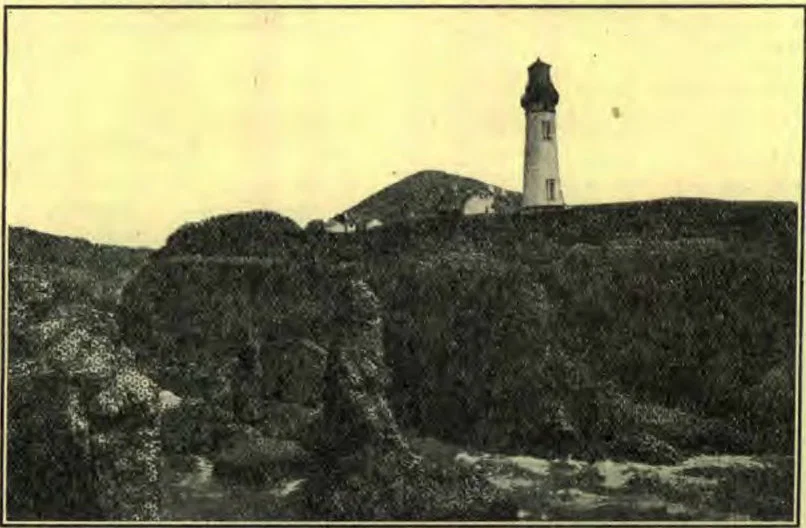
Lighthouses

A LIGHTHOUSE is an object lesson to all. For those inland or out at sea. Inside, lamps magnify; oil supply to be watched. It has a message: Beware of danger. Keep off the rocks.
We should be as lighthouses. Built on a good, firm foundation, and show a light in our lives. If the lamps be neglected and oil fails, the light will go out. Danger will be near.
Let your light shine when with companions. A shady act will smoke the glass and dim the light. You are being watched by your chums.
You have to keep the light always burning. At night it is most useful. When the night of trouble and temptation comes, be found constantly burning a good, steady light.
When storms come, let your light burn steadily.—Weapons for Workers.
Continue reading: To Work or to School, Which?