The Youth’s Instructor, Vol. 35, No. 27.

JULY

The Youth’s Instructor

Jul 6, 1887

S. D. A. Publishing Association · Battle Creek, Mich. · Jul 6, 1887

JULY

JULY—for you the songs are sung By birds the leafy trees among; With merry carolings they wake The meadows at the morning’s break, And through the day the lisping breeze Is woven with their tree-top glees. For you the prattling, pebbly brooks Are full of tales like story-books. For you a fragrant incense burns Within the garden’s blossom-urns, Which tempt the bees to hasten home With honey for their honey-comb. The river, like a looking-glass, Reflects the fleecy clouds that pass, Until it makes us almost doubt If earth and sky are not changed about. July—for you, in silence deep The world seems fallen fast asleep, Save on one glorious holiday, When all our books we put away, And every little maid and man Is proud to be American! —St. Nicholas.

THE APOSTLE PAUL.

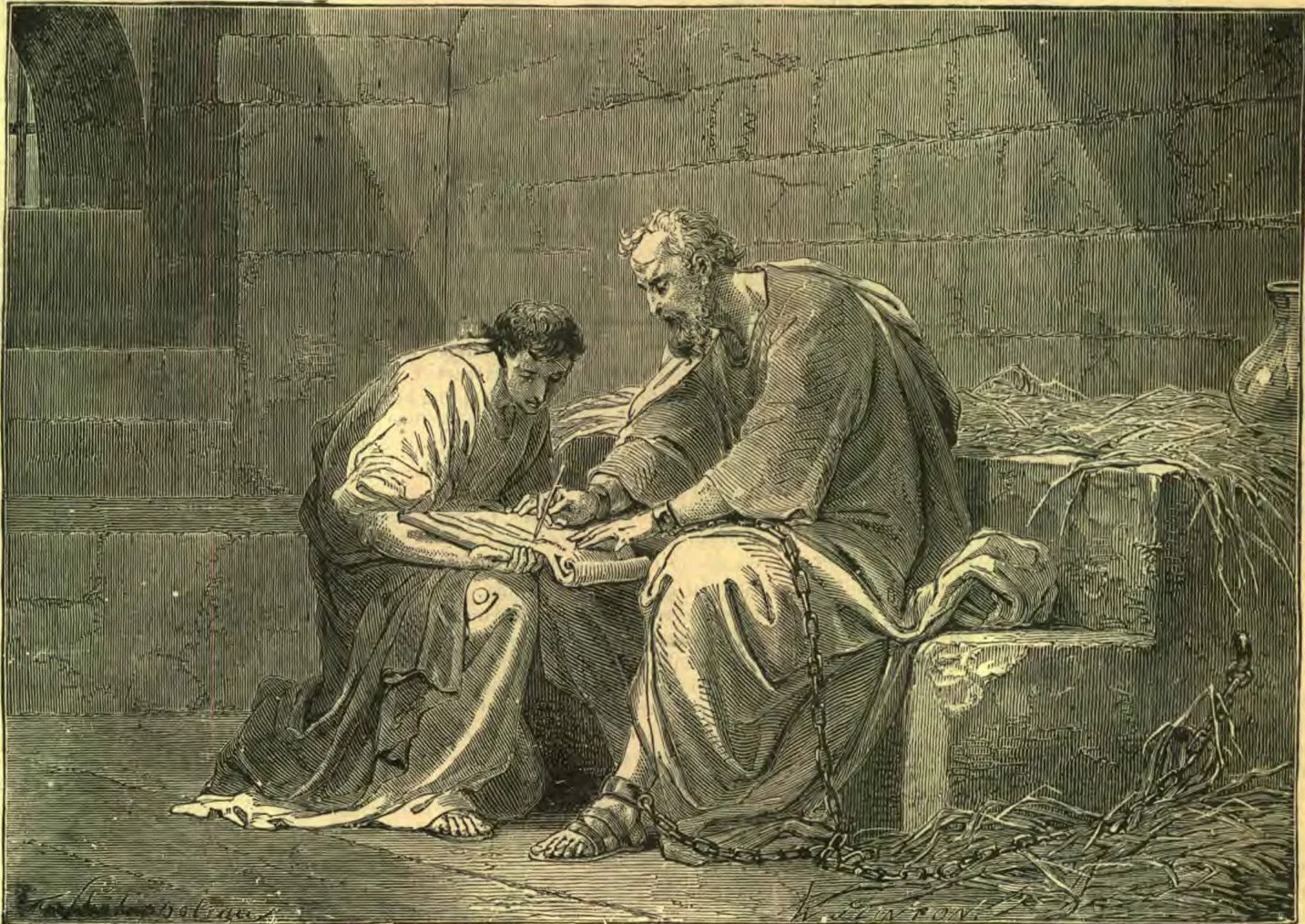
WONDER if the boys who like to read about heroes ever read the life of the apostle Paul? His is a character worth imitating; it is one of the most remarkable in the Book of books. One thing we may admire him for was his energy and perseverance.
Paul did not do things by halves; whatever he undertook was done thoroughly. Of this we may be sure when we remember how he persecuted the early Christians. As he says himself, “Many of the saints did I shut up in prison, having received authority from the chief priests; and when they were put to death, I gave my voice against them. And I punished them oft in every synagogue, and compelled them to blaspheme; and being exceeding mad against them, I persecuted them even unto strange cities;” “for I verily thought I ought to do many things contrary to the name of Jesus of Nazareth.”
Can you not imagine this ardent and impetuous young man, full of zeal for the maintenance of the Jewish doctrines, going on that remarkable journey to Damascus? Armed with authority from the high priest, he went breathing threatenings and slaughter upon all those Jews who had departed from the faith of their fathers. But suddenly a great light, brighter than the glaring oriental sun at midday, arrests his course; and out of the brightness he hears a voice, saying, “Why persecutest thou Me?”
Astonished and trembling, Paul knew the Lord of glory, and humbly asked, “What wilt thou have me to do?” His haughty, persecuting spirit was subdued, and his companions led him into the city, a humble, willing convert to the doctrines he had meant to exterminate. His repentance was sudden and complete. Before many days had gone by, he was zealously preaching in the synagogues, that Christ was the Son of God.
But we may admire him for his high courage as well as for his energy. When the angry Jews at Lystra stoned him and left him as one dead, he rose up and again entered the city! Though bitterly persecuted and driven from place to place, he still preached Christ; and when shut up in prison, he joyfully sang praises to God!
In a letter to the brethren at Corinth, Paul tells of his trials,—how he suffered “in stripes above measure, in prison frequent, and in deaths oft.” “Of the Jews,” says he, “five times received I forty stripes save one. Thrice was I beaten with rods, once was I stoned, thrice I suffered shipwreck, a night and a day have I been in the deep; in journeyings often, in perils of waters, in perils of robbers, in perils by mine own countrymen, in perils by the heathen, in perils in the city, in perils in the wilderness, in perils in the sea, in perils among false brethren; in weariness and painfulness, in watchings often, in hunger and thirst, in fastings often, in cold and nakedness!”
And the last the sacred historian tells us of this great apostle is that he is a prisoner at Rome. But even this trial did not check his ardor. A great man will be great in affliction, great in prison, and great in chains; and nowhere does Paul’s Christian manhood shine forth in clearer light. How close a prisoner he was kept we may not certainly know; but we know that he was allowed to receive his friends, and we may imagine that this was a great comfort to him and a blessing to them. We fancy he spent many days in thinking of the churches he had raised up, and in writing letters of encouragement and warning to the brethren scattered abroad.
In all his affliction he was not disheartened, but was able to write, with his whole soul, these words: “Let us not be weary in well-doing; for in due season we shall reap, if we faint not. As we have therefore opportunity, let us do good unto all men.” And though persecution had followed him from the time he began to preach, so great was the hope that had sustained him through it all, that he was enabled confidently to say at the close of his life: “I have fought a good fight, I have finished my course, I have kept the faith. Henceforth there is laid up for me a crown of righteousness, which the Lord, the righteous judge, shall give me at that day; and not to me only, but unto all them also that love his appearing.”
And this confidence may be ours to enjoy, if, like him, we run with patience the race that is set before us.
W. E. L.

WHAT IS YOUR FATHER TEACHING YOU?

It is recorded of a certain great philosopher that a friend who went to visit him met the philosopher's little daughter before he met the philosopher himself. Knowing that the father was such a deeply learned man, he thought that the little girl must have learned something very grave, something very deep, from such a father, and he said to her, “What is your father teaching you?” The little maid looked at him with her blue eyes, and just said, “Obedience.” This is what the great and wise man taught his little girl, and I believe that is the most important lesson for children to learn,—to be obedient. It is a lesson necessary for their happiness, for their safety, and I think we may say, for their life.—Canon Wynne.

THREE BOYS WHO GREW TO BE GREAT.

A boy used to crush the flowers to get their color, and painted the white side of his father's cottage in the Tyrol with all sorts of pictures, which the mountaineers gaped at as wonderful. He was the great artist Titian.
An old painter watched a little fellow who amused himself making drawings of his pot and brushes, easel and stool, and said:—
“That boy will beat me one day.”
So he did, for he was Michael Angelo.
A German boy was reading a novel. Right in the midst of it he said to himself:—
“Now this will never do. I get too much excited over it. I can't study so well after it. So, here goes!”
And he flung the book out into the river. He was Fichte, the great German philosopher.

MEDICAL SKILL OF THE CHINESE

TCHOUNG-KOUO.—NO. 6.

MEDICAL SKILL OF THE CHINESE.

The number of drugs that enter into the composition of Chinese medicine is marvelous. Usually the physician is a druggist, also, and he tries to induce his patient to purchase drugs of the highest price. The fear of being overreached leads the patient, as the properties of each ingredient are explained by the physician, to examine the prescription, and strike out such drugs as are considered too expensive, to which, after much wrangling, the practitioner agrees, and the modified prescription is then prepared and taken. The drugs are generally boiled in a vase of clay, and when their virtues have been extracted, the patient is made to swallow the potion scalding hot. Notwithstanding the dark, oily nature and yellow appearance of Chinese medicines, they are not half so difficult to swallow as many of the allopathic doses and patent medicines meekly taken by more enlightened nations.
Very often, in serious cases, the physician refuses to permit the erasing of some high-priced drug. In such cases a long family council often follows, in which the patient, if capable, takes part. The chances of recovery are weighed pro and con; and often on account of the age of the interested party, or the nature of the malady, it is decided not to incur the expense, but to let the patient die. Strange as it may seem, the sick one often gives the final word in this decision; for it is deemed preferable, in the eyes of a dying Chinese, to reserve the money for the purchase of a fine coffin and a magnificent funeral; and so, frequently, the doctor is dismissed, and the undertaker sent for.
One drug used by the people of China, in the form of little red pills, has the imposing name of ling-pao-you-y-tan, which means “supernatural treasure for all desires.” The composition is a secret which has for centuries been known only to a single family of Pekin. Its powerful smell of musk is no guide, as everything in China, even to the land and the air, are impregnated with the odor. These pills are a universal panacea. A single pill, ground to powder and taken into the nose, like snuff, induces prolonged sneezing, until the body is profusely covered with perspiration. It is often so used on sick people, to ascertain if they are still alive, or near the point of death. If the sick one moves but does not sneeze, he will not live more than twenty-four hours; if he sneezes once, he will live till the next day; and so on.
It is not wise to ridicule everything Chinese. The maladies incident to their mode of life are often complicated, and very stubbornly resist treatment; yet the mortality of that nation compares favorably with that of any or all others. In some things they stand alone, particularly in curing hydrophobia, and in setting fractured limbs. In the latter no “regular” surgeon need attempt to compete with them. Catch any peasant passing on the road, and he will perform as neat and acceptable a setting and bandaging as could any surgeon, while many professional operators will treat limbs in which the bones are crushed, and not only save, but cure them. Yet many a surgeon who could accomplish no such feat as this, would laugh to see the operator apply as a plaster to promote the junction of the bones, a composition of wood-lice, white pepper, and a fowl pounded to death.
W. S. C.

CARL AND HIS GRANDMOTHER.

LITTLE Carl was a Swiss boy. In looking at him you might have noticed that he wore neither shoes nor stockings, and that his clothes were ragged and dirty. I admit that Carl would have been improved in appearance had he had clean clothes, as you have, and a clean face and hands. But you may not have the same excuse for your appearance as he had for his. He had neither father nor mother to do anything for him, and he was very poor. He lived with his old grandmother among the great Swiss mountains. He was a most faithful little grandson. I hope that you are as kind to your dear old grandma as Carl was to his. On one occasion he showed his fidelity, and that is the subject of my story.
The sky looked very black and lowering one day as Carl and granny went up along the side of the mountain to milk the cows and goats. This flock had been put in their care, and they were paid to live up there during the summer and take care of them. There was a broad, green pasture among the mountains where the flock were kept, and granny with Carl lived in a chalet near. A chalet is not much more than a little hut in which the poor people live. There are hundreds of them among the mountains.
At this time of which I am telling you—for this is a true story—Carl stood looking away off to the north, when he said suddenly, “Granny, granny, come in quick. Don’t go out to milk the cows and goats just yet; I hear such a queer sound.”
But old granny was deaf; she did not hear the noise, and she started to go out to her evening work. Carl ran to her, and catching her by her arm, pulled her back into the house. He was not a moment too soon. A noise like heavy thunder was heard above them; even granny, who was so very deaf, heard it and fell down in terror. “It is a slide from the mountain!” she cried. “Oh, my boy, my Carl, we’re lost!” They both kneeled down together to pray God to help them.
The rumbling and crashing and roaring kept on for hours. It seemed to them as if the very mountain was splitting open. Sometimes they would scream out in fear lest the ground should be taken from under their feet, and then again their voices would join in prayer or in trying feebly to sing one of the Psalms, as they had been taught to do.
“The Lord is my rock and my fortress and my deliverer, my God, in whom I will trust,” rang out the clear voice of little Carl.
All night the fierce tempest continued. Towards morning the sound seemed more distant. They tried to open the door to look out, but a great rock had fallen near. Then they tried the little window. Carl could just creep out. Everything around them was changed; the ground was full of broken pieces of rock, torn-up trees, and blocks of ice. The few acres around the chalet had not been carried away, but all else was a scene of desolation.
Now came the test of Carl’s love to his grandmother. He might perhaps, by creeping and crawling and climbing, find his way out and down the mountain, but granny could not. She clung to him and begged him not to leave her, for she was so old and helpless. He gave up trying to save himself, and determined to stay by her. “She has done so much for me,” said he, “it would be wicked for me to leave her now.” Then turning to her, he said, “I will not leave you, granny; do not be afraid. We must trust in God.”
“Yes, we must trust in God; he can help us,” she said.
I might tell you of the weary hours they spent, and of their terrible anxiety, if I had the time, but I have not. I must hurry on to what happened the next day.
Some of the guides, who can find their way all over the great Swiss mountains, knew where granny and Carl lived, and went up to help them.
They carried them down with great rejoicing, and gave them a home with their old neighbors in the valley below. How glad and thankful they felt that they had been so wonderfully preserved, and finally rescued from their dangerous situation!
“Bless the Lord, O my soul!” cried granny, as she kneeled down in prayer.
“And forget not all his benefits!” added little Carl.
—The Child’s Paper.

JUNE

THE pretty flowers have come again, The roses and the daisies; And from the trees, oh, hear how plain The birds are singing praises!
The grass is fresh and green once more; The sky is clear and sunny; And bees are laying in a store Of pure and golden honey.
The little modest buttercup, The dandelion splendid, Their heads are bravely holding up, Now winter’s reign is ended.
How charming now our walks will be By meadows full of clover, Through shady lanes, where we can see The branches bending over!
The flowers are blooming fresh and bright In just the same old places, And oh, it fills me with delight To see their charming faces.
The air is sweet, the sky is blue, The woods with songs are ringing; And I’m so happy, that I, too, Can hardly keep from singing. —Josephine Pollard.

“THE BIRDS OF KILLINGWORTH.”

Have you read of the sad fate of the little birds of Killingworth? Longfellow, whose heart was full of sympathy, told the story in a beautiful poem.
It was in the springtime, more than a hundred years ago, when the happy little birds had come from far and near to make their homes in Killingworth. There were robins and bluebirds, little wrens and sparrows and the gay mocking-birds; yes,—
“All the throng That dwell in nests and have the gift of song.”
They flitted in and out among the budding branches, seeking quiet nooks in which to build their pretty nests; and gathered sticks and moss and feathers to make them strong and cozy. They worked and sang, and their hearts were so running over with joy they—
“Filled all the blossoming orchards with their glee.”
They sought their daily food in the gardens and in the fields, but none were very bold, except the daring crows, that, in shining suits of black, walked up and down the cornfields, cawing for a feast of grain. The thrifty farmers were alarmed, and set the awful scare-crows in the fields; but finding them quite useless, declared the birds should all be killed.
At length a day was set, and the grave parson, the stern deacon and the pompous squire, together with the farmers from all the country round, met in the town-hall to decide the fate of the birds. They called them thieves, and set a price upon their guilty heads. In all the crowd there was hardly one to plead their cause, until the teacher from the Academy arose and said:—
“You call them thieves and pillagers; but know, They are the winged wardens of your farms, Who from the cornfields drive the insidious foe, And from your harvests keep a hundred barns; Even the blackest of them all, the crow, Renders good service as your man-at-arms, Crushing the beetle in his coat of mail And crying havoc on the slug and snail.”
“How can I teach your children gentleness, And mercy to the weak, and reverence For life. * When by your laws, your actions, and your speech, You contradict the very things I teach?”
All this he said and more, and when he closed, some shook their heads and laughed at his “fine-spun sentiment.” They had no faith in such folly, and the records show the little birds were doomed to die.
Poor little things! They were hunted until,—
“The summer came, and all the birds were dead; The days were like hot coals; the very ground Was burned to ashes; in the orchards fed Myriads of caterpillars, and around The cultivated fields and garden beds, Hosts of devouring insects crawled, and found No foe to check their march, till they had made The land a desert without leaf or shade.”
What could the people do? On every side were worms and leafless trees. The autumn lost its splendor, and the silence grew heavy upon their hearts. It was broken only by murmurs of impatience and confessions of mistakes. They had learned that God’s plans were best; and when another spring came, a joyful sight was seen in the streets of Killingworth:—
“A wagon, overarched with evergreen, Upon whose boughs were wicker cages hung, All full of singing birds, came down the street, Filling the air with music wild and sweet.”
And when they were set free, and sought in fields and woods places to build their little homes, or from some swinging spray caroled forth a melody of joy, no birds in all the land found such a welcome as the birds of Killingworth.—Our Sabbath Visitor.

THE RECREATION OF A WORKING-MAN.

Note the name of Herman Strecker, of Reading, United States. He is a stone-cutter, and works at his trade by day. Yet this man is recognized in every country of the world as an authority on butterflies. After his day’s work is done, he devotes himself to his scientific studies. He makes all his own drawings, writes his own text, sets the type, and prints it. His collection of butterflies is the largest in the world, and contains hundreds of specimens not to be found in any other museum. In 1883 he published the most complete catalogue ever issued of the kinds of North American butterflies, and in it he mentioned the various foreign countries in which he has collectors. He has also collectors in every known island. The play-hours of this working man set us all a noble example.—Sel.

WHAT WE NEED.

We need help for our small schools. The greater number of those who write on Sabbath-school work have had little or no experience in small schools, and as soon as they begin to write, they get before the mind a school just like the one in which they have been in the habit of taking part. In this way it turns out that nearly all that is written is better fitted to help large, strong schools than it is to benefit those that are in the greatest need. Of course there are general principles that hold good in all kinds of schools, and from every well-written article good things may be learned by all classes of workers. But general principles need a special application according to the conditions and circumstances of the school. Now it is to be supposed that in small schools, and in schools that are newly organized, there will be fewer persons who know how to make this special application, and so meet the wants of their schools! It is plain, then, that writers should have such schools in mind, and should try to show how right plans and principles may be carried out in them.
Of the 111 schools of Michigan, only 19 have an average attendance of over fifty members. Of these, 10 number over 40; 24, over thirty; and 32, over 20. The remaining 26 number fewer than 20 members, and it is probable that the proportion of small schools is as great in other States as it is in Michigan. Need we ask, then, where help is most needed?
Of what use is it to talk to such schools about the complicated plans and arrangements that become necessary in a school of from three to five hundred members? What interest can they take in the duties of "Division Superintendents," "Assistant Secretaries," etc.? Here is a superintendent who has but three classes in his school (there are a good many such), and each class makes an entire division. One class is in the INSTRUCTOR, one in Book No. 3, and the other in Book 1. How much is this man likely to be benefited by an average discussion of the subject of "General Exercises"?
Again we say that every pupil who does not attend regularly should be promptly visited. Now this is all good wherever it can be carried out. But let us suppose a case that is not so uncommon as some might imagine. In a country school there is a class of children whose homes are widely separated. One resides two miles north of the place where the school is held, one three miles east, one seven miles west, and the other two much nearer. Now the teacher may be a poor man, a day-laborer who cannot leave his work during the week without losing his employment; it may be a young woman who sews or does house work by the week; it may be a mother of young children, one for whom it is almost impossible to leave home except when her husband and children go with her.
Now the precept to visit absent pupils promptly is a good one, and one that should be carried out so far as is at all consistent with circumstances. The greatest danger is that teachers will find groundless excuses for not attending to the duty; yet should there not be words of encouragement and advice for those who cannot possibly carry out what they would be glad to do? What an excellent thing it would be if Superintendents and teachers would be more free in letting their difficulties be known; and how much good might be done if those who have had similar difficulties, and have found a way out of them, or a way to partly overcome them, would communicate the same to the WORKER for the benefit of others?
But there is another need that should be noticed. We have articles on advanced work, and articles on primary work; but where are the articles on intermediate work? Is it thought that the extremes must include the means? Our intermediate classes make up a large proportion of our Sabbath-schools. They are at a very important stage in life. If their minds and hearts are not turned in the right direction now, it will be hard to turn them at a later period. The minds of children at this age are very active and inquiring, and they have now attained strength to enable them to think somewhat continuously and logically. What a rare opportunity is here offered for doing good! Yet how little is said about this kind of work.
These few paragraphs are not written in a fault-finding spirit, but with the hope of calling out something that will meet wants that have been neglected. The work needed in large schools has been none too thoroughly discussed, and no part of the field has been too well cultivated; but the small schools should receive more attention, and there are neglected portions of the field that are as abundant in strength and fertility as any other. These also should be watered and made to “bud and blossom as the rose.”
E. L. R.

COUNT THE COST.

Many Sabbath-school workers, especially among young people, grow discouraged and dissatisfied with their work because they do not enter upon it understandingly. They did not count the cost; they did not appreciate the force and number of their enemies; they did not fully realize their own insufficiency for such an undertaking. They were like the fresh convert who feels certain that he can convince all his friends, and bring them at once to the feet of the Saviour whom he loves so well.
When such young teachers begin to meet the ordinary difficulties of the way, and find that young hearts cannot always be won to goodness by smiles and kind words, they think that the lines have fallen to them in unpleasant places. The class they have they are sure is not an average class. They think it is certain that depravity is more fully developed in the members of this class than it is in others. Some are sure that they could succeed far better with another class than with the one they have. Others want to give up the work entirely. To such we would say, There is no evil that has overtaken you that is not common to the lot of teachers. These children of yours have in them the same noble impulses that you expected to find, but they are not so easily reached as you supposed. You have not taken into account the thousand conflicting influences that are struggling for the mastery in their minds. The following from the Sunday-school Times is to the point:—
“In the world as it is, evil has temporary advantages over good. You may catch a deadly fever by breathing but for an instant the breath of some fever patient, but you will not catch entire soundness of body by merely associating with the healthy and the strong. Diseases can be inoculated into the body easier than health of nerve or vigor of pulse-beat. You can fall down a hill, but you cannot fall up one; you may pierce the costliest dam by a single breach, but you cannot so easily repair the broken walls, and bring back the diffused waters. It is so, also, with the education of a child. A single evil word or deed will make more impression on a child's mind than a single good word or deed; and one impure thought lodged in the mind may undo the work of years in slow and earnest character building. The teacher ought to realize that the present struggle between good and evil is not an equal struggle; and that all the help which the best teacher can give, by instruction and influence, will not be more than enough to neutralize the contagion of evil suggestion and evil example. He who is the spiritual foe of older people is also the spiritual foe of the children, and never was there an enemy more crafty or more watchful than he. You need never be afraid that your scholar will find it too easy to do good; if you do your duty, you will realize that the battle is one which is going on continually; and your help must be steadfast and unvarying if you do not wish to give the Enemy an opportunity of undoing in an hour or a day, the results of your long and faithful work.”
The sentiments of the above extract are as important as they are true; yet we should not be discouraged by them. God has given us a difficult task surely, but not one that is impossible or that need be wholly fruitless. Every true and faithful worker will some day “see of the travail of his soul, and be satisfied.” It may be that not a single soul will ever be saved wholly or mainly through your influence, dear teacher, but you may help to prepare the way for influences that will put many on the sure road to heaven. Every human being is subject to countless influences, some good and some bad, and you may help to turn the scale on the side of truth and victory.
The plan of salvation was devised thousands of years ago, and Christ and the holy angels have been working for the consummation of that plan all down through the ages; yet how the tide of evil has swept over the world, and how it prevails even now! Have Christ and the angels become disheartened? have they slackened their efforts? And yet when on earth, our Saviour was fully aware that but few would be saved. Our Saviour's mission on earth must have seemed to human eyes to be a failure. After teaching the multitudes, healing the sick, comforting the afflicted, raising the dead, and speaking as never man spake, he was reviled, betrayed by one of his own disciples, forsaken by the rest in the hour of his greatest agony, considered of less worth than a murderer, and put to a disgraceful execution. Consider the persecutions and discouragements Paul and the other apostles had to meet. How has it been with our bravest and noblest missionaries?
Should you complain, then, because the odds are against you? Should you be disheartened because there is but a chance in a thousand for the salvation of those under your care? God is your Master; he has set you your task. Be faithful in it. Be diligent; be prayerful; and above all, be hopeful; for God is above all and over all. Every right effort on your part will do something towards staying the tide of evil, and will tend towards the great consummation, when all things that are hateful shall be swept away, and the righteous shall shine forth in glory. The members of your class may never all be truly converted, but every right effort you make will to some degree bless them and bless the world; and especially will it bless you. Work for God, for humanity, for the love of right, and do not falter because you see no immediate results, or because the tide seems to be against you. The Judge of all the earth will do right, and your labor will not be in vain. G. R. R.

THE NO-TIME QUESTION.

This no-time question, or perhaps it would be more correct to say, the lost-time question, is one of vital importance. Few excuses are more common than the one, “I didn't have time:” and few have less foundation in fact. Lamentable as such an excuse may be in secular affairs, it comes with particular sadness when given as a reason for neglecting the Lord's work. “I didn't have time to get my lesson,” says one scholar. “I meant to have looked up this point in connection with my lesson;” or, “I ought to have visited that scholar, but I didn't have time.” replies a teacher. “If I only had time, I could do so much better teaching. I wish I had all my time at my command.”
But the truth is, under no condition are we apt to accomplish less than when we are at full leisure. “Life,” it has been said, “is composed of an elastic material; and whenever a solid piece of business is removed, there the surrounding atmosphere of trifles rushes in as certainly as the air into a bottle when you pour out its contents.” And in these “trifles” most people lose enough time to make them proficient students of the Word.
Go carefully over the record of the past week, and you will be surprised to find how much time has been allowed to run to waste that might with great profit have been employed in study, and that, too, without the neglect of any real duty. God never meant us to be so busy in our work, or even in his, as to leave no time for thoughtful study and meditation over the inspired teachings. Though we sacrifice beyond measure to carry forward his work, it shall profit us nothing if we have not the knowledge and love of the truth in the heart.
All acknowledge the importance of Bible study; perhaps there is no other subject on which so much has been written and said; yet how few act in harmony with what they profess to believe. Teachers, take time to thoroughly prepare yourselves on your lesson. Take time for a meditative study of the Word, besides. Let its principles sink down into your heart, influencing your own life; then your words will carry weight. Show by your own example that you deem Bible study important; for you will teach more effectively by what you yourself are than by all the wise words that ever fell from your lips.
Take time, also, to show a true interest in your scholars' welfare. Put yourself out of the way to visit a sick one or an absent one. Show an interest in them outside of the school, even if they have been regular in attendance; and above all let this interest on your part be genuine. Whatever is worth doing at all, is worth doing well. Consider your class work of enough importance to forego some innocent but profitless pleasure that you may be the better enabled to do this work.
W. E. L.

Editors Correct Date Error in Worker Reports

The wisdom of the injunction, “Let him that thinketh he standeth take heed lest he fall,” has often been felt from the days of Solomon down to the present time. It came with peculiar force to the editors of the INSTRUCTOR when it was discovered that the reports in the late WORKER number were headed Dec. 31, 1886. It should have read March 31, 1887.
Continue reading: A REPRESENTATIVE SUNDAY-SCHOOL