The Youth’s Instructor, Vol. 43, No. 46.

SOME POINTS IN SOUTH AFRICAN HISTORY

The Youth’s Instructor

Nov 14, 1895

S. D. A. Publishing Association · Battle Creek, Mich. · Nov 14, 1895

SOME POINTS IN SOUTH AFRICAN HISTORY.
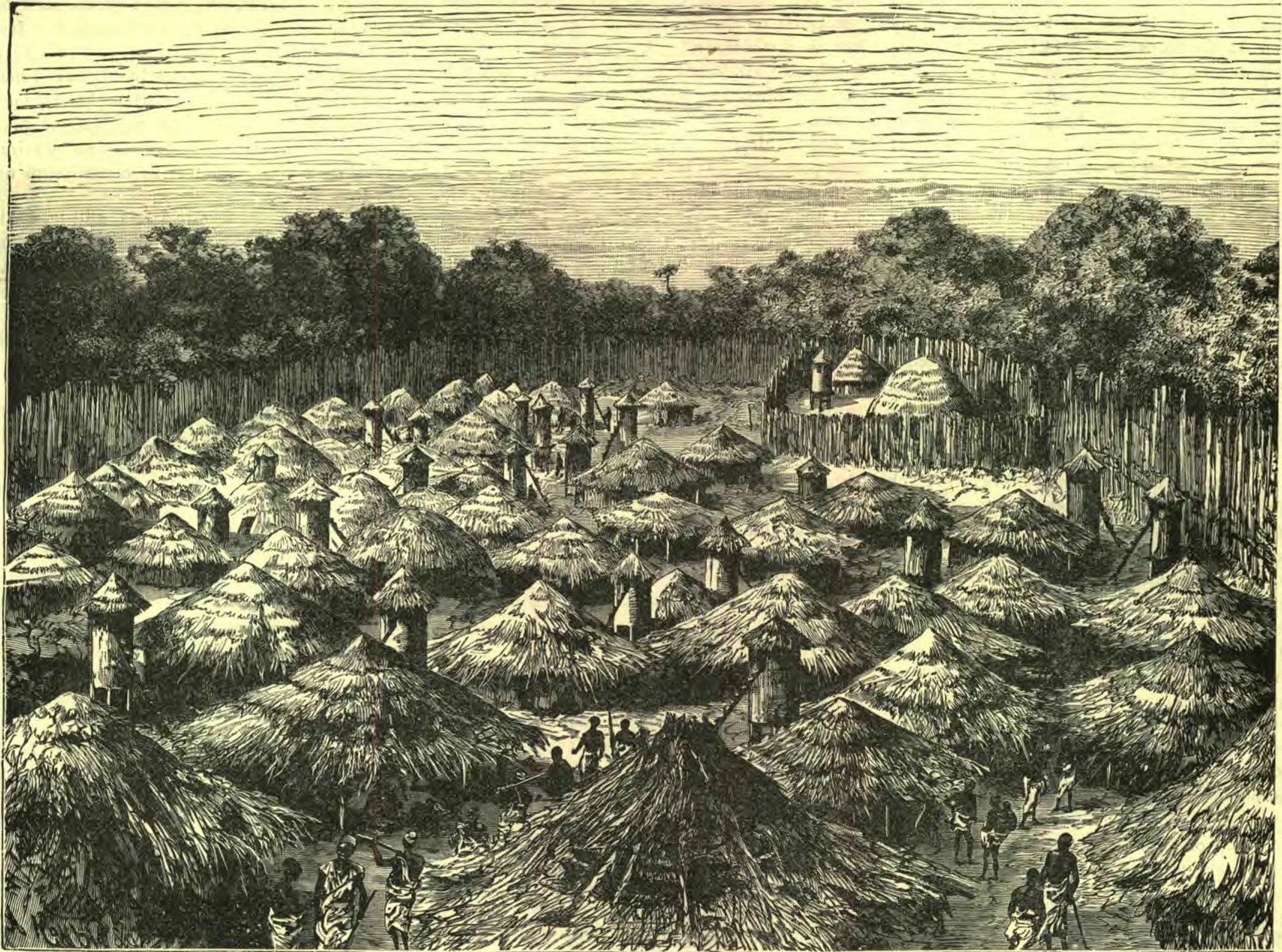
VILLAGE OF KIWANDA IN EQUATORIAL AFRICA.
The discovery of the southern extremity of the “dark continent” was made a few years prior to that of America by Columbus. According to Theal, to whom I am indebted for many of the following particulars, the Cape of Good Hope was first seen in 1486 by two Portuguese ships which had been driven far south by a storm.
Table Bay, on which is built Cape Town,—with its suburbs now containing about a hundred thousand inhabitants,—was first entered by a fleet commanded by Antonio de Saldanna, in 1503. The commander climbed to the top of Table Mountain, giving it the name which it still retains. In April, 1652, three vessels from Holland arrived in Table Bay with a small colony, that began to till the soil, which, so far as is known, had never brought forth food for man since the creation of the world. From this point the history of Europeans in the colony begins, and, in fact, the history of the country; for prior to this time the aborigines, who inhabited the land, kept no record.
In 1688 some Huguenots, driven from France by persecution, came from Holland to the colony, and from this time till near the close of the eighteenth century the colony was controlled by the Dutch East India Company. But at this time the company failed. The failure caused much distress, which was followed by petty rebellions. In June, 1795, an English fleet, with troops on board, arrived in Simon’s Bay, near Cape Town; and on September of the same year the government of the colony passed into the hands of the English.
About this time the London Missionary Society began sending its missionaries to the colony. The first station was established near Algoa Bay. In 1803 the Dutch once more took control of the country, this being one of the conditions of peace at the close of the war that had been raging in Europe. But England desired the Cape. The route to the Indies was at that time by way of the Cape of Good Hope, and that made South Africa a very desirable possession for the British; so in 1806 a fleet was dispatched to the cape, and as a result, the colony became once more a British possession, and has continued so ever since. The hostility felt by the Dutch on account of this seizure of the colony has not yet entirely ceased.
Various progressive steps were taken in the governing of the country, and in 1854 permission was received from the crown for the colony to elect a parliament. In 1872 some changes were made, and what is termed “responsible government” began. The present parliament is divided into two houses, called the Legislative Council and the House of Assembly. The Council consists of twenty-two members, who hold their seats for seven years, and is presided over by the chief justice of the colony. The Assembly is composed of seventy-six members, who hold their seats for five years. Before 1882 all members, when debating in Parliament, were compelled to speak in the English language; but this being considered a serious grievance by the Dutch citizens, this restriction was removed, and either tongue can now be used. The members of the parliament are elected by vote of the people, and each voter is required to be able to write his name, address, and occupation, and must be in receipt of a salary of fifty pounds a year, or occupy property valued at seventy-five pounds.
The De Beer diamond mines, famous through all the world for the amount of diamonds produced, are situated in the colony. It is said that so many diamonds are now on hand, that if they were thrown on the markets of the world, they would cease to be a valuable stone.
Another important division of South Africa is the colony of Natal. It was so named by Vasco da Gama, who was sailing past Africa on his way to India in command of a Portuguese fleet. To the land which was in sight on Christmas day, 1497, he gave the name of Natal. It was conquered by England in 1842, and since 1893 has possessed responsible government. The governor is appointed by the crown. The Legislative Council is composed of eleven members appointed by the governor, and the Assembly consists of thirty-seven members, elected by the people.
The South African Republic, which contains the celebrated gold-field of Johannesburg, is controlled by the Dutch. Its independence was first acknowledged by Great Britain in 1852, but since then was controlled by the English for a time. The president is elected for five years. The legislative power is vested in two chambers, called the Volkraad. Each chamber is composed of twenty-one members elected for four years. Paul Kruger has been president since 1882. Since the discovery of gold in 1886, the emigration to the country has been great, and Johannesburg is a very progressive city, almost as large as Cape Town.
The Orange Free State is also a Dutch government, with a system of government similar to that of the Transvaal. The country is quite prosperous, and contains a European population of upward of eighty thousand.
Railway lines extend over various portions of South Africa. The diamond fields at Kimberley are reached by train, as are also the gold-fields of Johannesburg, ten hundred and twenty-eight miles distant from Cape Town. The Transvaal is also reached by a line extending from Durban in Natal, and another from Delagoa Bay on the East coast.
The history of all civilized nations consists largely of a recital of their conquests for territory. Although a large portion of this globe has always been unsettled, nations have fought and drenched each other’s soil with blood, in order to acquire a portion of each other’s territory. The conquest for territory has made Africa the theater of much European warfare. The black man’s home, the burial ground of his ancestors, is taken from him, and a tax imposed upon him to maintain a civilized government. The “dark continent” is surrounded on all sides by the various kingdoms of the earth, and the dismemberment of the huge continent is taking place rapidly. The time once was when the Africans were taken from African soil; but at the present time, more attention seems to be devoted to taking the land from the African. One writer says: “The natives now have the land, and the white men have the Bibles; but soon the natives will have the Bibles, and the white men the land.” This is partly true. But the sad fact is that more rum is sold than Bibles. There are more saloons than missionary stations. Thousands die of intoxication where one is converted,—a sad commentary on the so-called “Christian” nations. Glorious achievements are made, however, by the gospel; but they are made in spite of all these hindering forces.
The efforts of the nations to establish protectorates and thus gain a foothold in Africa, has caused many native wars. The greed of human nature has inflicted upon the natives many wrongs. Goaded to desperation by the white man’s avarice, they have risen up and slain some of their tormentors. This is heralded through the earth as a “massacre.” They are then set upon by trained soldiers armed with Maxim guns, and multitudes of them are slain, and their land is taken to pay the expenses of the war. This is also published to the world,—not as a massacre, but as a “victory.” A “massacre” is when Europeans are killed by the natives; a “victory” is when the natives are slain by Europeans.
But in all this the Lord is working out his own purposes. It is the plan of him who has established the bounds of all nations (Acts 17: 26), that civilization should penetrate these dark regions of the earth, which Inspiration tells us are full of the “habitations of cruelty,” in order that the “gospel of peace” should go to every nation, kindred, tongue, and people, to gather out of them a people for his name. This is being done. The heralds of the cross are pushing their conquest into the very darkest portions of the continent. The proclamation of the Lord’s near coming is also being heard in all parts of the earth. From these dark portions of the globe the Lord is gathering out a few more to make up the final number required to people the earth, when all things shall be made new.
G. B. THOMPSON.

THE SURPRISE AT FELDKIRCH.

THERE is a little town called Feldkirch, on the frontier of Austria, on the Ill, an affluent of the Rhine. It numbers under three thousand inhabitants. In the year 1799, when the armies of Napoleon were sweeping over the continent, Massena, one of his generals, suddenly appeared on the heights above the town, at the head of eighteen thousand men. It was Easter day, and the morning sun, as it rose, glittered on the weapons of the French, at the top of the range of hills to the west of Feldkirch. The town council hastily assembled to consult what was to be done. Defense was impossible. Should a deputation be sent to Massena with the keys of the town, and an entreaty that he should treat the place with mercy? Then the old dean of the church stood up. “It is Easter day,” he said. “We have been reckoning on our own strength, and that fails. It is the day of the Lord’s resurrection. Let us ring the bells and have services, as usual, and leave the matter in God’s hands. We know only our weakness, and not the power of God.” His words prevailed. Then all at once, from the three or four church towers in Feldkirch, the bells began to clang joyous peals in honor of the resurrection, and the streets were filled with worshipers hastening to the house of God. The French heard with surprise and alarm the sudden clangor of joy-bells; and concluding that the Austrian army had arrived in the night to relieve the place, Massena suddenly broke up his camp, and before the bells had ceased ringing, not a Frenchman was to be seen.—Baring Gould.

The Cowrie

The cowrie (a shell) is used as a piece of money in India, and, as a curio, has been brought to this country by Bishop Thoburn and other missionaries. In India the value of the cowrie is one-hundredth part of a cent; in other words, it takes one hundred cowries to make a cent. This coin, it should be remarked, is agreed upon by the people; it is not recognized by the government. The coins accepted by the government are the pie, equal in value to one sixth of a cent, and the rupee, which is the highest in value, equal to twenty-six cents of our money. The use of the cowrie is a necessity, and for the convenience of the millions of people it is an article of exchange in all the cities, towns, and villages of north India. Brokers there are sitting cross-leg on the corner of the streets with a small sack of cowries, a smaller bag of coppers, and a few small silver pieces tied up in a rag. This very important individual is ready at any time, from early morning till late at night, to take your cowries and give you coppers, or take your silver or coppers and give you cowries, deducting a small amount as commission on each transaction.
The use of the cowrie in India, and its exhibition to an American audience, has greater significance than even can be described. The poverty of India has in the cowrie an interpreter to us more eloquent than human voice, and a plea for help more strong than any individual can express. A shell for a coin—a cowrie of the value of one-hundredth part of a cent! The rags, the nakedness, the specters of gaunt forms, flit before us! With the cowrie in service can the five-cent-a-day laborer only hope to get the pinch of salt or small amount of spices and pepper for the food of the day.
It would sound strange to say that most of the thousands of miles of railway have been built and their beds put in place by the use of the shell. It is a fact, nevertheless. The thousand of laborers—men, women, and children—so working, have been paid in these shells. It was contract work, of course; and each individual who brought his basket of earth and thus helped to raise the bed was paid one or two cowries, as the basket was large or small, or the distance it was brought long or short. A pathetic story could each cowrie tell. Not only have a few of these cowries supplied spices, salt, fuel, etc., but they have given a child a chance to buy an earthen image or a doll; not only in the quantity have they given severe toil its reward, but they have paid a neighbor’s child for an hour’s watching of the cattle or for running an errand for the decrepit.
The closing part of the history of each of the cowries brought to this country is perhaps as pathetic and touching as any. Each one came from the Sunday-school or church collection. “Such as I have give I thee.” Truly it might be said that it is “the widow’s mite.” Little tots with hardly more clothing upon their backs than a piece of cloth. Still they give! This is not self-support, but it is a hopeful sign of the coming self-support of the churches in India, for they are willing to give. —N. C. Advocate.

ENGLAND’S CONTENTION WITH VENEZUELA.

THE contention between Great Britain and Venezuela is evidently approaching a crisis. England has expressed a willingness to submit two points out of three in the dispute to arbitration, but the third,—the control of the Orinoco River,—she refuses to arbitrate. But this is the vital point, as the control of this great artery of commerce by England would give England practical command of Venezuela and of Colombia. There are few railways in those countries, and the river system, of which the Orinoco is the main channel, is the natural way by which the products of the interior must reach the coast, and this must be so for some time to come. The “Louisiana purchase,” which transferred the control of the Mississippi River from France to the United States, was one of the greatest acts of American statesmanship; but England controlling the Orinoco would place Venezuela in the same condition the United States would be in if a foreign power controlled the Mississippi, and we had few railways, and were depending on the river for our communication with the outside world.
It is now reported that England is very firm, and that an ultimatum will soon be sent to Venezuela. A military force will also be sent to the disputed territory. Naturally, Venezuela looks to this country for protection, and it is likely that it may be given. English papers hold that the “Monroe doctrine” is a myth, and that the United States will not interfere, no matter what England may do. It is not probable that England will gain possession of the disputed territory before the next session of the United States Congress, and then just what position the United States will take will be known. Not many years ago a French army of about twenty-five thousand men was withdrawn from Mexico at the demand of the United States; and while we would not say that France was frightened then, or that England would be, should the United States demand of her the withdrawal of her troops from Venezuelan soil, still the voice of Uncle Sam has great influence when he speaks in a decided tone, and it is very generally respected. We have no ill-will against England, but we wish she was not quite so ready to play the tyrant to the weak; but she is no more reprehensible in this respect than are many other nations.

STATEHOOD IN UTAH.

The progress of Utah toward statehood is again imperiled, and perhaps for a time defeated by a division which has arisen in the Mormon Church in that Territory. While the necessary legislation in Congress and in the territorial legislature to change the Territory into a State was in progress, the Mormon Church declared that it would allow the members of that church to be perfectly free to affiliate with whatever political party they might prefer, and as a matter of fact the Mormons are about equally divided between the Democratic and Republican parties. All seemed to go as merry as a marriage bell with the Mormons until the time came for nominations to the United States Congress; then a change came over the spirit of their dream.
The Democrats nominated Moses Thatcher for senator, and B. H. Roberts for representative. These men are Mormons,—Thatcher an apostle, and Roberts one of the presidents of the seventies. The Republicans nominated Heber W. Wills for senator, and a son of George Q. Cannon for representative. These men are also Mormons. The elder Cannon is a leading man in the Mormon Church, and is well known as a former representative of Utah Territory in the United States Congress. It would appear that he, in his paternal anxiety to assist his son on the road to Washington and fame, has been trying to bring the censure of the Mormon Church to bear upon the Democratic candidates, to the end that they may be defeated, and in doing this he has created such a furor that it is now somewhat doubtful whether any of these candidates will realize their hopes.
The trouble began in this way: At a meeting of the Mormon priesthood, Joseph F. Smith arose and said that it was a well-known regulation of the church that no man could stand for public office unless he first consulted the authorities of the church, and gained their permission. This was because the church might be contemplating sending such persons away upon some distant mission. J. Q. Cannon followed in the same strain. The following Sunday, Bishop Larson, at a large meeting of his teachers, referred to these statements made by Smith and Cannon, indorsed them, and, using language which could only be understood as applying to Thatcher and Roberts, the Democratic candidates, said, “You know how to vote.”
When the news of this got abroad, there was much excitement in Utah, and the Democrats, both Mormons and Gentiles, were greatly incensed. President Woodruff, head of the Mormon Church, declares that it is not the intention of the church to influence the votes of its members, and expresses regret at what took place; but it is held by many that the blunder has gone so far that the Mormon Church cannot now undo it. Unless the whole effort to dominate the elections is quickly and unmistakably discarded, the Democrats of the Territory will throw their whole weight against statehood, and in such an event the hopes of the people of Utah may be longer deferred. As all the candidates are Mormons, this action cannot be regarded as it would be if those against whom the church authority was directed were Gentiles. The whole affair probably arose from the very natural desire of Cannon for the election of his son. Be that as it may, it was very unpolitic, since many people still look with suspicion upon the profession of the Mormon Church of noninterference in politics. In this thing some of them showed neither the wisdom of the serpent nor the harmlessness of the dove.

CHAIN LETTER AGAIN.

The chain letter which was started for the benefit of a young lady in Kaneville, Ill., is still bringing her five hundred letters a day. For a time she received one hundred thousand a day. Then her mail dwindled down to a few scattering letters; but just as the postal officials were hoping that the nuisance was dead, it suddenly sprang into fresh life again. It seems that one end of the chain has got across, or under, the ocean, and many letters from England are now received by her. The young lady works assiduously to open her letters and to secure their contents, which are generally canceled postage-stamps, though occasionally small sums of money are found. A pile of letters the size of a haycock still remains unopened, and there seems to be no question but that she will be fully employed for several months more, at least.
It seems a little strange that some one does not translate the letters into foreign languages, and give them a more extended circulation! Not only the continent of Europe, but China, Japan, Afghanistan, and the Barbary States might be worked to good advantage. A letter might be sent into the country of the “Akhoond of Swat,” to the great delight of all the Swats and the benefit of the United States mails and the young lady at Kaneville. But these suggestions are probably useless; for, judging from what has already taken place, the chain letter is now on its way to all these countries, conquering and to conquer! P. T. Barnum said that the American people liked to be humbugged. In view of the success of the chain letter, who can dispute the statement of the great showman?

TOTAL SEPARATION.

THE Hon. J. Pierpont Morgan, chief of the syndicate now controlling the finances of the United States, and who is known to have made sixteen million dollars out of the people of this country by his late deal with the government, was, on October 21, attending the Protestant Episcopalian convention at Minneapolis as a lay delegate. While he was there attending to the duties of his religion, it was discovered that there is a plan on foot for a great combination of the trunk lines of railway from east to west, which is contrary to the interstate commerce law, and that this same J. P. Morgan is the chief man in this illegal conspiracy!
A New Hampshire senator has written an open letter to the president of the United States, setting forth what is being done, and of course everybody was at once deeply interested. A Minneapolis reporter thought that probably Mr. Morgan would like to speak for himself, and so he called upon him; but Mr. Morgan informed the reporter that he was in Minneapolis on church matters, and that he would have nothing to say on secular business while there! He evidently believes in total separation of religion and business, in point of time, at least!
He can beat the government and the people out of millions, and plan for an illegal combine to do it again; but that is business, and let not the inquisitive reporter attempt to interrupt his private devotion to inquire into any of these little matters! When his prayers have been said and his contribution to the church-extension fund duly paid and receipted, he will once again return to business, and, if possible, tighten his grip on the government and the people, by bonds with gold interest and with illegal railway schemes. Let the world wait, and not make too deep a scrutiny into such great men's business affairs. They must, at least, be given time to pray! Great is business, but greater is religion!

New United States Warships Maine and Brooklyn Launched

The United States has lately launched two new ships of war, the “Maine” and the “Brooklyn.” The first was launched September 17, the latter, October 2. Both of these ships are fully equal to any ship of their class afloat. A few years ago the United States had no navy of battle-ships, but now every year adds several strong ships to her now considerable fleet. This seems to indicate that this country has caught the spirit so prevalent in Europe, and is preparing for war. M. E. K.

THE MERCIFUL.

“Blessed are the merciful; for they shall obtain mercy.” Matt. 5:7. Mercy is the quality of treating an offender better than he deserves. Mercy is one of the attributes of God. In him mercy and justice are blended in harmonious working for the good of all the creatures he has made. There would not need to be any exercise, or manifestation, of mercy on the part of God to any of his creatures unless they sinned against him; but in such a case there would be an opportunity for a display of that attribute of the character of God. Hence the relation of God to those who never sinned,—to the angels who kept their first estate,—is not a relation of mercy. To them he is a God of justice and love, but not a God of love and mercy. This being the case, repenting sinners have one experience,—the pardon of their sins, and the great joy there is in it,—that even the angels cannot know; and they realize in their own experience a knowledge of one of the divine attributes,—that of mercy,—that none but sinners can ever know.
Before man had sinned, his relation to God was the same as that of the angels. Do this, and thou shalt live, was the rule for all. His creation and endowment with life and intelligence evinced the love of God, and the justice of God would be a full protection to him as long as he obeyed the Lord. But when man sinned, another of God’s attributes must be exercised, or the life of man must cease. Man’s sin gave being to mercy, which lifts man from his lowly, fallen state, and reinstates him in favor with God.
But so perfectly are the attributes of justice and mercy equalized in the character of God, that, in order to show mercy to man, the stroke of justice due man for his sin could not be allowed to remain unfallen, but it was diverted upon the Son of God himself. A sinless one, whose life was of more worth than all mankind, received the stroke, that we might go free. Thus the justice, love, and mercy of God are all blended together in the plan of salvation. It is only by Jesus Christ’s bearing the sins of the world in his own body on the tree, that mercy is offered to sinful men. The cross of Christ is a monument of the mercy of God. By virtue of Christ’s sacrificial death and the work of atonement performed by him in the heavenly sanctuary, mercy is freely offered to us. God is merciful; he treats us better than we deserve. He has declared himself to be, “The Lord, The Lord God, merciful and gracious, long-suffering, and abundant in goodness and truth.” This is manifest in all his dealings with the race of man; it stands forth as a beacon-light of hope to sinful men. “For he is good; for his mercy endureth forever.”
It will probably not be doubted that God is merciful, but the text at the head of this article refers to mercy bestowed by those who themselves need mercy, upon others who are also in need of the same. “Blessed are the merciful; for they shall obtain mercy.” That God is so merciful to man is a sufficient reason why man should be merciful to man. Indeed, he must be merciful to be godlike. This great truth is illustrated by Christ in the story of the two creditors. Matthew 18. A servant was found owing his lord ten thousand talents. He had nothing to pay, but his lord mercifully forgave him the whole debt. This part of the story represents the great mercy of God to us who believe, in the forgiveness of our sins. But that forgiven debtor went out, and soon found a fellow servant who owed him the trifling sum of one hundred pence. Forgetting that he had been forgiven a debt of ten thousand talents, he took his brother servant by the throat, and demanded his pay. Deaf to his entreaties for mercy, the fellow servant was thrust into prison! The lord of the servant, learning of this transaction, called his hard-hearted servant, and addressed him thus: “O thou wicked servant, I forgave thee all that debt, because thou desiredst me; shouldest not thou also have had compassion on thy fellow servant, even as I had pity on thee? And his lord was wroth, and delivered him to the tormenters, till he should pay all that was due unto him.” Then the Lord added these impressive words: “So likewise shall my heavenly Father do also unto you, if ye from your hearts forgive not every one his brother their trespasses.”
The last part of this story illustrates the case of one who has been forgiven all his sins by his kind heavenly Father, but who refuses to forgive his brethren of trifling offenses, often only imaginary, against himself. Such persons need not expect forgiveness; and if one has really tested the sweets of sins forgiven, he will not desire to withhold forgiveness to another. To forgive others of their trespasses against us is one of the requisites to a condition where God will hear us pray. Then we can say, “And forgive us our sins; for we also forgive every one that is indebted to us.” Luke 11:4.
But it is not only in matters relating to ourselves that we should be merciful, but in every other way possible. We should regard all persons as the purchase of the blood of Christ, and should treat them as Christ would treat them were he in our place. Christians are Christ’s representatives. The world can only see Christ as he is manifested in his followers. Those who have taken the steps outlined in Matt. 3:3-6 will be ready, yes, glad, to deal mercifully with those who have trespassed against them, and to do acts of the purest benevolence to all within their reach. And they will be happy, and they will obtain mercy of the Lord.
M. E. K.

THE BRAHMAN AND THE MICROSCOPE.

A MISSIONARY in India received a very powerful microscope from a friend, which he exhibited to a Brahman. To show him its use, he had him examine a drop of stagnant water through it. When the Brahman beheld the myriads of creeping things in it, a world of swarming life, and was told that he had both drunk such water and was in the habit of drinking it, he became most uneasy in his mind. After a short time he came to the missionary, and offered him an immense sum for the microscope, which was accepted by the missionary. As soon as the Brahman had obtained possession of it, he cast it on the stones at his feet, and dashed it to pieces. Amazed and grieved that the beautiful instrument should receive such treatment, the missionary asked for the cause of this strange action. The only reason that was given, was that the sight of water with those unsightly objects had so harassed him that he could neither eat, drink, nor sleep, for thinking of it.
He did not stop to think that the water remained the same after the microscope was destroyed as before. So it is often the case with those who are shown their sins by the Scriptures. They wreak their vengeance upon the Bible, thinking to be rid of the sins which by it have been revealed to them.
J. H. D.

DETERMINATION

There is much truth in the old saying, “Where there is a will, there is a way.” Many men and women who have made a failure in life, and attributed their failure to those who did not assist them as they should, might have made a success had they been determined to do so. Had they looked upon the world as large enough for themselves and others, too, and had a will to meet the obstacles before them, the way would have opened, and they would have accomplished their desires.
How often we hear young people express a desire to obtain an education. They say they desire to go to school, but have no money to pay their tuition, etc. At the same time they are complaining of their sad lot, others who have no better advantages are working their way through school. They do not wait for the way to open, but they are determined to open the way.
Many of the men who have attained to greatness started in poverty, but by a determined effort they not only improved their own minds, but became benefactors to the world.
It is said that Robert Burns was a poor boy. He was the oldest son of a family of seven children. His father was a bankrupt, and unable to supply his children with more than the bare necessities of life; yet by determined efforts he rose to fill a useful place in the world.
Garfield was a boy of all work, too poor even to have a trade. Grant spent his earlier years in connection with a tannery. Lincoln was a common farm-hand. All of these by perseverance made their mark in the world, and are to-day regarded as the great men of their age. Had they given up when obstacles were in their way, they would have failed to fill the places they occupied, and would have lived in poverty and discouragement. But they were determined to win, and they succeeded.
What they did may be done to-day by the same determined effort. Then none should be discouraged, but spend the time in hard, earnest work, and success will surely follow.
J. H. D.

Christ Came in the Likeness of Sinful Flesh

JESUS CHRIST came into the world to save sinners. That he might do this, he came in “the likeness of sinful flesh.” In other words he became a man, that he, the Son of God, might die for man. Yet it was the death of the divine that made the sacrifice of sufficient value to meet the demands of the law. Christ’s taking upon him the “likeness of sinful flesh” was not the bearing of our sins. Had it been, he need not have died. He took our likeness that he might bear our sins; and this he did upon Calvary. “Who his own self bare our sins in his own body on the tree, that we, being dead to sins, should live unto righteousness.” “For verily he taketh not hold of angels; but of the seed of Abraham he taketh hold.” Heb. 2:16 (margin). He became a man that he might take hold of men and save them. Let us be glad that Christ came in the “likeness of sinful flesh;” that he bore our sins at Calvary; and that in him there is healing for all mankind. M. E. K.

LESSON 9.—FORCE NOT A GOSPEL MEANS OF LABOR.

(November 30, 1895.)

THE WORK OF THE SPIRIT.

1. How is the work of God in saving men carried on in the earth? Zech. 4: 6.
2. What kind of worshipers does the Lord seek? John 4: 23, 24.
3. Who worship God in Spirit and in truth? Rom. 8: 14, 15.
4. Of what is faith the fruit? Gal. 5: 22.
5. How are men’s hearts purified? Acts 15: 8, 9.
6. How does Christ dwell in the heart? Eph. 3: 17.
7. Can faith be forced, or is it a voluntary act? (See note .)
8. Does God ever attempt to force men to believe? John 12: 47.
9. What course does he pursue with every soul in securing his place in the heart? Rev. 3: 20. (See note .)

THE GOSPEL WORK.

10. What commission did Christ give to his followers? Mark 16: 15, 16.
11. What expressions indicate proper methods of gospel work?—“I entreat thee” (Phil. 4: 3); “We persuade men” (2 Cor. 5: 11); “We pray you” (verse 20); “I beseech you” (Rom. 12: 1); “Whosoever will, let him take the water of life freely.” Rev. 22: 17.
12. What instruction have we as to the proper method of labor for the erring? 2 Tim. 2: 24–26.
13. In seeking to convert men, how does God appeal to them? Isa. 1: 18; 2 Cor. 5: 20. (See “Steps to Christ,” page 43.)

THE CHRISTIAN WARFARE.

14. In what are we, as Christians, engaged? 1 Tim. 1: 18.
15. What is the nature of this warfare? 2 Cor. 10: 3; Eph. 6: 11, 12.
16. What power is to be used? Eph. 6: 10.
17. What does Paul say about the weapons to be employed? 2 Cor. 10: 4.
18. What is the only sword he mentions in enumerating the “whole armor of God”? Eph. 6: 13–17.
19. What is said of its power? Heb. 4: 12.

FORCE NOT TO BE USED.

20. What reason did Christ give for his servants not fighting in his behalf? John 18: 36.
21. When Peter attempted to defend his Master with a sword, what did Christ say to him? Matt. 26: 52.
22. When two of Christ’s disciples desired to visit punishment upon certain Samaritans who “did not receive him,” how did he rebuke them? Luke 9: 51–56.
23. To whom does vengeance belong? Rom. 12: 19.
24. What course does Jesus forbid among his disciples? Luke 22: 25, 26.

NOTES.

Continue reading: BOOKS OF THE BIBLE