The Youth’s Instructor, Vol. 51, No. 2.

THE STORY OF OUR MATABELE MISSION

The Youth’s Instructor

Jan 22, 1903

Review and Herald Publishing Company · Battle Creek, Michigan · Jan 22, 1903

THE STORY OF OUR MATABELE MISSION

The Outlook Brightening
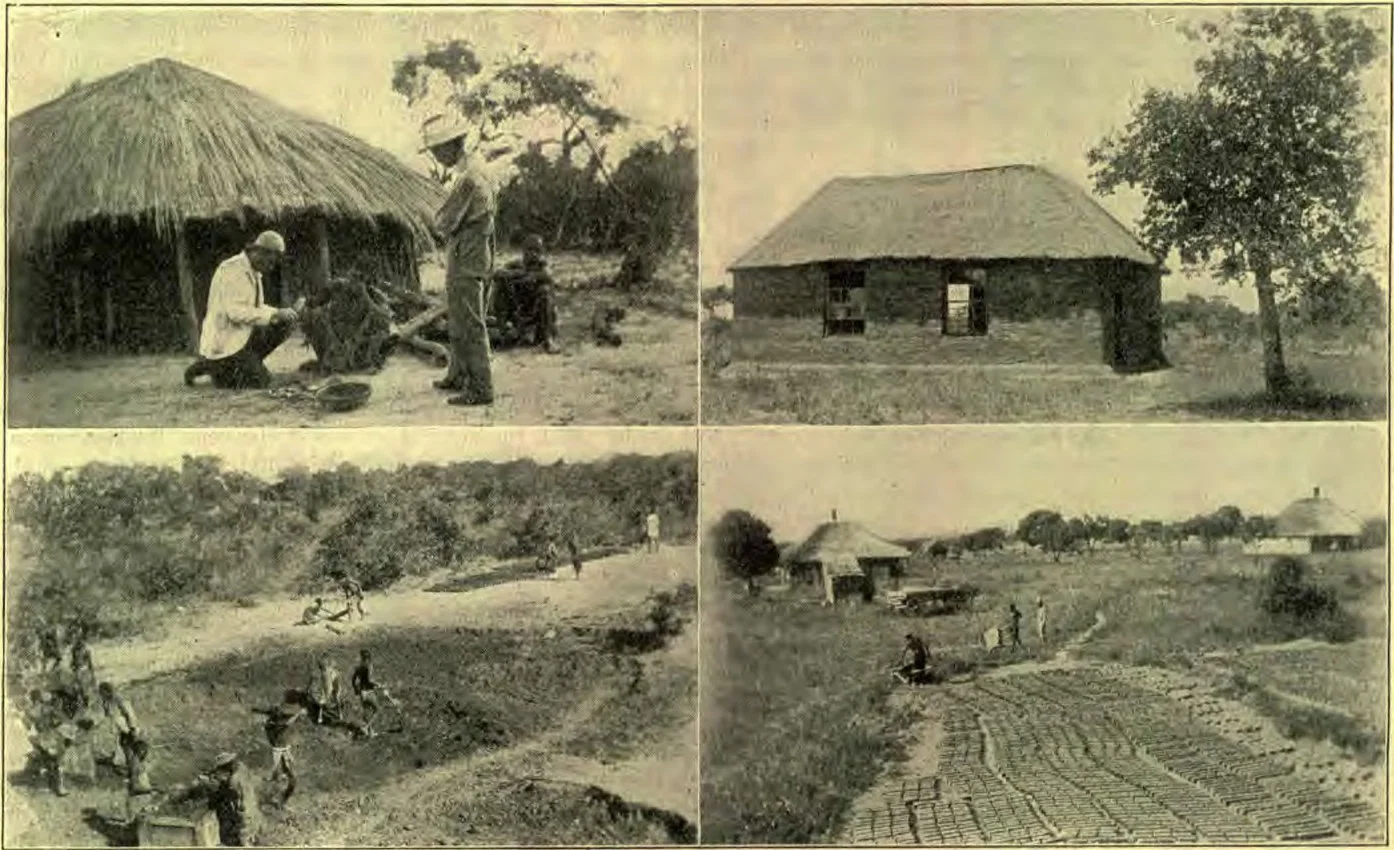
The inroads which death had made in the ranks of our missionaries reduced the working force to such a small number that reinforcements were now imperative. For months Elder Tripp had called for help; and it seemed that, if help could have been provided, his life might have been prolonged. But He who doeth all things well, gave our brother rest. For some time he had longed to step aside and rest a while, and the loving Father permitted him to enter into that rest from which no one ever returns to take up life’s duties again. While he sleeps, his work continues. His mute appeal now urged that the work so hastily laid down should be gathered up and carried forward by a larger corps of helpers.
To find the missionaries needed for this destitute field was no small task. Eight months passed before the company was selected. These intervening months were trying ones for the little company left behind. Work crowded in on every hand, but they were powerless to do all that was demanded of them. Brother Anderson was the only one of our missionaries who had not been compelled by the fever to flee for his life. For three years and a half he had stood faithfully at his post, picking up the work dropped by those who succumbed to the disease, often bearing burdens far beyond his human strength. But the Lord sustained him during these days with power from on high.
In June, 1898, the missionaries who had recovered from the fever had all returned to the farm, and work was resumed. The company was now composed of Brother and Sister Anderson, Elder Armitage and his little daughter, and Sister Tripp. Outside of building an orphanage for the children early in October, very little aggressive work was undertaken. With looking after the mission station, doing the manual labor connected with it, and caring for the thirty orphans that had been gathered in, the hands of the workers were more than full. They had to turn a deaf ear to more than one call, sometimes seeing the posts they had hoped to occupy, but were unable to enter because of the dearth of laborers, occupied by others.
DR. GREEN TREATING NATIVE BITTEN BY A SNAKE, THE NEW CHURCH, AND SCENES IN THE BRICKYARD
While these heart-rending experiences were the portion of our brethren over there, in the States the Mission Board was busy seeking those whom God had called to take up this work, to go to the relief of the overworked missionaries. On November 30, 1898, a party of eleven set sail from New York on the steamship “St. Paul,” bound for Matabeleland. The late Elder F. L. Mead, so well known throughout the States, with his family, made up a part of the company. Brother A. J. Chaney, now connected with the Natal-Transvaal Conference, was another member. Brother Chaney had been engaged for a number of years in mission work in Hausaland, and was ready to adapt the experience gained there to the needs of our little mission. Among the other members of the party were a doctor and his wife, a nurse, a teacher, and canvassers.
For various reasons the party were detained in South Africa several weeks, not reaching the mission farm until early in April. Of their arrival Brother Anderson wrote: —
“I can not describe the joy that filled our hearts when we reached the depot on the eve of April 4, 1899, and found so large a company to take up the work with us. I do not think I would have been more joyful if I had met my own father than I was to meet Elder Mead.”
All found plenty of work awaiting them. For a long time the brethren had been anxious to open some out-stations, and had promised the natives that they should soon have teachers. News of the arrival of so large a party soon spread, and the natives began to come in, inquiring when their teacher would be ready.
Very little time was lost in preparation. Just twenty days after they reached the mission farm, two out-stations were opened. The outfit for each station was not extensive, but the demand from these places could not longer be unheeded. Elder Armitage took one team with a small stock of goods for trading, and, accompanied by Brother Chaney and Brother and Sister Lloyd, went twenty-five miles north, to Kupavula, a point on the Burton farm. Here he pitched a tent, repaired two huts, and declared the station open. Elder Mead and Brother Anderson, with some trading goods, went six miles south, to Inwhabena, on the mission farm, and pitched a tent. The stations were open only a short time before the brethren had many evidences that the plan had been a wise one, suggested by the Lord.
At Kupavula especially the efforts of the missionaries were blessed in a marvelous manner. A number of young men came into the school that was opened, until the enrolment reached thirty. Brother Anderson thus describes some interesting experiences with them:—
“Several weeks ago I presented the tithing system from God’s word. Immediately after the meeting two of the young men who are in our school came and handed me a tithe of all the money in their possession. Since then more has come in. They do not get much money, as they are paid no wages; but I believe that none of the Lord’s tenth will be kept back by them. When God’s word on any subject is plainly presented, they live out the light received.
“Sabbath forenoon there was a rather cold wind blowing, and the young men and children were gathered on a sand pile in the sun, not far away. I thought I would go out and hear what they were talking about. I found the oldest of the group (he had read more in the Bible than the others) telling the others, from memory, the Bible account of the doings of Elijah and Elisha, the story of Daniel and his three companions, the feast of Belshazzar, etc. He brought in all the little details, and his recollection of the Bible account quite surprised me, as he had read these things but a few times. He is the young man who walked about one hundred miles to purchase a Zulu Bible. This book is his chief treasure and constant companion. We hope God will make of him a strong worker among his own people.
“Our Friday evening service is a testimony meeting, and every one of the children and young men take part, allowing no time to be unoccupied. If any have committed a wrong against another, this is a time of confessing and straightening things up.”
In September, 1899, a heavy loss was sustained at the mission by fire. The house occupied by Brother Anderson’s family and Dr. Green and his wife caught fire from the chimney flue, and in a very few minutes the whole structure was in flames, the thatched roof burning like tinder. Practically everything was lost—and this means far more in the heart of Africa, where one can not step into the stores and get whatever he wants, than it does even in the most pioneer region in America.
But the close of that year brought most encouraging reports from our mission. The seed so faithfully sown during all these trying years had taken root, and careful nourishment and training were now bringing it to successful fruitage. As a result of the work among the kraals and at the home station, seven young persons were converted, and these were not passive Christians, drinking in the precious truths of God’s word and holding them selfishly, but every one was a missionary, manifesting a zeal and earnestness worthy of imitation.
At Kupavula the Lord blessed with six converts, and these, too, began immediately with energy and faithfulness to prepare for service. The missionaries who had been there longest wrote that the year just closed was the best ever experienced. And this good work continued.
Estella Houser.

Our Common Speech

Our thoughts and fancies we can not always control, but our words are in our own power, for we may speak or be silent. And so let us talk about talking.
Have you ever found much interest in the dictionary? I do not know a more fascinating book than the unabridged lexicon, with its thousands of words, each of which has a history of its own. Our English language is like a mighty river, which has been fed by streams rising away back in the dimness of antiquity. We use in our common, every-day talk, words which came to us from old Rome, from Greece, from the wars and forays of Europe when it was a moving camp and the battleground of fierce and savage fighting tribes. Some words are very picturesque, some are aristocratic, others are plebeian and coarse. Our brief, terse words are mostly from the Anglo-Saxon, our longer and more stately ones spring from the Latin. Those of us who use beautiful words in our ordinary speech have been accustomed to read good books, and to talk with well-educated people. The more we read good books, the better language we shall command. Little is gained by confining our reading to the daily newspaper, though we must never neglect that source of information as to what the world is doing, and the history that is now making. Besides the daily paper, he who would speak in fitting phrases and agreeably, must devote some regular time every day to good reading.
I take it for granted that you have all studied grammar, and therefore know better than to say “ain’t,” or “hadn’t ought,” or to use a double negative. But do you drop your final “g,” and say “good-evenin’,” and “good-mornin’”? Do you slur over the pronoun “you,” and say “don’t chew,” instead of “don’t you”? Do you snip off the final end of your sentence, or make your “r” so prominent that it is like a prickly burr whenever one hears it—a fault quite as bad as its opposite, which treats the letter “r” like a poor relation, of whom one is ashamed, and omits it altogether? “Nevah” for “never” is as unjustifiable as the extreme which brings the r’s into conversation like the jolting logs in a corduroy road.
Speech should fall from our lips clean-cut and rounded, like shining golden coins from the mint. But we must not be pedantic. Tiresome beyond bearing are those who take so much pains to think of the right word that one may count two or three while they are hesitating. The desire to supply such slow talkers with a word becomes almost irresistible, and good manners forbid our doing this. We must wait in silence till the person with whom we are talking finishes his sentence.
Exaggeration is another very common fault among young people. Some of us fall into a habit of saying that the most commonplace things are “awful,”—a warm day, a bee sting, a mosquito bite, a rainy spell, a slight mishap, are “awful,” and the smallest accidents are “terrible” and “dreadful.” What have we left if we are thus lavish in the use of strong words, when we do not need them, for the great occasions when we do? Shipwrecks, cyclones, cloud-bursts, and freshets are awful in their horror and terrible in their results, but these are exceptional events in our lives, not the incidents of our usual days.
I must call your attention to a very common blemish in our speech, and one that borders closely on profanity; namely, the habit of exclaiming vehemently when we are surprised or vexed. “Great Heavens!” “Heavens and earth!” “Good land o’ living!” “Mercy me!” are expressions which people use quite as if some of them were not direct calls upon the Almighty, certainly not to be taken lightly upon heedless tongues.
Slang creeps into our talk through imitation. A young man who drops into slang to save himself the trouble of using clear and forcible English is certainly lazy. The third commandment so explicitly forbids our taking the name of God in vain that they who do so can have no shadow of an excuse. Our speech, like everything else about us, is dominated by habit, which, indeed, binds us in iron chains. When first, in anger or excitement, a boy nurtured in a Christian home uses an oath, he is ashamed through and through; he blushes hotly at the memory; the words seem to have blistered his lips. But, repeated, the oath ceases to shock, and the man or boy who forms a habit of swearing often swears unconsciously. The profane person has not a refuge into which to creep. He dishonors God, and insults man.
One of the most delightful persons I have ever known had a way of committing to memory every day some bit of noble verse or quotation from significant prose. From essays and histories he had culled favorite passages, and copied them into a commonplace book, and by this exercise, carried on in the intervals of a very absorbing and busy life, he had so enlarged and enriched his mind and his knowledge of words that gradually he grew to express himself in such choice language that to hear him converse was a delight. What one has done, others may do, if only they consider it worth while to try.—Young People’s Weekly.

II — The Etiquette of Words

It is a noble trait of character to stand firmly for truth, even though you stand alone. It is noble to be governed by conscience and duty, regardless of custom or tradition. But with words it is our privilege, and our imperative duty, to be governed by fashion, custom, tradition, to be led by majorities, and use a word only in the sense that the majorities use it. In fact, grammars are but codes of fashion, the etiquette of words; and dictionaries are but fashion-plates,—mere catalogues of the present and past fashions of words.
Words, like people, have a more or less complicated code of etiquette; and any language dignified by being regarded as civilized, has these rules bound up in book form, and called a “grammar.” In the democratic, English-speaking countries, words have cast aside many of their prejudices, have broken away from many of their traditions, and narrow, clannish ways, and, like the people they serve, take pride in doing as they please.
It seems to us liberty-loving people like the height of folly to see words behaving in the ridiculous way they do in many of the reputable languages of Europe. For instance, every noun has four or five different dress-suits, and is compelled by the unreasonable whims of etiquette to change his clothes every time he changes his office in a sentence. This causes me all sorts of trouble; for when I have learned to recognize Mr. Deusche in his nominative dress-suit, I can hardly single him out when he wears his dative suit.
Now, my young friends, are you prone to think the English noun puzzling? You ought to be proud of him, since he has the good sense to wear the same suit of clothes whatever office he fills, and merely puts a plume in his cap when he does duty in the possessive case.
Again to illustrate: The words of our European neighbors have such an extreme sense of propriety that a feminine adjective never thinks of walking with a masculine noun; and so we of the English-speaking world smile to see crowds of masculine, feminine, and neuter nouns marching along, each accompanied by an adjective of its respective sex. And here again I am annoyed when I attempt to speak Italian; for it is perplexing beyond measure to get my noun picked out, dressed in its appropriate suit, and then find an adjective of the same sex to qualify it. But if I do not comply with the rules laid down in the grammar, the people jeer me, and the words are justly indignant. So I feel thankful for the privilege of speaking a language where nouns wear the same clothes all the time, and the same adjective feels free to walk with a masculine, feminine, or neuter noun, and can look the world in the face with the consciousness of having done nothing improper.
But the height of the ridiculous is reached when the word-etiquette of our foreign neighbor decrees that a verb must have at least a hundred different styles of dress in order to discharge with propriety her duties in the various moods, tenses, and persons. But the verb in our own beautiful tongue draws the line at four costumes, and employs a few servants to help her with the several moods, tenses, and persons.
Yet everywhere we meet people who, in spite of the simplicity of our tongue, and the good sense and good taste it shows, continually violate the few social rules it has, by dragging together singular verbs and plural subjects, by making a verb wear its past-tense dress when it should be wearing its past participial, by making an adjective do the unheard-of thing of modifying a verb, and by insulting the already overworked “you” in putting it immediately in front of “was,”—all of which things occasion inaccuracy of expression as well as discord among the words and in any ear of culture that listens. L. T. Curtis.

The North Window

I had a dull north window To sit and work beside; No ray of sunlight pierced it From dawn to eventide, And I, who loved the shimmer Of fragrant bud and bloom, Could coax no cheery blossom To light my window’s gloom.
I had a life before me, That stretched all cold and gray; My youth’s gay bud of promise, Unoped, had died away; Joy’s flowers forsook my pathway, I missed love’s rose and leaf, My days held one sad color, The monochrome of grief.
One paused to hear my plaining, And smiled all tenderly; “O, blind and foolish, missing So much of good,” said he, “For countless plants of beauty Crave shade, not sunshine bright, And lives, denied earth’s blisses, Are readiest for God’s light.”
I filled my dull north window With palm and fern and vine; It grew a bower of beauty, This barren noon of mine; Beneath the tumbling ivy And wealth of waving plume, I dared to set a calla, Just rising into bloom.
I filled my life with loving, Since love had passed me by, I thought of self no longer, And learned to look on high; Lo! one day in my window A glorious lily bent, And in my soul unfolded God’s white flower of content.
— Carolyn Wade Greene.

“He That Gathereth Not with Me Scattereth Abroad”

The gospel of Christ has little to fear from its open enemies. Its most dangerous foes are its pretended friends,—unconsecrated Christians, who profess to be serving Christ, while in their lives they deny him. Such drive many away from the Saviour.
Christ declares, “He that is not with me is against me; and he that gathereth not with me scattereth abroad.” A man is either a Christian or a sinner, an honor or a dishonor to his Redeemer. The Saviour says again, “Ye are the salt of the earth: but if the salt have lost his savor, wherewith shall it be salted? it is henceforth good for nothing, but to be cast out, and to be trodden under foot of men.” As salt that has lost its saving properties is of no value as a preservative, so Christians who have lost their Christlikeness can not exert a saving influence upon those with whom they come in contact day after day.
To be converted means just what it says. It means that selfishness is cast away, and that its place in the heart is filled with the love of Christ. Old things have passed away; all things have become new.
He who is a friend of Christ studies his word, and brings its principles into the daily life, making every thought, word, and deed subject to the control of the Holy Spirit. He realizes that his talents were lent to him to be used in unselfish service, and that every gift not thus employed is wasted.
The Christian life is a life rescued, a life taken from sin and given to Christ, a life consecrated to doing the will of God. Such a life is filled with love for God and man.
When we submit to God’s way, the Lord Jesus guides our minds and fills our lips with assurance. We may be strong in the Lord and in the power of his might. Receiving Christ, we are clothed with power. No unrighteousness is seen in the life. We are able to speak words in season to those who know not the Saviour. Christ’s presence in the heart is a vitalizing power, strengthening the whole being.
“Thou wilt keep him in perfect peace, whose mind is stayed on thee: because he trusteth in thee. Trust ye in the Lord forever; for in the Lord Jehovah is everlasting strength.”
Mrs. E. G. White.

Wholly Thine?

One warm, sunshiny Sabbath afternoon in late autumn, as I sat by an open window, deeply engrossed in thought, I was aroused from my reverie by strains of music coming from over the way. Sweet young voices were blended together in the words of the familiar hymn,—
“I would be, dear Saviour, wholly thine; Teach me how, teach me how.”
As the singing proceeded, all at once it was broken off, and a merry peal of laughter rang out on the quiet air. Then, after a moment’s pause, the strain was resumed where it was interrupted,—
“Wholly thine, wholly thine, Wholly thine, this is my vow; Wholly thine, wholly thine, Wholly thine, O Lord,”—
again another peal of laughter.
The hymn was finally finished. Others were sung, with frequent interruptions of laughter and gay conversation.
Ah! I thought, can the singers be thinking of what they are singing? Do the sentiments of the hymn speak the language of their hearts? Is that dear Name, at the mention of which “every knee should bow, . . . and every tongue should confess that Jesus Christ is Lord,” taken with reverence and adoration upon their lips?
In the courts above, angels were looking down upon that little company on earth where mirth prevailed, where His name was lightly spoken by human lips. Could they with rapture re-echo the song, or mingle the melody of heaven with the mockery of earth?
While men below were remembering the rest of the holy Sabbath, angelic hosts assembled before the throne on high. Among that numberless throng were worshipers who “rest not day and night” in ascribing praise to the King of kings. At the mention of his name others of the angel worshipers “cast their crowns before the throne, saying, Thou art worthy, O Lord, to receive glory and honor and power.”
Would to God that the buoyancy and enthusiasm of youth might be blended with devotion in the service of the Master! Often we find ourselves in the company of those who have not taken the name of Christ, or who have taken it in vain, and we forget that we “were not redeemed with corruptible things as silver and gold, from your vain behavior, . . . but with the precious blood of Christ.” Could we but realize that every moment our influence either gathers with Christ or scatters abroad, we would fervently pray, “Set a watch, O Lord, before my mouth; keep the door of my lips.”
Many times have I heard the words of inspiration or the sentiments of a sacred song used as a joke, or in a light, careless way. Even the suppressed laugh gives evidence that we countenance the “smartness” of the speaker.
How little we realize that for “every idle word that men shall speak, they shall give account thereof in the day of judgment”! With a true sense of the fact that by our words we shall be condemned or justified, we shall carefully guard the unruly member. “If any man offend not in word, the same is a perfect man, and able also to bridle the whole body.” C. A. H.

“Would He Ever Let Me Go?”

We had been waiting at the station for a long time, little Ruth and I. As we paced up and down the platform, the child prattled of one thing and another. I answered her absent-mindedly, for my heart was troubled. The inefficiency of my Christian life was the burden on my soul. I didn’t love God as I should—that, I had decided, was why I was making such a dismal failure. What could I do to make myself love him more? If I was conscious of such a coldness toward him, how could I expect to keep my life right in his sight? How could I save myself, even leaving out all thought of helping others to build on the sure foundation? Where was the remedy? Over and over, bitter, heart-searching questions surged through my soul.
Snatches of the child’s talk came to me as we paced back and forth that weary hour; she toying with my hand, and trying to weave her baby fingers in and out among mine.
“See, auntie,” she said, “I can’t get hold of only two of your fingers to hold real tight. It pulls away when I take them all. Guess I’ll always just hold on by two.”
And I was dimply conscious of her amusing herself by trying to decide which two fingers were the best to take hold of.
Owing to an accident farther along the road, our car was crowded when it came, and in the first few moments it seemed as if we should be swept off our feet. I heard little Ruth cry out, “Hold on to me tight, auntie!” as she felt the rush, and you may be sure I did hold her tight with both hands, my great fear being that she would be torn away from me. At last, when we were seated safely in the car, she nestled up to me in a confiding way.
“It’s a lucky thing, auntie, you kept tight hold of me. I held hard as I could with two fingers; but if you hadn’t held on to me tight, I guess I’d have been pulled right away. I’m glad you’ve got such strong hands.”
“Out of the mouth of babes!” Here was my answer. I was trying to depend on the tiny clasp of my hand on God’s, forgetting the strong clasp of his on mine. Would he ever let me go, any more than I would have let my baby go? It was not my love toward him that could keep me, but his boundless love toward me. And now, when storm and stress come, my heart sends up little Ruth’s prayer: “Hold on to me tight.”—Evelyn L. Taylor.

Almost: A Railway Platform Disappointment in London

Almost

It was in England's metropolitan railway station, about eight o'clock on the morning when President McKinley was shot. The long train of second-cabin and steerage passengers was pulling out for the port of Southampton. Such a sight! What hand-shaking, waving of handkerchiefs, and shouts of farewell! But look! A young man running along the platform, his face flushed with heat and excitement, his brow damp with perspiration! He reaches the conductor's car, and leaps on the side step, only to be pushed back to the platform by the strong hand of that officer. A crowd gathers about him. He is almost hysterical. He wrings his hands, and moans in a foreign language. Poor fellow! he is homeless, friendless, alone, in the great city of London.
Stepping up to him, the writer spoke words of cheer. “Not too late, friend. You're all right. Another train in two hours.” His face lighted up with a smile, and he exchanged his ticket for a second-class one. The baggage was marked, and soon the call was made, “All aboard for Southampton!” We prepared to enter the train. An official of the steamship company inspected our tickets, and my new acquaintance was turned back. What, defeated again? Said the officer: “Too late. Were I to permit you to ride on this train, they would not let you board the steamer. You're too late as a steerage passenger. You must make other arrangements.”
Such a disappointment! A note to a benevolent society and a gift of a little money, the signal given, the train moves, and the last the writer saw of him, he was standing like a bewildered statue on the platform of that London station. He was only a few minutes late,— but just enough to be left. Almost will not do. To be almost is to be left. Many, like this young man, have been near the kingdom, yet, like the foolish virgins, left out. Many boys and girls have been almost saved, yet, like Felix, have put it off till too late. Almost a Christian is like Micah, who thought himself religious because he had a priest in his house. Almost a Christian is like the Ephraimites, who could not pronounce Shibboleth, but Sibboleth. Almost a Christian is like Ananias, who brought part, and left part behind. Almost, dear young people, is to be lost forever.
“Almost” can not avail; “Almost” is but to fail! Sad, sad, that bitter wail— “Almost—but lost!”
William P. Pearce.

The Young People Are Helping

When the Young People's work was first planned, but little thought was given to the financial phase of it. We all appreciated the fact that our young people do not have a great deal of money. What they do have is largely their own earnings, and in many cases this is not much more than sufficient for actual needs. But the work of organizing the young people for service had not been going on long, until it became evident that in the Societies there was a strong disposition to bind about personal wants, and to use the money that had formerly been spent for selfish purposes for missionary work. Self-denial funds were established in different places. The support of workers in mission fields was considered by some of the stronger Societies. Now almost every report from a local Society shows an effort to share in the financial side of the work.
Two very interesting experiences have recently been reported from the Western Oregon Conference. Doubtless all will remember the reports in the daily papers of the terrific forest fires which raged over the Pacific Northwest last fall, rendering homeless and destroying so many lives. One of our brethren living in the burning district barely escaped with the lives of his family, and was left in a most destitute condition. The Young People's Society of a church in that region went to work and raised twenty-nine dollars for the relief of the family. Since then the Society is maintaining a fund for similar purposes, the members making liberal monthly donations.
The Sabbath-school Secretary of the Western Oregon Conference writes: “The Mission Board wrote us about an old Chinaman, a member of our church, who has returned to China. He is very deaf, and unable to understand what any one says, and one would certainly never have imagined that he could labor among his own people. Yet Brother Anderson recently learned about him, and that he had several converts in his native village, one of them a very bright young man who would make a splendid worker. They asked us to support this young man in the work. The Portland Sabbath-school has determined to do all in its power to accomplish this, and have already sent off more than twenty-five dollars. We have birthday boxes in all the divisions, the proceeds of which are devoted to this cause.”
We are making progress when our attention is diverted from our own much-pampered selves, and we can give liberally of our means for the relief of the suffering about us and for the spread of the work in mission fields. May this spirit of self-denial, which causes us to save money that is uselessly spent, and devote it to missionary purposes, become a prominent part of the work of each of our Societies. Mrs. L. Flora Plummer.

The Apostle to the Nations

(January 25-31)
The study of the life of Paul comes very appropriately after the week of prayer, when our attention was so forcibly directed to the great work before us. In studying the story of the experiences by which the apostle was fitted for the work of carrying the gospel to the Gentiles, remember that now we have the same commission,—the final gospel message to all the nations in this generation. It was for us especially that the record of apostolic missionary work and methods was written. Above all, let us study to get the spirit of the great apostolic missionary, and learn the secret of his unwavering courage and earnestness.
Commissioned to the Nations.— Acts 13: 1-4 and 42-48; 15: 12-18; Gal. 2: 8, 9. Trace on the map the journeys of the apostle, and note his methods of labor, passing from place to place, sowing the seed of truth. See Acts 15: 26.
Not all these scriptures can be studied in our short service; but such special features may be dwelt upon as impress the mind of the leader in the study as most instructive. A few words may sum up Paul’s experiences immediately after conversion. Note the experiences calculated to fit him for the wandering commission to the nations, and notice the decision of character displayed. When Paul saw that he was wrong, he turned squarely about. He settled something. Christ was to have his service without reserve.
It was the revelation of Christ’s life within him that prepared the apostle to “preach him” to the heathen. Anybody can preach a sermon, but it takes a Christian to live it. We must live, if we would teach successfully. But it was not simply living a good life, and doing good, that made the apostle the man of opportunity that he was. He had a definite message and work to be accomplished. And nothing could swerve him from warning every man, and beseeching every man. As the churches were raised up, he warned believers against the subtle heresies and mysticisms which were coming in to make void the gospel. He saw the mystery of iniquity creeping into the church under Christian forms and names. Now, we know that the final working of the mystery of sin is to be seen, and we also have a very definite message to carry to all, and we also must be watchful against the devices of the devil, as he uses the forms and language of this truth that God has given us, to mislead souls.
The scriptures on the spirit of the apostle’s service are treasures indeed. Study them, and enter into the same spirit. Our motto and our aim, as expressed in the heading of this department, are the same as Paul had before him. “This one thing I do,” said he. It is to be the one thing with us. That does not mean that we are to be strained and unnatural. We are to be just what we are by the grace of God. Good sense is one of the best gifts of God. Earnestness in God’s work is not necessarily noise and bustle; but it is unceasing activity. God can give the timid a sweet courage that will make their ministry a blessing and a power.
The tract distribution campaign that the General Conference has launched is just the thing for the Society to take up. Throw yourselves into this work to co-operate with the plans of your church, and see that the young people have a part in scattering the leaflets “like the leaves of autumn.” You will see the plans discussed in the Review and other papers. This is all a part of the movement in response to God’s call for us to rise up, and quickly carry the witness of the third angel’s message to the world. We are not to forget what God has raised up this people to do. Thank God, the young people may stand by the fathers and mothers in Israel, ready for valiant service that shall soon end with the coming of the Lord in glory. W. A. S.

Reports from the Upper Columbia Conference

The largest Young People's Society in this field is the one at College Place, Washington, which has one hundred and forty-five members. Numerous extended reports have been published of the work of this Society, and all will be glad to know that the interest there is still growing. Meetings are still held weekly. The members are taking an active part in the work with “Christ’s Object Lessons.”
Another report from Washington gives a few items about the Society at Spokane. Here there are thirty members. These are largely the helpers at the Mt. View Sanitarium, and the meetings are held alternately at the church and the sanitarium. The older members of the church take quite an active interest in the work of the Society. The missionary work done has been mainly the selling of “Christ’s Object Lessons” and the distribution of The Life Boat.
The Boise, Idaho, Society numbers eighteen members, seven of whom have been added during the last quarter. The members supply paper-racks in the railway station, furnish the inmates of the penitentiary with literature, and sell “Christ’s Object Lessons.”
At Wilcox, Washington, there are twenty members. These are using the German paper, Christlicher Hausfreund, in missionary work, and are also sending tracts to selected names.
L. F. P.

Sabbath Program at the Anglo-Chinese Academy

From Our Chinese School in Honolulu

Thinking that the readers of the Instructor would like to become acquainted with some of our Chinese boys of the Anglo-Chinese Academy, we send in one of our Sabbath programs, with the names of the boys who took part:—
  1. Opening Song.—“Blessed Assurance.”
  2. Lord’s prayer.
  3. Song.—“I’ve Found a Friend in Jesus.”
  4. Scripture Reading.—Psalm 148.
  5. Nature Study.—“Autumn Leaves,” Ho Lim.
  6. Quartette.—“Bringing in the Sheaves.” Hoo Wong, Yine Nam, Wong Koon Chew, I. C. Colcord.
  7. Short Story.—“A Cuban Boy,” Wong Kwai Fun.
  8. “Earthquakes,” Hee Hung Nam.
  9. Reading.—“The Spacious Firmament,” Goo Kan.
  10. Song.—“On Time,”
  11. Reading.—“The Lily,” Young Kong Sen.
  12. Current Mention, Wong Hong Ling.
  13. Closing Song.—Selection by Leong Wah Cha.

Note

Chung Hung Yaw draw for No. 8. Wong Koon Chew draw for No. 11.
As we prepare these programs, and put them on the notice board, midweek, it is interesting to see the boys gather round to see if they are on for that week; and as soon as they are assigned a part, they begin right away to study for it. When Sabbath comes, each is neatly dressed in pongee silk or linen, and promptly in his place, ready to do his best.
Their names are not difficult to pronounce, nor hard to remember. The first name is the parent, or surname, and the last part, the given name. When we do not wish to speak the whole name, as Wong Hong Ling, we use the word, “Ah,” and say, Ah Ling. This serves as a handle to a name, the same as our “Mr.” I. C. Colcord.

Responsibility in Keeping and Sharing Secrets

“You should be careful not to intrust another unnecessarily with a secret which it may be a hard matter for him to keep. There is as much responsibility in imparting your own secrets as in keeping those of your neighbor.”
Continue reading: A Mental Family Tree