The Youth’s Instructor, Vol. 35, No. 47.

A MONDAY MORNING SURPRISE

The Youth’s Instructor

Nov 24, 1887

S. D. A. Publishing Association · Battle Creek, Mich. · Nov 24, 1887

A MONDAY MORNING SURPRISE.

“AND help mamma all you can.”
Gracie was reading her Sunday-school book, and looked up thoughtfully as she came to these words in the story, that a far-off auntie had written her little niece.
It was Monday morning, and out in the hot, close kitchen Gracie could hear the rub, rub of the clothes on the washboard, and the splash and ding of the water-pails, as the hired man, in his heedless way, filled boiler and tubs for Gracie’s tired mother.
“And help mamma all you can.”
Gracie had turned the leaf, and the words were not on the page she was now reading, but they seemed to be on every page.
“That was what Aunt Clara wrote little Elsie, and it does not mean me at all,” she thought, with a guilty flush creeping over her face, for Gracie knew her own dear mamma needed helping that very moment.
One, two, half a dozen leaves of the new book were half read in her hurry to drive away uncomfortable thoughts; but she could not, and the story she had been so eagerly following had lost all its interest.
“Help mamma all I can? Well, I will.”
And the green and gold covers of the pretty book were shut with such a loud, quick clap that grandpa looked up over his glasses to see what the noise meant.
Gracie looked about the room in which she and grandpa were sitting.
“Oh, dear! It’s all upset, and I do so hate to sweep and dust. Mamma won’t expect me to do it.”
No, Gracie’s mother did not; for she had found it so much harder work trying to teach her little ten-year old girl to do such tasks neatly and thoroughly and willingly than to do them herself, she had let all the work fall onto herself.
The chairs were in a huddle, the table littered with crumpled papers, the hearth and carpet dingy with dust, and every rug askew, with kicked-up corners.
How tired and discouraged such disorderly rooms do make a jaded mother feel, when she comes in from her hard, hot work in the kitchen to put another corner of her house to rights!
Watch your mother’s face some day, little girl, and see if it does not grow rested and happy when she finds her thoughtful little daughter has neatly done the work that the mother thought was waiting.
Gracie knew just what that sitting-room needed. She tumbled the dusty rugs out onto the green grass in the yard, carried the chairs into the front entry to save them from an extra coat of dust, carefully folded and placed in a pile every paper except the one that grandpa was reading, and put everything in perfect order.
Then she stole out into the kitchen for broom and dust-pan, and Gracie’s mother, bent low over her wash, was so blind with steam and suds, and so deaf with the steady rub-rub, slosh-slosh of her clothes, she did not see or hear the little girl who sped past her.
Did you know that any ten-year-old girl can sweep quickly and well when her arms are strong and willing and careful? And I think the careful, willing part counts more than strength.
Before grandpa had thought of moving out of the windward breeze of that Monday morning clearing up, there was the whisk of a busy broom round his chair, and Gracie’s brown braids came between his eyes and newspaper.
“Come, grandpa; please move. I want to sweep where you are sitting,” sent him and his big chair trundling across the floor into a patch of sunshine by the window, where the light was better and the carpet brushed free of every dust speck.
Scratch, whisk! went Gracie’s strong turkey-wing wing into every corner and cranny of casing and furniture. Not a bit of use for a raveling or fuzz of dust to think of hiding in that room with Gracie’s broom and duster whisking after them. She had watched her mother put that room in nicest order so many times, she knew just what needed to be done, only never before had she set herself to thoroughly do it.
When it was finished, the rugs aired and shaken and spread out without a wrinkle or a skew, the chairs rubbed till they shone and in their places, the table cover straightened, the brittle cedar boughs in the open grate replaced with fragrant fresh ones, and the mantle vases filled with sweet-scented flowers from the garden, beaded with dew and bright with color, the room looked and smelled and felt restful.
Grandpa must have thought so, for he went soundly to sleep in his arm-chair by the window, with his newspaper across his face and the sunshine flooding him with a warm bath.
Gracie softly clicked the latch after her when she went out to hang broom and dustpan in their places. Some way she felt happier and better satisfied with herself than if she had read half a dozen Sabbath-school books that Monday forenoon, and imagined she was the good girl in each.
“Help mamma all you can.”
The words of Aunt Clara’s letter popped right to the top again, just as soon as Gracie stepped into that kitchen, for there was the wringer she could turn for her heated, weary mother, and starch to stir, and one, two, three baskets of clothes to help carry out and spread on the green grass in the back garden, and a hundred steps to take for her mother in helping clear up the steamy, sloppy kitchen.
But the best of all came afterward, and that was when tubs and wringer had been put away until another Monday, and the last floor-board had been rubbed bright. Gracie’s mother gave her rolled-up sleeves an extra little hitch and twist to tighten them, coiled the loosened, gray streaked hair a little closer, and with such tired arms and face, reached for the broom and duster. Then she opened the sitting-room door, and, oh, I wish you helpful and unhelpful little girls could have seen her face then!
It paid Gracie twenty times over for all her work. Why, the very coolness and sweet restfulness of the fragrant, orderly room seemed to come right into her face.
I do think if I was a ten-year-old girl, I would plan just such surprises for my mother every week I lived with her. Try it, little girls, and see if a sweet share of the rest and happiness you give your tired mother does not fill your own heart.—Golden Days.

A Thousand Years Are as Yesterday

A thousand years in Thy sight are but as yesterday when it is past, and as a watch in the night.
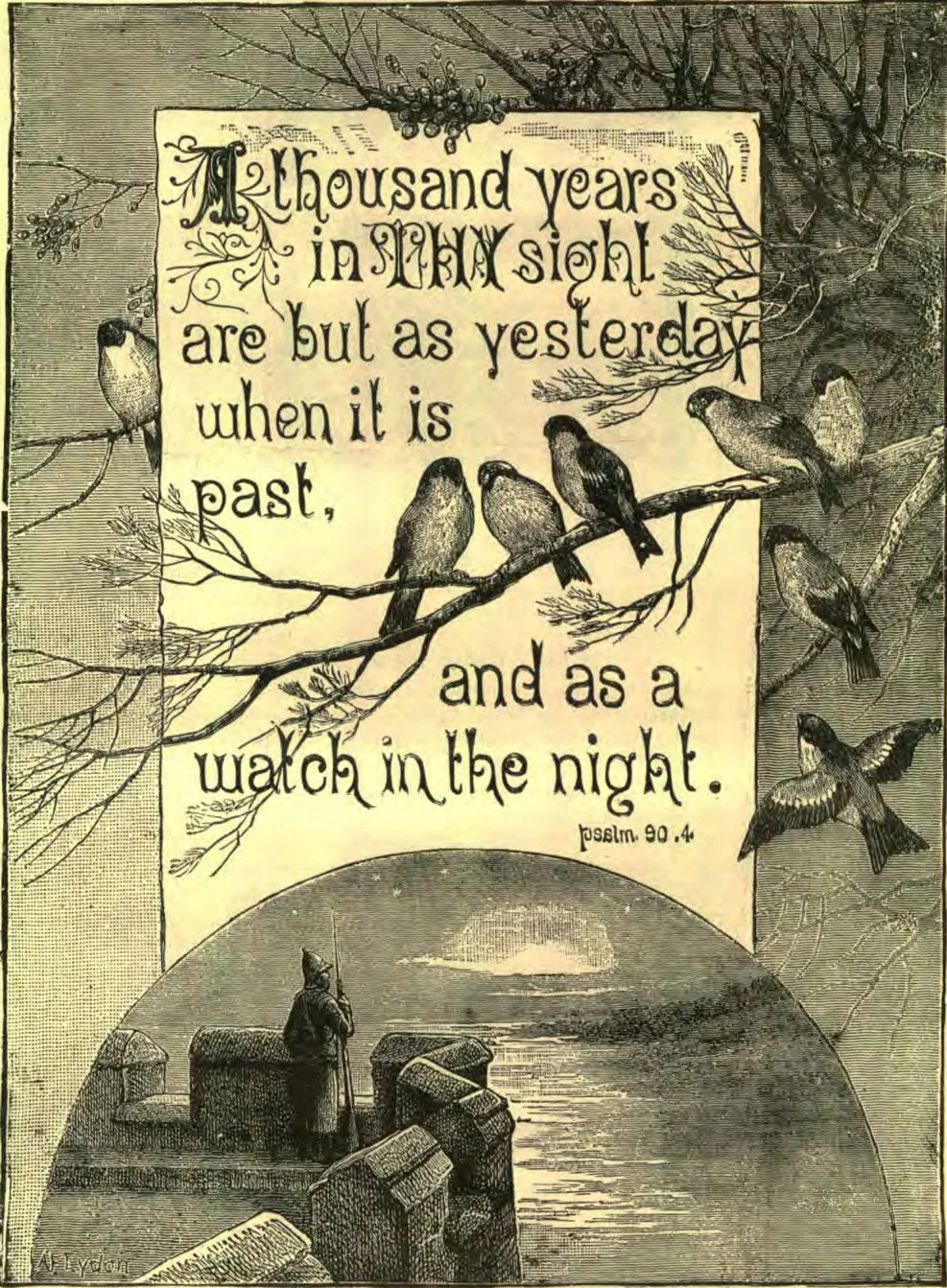
psalm. 90.4

MANNERS AND CUSTOMS

A PEEP AT AFRICA.—NO. 9.

MANNERS AND CUSTOMS.
On arriving at Cape Town, one is at first strangely impressed with what he sees; but after living here a month or two, these impressions fade away, and he fairly forgets that he is among a strange people. As we have already told you, the city has a population of about 60,000 inhabitants. About one third of these are colored. The colored population is made up of Malays, Kafirs, Hottentots, and remnants of a few other tribes, the Malays being the most numerous. This latter class, who are Mohammedans, hold tenaciously to their own peculiar manners, customs, and also to their religion. Missionaries have found it very difficult to persuade them to any extent to accept Christianity. They claim to believe in God, but his true prophet was Mahomet, and the Koran, instead of our Bible, is a revelation from God.
They have several mosques, or meeting houses, here in the city, where certain services are conducted. The men, they believe, have souls; but the women have none, so it is unnecessary for them ever to attend the mosque. Friday is regarded as their Sabbath, though their observance of it differs but little from what they do on other days. The men devote a brief period of the Friday to some kind of worship. Many of them here in the city are green grocers. A green grocer here, as well as in England, is a dealer in vegetables, fresh fruits, etc. The greater part of the oranges, lemons, nartjes, figs, bananas, guavas, and the various kinds of vegetables are sold here in the city by the Malays. It is a matter of great convenience to them that their women have no souls; for on Friday, if the men go to the mosque, the women can keep the store or shop open. The Malays dress in a peculiar manner. The women, when they go upon the streets, wear an immense gown, which gives one the impression that they are the children of giants. One woman thus attired will occupy as much room on the sidewalk as three ordinary persons would, and they frequently go in a rank of three, though at such times they invariably walk, not on the sidewalk, but in the middle of the street.
The Malay women do much of the washing of clothes for many people here in the city. This is performed in a somewhat novel manner. The Malay woman takes a large bundle of clothes, which she carries upon her head. Frequently at the same time she will have a babe in her arms or strapped upon her back. With this load she walks a mile or more to the mountain side, where everything is in readiness for her washing operations. It is true that she has neither washing machine nor wringer; neither has she tubs, pails, nor hot water. Such luxuries are unknown to her; but she has the mountain-stream, and by securing a place near some good-sized rock, where the water is two or three feet deep, she makes a wash-tub of the pond in the stream, and the rock serves as a rub-board. The clothes are washed, wrung out, and then spread upon the grass or bushes to dry, after which they are washed again. This process is gone through with about three times, when the clothes are pronounced clean. To the credit of such a plan we must say that we never saw clothes look whiter than do garments put through such a process. And then, not only are the clothes washed, but these women have practiced economy, and have taken a bath while they were doing their washing. These mountain brooks will be lined from one end to the other with scores of washers at the same time. We have concluded that if we engage them to wash our clothes, we will bargain that the washing shall be done at the top of the stream.
Many of the colored people have a peculiar dress for their feet, called “clogs.” These clogs are made of wood, the sole being about the width of the foot. A block of wood about two inches high is placed under the rear end, which serves as a heel, and another under the ball of the foot near the toes. This shoe was a great study to us for some time. It was difficult to see how it was kept on the foot, but on closer examination the mystery was solved. A little wooden pin is put in the top near the toe of this clog, and on the top end of this pin is a round knob, or button. When the wearer desires to put on his shoes, all he has to do is to set his foot on the clog, slip this pin between his great toe and the second toe, and the task is completed. The button at the top of the pin between his toes holds the shoe on his foot. So you see after all he wears button boots. This rude sketch is a fair representation of these clogs. I am sure the wearer cannot be troubled with corns on his feet. D. A. ROBINSON.

TWO QUEER POCKETS.

In a snug little home under the trunk of a great fallen tree that was covered with moss, there lived a tiny chipmunk, who was a lively, busy little fellow, running hither and thither through the woods with never a fear of being lost, for he knew every tree and twig by heart.
He felt very shy, though, when he heard any boys strolling along to gather nuts—his nuts he considered them, for they were what he laid up for his winter supply of food.
So, before starting out for his daily exercise, he would pop his soft little velvet head, with its bright eyes, out of his cozy quarters, and take a careful look about to make sure that no enemies were near, and then how nimbly he would run under leaves and ferns, or over the rocks, until one would feel fairly dizzy watching him!
His jacket was made of fur, beautifully striped with black and creamy white, and his tail was long and bushy; therefore he looked very much like his cousins, the squirrels. But he could not climb the trees and spring from branch to branch as they did; so he contented himself with running on the ground, and a pretty good time he managed to have.
One day, however, he ventured too near a house on the outskirts of the woods, thinking that he might find something nice that he could carry home, when to his sharp ears came the terrible sound of voices.
He would have fled at once to his own safe home, if he could, but they were coming straight toward him, and he must pass over the very same path to reach his retreat.
What should he do, for now he knew from the barking of the dogs that they had seen him?
But he was too nimble and swift for them, and quick as a flash he darted under the hollow trunk of an old tree, where he quietly waited until they were tired of hunting for him and gave up the search in despair.
Then he peeped very cautiously out, and finding the coast clear, ran as never a chipmunk ran before, and reached his own dear home in safety, not daring to venture out again that day.
In the autumn, when the nuts were dropping from the trees, he would go nutting as the boys did, and bring home from time to time so good a supply that they would last him all winter.
But he had the funniest little pockets to bring them home in that any one ever heard of. Not pockets in his coat, such as boys have, but pouches in each of his little cheeks; and these he would stuff just as full as they could hold, bring them home and store them safely away, then run off for another supply, working in this way until he had enough laid up to last until the nut season should come again.
Then, when the long, cold winter came, he would sit comfortably in his home, and with his sharp teeth crack his nuts, and take them away from shells just as nicely as any boy or girl can.
It would not be strange if he is living there yet as contentedly as possible; so, when an excursion is planned some pleasant day next summer or autumn to spend a while in the woods, keep a sharp lookout along the way, and perhaps this little chipmunk may be looking out from his home, watching you with his bright black eyes; or it may be one of his brothers will, if he should not.—Golden Days.

FOR YOU.

I HAVE some good advice for you, My merry little man, 'Tis this: where'er your lot is cast Oh, do the best you can! And find the good in everything, No matter what or where; And don't be always looking for The hardest things to bear.
Oh, do not stand with idle hands, And wait for something grand, While precious moments slip away Like grains of shining sand! But do the duty nearest you, And do it faithfully.
For stepping-stones to greater things These little deeds shall be.
In this big world of ours, my boy, There's work for all to do, Just measure by the golden rule That which is set for you; And try it with the square of truth, And with the line of right; In every act and thought of yours Oh, keep your honor bright!
—Companion.

THE HOLY GHOST FLOWER

For the Instructor.

THE HOLY GHOST FLOWER.

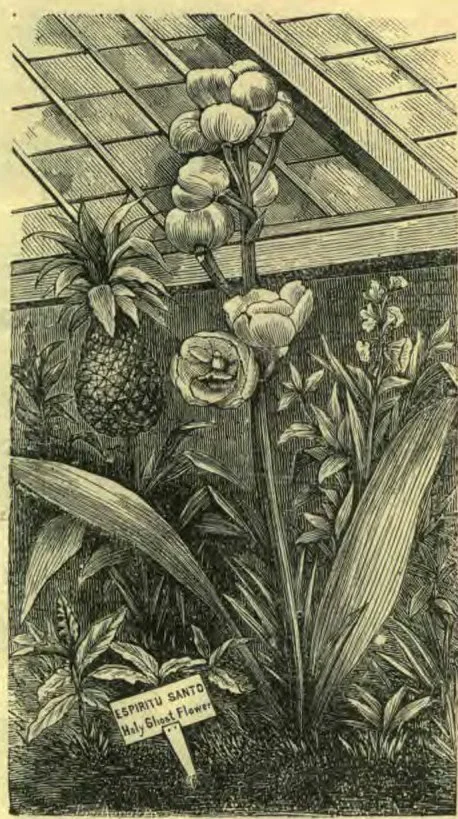
AMONG the endless varieties of flowers, there is a most interesting one, found in the tropical region of Central America. It is called the Holy Ghost Flower. It belongs to that strange group of plants known as orchids, whose flowers take the most grotesque shapes, often resembling butterflies and other insects.
The stock of the Holy Ghost Flower is usually about twenty inches high. The leaf is coarse, heavy, and oblanceolate, a form so common among tropical plants. But it is the flower which is the center of attraction. This somewhat resembles our snowdrop blossom, and is about one inch across. The outer flower leaves are quite regular, but the inner ones are so formed that they much resemble a dove's head and breast. It has a crest on its head, and a little pink bill. To complete the resemblance, two other leaves take the form of little white wings, beautifully tinted. It very much resembles the doves with which the old painters were fond of representing the descent of the Holy Spirit upon our Saviour at his baptism (Matt. 3:16). The odor emitted from this flower is very sweet indeed.
How wonderful are all the works of God! Let us love him with all the heart, so that we may be allowed to live with him and study all his wondrous works in the new earth.
Thos. H. Gibbs.

GIGGLING

It is a good thing to laugh. Man is a laughing animal, and he who has lost this faculty of smiling aloud is an object of pity and not of imitation. A good laugh drives away an evil spirit, and like a ray of sunshine scatters a cloud of gloom. Laugh when you can, and cry when you must, and in all things be natural.
But as for giggling—avoid it. It is only a poor counterfeit laugh, and should not be put into circulation in any society. There is no sense in it. If you see a thing that is really funny, laugh aloud and then stop, but do not keep on for five or ten minutes with a chuckling, choking, half-suppressed “He—he—he!” It looks as though you had no power to see or think of any thing but what is funny. Life has its serious side also, and he is only half grown who cannot see that.
It is easy to form the habit of giggling, and it grows in strength with constant indulgence. A slight thing sets the giggler going, and it is a hard thing to stop him. People who are sensible wonder what is the matter with him, and well they may, for he soon learns to giggle over trifles which hardly cause others to indulge in the faintest smile. Let all our readers, then, form a society to frown upon the young gigglers who are found in the school, in the parlor, in the concert-room, and, worst of all, even in the church.—The Classmate.

FLOWERS AND WEEDS.

Have you ever heard what the fairies say, Little girl, little boy? Oh, hear and heed! For each smile you wear on your face to-day There's a flower grows; for each frown a weed.
So to make this world like a garden bright, Little girl, little boy, keep frowns away, Oh, the loving lips that can say to-night, We have scattered flowers o'er the earth to-day!
—Harper's Young People.

I MUST PRAY MORE.

I habitually feel this necessity, but the other day the conviction came to my mind with strange power, and I said with greater emphasis than ever, I must pray more. It struck me with indescribable wonder that so little time should be employed, and so little energy expended in prayer, even by those who are prompt to acknowledge its dignity as a privilege, and its efficacy as a means of obtaining good. It is not now as it was in patriarchal times. We do not pray as Jacob did. He wrestled until the breaking of the day. Yes, his praying was wrestling, and it lasted all night. We put forth no such power in prayer, and we do not allow the repose of our nights to be interrupted by it. It is not because our wants are all supplied that we are so feeble and brief in prayer—nor is it that God’s bounty is exhausted. We are as poor as creatures ever were, and He as rich, and as munificent as ever. His hand is not shortened, neither his ear heavy.
Only think how small a portion of each successive day is spent in prayer. I wonder if any Christian ever thought of it, without being so dissatisfied as to resolve that he would spend more time in prayer the next day. Just add together the minutes you daily occupy in supplication, and the kindred exercises of devotion, scriptural reading, and meditation, and see what it will amount to. Will the sum total be one hour? What? less than an hour a day in devotion? not one twenty-fourth part of time! And is this all which can be afforded? Let us see. How much time has business? Could not a little be saved from business for prayer? Do you not give an hour or two more to business every day than it absolutely requires? I am sure, and I think no one can doubt, that considerably more time might be afforded for prayer than is actually given to it. If we take none from business and none from sleep, yet could not some be spared from the table, or conversation which is not always the most profitable? Perhaps some of us spend more time in barely receiving the body’s nourishment than we do in the entire care of the soul! But not to dwell to tediousness on this topic. You have only to look back on a day, to perceive how much of it might have been spent in prayer and devotion without interfering with anything which ought not to be interfered with.
Seeing then that we can pray more—that time can be afforded for it, I am amazed that we do not pray more. If prayer was nothing but a duty, we ought to pray more. We do not pray enough to discharge the mere obligation of prayer. We are commanded to pray more than we do. But prayer, while it is a duty, is rather to be viewed by us in the light of a privilege. And O, it is such a privilege! What a favor that we may petition God and ask of him eternal life, with the confidence that we shall not ask in vain! How strange it is that we no more value and exercise this privilege of prayer!
It is astonishing that the sense of want, or the desire of happiness, does not carry us oftener to a throne of grace, and that we should ever require to be incited to prayer by the stimulus of conscience. Oh! I wonder that we do not oftener go unto the King, whose gracious sceptre is ever extended toward us—I wonder we have not more frequent and longer interviews with our heavenly Father. It is strange we do not pray more, when prayer is the easiest way of obtaining good. What is so easy as to ask for what we want? How could we receive blessings on cheaper terms? Surely it is easier than to labor, and less expensive than to buy. It may be hard to the spirit to ask of men. To beg of them you may be ashamed. But no such feeling should keep you aloof from God. He giveth and upbraideth not.
But prayer is not merely the easiest way of obtaining good. It is the only way of obtaining the greatest of all good. The subordinate necessaries of life we get by labor or purchase; but the things we most need are given in answer to prayer. The one thing needful is a divine donation. We ask, and receive it. Now we labor much. Why do we not pray more? Do we seek a profitable employment? None is so profitable as prayer. No labor makes so large a return. If you have an unoccupied hour—and you have many, or might have by redeeming time,—you cannot employ it in any way that shall tell so favorably on your interests as by filling it up with petitions to God. Yet when we have such an hour, how apt we are to spend it in unprofitable intercourse with our fellows, rather than in communion with God. It is wonderful that we talk so much, when “the talk of the lips tendeth only to penury,” and pray so little, when prayer “brings a quick return of blessings in variety.”
Is there anything attended by a purer pleasure than prayer? One who knew, said, “It is good for me to draw near to God;” and again, “It is good to sing praises unto our God: for it is pleasant, and praise is comely.” All the exercises of devotion are as full of pleasure as they are abundant in profit.
But prayer is not only a means of getting good; it is such a means of doing good, that I wonder our benevolence does not lead us to pray more. We are commanded, “as we have opportunity,” to do good unto all men. Now prayer affords us the opportunity of being universal benefactors. Through God we can reach all men. We can make ourselves felt by all the world, by moving the hand that moves it. In no other way can we reach all. Prayer makes us, in a sense, omnipresent and omnipotent. It prevails with Him who is both.
The world needs your intercessions. It lies in wickedness. Zion needs them. She languishes because few pray for her peace; few come to hear her solemn assemblies. Whose family needs not the prayers of its every member? Who has not kindred that are out of Christ? With such a call upon us for prayer so urgent, and from so many quarters, I wonder we pray no more.
I must pray more, for then I shall do more—more for God, and more for myself; for I find that when I pray most, I accomplish more in the briefer intervals between my devotions, than when I give all my time to labor or study. I am convinced there is nothing lost by prayer. I am sure nothing helps a student like prayer. His most felicitous hours—his hours of most successful application to study, are those which immediately follow his seasons of most fervent devotion. And no wonder. Shall the collision of created minds with each other produce in them a salutary excitement, and shall not the communion of those minds with the infinite Intelligence much more excite them, and make them capable of wider thought and loftier conceptions?
I must pray more, because other Christians, whose biography I have read, have prayed more than I do.
God is disposed to hear more prayers from me than I offer; and Jesus, the Mediator, stands ready to present more for me.
If I pray more, I shall sin less.—Nevins.

PRAYER

LESSON 16.—REVIEW ON LESSONS 1-3.

1. How did both David and Job express a deep yearning for God? Ps. 42:1; 63:1; Job 23:3.
2. What did this yearning lead them to do? Ps. 63:4; Job 23:4, 5.
3. Repeat some invitations to prayer. Hosea 14:2; Phil. 4:6; 1 Tim. 2:8.
4. Show the importance of seeking God without delay. Isa. 55:6; Prov. 1:28.
5. How are we urged to constancy in prayer? Col. 4:2; 1 Thess. 5:17; 1 Chron. 16:11.
6. How are Christians to stand under temptation? Matt. 26:41.
7. Show the importance of prayer at the present time. Luke 21:36; Mark 13:33; 1 Pet. 4:7.
8. Give some promises by which men are encouraged to pray. Matt. 7:7; John 14:13, 14.
9. Show that these promises are made on the conditions of faith and obedience. Matt. 21:22; Mark 11:24; 1 John 3:22.
10. What did the Lord do for king David in answer to prayer? Ps. 3:4; 40:1-3.
11. Show that God will hear the prayer of the humble as well as that of the mighty. Ps. 34:6; 10:17; 102:17.
12. How shall we obtain help in times of trouble? Ps. 50:15.
13. Where should we go for wisdom? James 1:5; Jer. 33:3.
14. What must be the character of a people whom God is ever ready to hear? Isa. 58:6-9.
15. Through what experience must those pass who are to be the accepted people of God? Zech. 13:9.
16. In what different ways does God regard the prayers of the righteous and the wicked? John 9:31; 1 Pet. 3:12.
17. What sins cut men off from the privilege of prayer? Job 35:13; 27:8, 9; Ps. 66:18; Prov. 28:9.
18. What encouragement is given to those who turn from their sins and seek the Lord? Isa. 1:18; 2 Chron. 7:14.

SOME FACTS ABOUT FISHHAWKS.

My father's homestead was at Monmouth Beach, New Jersey. My earliest recollections of that place are closely connected with the fishhawks there. These birds made their great gray nests in dying trees. There the female hawk might always be seen, sitting with folded wings on the topmost boughs, looking out across the wild wastes of ocean from her leafless eyrie, watching with falcon eye for the return of her mate, fearlessly guarding the while her young in the nest below. Soon there might be seen, in the far distance, a black speck; then, from the very clouds, a deep dive into the waves below; then soaring, beating the air with his great wings, rising, curving, floating (was ever motion so majestic and graceful!), the male bird made his appearance. Nearer and nearer he came, holding, hanging from his strong beak, some bright, silvery fish of no mean dimensions, and welcomed by his mate with that shrill, wailing cry peculiar to their kind.
One of the most curious facts concerning these fishhawks is the marked precision as to date with which they make their semi-annual migrations. Never, in the memory of the oldest inhabitant at the beach, has a fishhawk been known to reach any spot in that vicinity either earlier or later than March 20. Never has one been known to remain later than September 20. They come in flocks, and they leave in flocks, following their leader. When they desert their nests in September, they invariably cover them up carefully with small stems, bits of twigs, leaves, grass, etc. When they return in March, they as invariably uncover them, each pair always reoccupying their former nests. Only young fishhawks build new nests, and then they build them for a lifetime; and as the birds of all the falcon species are noted for their longevity, these same nests have sometimes been known to last for nearly a century.
No loyal Jerseyman would ever knowingly destroy a fishhawk's nest or injure one of its occupants. Sailors and fishermen look upon these birds with a reverence that savors of superstition, and farmers value them because they drive from their precincts other hawks and birds of prey that eat and kill domestic fowls.—Well-Spring.

CHANGES IN POSTAGE STAMPS.

The following changes in the impressed stamps on stamped envelopes have been ordered to go into effect as soon as the contractors can get the stock ready:—
Present Color. New Color.
1-cent. Light blue Light blue
2-cent. Red Green
4-cent. Green Carmine
5-cent. Brown Dark blue
10-cent. Chocolate Chocolate
30-cent. Black Brown
90-cent. Carmine Purple
There will be some slight changes in the designs of the 1, 2, 4 and 5-cent impressed stamps, but the only radical change will be in the 5-cent stamp. In this case, the adhesive stamp will portray the head of Garfield, while the impressed stamp on the 5-cent envelope will bear a likeness of Grant.
One of the reasons which led to the determination to change the series is the friendly rivalry now existing among all nations by which each is trying to put out the most handsome series of postage-stamps. Then, too, it was found that the colors now in use in the adhesive varieties could not be reproduced with very good effect on the envelopes, as the inks used have a different effect on the peculiar paper used for the stamps than upon the heavier paper of the envelopes. It is the intention of the department to ultimately make the two kinds of stamps as nearly identical as possible.

FOUR NOTES IN THE CANARY'S SONG.

In the song of a canary, four notes are recognized by dealers, and they can tell by listening to it for a very few minutes whether the bird be German or American. They are the water note, which is a rippling, gurgling, attractive bit of warbling, like the murmur of a rill; a flute note, clear and ringing; the whistling note, of the same class, but very much finer; and the rolling note, which is a continuous melody, rising and falling only to rise again. It is in the last-named note that the American birds fail. They cannot hold it. Another difference between the two is that German canaries are night singers—they will sing until the light is extinguished. But American birds put their heads under their wings with darkness.

Finding Direction Without a Compass in the Woods

ALLEN THOMPSON, an old Mount Washington guide, says that he never carries a compass in the woods. “There are three sure ways,” said he, “that I have for finding the points of the compass. You will notice that three fourths of the moss on trees grows on the north side; the heaviest boughs on spruce trees are always on the south side, and thirdly, the topmost twig of every uninjured hemlock tips to the east.”
Continue reading: HAPPY LINDA