The Youth’s Instructor, Vol. LIII, No. 29

Traces of Sabbath Observance in Olden Time

The Youth’s Instructor

Jul 18, 1905

Review and Herald Publishing Assn. · Washington, D. C. · Jul 18, 1905

Traces of Sabbath Observance in Olden Time

2—In Ancient Scotland
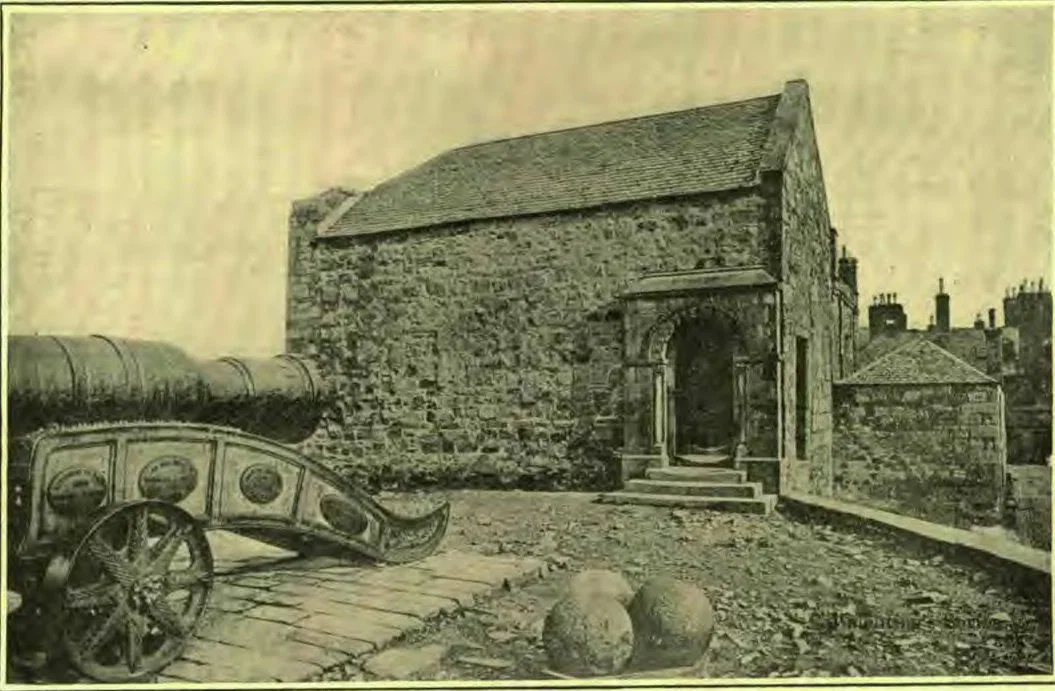
Within the walls of picturesque old Edinburgh Castle is a tiny building of rough-hewn stone, called St. Margaret’s chapel. It is a relic of times of no little interest to us, for Queen Margaret it was who helped to turn the Scottish people away from the true Sabbath.
ST. MARGARET'S CHAPEL, EDINBURGH CASTLE
The story begins in Ireland. Southern Scotland gave Patrick to Ireland to be first a herd-boy in slavery, and then the missionary apostle to the Irish people. A generation or two later Ireland gave one of its princely sons to be an apostle to the fierce Picts and Scots of northern Scotland.
Columba was born in 521, about thirty years after Patrick’s death. He was of a ruling clan in Ireland, an O’Neill. Getting into the schools that Patrick had founded, his heart was fired with the missionary zeal which he found in them. He started out to plant other schools in the wilderness. These schools to begin with were evidently but Bible training-schools. They were industrial schools also, for when Columba founded his first one in wild Derry, by the northwestern sea, he had to cut down the oaks and build his new school from the ground up.
These schools later grew into severely monastic institutions of the Romish sort. No doubt in the time of Patrick and Columba there was a tendency setting in strongly toward monasticism; but there is evidence that it was by no means as strong as the Romanist writers have made out. We must remember that the chronicles of those times were written long after by men who had every reason to make these early pioneers appear as Catholic as possible.
Columba’s heart always clung to his first school settlement, which has grown into the modern city of Londonderry. “My Derry, my fair oak grove,” he sings in one of his poems. He planted other school centers in Ireland,—
“But sweeter and fairer to me The salt sea where the sea-gulls cry When I come to Derry from far.”
The missionary fire was in his soul, however, and across the salt sea to the northward he knew that the wild Picts and Scots of north Britain and the western isles were living in darkness and ignorance. So he exiled himself from his native land, and founded an independent missionary center on the island of Iona, just off the Scottish coast. For thirty-four years he and his missionary band wrought among the pagan clansmen, planting churches and schools in all the land to the utmost bounds of Scotland. Scottish missionaries were sent out into western Europe, joining those from Ireland in preaching among the Gothic tribes, from the North Sea to the Alps and the Danube.
As Rome gathered power, this early work was largely spoiled. There was constant effort to break down the ancient churches in Britain, and with too great success. Furthest of all from Rome’s influence in Britain were the churches that had descended from those founded by Columba in northern Scotland. When Queen Margaret came to the Scottish throne in 1069 as wife of King Malcolm, she found the peasant churches quite out of harmony with the Roman practise.
She was a Saxon princess from England, and an ardent Catholic. She was shocked by the simplicity and plainness of the Scottish services. She urged the placing of crucifixes in the churches. Doubtless this little chapel of hers was fitted out to be a model of Catholic ritual. But strangest of all to her was the practise among the northern churches of working on Sunday and keeping the Sabbath.
Says Skene, the Scottish historian: “They held that Saturday was, properly, the Sabbath on which they abstained from work.” He traces this respect for God’s Sabbath to the teaching of Columba and the practise of the early Irish church.
Queen Margaret argued long about this with the Scottish church leaders. Her royal husband, Malcolm, called them in and translated for her. They spoke only the ancient Gaelic. She declared that the “blessed Pope Gregory” commanded rest on Sunday. And so he had, for Sabbath-keepers had been troubling him in Constantinople and the East. By her royal authority and by studied efforts to Romanize the churches of Scotland, Queen Margaret turned the people away from the Sabbath.
Papal darkness fell upon Scotland for centuries, and only by the hard struggles of the Reformation was the light let in again. John Knox and other Reformers did not go to the end of the matter and take their stand upon the Word of God with no admixture of Romish tradition. They saw not all the truth. Now in these last days, once again the primitive faith is being preached in Scotland, and our own workers are carrying the Sabbath truth through lowland and highland where once Columba’s missionaries taught the people to keep God’s holy day.
W. A. SPICER.

Fallen Angels

SIN is a terrible thing. It has wrecked a world. It has clothed this earth in the pall of night, transforming it into a vast charnel-house filled with misery and woe. Every tearful eye, every aching heart, every bowed form, every sick person, every funeral train, is a testimony to its power and cruelty. Sin took the life of the Son of God.
This subtle, mysterious power gained admittance into the universe through Lucifer, the highest angel in glory, created by the Lord for this high and exalted position. He led others in revolt. Angels, the pure and holy, sinned. 2 Peter 2:4. They exchanged the beautiful, glorious habitation of their Creator, their “first estate,” for chains of darkness. Jude 6. “And there was war in heaven: Michael [Christ] and his angels fought against the dragon [Satan]; and the dragon fought and his angels, and prevailed not; neither was there place found any more in heaven. And the great dragon was cast out, that old serpent, called the Devil, and Satan, which deceiveth the whole world: he was cast out into the earth, and his angels were cast out with him.” Rev. 12:7-9. This tells the whole sad story. Sin transformed the “covering cherub” into Satan, and an unnumbered host of holy angels into imps of darkness.
You say, I do not understand how angels could sin. Possibly not. But the fact remains nevertheless that they did, and as a result exchanged the robe of light for the sable garment of night. The whole wicked scheme originated with Lucifer, the “covering cherub,” the one next in power and command to Christ. He was the chorister of heaven. He had raised the first note, then all the angelic throng united with him in songs of praise to God. But he became jealous and envious of Christ. He beheld the Father and Son in counsel (Isa. 14:13), planning perhaps concerning the creation of the world, and making provision for the terrible consequences of sin which they foresaw. He could not understand why he should be excluded from the council. He nourished his envy, and whispered his evil surmisings among the angels, and led in rebellion fully a third of the angelic host. Rev. 12:4. “God informed Satan that to his Son alone he would reveal his secret purposes, and he required all the family in heaven, even Satan, to yield him implicit, unquestioned obedience; but that he (Satan) had proved himself unworthy a place in heaven. Then Satan exultingly pointed to his sympathizers, comprising nearly one half of all the angels, and exclaimed, These are with me! Will you expel these also, and make such a void in heaven?”—“Spirit of Prophecy,” Vol. I, page 22.
This was a terrible hour in heaven. God loved Lucifer and all his sympathizers, and bore long with them. But the time came when decided action must be taken, and they were cast out into the earth. Said Jesus, “I beheld Satan as lightning fall from heaven.” Luke 10:18. He “abode not in the truth” (John 8:44), and has been a murderer from the beginning of the world. As a roaring lion, he “walketh about, seeking whom he may devour.” 1 Peter 5:8. When questioned in the days of Job whence he came, he said, “From going to and fro in the earth, and from walking up and down in it.” Job 1:7. He tempted Adam in the garden of Eden, and he, with millions of the rebel host, for nearly six thousand years has been engaged in the terrible work of destroying souls. It is a well-organized and disciplined army against which we fight. “For our conflict is not with flesh and blood, but with principalities, and with those in authority and with the possessors of this dark world, and with the evil spirits that are beneath heaven.” Eph. 6:12, Murdock’s Translation.
The conflict in which we are engaged is as real as between two contending armies. Christ and loyal angels are working to rescue souls, and Satan and wicked angels are laboring with all their powers to drag souls down to perdition. But the counsel of Elisha to his servant is for us: “Fear not; for they that be with us are more than they that be with them.” 2 Kings 6:16. The heavenly angels were with Elisha, and the evil angels were with the Syrians. There are more good angels than evil ones.
G. B. THOMPSON.
  • (To be concluded)

New Earth Geography—I

No one will question that the new earth will have geography, but it may startle some to think that we may know anything of its details now, and in imagination see some of its actual forms. About all we ever think of is the holy city, and perhaps its closest environs, though we may know that the rest of the earth is to be inhabited, and suppose that it has a varied surface. Yet would it not be interesting to know where, in the earth, the capital city is to be located, and from what direction Daniel, for instance, will come up to the city for the Sabbath and monthly services, and whether Jonathan will be joined in the way by David, or whether they will not meet until they have entered the holy city? Have you ever wondered to what tribe you will belong? and have you tried to picture the family life, and to form in your mind the surroundings and the location of your house in the country, as well as of your palace in the city? These are questions a little apart from geography, it is true, but they are connected with it, and I believe that the Bible gives us data from which a much more complete conception of the new earth conditions may be made than we commonly have.
Now in tracing some of these geographical and related facts, let me have the privilege of an author, of forming a connected text and referring to my authorities in parentheses. While the searching out and arranging of evidence may in itself be a pleasing study, yet the making of a reference book is a different work from the writing of a treatise, and the combination of the two does not make the easiest reading. I shall try to be guided by my authorities in all that I write, aside from a legitimate use of the imagination, and between the speculative and the authentic I shall try to make a plain distinction.
It may be well to state here one principle which has governed in the collecting of the facts here given. The new earth, with its conditions, is a restoration, in almost every particular, of the first creation. Therefore it has been assumed to be safe to take conditions as they were before the fall, to represent conditions as they will be after the restoration, so far as they do not conflict with statements peculiarly relating to the latter state.
There is perhaps no reason to suppose that the general form of the earth will be altered in its re-creation, nor its relative position in the heavens changed, whatever may be the theories as to the phenomena of its movements, or the apparent certainty of its elevation in the economy of the universe. Day will succeed night and night day, save in and around that glorious city where “the Lamb is the light of it.” No common, dismal nights will they be, however, nor days that hold anything of gloom, wherever eye may glance or foot may press.
No. 1
No. 1
Through that clear and undefiled atmosphere the light of the moon shall come as the light of the sun, and the light of the sun shall be sevenfold. Isa. 30:26. No dark, dank places will there be in the woods, where reptiles creep, and noxious insects breed, but light, like the soft shading in the cathedral naves, while the branches wave in the breezes their homage to King Jesus. There will be no violent changes of temperature, but the winds will still sweep on according to their circuits, and the cool of the evening will send down the dew upon the earth to refresh it.
Plains there are of wide extent, fields of living green and gold, where the grasses and the grains dip and wave, bend and glow, almost in rivalry with that sea of crystal near the throne. The little hills that bound them give a fringe of varied color, with the white of the lily and the crimson of the rose. Purple is no exclusive royal color there, and the amaranth mingles with the buttercup to make a crown of glory for the hills. Upward goes the path, range after range of hills swelling higher to merge into the noble crested heights; for the mountains there are not rough, jagged upheavals, with outcroppings of ledge and cliff, but beautiful slopes of living green, flower-besprinkled and tree-bedecked, whose heights give prospects over many leagues, with every hill and lake and field and vine-roofed palace clear and distinct through the transparent air.
There are watercourses and systems wonderful to contemplate. The great wide, rolling waste of ocean, so John tells us (Rev. 21:1), is no more, but there are expanses of water through which the rivers run. Eze. 47:8. Whence do these rivers come?
Out from the throne of God there gushes a crystal stream, the River of Life. Small at first, it grows with increasing distance (Eze. 47:1-5), and as it issues from paradise, it becomes parted into four rivers, one of which winds away to the north, one to the south, one to the east, and one to the west. Gen. 2:10. Through the city it forms a broad and beautiful avenue, the tree of life with its many fruits on its either side, and as it parts to seek the corners of the earth, it still carries life and gladness all along its way. As once it parted into four heads, so now may we in thought watch it still dividing and separating here and there, to reach all quarters of the land, flowing here a broad, serene river through the plain, there tinkling in little rills in hidden dales, here bursting into hill-girt lakes and flowing out again to join its brother rivulets, and now dashing under hills to emerge elsewhere in sparkling springs; singing, laughing, sedately flowing, always blessing, always clear and bright, blue in the depths, and like sunshine and air in the shallows. It is, in part, a reversal of the plan of water-systems here on earth, but may we not so conceive it, and, not as a certainty, but as a conjecture (which we know the actuality will surpass in wonder of plan), make it to our minds look like this?
The fair green earth, how beautiful it will be! There is no thought of beauty on this earth that will not be reproduced there, unless it be the clouds of the sky. But the beautiful effects of even these will be outdone. Angel visitants and companies of kings from other worlds, seen afar through the bright sky, or nearer as they pass so distantly that only the fleecy whiteness of their company-form is seen,—can summer clouds so gloriously adorn the sky walls now? And no sunset splendor known to earth can vie with the ever-changing, ever-constant glory around the throne. What a sight, when sometime through the softly lighted shade of those celestial nights we journey over the hills of Levi to catch the distant flashing and glowing of the light of the eternal city; then, climbing with buoyant steps the last slopes, have burst full upon our eyes the resplendence of that jasper jewel!
“There the glory is ever shining! O, my longing heart, my longing heart is there! There is no sorrow, nor any sighing, Nor any tears there, nor any dying. I’m a pilgrim, and I’m a stranger, I can tarry, I can tarry but a night.”
A. W. SPAULDING.

India Ink

The Way the Kind Used in China and Japan Is Made

INDIA ink, much used in China and Japan for writing with small brushes on soft paper, and made extensively in China since 250 B. C., consists of a mixture of carbon and gum, with the addition of a little musk or Borneo camphor to give it the characteristic odor. The preparation of this simple ink is by no means easy, for if the materials are not of the best quality, and if the carbon is not as finely divided as possible, an inferior ink will be the result. After the carbon and gum have been mixed, the product has to be slowly and carefully dried. The high polish is said to be produced with tree wax.
Europeans have produced ink equal if not superior to the genuine Chinese article. The reason why the manufacture has remained chiefly in Eastern hands is an interesting one. The business instinct of the European maker prompts him to seize any opportunity of substituting cheaper raw materials, so lowering the quality of his ink, while the tendency of the Chinaman is to work on in the same groove, and in this case his conservatism is profitable.—London Mail.

Home Manners

SELDOM is there so just and at the same time so pointed a comment on manners as is contained in an incident reported by the London Chronicle. A young girl boarded with an elderly woman, who was not only landlady, but assumed for her also the place of parents. The girl had been out one evening. Upon her return a young man accompanied her as far as the door.
“He is my brother,” said the young woman.
“Your brother!” replied the cynical old lady. “Why, I saw him raise his hat to you when he walked away!”
Do the young men deserve so severe a comment? Many, perhaps most, of them do. They are not always the boorish, rough, and uncultivated young men, either; nor is their incivility confined to their sisters. It is usually a family affair, not at all personal or exclusive; simply the carelessness which comes from familiarity. But it robs life of a charm fine enough to be classed among the moralities.
There is nothing which will so quickly restore the beautiful old-fashioned courtesy of husband to wife, brother to sister, and children to parents as intellectual honesty. A young man was entering a reception-room with his wife when he stepped upon her gown and stumbled. In his annoyance he exclaimed:—
“Bother it, Mary! I wish you would either hold your dresses up or have them made short.”
The wife made no reply for a moment. Then she said, pleasantly:—
“Charles, if it had been some other woman whose dress you had stepped on, what would you have said?”
The young man was honest with himself. He turned red, but he answered frankly:—
“I should have apologized for my awkwardness, and I do apologize to you, my dear. I am ashamed of myself.”
We are all ready to do for those who are nearest to us without stint or complaint, and we take pleasure in it. We ought also to remember that to give pleasure the deed should be framed in courtesy. A mother, a sister, or a wife, of all women, ought not to miss the consideration which mere acquaintances claim as a matter of course.—Youth’s Companion.

Practical Things About Tithing—I

SHOULD we try to do so, we could not count all the things included in the “every good gift and every perfect gift” of James 1:17. Neither are we competent to appreciate the fact that the Giver is not variable and likely to change his mind in regard to his benefactions. The instruction given ancient Israel is just as good for his people of to-day. His requirements are not arbitrary, but are given in view of our best good and highest eternal interests; therefore it should be our greatest desire to obey him; for “obedience is the proof of love.” Who is so deserving of love and faithful service as our Creator, Saviour, and Elder Brother? Not to mention the “unspeakable gift” of the “all in Jesus,” his temporal bestowments should cause our hearts to respond in praise, and our actions to reveal appreciation.
For the use of all these great blessings with which God is daily loading us, he asks in return one tenth—not because of need; for the silver and gold, the cattle upon a thousand hills, and the earth itself belong to him; but it is that we may be proved, whether in our selfishness we will rob the Lord, or, in our integrity, return to him a tithe of the goods with which he trusts us.
It is said plainly in Lev. 27:30-32 that the tithe, or tenth, is holy unto the Lord. It is also to be the first of our substance. Prov. 3:9. Not self or family first, but, “Honor the Lord with thy substance, and with the first fruits of all thine increase.” Set aside the tithe before using any for self, and “so shall thy barns be filled with plenty, and thy presses shall burst out with new wine.”
Too often we hear it said, “I have so little that if I tithe it, my necessities could not be met.” Young friend, read Mal. 3:10; it may be that you will find that you have so little because you did not tithe as you should have done. Haggai 1:9.
You may find yourself wondering how a little can be made to meet so many wants. The nine tenths will supply you better than would the ten tenths without God’s promised blessing in Mal. 3:10-12. You will have a clear conscience and a heart of thankfulness to the Lord because he knew from the beginning what was for your best good. Mrs. D. A. Fitch.

A Lesson From the Street

“You’d better let me go to the door, mama,” said Alice, warningly.
Mrs. Farwell looked up at her daughter with something very like an appeal in her gray eyes. “You won’t be harsh with him, dear? He is only a child.”
Alice smiled. There can be a vast deal of superiority in the smile of eighteen. Alice would have been shocked at the suggestion that there was also something very like contempt in the curve of her lip.
“You are so tender-hearted, mama!” she answered. “I really wonder that you could have lived all these years in the city without growing more worldly wise.”
She went briskly to the front door, opened it, and frowned down upon the small boy whose hand was just reaching for the bell. “Go right away!” she said, severely. “We haven’t anything for you.”
The child lifted a pair of startled eyes to her face. He was a sufficiently wretched little figure, as he stood there, to appeal to the compassion of the hardest heart. And Alice was not hard-hearted, only proud of the thought that she could not be imposed upon. She was flattered by the child’s evident confusion as he stammered, “Please, lady, I didn’t mean —”
“I want you to go right away and not come back!” Alice commanded. “Don’t you know that you have no right to go round begging? Why, I could have you arrested for it.”
There was no need to say more. The child turned, and fled down the steps. When he reached the street, he paused, forlorn and bewildered, and, hiding his face in his ragged sleeve, broke into pitiful sobbing.
Mrs. Farwell turned to her daughter, who had re-entered the front room. “Look at him, Alice. Poor, poor little fellow!” There were tears in her eyes as she added, “It wouldn’t have cost anything to speak kindly to him.”
“You have to be decided with that sort of people. If you’re not, you can’t ever get rid of them,” Alice declared. Yet there was a sensation at her heart very like regret.
Down the street came a swarthy Italian, pushing before him a small hand-cart, and uttering at intervals certain unintelligible syllables which only to the initiated conveyed any idea of the fruit he was offering for sale. As he passed the sobbing boy, he glanced not unkindly toward the bowed figure, looked again, then stopped short. Taking two of the ripe bananas in his hand, he came up to the boy and touched his shoulder. The smile that for an instant lighted his dark, heavy features was reflected in the uplifted little face on which the tears were still undried.
It was over in a moment. The man went his way, calling his wares in feeble English, but with stalwart lungs. In the opposite direction trudged the boy, quite comforted. But Alice Farwell stood within her home condemned. In contrast to the simple, brotherly kindness of this ignorant fruit-vender, her own act stood out unlovely and unchristlike. And she felt in her heart that in the scene she had witnessed the Lord himself had spoken.—Young People’s Weekly.

Adversity

My sin-sick soul is weary, And life seems dark and dreary. Why am I left to suffer so, And only pain and sorrow know, While others are so free?
Why does my yearning, aching heart Know nothing but the poisoned dart, And go on grieving all the day, Nor ever hear my Saviour say, “It is enough”?
Why am I left so lonely here To shed unseen the bitter tear; To in the silence moan and cry, And sadly wish that I might die, While those around rejoice?
Why does my tried and trusted friend I had hoped to lean on till the end, Why does he turn and leave me so Nor stop to see the tear-drops flow From a heart that’s well-nigh broke?
Then why does death with cold, relentless greed Snatch true friends from me in my sorest need, And cause my poor, torn, bleeding heart again To feel the sharpness of a lingering pain That will not heal?
Why is my heart so cold, And the sweet, true story of Christ grown old? Why do I not fly to his gentle breast, And there find comfort and peace and rest In his love that will never fail?
At last my heart to Jesus turns, And in my soul a deep fire burns. I see this surely is his will, And say unto my heart, “Be still, For oftentimes it takes the rod To point the path to heaven and God.”
O. E. SMITH.

1. What effect do cheering words have upon the heavy hearted?

Cheerfulness

1. What effect do cheering words have upon the heavy hearted?

“Heaviness in the heart of a man maketh it stoop: but a good word maketh it glad.” Prov. 12:25.
2. What effect will they have upon the weak and weary ones?
“A merry heart doeth good like a medicine: but a broken spirit drieth the bones.” Prov. 17:22.
3. How may a child bring gladness to the heart of its parents?
“A wise son maketh a glad father; but a foolish son is the heaviness of his mother.” Prov. 10:1.
4. When should the Christian rejoice?
“Rejoice in the Lord alway: and again I say, Rejoice.” Phil. 4:4.
5. Why should we be of good cheer?
“These things I have spoken unto you, that in me ye might have peace. In the world ye shall have tribulation: but be of good cheer; I have overcome the world.” John 16:33.
6. Why should we especially be cheerful when we are persecuted for Christ’s sake?
“Blessed are ye, when men shall revile you, and persecute you, and say all manner of evil against you falsely, for my sake. Rejoice and be exceeding glad: for great is your reward in heaven.” Matt. 5:11, 12.
EMMA S. NEWCOMER.

Report of the Society at Healdsburg, California

As a representative of a band of young people who are preparing for active service in the Lord’s work, I would say, first, that we have tried to make our Society an active missionary organization, through which we might put into practise some of the noble principles taught in our college. We have not done as much as we might have done, but we have made an effort, and feel that the Lord has blessed us in the small service we have been able to render him. Our experience has proved to us that success in Young People’s Societies depends largely upon their missionary activity, and we have endeavored to make our work as practical as possible.
You remember a few months ago when the two Sunday bills were pending in Congress, petitions against them were sent out to our people. The members of our Society circulated these petitions among the people of Healdsburg, and obtained many signatures. This proved a valuable experience to us, and, indirectly, a blessing to the people; for, in presenting the petition, we were enabled to bring before them the great principles of religious liberty that we as Americans and Christians hold to be sacred and inviolable. Thus we became acquainted with the people, and the way was prepared for the tract work we took up later.
A part of our time has been devoted to the mailing of Signs and other literature, a correspondence being maintained with the persons to whom papers were sent. Of the special Signs of November, we disposed of sixteen hundred copies in and about Healdsburg.
Possibly some remember Mr. Wee, a Korean, who was in San Francisco a few weeks ago. This young man had recently accepted the truth, and was anxious to gain an education, but because of financial difficulties, was unable to do so. Hearing of this, our young people resolved to assist him, and accordingly solicited means in his behalf. As a result, Mr. Wee is now, and has been for several weeks, a student in Healdsburg College, preparing himself to be a missionary to his benighted people. It would do your hearts good to see with what earnestness and diligence he pursues his studies, especially the Bible. He seems to be happy and contented in his work of preparation, and shows unmistakable evidences of a good Christian experience. Two weeks ago he united with the church at Healdsburg through baptism. We indeed feel thankful for having had a part in preparing a laborer for the neglected Korean field, and we trust that Mr. Wee may do a great work for his people.
In January, Brother Armstrong made an appeal through the Review for a tent for Ceylon, as a means through which he might preach the gospel more effectively in that island. In response to this call, our Society decided to raise the necessary funds for the tent. Sixty-five dollars was donated, and the rest, one hundred seventy-three dollars in all, was raised by our young people. The tent was made by the students in the college factory, and finally shipped to that far-off isle of the sea, where we know it was joyfully received by Brother Armstrong. Today it is probably pitched under a tropical sun, affording to many the privilege of hearing the third angel’s message, which they otherwise might never have heard. We feel glad for the privilege of thus co-operating with the Master in giving the gospel to the people of Ceylon.
Since the first of the year we have tried a plan in our Society that has been successful and profitable. On the second Sabbath of the month, the day set apart for the missionary reading, the young people take entire charge of the church service, and a missionary program is rendered by them. The program consists, generally, of about two missionary readings, and as many good, rousing, missionary talks on some of the foreign fields. In our meeting of May 13, the needs of the heathen millions of Africa were presented in such a stirring manner that the donations on that day were three times the usual amount. But the greatest benefit is derived by the young people themselves, for these meetings incite a personal interest in foreign missions; and as they learn of the great needs of the benighted millions in the far-off heathen lands, their hearts are stirred, and they long to have a part in lifting this cloud of darkness, and revealing the light of the gospel to these peoples. God is calling young men and women to enter these foreign fields, and how important it is that we prepare to answer this call!
On the three remaining Sabbaths in the month, our meetings are held at half-past five in the evening, and the afternoon is spent in doing practical missionary work, such as visiting the sick and needy, and distributing tracts. In this latter work we follow this general plan: The town is divided into districts, and a certain portion is assigned to each member. He visits those in his locality, and presents some good tract, as, “We Would See Jesus,” and promises to call for it the next week. It is needless to say that our meetings are full of life and interest after an afternoon of such practical work. The air fairly rings with cheering testimonies, and interesting accounts of the afternoon’s experiences. We were surprised to see how little the people really know about this great truth. Many have expressed their appreciation of the tracts, and asked for further reading-matter, which we gladly supply.
Dear young people, there is a good work before us. A greater responsibility rests upon the young people of this generation than has ever before been placed upon a class of youth. We must carry the gospel to the world, and it is high time we prepare for this responsibility. May God fill us with a missionary zeal that will stir the world, and bring to a speedy, glorious, and triumphant close the third angel’s message, and then we shall hear with joy the welcome words, “Well done, thou good and faithful servant, enter thou into the joy of thy Lord.”
INEZ HOLLAND.

The Universe Is Not Quite Complete Without My Work Well Done

“THE universe is not quite complete without my work well done.”

Reverence for Everyday Fellow Men

“There are few heroes in the world. I can not afford to give all my love and reverence to such vanities. I want a great deal of these feelings for my every-day fellow men.”

Patience: The Spirit We Bring to Our Work

“PATIENCE is a needed virtue. A girl who was tired of washing dishes and making beds told the village doctor of her impatience with the drudgery of her life. He showed her the vials in his office, and told her how into one he might put a poison, into another a healing medicine, and into another a sweet perfume. It was not the vial that counted, but the contents. So it is not the occupation in which we are engaged, but the spirit which we put into it, that counts. A king or a millionaire may be filled with discontent and cynicism, while an errand boy or a hod-carrier may be full of gratefulness and gladness.”

THE WEEKLY STUDY

Paul Before Felix and Drusilla

OPENING EXERCISES.
SCRIPTURE FOR STUDY: Acts 24:24-27.
SCRIPTURE FOR PERSONAL STUDY: Psalms 15.
REFERENCE STUDY: “Sketches from the Life of Paul,” pages 239-246.
TOPICS FOR STUDY:—
Paul in prison.
Sent for by Felix and his wife.
Asked concerning his faith.
Reasoned of righteousness.
Of self-control.
Of a future judgment.
Effect on Felix.
“Go thy way for this time.”
Paul left in prison.
Why?
How long?

Notes

Paul did not have a large audience on this occasion, but he did not permit that to deter him from speaking the principles of the gospel with faithfulness; so much so that his auditors, steeped as they were in sin, trembled.
“When I have a convenient season.” Many are saying to the Spirit of the Lord, “Go thy way for this time.” They are waiting for a “convenient season.” Such a time will never come. Procrastination is a scheme of the devil to steal our time, our life, our service for himself. “To-day if ye will hear his voice, harden not your hearts.” There is danger in delay. Felix might have been saved, but he shut his heart against conviction, and no doubt will be numbered at last among the transgressors. His example stands as a solemn warning to all. Felix had other interviews with Paul, not to hear the gospel, but to obtain a bribe from him to obtain his freedom. But Paul preferred a home in the prison to liberty obtained by dishonorable means. Much as the gospel work needed his services, Paul was permitted to remain here in prison for two years. The Lord knew why, though we nor Paul may not understand it. There are chapters in our individual experiences that we shall have to wait and have read in eternity. Then, if not before, we shall fully understand all the dark providences through which we are permitted to pass.
“So violent and cruel had been the course of Felix, that few had ever before dared even to intimate to him that his character and conduct were not faultless. But Paul had no such fears.”
“Paul dwelt especially upon the far-reaching claims of God’s law. He showed how it extends to the deep secrets of man’s moral nature, and throws a flood of light upon that which has been concealed from the sight and knowledge of men.”
“Paul then endeavored to direct the minds of his hearers to the one great Sacrifice for sin. He pointed back to those sacrifices that were shadows of good things to come, and then presented Christ as the antitype of those ceremonies,—the object to which they pointed as the one only source of life and hope for fallen man.”
“Thus Paul the prisoner urged upon Jew and Gentile the claims of the divine law, and presented Jesus, the despised Nazarene, as the Son of God, the world’s Redeemer. The Jewish princess well understood the sacred character of that law which she had so shamelessly transgressed; but her prejudice against the Man of Calvary steeled her heart against the word of life. But Felix, who had never before listened to the truth, was deeply agitated as the Spirit of God sent conviction to his soul.”
“How wide the course of Felix and that of the jailer at Philippi!” G. B. T.
Continue reading: The Order of the Smiling Face