PUBLIC sentiment is rapidly being educated, by a class of zealous but deluded reformers, into a belief that the salvation of our nation depends upon a more general obedience to certain religious enactments, and especially the observance of Sunday, the first day of the week, as the “Christian Sabbath;” and hence we find that popular opinion is rapidly being crystallized into a desire for the enactment of various coercive religious measures. And this compulsion, in matters of religion, generally originates with, and emanates from, those who call themselves Christians. These dictatorial, coercive reformers claim to be followers of the humble, non-coercive Nazarene.
However, these principles of coercion in religion, and physical resistance under oppression, are antichristian both in their nature and tendency. The principles of the gospel of Christ upon these points, are very decidedly non-coercive in religion (or anything else), and non-resistant under oppression. Let us establish the propositions by Scripture citations.
First as to non-coercion. When the Jewish nation had ruthlessly thrust aside the last offer of mercy that was ever to be extended to it, Jesus said: “O Jerusalem, Jerusalem, . . . how often would I have gathered thy children together even as a hen gathereth her chickens under her wings, but ye would not.” When the ardent disciples, James and John, so far ignored their Master’s method of extending his religion as to resort to coercive measures,—wishing to destroy the Samaritans by calling down fire from heaven upon them because of their unbelief,—Christ forcibly rebuked their uncharitable and unchristlike conduct by the following significant words: “Ye know not what manner of spirit ye are of. For the Son of man is not come to destroy men’s lives, but to save them.” They did not know what manner of spirit they were of—what spirit prompted them to this violent act. It was the spirit of Satan that prompted this destruction of the Samaritans. It was the spirit of Satan then, and always will be the spirit of Satan, whenever and wherever this coercive spirit is manifested.
The first scripture quoted, regarding Jerusalem, shows that the religion taught by Jesus Christ, was one to be chosen by the recipient, and not forced upon an unwilling subject. Not once, not even in the least degree, did the divine Master resort to force to compel men to become Christians.
Now as to non-resistance. Jesus gives us this positive declaration: “But I say unto you, that ye resist not evil.” The vehement, impulsive Peter, on that memorable night when his divine Lord was betrayed into the hands of a murderous mob, so far deviated from his Master’s principles as to physically resist Christ’s enemies; and the loving Master was again obliged to correct him. The excited disciples asked, “Lord, shall we smite with the sword?” Peter, taking this as a signal for an onslaught, “having a sword, drew it, and smote the high priest’s servant, and cut off his right ear.” Jesus touched the ear, and healed it; then, turning to Peter, he said: “Put up again thy sword into his place; for all they that take the sword shall perish with the sword.” Here Jesus laid down the everlasting principle, that any one who resorts to force, or civil power, to advance the cause of Christ, or to resist its opposers, thereby alienates himself from the power of God, and if he persists therein, will perish with the spirit of coercion to which he has allied himself. Here, then, we have the lesson taught, both by precept and example, that Christ’s followers are not to resist evil.
Now, from the foregoing facts, it is positively certain that our modern Reformers, who are praying to the National and State legislatures in place of to God, have separated themselves from the power of God; and duped and deluded, they know not what manner of spirit they are of. They are working out a satanic principle, and unless they change their course, must eventually perish with their leader and his satanic principles.
GEO. W. SPIES.
The Stocks Again.
By A. G. D.
More Religious Persecution in New South Wales.
After an interval of some three months, religious intolerance has again manifested itself in Australia. Another member of the Seventh-day Adventist Church has been summoned to court, prosecuted, fined, and sentenced to the stocks for working on Sunday. The following account of this prosecution is taken from one of the Sydney papers:—
SUNDAY LABOR PROSECUTION.
“TWO HOURS IN THE STOCKS.”
Before Mr. Smithers, S.M., in the summons division of the Glebe Police Court to-day, Sub-Inspector Elliott proceeded against an undersized man named Robert Shannon on an information laid under section 1 of the Act 29, Charles II., charging him that being a person above the age of fourteen he did, on Sunday, July 29, work at his ordinary calling of a bricklayer, such work not being of necessity or of charity.
Constable Burke, stationed at Leichhardt, stated that at 1:30 P. M., on Sunday, July 29, he saw defendant engaged building a house in Albion Street, Leichhardt. He was laying bricks, and afterwards mixing mortar. Witness spoke to him, and asked him if he was aware it was Sunday. Defendant replied that it was not Sunday. Witness told him that it was a breach of the law to follow his calling on the Sabbath. Defendant replied that he didn’t care about the law; that he had been working every Sunday and would continue to do so.
Defendant asked for a postponement, but Mr. Smithers refused the application on learning that the summons had been served on Monday last. Defendant then gave evidence on his own behalf.
Mr. Smithers.—What have you to say?
Defendant.—I told him it was not the Sabbath day. The information against me is laid for working on the Lord’s day. There is no precedent in the Bible for calling it the Lord’s day.
Mr. Smithers.—I am not prepared to go into that.
Defendant.—I have here a proclamation I would like to read.
Mr. Smithers.—I can only be guided by the act. I have nothing to do with any proclamation, and the act forbids working on the Lord’s day.
Defendant.—I was not working on the Lord’s day. I was working on Sunday, and I contend that it was not the Lord’s day, but the first day.
Mr. Smithers.—Do you admit doing the work?
Defendant (after some hesitation).—Yes, but not on the Lord’s day. I believe in keeping the seventh day.
Defendant then handed the proclamation he was anxious to read, to Mr. Smithers, who, after perusing it, said it could not alter the act.
Defendant.—Will you postpone the case?
Mr. Smithers.—I cannot; you have practically admitted the offense.
Defendant.—Not on the Lord’s day, though.
Mr. Smithers.—I can only administer the law, but no doubt you were actuated by conscientious scruples. You are fined 2s. 6d. and costs, or in default to be set publicly in the stocks for two hours.
Defendant.—I will prefer the stocks to paying.
The Charge-Sergeant.—All right, you will find them ready for you!
Defendant then left the court, after again expressing his determination to “take it out.”—Sydney Evening News, Aug. 9, 1894.
A warrant was issued to levy on his goods during the afternoon.—Sydney Morning Herald, Aug. 10, 1894.
But for some reason not known to us, the warrant failed to operate. The Glebe authorities were therefore brought to face the serious question of placing Mr. Shannon in the stocks. One great difficulty that confronted them was the fact that there were no stocks. Because of this, they were obliged to bring the whole case before the government. As Mr. Gould, Minister for Justice, was in the country, the papers setting forth the case were placed in the hands of Mr. Fraser, Under-Secretary for Justice.
It appears that Mr. Justice Backhouse happened to be with the under-secretary when Mr. Shannon’s case was brought before his attention, and that he informally solicited the opinion of the judge. After examining the papers, also the law under which Mr. Shannon was prosecuted, the learned judge gave the opinion that the proceedings were illegal. The fine prescribed by the law is five shillings. The fine imposed by the magistrate was only two shillings and sixpence. This was robbing justice of half a crown. The sentence was therefore considered illegal.
The papers and the opinion of the judge were immediately forwarded to the Minister of Justice to be dealt with. But as he was unable to attend to the matter, it was referred to Mr. Simpson, the attorney-general. The result was this:—
We learn from the attorney-general’s department that the case of Robert Shannon has been under the consideration of the head of that department, and that Mr. Simpson has officially recommended to the governor that the sentence be remitted. The ground upon which this recommendation is based is that the sentence6itself was not strictly legal—that whereas the statute provides for a fine of 5s. or two hours in the stocks, the magistrate imposed a fine of only 2s. 6d. The recommendation for a remission of the sentence was to have been forwarded to the governor to-day,—Sydney Evening News, Aug. 13, 1894.
The last act in this interesting proceeding is given in the following telegram:—
Sydney, Monday.
The Minister of Justice [attorney-general] having decided to recommend a remission of the fine of 2s. 6d. imposed on Robert Shannon, a Seventh-day Adventist, or two hours of public confinement in the stocks, for working on Sunday, the governor to-day approved of the recommendation.—Melbourne Argus, Aug. 14, 1894.
Thus ends the legal proceedings of the second prosecution of Seventh-day Adventists in Australia. It was only by the little technicality in the fine imposed by the magistrate that the government of New South Wales was saved the disgrace of placing an upright, honest citizen in the stocks for his religious opinions. We are glad to see, on the part of the officers connected with the case, a disposition to evade such a step. We do not believe that the police or the magistrate undertook this prosecution on their own account. And the history of the case shows that the under-secretary, the judge, the attorney-general, and the governor, all manifested a desire to prevent this shameful proceeding from being carried to its utmost limit. Upon whom, then, we ask, does the responsibility of this prosecution rest?—A. G. D., in Australian Sentinel.
The Editor Sees the Point.
By Editor
WITHOUT exception the religious press of the country, outside the circle of seventh-day observers, refuse to recognize the vital principle at stake in the Seventh-day Adventist’s refusal to obey laws enforcing Sunday observance; but here is the editor of a secular paper of wide circulation and influence who sees it clearly. After narrating the recent imprisonment of Seventh-day Adventists in Tennessee and Maryland, the editor of the Portland Transcript says:—
His reason for preferring to suffer imprisonment to keeping Sunday is that he regards that day as the rival of the Sabbath of the Lord, and to honor it would be a denial of the Lord of the Sabbath. It is not with him a question of convenience, a simple choice of day, but it is a question of loyalty to God. It is monstrous and out of harmony with our age to imprison a man honestly acting upon such convictions, however mistaken he may be in entertaining them. It is not enough to say that these people are not forbidden to keep their Sabbath, and that they are only required not to work on Sunday. The early Christians suffered martyrdom rather than offer incense on the altars of the gods. They were not forbidden to pay respect to Jehovah; they were only asked to pay respect to pretended divinities in addition. Some of the Adventists have scruples against refraining from work on Sunday which certainly ought to be respected, if they regard it as disloyalty to a conscientious conviction. Men who are acting upon such convictions will not needlessly annoy those who desire quiet and rest on the first day.
We recommend this paragraph to the careful attention of Sunday-law theologians.
“Render unto Cæsar.”
THE brilliant pastor of the Portland Avenue Church of Christ, Rev. Carey E. Morgan, in his sermon yesterday morning, gave utterance to a new gospel in Minneapolis. His subject was, “Christ in History,” and toward the close he expressed himself very forcibly regarding the attitude of the Church toward the State, and public affairs in general, taking the ground that Christ influences governments by influencing individuals and would make man a better citizen by making him a better man. This doctrine is so contrary in its teaching to much that has been heard in its Minneapolis pulpits during the past few years, that the public will be interested in having Mr. Morgan’s words on the subject practically in full.
While Christ had directly influenced government, Mr. Morgan said that he had done it inadvertently. “He did not come to supplant earthly rulers, nor to enter into competition with them, nor to legislate for them. He said, ‘My kingdom is not of this world,’ and, ‘Render unto Cæsar the things that are Cæsar’s.’ Paul exhorted the disciples to be ‘obedient unto the higher powers.’ Neither Christ nor his apostles stopped to deliver Philippics against the emperor or his representatives; and yet there was plenty of occasion for it, if they had had time. Paul said, ‘This one thing I do.’ It was Christ’s purpose to get men to be good and to do good. This he would accomplish, not by government, but by the gospel. He did not attempt to make men good by law. He knew that men could not be made righteous by an enactment of the legislature—that spirituality is a growth, and that it cannot be commanded, but must be cultivated.
“Let us not misunderstand his mission,” said Mr. Morgan. “He did not come primarily to save men from hunger, or sickness, or bondage. He did not promise them bread, or health, or liberty. He did not come to take the place of the baker, the doctor, or the legislator. Men may be good and do good in a monarchy as well as in a republic. He did not involve himself in these questions; and it would have been well if the Church, as such, had followed his example.”—Minneapolis Journal, Dec. 3.
Subject Unto the Higher Powers.
By E. Hilliard
THE first verse of the thirteenth chapter of Romans is often quoted to convince those who oppose the Sunday law that it is their duty to obey without question. It reads: “Let every soul be subject unto the higher powers. For there is no power but of God: the powers that be are ordained of God.”
The Saviour himself ordained the “powers that be” (civil government) and commanded his followers to obey them; but he never ordained civil government to legislate on religious institutions, or commanded the civil authorities to punish in any way any of their subjects for the non-performance of any religious duty. He has told us to follow his example. Hear his words, as recorded by his Apostle John: “He that saith he abideth in him ought himself also so to walk, even as he walked.” 1 John 2:6.
Now, He did not always obey the civil authority when on earth; for we read in Acts 4:26, 27: “The kings of the earth stood up, and the rulers were gathered together against the Lord, and against his Christ. For of a truth against thy holy child Jesus, whom thou hast anointed, both Herod, and Pontius Pilate, with the Gentiles, and the people of Israel, were gathered together.”
The kings of the earth and Herod and Pilate were opposed to the Saviour of men, and as administrators of civil power, used it against him. Jesus refused to obey them. It is very clear that if he who ordained “the powers that be” refused to obey them, and tells us to walk as he walked, whenever these powers legislate contrary to him and his Word, it is our duty to disobey them. He taught, in his sermon on the mount, that not a jot or tittle of his Father’s holy law should pass till heaven and earth pass. That law teaches that the seventh day is the Sabbath. If the “powers that be” enact a law that enjoins the observance of Sunday, if we follow Christ’s example we will not obey it. For the Government to legislate against the fourth commandment of God’s law, is to stand up “against the Lord, and against his Christ.”
Another text is sometimes quoted to convince seventh-day observers that they should be subject unto “the powers that be.” It is found in 1 Peter 2:13, 14, and reads: “Submit yourselves to every ordinance of man for the Lord’s sake: whether it be to the king, as supreme; or unto governors, as unto them that are sent by him for the punishment of evil-doers, and for the praise of them that do well.” We are to submit to every ordinance of man for the Lord’s sake. But when an ordinance of man is against God’s law it is not for the Lord’s sake to obey it. Those sent by the governor are sent to punish evil-doers. Now, he who obeys the fourth command of God’s law, which enjoins the observance of the seventh day (Saturday), and refuses to obey man’s law that enjoins the first day (Sunday), is not an evil-doer, and no government has any right to send its officers to arrest and punish him as such.
The Apostle Peter, who penned the last text quoted, with his companion John, disobeyed the civil power. They were called before the council and commanded “not to speak at all nor teach in the name of Jesus.” Acts 4:18. They replied, “We cannot but speak the things which we have seen and heard.” Verse 20. They did continue to speak the things that they had seen and heard from Christ, and as the result were cast into prison. But the angel of the Lord opened the prison doors, and brought them forth, and said, “Go, stand and speak in the temple to the people all the words of this life.” Acts 5:19, 20.
The ordinance of man put these apostles behind prison bars for speaking the words of life to the perishing people. They forbade their speaking and put them in prison for doing so; but God delivered them by his angel and told them to speak “all the words of this life.” God, who ordained the powers that be and told us to submit to every ordinance of man for the Lord’s sake, told these apostles to disobey the civil authorities. They did right in disobeying. It was for the Lord’s sake that they disobeyed. When they were interrogated by the magistrates, who asked, “Did not we straitly command you that you should not teach in this name?” Peter and the other apostles answered, “We ought to obey God rather than men.” Acts 5:28, 29. So say Seventh-day Adventists. When God commands us to observe the seventh day and to labor on the first, it is not for the Lord’s sake that the ordinance of man, which enjoins Sunday rest, is obeyed. It is clear to every truth-loving soul, that when the powers that be enact any ordinance contrary to God’s Word, it is the imperative duty of every person to disobey that ordinance. He who ordained “the powers that be,” ordained also the limit of their jurisdiction. This is evident from the divine assistance given to those who were brought in contact with the laws of men that contravened the law of God. Daniel, in the lions’ den, the Hebrew children in the fiery furnace, the apostles in prison, and the martyrs in the flames, are encouraging examples to all who love God and his law above the laws of men, to disobey, without hesitation, any law that is against the law of their God. The Sunday-Sabbath law is against God and his law, and Seventh-day Adventists are not evil-doers when they disobey it.
E. HILLIARD.
Brainerd, Minn.
Sunday Closing in Denver.
The people of Denver—led by the Christian people, regardless of sect or denomination—are up in arms against the gambling evil. This is proper. Gambling is easily proven a detriment and menace to society. For this reason society has a right to suppress it.
But the ministers, especially the Protestant ministers of Denver, propose to make a crusade in the religious interest. They propose to close all places of business and amusement on Sunday. In other words, they propose to use the power of the State to enhance the power of the Church.
It is claimed that a “violation” of the7Sabbath outrages the Bible. Now, not one person in every twenty throughout the world, and not one in every three throughout this country, regards the Bible as a divinely inspired volume. Personally, we so regard it, and we would like to bring all others to our way of thinking, but we deny our own, or any other person’s, right to force that belief upon any one.
The State has no right to suppress on Sunday that which it claims no right to suppress on any other day of the week.—Denver American, Dec. 8, 1894.
The School Question in England.
THE school question is destined to bring on such a religio-political fight as has not been known in England for long years. The Roman Catholic Bishop of Middlesborough, in a recent speech, intimated that if Catholics did not soon succeed in securing for their schools a share in the public rates, they would “make a stand and refuse to pay the unjust rates.” A correspondent of the Catholic Times, commenting on this utterance, says:—
I venture to express the hope that their lordships will forthwith see their way to send an ultimatum to Parliament, giving notice that if, after a reasonable interval of stipulated time (say six or twelve months), Catholics are left without some assurance that their claim to the rates will be considered, they will be advised in the various dioceses to refuse to pay the school board levy, and to throw the onus of the resulting wholesale prosecution on the local authorities.
Another priest goes still further, and says, “We Catholics must be ready, if need be, to part with our lives.” He says that in the event of their demands not being granted, “resistance to blood and death would be the order of the day.”
Not to be behind in the fray, the editor of the Methodist Times writes a stirring article, entitled, “Nonconformists! Close Your Ranks,” in which he says:—
And what are we to do? Not to waste our time in useless laments, but to prepare at once, and with all our might, for the next pitched battle. The Church of England has now declared herself the warm friend of Rome and the implacable enemy of evangelistic nonconformity. She has made her choice, and we have made ours. She talks about Laud, and we will remember Oliver Cromwell. When the friends of freedom and pure Christianity were united in their earlier encounters with Charles and Laud, Oliver Cromwell did not waste his time in unworthy lamentations, but he quietly organized his Ironsides, who ultimately crushed tyranny and clericalism. We, too, must quietly organize.
As between the two there is nothing to choose. While they look to Laud and Cromwell, we must look to Christ, “who, when he was reviled, reviled not again; when he suffered, he threatened not.” He is the only example of pure Christianity. “The wrath of man worketh not the righteousness of God.”—Present Truth (London), Dec. 6.
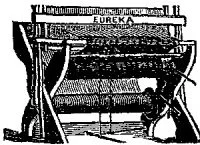
For the best HAND BAG CARPET LOOM AND WEAVERS' NEWSPAPER IN THE WORLD,
Address, EUREKA LOOM CO., 3077 W. Main St., Battle Creek, Mich., for circular & copy
CRUDEN'S CONCORDANCE,
A DICTIONARY,
And Alphabetical Index
TO THE BIBLE.
Cloth Binding, - - $1.25.
With “Sentinel,” - - 1.90.
—ADDRESS—
PACIFIC PRESS, 43 Bond Street,
New York City.
The Graphic Atlas—and Gazetteer of the World.
With over 220 Maps, Charts, Plans of Cities, etc.,
All revised to the present date.
—ALSO—
GAZETTEER with nearly 55,000 PLACES and RESULTS of NEW CENSUS.
By J. C. Bartholomew, F.R.C.S., F.R.S.E.
Quarto (size, 10⅜ x 8½ inches), half morocco, gilt top.
Publisher’s Price, $7.50
OUR PRICE, Post-paid, $3.75
Throughout the Atlas the countries of the world have been treated with fullness in proportion to their commercial importance and interest.
In the United States section a separate Map is given of each of the States and Territories.
The Canadian Provinces are treated in similar detail.
These Maps have been specially compiled from the latest and best Government Survey Maps, and have undergone local revision for the verification of New Counties, Townships and Railways.
Among the special features are Maps of the Hudson and Rhine Rivers, the Yosemite Valley, United States Railways, British Isles Railways, mean Annual Temperature, mean Annual Rainfall; also Maps showing environs of New York, Chicago, Philadelphia, Boston, San Francisco, New Orleans, Montreal, Quebec, Toronto, Ottawa, Rio Janeiro, London, Liverpool, Manchester, Mobile, Paris, Vienna, Rome, Constantinople, Cape Town, Jerusalem, etc., etc.
The GAZETTEER of the WORLD is a valuable feature for such a book of reference. It contains entries for about 55,000 places, is compiled from the latest authorities, and is specially complete in American names.
The results of the New Census have been incorporated.
For compactness and portability this volume is, in proportion to its ample contents, quite unique among Atlases.
—ADDRESS—
PACIFIC PRESS, 43 Bond Street, New York City.
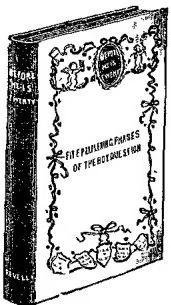
“Before He Is Twenty,” OR “Five Perplexing Phases of the Boy Question,”
IS A VERY HELPFUL BOOK FOR PARENTS.
It is divided into five chapters, by as many different writers, each treating of a particular phase of a boy’s life.
The first chapter, “THE BOY AND HIS FATHER,” by Robert J. Burdette, is alone worth many times the price of the book to any father of a young boy.
The other chapters, “WHEN HE DECIDES,” “THE BOY IN THE OFFICE,” “HIS EVENINGS AND AMUSEMENTS,” and “LOOKING TOWARD A WIFE,” are all important and helpful.
104 pages, bound in cloth, embossed in jet and gold, price, 75 cents.
PACIFIC PRESS, 43 BOND STREET, New York City.
BIBLES
_A LARGE AND VARIED STOCK._
Send for Catalogue to
PACIFIC PRESS PUBLISHING COMPANY,
43 BOND STREET, NEW YORK CITY.
Kansas City, Mo. Oakland, Cal.
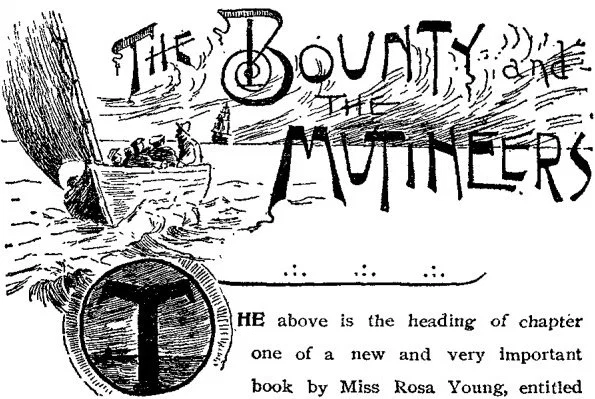
The Story of Pitcairn Island.
The above is the heading of chapter one of a new and very important book by Miss Rosa Young, entitled Pitcairn Island.
Miss Young, although a native daughter of Pitcairn Island, wields a facile pen, and tells with all the ease and grace of those whose opportunities for education have been better than hers, a most interesting and truthful story of Pitcairn, the far-away “Gem of the Pacific.”
Beginning with the account of the mutiny on board the Bounty, she relates the story of the arrival at Pitcairn, describes the experiences of the survivors, tells of the removal to Norfolk Island and the return to Pitcairn again, describes the wreck of the Cornwallis, and of the Oregon, gives an account of the various missionary efforts put forth by different denominations in behalf of the Pitcairners, and finally the arrival of the missionary ship Pitcairn and the conversion of the islanders to a new and unpopular religion.
The book is embellished with
18 FULL-PAGE HALF-TONE ENGRAVINGS
made from original photographs, and contains 256 pages. In addition to its being a reliable history of Pitcairn Island, this book will certainly prove a valuable acquisition to the missionary literature of the day.
PRICE, ONE DOLLAR, POSTPAID.
Neat vellum cloth binding, embossed in black and gold.
Persons who can canvass their own neighborhood before the holidays, please write for terms to agents.
Address, Pacific Press Publishing Co.,
Oakland, Cal. Kansas City, Mo. New York City, N. Y.