Your ShelfYour Projects

The American Sentinel, Vol. 7, No. 10

GOD is the great moral Governor; to him every soul is responsible; to him every
Earlier text: GOD is the great moral Governor; to him every soul is responsible; to him every

“Pagan or Christian.”

The Elmira Telegram has opened its columns to a discussion as to whether the civilization of the present time is Pagan or Christian, and as to the comparative values of what might be called Pagan, or Christian distinctively considered. Among the many articles published the one here quoted, alone, shows an intelligent discrimination between civilizing and christianizing a people,—between Christianity and civilization. The article is reprinted in full:—
I, with many others, no doubt, have read with interest, and may I say amusement, the discussion of “civilization,” under the above heading, and have waited patiently, hoping that some contributor would rise and inquire what the thing was over which the argument was being held, so that we laymen could have some chance of judging the merits of the various assertions being made. The original question, as I understand it, seems to be, “Is our civilization Pagan or Christian?” As I can not conceive how a “civilization,” or any other thing can be either one or the other, I venture to call your attention to a few facts that may ease the controversy of much that is immaterial and unsound. Both Paganism and Christianity are religious—one “the worship of idols,” the other “the religion of Jesus Christ.” A Pagan is “a worshiper of idols,” a Christian, “a believer in Jesus Christ.” A “civilization” being without life, without mind, and without volition, can neither worship, believe, nor render religious service, hence a civilization can not be religious, therefore can not be either Pagan or Christian.
We hear to-day, on every hand, our country called a “Christian Nation,” these worthy souls making a similar mistake with your correspondents. A nation, is a thing, an appellation, and practically a synonym for confederacy or union, and even if every individual in the nation was a Christian, the nation would be simply a nation, or confederacy, of Christians, and not a Christian nation. A nation is the result of a civil compact between individuals, without reference to religion, even though all may be of one religion, hence the religion of the people of a nation forms no part of their civilization though it may make all the difference as to the character, quality or degree of civilization a people may enjoy. The proper question then to ask, seems to me to be something like this: “To which are we most indebted for the development of our civilization—Paganism or Christianity?”
To properly consider this question we need, on the start, to understand fully what is meant by “civilization.” Lexicographers define the word as “the act of civilizing,” and to civilize as “to reclaim from savage life.” A savage is “a barbarian or rude” person, while a civilized being is “polite, polished, and cultivated.” “Civil,” is defined as “pertaining to society,” and “society” as “a union of many in one interest,” while a “civilian” is said to be “one engaged in the ordinary pursuits of life.” If now, we put all this together we will obtain a comprehensive, as well as intelligent conception of the meaning of the appellation “civilization.” A civilized being, then, “is one who has been reclaimed from a savage, or rude State, to dwell in union and harmony with his fellows who have associated or confederated together for the common purpose or interest of protection and advancement, that all may engage in the ordinary pursuits of life without fear or molestation.”
If this definition be substantially correct, and the two religions be submitted to its test, the palm of victory must, of necessity, be given to Christianity. If we trace the record of civilization from the incipient tribal relations to the gathering into a monarchy in Assyria, and so on down through the succeeding kingdoms until we reach Rome, we notice a constant development in culture and refinement, under Paganism, but a lamentable disregard by the reigning power of the life and liberty of individuals.
With the coming of Christ, a new era dawned upon the world. Up to that time civilization to the individual had been a partial failure. He had become, it is true, both cultivated and refined, and, so far, civilized, but the union for individual protection had not resulted from the civilization, for while the history of Rome, for instance, shows that the State protected its subjects to the best of its ability from common foes from without, it absorbed the individual’s liberty and made him a mere machine for the advancement to, and maintenance in, power. Such a thing as personal liberty was unknown, the individual existed simply for the State.
Jesus Christ taught the value of a soul and thrilled the world with the doctrine of true liberty—“Render, therefore, unto Cæsar [earthly rulers] the things that are Cæsar’s, and unto God the things that are God’s.” The individualism that then had its birth has come to fruition in our own country, where civilization has resulted in a confederation and government “of the people, by the people and for the people,” and where all men have [in theory] a right “to worship God according to the dictates of their own conscience;” where they are protected in their life and pursuit of happiness; where woman has been elevated to her proper sphere as the equal of man, and where the value of an individual life is fully appreciated. To Christianity, then, belongs the palm of victory, as having developed the highest and true standard of civilization, and to our country the proud distinction of selection as the field for its development.—W. S. C., Deckertown, N. J.
This extract from the proceedings of the Ohio Legislature published in the State Journal, Columbus, February 25, shows how little the legislative mind comprehends the true principle at issue in these bills involving religious questions:—
“The gay barber was the subject of legislative consideration yesterday afternoon in the house. Mr. McConnell, by request of the Journeyman Barber’s Association, had introduced a bill prohibiting barbering on Sunday.
“There was some opposition to it coming from the rural districts but it passed by a good majority. Mr. McConnel, the author of the bill, championed his measure and claimed it was demanded by ‘advancing civilization and was in the interest of humanity.’
“Mr. Beaird opposed the bill on the ground that it would inconvenience the traveling public. Before this reform was instituted he would suggest that saloons be closed on Sunday. Though demanded by the union of barbers it was not made in the interest of the laboring class, many of whom had no opportunity to be shaved on Saturday. There were ten votes against the bill, which provides that any person found engaged in the business of barbering on Sunday shall be deemed guilty of a misdemeanor, and upon conviction shall be fined not less than twenty-five or more than fifty dollars, or imprisoned in the county jail for a period of not less than fifteen nor more than thirty days.”
A DIFFERENCE of opinion seems to have arisen in Minneapolis, Minnesota, between the city council and the Sabbath Union and the Law and Order League. The life of the Sunday-closing ordinance there has been short. The committee to whom the matter was referred in the council made this report:—
“Your standing Committee on Ordinances, to whom was referred an ordinance to close Sunday theaters, respectfully report that they have given the matter careful consideration and find that some people work seven days in the week, some six days and rest one. Some work one day and rest six. Your committee regard it as a self-evident proposition that those who merit the greatest consideration from the State are those who work the most, other things being equal.
“Your committee further finds that ‘one man esteemeth one day above another; another esteemeth every day alike. Let every man be fully persuaded in his own mind.’ And again, ‘He that regardeth the day regardeth it unto the Lord; and he that regardeth not the day to the Lord doth not regard it.’
“Your committee respectfully recommends that said ordinance be laid on the table.”
Alderman Bradish supplemented this report with a speech after the same fashion. It seemed to him that the preachers and Sunday-closing agitators were a little out of their latitude; they were trying to improve on the word as God made it. He said further:—
“This council has always been harassed by people representing the two extremes in the community—the Puritans and the im-Puritans. The first class has the idea that the sole purpose of the council is to prepare men for heaven, while the other class want unlimited license for men to make a hell on earth. The Puritans would have a new code of Blue Laws to regulate the institution of the Sabbath, and prohibiting everything but Sunday preaching. The im-Puritans want all the world wide open. Some people will hear of no distinction between the saloon and the theater. The same people would be unable to distinguish between a blizzard and a mocking-bird.”
The minister of religion should inculcate correct principles, should insist upon honesty in every walk of life, but when he attempts to coerce voters by threats of the Divine wrath, or even to influence them in a certain direction by threatening them with his own or the church’s displeasure, he abuses his sacred office and arrays himself on the side of religious despotism. It matters not even if, in a given case, the minister’s views are correct as to the better political course to pursue, the principle remains unchanged; and it should be insisted upon by free people everywhere that ecclesiastics, as such, shall keep out of politics.
It is reported that petitions are being industriously circulated in Canada, asking that the Canadian Government order its exhibit at the World's Fair closed on Sunday.
The “Pearl of Days” reports that “the Legislature of Ohio by a decided vote—fifty-four in the affirmative and twenty in the negative—has requested the Commissioners of the Columbian Exposition, in Chicago, to keep the gates closed on Sunday.”
The question of teaching religion in the public schools is one that will not down. The advocates of a national religion are of course logical and consistent in attempting to use State and national means for its promulgation. That California is feeling the premonitions of a coming agitation of this subject is shown by the following editorial item from the Grass Valley Union:— “A controversy appears to be raging in the State Normal School at San Jose as to whether or not the Bible should be read in the school. Any dispute of this kind is to be greatly regretted. The public schools and the public school system of the State are well managed, and religious questions have nothing to do with them. This is one of the cases in which it is proper to let well enough alone. In this connection there is a rumor throughout the State that during the last few months religious exercises of some nature have been conducted on Sunday in the university buildings at Berkeley by professors of the institution. This is probably untrue, but were it correct it would show bad taste and wrong judgment. The buildings have never been open on Sunday during the twenty years of their existence, and should be used for the purposes for which they are built, and for which every class of people pays taxes.”
On Wednesday, March 2, the Committee on Corporations, of the New Jersey Legislature, to which questions in reference to the World's Fair had been referred, gave a hearing upon the closing of the World's Fair on Sunday. There were present about twenty-five persons, mostly clergymen and members of the Woman's Christian Temperance Union. Three members of the Legislature attended the hearing. The purpose of the gathering was to ask that a resolution be presented to the Legislature, and passed, expressing it as the opinion of the Legislature of New Jersey that the World's Fair should be closed on Sundays. Rev. Geo. S. Mott led the delegation and gave a detailed history of the practice of previous expositions, in this and other countries, and upon the precedents quoted based his request for legislative action in the case of the Exposition at Chicago. Mr. Mott attempted to put his plea entirely upon a civil basis, but Jas. S. Ford, and Mr. Taylor, of Belvidere, who followed him, being less instructed in the sophistries of the subject, made a religious plea that the Legislature should voice the views of the churches and the Woman's Christian Temperance Union in regard to Sunday closing.
The action taken by the Legislatures of Massachusetts, Ohio, Kentucky, and Virginia, and the Assembly in New York in voting their State Expositions closed, or passing resolutions recommending the closing of the Fair, was quoted as a strong incentive to similar action by this and other legislatures.

NATIONAL Religious Liberty Association

DECLARATION OF PRINCIPLES.

We believe in the religion taught by Jesus Christ.
We believe in temperance, and regard the liquor traffic as a curse to society.
We believe in supporting the civil government, and submitting to its authority.
We deny the right of any civil government to legislate on religious questions.
We believe it is the right, and should be the privilege, of every man to worship according to the dictates of his own conscience.
We also believe it to be our duty to use every lawful and honorable means to prevent religious legislation by the civil government; that we and our fellow-citizens may enjoy the inestimable blessings of both religious and civil liberty.

OFFICES:

43 Bond St., New York City.
1225 T St., N. W., Washington, D. C.
28 College Place, Chicago, Ill.
12th and Castro Sts., Oakland, Cal.
267 West Main St., Battle Creek, Mich.
R. C. PORTER — PRESIDENT.
A. F. BALLENGER — SECRETARY.

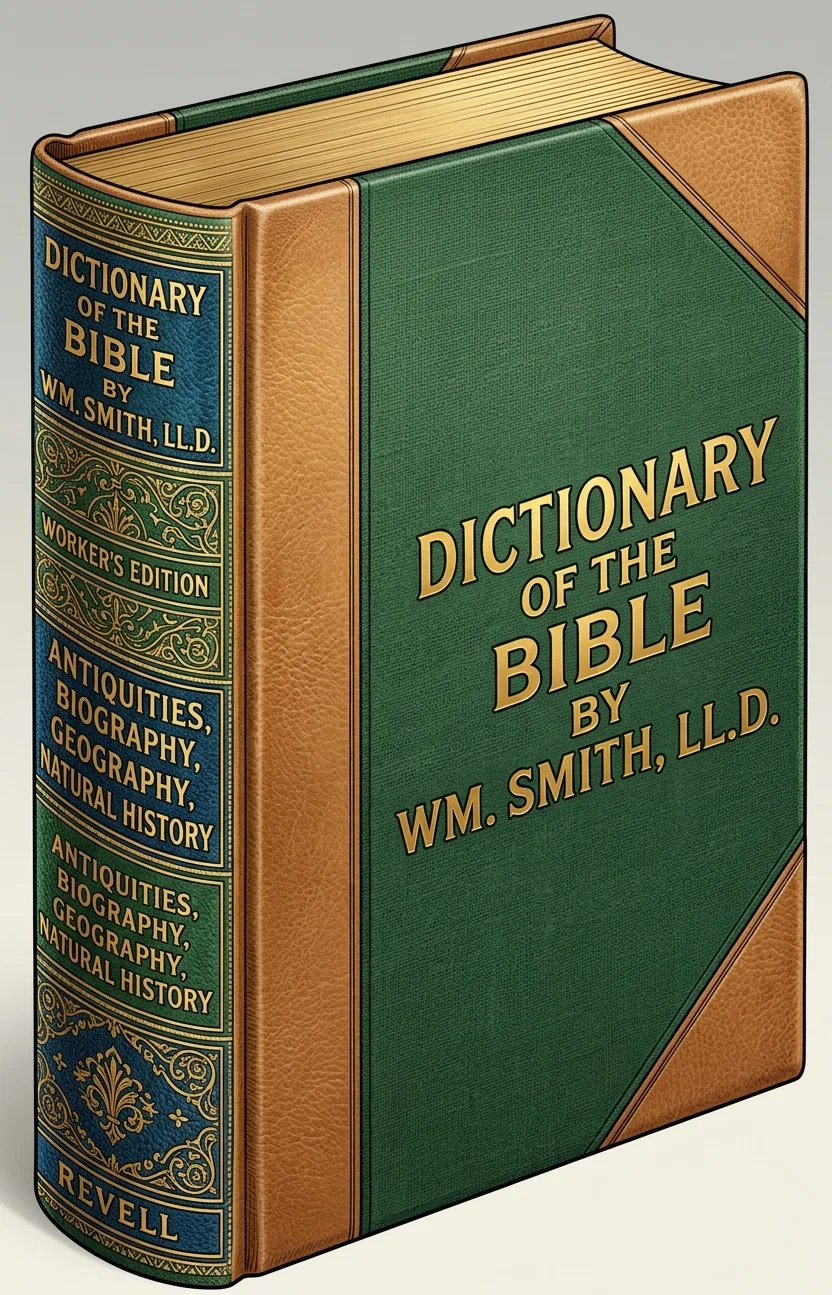
SMITH'S Dictionary of the Bible.

“Worker's Edition.” Comprising its antiquities, Biography, geography, and natural history. Edited by Wm. Smith, LL. D. Price, $2.00.
This work contains every name in the Bible respecting which anything can be said; over 500 engravings, and is a complete guide to the pronunciation and signification of scriptural names; the solution of difficulties of interpretation, authority and harmony; also a history and description of Biblical customs, manners, events, places, persons, animals, plants, minerals, etc., and comprises a most complete encyclopedia of Biblical information.

FOUND AT LAST!

A POCKET SPELLER, DICTIONARY, AND MEMORANDUM BOOK COMBINED.
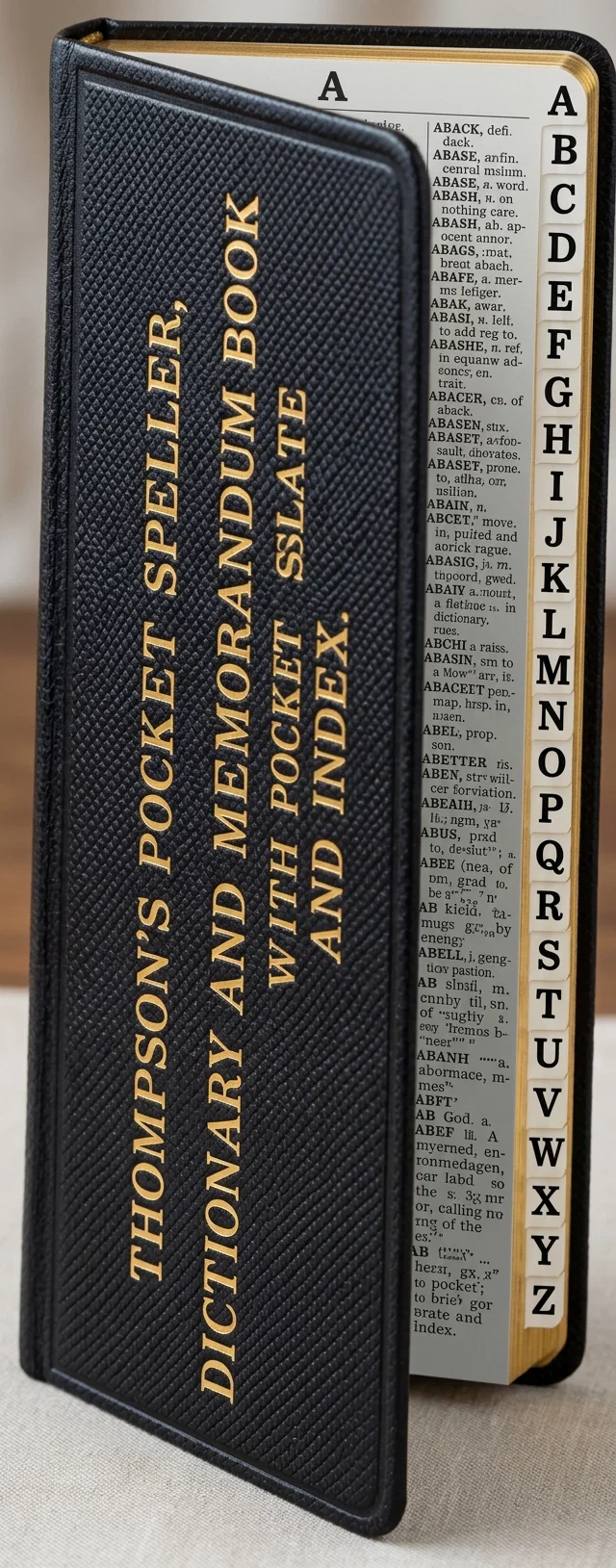
It gives the right orthography of all words (over 22,800) in common use, and in nearly every instance their definition of commercial terms, forms of notes, due bills, receipts, letters of credit, orders for money, merchandise and goods stored, principal holidays, marriage anniversaries, combination of shades, and carefully selected laws of etiquette in social and business life, also a silicate slate for memorandums.
This Speller gives the most complete list of words in common use; it is a Speller, Dictionary, Handy Companion, and Memorandum Book combined; it is indexed; it prints all words pronounced alike but spelled differently, so they can be distinguished at a glance; it shows where the letter e at the end of a word is to be dropped when adding ed or ing; it gives a complete list of the most practical business forms; it gives the laws of etiquette in social and business life; these rules alone are worth the price of the Speller.
This Speller is bound in leather, is of convenient size to be carried in vest pocket, and its price brings it within the reach of all. American Russia leather, gilt edge, 50 cents. Sent post-paid to any address on receipt of price.
Address all orders to PACIFIC PRESS, 43 BOND ST., NEW YORK.
Such communications as this, published in the “Pearl of Days,” show the progress of the popular movement for the recognition of Sunday throughout the world. The French Popular League is wiser in its generation than the American Sabbath Union and avoids committing itself in so many words to the civil enforcement of Sunday regulations, nevertheless they are affiliated organizations with the same general purpose in view:—

POPULAR LEAGUE FOR SABBATH REST IN FRANCE.

174 Boulevard St. Germain, Paris, France, Feb. 10, 1892.
Sir and Dear Colleague: I have had the pleasure of receiving your telegram and of communicating it last evening, to the general assembly of our Popular League. The reading of it was received with overwhelming applause.
The cause of Sabbath rest interests the whole of humanity, and it is pleasant and encouraging for the combatants of every nation to feel themselves side by side with those of another nation. The sentiment of this community of ideas and efforts is doubled in value, when it concerns nations living under the same form of government.
I thank you, therefore, with all my heart, sir and dear colleague, for your manifestation of sympathy, and I beg you will accept my very sincere acknowledgment.
The President of the Popular League, LEON SAY.
To Col. Elliott F. Shepard, President of the American Sabbath Union.
UNDER the title “Mass Meeting of the Wicked,” the Mail and Express, of February 27, publishes a “special” from Chicago, as follows:—
Under the auspices of the American Secular Union, an organization which opposes the reading of the Bible in the public schools, favors the repeal of all laws on Sabbath observance, the abolition of the oath in courts of justice, and the substitution of a simple affirmation, the discontinuance of the observance of religious festivals and feasts, and the abolition of paid preachers in prisons, hospitals and other similar institutions, a mass meeting is to be held in Central Music Hall to-night for the purpose of demanding that the World’s Fair be kept open on Sundays. The movement has received the support of all the Socialistic and Anarchistic organizations of the city, as well as of the foreign-speaking atheistic element.
It is said that, in addition to demanding that the gates shall be opened, the machinery kept in motion and ordinary trading be carried on on the Lord’s day, the resolutions will also declare in favor of the unrestricted sale of liquors of all kinds on the Fair grounds.
It is given out that this is but the first of a series of gatherings that will be continued so long as the religious element of the country continues to petition and hold meetings in favor of the proper observance of the Sabbath by the Fair authorities.
It is a remarkable fact, worthy of notice in this item, that, outside of the claim that the unrestricted sale of liquors is to be asked, the position attributed to this “mass meeting of the wicked,” is in the interest of Christianity, pure and undefiled. The statement that the running of machinery and general trading be carried on Sunday does not mean that Sunday labor and Sunday selling should be compulsory at the Fair. This form of putting the matter is quite common among those who favor compulsory Sunday closing. The golden rule of the orthodox in reference to the World’s Fair is, “Whatsoever I would that others should do, that shall they be compelled to do.” The Secular Union denies the authority of the Bible, and then acts upon its precept, “Whatsoever ye would that others should do unto you, do ye even so unto them.”
The rare ability of the author in the presentation of Scripture truth has never been used to better advantage than in this little work. “Steps to Christ” is not alone suitable as a guide to the inquirer and young convert, but is rich in thought and suggestion for the most mature Christian. Some idea of its scope and practical character may be gathered from the following table of

CONTENTS.

  1. The Sinner’s Need of Christ.
  2. Repentance.
  3. Confession.
  4. Consecration.
  5. Faith and Acceptance.
  6. The Test of Discipleship.
  7. Growing up into Christ.
  8. The Work and the Life.
  9. A Knowledge of God.
  10. The Privilege of Prayer.
  11. What to do with Doubt.
  12. Rejoicing in the Lord.
STEPS TO CHRIST is issued in a rich, neat cloth binding, gold and ink dies, at 75 cents per copy.

THE CHRISTIAN'S SECRET

OF A

HAPPY LIFE.

BY HANNAH WHITALL SMITH.
—O—
Standard edition, 12mo, 240 pages, 75 cents.
Handy classic edition, 18mo, 292 pages, cloth, gilt edge, 85 cents.

CHURCH AND STATE

IN THE UNITED STATES.

ON THE AMERICAN IDEA OF RELIGIOUS LIBERTY AND ITS PRACTICAL EFFECTS, WITH OFFICIAL DOCUMENTS,
BY PHILIP SCHAFF, D. D.
This is a companion volume to “Religious Freedom,” and discusses that part of the Constitution which protects us against the despotism of a State Church, and guarantees to us the free exercise and enjoyment of religion, as an inherent, inviolable, and inalienable right of every man. A most excellent treatise. Price, $1.50.
The above-named books will be sent post-paid on receipt of price.
PACIFIC PRESS PUBLISHING CO.
Or Oakland, Cal.                                     42 Bond St., New York City.

IN THE HEART OF THE SIERRAS

—BY J. M. HUTCHINS.—
This book has been out but a short time, but it has attained a large sale. It is a book which sells to all classes of readers. As a work of art it surpasses anything of the kind which has ever before been attempted. The Yosemite Valley is now the leading attraction for tourists, and it is visited every year by thousands. It is one of the wonders of the world, and this work written by a man who has lived so long amidst these scenes is one which all will be eager to possess.

IT IS A COMPLETE HISTORICAL AND DESCRIPTIVE SUMMARY OF THE GREAT VALLEY AND ITS MARVELOUS SURROUNDINGS.

A Book of Thrilling Interest.

All who have seen the volume pronounce it the most intensely interesting work published on the Pacific Coast.
MORE THAN ONE HUNDRED ILLUSTRATIONS.
Price, in Flexible Cloth, $1.50; Heavy Paper covers, $1.25.
Address, PACIFIC PRESS PUB. CO., 43 Bond St., New York City. Or, Oakland, Cal.

USEFUL AND INTERESTING BOOKS FOR BOTH OLD AND NEW SUBSCRIBERS.

We will send the Signs of the Times one year, with your choice of either one of the following books, post-paid, for $2.00:
PROPHETIC LIGHTS, by E. J. WAGGONER, Prophecies of the Old and New Testaments, interpreted by the Bible and history. Paper bound, 180 pages, handsomely illustrated.
HISTORICAL SKETCHES OF FOREIGN MISSIONS of Seventh-day Adventists, with maps showing location of churches, etc., 294 pages, paper binding.
LIFE AND WORDS OF CHRIST, by C. GEIKIE, D. D. This is a cheap edition, contains over 800 pages, and is bound in cloth.
Every library ought to contain these interesting and instructive books.

The Signs of the Times

is a 16-page weekly religious journal, and will be furnished at the following prices of subscription:
Single copy, one year, post-paid,    $1.50. In clubs of 10 and over to one address,    1.25. To foreign countries in Postal Union,    ($2)    8s.
Address        SIGNS OF THE TIMES, 12th and Castro Sts., Oakland, Cal. U. S. A.
IN commenting upon the proposed Sixteenth Amendment to the Constitution of the United States, the Christian at Work says: “This amendment forbids any appropriation of public moneys to sectarian purposes. . . . Its adoption would at once solve the vexed public-school question in every State in the Union. It would also render the introduction or passage of such measures as the Freedom-of-Worship Bill impossible.”
THE Freedom-of-Worship Bill is a measure now before the Legislature of New York which provides that no institution in this State shall receive any State aid unless it is free and open for any denomination to hold religious services for the benefit of such inmates as desire the services of that particular sect. Of course the object of the bill is to secure the admission of Romish priests to certain institutions supported by the State, but under Protestant control so far as the religious instruction given is concerned.
THE religious instruction now given in the institutions, which would be opened to the priests by this Freedom-of-Worship Bill, is what is known as “unsectarian religious instruction.” However, such religious instruction is “unsectarian” only as to Protestants. From a Roman Catholic standpoint this so-called “unsectarian” instruction is intensely sectarian, for it is anti-papal.
THE papal theory of religion is that all religions, except the Roman Catholic, are either entirely false or else insufficient for the moral uplifting of man, and for the salvation of the soul, and that the church, that is the Papal Church, is alone authorized to teach religion. It follows that the teaching of any other religion is itself a denial of the doctrines and claims of Romanism; in short, such religious instruction is essentially Protestant; and in the very nature of the case it can not be otherwise.
THE SENTINEL has not the least sympathy with the assumption, that Romanism is the only true religion, and that therefore all other religious instruction is insufficient; but it is the right of that church to so hold, and to so teach; and it is manifestly unjust to require Catholics to contribute to the support of schools, and other institutions, in which the falsity of the papal claim is taught. Protestants ought to deny the Roman assumption; and as far as possible, by proper means fortify the minds of the rising generation against papal superstitions; but they ought to be at the expense themselves, and not ask the Catholics to help foot the bills.
THE American State is, or at least professes to be, purely secular. This is the American theory of civil government, and it is the correct theory. The proposed Sixteenth Amendment is not, however, designed to correct such abuses as this; it provides, it is true, that no State shall “use its property or credit, or any money raised by taxation, or authorize either to be used for the purpose of founding, maintaining, or aiding, by appropriation, payment for services, expenses or otherwise, any church, religious denomination or religious society, or any institution, society or undertaking which is wholly, or in part, under sectarian or ecclesiastical control;” but the well-known views of the promoters of this measure forbid the hope that they intend anything more than to cut off State appropriations to Roman Catholic institutions.
AS THE SENTINEL has previously remarked, concerning this amendment, it might be so construed as to cut off all appropriations for religious purposes. The effect of the amendment, should it be adopted, will all depend upon the turn given to the terms, “sectarian” and “ecclesiastical.” As these terms are now used by many, the amendment would cut off all State aid to Catholics but leave the doors wide open for the indirect support of that colorless thing called “unsectarian religious instruction.”
THE bill to authorize an appropriation of seventy thousand dollars a year to maintain the Metropolitan Museum of Art and keep it open on Sundays, has passed our State Senate. “It ought soon to become law,” says the World, “and there is little doubt that it will.”
NEVER before were the advocates of religious legislation so active or so aggressive as now. Both Congress and the several State Legislatures are being fairly deluged with petitions asking for legislation of a religious character. The most of these petitions are concerning Sunday.
As might have been expected, disestablishment of the Church of Wales has been defeated in Parliament. In that country the Established Church is greatly in the minority, but it has the advantage of being entrenched in the law, and so by brute force, holds the whole country under tribute to it. However, with the election of a new Parliament, which can not be long delayed, disestablishment may come.
A good deal is being said by both press and pulpit on the subject of marriage and divorce, and the religious press especially is deploring the great increase in the number of divorces granted. The remedy is supposed to be in the direction of a national divorce law, or at least in the amendment of the divorce laws of the several States. But this never can correct the real difficulty. The fault is not in the laws but in the morals of the people. A change in the laws might make fewer divorces but it would not remove the immorality which gives rise to divorces. It is well to have good marriage and divorce laws; it is better to have good morals. Legislatures can make the laws: individuals alone can cultivate the morals.
A READER asks to be advised as to the propriety of signing the following pledge, which is being circulated very extensively at the instance of the Voice, of this city:—
We, the undersigned, being profoundly impressed with the aggressive power of the liquor traffic, and the overwhelming evils, political, industrial, and moral, growing out of it, believe that a strong influence would be exerted upon public sentiment and a long step taken toward the eradication of those evils if the enemies of the liquor traffic would present as united a front as the liquor dealers present when their business is attacked. We therefore agree to vote, at the Presidential election in 1892, for the candidates of the Prohibition Party for President and Vice-President, provided that the signatures of one million voters be secured to this agreement.
THE SENTINEL can not better answer this than in the words of holy writ: “He that answereth a matter before he heareth it, it is folly and shame unto him.” Prov. 18:13. As yet, nobody knows what the platform of the Prohibition Party will be, nor who will be its candidates. The man who signs such a pledge is guilty of treason to his own manhood, for he abdicates the right to exercise his private judgment.
COLERIDGE defines morality thus: “Morality is the body, of which the faith in Christ is the soul.” What folly then to talk of enforcing morality by civil law.
It is a contradiction to let a man be free, and force him to do right.—F. W. Robertson.

You have reached the end of this edition.

The American Sentinel · March 10, 1892