THE prophet Joel mentioned a time when great trouble would exist among the different nations, a time when plowshares would be beaten into swords, and pruning-hooks into spears. This would be an era in which the weak state would exclaim, "I am strong," without a doubt having caught the war contagion from other mightier nations. Every evidence is pointing to the present as the epoch in which the prophecy is meeting its exact fulfilment.
The great European powers, the United States, and Japan, have set before the world the bad example of preparing for war in time of peace. The fact that weaker countries have also adopted this policy as their own should occasion no unusual surprise, but instead should be received as a matter of logical sequence. Weakness usually looks to strength for models to copy from. A strong power always wields more or less of a telling influence over a weaker one. Take the Sunday laws as an excellent illustration. The United States began to pass them, and now every country in Latin America is patterning after her. In the Americas the United States has for some time been equipping a very powerful navy. Now the Latin American republics have caught the germ of war infection, a microbe which will probably continue to prey on its victims and sap their life-blood until the Battle of Armageddon in the Valley of Jehoshaphat puts an end to all feverish war preparations.
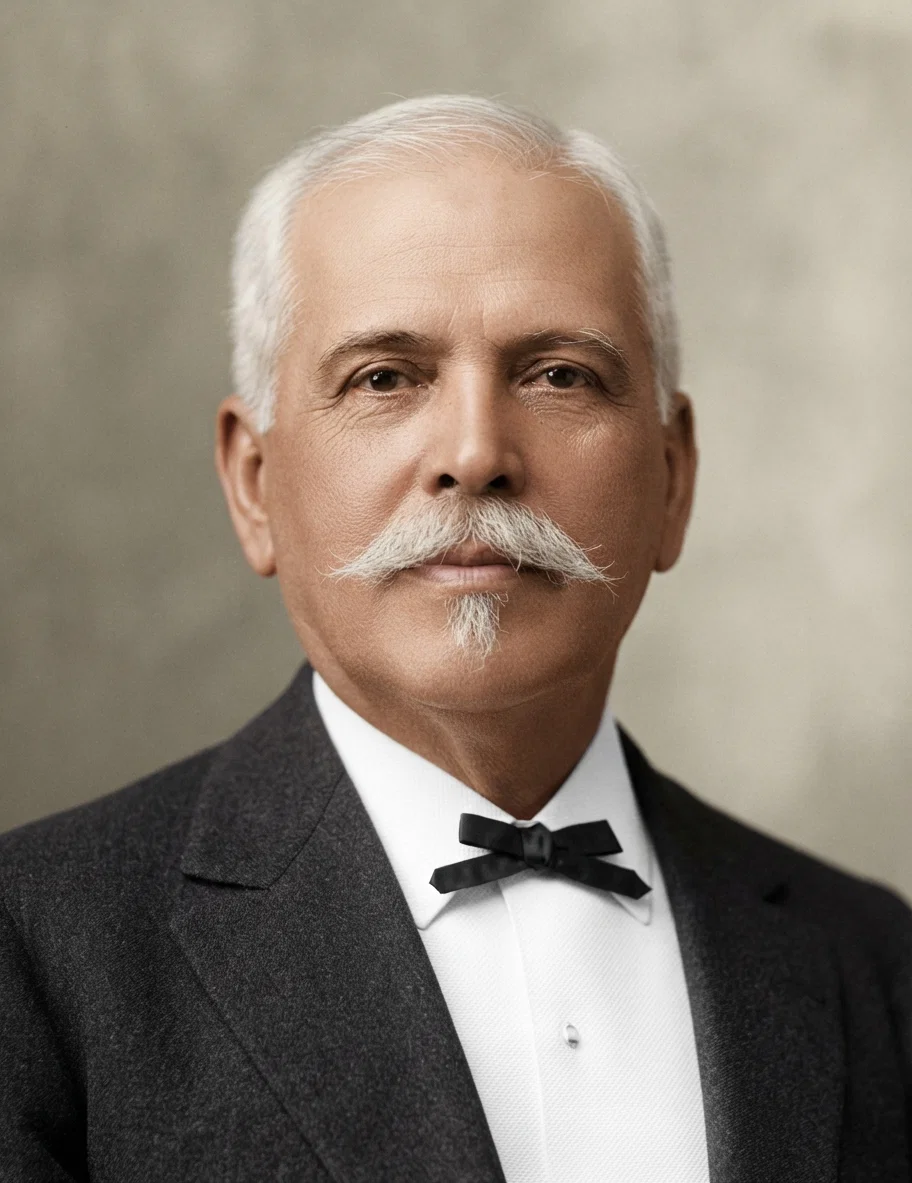
General Eloy Alfaro, President of Ecuador
Ecuador, one of the smallest and consequently one of the weakest South American countries, is actively occupied at present in getting ready for a war with Peru, her neighbor on the south, in case the Spanish king fails to favor her in his verdict concerning the boundary dispute between the two nations. This decision should be made public almost any day. The Ecuadorian minister in Madrid has urged the king to make known the settlement he has arrived at, as soon as convenient, since commerce in Ecuador and Peru is suffering a bit, as always occurs when relations between countries are strained.
Ecuador, in shape like a triangle, finds itself both north and south of the equator. Quito, the capital city, is situated a few leagues to the south of the line. The extension of the country from north to south along the coast, or, in other words, from Colombia to Peru, is about 480 miles. The best salt water harbors are those of Port Bolivar and Santa Elena. Some day in the near future the Bay of Caraquez will be perhaps the principal one, as the government has voted to expend a considerable sum of money on it. From this port a railroad is being constructed by a French company to Quito. Guayaquil, the second city in size in Ecuador, is really a river port, the river at this point being about as far across as the Mississippi at New Orleans.
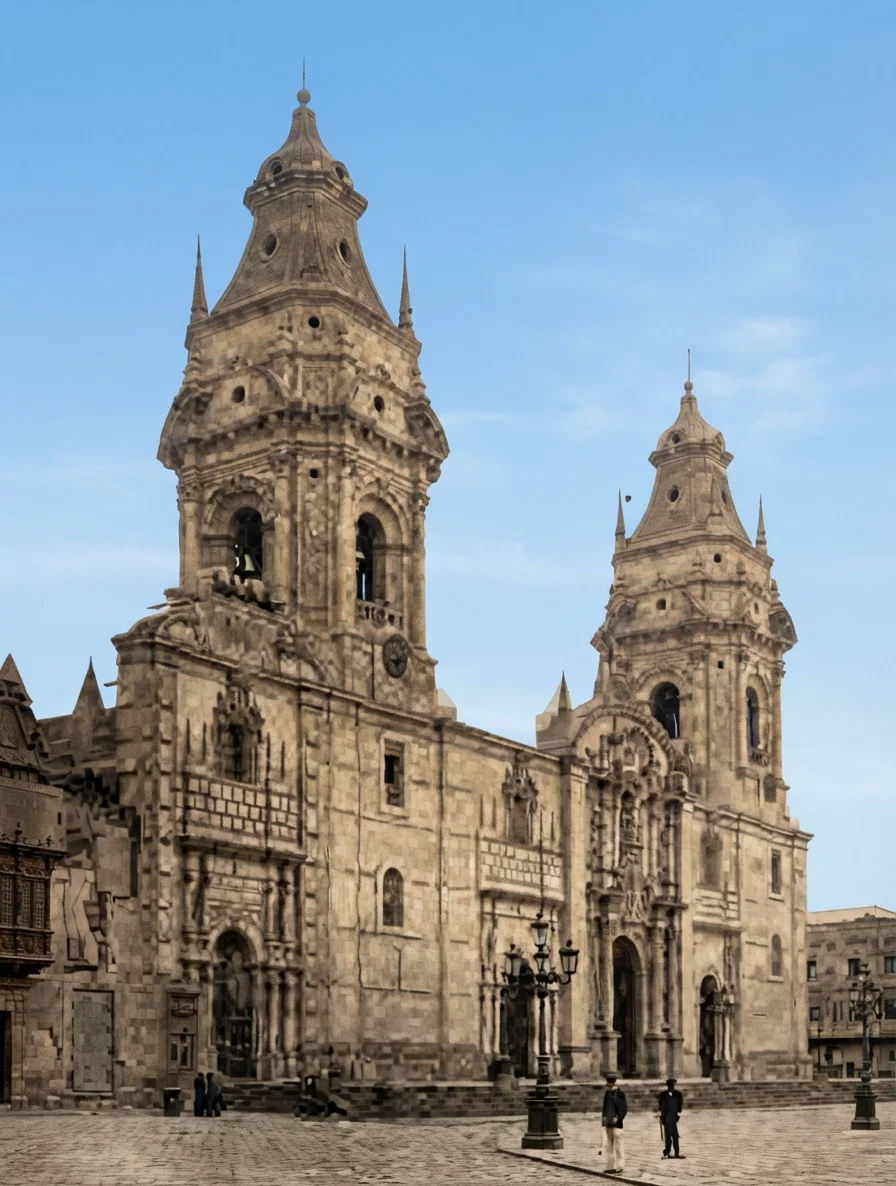
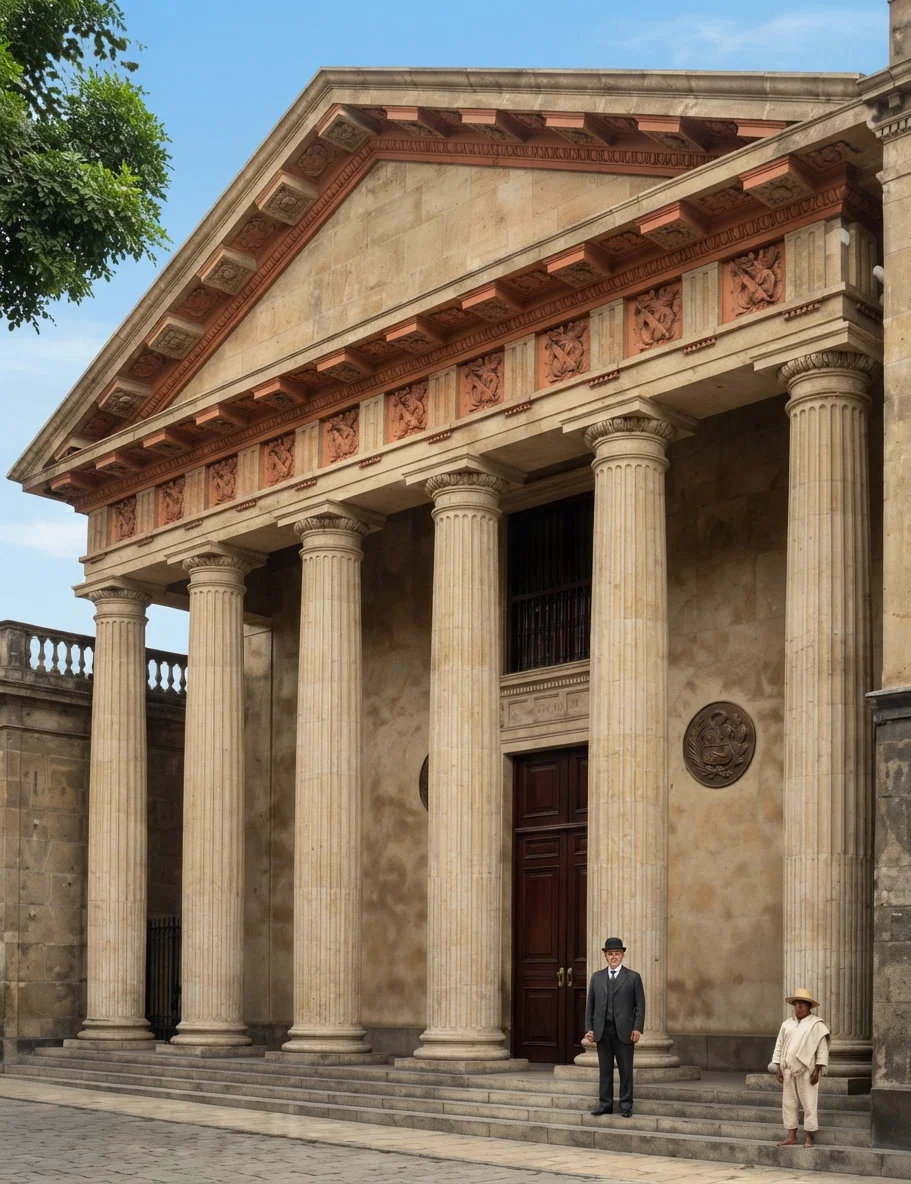
St. John's Cathedral, Lima, Peru. The facade is 480 feet wide; the central portion between the towers, 120 feet wide.
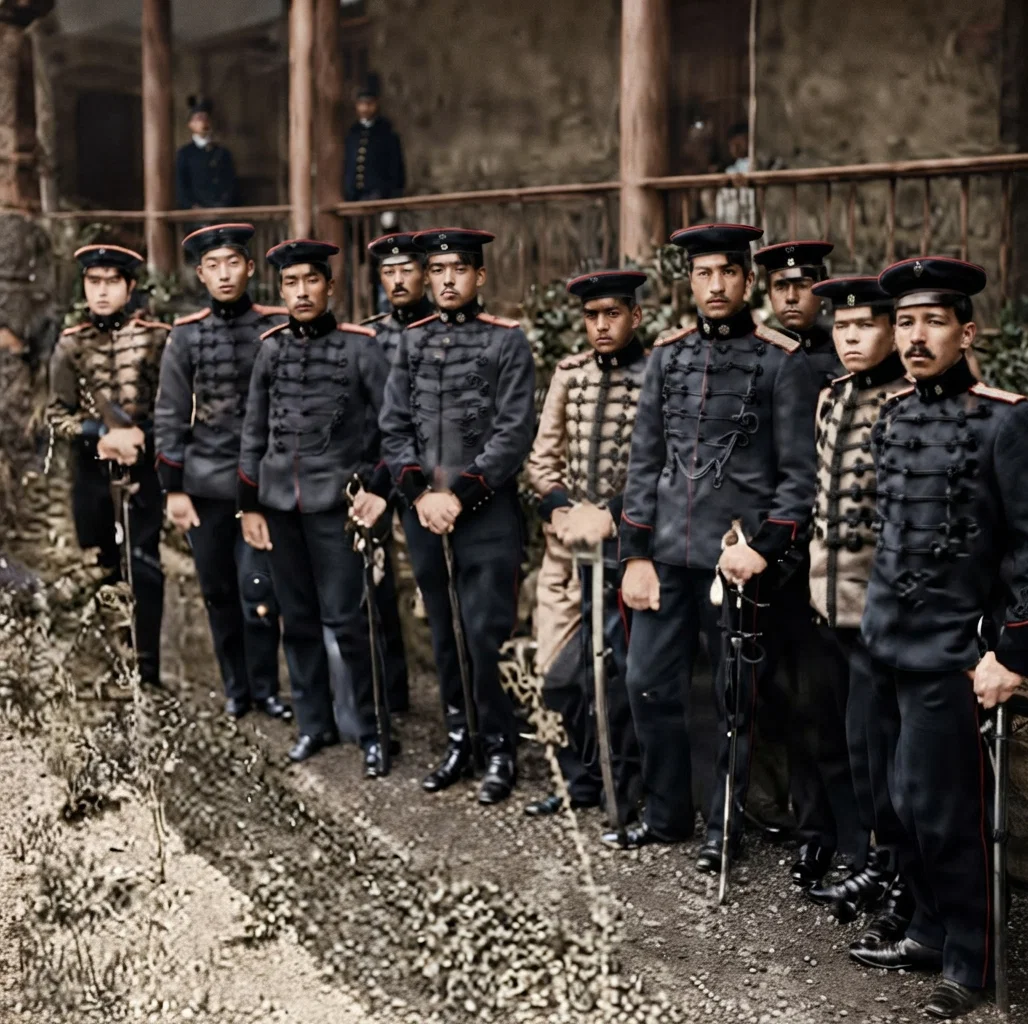
Group of instructors at the Ecuador National Military School. Notice their comparative youth.
Ecuador claims all territory embraced between the Pacific Ocean on the west and Brazil on the east, and between the Maranan River—another name for the Amazon—on the south, and Colombia on the north, a total area estimated at 250,000 square miles. Peru, however, only concedes her neighbor 49,626 square miles. One can see at a glance how great the disputed territory is. As Peru already has colonies planted in the lower part of the disputed territory, she has in this particular a considerable advantage over Ecuador. Iquitos, a populous city situated near the Amazon River, and noted for its large output of rubber, is the largest of these Peruvian colonies. From present appearances it seems probable that King Alfonso in his verdict will award to Ecuador that portion of the Amazon Valley territory which is already under her jurisdiction, and to Peru the portion which at the present moment is under her control. Whether Ecuador will abide by this decision, no one at present is capable of saying definitely; but it seems to me that history may repeat itself, and that the same scenes which were enacted in Bolivia may occur in this country as soon as the decision is made public.
Ecuador is drilling all her available men. Pure Indians, priests, and men physically unable to take part in the maneuvers, are excepted. There is a law that lawyers or doctors who refuse to sign for service will be subject to imprisonment for a year's time; furthermore, they must pay a heavy fine and suffer the loss of their citizenship, besides not being able to practise their profession any more in this country. In other words, they are to be completely ostracized. Boys in the high school, only sixteen or seventeen years old, falsely swear that they are eighteen, sign for active service, and begin to drill. The time for the military exercises is Sunday, in the afternoon. Sunday, all over South America, is also the official election day.
Ecuador's Strength
It is calculated that on very short notice Ecuador could rush 60,000 men into the field. I am inclined to think that this is a low estimate. In case of war these men would be hastened to the frontier. A train traveling night and day, in less than twenty-four hours could reach Guayaquil. From that city to Tumbes, the nearest center of population in Peruvian territory, a steamer can go in seventeen hours. Quite frequently, however, landslides delay trains for hours, and sometimes even days. A month ago we had no mail for about two weeks. Landslides over a11distance of fifteen miles covered the tracks and completely paralyzed traffic.
The railroad between Quito and Guayaquil is an American enterprise, but has not met with ready acceptance from the people in general. The freight tariff is very high; and as grades are as steep as seven per cent, accidents are not uncommon. A single engine could only haul 300 men at a time, but in case of war all trains on the entire line would be immediately pressed into service. The railroad is called the "tapeworm of the nation," but in case of trouble the people would very likely change their ideas regarding it. The trains could transport soldiers quickly and safely to Guayaquil. In the winter season it is extremely difficult to go on foot or on horseback to the coast, because of the swamps that cover the lowlands during the rainy months from January to June.
The standing army of Ecuador is composed of 3,200 men, 600 of whom are officers, usually graduates of the Quito Military School. As there is a very close alliance between Chile and Ecuador, Chilean officials are brought to this country to put the army on the best possible footing. The Chilean army is generally considered to be best drilled in South America.
Besides the men of the regular army, there are in Guayaquil twenty companies of firemen, composed of 2,100 men. These are organized like soldiers, and form a sort of militia. There are 500 policemen in Guayaquil, and an equal number more in Quito. These, including the rural and urban police of other provinces, bring the total number of men that can be called on for service at a moment's notice, up to somewhere near 10,000. These 10,000 men usually are considered as the army in time of peace. These soldiers quite often are called upon to quell insurrections, which are frequent. Luis Martinez, a noted painter, author, and politician, has well said that it is easier to start a rebellion in Ecuador than cook a pot of mush. However, at present, for a wonder, all parties have stopped their quarreling, and are preparing to stand united against the common foe, Peru.
The Two Nations Compared
Ecuador has a population of 1,500,000. This number is only an approximate estimate. For a half century or more, it has been placed at this figure. Nobody knows how many Indians there are in the Amazon Valley, so this vague census will have to remain until the statistics of the country are more accurately known. Peru has twice as many inhabitants as Ecuador. In both republics one can find every shade of color imaginable. The Negroes and Chinese incline to the warmer coast region; the Indians cling to the Andean hills and valleys. In Ecuador about 600,000 of the 1,500,000 inhabitants belong to the mixed race; 30,000 are whites, descended from the Spaniards who came to the country during colonial times. The white race only has a taint of Indian blood; they are the ones who own most of the property in the country. There are about 10,000 pure Negroes in Ecuador. Many Jamaicans have come here to work for the railroad.
The soldiers are usually recruited from the mixed classes. If a soldier does not know how to read when he enters the army, he is taught how to do so before he ends his term of service. This is true not only of Ecuador, but of the Argentine and other countries of South America as well. The soldiers stationed at Ambato often come to our house for our Spanish "Signs of the Times" to read. Paid as they are to fight for a liberal government, they are not usually very much inclined to Catholicism. The officers are more generally Spiritualists or atheists, altho there are some who look upon Protestant ideas with favor.
Internal Conditions
During the last fourteen years there has been considerable warring in Ecuador between the Church and the Liberal parties. The latter has been victorious, but usually a reaction follows the advent of radical principles. Now is a very favorable time for us to work in this country. When the Catholic Church regains its influence over the people, it will be forever too late. The thought of a conflict with Peru has brought the people together as never before during the last fourteen years. Whereas formerly churchman and liberal have fought against each other, now they are offering to fight side by side in a common cause.
The sum voted for the army every year is $828,300. The common soldier receives a daily wage of about thirty-four cents of American money. During a civil war, the quickest way for a rival candidate for the presidency to get into power, is to issue a decree advancing the soldiers' pay five cents, and he is almost certain to win all the army over to his side. The one who has the soldiers behind him is the one to be elected.
DELWIN REES BUCKNER.
(Concluded next week)
The cathedral, Quito, Ecuador. The bishopric to which this cathedral belongs was founded in 1545, and the cathedral built shortly after. It has a fine marble porch.
The Senate Chamber, Lima, Peru. The upper house of the Peruvian Congress consists of 51 senators elected by direct votes for a period of six years. Congress meets annually on July 28, and sits for 90 days only. Special sessions must be limited to 45 days. Senators must have an income of at least 100 pounds a year or be members of a scientific profession.
Good Reasons, but They May Not Appeal to Him
By Editor
A WRITER in an Adventist exchange, referring to an article on the lack of evidence for first-day observance, says:
"But why did not the same writer tell his readers that the New Testament is as silent as the grave concerning it [its] being the duty of any man or woman under Christ (not Moses) to keep the Sabbath? Did Jesus or His apostles ever command any man to keep the Sabbath after the expiration of the old law with Christ's death upon the cross?"
First of all, the SIGNS OF THE TIMES believes in a consistent, unchangeable God, unchangeable in love, in justice, in mercy, in wisdom, in truth. He has not one code of morals to-day and another to-morrow and another next day, as our critic seems to believe. While His revelation and development of the plan of saving sinners has been progressive, His code of moral character has been, and in the nature of the case must be, eternally unchangeable.
2. That code in its positive form was written in the beginning in man's nature, until through sin it became so marred and corrupted that man's very sense of sin was in danger of extirpation. Then God gave that same law written largely in negative form to condemn man's sin and lead him to God.
When there came to be danger of the world's losing God's standard, the great Jehovah took the particular pains to come down Himself, speak His law with His own voice, write it with His own finger on tables of imperishable stone, and to commit it to the chosen people, the best in the world, to preserve it.
3. Of Christ it is prophesied that He should say when He came, "I delight to do Thy will, O My God; yea, Thy law is within My heart." Ps. 40:8. Another prophet declares of Him, "He will magnify the law, and make it honorable." Isa. 42:21. Jesus said the first and did the second.
4. Then, that man might not by measuring God with himself declare that a change had taken place in God's government, the Ruler of the universe sent His Son into the world to teach His law and to live His law before all men. Christ taught its perpetuity. "Think not that I am come to destroy the law, or the prophets: I am not come to destroy, but to fulfil. For verily I say unto you, Till heaven and earth pass, one jot or one tittle shall in no wise pass from the law, till all be fulfilled." See Matt. 5:17-20. Heaven and earth have not passed. All the prophets have not been fulfilled. God's law in every jot and tittle abides. "It is easier for heaven and earth to pass, than one tittle of the law to fail." Luke 16:17.
Then Jesus lived the law; kept it in every jot and tittle; did only that upon the Sabbath which was "lawful," in harmony with the law of God; and then He died upon the cross to save men from the transgression of that law—sin. But He did not break the law to do that; He saved man from the law's transgression, and wrote the law in his heart.
5. Then He died, died to vindicate God's law, to show that God could be unchangeably just, and yet the justifier of the believer in Jesus, who does not make "void the law through faith," but by faith it is established in the heart. Rom. 3:31. And this is the law which in Paul's day the Jews had the form and the knowledge of the truth of. Rom. 2:20.
6. Jesus Christ confirmed the new covenant upon the cross. All that was in the covenant when He died upon the cross, remained forever sealed. All change that would seek entrance one moment this side of "It is finished," is fraudulent. The seventh-day Sabbath was in the covenant sealed and in the character of Christ. The first-day sabbath, or pseudo "Lord's day," has no place in it.
7. Finally, tho it is not the last which might be said, our Lord observed the seventh-day Sabbath, and thus left us in that respect an example. Therefore, "He that saith he abideth in Him [Christ] ought himself also to walk even as He walked." 1 John 2:6. And this ought to be sufficient. It is Biblical and consistent.
But our critic believes in a changeable God. Such a God must have several standards by which to judge men. To be consistent our critic should look for a change in the Constitution of the United States whenever a new president or new administration takes office in Washington. When a new governor is elected in the Golden State, our critic should look for radical changes in the Constitution and laws. If the people of the state were all worthy of death, and the governor should give his son to die to ransom them from death, the death of that son would blot out all the laws the people were transgressing, and Constitution and civil code would be done away!! And the same thing would occur repeatedly. Think of such logic!
A simple, just, honest, true conception of God's matchless government, would find no room for the worse than useless argument for a shifting, changing moral code.
Infidels and the Bible
A MEMBER of the French Academy went to see Diderot, an able champion of infidelity, and found him explaining a chapter of the Gospel to his daughter as seriously as a Christian parent. The visitor expressed his surprise. "I understand you," said Diderot, "but, in truth, what better lesson could I give her?"
Chapter XV.—The Messiah Proclaimed
“AND yet thou sayest thou hast seen Him — the Messiah!” exclaimed Martha, while an expression of impatience and incredulity passed like a shadow across her expressive face.
“Be patient, my sister,” entreated Lazarus calmly; “be not so soon troubled. If thou wilt wait patiently, we shall hear the experience of these our friends, and have a full understanding of the matter.”
“Yes, yes; we have seen Him,—the Anointed, the Messiah,—even so am I constrained to believe; tho when I think upon it, it seemeth so different from our teaching, that my poor heart almost doubteth,—for of a truth it is very strange.
“Yesterday morning we were about to return to Jericho, for the prophet had almost finished his discourse—and verily I have never before listened to such searching rebuke of sin, and such burning eloquence. We have heard Gamaliel, the learned doctor of the law, and have listened to the logic of the lawyers and the discussions of the high priests; but never before have such powerful, such convincing words fallen upon our ears. Before the discourse was finished, and before any of the people had arisen to depart, we noticed that their attention seemed to be riveted upon a Man who had suddenly appeared among them, having come apparently from the western side of the Jordan. The Man could not have been above thirty years of age. His hair was of the color of ripe filberts, and fell to the shoulders in softly curling tresses. His beard was of the same hue, and slightly parted in the center. His complexion was clear and fair as that of a child. But His eyes! how shall I describe them? They were more piercing than the eagle’s, more tender and gentle than a woman’s, and more loving than a mother’s as she gazes upon her babe! His tunic, or vest, of blue cloth reached nearly to the feet, and was girt about with a broad girdle. The cloak, or aba, of wool was very large, and covered the entire form. I beheld Him when first He approached, as did also many of the multitude.”
“Had He any attendant?” questioned Lazarus.
“None; He was alone; His garments were somewhat travel-stained, and His appearance as if He had come from afar.”
“One of the priests told me afterward, that He came from Nazareth of Galilee,” interrupted Machbor, “tho whether this be true, I know not.”
“He seated Himself,” continued Zilpha, “and quietly and reverently listened to the prophet till the close of the discourse. Then at once He began conversing earnestly with him. We heard not the first words, for His voice was low; but we plainly heard the reply of the Baptizer:
“‘I have need to be baptized of Thee; and comest Thou to me?’ The answer of the Stranger was plain and distinct; His voice had a gentle cadence like the sighing of the night wind among the treetops.
“‘Suffer it to be so now, for thus it becometh us to fulfil all righteousness.’
“Then,” continued Zilpha, “the Stranger divested Himself of His cloak, and together they entered the Jordan, which flowed at our very feet. All eyes were upon the Man as He walked up out of the water; for already He seemed unlike any other of the sons of men. Quietly throwing His garment about Him, He calmly knelt upon the bank, and offered up a prayer to Heaven, the like of which I have never heard from the lips of man! As He prayed, suddenly there appeared a dazzling light, brighter than the sun at noonday, which seemed to emanate from the zenith.”
“Could it not have been the bright shining of the sun?” questioned Simon, with a look of incredulity upon his face.
“Nay,” interrupted Machbor, “it was before the third hour of the day, and the sun had not yet approached his meridian.”
Magdalene sat with her dark eyes fixed upon the speaker as if entranced.
“And the light — the glory — pray what of the glory?” she questioned eagerly, never once turning her face from the speaker.
“The glory seemed to concentrate, taking the form of a beautiful dove, which lighted upon the bared head of the divine One, who still continued His devotions. At the same moment we heard a noise as of muffled thunder, tho the sky was clear. I looked to see the effect of this most sublime miracle upon the multitude. While I looked, from the dazzling sky pealed forth the words clear and distinct:
“‘Behold, this is My beloved Son, in whom I am well pleased. Hear ye Him!’
“Again I looked to see the effect upon the multitude. The eyes of some, but not of all, were directed upward, and upon every upturned countenance was a look of wonder and astonishment. Presently the voice died away, and the dove-like form seemed to return again to the dim and distant heavens. The Man arose from His devotions;
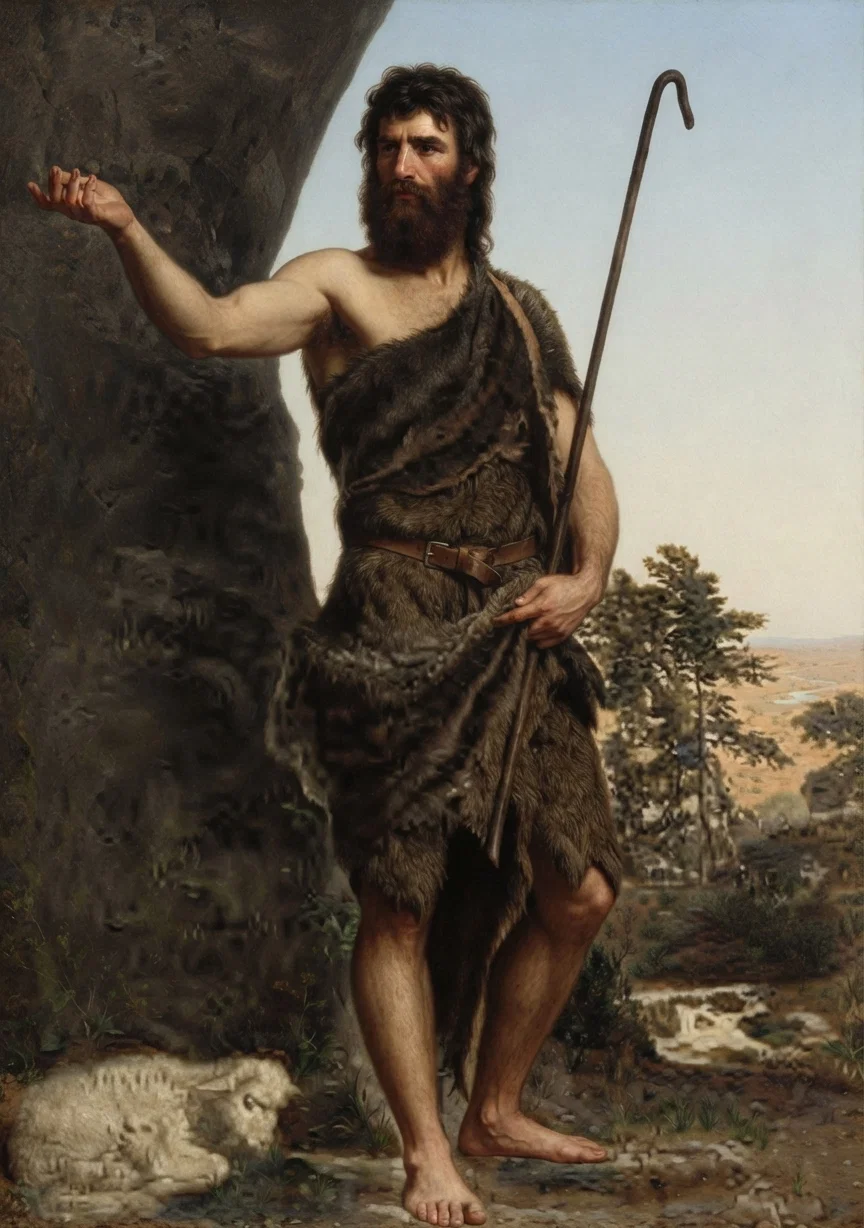
John the Baptizer, the Voice in the Wilderness
and while I looked, He had disappeared among the multitude, and was gone.”
Zilpha ceased speaking, and as if overcome by her remembrance of the wonderful scene, she turned her face appealingly toward her husband, indicating by a wave of her jeweled hand that she desired him to proceed with the narrative.
“Immediately there was a great commotion among the people,” he began, “but the trumpet tones of the prophet were heard above the din:
“‘I knew not this Man; but now do I know Him; and now perceive I that He is the Messiah, even He of whom I said unto you, the latchet of whose shoes I am not worthy to stoop down and unloose; for the God of Israel, who sent me to baptize with water, the same gave me a sign, saying, Upon whomsoever thou shalt see the Spirit descending and remaining upon Him, the same is He who baptizeth with the Holy Ghost. And I saw this, and now do I bear record that this is the Son of God.’
“Then, as I turned my head,” continued Machbor, “I saw one named Jazer, a scribe of Jerusalem; and because I knew the man aforetime, I said unto him, ‘What thinkest thou, Jazer? Surely this Man is the Messiah — the Anointed of God; now indeed hath Jehovah visited Israel, as He hath promised. What thinkest thou, Jazer?’ Then I saw that the fellow’s face was clouded by a thick frown.
“Verily,” he made answer, “verily thou art one of the foolish ones, and thy tongue betrayeth thee. What! art thou a ruler among the Jews, and knowest not that when Messiah cometh, He cometh as a mighty king to Jerusalem? Sawest thou the raiment of the Man? Indeed,” he continued with a sneer, “indeed He wore not the clothing of a king. And verily I have seen this face before. Almost a score of years ago, O Machbor, a foolish and impudent Lad presented Himself at the temple at Jerusalem, and essayed to argue with the learned doctors. I believe,” continued Jazer, “that He was driven from the holy place whose presence He had dishonored. I then learned from Shaphan, the rabbi, that it was one Jesus, of Nazareth, whose mother is called Mary, but whose father none knoweth. And this Fellow,—I remember His face well, despite His beard; I can not be mistaken,—this Fellow is Jesus of Nazareth,” he repeated, sneeringly.
“While he yet spake, the aged Rabbi Ben Israel — thou rememberest him, Simon,” continued Machbor, addressing his guest, who replied with a nod, “he of the long, white beard and the piercing eye. This Ben Israel arose from the trunk of a fallen sycamore where he had been sitting near us. ‘Why sayest thou, Jazer, that He was driven from the holy temple — the Lad of whom thou spakest? Dost thou forget that I, Ben Israel, was then present, almost a score of years ago? Of a truth thy memory is not as good as mine, albeit thy beard is not nearly so white.’ To this, Jazer replied not, but his ugly visage was drawn with a deep frown.
“Then good Ben Israel continued: ‘Thou sayest right, however, in that thou declarest this Man to be the same who, as a mere Lad, astonished all the doctors and lawyers of the temple with the wisdom of His logic. I wonder not at all that thou rememberest Him; for of a truth, Jazer, there is that about this face which stampeth itself upon the mind. But thy memory serveth thee false when thou sayest that He was driven from the temple — not so! His father and His mother called Him, — so said Bar-jona of Bethsaida.’
“‘His father!’ scornfully repeated Jazer; ‘He hath no father! Go ask Shaphan the rabbi of Nazareth if this fellow be not born of fornication! And now, behold, these men are cousins, and verily they are tricksters, and there is some connivance between them.’
“But,” continued Ben Israel, “the Baptizer saith plainly that he knoweth Him not, and verily Nazareth and Bethabara are far distant the one from the other. And thou knowest, Jazer, that neither the voice from heaven nor the amazing light can be the work of two men in this wilderness.” But Jazer the scribe made no answer, and at once pompously turned upon his heel and left us.
“Then,” continued the narrator, “our attention was attracted toward Jonathan, son of Annas the high priest, who sat supporting the head of his aged father in his arms. The face of Annas was ghastly, almost as white as the long, snowy beard which fell upon his bosom.
“Heardest thou the voice from heaven, Jonathan, my son?” he questioned, with ashen lips, “for behold the days are fulfilled,—the days spoken of by the prophet Daniel. Sawest thou the light? What said the voice? I understood not the words. And who is this Man?”
“Who the Man is I know not,” replied Jonathan, “yet heard I the words of the voice plainly, O my father.”
“I will tell thee the words,” interrupted a tall, dark man whom they called Judas, the son of Simon, of Kerioth, “I will tell thee the words, thou high priest, for they have burned themselves into the tablets of my heart: ‘This is My beloved Son,13in whom I am well pleased; hear ye Him.’” And now, verily,” continued the man Judas of Kerioth, “now do I begin to see the dawning of the coming glory of Israel, when the holy city, even Jerusalem, shall be the treasure-house of the whole earth, and Israel shall fatten upon the milk of the Gentiles!”
(To be continued)
The Bible or Tradition?
A review of Dr. Torrey on the Sabbath question. Revised and enlarged. Some of the sub-heads are as follows:
What Seventh-day Adventists Believe
"The Unanswerable Propositions"
A Strange Conclusion
The "Ministration" Is Changed; Not the Law "Done Away"
The Principle Illustrated
Does the Doctor Teach Men to Break Them or Keep Them?
Law of Sin, Not Law of Moses
Law Established by Faith
Antinomianism
Law Abolished, Yet Not Abolished
Typical Sabbaths
Sabbath Not a Shadow of Anything
A Divine Distinction
The Sabbath a Memorial, Not a Shadow
Sunday Observance Merely a Privilege
"The Bible Only," the Protestant Platform
The Lord Himself Speaks
Protestantism or Romanism—Which?
An Unfailing Help.
This pamphlet is issued as No. 193 of the "Bible Students' Library." Price two cents each.
Address your tract society or publishers of this paper.