The American Sentinel, Vol. 11, No. 22.

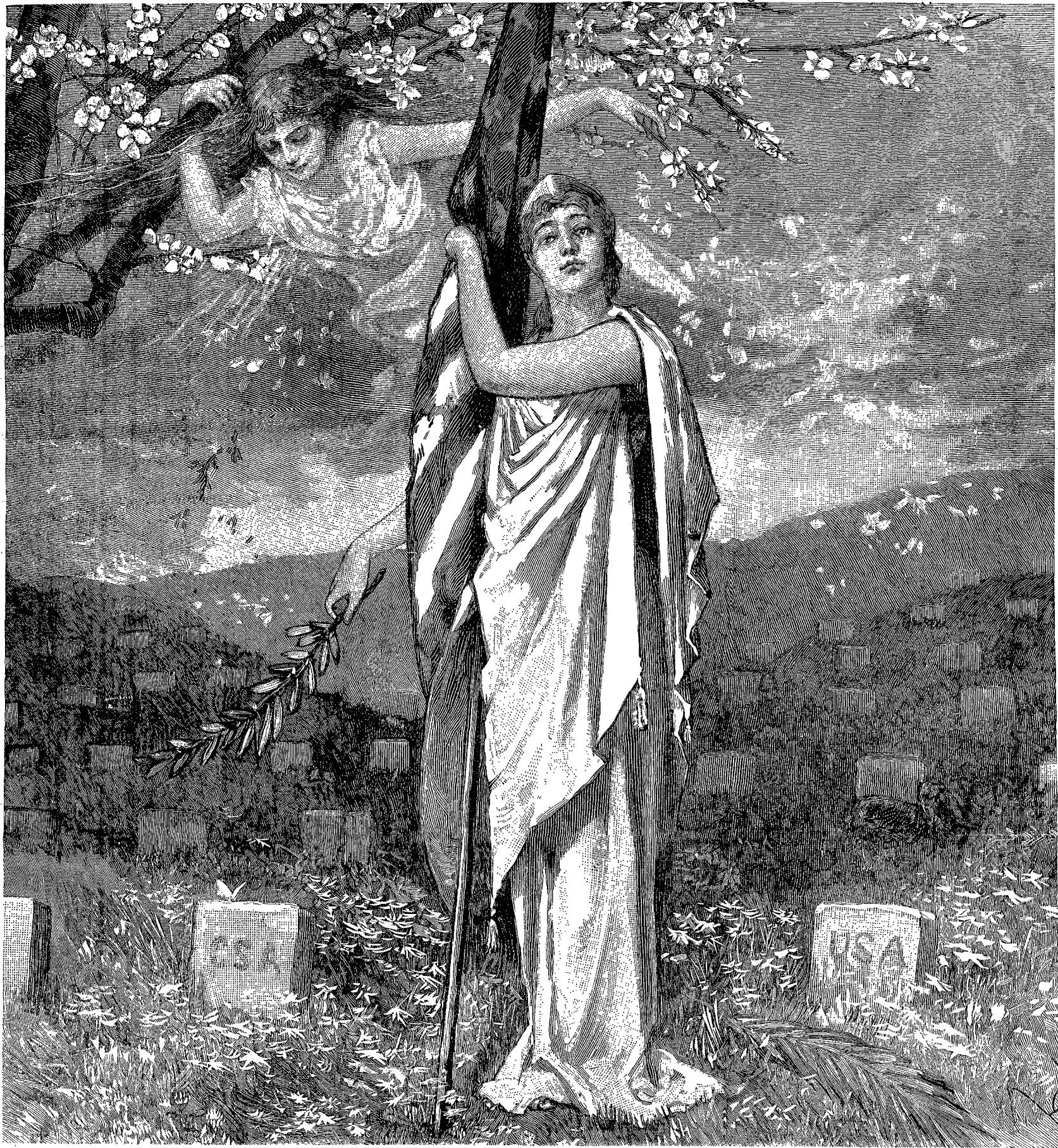
DECORATION DAY AND ITS LESSON
Earlier text: DECORATION DAY AND ITS LESSON

WORDS ARE NOTHING.

[New York Herald, May 14, 1896.]
THE Christian Endeavorers are a very admirable class of people, and on more than one occasion it has been a pleasure to commend their work. They ought not however, to waste valuable energy in the attempt to accomplish the impossible or the unnecessary. There is so much which must be done that it is poor policy to try to do what would be of no special value if it were done.
They have set themselves to the task of having the name of Deity inserted in the Constitution, and of late have sought the aid of certain Methodist and other conventions for the purpose of emphasizing their claim.
But the introduction of the name of Deity in a public document is not of any practical moment. Putting the word “God” everywhere does not put the Spirit of God anywhere. Mere words count for nothing when things rather than words are what we want. If by a popular vote you were to insert the Apostles’ Creed into the Constitution it wouldn’t make us all Christians.
The Constitution is a document containing a good deal of wisdom, and the men who framed it put into it all they thought necessary to political orthodoxy. They were God-fearing and worshiping men, whose faith and faithfulness compare favorably with our own. They at least did not need the word “God” in print in order to keep them in the path of virtue, public or private. Do we?
It is better to have the thing without the word than the word without the thing. The Endeavorers should bend their energy to get what the word stands for rather than insist on the word itself.

TRYING TO EVADE THE FACTS.

[Evangel and Sabbath Outlook, May 14.]
The Christian Statesman is anxious to evade the facts which were brought out at the late “hearing” on the “Constitutional Amendment” at Washington, D. C. We do not wonder at this anxiety, for the application which various members of the Judiciary Committee made not only sustained the claims of the Evangel and Sabbath Outlook as to the Bible Sabbath, but they showed the self-destructive nature of the amendment scheme. The Statesman takes the usual way of trying to escape from its own defeat by finding fault with some one else. It pays its compliments to us as follows:—
The Evangel and Sabbath Outlook is responsible for the following misrepresentation which has been copied into other journals:—
“In the cross-questioning, which was put upon the speakers who closed the debate for the affirmative, various members of the committee, able lawyers, brought out the weak points in overwhelming confusion. This part of the hearing developed the fact that the Sabbath question is a prominent feature of this movement. The logic of the situation was set forth by a member of the committee, when, by questioning, he showed that under the amendment, if a case of ‘Sabbath-breaking’ were carried to the Supreme Court, the advocates of the amendment would be compelled to abandon Sunday and keep the Sabbath. He showed that no ‘interpretation’ could permit any other decision under the text of the Bible. That episode alone was worth a volume of arguments in favor of the Sabbath.”
The Statesman’s attempt to evade the facts in the case runs as follows:—
The question asked by the member of the committee was in reference to the interpretation by the Supreme Court, in case the members of the court believed the seventh-day Sabbath to be the Sabbath of the Bible. He did not show “that no ‘interpretation’ could permit any other decision under the text of the Bible.” With the simple acknowledgment of the Bible in the Constitution our Supreme Court as it has always been made up, would interpret the Bible as Christians with so great unanimity have always interpreted it in our country as teaching the observance of the first-day sabbath. But if by any possibility the majority of the judges of the Supreme Court should ever be Seventh-day Baptists, or Adventists or Jews, and should interpret the Bible as enjoining the observance of the seventh-day Sabbath, then the nation which believed in the first-day sabbath would have to speak more definitely and in its own sovereign legislation lay down the constitutional basis so clearly that the Supreme Court could not override the explicit expression of its will in this matter of Sabbath law.
Since the Statesman wrote the above the official report of the hearing is at hand, as noted in another column. We are content to place before our readers those points in the hearing on which our “misrepresentation” (?) was based since the case is shown to be far more telling against the Statesman than our conservative report made it. It is rather unfortunate for the Statesman that the Committee concluded to publish this report. It will also be seen by the following that the friends of the amendment introduced the Sabbath question at the hearing. We quote as follows:—
(Dr. McAllister is defending the Amendment.)
THE CHAIRMAN—I want to know whether you intend at all to subject the true meaning of the Bible itself to the construction of the courts?
DR. MCALLISTER—No, sir; it cannot come in that way.
THE CHAIRMAN—It is not a question whether it would or would not. I ask you what you intend.
DR. MCALLISTER—This is what is intended. Let me give you an illustration. You had the question in Congress as to whether the gates of the World’s Fair should be kept open on sabbath or not. That was a practical question, and that was a question on which the law-making power had to decide. Now, Congress must take into consideration, as it did then, what the word of God says. The senator from Pennsylvania sent up to the clerk’s desk a copy of the Bible with the page marked on which was “Remember the Sabbath day to keep it holy.”
A VOICE—That is the seventh day.
DR. MCALLISTER—It is not the seventh day. “Remember the Sabbath day to keep it holy.” That is what it says. There was a case of Congress having to decide whether the gates would be open on a particular day or not, and the appeal was made to the authority of the divine word. The Congress, having the law-making power, having thus decided, the courts should be bound by the law-making power; for it is not the business of the courts to make laws.
MR. BURTON—Now, suppose we adopt this amendment, and a party should be arrested for breaking the sabbath, the first day of the week, commonly called Sunday; that he should be convicted, and he should appeal to the Supreme Court of the United States, and say, “You have adopted the Bible as the standard in civil affairs, claiming that the Sabbath day is Saturday,” and that the Supreme Court of the United States should decide that it was Saturday?
DR. MCALLISTER—The Supreme Court of the United States would have to go by the law.
MR. BURTON—Very well; but when they did go by it that is the end of it.
DR. MCALLISTER—Certainly.
MR. BURTON—Now, do you want to put into the Constitution of the United States a clause which will permit the Supreme Court of the United States to say that you must keep Saturday or else you violate the law of the land?
DR. MCALLISTER—No, sir.
MR. BURTON—That is just what you are trying to do. (pp. 32, 33.)
MR. BURTON—Suppose in case of war the President should call out the militia, and it should be said, “Under the Bible which you have adopted as the standard we are not permitted to fight,” and the Supreme Court should say, “that is true,” what would become of your army?
DR. MCALLISTER—He can do that now.
A MEMBER—Oh, no!
DR. MCALLISTER—Certainly he can; and he could not interfere with the Congress of the United States in the case of war.
MR. JONES—But could he not then raise the case to the Supreme Court and have a decision?
DR. MCALLISTER—He can raise any case now, just as the case may be raised to-day in regard to the sabbath law.
DR. LEWIS—There are to-day in the United States by the last census, and I give my statement on the authority of Mr. Charles Buell, who was a prominent member of the census corps, one million of people observing the Sabbath according to the Bible, Seventh-day Baptists, Adventists, and Hebrews. Now, I put the question to you, Doctor: Is it not the purpose of this movement—it has certainly been so announced—to compel us, who, on conscientious biblical grounds, hold to the seventh day, according to the Bible and not according to a tradition, is it not the purpose to compel us to submit?
DR. MCALLISTER—No, sir.
DR. LEWIS—It has been so announced.
DR. MCALLISTER—I am not responsible for any such announcement.
MR. BURTON—Conceding that it is not the purpose, would it not be the result?
DR. MCALLISTER—No, sir; not at all. It could not be. Now, let me give my answer as to this matter in regard to the Bible. In the first place, my good friend, Dr. Lewis, says explicitly that the seventh-day Sabbath is the Bible ground. That is his interpretation. He has a right to interpret it in that way. I say that the first day of the week is the Bible ground. And that is the way it ever will be. Now, here comes the Congress of the United States, and it must decide; the nation must decide.
MR. BURTON—Let me ask you why should anyone decide except the individual?
DR. MCALLISTER—The Congress must decide.
MR. BURTON—But why?
DR. MCALLISTER—You meet here to do certain work, and like every man, you have to decide whether you will work seven days or six. You must decide whether you will work seven days or not. You have to give a decision. The next point is that when you decide not to work more than six days you must decide which day you will rest. And you have decided to rest on Sunday, the first day. Why? Because it is a Christian country. It is the Christian sabbath. (P. 34.)
MR. CONNOLLY—Suppose the Bible has already settled that question, how could any act of Congress interfere with it if that is to be in the Constitution?
DR. MCALLISTER—Because we must interpret the Bible. [Laughter.] Those gentlemen on the other side look at that as ridiculous, and yet you have to interpret every law. Congress has to interpret every law.
MR. BURTON—Supposing the Supreme Court should decide that Saturday was the seventh day?
DR. MCALLISTER—No, sir; they would not. The people themselves are back of the court.
SEVERAL MEMBERS—Oh, no.
DR. MCALLISTER—Now, gentlemen, don’t get this thing mixed up. I have been making the matter perfectly clear between constitutional law and statutory law. Now, if the legislature, in its enactment of statutory law, feels that the first-day sabbath is in harmony with the Constitution, then of course it puts that interpretation on its acts. If the Supreme Court overrules it, there is a conflict, and the question goes back as to what the constitutional law is. Then the sovereign people, the maker of constitutions, if they have not got their will sufficiently clear, can act.
MR. CONNOLLY—They could put it back the way it is now. (p. 36.)
MR. CONNOLLY—In two ways—by the long way or by waiting till the Supreme Court die and by putting in new men; but until it is changed by either of these ways, if we should adopt this and a case of this kind should come up, and the Supreme Court should hold that Saturday was the Sabbath, you would have to respect their decision. You would have to worship for at least thirty years on Saturday. It would take thirty years to change the Constitution back again.
DR. MCALLISTER—Is that a fair representation? Would that compel me to worship on Saturday any more than the Seventh-day Adventists are compelled to worship on Sunday at present?
MR. CONNOLLY—No, sir; not in one sense, but you could not work on Saturday.
If we can understand the evasion of the Statesman, it is this. The Supreme Court would interpret the Bible according to the theological creed of the judges, and not according to the letter of the law. If the court should happen to be Seventh-day Baptists, they would “interpret” the law which says “the seventh day is the sabbath” to mean what it says. If they were of a different faith, they would interpret “seventh” to mean “first,” especially if a majority of the people so believed. That is putting an estimate upon the candor and judicial ability of the highest court in the nation, so low that our readers shall undoubtedly rise above it, and will agree with Congressman Burton, that in seeking the amendment, those who so sharply oppose the Sabbath, seek to compel themselves to observe it. We do not wish to see the Sabbath restored under a decision of the Supreme Court of the United States, but rather under the ruling of the Supreme Statute of the Christian world—the Bible. But we would willingly risk the test of our position with the Supreme Court.

SUNDAY AND THE BICYCLE.

The bicycle is making such inroads into Sunday as a sacred day that many of the ministers of the Sunday-keeping churches are up in arms against it, and some are demanding the legal prohibition of Sunday cycling.
The difficulties surrounding this question are however great. Can bicycle riding be prohibited while horseback riding and carriage riding are permitted? Can one kind of vehicle be forbidden on Sunday while other kinds are permitted? It would seem that such discrimination cannot be made. It follows that the “abuse” complained of by the Sunday preachers must either continue, or all riding, driving, etc., must be prohibited on Sunday, except riding or driving “reverently to and from church.” This would be only an adaptation to modern manners and customs of the famous “Blue Law” of Connecticut which forbade outdoor exercise upon Sunday, “except walking reverently to and from meeting.”
Of course if this matter were left to the individual conscience there would be no trouble, for in that case those who felt free to ride would do so while others would walk; but as it is becoming quite the thing to erect statutory standards for the conscience, it is probable that erelong we shall see legislatures besieged to enact “laws” regulating or even prohibiting the use of bicycles on Sunday.

TAMPERING WITH THE CONSTITUTION.

[New England Evangelist.]
SPEAKING of the Constitution brings to mind the insane idea that there was a fatal mistake in its construction, in that there is contained in it no recognition of the Almighty, nor of the Christian religion; and that it is the consequent duty of all Christians, and of the Church as such, to endeavor to amend that charter of our civil government by securing therein a proper recognition of both. To this end there exists a national organization of persons whose conceptions of the things of Cæsar and of God are so imperfect or confused that they imagine that the former must acknowledge the latter in his secular affairs, else the divine kingdom may perhaps perish from the earth! Now, for our part, we believe that it was God’s will that his name be left out of that Magna Charta of the land of liberty, and that he was on hand to see that it was left out. We appreciate the mistaken zeal with which some are laboring to correct God’s mistakes; but we would say to any such that their efforts would better avail something for the good of mankind in this case, if they would devote themselves to getting the name of God written in the hearts of men, rather than upon the pages of the civil Constitution. The Lord has never told us to seek by such means to promote the glory of his name and kingdom.
Of the same nature as the before-mentioned effort to amend the National Constitution in the supposed interest of the Christian religion, is the endeavor to secure primary or additional legislation to enforce the observance of the Lord’s day, or so-called Christian sabbath, as a religious institution. Probably many who are active in this endeavor do not advocate it with the purpose of forcing a religious institution upon any, but to make the observance purely a civil one so far as the law is concerned. Nevertheless, it is essentially a church movement, and its supposed benefits are not expected to be social or political, but spiritual. With the establishing of a civil day for rest we have nothing to do, except as citizens of a free country; and it may be considered as a matter of social and political expediency, as in a hundred other things. But as to the Church, and the establishing of a day of religious observance, we would dispose of the whole question by saying that if God has ordained any day to be kept, it must be that there is abundant inherent power in the religion itself to maintain it, for God does not call upon the civil authorities to uphold the ordinances of his church.
The growth of Christianity would have been small indeed in the early centuries of its era if it had depended upon the enactment of a Lord’s day or sabbath observance by Nero and the Roman Senate. We have no hesitation whatever in maintaining that Christian people have no more warrant for endeavoring to secure and enforce the legal observance of a day of Christian worship as such, or as a matter of church interest, than they have to secure and enforce a similar enactment that people shall be baptized and observe the Lord’s supper. It would be well if those who are zealous in getting the civil power to back up the traditions of men, would look to the end whence they are tending.

LOW GROUND ON WHICH SUNDAY-OBSERVANCE IS URGED.

BY REV. A. H. LEWIS, D. D.
No institution rises higher than the average reasons which men give for its existence. If there be both higher and lower reasons supporting it, and the lower reasons be urged to the exclusion of the higher, the institution is correspondingly degraded. This is an inevitable law, against which it is useless to complain. The history of the Sunday question presents some marked illustrations of this truth. The popular interpretation of the meaning of the fourth commandment is, in the narrowest sense, materialistic. That interpretation makes physical rest to be the central point in the matter of Sabbath-keeping. A “rest day once in the week,” is as high as the average theory rises. Instead of making the rest secondary, as it really is, to the higher idea of spiritual rest and religious instruction, the order is reversed, and the religious phases of the question are either secondary, or wholly eliminated. Such a view places the whole question on the low, earthly, human plane. Such a conception cultivates the idea that when one has rested from ordinary business or labor, he has sabbatized. Whereas, the higher truth is, that he only has sabbatized, according to the spirit of the fourth commandment, who has rested, that he might thereby attain communion with God, spiritual rest and religious culture.
This low conception necessarily appeals to the lower motives as a ground of obedience; indeed, the popular theory has gone so far that no motive higher than the individual choice enters into the mind of the average man in the matter of Sunday observance. But where anything like authority is sought, it is sought on the lower plane, thus increasing the evil which the conception of sabbatizing already noticed has begun. For instance, it is urged that man’s physical health demands rest one day in seven; that this is most conducive to long life; that thus men are enabled to do more work, therefore, to earn more money; that machinery wears longer when permitted to rest; that beasts of burden are more valuable if permitted to rest; that soundness of mind and soundness of body demand periodic rest. It is further urged, that the interests of the commonwealth are thereby served, since the individual health and the productive power, and the economic habits of the individual members of the commonwealth, are all increased by giving the body periodic rest. Even religious teachers often appeal to this line of argument, either because there is no higher conception in their own mind, or because they think the masses can be made to apprehend the low-ground argument, rather than the higher. Whatever reason may induce this appeal, the result is the same in each case,—a low conception, the lowest conception which can possibly be called true, in regard to Sabbath-keeping.
Such arguments and conceptions neither appeal to religious conscience, nor cultivate it. When we add to this the fact, that since the introduction of no-sabbathism in the second century, the great mass of those who have professed Christianity have held to and taught that theory, we have an additional reason why the public mind is conscienceless concerning Sunday. When this no-sabbath philosophy drove the Sabbath from the church, the void which was left was filled (through the action of civil law) by not only the Sunday, but by many other festivals. This shows why the low-ground conception has become the prevailing one, and why the popular appeal is to the lowest arguments. There is no place in the general theory concerning Sunday for the higher argument, or the divine authority. The results which are upon us, therefore, are legitimate.
While there is a degree of truth in these low-ground appeals, more careful investigation is revealing the fact that much of the argument so claimed is not supported by facts. The report of the Massachusetts Bureau of statistics made a few years ago, shows that the effect of Sunday labor in different departments indicates that there is no perceptible loss in physical strength, or in the money earned by Sunday laborers. They get pay for seven days’ work in the week, and while some of them would prefer the leisure, none were found suffering in their physical health for want of it. It must be granted that investigation in this direction has not gone far enough, nor been continued long enough, to make a positive argument, pro or con, upon this point. If, however, the popular claim concerning the advantages and disadvantages of Sunday labor were true, with the rapid increase of Sunday labor throughout the land, there would already have come a corresponding decrease in general health, and general prosperity, which has not come, and is not promised by existing facts.

“ALL MUST REST, OR NONE CAN.”

[Sabbath Recorder.]
The statement is made in several ways by the advocates of Sunday legislation that the possibility of rest for any is contingent upon compulsory resting on the part of all. If this be true, no one has ever had a day of rest, and no one has such a day at the present time. Those who advocate stricter Sunday legislation urge, as a prominent reason, that hundreds of thousands of people are now engaged in business on Sunday; this being the fact, and the logic of the claim which stands at the head of this article being correct, the most devout, who give Sunday wholly to worship and deeds of love, do not yet have a day of rest, neither can they have until the whole are compelled to rest, for their sakes. Putting the facts alongside this claim is sufficient answer to the claim. They show it to be false. Several other facts show the same thing.
Devout Jews in all lands, and through all the centuries, though often persecuted and bitterly opposed, have conscientiously and successfully rested from their labors and business, not only upon the Sabbath, but upon many other religious festivals. If there were no other facts in history bearing on this point, other than those in connection with the Hebrew nation, the foregoing claim would be absolutely condemned. For more than two centuries in the United States, the Seventh-day Baptists, and in later years the Seventh-day Adventists as well, have observed the Sabbath strictly, finding no trouble in securing a day of rest and worship, though in “the insignificant minority”—as the friends of Sunday legislation describe them—and in the midst of the world’s busiest day. What is needed to secure a day of rest and worship, or, better still, “keep the Sabbath according to the commandment,” is a conscience toward God, and a determination to obey him. All else is valueless, and the strictest legislation does no more than create a legal holiday.
The arguments upon which men attempt to base statements like that which heads this article, are futile, illogical, and deceptive. Facts deny the statement, and the attempted argument based upon the statement is destructive of regard for God and of conscience toward him. Not the outward compulsion of civil law, but the inward choice of the heart, settles the question, and regard for any day as a Sabbath will be destroyed in proportion as men induce themselves to believe that such regard must depend upon similar regard on the part of others, or upon the fact that others do or do not cease from their labors. It would be as logical to ask civil legislation to forbid all profanity, upon the claim that the ability to refrain from taking the name of the Lord in vain on the part of one depended upon compelling all thus to refrain. He who respects God as he ought will not take his name in vain, though he dwell in the midst of blasphemy. He who regards the Sabbath as he ought will observe it as God requires, though he dwell in the midst of those who forget God, and trample upon his law.

THE “CYCLONE” STILL WHIRLS

Sweeping Everything Clean Before It.

SEE WHAT THE PEOPLE SAY:

Elk Point, S. D., Jan. 25, 1896.
Gents: Inclosed please find draft for three machines. Would say that the machines are giving the best of satisfaction here.
Yours truly, ALBERT TUCKER.
Address. COON BROS., Battle Creek, Mich.

Absurdity of Papal Infallibility and National Reform

THE absurdity of the Roman Catholic production of infallibility for the pope from the decisions of a number of fallible cardinals, is paralleled by the “national reform” doctrine that the people, being incompetent to govern themselves, should by their votes evolve a form of government which will be free from the defects of popular government. It would seem that these “reformers” have yet to learn that a stream cannot rise higher than its fountain head.

Interesting Facts

Is the name of a neat little book of 96 pages, 4½ x 5 inches, bound in heavy paper, brim full of “interesting facts,” questions and answers on different subjects, religious and political;
“A Father’s Talk to a Careless Daughter,”
“How to Bring Up a Son,”
“How to Bring Down a Son,” etc., etc.
The last 21 pages are an album containing the portraits of 21 different sovereigns of Europe, and is worth alone the price of the book.
Regular price, 25 cents; we will send it post-paid for 20 cents in stamps. Address, PACIFIC PRESS PUB. CO., 39 Bond Street, New York.

Presbyterian Assembly Debates Sabbath Observance and Sunday Laws

In the Presbyterian General Assembly at Saratoga, on the 22nd inst., Eld. L. P. Main, of Kearney, Neb., introduced a resolution expressing “lack of sympathy with the criminal prosecution of those persons who honestly and conscientiously observe the seventh day of the week instead of the first;” but his motion was tabled.
The report on “sabbath observance” was presented by Eld. William R. Worrell, of New York. It denounced all work on Sunday, various theories of individual liberty, excursions, ball games, bicycle riding, lax views of the “sabbath,” social entertainment and the Sunday newspapers. The resolutions which were adopted reaffirmed former deliverances as to the perpetual binding obligations of the fourth commandment, and called upon all people to discontinue practices adverse to the strict observance of Sunday!

Archbishop Ireland's Claims Against Historical Record

ARCHBISHOP IRELAND, one of Rome’s leading prelates in this country, in a recent speech directed against the American Protective Association, illustrated the manner in which Rome is accustomed to ignore both history and the intelligence of the American people, by the following utterance: “The liberties, the democracy, the spirit of progress which are the glories of America, are the outcome of the deepest principles of the Catholic Church. Liberty and progress came into the world with her.” The intrinsic value of this may be seen by placing beside it this statement from Bancroft’s History of the United States, Vol. V., page 295:—
The British gained numerous recruits from immigrants. Cultivated men of the Romish Church gave hearty support to the cause of independence; but the great mass of its members, who were then but about one in seventy-five of the population of the United States and were chiefly newcomers in the middle States, followed the influence of the Jesuits, in whose hands the direction of the Catholics of the United States still remained, and who cherished hatred of France for her share in the overthrow of their order. In Philadelphia Howe had been able to form a regiment of Roman Catholics.
This early opposition of the Catholics to American independence reflects of course much less upon the character of the Catholic people than upon their condition of mental and moral subserviency to the will of their superiors, who were well versed in “the deepest principles of the Catholic Church.” The evil work of the Papacy is due not to the character of the mass of its adherents, but to the nature of its principles.

Bishop Keene on Church and State Separation

In connection with the recent consecration of the “Right Reverend” Thomas O’Gorman as Bishop of Sioux Falls, S. D., Bishop Keene, of the Catholic University, said:—
The Church recognizes as her own sphere faith and morals; she possesses and claims no mission in civil and political matters. If the Church encroaches upon the sphere of the State we should bid her be away. If the State enters into the sanctuary of conscience, the proper empire of the Church, the appeal is to God, and the State is ordered to hold off its hands.
Separation of Church and State, as it is in America, Church and State revolving freely in their separate and distinct spheres, Catholics fall behind none of their fellow-citizens in admiring it and demanding its continuance. The Catholic Church wishes no aid from the State in the preaching of the gospel.
But liberty from the State she wishes and clamors for as a sacred and inalienable right, liberty in its fullest gifts under the common law of the land. I am a Catholic, I am a priest and bishop, but I am an American citizen, and I must be debarred from no rights and privileges accorded to other citizens because I am a Catholic; my words betray no fear for the future.

Union County Grand Jury Presents Elizabeth Officials Over Sunday Laws

May 20, the grand jury of Union County, N. J., found a presentment against the officials of the city of Elizabeth for failure to enforce the Sunday “laws.” No particular official is mentioned, but the action of the jury is regarded as a great victory for the Sunday forces.

Grand Jury Indicts School Heads Over Missing Flags

A DISPATCH from Jacksonville, Ill., under date of May 22, says: “The grand jury has returned indictments against the heads of the Illinois College and the Catholic and parochial schools for not having flags on their school buildings. Among those indicted are Bishop Ryan, of the Alton Diocese, and Vice-General Hickey, of Springfield.”

Religious Toleration in Maryland and Catholic Claims

RELIGIOUS toleration was secured in Maryland by the Roman Catholic minority for themselves from a “Protestant” governor and legislative assembly, as has been repeatedly proved in these columns; but the Catholic press never tires of boasting how “the church” established religious liberty in that colony.

Vice-President Stevenson Seen Walking With Cardinal Satolli

A good deal of comment has been occasioned by the fact that Vice-President Stevenson was seen walking arm-in-arm in the Capitol at Washington a few days since with Cardinal Satolli. Such an event would be without significance were it not for the fact that the Catholic Church has always and everywhere meddled to a great extent in politics.

Pope's Encyclical to Hungarian Episcopate on Anniversary

A DISPATCH from Rome under date of May 15, says that “the Pope has issued an encyclical letter to the Hungarian episcopate regarding the celebration of the thousandth anniversary of the founding of the Hungarian kingdom. His Holiness recalls the entente which endured so long between the Church and Hungary, and deplores the recent ‘departure of Hungary’ from that relation. He asks the civil authorities of Hungary to act in accord with the Catholic Church, and beseeches the Hungarian people to follow in the footsteps of their ancestors.”

Roman Catholic Liberty and the Demand for Monopoly

This language sounds well, but it must be understood in harmony with other utterances from representative Roman Catholic sources. It is true that the Roman Catholic Church demands liberty for “the church,” but it is also a fact that by liberty the Roman Catholic Church always and everywhere means monopoly for herself. It will not be forgotten by the American people that in one of his latest encyclicals, Pope Leo XIII. plainly stated that separation of Church and State was not the highest or most desirable condition; and that notwithstanding the fact that “the church” had prospered in America, that prosperity would have been greater had the church “enjoyed the favor of the laws and the patronage of the public authority.”

IMPORTANT NOTICE.

OUR readers will be glad to learn that the International Religious Liberty Association, with headquarters formerly at Battle Creek, Mich., has removed to this city. Mr. A. F. Ballenger, formerly of the editorial staff of this paper, has been appointed Corresponding Secretary, and has taken an office adjoining the editorial room of the AMERICAN SENTINEL. This places the SENTINEL in close touch with the Association, and will, we are sure, add much to the efficiency of both the paper and the Association. All the correspondence for the International Religious Liberty Association should hereafter be addressed to 39 Bond St., New York City.

Porte Halts Forced Conversions at Biredjik

A RECENT Constantinople dispatch says that “as a result of the vigorous action of the foreign ambassadors and ministers, the Porte has ordered that the enforced conversion of Christians to Islamism at Biredjik be stopped. The Sultan has ordered the withdrawal of the local troops at that place and the substitution of regular troops, and has decreed also that a commission proceed at once from Marash to Biredjik to arrange for the rebuilding of the mosque and the Christian church and to remain there until confidence in future order is completely restored.”

Political Difficulties in Armenia and Forced Conversions
completely restored.
The fact is that the political difficulties in Armenia have given the Mohammedans an opportunity of venting the hate which they have against all people bearing the name of Christian; and these so-called forced conversions to Moslemism would be a common occurrence not only in Armenia, but wherever the Turks bear rule, were it not for the influence of civilized nations.
“We stand again upon the verge, as it were, of that dark drama, and sorrow for the dead.”

You have reached the end of this edition.

The American Sentinel · May 28, 1896