The Youth’s Instructor, Vol. 32, No. 7.

THE HUNDRED GATES

The Youth’s Instructor

Feb 13, 1884

S. D. A. Publishing Association · Battle Creek, Mich. · Feb 13, 1884

THE HUNDRED GATES.

Of old, within the valley of the Nile, A city stood, and still its records stand, With massive walls encircling mile on mile, And gates at every hand.
An hundred gates there were; to south and north, To east and west, their hinges swinging wide, Let those within, if so they would, go forth To all the world outside.
This to the desert led, where camels' feet Toiled through the sand, yet left no dint of hoof; That to the mountain, which from tempest and heat Kept its high head aloft; This to the river's lotus-bordered shore; That to the tombs cut in th' enduring rocks; Another to the plain, where lowly, poor, The shepherds kept their flocks.
Thence went the beggar, crouching for his alms; Hence came a stranger, seeking an abode; There was a street, shady with dates and palms, Here an unsheltered road.
As Thebes of old, so has the human soul Her hundred gates; lo, how in going forth She has all clime, all range, from pole to pole, East, west, and south, and north.
Aye, and it needs strong guard at every gate; Outside are roving, warring hosts of sin, Armed to the teeth, who ever watch and wait To steal unhindered in;
There to lay waste the temple and the shrine, To fire with torch, to rob, to smite with sword, To ruin and make desolate this divine Fair city of the Lord.
Then, O my soul, knowing the fate that waits One careless hour, a faithful vigil keep! Set sentinels at all thy hundred gates, Nor let them faint nor sleep!
—Clara Doty Bates.

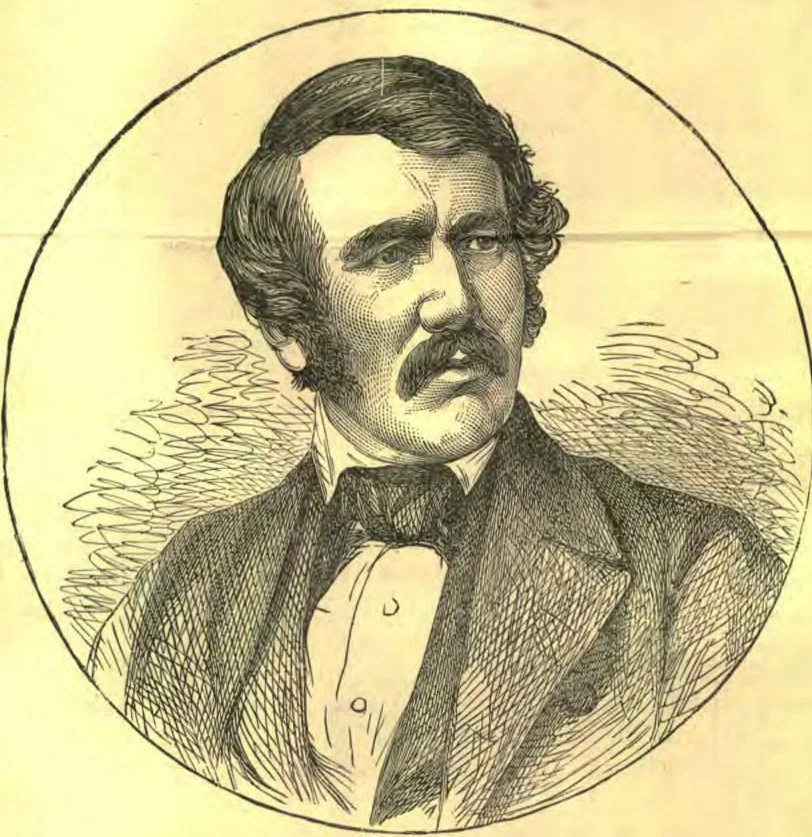
DAVID LIVINGSTONE.

Many of you are undoubtedly familiar with the name of that great African explorer, David Livingstone, and perhaps you remember reading in an INSTRUCTOR printed a year or two ago, of his last days in the Dark Continent, and of his death there. Possibly you would like to hear about his early life at home, and the causes that led him to engage in such a difficult and self-sacrificing work.
David Livingstone was born the 19th of March, 1813, at Blantyre, Scotland, and was the second child in a family of five,—three boys and two girls. His parents were poor, but of sterling worth. His father was an earnest and resolute Christian, and possessed in no small degree the missionary spirit. He was a tea-peddler; and while traveling through the neighboring parishes, selling his goods, he distributed large quantities of tracts, and talked to the young on the subject of religion. When he was quite advanced in years, and it was difficult for him to study, he set himself to master the Gaelic language, that he might be able to read the Bible to his aged mother, who understood that tongue the best. Mrs. Livingstone was a delicate little woman, active, orderly, and scrupulously neat; and she trained her children to the same virtues. She was sunny and good-natured, and made the home-life bright.
The parents required of the children implicit obedience and much self-denial. It is said that when David was a very little boy, he returned home one evening later than usual, and found the door barred against him; for it was one of his father's rules that the doors should be bolted at dusk, and every child was expected to be in. David had no idea that a rule would be broken to favor him, and so, having obtained a piece of bread, he sat down on the door-step, intending to stay there all night; but his mother saw him, and let him in. He learned, under such training, to make the best of things, and grew up a thorough-going, self-reliant young man.
When he was but ten years old, he was set to work as a “piecer” in a cotton-mill. It was weary work for one so young, but he felt amply repaid, when, at the end of his week's work, he placed his first earnings, sixty cents, in his mother's lap. She gave him back enough to buy a Latin grammar, and for several years he studied Latin in an evening school from eight till ten o'clock. In his Journal he says, “The dictionary part of my labors was followed up till twelve o'clock, or later, if my mother did not interfere by jumping up and snatching the books out of my hands. I had to be back in the factory by six in the morning, and continue my work, with intervals for breakfast and dinner, till eight o'clock at night. I read in this way many of the classical authors.”
He read everything he could get hold of except novels, and he was not afraid of hard study. He was passionately fond of natural history, botany, and geology, and with his brother, used to spend what few holidays they had in scouring the neighboring fields for specimens.
When he was nineteen, he was set at spinning. He was very glad of the change, not only because he had higher wages, but because he had more time for reading. He had no more spare time than before, for his working hours were still from six in the morning till eight at night; but he could fasten his book up on the frame before him, and as he passed and repassed it at his work, catch a sentence now and then, and in this way slowly read a book through.
About this time he read a book that led him to see the wonderful love of Christ in coming to die for us; and he was so glad and thankful that he resolved to give all his earnings, except what he needed to live on, to the cause of missions. By and by an appeal was made by a missionary to China, showing the great amount of work to be done among the heathen, and the scarcity of help, and pleading for faithful and earnest Christians to enter that field of labor. Then it occurred to Livingstone that the best service he could render to God was to give himself wholly to the missionary cause. He consulted his parents and the pastor, and finding that they approved of his plan, he set himself steadily at work to prepare for his mission. He made the meager earnings of six months serve not only to support himself while he was at work, but also to cover his expenses while attending school in the winter.
He intended to go as a missionary physician, and to do this he had to go through a costly medical course; but he had determined to receive help from no one. He went first to Glasgow, and afterwards to London.
He wished to make China his field of labor; but as the ports were then closed on account of the opium war, he turned his face towards Africa. He stopped first at Kuruman, the most Northern mission-post of the Dark Continent. Becoming convinced that the missionaries were stationed too closely together to accomplish all the good that might be effected, he wrote home to the Missionary Society that sent him, to gain permission to go farther up into the interior, where no white man had ever gone. While waiting for the desired permission, he made long journeys into the surrounding country, acquainting himself with the habits of the natives, and learning their language.
At last the consent of the Society was obtained, and Livingstone, with his wife, the daughter of a missionary in Kuruman, started out to give to the natives of the interior a knowledge of the true God. They went north of Kuruman, and planted a very successful mission, training the natives so that they could teach their countrymen themselves.
But the Doctor's plan was not to spend his time solely in teaching the people about Christ; he meant to prepare the way for others to follow him into the heart of Africa, and finish up the work that he had only time to begin. To do this, he tried to find out if there was not a waterway from the interior to the sea, that by a more direct route and at less expense the gospel might be brought to the inland tribes. So, leaving his missions to the care of the trained natives, he forced his way to the west coast, over a route never before traveled by white man or native. The obstacles he had to meet were almost insurmountable; yet with the same perseverance that characterized him when a boy, he kept steadily to his purpose. He did not find the waterway that he expected to discover, but he accomplished many other things. On his return, he made a similar journey to the east coast, and with very much the same results. He often met with bitter disappointment, and his work was seriously hindered, because his own people did not have faith in his plans, but thought that he was spending the money given him to use in the missionary cause, to forward his own selfish ends. Yet he was cheerful in face of all this discouragement, never once losing faith in the Guiding Hand.
There is not space to tell you of his return to England, and his two other journeys to Africa; nor how, as he had almost succeeded in his life work, his light went out in his little canvas tent in Ilala, and his servants found him, one morning, with clasped hands and bended knees, dead, while praying to the Almighty for the weal of Africa. Faithful hands bore his remains over nine hundred miles to the coast, and then took them to England, where they lie buried in Westminster Abbey, with the kings and princes of the earth.
But you must get some book telling of the life of Livingstone, and read these things for yourselves. And while you study carefully the life of one who so faithfully followed Christ, in that he “pleased not himself,” may you imitate his noble Christian example. W. E. L.

HISTORY OF A SONG.

Mr. Bennett, a music-writer, and Mr. Webster were intimate friends. The latter was subject to melancholy. Bennett came in to where his friend Webster was at business one day, while in a depression of spirits.
“What is the matter now?” said Bennett, noticing his sad countenance.
“No matter,” said Webster; “it will be right by and by.”
“Yes; that sweet by and by,” said Bennett. “Would not that sentiment make a good hymn, Webster?”
“May be it would,” replied Webster, indifferently.
Turning to a desk, Bennett wrote the three verses of the hymn, and handed them to Webster. When he read them, his whole demeanor changed. Stepping to his desk, he began to write the notes. Having finished them, he requested his violin, and played the melody. In a few minutes more, he had the four parts of the chorus jotted down. It was not over thirty minutes from the first thought of the hymn before the two friends, and two others who had come in in the meantime, were singing all the parts together.
A bystander, who had been attracted by the music, and had listened in tearful silence, remarked, “That hymn is immortal.”
It is now sung in every land under the sun.—Exchange.

A MIRAGE

Written for the INSTRUCTOR.

A MIRAGE.

A few years ago we were traveling upon the cars in Northern Iowa. It was early spring-time, and all nature was bursting into life. The woodlands, hills, and dales presented an enchanting view. We flew by cities and villages, and leaving the rough woodlands, came dashing out over the lovely prairies.
As far as the eye could see was undulating ground covered with the most beautiful flowers, and dotted here and there with thrifty looking farm-houses. Now and then we passed a large herd of cattle tended by the herd boy, who lazily sat on his pony, or lay in the long grass. While gazing from the window, and talking about the scene, we saw in the far distance a beautiful lake. The lovely, white-capped waves were dancing in the sunlight, now dashing upon the shore, then receding only to rush up again with renewed force. The farm-houses seemed near its shore, and the green grass came quite to the water’s edge.
How impatient we were to have the train draw nearer so we could get a better view! We thought, as we rounded a curve, now we shall step out on the platform, and gather shells from its shore before the train moves on. Just as our anticipations were at their height, we found it only a mirage.
Methought, thus is life. The young man just starting in his career pauses a moment to enjoy the scene presented before him. The picture is fascinating. He longs to hurry through College that he may engage in his profession, gain worldly honor, and become wealthy. Wealth! oh, how he longs to grasp the glittering prize! Years fly swiftly by, and he has a great name and is a millionaire. But is he satisfied?—Oh, no. He is still eager for more, and as he rounds the last curve in life, still reaching for happiness, death comes; life with its supposed pleasures has been but a mirage. All is past, and how bitter the disappointment!
But it need not be thus. One who lives for God and tries to benefit his fellow-men, can feel, when the last hour comes, that success is really his, and that the wealth and honor of heaven await him.
God grant that you and I, dear reader, may lay up treasures in heaven. Mrs. I. J. HANKINS.

THE LITTLE SHIPS IN THE AIR.

FLAKES of snow, with sails so white, Drifting down the wintry skies, Tell us where your route begins, Say which way your harbor lies?
“In the clouds, the roomy clouds, Arching earth with shadowy dome, There's the port from which we sail, There is tiny snow-flake's home.”
And the cargo that you take From those cloudy ports above— Is it always meant to bless, Sent in anger or in love?
“Warmth for all the tender roots, Warmth for every living thing, Water for the river's flow, This the cargo that we bring.”
Who's the Master that you serve, Bids you lift your tiny sails, Brings you safely to the earth, Guides you through the wintry gales?
“He who tells the birds to sing, He who sends the April flowers, He who ripens all the fruit, That great Master, he is ours.”
—Edward A. Rand, in S. S. Gem.
Written for the INSTRUCTOR.

EDITOR'S CORNER.

The youth who know nothing about the happiness which the service of Christ imparts excuse themselves for not serving the Lord, with the plea that it will cut them off from all sources of pleasure and amusement. Generally, it is their intention to seek God sometime, but they choose rather to spend their early days in the pursuit of worldly happiness. Satan, taking advantage of their ignorance, makes the cross of Christ appear as odious as possible; but the pleasures of the world, he presents in their most pleasing form.
If the dear youth could understand the game which Satan is playing with their souls, they would listen to the truth which has been handed down from the wise and good in every age,—that only those who unite themselves to God, through Christ, know true happiness. Do you want pleasure? The Christian may seek it in a variety of ways, all in keeping with his profession. The study of nature of itself could afford pleasures to feast the soul for ages; and if you formed habits of searching for happiness from this one source alone, you would lose all relish for worldly amusements. To understand how much more elevating and refining such pleasure is to one's mind, you have but to contrast the life of a giddy worldling with that of a person who holds sweet communion with nature, and with nature's God.
Worldly amusements are often too expensive to be indulged in by the poor; but nature is generous, and furnishes alike to both rich and poor her choicest treasures. And whether we view the heavens, studded with countless millions of stars; the waters, teeming with their variety of animal life; the charming notes of the feathered songsters; or the broad fields, with their varied scenery, we ever find something new to surprise and please us.
Astronomers tell us that “could we reach the most elevated star above our heads, we should discover new heavens, and new suns; new stars, and new systems of worlds, perhaps still more and more magnificent. But all these would not fix the bounds of the empire of the great God, and we should observe with the utmost astonishment that we had only come to the borders of the place of worlds.”
And the same immensity is observable in every department of his creative works. In the language of Job, we inquire, “Canst thou by searching find out God? Canst thou find out the Almighty to perfection? It is high as heaven; what canst thou do? Deeper than hell; what canst thou know?” But this same God, whose glory shines from the heavens, and whose power upholds millions of worlds, is our Father. You have only to love him, and to become as a little child in faith and affection, and you shall never want for any good thing.
Dear reader, will you not make the experiment,—accept Christ now, and search for true enjoyment in the way marked out for us in the word of God? M. J. C.

HOW TO MAKE CLEAR THAT WHICH YOU WOULD TEACH.

By its very nature, the teaching-process includes the idea of a teacher, a learner, and a lesson. In the teaching-process, the scholar must give his attention, the teacher must make clear that which he would teach, and teacher and scholar must co-work in securing to the scholar’s mind the truth which the teacher has in his mind for this teaching. And now, in taking one point at a time, How can a teacher make clear to a scholar that which he would teach to that scholar?
To begin with, a teacher must have the truth clearly in his own mind. So long as he is in doubt as to the real meaning, or the practical bearing, of a lesson, it is vain for him to try to show its real meaning, or its practical bearing, to anybody else; “for he that doubteth is like the surge of the sea:” let not that man think that he shall give anything to one who is more in doubt than himself.
When a teacher has clearly in his own mind that which he would teach to another, who is all attention before him, he must concentrate his chief energies on the work of making that truth clear to that scholar. It is not then a question for him, whether that is the most important truth in the world; it is enough that it is the truth he is trying to teach. Nor is he just then to strive at being attractive as a teacher, or impressive as a teacher; those qualities are very well in their way, but it is clearness, not attractiveness, or impressiveness, which is needed in making a truth clear; and in order to make a truth clear, a teacher’s whole mind must, for the time being, be set on clearness of teaching; that must be the one thing he is living for while it is the one thing he is attempting.
To make a truth clear to another, involves an understanding of that other’s mind, in its attainments, its limitations, and its methods of working. The truth which is already clear in the teacher’s mind must be made clear to the scholar’s comprehension; and to this end the truth must be so phrased, so illustrated, and so applied, as to be clear—not alone to the one who imparts it, but to the one who is to receive it. The teacher must, therefore, put himself alongside of his scholar in knowledge and in sympathy; must bring himself down to the scholar’s level of understanding and thought and feeling. If there are more scholars than one to be taught at one and the same time, then the teacher must bring himself to the level of the lowest of these scholars; for if those of the lowest grade can understand him, those of the grades above that will understand him also.
A scholar of slow thought must have the teacher’s help in slow and patient teaching. No matter how long it takes to make the one truth in hand clear to the one scholar under instruction; no matter how many times the words chosen to make that truth clear have to be changed, or re-stated,—the teacher must keep on trying; for, to make just that truth clear to that particular scholar is the only thing that is really worth thinking about by that teacher—until that thing is finally accomplished.
The help of the eye, of the scholar’s eye, ought to be sought by the teacher in his effort at making clear the truth he would teach. Maps, and pictures, and other visible helps, have their important place in this line of effort. Yet more commonly the blackboard, or the class slate, or a sheet of paper and a pencil, can be made to do much toward making clear that which the teacher would teach. Peculiarly is this the case where the lesson includes a narrative, and where the relative positions of persons and places need to be understood. It is hardly less useful where related truths are to be considered over against each other. With all scholars who can read, the directing of their attention to the text itself, in conjunction with the teacher’s explanations, can be made to perform an important part in making clear that which the teacher would teach.
Making clear that which you would teach, is not the whole of teaching; but there is no teaching without it. There are other things to be done besides this; things which, in their place, are even more important than this; but this is the thing of things for you to attend to when it is the thing you are attempting as a teacher. How to do it, is a point of pre-eminent importance to you, when you have it to do.—S. S. Times.

OUR REPORTS.

For several reasons it has been thought best to omit the double number of the INSTRUCTOR this quarter; consequently we can print only the summary of the schools in the different States. We hope that none will feel discouraged, and slacken their efforts to have a full report for the next double number. Let them remember that every little helps to make the sum total larger. We expect to print the regular double number next quarter, and ask you to help us make it a good one.
In this number are given the addresses of the State secretaries. The directory has been made according to the latest information the Secretary of the General Association has been able to obtain. If it contains any errors, she would be glad to be informed of them.

NEW-TESTAMENT HISTORY.

LESSON 174.—REVIEW ON ACTS 10 AND 11.

1. What noted man is introduced in Acts 10:1?
2. What good qualities did he possess? Verse 2.
3. What did he see in vision? Verse 3.
4. Of what did the angel assure him? Verse 4.
5. What did he tell him to do? Verse 5.
6. When did the messengers sent by Cornelius draw nigh to Joppa? Verse 9.
7. How did the Lord prepare Peter to receive them? Verses 10–16.
8. What perplexed the apostle? Verse 17.
9. What direct instruction was given him? Verses 19, 20.
10. Describe the meeting of Peter and Cornelius? Verses 24–26.
11. How did Peter show that the meaning of his vision had been made plain to him? Verses 28, 29.
12. After relating his own experience, how did Cornelius invite Peter to speak to the company that had assembled at his house? Verse 33.
13. How did Peter open his discourse? Verses 34, 35.
14. What did he tell them about the character and work of Jesus? Verse 38.
15. What did he testify concerning his death and resurrection? Verses 39, 40.
16. What proof of his resurrection could be given? Verse 41.
17. What were the apostles commanded to preach? Verse 42.
18. To what do all the prophets bear witness? Verse 43.
19. How did the Lord convince Peter that salvation was for the Gentiles as well as for the Jews? Verses 44–46.
20. What did Peter say? Verse 47.
21. What accusation was brought against Peter when he went up to Jerusalem? Acts 11:3.
22. How did Peter defend himself? Verse 4.
23. What words of the Saviour were brought to his mind when the Holy Spirit came upon the Gentiles? Verse 16.
24. With what question did Peter conclude his defense? Verse 17.
25. What was the effect of his words? Verse 18.
26. How did salvation through Christ come to be preached in distant cities? Verse 19.
27. Describe the work done at Antioch. Verses 20, 21.
28. How did the church at Jerusalem assist in this work? Verses 22, 23.
29. How were his labors blessed? Verse 24.
30. Did he feel satisfied with his own efforts? Verse 25.
31. How long did these two men labor together in Antioch?
32. How were they of Antioch apprized of a coming famine? Verses 27, 28.
33. How did they exercise their curiosity? Verses 29, 30.

GENERAL SUMMARY OF S. S. REPORTS

For Quarter Ending September 30, 1883.
Names of States Names of State Secretaries No. Schools reported Membership Average Attendance New Members Enrolled Dropped from Record Number Under 14 Number Over 20 Church Members Number of Classes Number of Members in Primary Division Intermediate Division Senior Division Keep Complete Records Number of Instructors Taken Contributions Received Amount Sent State Association Amount Sent General Association
Alabama 33 1218 849 227 142 378 501 539 159 388 130 606 25 779 $196 32 $5 53 $5 35
California Mrs. G. D. Ballou 4 121 85 5 7 37 39 54 16 52 6 63 4 53 $10 25
Colorado C. H. Pierce 14 460 299 53 36 169 203 218 52 128 95 217 12 102 $12 62 $1 12 32
Dakota Vesta J. Olsen 30 867 617 50 39 295 361 420 102 238 167 404 27 425 $48 10 $3 72 $1 50
Indiana Leanna Morrill 30 867 617 50 39 295 361 420 102 238 167 404 27 425 $48 10 $3 72 $1 50
Illinois Lizzie S. Campbell 30 607 435 21 21 206 327 364 79 166 52 408 16 237 $24 05 $4 04 $1 40
Iowa Mrs. P. A. Holly 42 1318 721 82 65 534 641 673 159 314 124 513 34 502 $51 84 $4 57 41
Kansas Emma Enoch 20 670 466 125 52 180 218 321 82 106 106 206 12 110 $13 24 $7
Kentucky Sallie C. Branstetter 7 59 49 1 21 18 33 14 12 4 29 4 12
Michigan Eva Bell Giles 75 2960 1824 270 153 732 1142 1256 330 620 390 1460 75 1825 $225 29 $16 20 $2 00
Missouri Vita Morrow 12 191 138 28 7 74 93 98 24 70 8 114 6 85 $10 13 $2 25
Maine Mrs. A. K. Hersum 15 252 170 2 3 70 122 118 33 37 17 96 11 92 $8 37 $2 61
Minnesota E. S. Babcock 42 1058 683 84 71 341 524 520 137 245 612 32 402 $73 24 $8 00 $1 05
New York Mrs. N. J. Walsworth 16 351 219 10 9 82 205 208 49 71 36 204 14 149 $16 73 $1 46 15
North Pacific R. D. Benham 10 222 176 45 41 100 107 109 32 81 21 119 9 111 $2 45
Nevada
New England Mrs. E. D. Robinson 27 494 343 43 26 137 279 250 71 87 38 361 24 414 $65 15 $7 22 $1 00
Nebraska Mrs. N. N. Shepard 24 526 367 16 30 167 276 296 75 155 77 284 24 296 $43 41 $2 59 83
Ohio 20 512 349 65 40 188 292 135 72 156 41 310 26 245 $33 37 $1 87 20
Pennsylvania Mrs. F. C. Oviatt 3 48 32 4 15 28 29 7 15 9 22 1 20 $2 15 20
Tennessee Mattie C. Moore 9 231 186 44 9 103 127 104 36 80 56 92 7 100 $11 15 $1 12 15
Texas Susie C. King 15 266 166 18 20 75 168 173 36 52 10 117 9 108 $11 75 $1 15 12
Vermont Ann E. Smith 4 100 72 13 9 24 19 25 16 45 9 56 3 38 $2 76
Virginia Lillie D. Woods 46 1095 752 111 81 316 432 512 146 317 127 438 40 466 $58 53 $5 23 52
Wisconsin Mrs. Nellie Taylor 6 118 87 15 39 51 59 61 13 51 56 11 75 $2 05
Upper Columbia Francis E. Jones
Totals 520 13800 9085 1331 910 4295 6211 6506 1740 3481 1579 6748 415 6640 $922 95 $69 55 $14 26
WINNIE LOUGHBOROUGH, Secretary General Association.

DIRECTORY OF STATE S. S. SECRETARIES.

California.—Mrs. G. D. Ballou, Ferndale, Humboldt Co.
Canada.—Nina Libby, South Stukely, P. Q.
Dakota.—Vesta J. Olsen, Howard.
Illinois.—Lizzie S. Campbell, Belvidere.
Indiana.—Leanna Morrell, Ligonier.
Iowa.—Mrs. P. A. Holly, State Center.
Kansas.—Emma Enoch, Bull City, Osborn Co.
Kentucky.—Sallie Branstetter, Summer Shade.
Maine.—Mrs. A. H. Hersum, Deering.
Michigan.—Eva Bell Giles, Battle Creek.
Minnesota.—E. S. Babcock, Medford, Steel Co.
Missouri.—Vita Morrow, Salisbury.
Nebraska.—Mrs. Annie E. Shepherd, Nebraska City.
New England.—Mrs. E. D. Robinson, So. Lancaster, Mass.
New York.—Mrs. N. J. Walsworth, No. 2 Cherry St., Syracuse.
North Pacific.—R. D. Benham, Salem, Or.
Ohio.—Verna Null, Delaware.
Pennsylvania.—Mrs. F. C. Oviatt, Wellsville, N. Y.
Texas.—Susie C. King, Dallas, South Howard St.
Upper Columbia.—Frances E. Jones, Farmington, Whitman Co., Wash. T.
Vermont.—Ann E. Smith, Troy.
Virginia.—Lillie D. Woods, New Market, Shenandoah Co.
Wisconsin.—Nellie C. Taylor, Neillsville, Clarke Co.
Continue reading: The Story of King Corn