The Youth’s Instructor, Vol. 38, No. 32.

NEVER KNEW HIM

The Youth’s Instructor

Aug 6, 1890

S. D. A. Publishing Association · Battle Creek, Mich. · Aug 6, 1890

NEVER KNEW HIM.
A TOUCHING story is told of the child of a well-known French painter. The little girl lost her sight in infancy, and her blindness was supposed to be incurable. Three years ago, however, a famous oculist in Paris performed an operation on her eyes, and restored her sight.
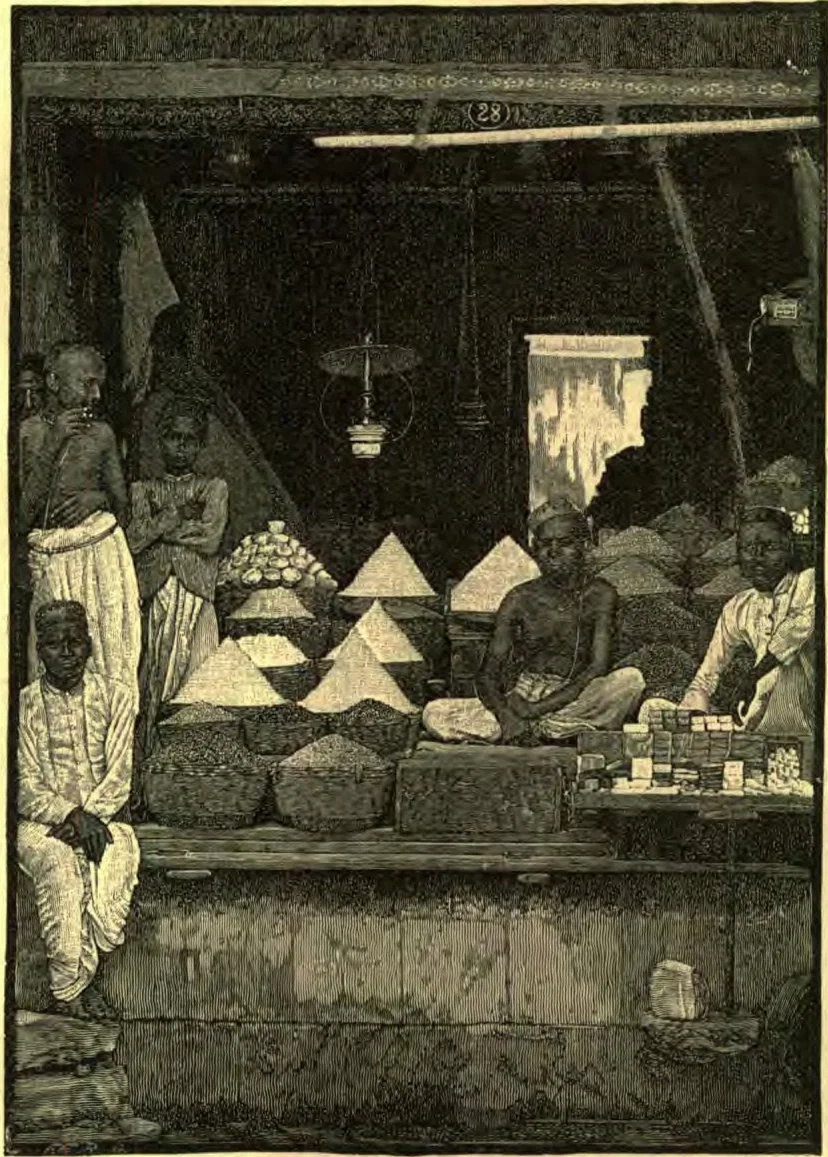
A HINDU GRAIN STORE.
Her mother had long been dead, and her father had been her only friend and companion. When she was told that her blindness could be cured, her one thought was that she could see him, and when the cure was complete, and the bandages removed, she ran to him, and, trembling, pored over his features, shutting her eyes now and then, and passing her fingers over his face, as if to make sure it was really the one she had called father.
The father had a noble head and presence, and his every look and motion were watched by his daughter with the keenest delight. For the first time his constant tenderness and care seemed real to her. If he caressed her, or even looked upon her kindly, it brought the tears to her eyes.
“To think,” she cried, holding his hand close in hers, “that I had this father so many years, and never knew him!”
How many of us are like the little blind child!
How many young men just entering life have made no close friendships at school or elsewhere because some bodily defect or poverty has soured their tempers, and made them cynical and suspicious. It is their lot, they think, to go alone through the world, to find women shallow, and men shams. Luck is against them. They will have nothing to do with friends; they will fight their own way, and ask help of none.
Women who know themselves to be plain and unattractive often feel this morbid jealousy and bitterness. They case themselves in a pride and reserve that keep their lives more solitary than could any prison walls.
The eyes of these souls are shut. If they would open them, they would see that the world is full of true and helpful friends, waiting to work and be happy with them.
They would see unnumbered chances in their own lives, however poor or sorrowful they may be, for healthy and cheerful work, for hearty good-will and love and comradeship.
And under and above and around their ungrateful, discontented lives, they would be conscious of an Almighty love and tenderness, holding them as the sunshine holds the floating mote of dust.
Often the oldest and wisest of us go through life like the blind child, never seeing the hand of Him who sets the sun to light our steps, who feeds us day by day, who makes ready a home for us hereafter.
But this blindness of the soul, whatever men may say about it, is not beyond a cure. We have but to seek the Great Physician, crying with one of old, “Lord, that I might receive my sight!” At his touch our darkness will vanish, and with the new light we shall find ourselves in a new world.
Then, like the happy French child, we shall be ready to exclaim, “To think that I had this Father so many years, and never knew him!”—Selected.

MAKING BELIEVE.

It was just a little lass, playing house upon the grass, With acorn cups and saucers, and a smooth white stone Spread with bits of broken glass; and she smiled to see me pass Every morning on my walk—she, as I, alone.
So I said, “My pretty maid,”—watching as she daily played, Not a doll to help her, crooning to herself— She her work a while delayed—eggs and sugar to be weighed, And all the funny dishes to be set upon the shelf.
And with brown eyes open wide, as my asking look she spied, “Well, what is it, lady?” did the darling say. Then, but not to hurt her pride, very honestly I tried To find out the secret of her happy day.
“Tell me, sweet one, if you know, what it is that makes you so Merry and contented in your garden here, Cheeks like roses all aglow. Why, I almost see you grow Brighter in the sunshine, like the flowers, my dear.”
“Mother says,” she answered sweet, eyes down dropping to her feet, Bravely lifted then, and fixed upon my face, “That you never must deceive, but that you may make believe, Till you’ll build a palace in a very humble place.”
Blessings on the little maid quite contentedly who played, “Making b’lieve” her common things were somewhat rare and fine, In the realm of fancy strayed, found the sunshine in the shade, And taught me how to make her pretty secret mine.
—Margaret E. Sangster.

ROUND THE WORLD.—22.

CENTRAL AND SOUTHERN INDIA.

Below the great Himalayas, the backbone of the world, as one speaker has tersely defined them, are the plains. These extend from the Bay of Bengal on the east to the Indian Ocean on the west, and contain the richest and most densely-crowded provinces of the Empire.
It is stated that on and around these plains dwell one hundred and fifty millions of people, in the provinces known as Lower Bengal, Assam, Oudh, the Northwest Provinces, the Punjab, Sind, Rajputana, and other native States. Our tour across the continent lay through many of these divisions, and although time was too valuable to stop and take a census of the people, to find out exactly how many there were, it will not be disputed that they are legion. The whole of this territory, though dotted with mountain ranges of moderate hight, is flat and uninteresting.
The soil is rich, and has been tilled for hundreds of years without receiving any fertilization. Mango groves scent the air with their perfume in the spring, and yield their abundant fruit in summer; indeed, for a certain portion of each year the mango is the staple article of diet. The spreading banyan, with its colonnades of foliage, the leafless wild cotton-tree, laden with heavy red flowers, the tall feather tamarind and the quick-growing babul rear their heads above the crop-fields.
As a rule, two crops are reaped each year, and in some parts of the country as many as three. In the northern part of the river plains, peas, pulse, oil seeds, and green crops of various sorts are reaped in the spring; the early rice crop in September, which is the great rice harvest of the year, and other grains in November.
Nearer the coast, at the head of the Bay of Bengal, and also on the western side, a great deal of wheat and barley is raised, and two varieties of millet, known to the natives as joar and bajra. In this portion of the country, the two last-named grains form the food of the masses, rice being only grown on irrigated lands, and consumed by the rich. Further south, however, it is the staple crop and the universal diet; and more than one hundred varieties of it are known to the Bengal peasant.
The tea-plant is reared on several hilly ranges which skirt the plains, but chiefly in Assam. Indian teas are now becoming famous among lovers of that beverage, the planters having so far superseded their Celestial brothers in the art of curing, that the latter are now sending deputies to India to acquire proficiency in a business which was at one time almost entirely under their control. But Hindus and Mohammedans are not a tea-drinking people, so that deducting what little is consumed by Europeans in the country, all the rest is exported. As there are so many lands supplying the tea-market now-a-days, the prices have naturally fallen, which has made heavy and sad the hearts of the Indian planters. To revive their failing finances, all the large tea-firms have formed themselves into a syndicate, and are sending their workers throughout the length and breadth of the land, to convert the people to the unhealthful practice of tea-drinking. We met one of these missionaries on the train, who, with great eclat, informed us of the noble (?) work in which he was engaged.
These great plains are watered by many rivers and canals for irrigation. The Himalayas form a kind of double mountain wall, with a deep trough, or valley, beyond. The three principal rivers are the Indus, which, flowing westward, unites with the smaller stream of the Punjab, and after a course of 1,800 miles, empties itself into the Indian Ocean; the Brahmaputra, or, as the word signifies, “the son of Brahma, or God,” which rises near the Indus, and like it has a course of 1,890 miles, forces itself through the clefts of the Himalaya Mountains at the northeastern corner of Assam, turns sharply to the west, then to the south, and finally reaches the Bay of Bengal; and, last but not least, the Ganges, or “Mother Ganges,” as she is lovingly termed. All rivers are sacred to the Hindu. As I gazed upon the murky waters of the Ganges, I could but think of all the sickening heathen rites that have been performed there, of the numbers of innocent widows who have been taken alive and burned on the suttee pile, that they might follow their departed husbands, as their sins are always supposed to have been the cause of his death, even though they have been married in infancy, and in some cases have never seen him at all. Little children by thousands have been cast into the water, to be either drowned, or swallowed immediately by the crocodiles, that the wrath of the gods might be appeased. But under British rule all this has ceased; the Hindus may follow their faith without restraint as long as human life or the property of others is not interfered with, but they can go no further.
As a rule, the buildings in which the natives dwell, or such as they use for stores, are of a very primitive and rude nature. They are generally built of mud, with tile or thatch roofs; even the stores have only three walls, and are entirely open in front, as shown in the picture.
With these few gleanings concerning the Himalayas on the north, and the great plains lying at their base, we will pass to a brief description of the three-sided tableland which covers the southern half of the peninsula.
In ancient days it went by the name of the “Deccan,” or the “South,” and now comprises the Central Provinces, Berar, and the Presidencies of Bombay and Madras, besides the native territories of Nizam, Mysore, Sindhia, Holkar, and other States under the control of feudatory princes. It slopes upward from the southern edge of the Gangetic plains. At the western extremity is Mount Abu, 5,650 feet from the Rajputana plains, famous for its exquisite Jain temples. On the extreme east, Mount Parasnath, also sacred to Jain rites, towers 4,490 feet above the Gangetic plains. There are various ranges between these two, which form a buttress on which rests the central table-land. These are now pierced by road and rail, and crossed by telegraph wires, but in former times they were a barrier between Northern and Southern India, and greatly increased the difficulty of welding the two into one Empire. This three-cornered table-land forms a vast mass of forests, ridges, and peaks, broken by cultivated valleys and high-lying plains.
There are a great many forests of the “sissu,” or teak tree, which is very durable, and is used in ship-building. The deeper one gets into the tropics, the more of that foliage is seen. Up country the coroneted palm-tree is not seen, but south there are forests of them, besides plantains (another name for the banana), Jack-fruit, toddy-trees, etc. The black soil of Southern India is proverbial for its fertility; cotton and the sugar cane are grown in large quantities. Coal mining forms a great industry; copper and other metals exist in small quantities; and the diamonds of Golconda were long famous, while gold-dust has from very ancient times been washed out of the river beds.
P. T. M.

“OUTING” AT THE SEA-SIDE.

The Instructor family will be interested in the following letter from one of our missionaries in South Africa, as she describes a pleasant outing which she took at the sea-shore:—
The day dawned clear and bright, indicating a hot mid-day in a Southern clime. It was about the time of the farmers’ annual visit to the sea. Accepting a kind invitation to accompany them, we engaged a wagon from town to Rokeby Park, there pitching our tent till the time of starting.
The long-looked-for morning arrived, and many grown people, as well as children, watched anxiously for the white-covered wagons that were to join us. Early their white sails were descried against the horizon, and with brief delay we joined the train.
The large wagons, eighteen feet long, with a capacity of 8,000 pounds, were each drawn by from twelve to sixteen oxen (sixteen is a span). Boxes of provisions, trunks, pots, pans, and kettles were stowed away in the bed of the wagon, with mattresses and bedding on top for comfort at night, and we were off for a twenty-mile drive to the sea.
The driver, a Kaffer, carried a whip with a stock ten feet long, and a lash twenty. The front yoke of oxen were led by a Kaffer boy, by means of a strap tied to their horns. After driving about three hours, we “outspanned,” to rest and graze the oxen. The Government has reserved many acres of grazing lands all along the public highways for the free use of travelers.
The servants soon had a fire and the kettle boiling under the thorny “mimosa” bush, and lunch was served on the ground, under the shade of the large wagons. A friend here met us with fruit, previously ordered for the company, which was carried on the heads of several half naked Kaffer women.
Traveling was done in the cool of the day and at night. As we came over the highest range of hills bordering the sea, the grand old ocean lay at our feet. Long distances apart were a few farm houses. Abundant growth of “mimosa” along its banks plainly showed the winding course of Reed River on its way to the sea. It has no visible mouth, a sand bank obstructing its passage to the sea.
Rounding a sand-hill by a narrow wagon-trail close by the river-bank, we came to the pretty “Reed River Glen,”—our camping-ground. Inclosed on three sides by high sand-hills, with no entrance except by the narrow river road, with another narrow road leading to the beach, we were securely sheltered from wind and storm.
Fifty persons, friends and relatives of our party, were already on the ground, and soon we had our temporary abodes erected and furnished. The wagons were used as bed-rooms, and with a ladder at the end, were easy of access. Posts were driven at the four corners between the wagons. To these, straps were attached and interlaced, forming a foundation for a canvas covering, which joined the wagon on each side, thus making a large, cool, and comfortable dining-room. This, with a kitchen made in the bush at the foot of the hill, made our apartments complete.
Those who had tents pitched them. Our encampment now numbered nearly one hundred, mostly professed Christians. When Sabbath came, we had meeting and a Sabbath-school in our tent. Some of the little ones had never attended Sabbath-school before and how delighted they were! They were taught the same lessons that you learn in your Sabbath-school.
Now if you will look on your map, you will see that we were encamped by the Indian Ocean, near to Port Alfred. Ask your teacher to point it out to you. I am sure you will be interested in a Sabbath-school here, because it was your money that paid the passage of missionaries to this far-off land, to organize Sabbath-schools, where the children might be taught to love the Saviour, and to prepare to meet him.
We much enjoyed our stay at the sea. The day-time was spent in strolling along the beach, gathering shells, watching the breakers chasing each other to the shore, fishing, and bathing in the briny surf.
Evenings were devoted by some to games and various amusements. Several evenings, however, we had religious services,—Bible readings, prayer-meetings, or preaching.
Several heard for the first time about the Saviour’s soon coming, and about the true Sabbath; and we hope that they may learn to love the same precious truths that are loved by the INSTRUCTOR family, and that in the coming harvest, you may see some fruit as the result of your Sabbath-school contributions to this far-off mission.
Mrs. Ira J. Hankins.

A FLOWER LESSON.

It sprang from the soft, dark earth, The morning-glory vine; Higher and higher, brave and green, With many a twist and twine. Bird and butterfly wheeled to see, And children stopped, a-row, To point with rosy fingers sweet, And watch the blossoms blow.
Purple and crimson, white and blue, Out from the lightsome green, They swing and rustle, the dainty bells, Their sheltering leaves between. Low by the grass, and high by the roof, And beautiful all the way; “And the prettiest flowers grow highest up,” The children wisely say.
Listen, laddies and lassies dear! God’s flowers are hearts, we know:— Look where the morning-glory springs To show us the way to grow! Up and up, with a strong, sweet will, Reach to your blossom-time; For life’s best flowers grow highest up, With God’s brave souls that climb.
—Selected.

A GOOD MAN’S TENDERNESS.

Boys are sometimes tempted to think that to be tender-hearted is to be weak and unmanly. Yet the tenderest heart may be associated with the strongest will. Take, for example, the story told of him to whom we owe our wonderful railway system.
George Stephenson went one day into an upper room of his house, and closed the window. It had been open a long time because of the great heat, but now the weather was cooler, and so Mr. Stephenson thought it would be well to shut it. He little knew what he was doing. Two or three days afterwards, however, he chanced to observe a bird flying against the same window, and beating against it with all its might again and again, as if trying to break it. His sympathy and curiosity were aroused. What could the little thing want? He went at once to the room, and opened the window to see. The window open, the bird flew straight to one particular spot in the room, where Stephenson saw a nest. The poor bird looked at it, took in the situation at a glance, and fluttered to the floor broken-hearted, almost dead.
Stephenson, drawing near to look, was filled with unspeakable sorrow. There sat the mother-bird, and under it four little, tiny ones—mother and young—all apparently dead. Stephenson cried aloud. He tenderly lifted the exhausted bird from the floor, the worm it had so long and so bravely struggled to bring to its home and its young still in its beak, and carefully tried to revive it, but all his efforts proved in vain. It speedily died, and the great man mourned for many a day. At the same time the force of George Stephenson’s mind was changing the business of the earth, yet he wept at the sight of this little family, and was grieved because he had unconsciously been the cause of their death.

FAITHFUL STITCHES.

You have often been told, no doubt, that every stitch faithfully done, every little duty cheerfully performed, every task accomplished as well as you can do it—this is the secret of a useful and happy life. Here is a striking illustration of the truth of this assertion.
A poor, lame, half-witted creature was obliged to stand in a close, hot room twelve hours a day, stitching harness. He had heard from some preacher that every-day work could be ennobled, but he had only a dim idea of the man's meaning.
One day he looked out of his dirty window, and saw a horse dashing madly by with a light carriage, in which were a woman and child. A bold man leaped from the curb, caught the horse by the bridle, and was dragged along by the infuriated animal. But the bridle held, the horse was stopped, the mother and child were saved.
The thought flashed through the mind of the poor leather-stitcher: “Suppose the sewing on that bridle had been poorly done, with bad thread? Then the bridle might have been broken, and the man as well as those in the carriage would have been injured. How do I know but that sewing was some of my work?”
Animated by that grand thought, he stitched away like a hero, determined to do his humble work well, for the sake of others. From that time on, he ennobled his calling, as every one may do who has the spirit of the Master, whose life has made our lives worth living.

Responsibility for Others' Progress and Our Own

To hinder the progress of others by our refusing to make progress is to make ourselves responsible for their failures as well as our own. So long as we are in the current of human activity, we must move with the current or be overborne by it. If we would halt, we must step aside. Hence, in order to know our own rights, we must first know what are the rights of our neighbors.

TO A LITTLE MAID.

HOW should little maidens grow, When they're ten or over? In the sunshine and the air, Wholesome, simple, fresh, and fair, As the bonny daisies blow, And the happy clover.
How should little lassies speak, When they're ten or over? As the birds do, and the bees, Singing though the flowers and trees, Till each mortal fain would seek The merry-hearted rover.
How about her eyes and ears, At this stage of growing? Like the clear, unclouded skies, Nor too eager nor too wise, So that all she sees and hears May be worth the knowing.
And the little maiden's heart? Ah! for that we're praying, That it strong and pure may grow; God, who loveth children so, Keep her from all guile apart, Through life's mazes straying.
—Journal of Education.

A SAD STORY.

“Ah me!” said the sponge. “Dear! dear! dear! well-a-day!”
“What is the matter?” asked the bath-tub. “Have you been squeezed too hard? or has the nurse rubbed soap on you again? I know soap never agrees with you.”
“I am rather exhausted by the squeezing, I confess,” replied the sponge, “but it was not for that I sighed. I am gradually getting used to these daily tortures.”
“But I was thinking about the past; about my beautiful home, from which I was so cruelly torn, and the happy, happy life I led there.”
“Tell me about it,” said the bath-tub. “You have told me before, but I always find it interesting. My home was in a tin-shop, as you are aware. The society was good, but it was a rather dull place, on the whole. You lived, you say—”
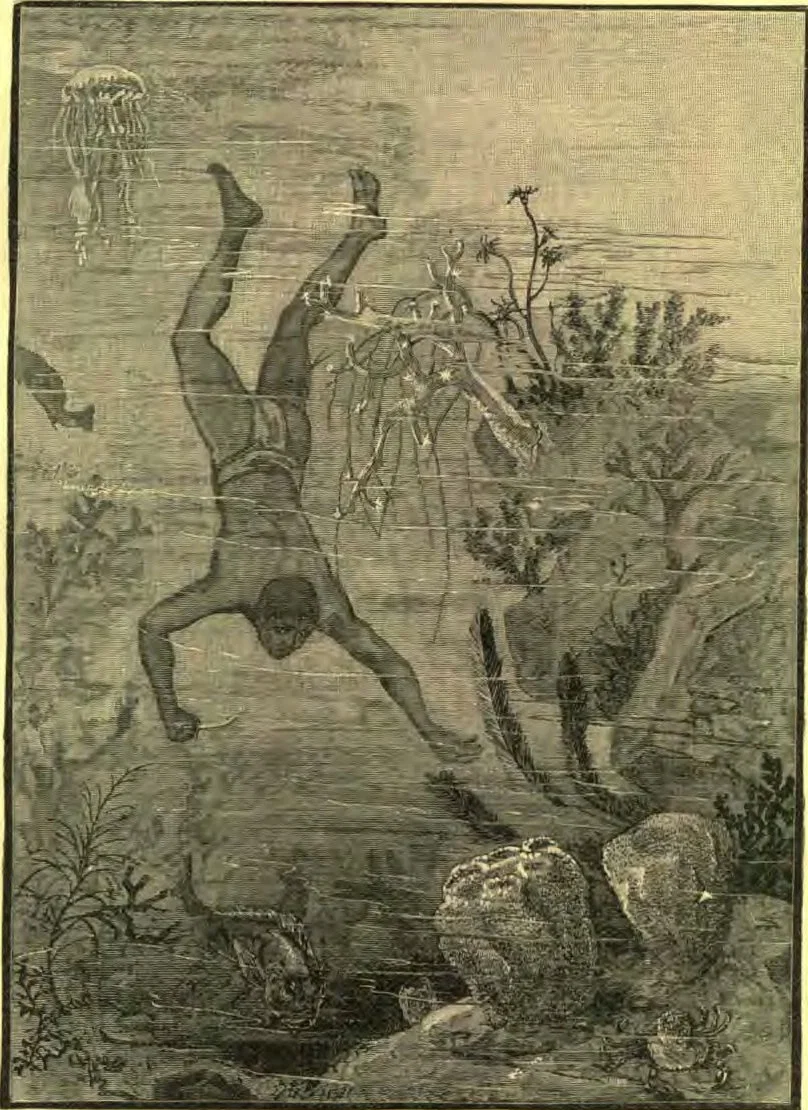
“On the coast of Syria,” said the sponge, with a sigh,—“the coast of beautiful Syria. There is a tiny bay, where the shore is bold and rocky. The rocks are bare above the water, but down below they are covered with lovely plants and fringed with gay mosses, beautiful to behold. The bottom of the sea is covered with silver sand, and over it move the crimson and gold-colored jelly-fish, the scarlet star-fish, and a thousand other brilliant creatures, making the neighborhood always attractive and delightful. On a certain ledge of rock, close by the bottom, I lived, as happy an animal as could be found in the Mediterranean Sea.”
“What do you mean?” interrupted the nail-brush, which was new and very ignorant. “You an animal? I don’t believe it. If your back were bone, and your hair pig-bristles, like mine, you might at least call yourself an animal product; but you have no back that I can see, nor hair either.”
“You are extremely rude,” said the sponge. “But you know no better, and ignorance should always be pitied rather than blamed. I was an animal, my young friend, though now, alas! I am only the skeleton of one.”
“I lived, as I said, a very happy life on my rocky ledge. I never moved from it. I had no occasion to do so, even if I had been provided with legs, as so many animals are. I never had any fancy for a roving life. To draw in the warm, delicious water through the thousand small holes and canals of my frame, and spout it out through my large holes, was my chief occupation, and one of which I was never weary. The water was full of tiny creatures of all kinds, and these formed my food, always giving me plenty to eat. In the spring I was always busy with my maternal duties. I brought out hundreds of lovely little round eggs, yellow and white, the prettiest eggs you ever saw. In a short time they put out tiny feelers, a sort of fringe of waving lashes, like those things on the nurse’s eyes; as soon as they appeared, I knew my babies were ready to come out; and, sure enough, they soon broke through their egg-covering, and, waving their lashes, swam out into the sea.”
“At first they staid near me, delighting my heart with their pretty tricks; but very soon they felt the need of homes of their own, and went off to fix themselves on rocks or coral trees, and become, in their turn, full-grown sponges like myself. I could not complain, for I had left my own mother in the same way. I never saw any of them again except one dear child who made his home on the shell of a large crab. He grew finely, and became a noble sponge; but the crab never seemed to mind him in the least, and carried him about with him wherever he went. In this way he often passed near my ledge, and as the crab was a friendly and sensible fellow, we often had a pleasant chat together.”
“One day, one dreadful, dreadful day, I was talking thus with my son and his landlord, when suddenly something huge and dark was seen above us, swimming slowly downward through the clear water. At first I paid no attention to it, supposing it to be a shark or some other large fish; but as it drew nearer, I saw that it was no fish, but a strange and horrible monster, the like of which had never been seen under the sea. It had four long arms, something like those of a cuttle-fish, only much less graceful, and divided at the end into five claws, or feelers. (I have since learned that two of those arms are called legs, and that the feelers are fingers and toes.) It had gleaming eyes, and in one hand it held something bright and shining. Ah! it makes me cold to think of it. To my horror the monster fixed his shining eyes on me, and swam directly toward my ledge. The crab scuttled off with my son on his back, and I was left alone and helpless. I saw one of the long arms extended; the five feelers clutched me in their grasp; I shrank down, and clung with all my might to the rock, but in vain. The shining thing in the monster’s other claw was slipped under me. It cut my delicate fibers; I felt them give way one by one; and at last, with one terrible cut and a violent wrench, I was torn from my peaceful home—torn from it, alas! forever. ”
“I was thrown into a bag full of other sponges, which the monster had slung about him, and then he pursued his path of destruction. I will pass briefly over the dark days that followed the drying in the sun, till all the life was dried out of me; the fearful squeezing, with thousands of other wretches like myself, into wooden cases; the voyage over seas; finally the exposure of my bleached and miserable skeleton in the window of a druggist’s shop. All these things are too painful to be dwelt upon; and, as you know, I am now resigned to my lot. I find in you a sympathizing friend. I have water given me (though of a very inferior quality) morning and night, and, were it not for the soap and the squeezing, I should make no complaint. But often, as I hang idly in my wire basket, my thoughts go back to my own dear home under the Syrian shores; and I long for a draught of the warm, delicious water, for the cool retirement of my rocky ledge, and for the sight of my dear son, riding gracefully about on the back of his crab.—Our Little Ones.

WHY MINNIE COULD NOT SLEEP.

She sat up in bed. The curtain was drawn up, and she saw the moon, and it looked as if it were laughing at her.
“You need not look at me, Moon,” she said. “You don’t know about it; you can’t see in the daytime. Besides, I’m going to sleep.”
She lay down, and tried to go to sleep. Her clock on the mantle went “tick-tock, tick-tock.” She generally liked to hear it, but to-night it sounded just as if it said, “I know, I know, I know.”
“You don’t know, either,” said Minnie, opening her eyes wide. “You weren’t there; you were upstairs.”
Her loud noise awoke the parrot. He took his head from under his wing, and cried out, “Polly did!”
“That’s a wicked story, you naughty bird,” said Minnie. “You were in grandma’s room, so now.”
Then Minnie tried to go to sleep again. She lay down and counted white sheep, just as grandma said she did, when she couldn’t sleep. But there was a big lump in her throat. “Oh, I wish I hadn’t!”
Pretty soon there came a very soft patter of four little feet, and her pussy jumped up on the bed, kissed Minnie’s cheek, and then began to “pur-r-r-r, pur-r-r-r.” It was very queer, but that, too, sounded as if pussy said, “I know, I know.”
“Yes, you do know, kitty,” said Minnie, and then she threw her arms about kitty’s neck, and cried bitterly. “And—I—guess—I—want—to—see—my—mamma!”
Mamma opened her arms when she saw the little weeping girl coming, and then Minnie told her miserable story.
“I was awfully naughty, mamma, but I did want the custard pie so bad, and so I ate it up, ’most a whole pie, and then—I—I—oh, I don’t want to tell, but ’spect I must,—I shut kitty in the pantry, to make you think she did it. But I’m truly sorry, mamma.”
Then mamma told Minnie that she had known all about it. But she had hoped that the little daughter would be brave enough to tell her all about it herself.
“But, mamma,” she asked, “how did you know it was a kitty?”
“Because kitty would never have left a spoon in the pie,” replied mamma.—Our Little Men and Women.

IT'S VERY HARD.

“It’s very hard to have nothing to eat but porridge, when others have every sort of dainty,” muttered Charley, as he sat with his bowl before him.
“It’s very hard to have to get up so early all these bitter cold mornings, and work hard all day, when others can enjoy themselves without labor. It’s very hard to have to trudge along through the snow, while others roll about in their coaches!”
“It’s a great blessing,” said his grandmother, as she sat at her knitting, “to have food when so many are hungry; it’s a great blessing to have a roof over our heads when so many are homeless; it’s a great blessing to have sight and hearing, and strength for daily labor, when so many are blind, deaf, or suffering.”
“Why, grandmother, you seem to think that nothing is hard,” said the boy, still in a grumbling tone.
“No, Charley; there is one thing I think is very hard.”
“What’s that?” cried Charley, who thought that at last his grandmother had found some cause for complaint.
“Why, boy, I think that heart is very hard that is not thankful for so many blessings!”

PEPPERMINT

There are two places in the United States where the cultivation of the peppermint plant is one of the leading industries. The older of these places is Wayne County, New York; but for thirty years the business has been a well-known one in St. Joseph County, Michigan.
“Hall’s big Marsh of Florence,” at Three Rivers, Mich., is the largest piece of land in America devoted to the raising of this plant. The farm contains about nine hundred acres, of which four hundred acres are put into mint each year, and alternated with clover to keep up the strength of the soil.
The cultivation of the crop requires more than ordinary care. The ground is plowed in August, September, or October, then thoroughly harrowed, and the following spring it must be harrowed again, then marked and planted. Old roots from “first” crop are removed from the ground in spring, and planted in rows three feet apart. A man carries the roots in a sack on his back, throws them into the rows, and they are then “kicked in.”
From the time the mint appears above the ground until it is gathered, it should be constantly cultivated and hoed to keep it free from weeds, which are the bane of the peppermint-grower’s existence. The plants mature from the middle of August to the first of September—as soon as the blossom is out. It is cut with a mower, or by hand with a scythe, and if weedy, the weeds must be sorted out by hand.
After cutting, the mint is allowed partly to dry, or “cure,” and is then drawn to the still-house, where it is immediately distilled. The still is a large wooden tub with tight-hinged top, a steam supply connection at the bottom, and an outlet to the condenser at the top of one side.
The mint is drawn to the still-house in wagons, and pitched into the still; the packer “packs the tub,” the top is fastened down, and the steam turned on for about an hour, or until exhausted. This is told by pulling out a plug in the top of the still. The exhausted mint, or “charge,” is lifted out of the still, and carried away on a wagon. The “mint straw” is dried, and used as fodder for sheep and cattle.
Two or three crops are gathered from each planting. The first and second crops are the best, and twenty pounds of oil to the acre is a good yield. The third crop is very apt to be weedy, and the yield only about ten pounds to the acre.—Youth’s Companion.

LITTLE BROWN HANDS.

They drive home the cows from the pasture Up through the long, shady lane, Where the quail whistles loud in the wheat-fields, That are yellow with ripening grain. They find, in the thick-waving grasses, Where the scarlet-lipped strawberry grows; They gather the earliest snow-drops, And the first crimson buds of the rose.
They toss the new hay in the meadow; They gather the elder-bloom white; They find where the dusky grapes purple In the soft-tinted October light. They know where the apples hang ripest, And are sweeter than Italy's wines; They know where the fruit hangs the thickest On the long, thorny blackberry vines.
They gather the delicate sea-weeds, And build tiny castles of sand; They pick up the beautiful sea-shells— Fairy barks that have drifted to land. They wave from the tall, rocking tree-tops, Where the oriole's hammock-nest swings; And at night time are folded in slumber By the song that a fond mother sings.
Those who toil bravely are strongest; The humble and poor become great, And so from these brown-handed children Shall grow mighty rulers of state. The pen of the author and statesman, The noble and wise of the land, The sword, and the chisel, and palette, Shall be held in the little brown hand.
—Selected.

A BAD FIRE.

“Joe, have you heard of the fire that burned up the man's house and lot?”
“No, Sam; where was it?”
“Here in the city.”
“What a misfortune to him! Was it a good house?”
“Yes; a nice house and lot—a good home for any family.”
“What a pity! How did the fire begin?”
“The man played with fire, and thoughtlessly set it burning himself.”
“How silly! Did you say the lot was burned too?”
“Yes; lot and all—all gone slick and clean.”
“That is singular. It must have been a terribly hot fire; and then I don't see how it could have burned the lot.”
“No; it was not a very hot fire. Indeed, it was so small that it attracted but little attention, and did not alarm anybody.”
“But how could such a little fire burn up a house and lot? You haven't told me.”
“It burned a long time—more than twenty years; and though it seemed to burn very slowly, it consumed about one hundred and fifty dollars' worth every year till it was all gone.”
“I cannot understand you yet. Tell me where the fire was kindled, and all about it.”
“Well, then, it was kindled on the end of a cigar. The cigar cost him, he himself told me, twelve dollars and fifty cents per month, or one hundred and fifty dollars a year, and that in twenty-one years would amount to three thousand one hundred and fifty dollars, besides all the interest. Now, the money was worth at least ten per cent, and at that rate it would double once in about every seven years; so that the whole sum would be more than twenty thousand dollars. That would buy a fine house and lot in any city. It would pay for a large farm in the country. Don't you pity the family of the man who has slowly burned up their home?”
The boys would better never light a fire which costs so much, and which, though so easily put out, is yet so likely, if once kindled, to keep burning all their lives.—Selected.
Continue reading: A QUEER PLACE FOR BEARS