The Youth’s Instructor, Vol. 35, No. 43.

THE POET AND HIS HOME

The Youth’s Instructor

Oct 26, 1887

S. D. A. Publishing Association · Battle Creek, Mich. · Oct 26, 1887

THE POET AND HIS HOME.
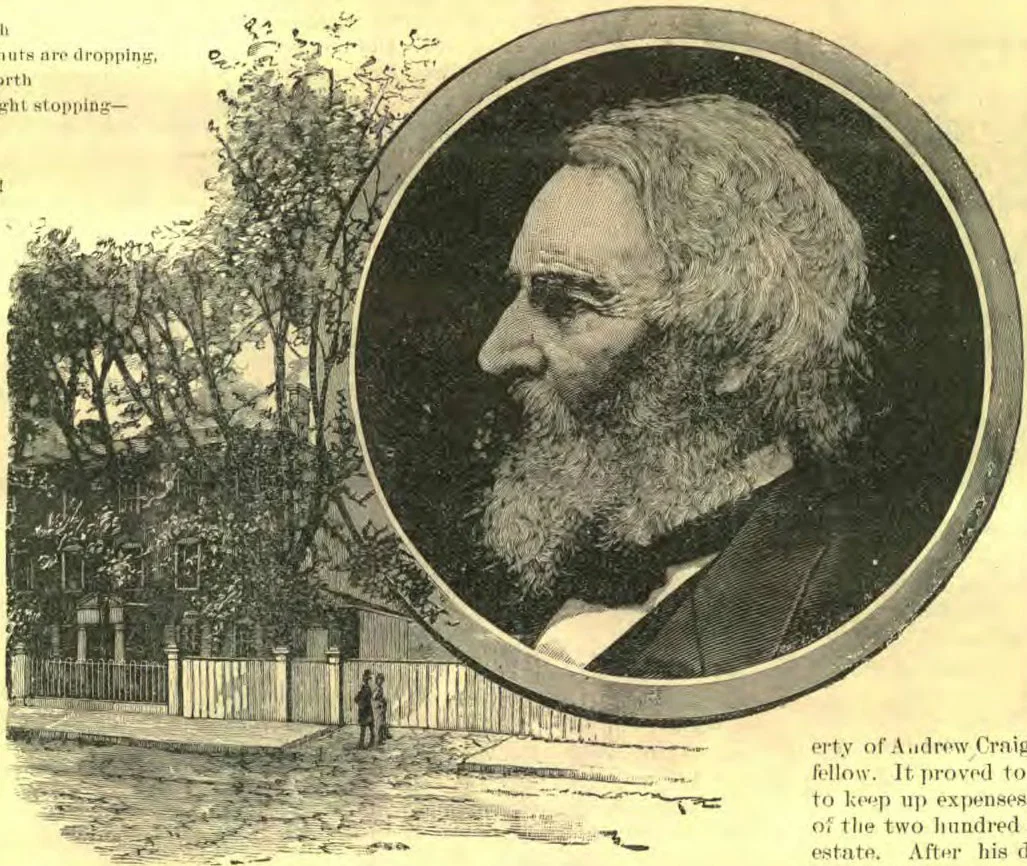
It is said that no poet has ever had so warm a place in the hearts of the people the world over, as our own Longfellow. A writer who has traveled much tells of the strange and far-away places in which his heart has warmed at sight of a well-worn copy of Longfellow’s Poems. Even in far frozen Iceland they asked him, “And do you know Mr. Longfellow? Tell him we know him and love him.” He seems to have a touch of nature which makes the whole world akin; for he is not more warmly appreciated in his native land than in the hearts and homes on the other side of the sea.
And when we think of the quiet, pure life he led, and remember the noble and elevating tone which runs through all his poems, we feel that the homage which he receives is meet. Does it not give evidence of the character of the man that we can recall no taint of impurity in any thought or expression which he has given to the world? The great poet loved Nature, and came very near to her heart; and so long as he kept such company, there was no room in his mind for idle or impure thoughts. And he leaned not upon nature as a blind force; but points us ever through nature up to its Author. From every one of the old legends which he is so fond of relating, is drawn some lesson which shall serve to make the reader wiser or better.
And as we note the even, quiet flow of his verses, and can see the many sweet home-pictures which he has spread out for us, do we not feel instinctively that he must have written from the sanctuary of a home where the dove of peace sat brooding? And thus it was; for Mr. Longfellow was favored with that one of the greatest of earthly blessings,—a quiet, well-ordered home, where strife and unhappiness found no place. (I have sometimes thought that of all classes of men, poets, as a rule, had been the most unfortunate in this respect.) But Mr. Longfellow was no idle dreamer; he was a poet, and more,—he was a kind husband, a loving but firm father, a good neighbor and citizen, and capable of the truest friendship,—he was a man among men, as well as a poet. His poems were expressions of what he knew of people, and things, and nature,—not the mere fancies of a fervid imagination untaught by contact with the realities of life.
The old place where he so long made his home is rich in historic associations as well as in the beauties of nature. Leaving the street car which has brought us over from Boston, at Harvard Square, a short walk takes us past Memorial Hall, the most imposing of the university buildings; Agassiz Museum; the Washington Elm, under which the great General took command of the Continental armies on the morning of July 3, 1775; and many other places, where we could spend hours with thrilling interest. But we hasten on, for the sky is growing dark with an approaching storm, and we would like to reach the shelter of the hospitable-looking old Longfellow mansion before the rain; but we hurry in vain, for anon there comes a sharper flash and a deafening crash, and a large limb of one of the old elm trees which line the walk is twisted off before our own eyes, just where we should have passed a moment later. The big drops begin to fall upon us like hail, and we are glad to take refuge under the deep stone portico of the Shephard Memorial Church, where are already gathered a score or more of Harvard boys.
The shower is a heavy one, but it does not reach us, though we have a chance to enjoy the society of the Harvardites for a half hour or more. It is but the day before Commencement, and they are full of talk and excitement in regard to it; and seem scarcely to heed the presence of the three strangers who have found refuge in one of the recesses of the portico. But at last the rain is over, the sun comes out; and we pass on under the still dripping trees, and are soon at the poet’s home, which we have come so far to see.
Yes, this is the place, and it looks very much as we had expected, only there are more trees and shrubbery in the yard than the pictures show. Everything is very quiet and dripping after the rain, and not a soul appears to break in upon our reverie, or to ask us why we go hither or yon. Few words are spoken—we are all busy with our thoughts—and soon we each go a separate way to get a better look at some object that interests us. Yes, I muse; this is the same old house I have seen in the pictures so many times; and I begin to recall its history, till I can almost see, gliding down the shaded walks, the stately dames in embroidered petticoats and high-heeled slippers, and gallant courtiers with sheathed swords and powdered queues. And then I remember the stories I have read about the kindness of the latest dweller, the poet; and half expectantly I wait to see him open the hospitable-looking front door and invite us into his sunny library. But there is a deserted air about the house and grounds; and the truth comes home to me that the genial, warm-hearted owner has been carried a little farther down the street, past Lowell’s home, and laid away to rest in one of the quiet graves of Mt. Auburn.
The house was built more than a century ago, by Col. John Vassal, a noted Tory; but was deserted by him in the time of the Revolution, and became the home of Washington and the headquarters of the American army while stationed in Boston. After the Revolutionary war, it passed through the hands of various owners till it at last became the property of Andrew Craigie, the owner previous to Longfellow. It proved to be a burden on his hands, and to keep up expenses, he parted with all except eight of the two hundred acres originally included in the estate. After his death, Mrs. Craigie was obliged to let lodgings to the youth of Harvard, which was a great crucifixion to the pride of the old gentlewoman. Edward Everett, Jared Sparks, Longfellow, and others who have since become famous men, were among the lodgers. After her death, in 1843, Longfellow bought the old place, to which he had become much attached; and from that time, till his death, in 1882, with tender love and reverent care, he preserved and adorned the place. It has been said by those well acquainted with its fortunes that he made it what it had not been in all the changing years—a home. The passing years brought him wealth to gratify his tastes, and he continued until the time of his death to add beauties of art, curiosities from every land, and sacred relics.
The house is set back from the street, behind a lilac hedge, blossoming in spring with purple and white. On either side are the broad verandas, from which one can look across the meadow to the River Charles, which the poet loved so well, winding its way like a silver S; and beyond it to the blue hills of Milton. Longfellow bought the land on the other side of the street, between his windows and the river, that this beautiful view might never be shut out from his gaze. Since his death, it has been presented by the heirs to the town, and is to be known as Longfellow’s Park.
We are told that within the house are things rare, beautiful, and exquisite as the poet’s taste, from almost every land upon which the sun shines; and we would like to go inside, but no one invites us; and so we content ourselves with wandering about the beautiful grounds and garden, thinking that only a little while ago the master of all this loveliness walked these very paths, tended the flowers which he loved as children, and sitting in this half-ruined summer house, wrote strong, beautiful words, which have gone out to help and to comfort people in all parts of the earth. And those lines of his, so familiar and yet so inspiring, seem to speak to us out of the trees and shrubbery around:—
“Not enjoyment and not sorrow, Is our destined end or way; But to act, that each to-morrow, Find us farther than to-day. “Trust no future, howe’er pleasant! Let the dead past bury its dead! Act,—act in the living present, Heart within and God o’er head!”
Truly, “the pen is mightier than the sword;” and in the years to come the old place will be far more precious as the home of the poet than famous as that of the soldier. EVA BELL GILES.

AMONG FALLING LEAVES.

The leaves are ripe; earth everywhere Is gorgeous with their color-stain; A glory streams through all the air Like light in church through tinted panes, That shimmers slowly.
The anxious time for nesting bird And toiling man is over now: Only some casual song is heard, Or easy whistle at the plough Or yeoman lowly.
It is the time of quiet earned; The Sabbath of stern labor won: Hallowed since first the planets burned— The seventh-day calm of the well-done; And it is holy.
I hear a small, sweet strain that floats Among the tree-tops of October, Seeming to say, in gentle notes, So few, so clear, so softly sober— “Oh, keep it holy!”
The little sparrow of the north Comes when the leaves and nuts are dropping, And on the stillness warbles forth This message, in his long flight stopping— “Yes—keep it holy!”
Dear word—yet now, as long ago, The “wherefore” of six days’ pursuing! God’s Sabbath is but blinded so, And only grows of urgent doing. “Keep—the week—ho-ly!”
—Wide-Awake.

SOUTH AFRICA

A PEEP AT AFRICA.—NO. 5.

SOUTH AFRICA.

Ancient writers have handed down to us some traditions that the Phoenician voyagers sailed around Africa in earlier times; but the first historical record we have that can be relied upon relating to the matter, describes the voyage of Bartholmew Diaz and Joa Infanta about four hundred years ago, in the year 1486. They were sent out by John II., the king of Portugal. One of the chief objects the king had in mind was to discover, if possible, a seaway to India. These navigators took with them stone pillars in the form of a cross, and erected them at such capes, bays, and headlands as they discovered. They were unsuccessful in their search for their desired object. They sailed as far around the coast as the mouth of the Great Fish River, which is a number of miles east of Port Elizabeth, when they were compelled on account of the discontent of the sailors to turn back. On their way home, they sighted the mountain range of the Cape Peninsula. Diaz named its southern extremity “Cabo Tormentos,” or Stormy Cape, because of the rough seas they had to pass through in sailing around it.
When they reached Portugal, and told the king of their discoveries, he was so much encouraged to think that there would yet be found a route to India, that he named this most southern land of Africa “Cabo de Boa Esperanca,” which means the Cape of Good Hope.
Ten years later, another fleet was sent out under the command of Vasco da Gama, who, on the 20th of March, 1497, doubled the Cape of Good Hope. He then sailed up the eastern side, landed at Natal and Mozambique, when he proceeded to India, reaching there in the following month of May.
In sailing around the Cape, he landed at Mossel Bay, and there he was the first to converse with the Hottentots of South Africa. Vasco da Gama speaks of them as “negroes with frizzly hair; they value their flocks of cattle very highly, and some of them our men saw were very fat and clean, and women rode upon them, on pack saddles of reed. Our crews were much entertained by these natives, as they are a pleasure-loving people, given to playing on musical instruments and to dancing; and among them were some who played upon a kind of pastoral reed, which seemed good after its fashion.”
For one hundred and fifty years following these discoveries, the Cape was simply a temporary place of call for Portuguese, Dutch, and English ships, in the eastern ocean-trade. Cape Town, which is now the largest city of South Africa, was one of the principal places where these ships called. Here they obtained water and live stock from the natives.
No permanent settlement of Europeans was attempted till 1652, when the States-General of the United Provinces of Holland granted a charter to the Dutch East India Company, who at that time took possession of “Table Bay.” This bay is the port of the present city of Cape Town. Here they established a fort, and occupied the lands between the bay and Table Mountain. Their object was to have always in readiness supplies with which to furnish their passing ships.
The first Governor of the new settlement, Jan Anthony van Riebeek, on the 6th of April, 1652, anchored in Table Bay. Van Riebeek was accompanied by his family, and he was furnished with about one hundred men from the ships, who were to form a garrison. “They erected,” says the historian, “a small earthen-work fort, as a strong-hold against any attempt of the savages, and, under protection of its eight-pounder cannon, the first inhabitants laid out their gardens and pastures. They first raised vegetables and grew corn. They afterwards introduced and propagated the vine, the orange, the olive, and other fruit trees. They bartered grass, beads, brandy, and tobacco for the cattle and sheep of the Hottentots. And from time to time they sent out small expeditions to penetrate into the interior, with a view to make search for more profitable commodities for trade, and to learn ‘more and more of the secrets of Africa,’ and especially to try to find a way inland to the auriferous lands of Monomotapa and Sofala, which even in those days were believed to be the true Ophir whence king Solomon had imported his gold.”
Upon their arrival in Table Bay, Van Riebeek held a council with his officers on board the Dromedaris, his principal ship. This council was opened with a solemn prayer to God for his blessing upon their work. The “journals” and “dispatches” of those times, which are still preserved in the archives of the Colony, say that they prayed that “as they were called to the government of the affairs of the Cape of Good Hope,—to advise and to take such measures as might best tend to promote the interests of the East India Company—to maintain justice, and, if possible, to implant and propagate the true Reformed Christian doctrine amongst the wild and savage inhabitants, for the praise and honor of God and the benefit of their employers,—it might please the Almighty Father to preside at their assembly, and with heavenly wisdom enlighten their hearts, and remove all perverse passions, misunderstandings, and other defects, and human weaknesses, that their minds might be so composed, and in all their deliberations they should not resolve anything which would not tend to the praise and glory of his holy name and the benefit of their masters without considering in the least their own personal advantage or profit.”
The erection of the Fort was begun on April 10th; but many of the men were so unskilful that Van Riebeek found it necessary to engage himself as engineer, carpenter, mason, blacksmith, and excavator. “Harts, elands, steenbuck, and other game were plentiful; but so wild that they could not be approached. The hippopotamus and rhinoceros were in near neighborhood; and one evening a lion killed the cattle of a Hottentot quite close to the fort.” A day or two afterwards, says the Journal, “The commander, while walking in the garden [where the Parliament houses now stand], found traces of wild animals all over it; and soon after, a large lion sprang up from the outside of the ground, forty or fifty paces off, and walked slowly toward the mountain.” This lion they killed, and it was found to weigh four hundred and twenty-six pounds. But the lions and tigers and wild animals are not here now; for on the ground where these scenes occurred so many years ago, stands the city of Cape Town, the largest city of South Africa.
D. A. ROBINSON.

BRINGING THE CHILDREN TO JESUS.

In the far away hills of the land of Judea A dear, weary mother was weeping one morn; Her heart was so grieved for her beautiful darlings That God had vouchsafed to her care to be born.
She saw how the bloom of fresh innocence faded, She saw how ill passions were marring each grace, And a great heavy grief filled her innermost bosom As she looked on the change in each pretty one's face.
“Oh, what shall I do?” sighed the sad-hearted mother; “I am powerless to help them, unfit for my trust; Yet God will inquire for my beautiful treasures, And shall they be yielded to Satan and lust?
I have heard of the prophet of Nazareth, Jesus; The poor and the sick and the blind go to him; Oh, wouldn't he pity a care-burdened mother? My heart is so heavy, my eyes are so dim!”
“Come, children, come in from your play,” cried the mother; “I'm going to take you to Jesus to-day; He's the mightiest, tenderest one in Judea, And blesses all people who come in his way.”
Then hurried the mother to cleanse the bright faces, To answer the questions they asked her of him; How he looked, with his great holy eyes; would he scold them? And switch them, perhaps, with a hard olive limb?
“Oh, no; he would pity and love you, as I do;” And the mother's step slackened for the babes at her side; But her heart went ahead, searching, yearning for Jesus; Ah! did he not hear what the eager heart cried?
“Well, where are you going?” called many a neighbor, “I'm taking the children to Jesus,” she said; “I feel sure he will help me to care for my treasures.” “Oh, wait; I'll go too, and take Mary and Zed.”
And so, street by street, the strange army collected, Of fond, earnest mothers, and dear little feet. “Oh, where is Jesus, the compassionate prophet? He's coming, he's coming this way. We shall meet.”
“Who'll tell him,” said one, “what we want? His disciples Perhaps will speak for us. O sirs, we have come To have Jesus just talk to our children and bless them; We've traveled on purpose this day from our home.”
“Oh,” said the disciples, “the Master's too busy With worthier cares. Go away from this spot.” So sad were the mothers; but Jesus spoke quickly, “Oh suffer the children, forbidding them not.”
He gathered them round him with words of compassion, The lambs to his bosom he tenderly pressed, His hands on each head were laid softly in blessing, And each little heart was enfolded to rest.
O, just what the mothers desired he gave them; They sobbed at his feet all their troubles and cares, And he comforted them, and blessed them, and loved them, And listened so kindly to all of their prayers.
Are you heavy laden, poor mother, and weary? The same Jesus lives as in Judea's land. Just call in your children, and take them to Jesus; He'll bless them, and lay on their heads the same hand;
And at last in the courts of the same Heavenly Father You will say, “Here am I and these jewels of thine.” And he'll give you a crown gemmed with stars of rejoicing, Happy mothers, whose crowns with their children shall shine.
FANNIE BOLTON.

OUR BAREFOOT BOYS.

MR. MATTHEW ARNOLD was greatly struck, says the Boston Herald, by the democratic government of our reading-rooms, when in Boston. He entered a reading-room one day, and saw a small, barefooted newsboy sitting in one of the best chairs, enjoying himself to the utmost. The great essayist was amazed, and asked, “Do you let barefooted boys in this reading-room? You would never see such a sight as that in Europe. I do not believe there is a reading-room in all Europe, in which that boy, dressed as he is, could enter.”
Then Mr. Arnold went over to the boy, engaged him in conversation, and found that he was reading the “Life of Washington,” and that he was a young gentleman of decidedly anti-British tendencies, and, for his age, remarkably well-informed.
Mr. Arnold remained talking with the youngster for some time, and, as he came away, he said: “I do not think I have been so impressed with anything else that I have seen, since arriving in this country, as I am now, with meeting this barefooted boy in this reading-room.
“What a tribute to democratic institutions it is, to say that, instead of sending that boy out to wander alone in the streets, they permit him to come in here, and excite his youthful imagination by reading such a book as the ‘Life of Washington’!”
“The reading of that one book may change the whole course of that boy’s life, and may be the means of making him a useful, honorable, worthy citizen of this great country. It is, I tell you, a sight that impresses a European not accustomed to your democratic ways.”—Companion.

THE BROKEN BUCKLE.

It is related of a hero in Scottish history, that, when an overwhelming force was in full pursuit, and all his followers were urging him to more rapid flight, he coolly dismounted, in order to repair a flaw in his horse's harness. Whilst busied with the broken buckle, the distant cloud swept down in nearer thunder; but just as the prancing hoofs and eager spears were ready to dash down on him, the flaw was mended, the clasp was fastened, the steed was mounted, and, like a sweeping falcon he had vanished from their view. The broken buckle would have left him in the field an inglorious prisoner; the timely delay sent him in safety to his huzzaing comrades. There is such a thing as making haste slowly, when, if we are too eager for the end, we fail to do our work right. Promptness and hurry are two very different things. The prompt man or the prompt child does things as quickly as they can be done well. When one hurries, he is apt to slight his work and do it improperly.—Selected.

Devote Each Day to Its Duty

DEVOTE each day to the object then in time, and every evening will find something done.—Goethe.

CURIOUS FACTS.—NO. 1.

—Prussic acid is the most powerful poison known. It destroys the nervous system. A single drop put on the tongue of a dog will kill it instantly. This poison can be found in green tea, and souchong is as effectual in poisoning flies as arsenic.
—The cow tree of South America, on being tapped, furnishes an abundant secretion of rich, nourishing vegetable milk.
—Scales that appear on iron when heated are formed by the iron's absorbing oxygen from the air, and are called black oxyde.
—Ising-glass is made of the sounds, or air bladders, of certain species of sturgeons found in the rivers of Western Russia.
—Count Rumford, by boring a cannon within water, so heated the water by the friction produced that he made it boil, and actually boiled a piece of beef in it.
—A pound of ice, in melting, uses up as much heat as would suffice to raise a pound of water to 135 degrees.
—The flame of a candle will burn separately in the flame from alcohol.
—Of all metals, brass and copper retain heat the longest; next iron, tin, and lastly lead.
—All metals can be reduced to salts.
—One grain of sulphate of lime will render 2,000 grains of water hard.
—Pieces of ice rubbed together will melt.
—In 1782, Dr. James Price, of Guilford, England, pretended to have discovered the philosopher's stone, and published an account of his experiments; but being a fellow of the Royal Society, he was required, on pain of exclusion, to repeat his experiments before a committee; but after some equivocation he took poison, and died in August, 1873. He presented specimens of gold to the king and the Royal Society, pretending they were made by a red and white powder.
W. S. Chapman.

PRAYER

LESSON 12.—PRAYING IN PUBLIC.

1. WHAT is the most remarkable public prayer on record? 1 Kings 8:22–53.
2. On what occasion was it made?
3. What was the leading petition in this prayer?—That God would at all times hear the prayers of his people, and forgive their sins. Verse 30.
4. What request was next made?—That in cases of bitter contention between neighbors, God would condemn the wicked and justify the righteous. Verses 31, 32.
5. What prayer was made for the restoration of the nation? Verses 33, 34.
6. What does he thus seem to anticipate?—The Babylonish captivity.
7. What does he recognize as the cause of their captivity? First part of verse 33.
8. What does he recognize as the first steps towards their restoration? Last part of the same verse.
9. What other great calamity does he anticipate will come upon them on account of their sins? V. 35.
10. When and under what circumstances did such a calamity take place? 1 Kings 17:1; 18:1; Jas. 5:17, 18.
11. What other very important blessings did Solomon ask for in connection with the giving of rain? 1 Kings 8:36.
12. What other afflictions did he mention as proper subjects for prayer? Verse 37.
13. What comprehensive petition does he then add?—That whatever prayer may be sincerely made by any man concerning the plague of his own heart may be heard, and pardon granted. Verses 38–40.
14. What petition is made for the stranger?—That God will hear his prayer and do according to all that he calleth for. Verses 41–43.
15. What is one reason for desiring this?—That all the people of the earth may know the name of the true God, and fear him.
16. What does he ask God to do for his people when they are compelled to go to battle? Verses 44, 45.
17. What subject does he again take up at length? Verses 46–53.

SUPPLEMENTARY QUESTIONS.

1. When David thought he was drawing nigh to the grave, and about to sleep the sleep of death, how did he seek for deliverance? Ps. 88:2, 3; 13:3; 39:13.
2. What instructions did the apostle James give in cases of sickness, and what promises did the Lord make through him? Jas. 5:13–16.
3. Show that the gift of healing was to be bestowed upon true believers, and that it was exercised by the apostles. Mark 16:17, 18; 6:13; Acts 5:16; 19:11, 12.
4. What passages seem to indicate that sin, in some instances at least, is closely connected with the causes of sickness? Isa. 33:24; Matt. 9:2; John 5:14.
5. What history shows that God does not always see fit to raise the sick in answer to prayer? 2 Sam. 12:13–18; 2 Tim. 4:20.
6. What instance shows that it is best not to be too importunate in pleading for the recovery of the sick? 2 Kings 20:1–6; 2 Chron. 32:24, 25.
7. What assurance have we that the Spirit of God will help our infirmities, and render our petitions acceptable? Rom. 8:26, 27.

COMPENDIUM.

The prayer of Solomon at the dedication of the temple was probably the most remarkable public prayer on record. 1 Kings 8:22–53. The leading petition seems to be that God would at all times hear the prayers of his people, and forgive their sins. He also asks that in cases of contention between neighbors, the wicked might be condemned and the righteous justified. He then prays for the restoration of the nation when they shall be smitten down by their enemies and taken captives. He seems to anticipate the Babylonish captivity, recognizes sin as its cause, and repentance and prayer as the first steps toward restoration. He also anticipates that on account of their sins the heavens may be shut up and rain withheld, as though with prophetic eye he could look forward to the time when it should “rain not on the earth by the space of three years and six months.”
He not only prays that rain may be sent, when the people turn again to God with all the heart, but asks, first of all, that their sins may be forgiven, and that God would “teach them the good way wherein they should walk.”
He also shows by his example that it is proper to pray for deliverance from famine, pestilence, blasting and mildew, the scourge of the locusts or the caterpillar, from an invading enemy, or from whatsoever plague or sickness there may be; and that whatever prayer may be made by any man concerning the plague of his own heart shall be heard in heaven, and forgiveness granted. He even remembers the stranger that is not numbered among God’s chosen people,—one from a far country,—saying, “Hear thou in heaven, thy dwelling place, and do according to all that the stranger calleth to thee for; that all people of the earth may know thy name, to fear thee as do thy people Israel.” He then takes up again the anticipated captivity of his people Israel, and pleads with great earnestness that God will finally maintain their cause, forgive their sins, and give them the compassion of those who have enslaved them.

CONDENSED ANALYSIS.

1. A most remarkable public prayer and its leading petition,—that God would at all times hear prayer, forgive sins, and administer justice between contending parties. 2. A prayer for national deliverance from enemies and from captivity. 3. A prayer that rain may be granted, and the people taught in the good way; for deliverance from famine, pestilence, and whatsoever plague or sickness there may be. 4. A plea that every man shall be heard concerning the plague of his own heart, and that the stranger from far, who comes to seek the God of Israel, shall be heard and answered.

DOUBLE INFLUENCE.

THE bird that to the evening sings Leaves music when her song is ended,— A sweetness left, which takes not wings, But with each pulse of eve is blended: Thus life involves a double light, Our acts and words have many brothers; The heart that makes its own delight Makes also a delight for others. —Charles Swain.

THE BONES OF COLUMBUS.

WHEN Christopher Columbus, the discoverer of America, died, he was buried at Valladolid, Spain; but after the short space of seven years, his remains were taken to Seville. In 1536 they were again removed, this time across the ocean, to Hayti, where they were deposited in the Cathedral of San Domingo. In 1795, his bones were disturbed again, being taken to Havana, in Cuba. Now, after a further rest of a hundred years, they are to be once more removed, as if they had not yet earned rest. Let us hope this is the last transfer to be made of them, which is to Genoa, the navigator’s birthplace.

VENUS, THE MORNING STAR.

An important event occurred, a week or two ago, in the movements of our nearest celestial neighbor among the planets. The fairest of the evening stars shines no longer in the western sky, where her beaming presence has been so welcome during the spring and summer.
On the 21st of September, Venus reached inferior conjunction, passing, at that time, between the earth and sun, as the moon does at new moon, and changed her position from the eastern side of the sun to the western. She has now become morning star.
For a short time after she began her new role, she was invisible, for she was so near the sun as to be hidden in his rays. She may now, however, be seen shortly before sunrise; for she moves rapidly in this part of her course. Careful observers will easily find her early in the present month, a lovely object under “the opening eyelids of the morn.” She will rise earlier each morning, and grow brighter until the 28th of October, when she reaches her period of greatest brilliancy as morning star, being visible even in the presence of the great luminary from which she borrows leave to shine.
During this time, she is moving westward from the sun, and will continue to move in this direction until the 2d of December, when she reaches the greatest western elongation. Her movement is then reversed. She approaches the sun, sets earlier every evening, and her brilliancy decreases until she arrives at superior conjunction on the 11th of July, 1888. Her course as morning star is then completed, and she becomes evening star.
It takes our charming neighbor five hundred and eighty-four days to pass through the changes from the time she becomes morning star until she reaches the same point again. She is morning star for about two hundred and ninety-two days, and evening star for the same length of time.
Observers who wish to follow her present course will find it an easy study. She will be visible early in October, a little while before sunrise, in the eastern sky, will grow larger and brighter and rise earlier until the 11th of December, when she rises about three hours before the sun. She will, after this time, approach the sun, grow smaller and rise later, until she is lost to sight in the sunbeams.—Youth's Companion.

OUR BOUNDARY MARKS.

A GLANCE at the map of the United States shows that its boundary adjoining Canada follows, the larger part of the distance, an irregular water-line formed by the great lakes and their outlets. Thence from the Lake of the Woods, on the north of Minnesota, a more direct course is taken through the wilderness and over the mountains of the wild West to the Pacific coast. This boundary between the countries is marked at regular intervals by pillars of wood and iron, earth mounds, or stone cairns.
Beginning at the Lake of the Woods, cast-iron pillars have been placed alternately by the English and our government, one mile apart, until reaching the Red River Valley. Those set by our neighbor were brought from over the ocean, while ours were made in Detroit. They are a hollow casting of a pyramidal form, eight feet in height, having a base eight inches square and an octagon flange one inch in thickness, with a top four inches square, surmounted by a solid cap. Into these hollow posts are fitted well-seasoned cedar joists, with spikes driven through apertures made for that purpose in the casting. One-half of the length of the pillars are firmly imbedded in the ground, so that the inscriptions on their sides, in raised letters two inches high, face the north and south, the first reading “Convention of London,” the latter “October, 20th, 1818.”
Beyond the Red River, earth mounds and stone cairns seven feet by eight generally denote the boundary line. Whenever wooden posts are used, they are of the same height as the iron pillars, and painted red above the ground. Through forests, a clearing has been made a rod wide, so that the course is plainly indicated. Where bodies of water are crossed, monuments of stone have been raised several feet above high-tide. Over the mountains, shafts of granite like grim sentinels guard the way. Altogether, the fixing of the boundary-marks was expensive, but it was well done.—Golden Days.

Glass Eyes: Annual Production and Lifespan

Disasters to eyesight are evidently more than is generally supposed, judging from the statement that more than 2,000,000 glass eyes are made annually in Germany and Switzerland. An artificial eye seldom lasts more than five years, the secretions of the glands turning it cloudy.

MOTHER'S EARS.

“I've had the beautifulest time!” said Tommy Downs to his mamma, coming in at bed-time from spending the evening with his playmate, Phil Porter.
“What have you been doing?” asked Mrs. Downs, smiling on her noisy, stirring boy.
“Oh, we've made all the noise we wanted to, I, and Phil, and the girls. We marched for soldiers, and I whistled while Phil beat his drum, and we played ‘I spy’ and ‘Stage Coach’ and ‘Puss-in-the-Corner.’ Then we each took a comb and some tissue paper, and played on them as loud as we could—had a regular comb concert.”
“And it didn't disturb Mrs. Potter at all?”
“Not a bit. She just sat and read all the evening, and paid no attention to us. I wish you were as deaf as she is!”
“Why, Tommy!”
“Well, I do,” persisted Tommy. “It would save you so much trouble with your headaches and my noise, for I know I'm a noisy boy. I believe you'd take lots more comfort than you do now.”
“Don't you think I like to hear the music of my little boy's voice?”
“The trouble is, it is too much and too loud,” laughed Tommy.
A few days afterward, he went to see Phil again. It was fine sliding, so he and Phil and a dozen other boys were coasting down the hill back of Mrs. Potter's house.
“I'm dreadful thirsty,” said Tommy to Phil. “I'll run down to your house for a drink of water.”
“You won't need to go in,” said Phil. “You can get it from the cistern in the back room.” The cistern was under the floor, the water low down, and Tommy's arm short. It was icy, too, around the trap-door, and it was no wonder that Tommy slipped in.
He caught the edge of the board and held on with all his might, screaming for help. Through the open outside door he could see Mrs. Potter sitting by the back parlor window, sewing, and she could easily have heard him scream, if she hadn't been deaf.
The boys on the hill made too much noise to hear him. He was hanging in the ice-cold water almost to his waist, and his hands and arms were so tired that he thought he must let go and drop in, when little Nell came and stood by the window where her mother sat, and she caught sight of Tommy.
He saw her pull her mother's sleeve, and point to him, and then it was no time at all before Mrs. Potter had him out of his cold bath and into the house in hot blankets. Tommy stayed there nearly all day, and towards night Phil drew him home on his sled.
“Mother,” said Tommy that night, as she had tucked him snugly in bed, and was going down stairs with the light, “I can't be glad enough that you are not deaf! I don't wonder that Jesus said, ‘Blessed are your ears, for they hear!’”
Continue reading: THE PINE-APPLE