The Youth’s Instructor, Vol. 30, No. 34.

HEBRON

The Youth’s Instructor

Aug 23, 1882

S. D. A. Publishing Association · Battle Creek, Mich. · Aug 23, 1882

HEBRON
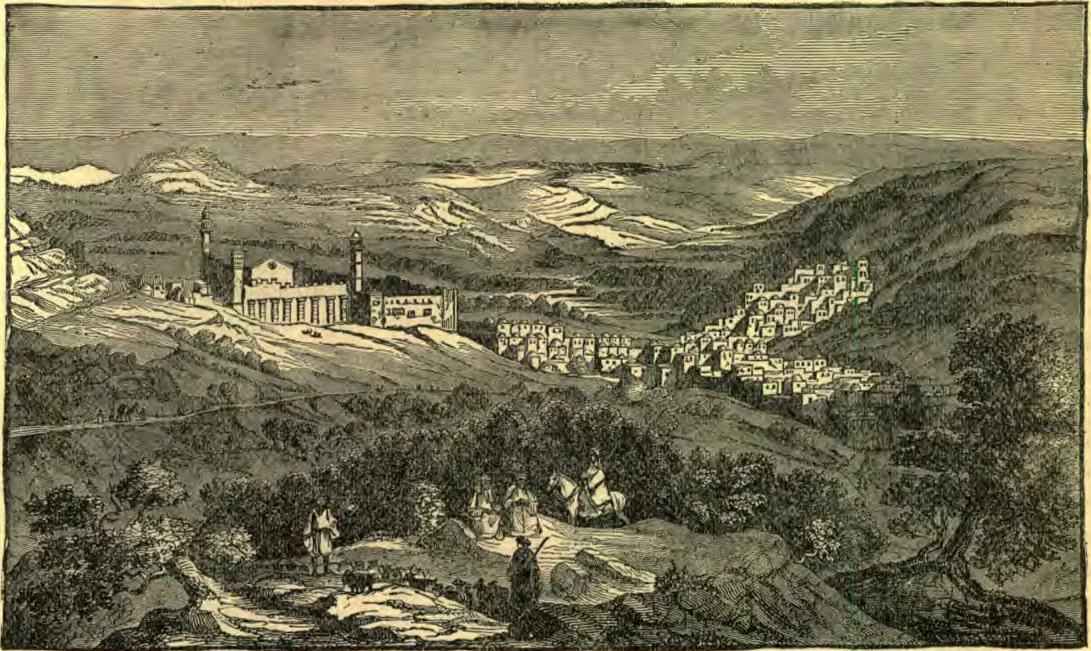
GOING south from Jerusalem some twenty miles by the road leading through Bethlehem, the traveler in the Holy Land comes to the city of Hebron, situated among the mountains of Judah. This is the most ancient town of Palestine, and has been known by different names at different times in its history. It was built seven years before Tanis, the capital of Lower Egypt, and was at least two hundred years old when Abraham entered the land of Canaan. This would make it about four thousand years old at the present time. It was first called Kirjath-Arba,—the city of Arba, who was the father of the race of giants called Anakim. The plain of Mamre was near by the city, and in this plain was the oak beneath which Abraham so often pitched his tent, and where he sat when he was visited by two angels of the Lord just before the destruction of Sodom. The city, too, seems to have been called by the name Mamre, for some time after Abraham’s first sojourn in the plain. It was here that Abraham bought the cave of Machpelah, in which to bury Sarah, his wife; the same cave afterwards received the remains of the patriarch himself, and of his descendants Isaac and Jacob, and their wives, Rebekah and Sarah.
In the conquest of Canaan by Joshua, the Anakim were driven out of the city after much labor, and the place was made one of the cities of refuge. In the time of David the city was called Hebron, and the shepherd king made it the seat of his government during the seven years that he reigned over the tribe of Judah alone. It was here that David slew the murderers of Saul’s son, Ishbosheth. The pool over which he hung their dead bodies, still exists in a good state of repair. It was to Hebron that Absalom went to be anointed king, and establish an insurrection against his father. After the time of Solomon the city suffered two or three pillagings, but owing to its favorable situation on the road from Jerusalem to Beersheba, it each time recovered its beauty and importance.
At the present day it is called by the Arabic name, El-Khalil, meaning “the friend,” that is, of God, which is the same name that the Moslems give to Abraham. It is now an unwalled town of about eight thousand inhabitants, only seven hundred of whom are Jews, the rest being Turks and Arabs. Besides being the oldest city of Palestine, it is also the highest, being two thousand eight hundred feet above the Mediterranean Sea. It lies in the narrow Valley of Eschol, so noted for its vineyards, groves of olives, and other fruit trees. It was from this valley that the spies obtained the huge bunch of grapes which required two men to carry it. The streets of the city are narrow, and crooked, and the houses are built of white stone, with little domes on the top, which give them quite a picturesque appearance from the neighboring hill-sides. Large quantities of glass lamps and colored rings are manufactured here; also leathern bottles, raisins, and a grape syrup, called “dibs.” The city contains, besides the citadel, eight mosques and two synagogues. But the most interesting structure of all is the Mosque of Abraham, or the Haram. This building can be seen to the left in the picture, and is said to contain the very cave in which lies the bodies of the three patriarchs. No Christian is allowed to enter the building, but there is little doubt but that the mosque covers the veritable resting place of these first sojourners in the Land of Promise. E. B.

FERGUS LANE'S DECISION.

In the hush of a soft June twilight, Fergus Lane was walking slowly home from the post-office. He felt tired, and looked moody, for it had been a long, busy day on the farm, and Fergus hated farm-work. It was his delight to read and study; but after such a hard day's work, he had felt too tired even to read, and too restless to stay in the house. Hence his stroll to the office.
Suddenly his face brightened, as the door of the Rays' house opened, and a tall, graceful figure came down the garden-walk, and waited till he came up.
“Good evening, Fergus!”
“Good evening, Miss Ray,” returned Fergus, lifting his hat and making his best bow. Miss Ray was his Sabbath-school teacher, and there was no one in the world whom he loved quite so well as she,—for Fergus was an orphan, and after the death of his mother he had felt, for several years, that there was no one who cared anything about him. But when he was put into Miss Ray's class, her interest in him was so evident, and sincere, that the boy's heart was warmed and cheered.
“Can you spare me a few moments, Fergus?” asked Miss Ray, in that pleasant way of hers.
“Oh, yes, indeed!”
“You received the little card and note I sent, two weeks ago; didn't you?”
“Yes, ma'am. Here is the card in my pocket now. I was just thinking about it as you asked me to in your note.”
He took it from his pocket as he spoke, and looked at it. It was a little printed card, which read as follows:—
YOUNG PEOPLES' SOCIETY OF CHRISTIAN ENDEAVOR.
OUR COVENANT OF WORKS.
  1. We will try to be brave, gentle, generous, pure-minded, and true.
  2. We will try to be obedient and reverent toward parents and teachers, and loving and unselfish toward our companions.
  3. We will try to learn some useful thing, and do some helpful act, every day.
  4. Every day we will ask God to teach us what his will is.
  5. We will take Christ for our example in doing God's will, and will love and follow him.
All this I will try to do.
“Well, Fergus, what do you think about signing it?” asked Miss Ray.
Her face was full of tender earnestness, and Fergus hesitated. His eyes sought the ground, which he smoothed with his foot, and carefully watched the process. At length he said,—
“I don't know what to think.”
“What is the trouble, Fergus?”
“Well, Miss Ray, it's going to be so hard for me, that I'm afraid I sha'n't hold out if I begin. It will take every particle of bravery that I have, I can tell you. Uncle Jonas will make fun of me, and Harley will tease me; and then I shall get mad,—and I mustn't, of course, if I sign this card. And Aunt Lucy won't—won't care, as my mother would if she were here.”
“But I care very much, and I will tell you of some one else who cares,—your friend Frank's mother. She loves you for your own sake, and then she thinks that you can help Frank. If you decide to sign your card, she thinks he will sign his, and after that, you can help him in a great many ways.”
“Did she say that?” cried Fergus, his eyes sparkling.
“She certainly did.”
“But, O Miss Ray, supposing I do begin, how shall I be sure that I can keep on?”
“You began Latin last winter; didn't you?”
“Yes, ma'am.”
“Did you ever fail in a lesson?”
“Sometimes.”
“What did you do then—give it up?”
Fergus laughed. “No, indeed. I learned that lesson over again, and then tried harder on the next.”
“How soon do you expect to master it?”
“Oh! not for several years. You know I don't have so very much time to study.”
“But you intend to keep on?”
“Indeed I do. Why, don't you know I'm going to college?”
“How do you know that you are going to college?”
“Know? Why, I'm just bound to, if I live. Uncle Jonas won't give me my time till I'm twenty-one, but after that I'm very sure that I can work my way through, if I have my health.”
“Well, Fergus, your life as a Christian must be very much like your life as a student; don't you see? If you fail one day, you must try harder the next; you must not expect to be perfect all at once, any more than you can expect to go through your Latin grammar in a day. Learn a little bravery, a little gentleness, a little kindness and helpfulness each day, just as you learn a little Latin, algebra, spelling, etc. And there is one Teacher, you know, who will help you about every hard lesson. You must be ‘just bound’ to be a Christian, and then keep on trying.”
Tears filled Fergus's eyes. He thought he saw how he might begin. He knew how earnest his resolve was to go to college, and he saw how he might put this same earnestness into a life of Christian endeavor. He stood thinking a moment, and then said earnestly,—
“I believe I'll sign my card, and try, Miss Ray.”
Miss Ray was unspeakably thankful; for she knew Fergus well enough to feel sure that when he had once made up his mind, there would be no going back nor faltering.
“O my dear boy, I am so glad!” she said, laying her hand kindly on his shoulder. “And I know your mother would be glad too. Now may I tell you the first thing that I would like to have you do? See Frank on your way home, and try to persuade him to do the same.”
“I will,” said Fergus, giving Miss Ray his hand.
She took it in both of hers, and said, “God bless you, my dear boy!” in a tone which went to his heart.
He stopped to see Frank, as he had promised to do, and after a long talk, Frank, too, was persuaded to sign the little covenant, and the two friends were united by a happy tie.
It was not a great while after this, before Aunt Lucy began to notice that Fergus was more thoughtful of her comfort. She never had to ask now for extra wood or water; the box and pail were always kept filled. It was Fergus who placed the most comfortable chair near the light for her, when she was ready to sit down in the evening; who saw what she wanted before she started to get it; who even offered to wash her dishes, or scour her knives, when she was unusually busy,—a thing he had never done before, thinking it “girl's work.” She was a hard-working woman, and these little attentions were grateful to her. Her tone gradually and involuntarily softened towards her young nephew, and once she actually said, “Why, child, you really are growing polite.”
Oh, how much that pleased Fergus! “This comes of trying to be gentle,” he said to himself. “I never thought before that trying to be a Christian would make me more of a gentleman!”
Miss Ray, too, when she invited her class to her house, as she frequently did, could not help noticing how thoughtful and kind Fergus was to the boys who were not so fortunate, or so much liked as the others.
And it occurred to Harley that it was not so easy to tease his cousin in these days as before. It must be confessed that Fergus did sometimes fail in his lesson, and get exceedingly “mad” when Harley was in a merciless mood,—and this was not seldom, for he redoubled his efforts when he found that Fergus was trying to do better. Poor Fergus frequently said to himself, “Oh! it is hard to be loving and unselfish towards Harley when I want to hate him so, but Jesus was more cruelly treated than I have ever been, and he prayed for his enemies; so if I am going to try to be like him, I suppose I must pray for Harley.”
By and by these prayers were answered. Harley, too, was persuaded to sign one of the cards; and from that time on, Fergus noticed a gradual change in his treatment of him.
I think it must have been because Fergus was so earnest in his life of Christian endeavor, that Uncle Jonas said to him, on his eighteenth birthday,—
“Well, Fergus, so you want to go to college; do you?”
“O yes, sir!”
“Well, Harley and I have been talking it over, and we think that you have worked for us pretty faithfully up to this time, and we propose now to let you off, so that you can begin your college course. We shall expect you to teach school in vacations, and help yourself along as far as possible; but whatever else is needed we will supply. Your Aunt Lucy wishes it, too,—decidedly.”
Fergus was completely overcome; he could only grasp his uncle's hand, and stammer out his thanks. Then he rushed up to his own room, and fell on his knees, to thank God who had granted him the desire of his heart.
We may hope to hear from Fergus some day, among the earnest workers for his Master, for he that is “faithful in that which is least,” is quite sure to be “faithful also in much.”
—Elizabeth Winthrop, in S. S. Times.

THE BLIND MAN.

Whether the days are warm and bright, Or airs are keen and cold, We see him on the pavement sit, A beggar blind and old.
His hat is in his outstretched hand— Leaving his white locks bare— That now and then a passer-by May drop a penny there.
The crowds go on with hurrying feet, And with indifferent eyes, Though little children pause to gaze In pity and surprise.
I ponder how, when Jesus walked Upon the earth, and heard The blind man at the way-side cry, His loving heart was stirred;
And how, though care for all the world Weighed on him like a chain, His patient ear could wait to hear That humble voice of pain.
And then, how his compassionate touch Fell on the withered sight, ’Tll long-sealed, helpless lids once more Were open to the light.
Aye, day by day, on mart and street, And all along our ways, Come up the self-same sufferings That met our Master’s gaze.
The same as then is need and room To heal and cheer and bless, If we but carry in our breasts His heart of tenderness.
—S. S. Times.

CASTING ALL YOUR CARES UPON HIM.

In the summer of 1878 I descended the Rhigi with one of the most faithful of the old Swiss guides. Beyond the service of the day, he gave me unconsciously a lesson for life. His first care was to put my wraps and other burdens upon his shoulder. In doing this he asked for all, but I chose to keep back a few for special care. I soon found them no little hindrance to the freedom of my movement; but still I would not give them up until my guide, returning to me where I sat resting for a moment, kindly but firmly demanded that I should give him every thing but my Alpine stock. Putting them with the utmost care upon his shoulders, with a look of intense satisfaction he again led the way. And now, in my freedom, I found I could make double speed with double safety.
Then a voice spoke inwardly, “Oh, foolish, willful heart, hast thou indeed given up thy last burden? Thou hast no need to carry them, nor even the right.” I saw it all in a flash; and then, as I leaped lightly from rock to rock down the steep mountain side, I said within myself, “And even thus will I follow Jesus, my Guide, my Burden-bearer. I will cast all my care upon him, for he careth for me.”—Sarah P. Smiley.

Value of One Leaf.

There was once a caravan crossing, I think, the north of India, and numbering in the company a godly and devout missionary. As it passed along, a poor old man was overcome by the heat and labors of the journey, and, sinking down, was left to perish on the road. The missionary saw him, and, kneeling down to his side when the rest had passed along, whispered into his ear, “Brother, what is your hope?” The dying man raised himself a little to reply, and with great effort succeeded in answering, “The blood of Jesus Christ cleanseth from all sin;” and immediately expired with the effort. The missionary was greatly astonished at the answer, and in the calm and peaceful appearance of the man he felt assured he had died in Christ. “How or where,” he thought, “could this man, seemingly a heathen, have got this hope?” and as he thought of it, he observed a piece of paper grasped tightly in the hand of the corpse, which he succeeded in getting out. What do you suppose was his surprise and delight when he found it was a single leaf of the Bible, containing the first chapter of the First Epistle of John, in which these words occur! On that page the man had found the gospel.

Honest Effort Against Temptation

No one can ask honestly and hopefully to be delivered from temptation, unless he has himself honestly and firmly determined to do the best he can to keep out of it.

SCENES IN THE LIFE OF CHRIST.

LESSON 33.—MARY ANOINTS JESUS.

“And the Jew’s passover was nigh at hand: and many went out of the country up to Jerusalem before the Passover, to purify themselves.” That is, they went through certain ceremonies which the law required them to perform before they could keep the Passover. “Then sought they for Jesus, and spoke among themselves, as they stood in the temple, What think ye, that he will not come to the feast?” This they said because he had not attended the last Passover, and because the chief priests and the Pharisees had given a commandment that, if any man knew where Jesus could be found, he should make it known, so that they might take him; for they wanted to put him to death.
Six days before the Passover, Jesus came to Bethany, where Lazarus was, whom he had raised from the dead. There they made him a supper, in the house of Simon, the leper, and Martha served, or waited on the table, while Lazarus was one of them that sat at the table with him. As they were eating, Mary took a pound of ointment of spikenard, very costly, and, breaking the box, she poured a part of it on his head, anointing his feet with the remainder, and wiping them with her hair. The house was filled with the odor of the precious ointment; but some of the disciples were greatly displeased with the woman, thinking she had done very wrong to waste the ointment in that way. Judas Iscariot spoke out boldly, and said, “Why was not this ointment sold for three hundred pence, and given to the poor?” This he said, not because he cared for the poor, but because he was a thief, and as he carried the bag in which the contributions were placed, he would have taken part of the money for himself. But when Jesus heard these selfish words, he said, “Let her alone, why trouble ye her? She hath wrought a good work on me. For ye have the poor with you always, and whensoever ye will, ye may do them good; but me ye have not always. She hath done what she could; she is come aforehand to anoint my body to the burying. Verily I say unto you, Wheresoever this gospel shall be preached throughout the whole world, this also that she hath done shall be spoken of for a memorial of her.”
“Much people of the Jews therefore knew that he was there: and they came not for Jesus’ sake only, but that they might see Lazarus also, whom he had raised from the dead. But the chief priests consulted that they might put Lazarus also to death; because that by reason of him many of the Jews went away, and believed on Jesus.”

QUESTIONS.

  1. What important feast of the Jews was nigh? John 11 : 55.
  2. Why did many of the people go up to Jerusalem a few days before the feast began?
  3. What is meant by their purifying themselves?
  4. Whom did they seek?
  5. What question did they ask, as they spoke among themselves?
  6. Why did they think he might not come to the feast?
  7. To what place did Jesus come in six days before the Passover? John 12 : 1.
  8. What noted person was there?
  9. What did they do for him there?
  10. In whose house was the supper eaten?
  11. What part did Martha take?
  12. Who was among those who sat at the table with Jesus?
  13. As they were eating, what did Mary do?
  14. What did some of the disciples think of this act?
  15. Who was bold enough to speak out?
  16. What did he say?
  17. Did he care for the poor?
  18. Why, then, did he say this?
  19. What did Jesus say to them? Mark 14 : 6.
  20. How did he regard her action?
  21. How did he justify her for not selling the ointment to help the poor?
  22. For what purpose did he say she had anointed him?
  23. What did he say should be done for a memorial of her?
  24. What called many of the Jews to Bethany? John 12: 9–11.
  25. What did the chief priests want to do?
  26. Why did they want to put Lazarus to death?

NEW-TESTAMENT HISTORY.

LESSON 96.—THE COMFORTER PROMISED.

After the supper, our Lord discoursed with his disciples, saying, “Let not your heart be troubled; ye believe in God, believe also in me. In my Father’s house are many mansions; if it were not so, I would have told you. I go to prepare a place for you. And if I go and prepare a place for you, I will come again, and receive you unto myself; that where I am, there ye may be also. And whither I go ye know, and the way ye know. Thomas saith unto him, Lord, we know not whither thou goest; and how can we know the way? Jesus saith unto him, I am the way, the truth, and the life; no man cometh unto the Father, but by me. If ye had known me, ye should have known my Father also; and from henceforth ye know him, and have seen him. Philip saith unto him, Lord, shew us the Father, and it sufficeth us. Jesus saith unto him, Have I been so long time with you, and yet hast thou not known me, Philip? he that hath seen me hath seen the Father; and how sayest thou then, Shew us the Father? Believest thou not that I am in the Father, and the Father in me? the words that I speak unto you I speak not of myself; but the Father that dwelleth in me, he doeth the works. Believe me that I am in the Father, and the Father in me; or else believe me for the very works’ sake. Verily, verily, I say unto you, He that believeth on me, the works that I do shall he do also; and greater works than these shall he do; because I go unto my Father. And whatsoever ye shall ask in my name, that will I do, that the Father may be glorified in the Son. If ye shall ask any thing in my name, I will do it.
“If ye love me, keep my commandments. And I will pray the Father, and he shall give you another Comforter, that he may abide with you for ever; even the Spirit of truth; whom the world cannot receive, because it seeth him not, neither knoweth him: but ye know him; for he dwelleth with you, and shall be in you. I will not leave you comfortless: I will come to you. Yet a little while, and the world seeth me no more; but ye see me; because I live, ye shall live also. At that day ye shall know that I am in my Father, and ye in me, and I in you. He that hath my commandments, and keepeth them, he it is that loveth me; and he that loveth me shall be loved of my Father, and I will love him, and will manifest myself to him. Judas saith unto him, not Iscariot, Lord, how is it that thou wilt manifest thyself unto us, and not unto the world? Jesus answered and said unto him, If a man love me, he will keep my words; and my Father will love him, and we will come unto him, and make our abode with him. He that loveth me not keepeth not my sayings; and the word which ye hear is not mine, but the Father’s which sent me. These things have I spoken unto you, being yet present with you. But the Comforter, which is the Holy Ghost, whom the Father will send in my name, he shall teach you all things, and bring all things to your remembrance, whatsoever I have said unto you. Peace I leave with you, my peace I give unto you; not as the world giveth, give I unto you. Let not your heart be troubled, neither let it be afraid. Ye have heard how I said unto you, I go away, and come again unto you. If ye loved me, ye would rejoice, because I said, I go unto the Father; for my Father is greater than I. And now I have told you before it come to pass, that, when it is come to pass, ye might believe. Hereafter I will not talk much with you; for the prince of this world cometh, and hath nothing in me. But that the world may know that I love the Father; and as the Father gave me commandment, even so I do. Arise, let us go hence.”

QUESTIONS.

  1. As Jesus began to talk to his disciples after the supper, what encouraging admonition did he give them? John 14 : 1.
  2. How were they to keep themselves from being troubled?
  3. What did he say about his Father’s house? Verse 2.
  4. For what purpose did he say he was going away?
  5. What promise did he make? Verses 3, 4.
  6. How did he encourage his disciples to follow him?
  7. What objection did Thomas raise?
  8. How did Jesus answer him?
  9. How must all men come to the Father?
  10. How are we to know the character of the Father?
  11. What strange demand did Philip make?
  12. By what questions did Jesus indicate his astonishment at these words?
  13. What did he say about the words he had spoken, and the works he had performed?
  14. How did he admonish Philip to exercise faith?
  15. What was to be the result of the exercise of such faith?
  16. What strong promises did Jesus then make? Verses 13, 14.
  17. How does our Lord ask us to manifest our love toward him? Verse 15.
  18. What comfort is promised to those who keep the commandments?
  19. Why cannot the world receive this comfort?
  20. How is the presence of the Comforter to be manifested? Verse 17; Romans 8 : 14–16, 26; 1 John 2 : 27; Gal. 5 : 22, 23.
  21. What promise is found in John 14 : 18?
  22. How did Jesus predict his immediate death?
  23. In what sense do his disciples see him?—They see him by faith, and he manifests himself to them by the influence of the Holy Spirit.
  24. What reference does he make to the resurrection? Verse 19.
  25. What shall be known at that day?
  26. What did he say about those who have the commandments of God and keep them? Verse 21.
  27. Who then asked him a question?
  28. What was the question?
  29. What answer was given him?
  30. How were his disciples to be taught after their Lord was taken from them? Verse 26.
  31. How has this promise been fulfilled?—It was fulfilled directly to the apostles who wrote the gospels, and the epistles to the churches; and indirectly to us, who read what the apostles were inspired to write, and who have the aid of the Holy Spirit to enable us to understand and apply those Scriptures.
  32. What did he leave them as a parting gift?
  33. What did he say about his manner of giving?
  34. By what kind admonition did he comfort them?
  35. How did he say that they, if they loved him, ought to feel about his going away?
  36. Why ought they to rejoice?
  37. Why did he tell them all these things before they came to pass?
  38. What did he say about talking with them after that time?
  39. What did he say about the prince of this world?
  40. Who is now the prince of this world?
  41. Who will finally take the kingdom? Daniel 7 : 13, 14.

NOTES.

Because I go unto my Father.—While Jesus was upon the earth, his disciples played but a subordinate part in the working of miracles, but after his ascension, they were to work miracles as astonishing as those wrought by the Saviour, and in the aggregate, greater in number. Mark 16 : 17; Acts 5 : 14–16; 19 : 11, 12.
The prince of this world.—The “prince of this world” must be Satan. Eph. 2 : 2; 6 : 12. The sacrifice of the Son of God opened a way by which men, through faith and obedience, may break away from the power of Satan. Few however, comparatively speaking, have, in any age of the world, availed themselves of this privilege; the world still lies in wickedness, and Satan still bears sway over the children of men. But the time is hastening on, when Satan and his hosts will be overthrown; the wicked will be destroyed from the face of the earth; the curse will be removed; and Christ, the Prince of Life, will set up his kingdom, and reign supreme.

CAN YOU SEE HIM?

No doubt all the children who read the Instructor can point out on the map the city of Washington, where the President of the United States and the great men who make the laws of the country, spend most of their time. Of course you all know that this city was named after our first president, who is still called the “Father of his Country,” because he did so much to make us a free nation.
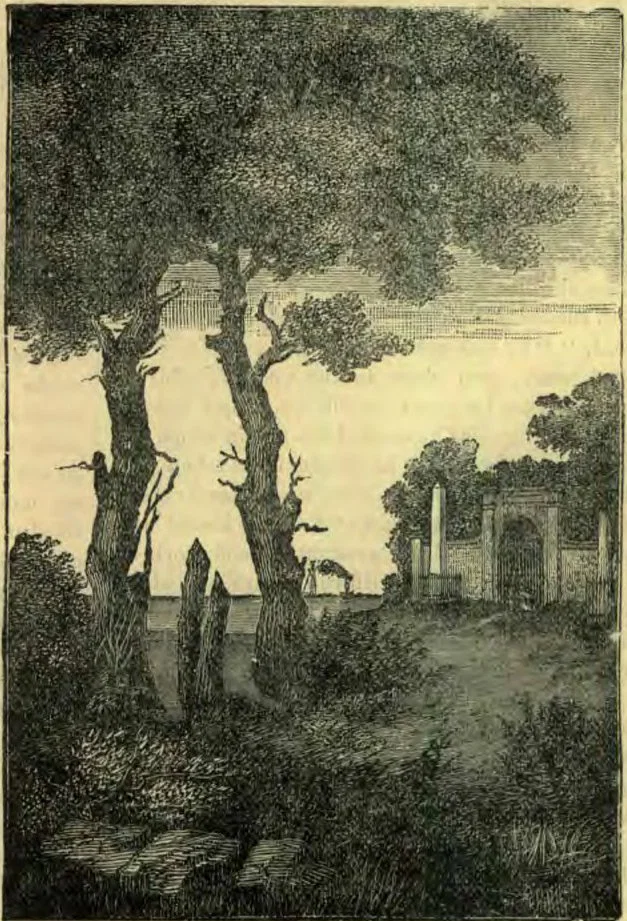
Well, as you know, this beautiful city is built by the side of the Potomac River. But let us imagine ourselves leaving the city, and sailing down the river. About fifteen miles below Washington, we come in sight of some beautiful grounds, with nice sloping lawns, and high above the water, a large wooden mansion. On asking what place this is, we are told that it is the home of George Washington. His oldest brother bought the grounds many years before the Revolutionary War, and named the place Mt. Vernon, in memory of a general that he had served under in the West Indies. Here George lived when a boy, and here he made his home while he was a soldier and president. In the old mansion can still be seen the very room where he died. In this room is the same furniture that was in it during his life, and a great many people visit the place to look at and handle the same things that this good and great man once used. But the most interesting thing to all who visit the place is the tomb where the body of Washington still lies. Some ways in front of the vault are two trees growing near each other. These trees have been so trimmed that by looking at them from one certain spot, the form of a man can be seen between them, which looks very much like Washington himself. How many can find it in the picture?

THE ANT AND THE GRASSHOPPER.

A GRASSHOPPER, who had not thought of laying up anything in the summer, found, when winter came, that she had nothing to eat.
In her trouble, she went to her neighbor, the ant, who had stored away a great deal of food, and begged her for a few grains of wheat or rye.
The ant asked her what she had been doing all the bright summer. “Alas!” said the grasshopper: “I was singing and dancing all the sunny days, and never once thought of winter.”
“Very well, then,” said the ant: “I have no food to spare for you. They who sing and dance all summer ought to starve when winter comes.”

Letter Budget.

We have a letter from Dora Gales, whose cousin, Florence Gales, wrote for the “Budget” two weeks ago. She says: “I never wrote for the paper before, but since my cousin Florence was writing, I thought I would too. My mother tries to be a Christian, but my father does not. I wish he did, though. I have a little brother named Charles. He is two years old. My grandpa and grandma live with us.”
Here is a very neat letter from Edith Pierce, Bordoville, Vermont. She says: “As I have never seen any letter from this place, I thought I would write one. We have taken the INSTRUCTOR ever since I can remember, and like it very much better since it comes weekly. I am trying to be an every-day Christian, so I can meet Jesus with joy when he comes. I was baptized last camp-meeting. I am twelve years old. I have two correspondents, one in Illinois and the other in Texas. I began to write to them over two years ago. One of them has subscribed for the INSTRUCTOR. I hope good will come from it.”

LIVE IN GOD’S SUNSHINE.

“WELL, Aunt Polly, here you are again on the doorsteps. It seems to me you almost live on them.” Old Polly raised her faded eyes to the face of her friend, and laughing, said,—
“Yes, dear, dat’s jus’ so! Jim says ‘We mought build a house all doo’ steps, and nothin’ else fo’ granny, ’cause she lives dar an’ nowhar else.’”
“I suppose you like to see the people, and hear the children prattle as they go by to school,” said the lady.
“Well, yes, I likes to see folks, ’cause my Fader up dar made ’em all; but its most fo’ de sunshine dat I stays out here. Oh, God’s sunshine’s a powerful blessin’, dear. When I’s cold, I comes out and sits in it, and I grows warm; when I’s hungry, and Jim’s wife’s got nothin’ to eat, I comes out here and ’pears like I’d had my dinner; when I’s in pain, and ’scruciated all over wid de rheumatiz, I comes out into de sunshine, and de pain skulks off; when Jim don’t be good, and ’pears like he was goin’ to ’struction, and my heart is burstin’ like, I comes out, and sits in God’s sunshine, and peace comes through his beam into my soul; when old Death comes and stares in my face, and say, ‘I comin’ after ye soon to take ye into de dark grave,’ den I comes out into God’s sunshine and dars him to frighten my soul! Says I to him, ‘Ye hasn’t power in ye to throw one shadow onto my pillow; for my Blessed Jesus, de Sun of Righteousness, he been down dar before me, and he left it full, heaped up, an’ runnin’ over wid God’s sunshine. I shall rest sweet in dat warm place, for de ’ternal sunshine dat shall magnify and glorify all as loves the shinin’ Jesus.’”
“Auntie,” said her friend, who always felt that she could sit at the feet of this humble saint, and learn of Jesus, “that is very pleasant. But there come days when there is no sunshine—when the clouds gather, and the rains fall, and the snows come, and the winds blow. What do you do then?”
“O honey, by the time de storms come, I’ve got my soul so full ob sunshine dat it lasts a heap o’ time. Dem times Jim scolds, and his poor wife’s ’scouraged, and de child’n are cross, and the stove smokes, and the kittle won’t bile; but I never knows it. God’s sunshine is in my soul, an’ I tries to spread it round, and sometimes Jim’s wife feels it, and she says—Oh, she’s a good daughter-in-law—‘Long’s I keeps close to granny, ’pears like my heart’s held up.’”
“Well, well, dear, you can teach me somethin’, an’ ye can fetch me nice things to make mo’ sunshine; but I can teach you what ye never thought on—dat God’s sunshine’s ’nough for rich and poor, and dem dat thank him for it, and sit in it, or work in it, and let it into dar heart, will soon go whar it’s all sunshine. Try to make folks live in God’s sunshine, and get it into dar hearts, honey.”
—Selected.

HIDDEN TREASURES.

In the “green-room” at Dresden, where, for centuries, the Saxon princes have gathered their gems and treasures, until they have become worth millions of dollars, may be seen a silver egg, a present to one of the Saxon queens, which, when you touch, opens, and reveals a gold yolk. Within the yolk is a chicken. Press the wing, and the chicken flies open, disclosing a splendid gold crown studded with jewels. Nor is this all. Touch another secret spring, and you find hid in the center a magnificent diamond ring!
So it is with every truth and promise of God’s Word,—a treasure within a treasure. The more we examine it, the greater riches do we find. But how many neglect to touch the spring!—The Sunday-School.
Continue reading: LITTLE CHILDREN