Your ShelfYour Projects

Signs of the Times, Vol. 27, No. 7.

OUR STRONG TOWER

Signs of the Times

Feb 13, 1901

Pacific Press Publishing Company · Oakland, California · Feb 13, 1901

OUR STRONG TOWER.
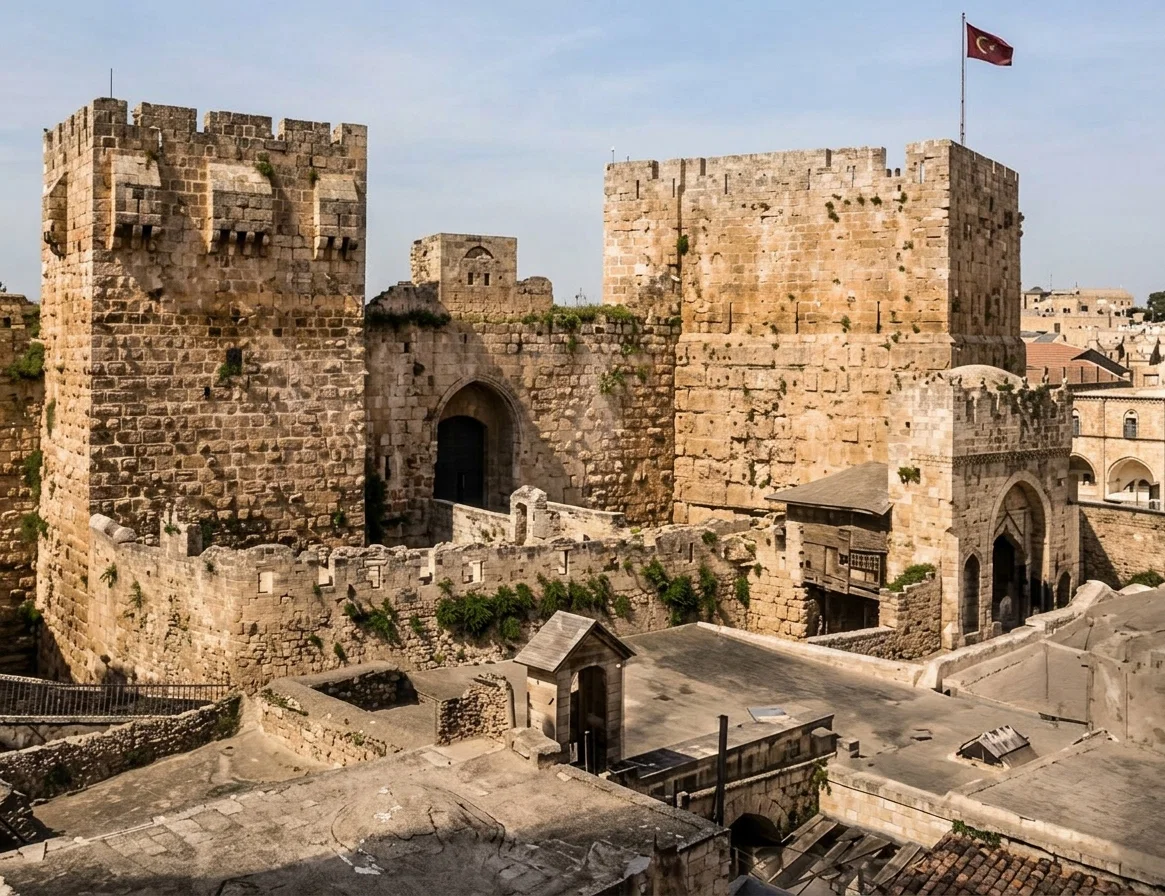
IN ancient times the tower was a conspicuous and important feature in both public and private improvement. Towers were used as places of defense and refuge, as garrisons for soldiers, and as outlook stations. They were always connected with, usually incorporated in, the walls of “fenced cities.” King Uzziah “strengthened himself exceedingly” by building towers in Jerusalem and in the desert. 2 Chron. 26:8–10. It is said that there were 250 towers on the walls of Babylon. The great wall of China, much of which is yet intact, is surrounded with towers at intervals convenient for communication. There are many towers and ruins of towers of ancient character yet to be seen in the Old World, especially in Asia. Over the gates of walled cities there were always the watch-towers. And every well-ordered vineyard had its watch-tower, from which watchmen could look out for persons or animals that would commit depredations. See Isa. 5:2; Matt. 21:33. These are still common in Palestine.
TOWER OF DAVID—JERUSALEM.
THE first tower mentioned in the Scriptures is that of Babel. The proposition of the builders was to build “a city and a tower” whose top would “reach unto heaven,” the purpose being to make for themselves a name. It was because of this act of presumption that the world is afflicted with such an inconvenient multiplicity of languages. The world was then more than two thousand years old, yet “the whole earth was of one language, and of one speech.” After the confounding of their speech, the people scattered abroad, as the Lord had originally designed. Jewish tradition tells of many remains of towers discovered during the captivity in Chaldea, some of them very large.
OTHER prominent towers are noted in the Scriptures. The tower of Edar is mentioned in Gen. 35:21 as one of the stopping-places of Jacob on his return from Padan-aram. Gideon beat down the tower of Penuel. Judges 8:17. Abimelech destroyed about a thousand men in the tower of Shechem. Chapter 9:41–49. Mount Hermon is called “the tower of Lebanon which looketh toward Damascus.” Song of Solomon 7:4. Several towers are spoken of in Jerusalem, such as Hananeel (Neh. 3:1; 12:39; Jer. 31:38, and Zech. 14:10), the tower of the furnaces, the tower of Siloam, etc. The following from the Schaff-Herzog “Encyclopedia of Religious Knowledge” is of interest in connection with the accompanying illustration:—
“The walls were almost entirely destroyed, along with the city, by Titus, A.D. 70, but rebuilt by Hadrian, A.D. 132–136, who probablyrestored the old citadel built by Herod; for in 1099 the Crusaders found at the spot a fortress which long resisted their attacks. They called it the Tower of David, and this name it has retained until the present day. It is now the most prominent object as one enters the Jaffa gate, and consists of five square towers originally surrounded by a ditch. The foundations of the towers are manifestly ancient. It is probably the tower of Phasaelus. The present walls are of Arabic construction, and date from Sultan Soleyman I. (1536–39).”
THE prominence and importance of the tower make it a fitting symbol of our Lord, so He is frequently spoken of as a tower. “The Lord is my rock, and my fortress, and my deliverer; the God of my rock; in Him will I trust; He is my shield, and the horn of my salvation, my high tower, and my refuge, my Saviour; Thou savest me from violence.” 2 Sam. 22:2, 3; also Ps. 18:2, and 144:2. The tower implies strength of resistance against attack, hence a safe place of refuge for the weak. It also implies height, or eminence from which may be foreseen the approach of danger, from whatever source. “The eyes of the Lord run to and fro throughout the whole earth, to show Himself strong in the behalf of them whose heart is perfect toward Him.” 2 Chron. 16:9.
TO THE suggestion of a Saviour is added the idea of a present Saviour—immediate help. “God is our refuge and strength, a very present help in trouble.” Ps. 46:1. This is a most encouraging assurance. “Therefore will not we fear, tho the earth be removed, and tho the mountains be carried into the midst of the sea; tho the waters thereof roar and be troubled, tho the mountains shake with the swelling thereof.” Verses 2, 3. In the strength of this assurance the Christian may unhesitatingly adopt this further language of the psalmist: “From the end of the earth will I cry unto Thee, when my heart is overwhelmed; lead me to the rock that is higher than I. For thou hast been a shelter for me, and a strong tower from the enemy.” Ps. 61:2, 3.
THERE are power and salvation even in the name of our Redeemer. “The name of the Lord is a strong tower; the righteous runneth into it, and is safe.” Prov. 18:10. The power that is in this tower was illustrated in the wonderful works done in the name of Jesus of Nazareth. The seventy disciples whom He sent out during His ministry in Judea, “returned again with joy, saying, Lord, even the devils are subject unto us thru Thy name.” Luke 10:17. And He gave them this further assurance, “Behold, I give unto you power to tread on serpents and scorpions, and over all the power of the enemy.” Verse 19. After His resurrection and departure from earth, the power of His name remained, with the assurance that it should continue to the end. Matt. 28:18–20. The lifelong cripple whom Peter and John found at the gate of the temple, was healed thru the power of His name. Acts 4:5–10. And in giving testimony to this fact, Peter added, “Neither is there salvation in any other; for there is none other name under heaven given among men, whereby we must be saved.” Verse 12. This is the name that is “above every name.” See Phil. 2:9–11; Eph. 1:21.
PERSONATING the church, Solomon sings of Christ, the “beloved:” “Thy neck is like the Tower of David builded for an armory, whereon there hang a thousand bucklers, all shields of mighty men.” Song of Solomon 4:4. He is indeed the Tower of David; for David trusted in Him, saying: “In Thee, O Lord, do I put my trust; let me never be ashamed; deliver me in Thy righteousness. Bow down Thine ear to me; deliver me speedily; be Thou my strong rock, for an house of defense to save me.” Ps. 31:1, 2. He is also to sit upon the throne of David, “and He shall reign over the house of Jacob forever; and of His kingdom there shall be no end.” Luke 1:33.
CHRIST, our strong Tower, is prominent over all, both in this world and the world to come. God “hath put all things under His feet, and gave Him to be the head over all things to the church; which is His body, the fulness of Him that filleth all in all.” Eph. 1:22, 23. And the complete restoration is thus foretold in prophecy: “And Thou, O Tower of the flock, the stronghold of the daughter of Zion, unto Thee shall it come, even the first dominion; the kingdom shall come to the daughter of Jerusalem.” Micah 4:8. The “first dominion” is the dominion that was given to the first Adam at the creation, and which he lost when he by transgression fell. All this is soon to be restored by and for Christ, and for all who, thru the obedience of faith, make Him their strong Tower. The full consummation will be enjoyed by the “Tower” and by the “flock” in the “new earth, wherein dwelleth righteousness.” 2 Peter 3:13. G.

“BE YE KIND ONE TO ANOTHER.”

In His life Christ has given an example of how we should treat one another. He went about “doing good,” ministering to the suffering and teaching the ignorant. He did not come to this world to save the righteous; for there was none righteous. He came to save all who felt their need of a Saviour. For this end He worked untiringly, never thinking of Himself.
Christ labored unceasingly to save men from delusion. To this end His servants must work. God has given to every man a measure of light, and he is to let this light shine forth to others. No Christian lives to himself. He who is devoted to self-serving has not yet learned of the divine Teacher, though he may profess to be a Christian. It is one thing to passively assent to the truth, and another to apply the truth to the practical life. There are many hearers, but few doers.
God is measuring the temple and the worshipers therein. There are those who in the providence of God have been placed in positions where they have opportunity to do much good with the blessings they have received. Upon these He places the responsibility of ministering to those who have few blessings and little encouragement. “Freely ye have received,” He says; “freely give.” Human beings in their suffering are crying to God, and their prayers are just as surely ascending before Him as did the blood of Abel. God is not indifferent to the needs of His children, wherever they may be; and His angels are waiting to see what testimony they can carry to the courts above regarding the help which those who are highly privileged have given to these suffering ones.
God never forsakes His children. Jacob obtained his birthright by fraud, and then fled to escape his brother’s wrath. He knew that he had sinned. Sad and despondent, he lay down to sleep. But God had not forsaken him. That night he saw a ladder reaching from heaven to earth, the base of it planted firmly on the earth, and the topmost round reaching to the highest heaven. And continually angels of shining brightness ascended and descended this ladder. Jacob understood the meaning of this dream, and he said: “This is none other but the house of God, and this is the gate of heaven.” “Surely the Lord is in this place; and I knew it not.”
There are in our Lord’s discourses numerous places where He speaks of being personally injured by an injustice done to His followers. He is affected by all that befalls them; for He has identified Himself with them. He is never an indifferent spectator of the doings of men. He puts Himself in the place of His injured, oppressed children. His soul throbs with compassionate pain as the members of His body suffer; for He is the great sympathetic nerve of the church. All the suffering of the members is felt by Him. At the last great day He says to the selfish, “Inasmuch as ye did it not to one of the least of these, ye did it not to Me.”
In the “new commandment” Christ has laid down the rule we are to follow in dealing with our fellow-men. “A new commandment I give unto you,” He said, “That ye love one another; as I have loved you, that ye also love one another. By this shall all men know that ye are My disciples, if ye have love one to another.” If we do not obey this command, we shall not glorify our Redeemer. It should be our ambition to excel in all that is noble and good and unselfish. Never should we do anything that will mar our representation of God’s character. We are to hold the beginning of our confidence firm unto the end. The friends of the truth are friends of one another. By the golden links of love they are bound with one another and with Christ. Each one is to labor earnestly for the highest good of his brother.
We need as never before to pray with heart and voice for the indwelling of the Spirit, that we may be used in God’s service. We are to unite with our fellow-workers in the upbuilding of God’s kingdom. We are never to be satisfied with present attainments, but are ever to press upward and onward, seeking greater fervency and purer zeal. Our greatest desire should be to be found faithful to the Master.
Do you wish your heart to overflow with the love of God? Then cultivate grateful thanksgiving for the unspeakable privilege of knowing the truth. Lose sight of self by beholding Christ. Then you will be changed from glory to glory into His image. Bridle your disposition. Then peace and contentment will fill your soul.
God desires His church to be firmly united in the bonds of Christianunity. The want of harmony is the result of the development of the root of bitterness. Unless every fiber of this is eradicated, many will be defiled.
James wrote to his brethren: “Who is a wise man and endued with knowledge among you? let him show out of a good conversation his works with meekness of wisdom. But if ye have bitter envying and strife in your hearts, glory not, and lie not against the truth. This wisdom descendeth not from above, but is earthly, sensual, devilish. For where envying and strife is, there is confusion and every evil work. But the wisdom that is from above is first pure, then peaceable, gentle, and easy to be entreated, full of mercy and good fruits, without partiality, and without hypocrisy. And the fruit of righteousness is sown in peace of them that make peace.”
The spirituality of many is being killed by their selfishness. Many cherish a spirit of self-sufficiency, which leads them to treat harshly the purchase of Christ’s blood. Unless such are converted, they can never see the kingdom of heaven. God says: “Be kindly affectioned one to another with brotherly love; in honor preferring one another.” “Bear ye one another’s burdens, and so fulfil the law of Christ.” “The Lord make you to increase and abound in love one toward another, and toward all men, . . . to the end He may stablish your hearts unblamable in holiness before God, even our Father, at the coming of our Lord Jesus Christ.”
MRS. E. G. WHITE.

The Law of God Still Exists

THE LAW AND THE GOSPEL. No. 5.

The Law Magnified and Made Honorable by the Gospel. The Law and the Gospel are Co-existent.
THEY were both before the first sin and the first death, and they are both everlasting. Provision was made for the redemption of the fallen before they were. The Saviour is “the Lamb slain from the foundation of the world.” Rev. 13:8. The Gospel sprang into being when the Lamb was slain; therefore it existed “from the foundation of the world.” To Abraham the Gospel was preached. Gal. 3:8. The Gospel, or the power of God to save thru faith, was as effectual before the incarnation as it has been since. Before Christ came to the earth, the Lord asks, “Is My hand shortened at all, that it can not redeem?” Again He affirms, “Behold, the Lord’s hand is not shortened, that it can not save.” Isa. 50:2; 59:1.
The manifestation of the Gospel, or of the power of redemption, in the person of Jesus Christ, God saw fit to make in these last times. Because this power was subsequently manifested does not gainsay its prior existence. We are redeemed “with the precious blood of Christ, as of a lamb without blemish and without spot; who verily was foreordained before the foundation of the world, but was manifest in these last times for you.” 1 Peter 1:19, 20.
“The mystery of the Gospel,” or the mystery of godliness, “which hath been hid from ages and from generations, but now is made manifest to His saints,” “is Christ in you, the hope of glory.” Eph. 6:19; Col. 1:26, 27. Jesus says, “Before Abraham was, I am.” John 8:58. He lives, He lives to live in the heart of every believer that ever lived or ever will live. “Jesus Christ the same yesterday, and to-day, and forever.” Heb. 13:8. The Gospel not only existed from the foundation of the world, but it ever will exist; for it is “the everlasting Gospel.” Rev. 14:6.
As the Gospel existed before it was manifested, so the law existed before it was given on Mount Sinai. It existed before the first sin, and before the first death. If it had not existed, there would have been no sin and no death; “for sin is the transgression of the law;” and “the wages of sin is death.” 1 John 3:4; Rom. 6:23. The one is a resultant of the other. The law was in heaven before the tabernacle was built on the earth. The tabernacle on earth was the pattern of the one in heaven. It was to be like the original in “all things.” “For, See, saith He, that thou make all things according to the pattern showed to thee in the mount.” Heb. 8:5. The tabernacle on earth would not have been a true copy of the one in heaven if the law of God had not been in both places. The revelator saw the temple of God in heaven, and he saw in the temple the ark of the testament, called also “the ark of the testimony.” Rev. 11:19; Ex. 40:3. It received this name because the testimony, or law of God, was put into this ark. “And thou shalt put into the ark the testimony which I shall give thee.” Ex. 25:16. Therefore the ark of the testament, which John saw in the temple in heaven, contains the Ten Commandments, as the pattern on earth did.

The Law of God Still Exists.

“Until the law sin was in the world.” Rom. 5:13. That is, from Adam to Moses, or up to the giving of the law, “sin was in the world.” “But sin is not imputed when there is no law.” If sin was in the world until the law was given on Mount Sinai, it is evident that the law existed as long previous to that event as there was sin in the world. “But the Scripture hath concluded all under sin.” Gal. 3:22. Therefore the law was in heaven before the first sin, and of course before it was given on Mount Sinai.
The evidence is cumulative. “Death reigned from Adam to Moses.” Rom. 5:13, 14. The law, evidently, was in existence as long as death reigned.
The giving of the law on Mount Sinai was not to prove its existence nor to date its beginning. “Wherefore then serveth the law? It was added because of transgressions.” Gal. 3:19. “For by the law is the knowledge of sin.” Rom. 3:20. If Paul proved the preexistence of the law before it was given to Moses by the presence of sin and death, then its present existence and condemnation are equally convincing, because both sin and death are now in the world. The law not only exists, but it will ever exist, because it is part of the everlasting covenant. “They have transgressed the laws, changed the ordinance, broken the everlasting covenant.” Isa. 24:5. The law is a contractual part of the everlasting covenant; it can not be transgressed without breaking the covenant.
The law will exist till heaven and earth pass away. “Till heaven and earth pass, one jot or one tittle shall in nowise pass from the law, till all be fulfilled.” Matt. 5:18. The law will be in the new heaven and new earth, for the Sabbath will be observed there. Isa. 66:22, 23.

The Law Magnified by the Gospel.

The law stands fast forever. Ps. 111:7, 8. To magnify the law of God and make it honorable is to fulfil it. This can not be done by disobeying the law, nor by repealing it, nor by doing away with it, nor by ignoring it. “The Lord is well pleased for His righteousness’ sake; He will magnify the law, and make it honorable.” Isa. 42:21. This promise, remember, is made by God. “He will magnify the law, and make it honorable.”
When Christ was on earth He fulfilled the law. In referring to this the Saviour thru the psalmist says: “Lo, I come; in the volume of the book it is written of Me, I delight to do Thy will, O my God; yea, Thy law is within My heart.” Ps. 40:7, 8. That none may think that Jesus came to release any from the obligations imposed by the law, he says, “Think not that I am come to destroy the law, or the prophets; I am not come to destroy, but to fulfil.” Matt. 5:17. Because Jesus fulfilled the law when living as our example, are His followers absolved from doing likewise? Does that do away with its righteous requirements?
Jesus tells us to follow Him; and if we follow Him, we must do as He did. If He had the law of God within His heart, and fulfilled it, then all who follow Him must have the same law within their hearts, and fulfil it also. “If any man will come after Me, let him deny himself, and take up his cross daily, and follow Me.” Luke 9:23. Jesus came to do the will of God. In order to do this will of God, the law of God was within His heart. Let us repeat the text: “Lo, I come; in the volume of the book it is written of Me, I delight to do Thy will, O My God; yea, Thy law is within My heart.” What kind of people are saved? What kind really enter into the kingdom of heaven?—Those who do the will of God by having His law within their hearts. “Not every one that saith unto Me, Lord, Lord, shall enter into the kingdom of heaven; but He that doeth the will of My Father which is in heaven.” Matt. 7:21.
Behold the covenantal promise made by God to His children: “I will put My law in their inward parts, and write it in their hearts.” Jer. 31:33; Heb. 8:10. It behooved Jesus, our Pattern, in all things “to be made like unto His brethren.” Heb. 2:17. He became incarnate in the likeness of sinful flesh, to reveal to fallen humanity the possibilities attainable through faith in the power of God. The selfsame power that kept the law in Jesus will keep it in every believer. “God sending His own Son in the likeness of sinful flesh, and for sin, condemned sin in the flesh; that the righteousness of the law might be fulfilled in us.” Rom. 8:3, 4. But how can this be done? It is impossible for man in his own strength to keep God’s law. This very weakness shows the necessity of a Saviour, the necessity of the power of God accessible to man, the necessity of the Gospel. Every child of God thru faith has the Holy Spirit, or the power of God, working and dwelling in him, fulfilling the righteousness of the law in him, and thus magnifying it and making it honorable. Christ while on earthdid not fulfil the law for us so as to release us from doing likewise; but He does fulfil the law for us and in us if we will only let Him, and take Him at His word.
CYRUS SIMMONS.

WHAT HISTORY SAYS CONCERNING THE CHANGE OF THE SABBATH.

“WHO changed the Sabbath?” is a question frequently asked to-day. Anciently God’s people observed the seventh day. For over four thousand years no other day was spoken of as the Sabbath.
A change has taken place. Another day is now called and observed as the Sabbath. How came this about? Was it God or man who made the change? This is an interesting and important question.
It is said by some that Rome changed the day. Others, disliking to think that they are in any way paying homage to that power, deny this. What, therefore, are the facts?
In the first place, we may ask,—

What Constitutes a Change?

To prove a change in the Sabbath from seventh to first day, three things must be shown: (1) That the seventh day ceased to be observed as the Sabbath; (2) that the first day was observed as a Sabbath; and (3) that it was observed in the place of the Sabbath. Nothing short of this could constitute a change of the Sabbath.
Holding meetings on the first day does not prove a change, nor even the religious observance of the day, for two days might be so observed at the same time, and were for a time. A change consists in the transference of the observance and obligations of one day to the other.
All this took place in time, but not in apostolic times, as it certainly would have done had the change been by divine appointment. The seventh-day Sabbath was generally observed by Christians for centuries; the first day was not observed as a sabbath for nearly two hundred years; and it did not fully take the place of the Sabbath till about the fifth century.

What History Says.

Mr. Morer, a learned clergyman of the Church of England, says: “The primitive Christians had a great veneration for the Sabbath, and spent the day in devotion and sermons. And it is not to be doubted but they derived this practice from the apostles themselves.”—Dialogues on the Lord’s Day, p. 189.
Prof. E. Brerewood, of Gresham College, London, says of the seventh day: “That Sabbath was religiously observed in the East Church three hundred years and more after our Saviour’s passion.”—Learned Treatises of the Sabbath, p. 77.
Bishop Jeremy Taylor, an eminent Church of England writer, speaks thus of Sunday observance: “It was not introduced by virtue of the fourth commandment, because they for almost three hundred years together kept that day which was in that commandment.”—Ductor Dubitantium, part 1, book 2, ch. 2.
John Ley, another English author, says: “From the apostles’ time until the Council of Laodicea, which was about the year 364, the holy observation of the Jews’ Sabbath continued, as may be proved out of many authors; yea, notwithstanding the decree of that council against it.”—Sunday a Sabbath, p. 163.
Lyman Coleman says, “Down even to the fifth century the observance of the Jewish Sabbath was continued in the Christian church, but with a rigor and solemnity gradually diminishing, until it was wholly discontinued.”—Ancient Christianity Exemplified, sec. 2, ch. 26.
The historian Socrates, middle of fifth century, writes: “Altho almost all churches throughout the world celebrate the sacred mysteries on the Sabbath of every week, yet the Christians of Alexandria and at Rome, on account of some ancient tradition, refused to do this.”—Book 5, ch. 22.
Sozomen, another historian of the same period, says: “The people of Constantinople, and of several other cities, assemble together on the Sabbath, as well as on the next day, which custom is never observed at Rome.”—Book 7, ch. 19.
Archdeacon Farrar says: “Little need be said of the change from the seventh to the first day of the week. The first disciples kept both days, the Sabbath for rest, and the Sunday for worship. The Christian church made no formal but a gradual and almost unconscious transference of the one day to the other.”—Voice from Sinai, pp. 166, 167.
Neander, the greatest church historian of the nineteenth century, says: “The festival Sunday, like all other festivals, was always only a human ordinance; and it was far from the intention of the apostles to establish a divine command in this respect—far from them, and from the early apostolic church, to transfer the laws of the Sabbath to Sunday. Perhaps at the end of the second century a false application of this kind had begun to take place; for men appear by that time to have considered laboring on Sunday as a sin.”—Neander’s Church History, Rose’s translation, p. 168.
These clearly show that the Bible Sabbath was long observed by Christians; that Sunday was not observed as a Sabbath for a considerable time; that the Sunday sabbath was always “only a human ordinance,” and that the change came about gradually. Who brought it about?

Rome Changed the Sabbath.

Neander, the prince of church historians, says, “Opposition to Judaism early led to the special observance of Sunday in the place of the Sabbath.”—Church History, Torrey’s translation, vol. 1, p. 402. Note, he does not say a divine command led to the change, but “opposition to Judaism.” And from whence came this opposition?—From Western Rome, and especially from the Church of Rome itself. Proof: The Eastern churches would not consent to degrade the Sabbath by making it a fast day, Neander informs us, but he says, “In the Western, and especially in the Roman Church, where the opposition against Judaism predominated, the custom, on the other hand, grew out of this opposition, of observing the Sabbath also as a fast day.”—P. 404.
“Opposition to Judaism” early led to the observance of Sunday in the place of the Sabbath, he says; and this opposition “predominated” and was especially manifested “in the Roman Church.” And yet some deny that Rome changed the Sabbath, and challenge any one to produce the “slightest historical proof” of it. Here is more than slight proof. Rome led in elevating the Sunday, and in trampling the Sabbath of the Lord out of sight.
The Eastern churches observed the Passover (erroneously called Easter) on the fourteenth day of the first month, as God had appointed; the Western churches, and especially the Roman Church, on a Sunday. In 196 A.D., Victor, bishop of Rome, commanded the Eastern churches to imitate the Western in this respect. They refused. Then, says Neander, “The Roman bishop, actuated by that hierarchical spirit which, as we have already observed, had already begun to show itself in the Roman Church, published sentence of excommunication against the churches of Asia Minor on account of this trivial point of dispute.”—P. 409. The point in dispute was they would not honor Sunday as Rome wished them to, so she excommunicated them. This act Bower styles “the first essay of papal usurpation,” and Dowling, the “earliest instance of Romish assumption.” And it was simply an attempt on the part of Rome to elevate the Sunday at the expense of a divine appointment. Another proof that Rome changed the Sabbath!
Eusebius (270–338 A.D.), an early bishop, and the reputed father of ecclesiastical history, says, “All things whatsoever that it was duty to do on the Sabbath, these we have transferred to the Lord’s day.”—Commentary on Psalm 92. The whole system of papal hierarchical apostasy was engaged in changing the Sabbath, and this system had its head in the bishop of Rome.
Alexander Campbell, founder of the Disciple denomination, spoke truly when he said of the Sabbath, “If it be changed, it was that august person changed it who changes times and laws ex-officio. I think his name is Dr. Antichrist.”—Bible Advocate, Jan., 1848.
Twenty-five hundred years ago God described the power that would change the Sabbath. He said, “He shall speak great words against the Most High, and shall wear out the saints of the Most High, and think to change times and laws.” Dan. 7:25. Why, then, should any one be in doubt as to who changed the Sabbath? There is the prophecy; here is the history—tho but a fragment of what might be presented.
Some may deny that Rome claims the change of the Sabbath as the mark of her authority. But she does. She asks, “How prove you that the church hath power to command feast and holy days? Ans.—By the very act of changing the Sabbath into Sunday.”—Douay Catechism, p. 58. It is not, as some have asserted, “the claim to remit sins.” “Sin is the transgression of the law.” The claim to forgive transgressions of the law is certainly not so great as that of changing the law itself. But the prophecy settles the point. He was to think to “change the times and law”—the very thing thePapacy has done in changing the Sabbath and the law of God. This, therefore, is its mark.

A Gradual Change.

Just as the Papacy grew, so the Sabbath was changed. Of the former, Fisher, in his “History of the Church,” p. 104, says, “The hierarchical organization gradually became perfected.” Coleman, as already noted, says the seventh day was observed “with a rigor gradually diminishing, until it was wholly discontinued;” and Farrar, that “the Christian church made no formal, but a gradual, and almost unconscious, transference of the one day to the other.”
The apostate church called Sunday the Lord’s day. God nowhere claims this as His day, but He does the seventh. The Papacy claims the first. Prior to the fourth century, there was no law, human or divine, for its sabbatical observance. Says Chambers’ Encyclopedia, “Unquestionably the first law, either ecclesiastical or civil, by which the sabbatical observance of that day is known to have been ordained, is the edict of Constantine, 321 A.D.” (Article Sabbath.) After enumerating the various Sunday laws passed by the Roman Government from 321 to 425, at the instance of church bishops, Neander says, “In this way the church received help from the State, for the furtherance of her ends.” (Vol. 3, p. 405.) Yes, “in this way” Church and State were united, and the Papacy gained her power and supremacy. Sunday laws are the badge and sign of Church and State union. Men are seeking to unite these in this same way again to-day. In this way they are forming “an image” to the Papacy, and seeking to enforce its “mark.” Read Revelation 13.
The countries enlightened by the Reformation, which continued to observe Sunday and enforce Sunday laws, have never wholly severed connection with Rome. There still exists a bond of sympathy between them and Rome; they are steadily drifting back toward Rome, and will yet clasp hands with her over the Sunday sabbath and its enforcement by oppressive laws. That is what all this present agitation for Sunday laws means, and that is where it will end, in oppressing those who “keep the commandments of God, and have the testimony of Jesus Christ.” Read Revelation 12, 13, and 14.
In the name of Christ we warn all to take the other side of this question, “Fear God, and give glory to Him; for the hour of His judgment is come;” and His law is the standard in the judgment. Rev. 14:6, 7; Eccl. 12:13, 14. Will it not be safe to keep the day God kept in the beginning, the day He specifies in His holy law and claims as His “sign” (Ex. 31:12–17; Eze. 20:12, 20), and the day that Christ, our Example, kept all His life on earth? Let all say with Joshua, “As for me and my house, we will serve the Lord.”
W. A. COLCORD.

THE PREACHING DEMANDED BY THE TIMES.

We often hear the expression, “The preaching demanded by the times.” The fact is that about the same kind of preaching is demanded by all times. The preacher does not deal with the changing modes of human thought, but with the eternal verities of God, and the need of human souls. Man’s need and God’s way of salvation do not vary from age to age. The convicted sinner still exclaims, “What must I do to be saved?” and the faithful minister of Jesus still responds, “Believe on the Lord Jesus Christ, and thou shalt be saved.” Acts 16:30, 31.
There can no more be a new gospel than there can be a new multiplication table, or a new sun shining in the heavens. “But tho’ we, or an angel from heaven, preach any other gospel unto you than that which we have preached unto you, let him be accursed.” Gal. 1:8. While this is true, every age has its own modes of thought and statement, its own peculiar needs and evils.
We need not, in order to be evangelical, use the stilted phraseology and quaint illustrations of the seventeenth and eighteenth centuries. We are to preach to the living men and women of to-day. The sins of the Babylonians, of the ancient Greeks and Romans, may be very interesting to the antiquarian, but little good would attend their discussion in the pulpit of to-day. We need to apply God’s truth to the sins that are prevalent in our own times.
We may say then that the preaching demanded by the times, in fact by all time, is scriptural. “Preach the Word.” 2 Tim. 4:2. “The seed is the Word of God.” Luke 8:11. We are not sent to preach art, science, or philosophy, but the living Word of the living God. To present hungry souls with the husks of human speculation, is to give them a stone instead of bread, and the cup of Tantalus instead of the living waters. The times need very plain preaching. I heard a sermon, not long since, in which the flowers of rhetoric were so numerous and gorgeous as to cover and dull the sword of the Spirit.
We need earnest preaching. Time is growing too short, and eternity too near, to trifle away the sublime opportunities of the pulpit. Said a once popular and distinguished minister upon his death-bed, “I have been Nero fiddling, while Rome was burning.”
We need to apply God’s Word to present evils, and to press home upon the minds and hearts of men the truth most vital at the present time.
What are the evils most prevalent at the present time?—Intemperance, blasphemy, licentiousness, Sabbath-breaking, and unbelief. Against these we must bring to bear the calcium light of God’s Word.
What is present truth?—The near coming of the Son of man. Never was this truth more vital than it is at the present time. Let us herald the coming King. Blessed will be those watchmen upon the walls of Zion whom the Lord finds proclaiming the swift-coming kingdom.—Rev. Jesse S. Gilbert, A.M.

WHY AM I NOT A CHRISTIAN?

[Rev. A. Sims, in the Wesleyan Herald.]
1. Is it because I fear what others may say of me?
“Whosoever shall be ashamed of Me and of My words, of him shall the Son of man be ashamed.” Luke 9:26.
2. Is it because professed Christians are inconsistent?
“Every one of us shall give account of himself to God.” Rom. 14:12.
3. Is it because I am unwilling to give up all to Christ?
“What is a man profited, if he shall gain the whole world, and lose his own soul?” Matt. 16:26.
4. Is it because I am afraid I will not be accepted?
“Him that cometh to Me I will in nowise cast out.” John 6:37.
5. Is it because I fear I am too great a sinner?
“The blood of Jesus Christ His Son cleanseth us from all sin.” 1 John 1:7.
6. Is it because I am afraid that I will not hold out?
“The Lord is faithful, who shall stablish you, and keep you from evil.” 2 Thess. 3:3.
7. Is it because I think I will do as well as I can, and that God ought to be satisfied with that?
“Whosoever shall keep the whole law, and yet offend in one point, he is guilty of all.” James 2:10.
8. Is it because I think heaven can be reached without faith in Christ?
“Neither is there salvation in any other; for there is none other name under heaven given among men, whereby we must be saved.” Acts 4:12.
9. Is it because I am waiting for a more favorable time?
“Boast not thyself of to-morrow; for thou knowest not what a day may bring forth.” Prov. 27:1.
10. Is it because I am afraid God will ask me to do more than I am able?
“I can do all things thru Christ which strengtheneth me.” Phil. 4:13.
11. Is it because I think my morality will do?
“Except a man be born again, he can not see the kingdom of God.” John 3:3.
12. Is it because I think all will get into heaven anyhow?
“The wicked shall be turned into hell, and all the nations that forget God.” Ps. 9:17.
13. Is it because I am unwilling to give up my lodge and other worldly partnerships?
“Be ye not unequally yoked together with unbelievers.” 2 Cor 6:14.
14. Is it because I am unwilling to confess and forsake my sins?
“He that covereth his sins shall not prosper; but whoso confesseth and forsaketh them shall have mercy.” Prov. 28:13.
15. Is it because I am unwilling to make restitution?
“If the wicked restore the pledge, give again that he had robbed,” etc. Eze. 33:15.
16. Is it because I wish to follow the foolish fashions of the world?
“Not with broidered hair, or gold, or pearls, or costly array.” 1 Tim. 2:9.
17. Is it because I would not give up my wicked business and worldly pleasures?
“Godliness is profitable unto all things.” 1 Tim. 4:8.
18. Is it because I will not forgive my enemies?
“Love your enemies.” Matt. 5:44.
19. Is it because I think I can not repent now?
“Now God commandeth all men everywhere to repent.” Acts 17:30.
Continue reading: Honesty as the Breath of the Soul