The Youth’s Instructor, Vol. 28, No. 13.

CAPERNAUM

The Youth’s Instructor

Mar 24, 1880

S. D. A. Publishing Association · Battle Creek, Mich. · Mar 24, 1880

CAPERNAUM
Jesus was born at Bethlehem, and grew up at Nazareth, yet neither of these places is called his home. To Capernaum alone is this fond word applied.
In this, “his own city,” Jesus began his ministry. Doubtless his object in selecting this town from all others, was the close connection it had with the surrounding country, and also with foreign countries. The city itself was full of active industry, and the country for miles around was densely populated, the population comprising nearly every nationality. Here might have been found the Jew and the Greek, the Arab and the Egyptian, the Roman and the Persian—all bringing their merchandise into the busy little city.
The maps of Palestine place Capernaum about twenty miles north-east from Nazareth, on the western shore of Tiberias, about two miles from the river Jordan. Notwithstanding the greatness and fame of this city, and the wonderful events that transpired within and around it at the time of Christ’s sojourn there, yet at the present time, the site of the city is not agreed upon by the various explorers of “Bible Land.”
There is no doubt in my own mind that the ruins now known as Tell Hum mark the real location of ancient Capernaum. Captain Wilson adopts this theory, and thinks he has found traces of a main street leading from the ruins of Tell Hum in the direction of Chorazin. This would correspond with the old carriage-road built by the Romans through Capernaum. Dr. Robinson, Dr. Porter, and some other explorers object to this as the real ruins of Capernaum; but time and space would not admit of my giving their objections and arguments, if I had the desire, which I have not, for I am satisfied that Capernaum and Tell Hum are one and the same place, and are situated as described above.
Chorazin lies about two and a half miles north of Capernaum, and is now called Khorazy. The ruins of this town are fully as large as those of Capernaum, and are situated partly in a valley, and partly on a rocky hill. From this elevation there is a beautiful view of the sea of Tiberias, and also of many other interesting scenes,—ruins of towns, monasteries, and cathedrals. Oh! what a change since our dear Lord walked the streets of these towns. Then, all was life and animation. Now, all is silence and desolation. Yet how the pulse quickens and the heart throbs as we think that “Jesus has been here. He has walked these streets. His eye beheld these towns in their perfect beauty.”
MAGGIE ABDELL.

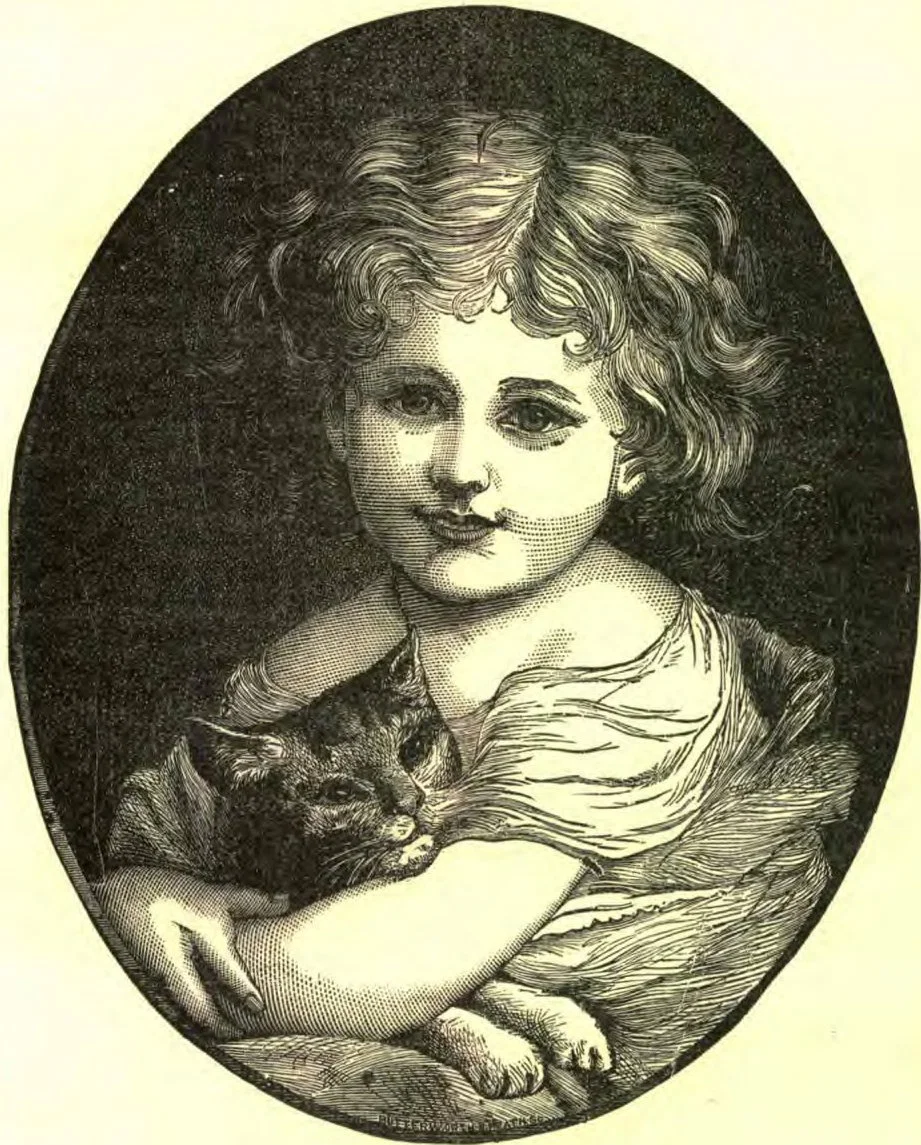
READING PUSSY A LESSON.

PUSSY, will you tell me why At all the pretty birds you fly? The little birds that sing so sweet You surely would not catch and eat!
For you are ever kindly fed, Each day with nicest milk and bread, And always at my dinner, too, I save a lovely bit for you.
At night you sleep so warm and snug Before the fire upon the rug, While little birds (as I've been told) Have often perished with the cold.
All in the bitter frost and snow, They fly so cheerless to and fro, And scarcely ever dare to come And see if we can spare a crumb,
So, pussy dear, attend to me, And never, never cruel be; Oh, do not harm the weak and small, For that's not being good at all.
My dear mamma, so kind and true, Has often said that we should do To others as we wish that they Would do to us from day to day.

A LETTER.

DEAR READERS OF THE INSTRUCTOR: It has been some time since I have written anything for your excellent paper; not because I have lost my interest in it by any means, but other duties have taken my time and attention. I have been a reader of its pages ever since it was first published, in 1852, when I was but seven years of age. My mind often goes back to those days of my childhood, and as often my heart is filled with gratitude and thanksgiving to God that I was privileged with such excellent admonitions and appeals as were found in this paper. I think they made an impression upon my mind which will not soon be effaced.
At the age of fourteen, three of my young associates and myself were buried with Christ by baptism. Oh, how good the Christian’s hope looked to me! I could say, as did one of old, I choose “rather to suffer affliction with the people of God than to enjoy the pleasures of sin for a season.” Very dear to me was the society of God’s people, and I earnestly desired so to live that I might have a home with them when they should meet to part no more.
Years have fled since then, and I can say to-day that I am still striving to obey God by keeping all his commandments; and I feel an earnest desire to consecrate myself anew to his service.
Dear young friends, shall we be overcomers, or shall we be overcome? Shall we heed the counsel of the True Witness, and so perfect Christian characters that we may be fitted up with God’s people to abide the day of his coming? Now is the time to work. Soon it will be too late. Now, if we will, we may do something for Jesus. Although it may be but little, how sweet the privilege of doing something for Him who has done so much for us. Let us scatter the blessed light and truth that has made our hearts rejoice.
Do not seek the honors and pleasures of this world, for they are vain and delusive. They yield satisfaction but for the moment. Beyond these fleeting pleasures are joys that never fade; and although the road may be rough and thorny that leads to them, we may safely journey while our trust and hope are in God. May you and I, reader, hear the welcome words from our dear Saviour, when he comes, “Well done, thou good and faithful servant, enter thou into the joy of thy Lord.”
SARAH A. NICHOLS.
Windham, Vt.

PALMS

THE ARECA FAMILY.

The name of Areca is given to a beautiful genus of palms mostly found in the East Indies. The Areca catechu produces the well-known betel-nut, for which purpose it is very generally cultivated. The nuts are cut into slices, wrapped in the aromatic leaves of the Piper betel (betel-pepper plant), and then chewed. In most parts of the East Indies the natives are perpetually chewing these nuts. They are, of course, more accurately termed catechu-nuts, having taken the name of betel-nut from the leaves which are chewed with them. It is asserted to improve the digestion and preserve the teeth, and other excuses for the habit are also made. It gives to the tongue and palate a blood-red hue, and in time turns the teeth perfectly black. The Malays get really hideous from the constant use of these nuts, but the Chinese are exceedingly careful to remove the stain from their teeth. It is fashionable for persons of rank to keep the nuts ready prepared for use in splendid cases worn at the girdle, and when they meet, it is the correct thing to open their cases and offer catechu-nuts to each other, as some people offer snuff in Europe.
There are several species of the Areca. A very graceful variety, the Areca rubra, is sometimes seen in English palm-houses. It grows to the height of about thirty feet, and bears a pinkish-white flower. There is another species of the same genus, presenting a widely different appearance. This is the Areca oleracea, the cabbage-palm of the West Indies, one of the most beautiful and stately of the palm tribe, and described by different authorities as growing to a height of from one hundred and thirty to one hundred and fifty feet. Ensheathed in the foliage at the top is the crisp, white (so-called) cabbage, about two feet long, and as thick as a man's arm. When eaten raw it tastes something like the almond, but is more tender and delicious. It is usually cut into slices and boiled, or fried in butter, and served up as a vegetable with meat.—Arthur's Home Magazine.

A PLAN IN LIFE.

“What is your plan in life, Neddie?” I asked a small boy, turning from his brothers, who were talking about theirs, to which he and I had been listening; “what is yours, Neddie?”
“I am not large enough for a plan yet,” said Neddie, “but I have a purpose.”
“That is good; it is not every one who has a purpose. What is your purpose, Neddie?”
“To grow up a good boy, so as to be a good man like my father,” said Neddie.
And by the way he said it, it was plain he meant it. His father was a noble Christian man, and Neddie could not do better than to follow in his steps. A boy with such a purpose will not fail of his mark.

Dependence on the Bible for Light

WE are as dependent on the Bible for light as we are on Christ’s blood for pardon.

THE BURIAL OF JOSEPH.

No doubt you are all familiar with that part of Joseph’s history which tells how he came to be in Egypt, how cruelly he was treated at first, and afterward how much honor he received, and how he managed to get his father and brethren there; but did you ever think much of his death, and the manner in which he was buried?
The Bible account of his death is very brief: “So Joseph died, being an hundred and ten years old; and they embalmed him, and put him in a coffin in Egypt.” At that time it was a universal custom in Egypt to embalm the dead, that is, to so apply spices and aromatic drugs as to preserve the body from decay, and cause it to retain a life-like appearance. But notwithstanding so much care was taken to preserve the bodies, they were often buried without a coffin, and the fact that Joseph was put into a coffin plainly shows the high rank to which he had attained.
Before his death he called his brethren, the children of Israel, together, and caused them to swear that when the Lord visited them, as he surely would, they would carry his bones up with them into the land of Canaan. This promise, although made nearly two centuries before they went out of Egypt, was still remembered.
On that memorable night when the first-born of all the Egyptians were slain, and the Israelites were driven out of the land in such haste, the body of Joseph was not forgotten. Neither was it left behind at the Red Sea, to fall into the hands of the pursuing Egyptians. During all the wanderings of the Israelites in the wilderness, it was in their midst, and when the mighty waters of the Jordan were parted, it was carried safely over between those watery walls, into the promised land. And there, in the city of Shechem, in a parcel of ground which belonged to his father Jacob, the body of Joseph found its last resting-place.
What a funeral procession was this! Continually led by the Lord Jesus himself, miraculously fed with angels’ food, and having the ark of God and the body of their earthly preserver and benefactor in their midst, did they travel all the way from Egypt to Canaan.
Dear children, you who have been studying about Joseph in your Sabbath-school lessons, did you ever have a desire to see such a great and good man, one who did so many wonderful things in Egypt? If so, remember that the time is not far distant when not only Joseph but all the holy men of old will be called forth from their dusty beds, and many shall come from the east and from the west and shall sit down with them in the kingdom of Heaven. Shall you and I be among that number? We may if we will. M. K. W.

LESSONS FOR CHILDREN.

LESSON LXV.—BEN-HADAD'S DEFEAT.

After Elijah had left Mount Horeb, and gone back to Canaan, he found Elisha plowing with twelve yoke of oxen before him, and he with the twelfth. As Elijah passed by him, he cast his mantle upon him, and Elisha, making haste, followed Elijah, and became his servant.
“And Ben-hadad, the king of Syria, gathered all his host together; and there were thirty and two kings with him, and horses, and chariots; and he went up and besieged Samaria, and warred against it. . . . And, behold, there came a prophet unto Ahab, king of Israel, saying, Thus saith the Lord, Hast thou seen all this great multitude? behold, I will deliver it into thine hand this day; and thou shalt know that I am the Lord.”
Ahab, following the Lord’s directions, sent out two hundred and thirty-two young men, and all the mighty host of the Syrians fled before them. Then all the men of Israel pursued, and made a great slaughter among their enemies.
“And the servants of the king of Syria said unto him, Their gods are gods of the hills; therefore they were stronger than we; but let us fight against them in the plain, and surely we shall be stronger than they.”
“And it came to pass at the return of the year, that Ben-hadad numbered the Syrians, and went up to Aphek, to fight against Israel. . . . And the children of Israel pitched before them like two little flocks of kids; but the Syrians filled the country.”
“And there came a man of God, and spake unto the king of Israel, and said, Thus saith the Lord, Because the Syrians have said, the Lord is God of the hills, but he is not God of the valleys, therefore will I deliver all this great multitude into thine hand, and ye shall know that I am the Lord.”
“And they pitched one over against the other seven days. And so it was, that in the seventh day the battle was joined; and the children of Israel slew of the Syrians an hundred thousand footmen in one day. But the rest fled to Aphek, into the city; and there a wall fell upon twenty and seven thousand of the men that were left. And Ben-hadad fled, and came into the city, into an inner chamber.”
Now the Lord did not work these great miracles because Ahab was a good man, but that both he and the Syrians might know who is the true God.
Afterward Ben-hadad came to Ahab, and humbled himself before him, calling himself Ahab’s servant, and promising to restore all the cities which the Syrians had taken from the Israelites. Then Ahab made a covenant with him, and let him go in peace. This displeased the Lord very much; for he had meant that this wicked king should be destroyed. So the Lord said to Ahab, “Thy life shall go for his life, and thy people for his people.”

QUESTIONS.

1. Where did Elijah find Elisha, when he had left Mount Horeb and come into the land of Canaan? 1 Kings 19:19.
2. What did he do to Elisha?
3. What did Elisha then become?
4. What did Ben-hadad do? 1 Kings 20:1.
5. Who was Ben-hadad?
6. How many kings joined Ben-hadad?
7. What city did they besiege?
8. Whom did the Lord send to talk with Ahab? Verse 13.
9. What question did the Lord ask Ahab by the mouth of the prophet?
10. What did the Lord promise to do for Ahab?
11. Who of the men of Israel were sent out by the command of the Lord to fight the mighty host of the Syrians?
12. How many of these young men were there?
13. At what time of day did they go out?
14. What were Ben-hadad and the other thirty-two kings doing at this time?
15. Give the result of the battle.
16. What did Ben-hadad’s servants say to him about the reason why the Syrian army was beaten? Verse 23.
17. What did these servants advise the king to do?
18. When did the king of Syria raise another army, and go up again to fight Israel?
19. How numerous were the Syrians?
20. How did the children of Israel appear, as they encamped before the Syrians?
21. Who was again sent to encourage the king of Israel?
22. What did the Lord promise to do?
23. Why was the Lord going to turn the battle against the Syrians?
24. When did the two armies join battle?
25. How many Syrians did the children of Israel slay in one day?
26. To what place did the Syrians flee?
27. What ill-fortune befell them there?
28. What did Ben-hadad afterward do?
29. What did he offer to become?
30. What did he promise?
31. What course did Ahab then pursue toward Ben-hadad?
32. How did this please the Lord?
33. What did he say to Ahab?

BIBLE LESSONS FOR YOUTH.

LESSON XCI.—REVIEW OF LESSONS LXXXVIII–XC.
1. What wicked deeds characterized the first years of Manasseh’s reign?
2. How was the nation affected by such a course of conduct?
3. How did the Lord first try to lead this wicked king and people to repentance and reformation?
4. When admonition failed, what means did he employ?
5. What good effects were produced by this captivity and imprisonment?
6. How did Manasseh afterward show that his repentance had been sincere?
7. Who reigned next after Manasseh?
8. What were the length and character of his reign?
9. By what good king was he succeeded?
10. Describe Josiah’s efforts to purge the land from idolatry.
11. What other good work did he undertake?
12. While this work was going on, what was found in the temple?
13. What did Josiah learn from the book?
14. How did he try to bring himself and his people into a condition where God could accept them?
15. Describe the passover which he kept at this time.
16. Give the circumstances of Josiah’s death.
17. Who was his successor?
18. How long did he reign, and how was he deposed?
19. Who was made king in his place?
20. Describe Nebuchadnezzar’s first expedition against Jerusalem.
21. What captives were taken to Babylon about this time? Dan. 1:1–6.
22. Describe the evil course of Jehoiakim.
23. How did he finally lose his kingdom and his life?
24. By whom was he succeeded?
25. How long was Jehoiachin allowed to reign?
26. What was then done with him?
27. How did the Babylonians enrich themselves at the time Jehoiachin was taken captive?
28. Who of the people were carried to the country of Babylon at this time?
29. How did the Lord work for his people even in this time of affliction?
30. Who was put upon the throne at Jerusalem?
31. What was his character and conduct?
32. How did he provoke the vengeance of Nebuchadnezzar?
33. What consequences did this rashness bring upon himself?
34. What upon Jerusalem and its inhabitants?
35. What became of the poor remnant that still remained in Judea?
36. Why were all these calamities brought upon the Jews?
37. What opportunities for repentance did the Lord give them?
38. How did they treat these prophets?

ESDRAELON

This plain is situated in the central part of Palestine, and extends from the Mediterranean Sea to the Jordan valley. In form, it is triangular. The eastern side, extending from Engannin to Mount Tabor, is about fifteen miles long; the northern side, bounded by the hills of Galilee, about twelve miles; and the south-western side, bordered by the Samarian and the Carmel ranges, about eighteen miles. The western part may more properly be called the plain of Akka, or Acre, a spur of the northern mountains running down and separating this from the great plain.
At the eastern side are three branches extending to the Jordan valley. The northern branch lies between Mount Tabor and Little Hermon; the central one, between Little Hermon and Mount Gilboa; and the southern, between Gilboa and the mountains of Ephraim.
The whole plain is remarkable for its fertility, as the luxurious gardens, where cultivated, and the rank weeds and grasses, where uncultivated, clearly indicate. It is not perfectly level, but consists of low, rolling hills, dotted with groves of evergreen oaks, leaving undulating fields of green grass. Wild flowers of great beauty and variety fill the air with their fragrance, while the hills and vales are vocal with the songs of birds.
There are at present but few villages, these consisting, at the most, of nothing more than from ten to twenty squalid huts. Indeed, the liability to at any moment be attacked by the plundering Bedouins, makes it a place of great insecurity. “And so it was, when Israel had sown, that the Midianites came up, and the Amalekites, and the children of the East, . . . they came as grasshoppers for multitude, and they entered into the land to destroy it.”
The few small streams in the eastern part run off into the Jordan, while the rest of the plain is drained by the river Kishon and its tributaries. The Kishon flows in a north-westerly direction, and runs into the Mediterranean through a narrow pass at the base of Carmel. It was once quite a large stream, though at present it is nearly dry, except for a few miles at its mouth. In the rainy season, however, it becomes a torrent, very difficult and dangerous of passage.
Esdraelon is a place of high historical interest. At the northern part is Nazareth, where the boyhood of our Saviour was passed. Directly east of Nazareth rises Mount Tabor, a symmetrical, cone-shaped mass of gray limestone, dotted with clumps of bushes and groves of oak. It is said that the view from this mountain is one of the finest in the Holy Land. By some, this is thought to be the Mount of Transfiguration.
South of Tabor is ed-Duhy, or Little Hermon. On the northern side of this mountain are Nain, the place where Christ raised the widow’s son to life, and Endor, where Saul beheld the apparition of Samuel, and learned from it his own fate and that of the kingdom.
On the southern slope is Shunem, where the good prophet Elijah restored to life the son of the Shunammite woman. South of Shunem, and opposite to it, is the ancient city Jezreel. This is ever to be remembered on account of the destruction of Queen Jezebel. The view obtained from Jezreel is very extensive, overlooking the greater part of the plain of Esdraelon and many of its cities. Jezreel is situated on a spur of the Gilboa range, which forms the southern boundary of the central arm of the plain. This central branch is the valley of Jezreel proper.
Gilboa is a bleak, desolate mountain, corresponding perfectly with the imprecation of David after hearing of the death of Saul, when he said, “Ye mountains of Gilboa, let there be no dew, neither let there be rain upon you, nor fields of offerings.”
East of Gilboa a few miles is Bethshean, at present comprising not more than sixty or seventy houses, though extensive ruins of the old city yet remain. Here it was that the Philistines, on returning from the battle with Saul on Mount Gilboa, hung the bodies of the king and his sons upon the wall of the city.
In the south-western part of the Great Plain is the supposed site of ancient Megiddo. Near here was fought the battle between Barak and Sisera. And “Barak went down from Mount Tabor, and ten thousand men after him; and the Lord discomfited Sisera with the edge of the sword before Barak.” And Sisera turned and fled, and “the river Kishon swept them away, that ancient river, the river Kishon.” Here, too, the good king Josiah lost his life in a battle with Pharaoh-necho, king of Egypt.
Esdraelon has been the great battle-ground of the surrounding nations in all ages. The plain around Megiddo, often called the “Plain of Megiddo,” is thought to be the one in the mind of the apostle John, when, in Rev. 16, he describes the conflict between right and wrong as taking place at Armageddon; and certainly what fitter place could be chosen for the last earthly conflict than the one where Jews, Gentiles, Persians, Turks, Arabs, Christians,—warriors of every nation, have in all ages fought their greatest battles and gained their grandest victories!
WINNIE LOUGHBOROUGH.

LETTER BUDGET.

PERRYSBURG, N. Y.
DEAR EDITORS: I am fourteen years old. I keep the Sabbath with my parents. I have taken the INSTRUCTOR ten years and like it very much. I would like to see all the INSTRUCTOR family. I have never written for the paper before. Pray for me that I may be an overcomer and have a home in the new earth.
Yours in hope of eternal life,
DANIEL L. NEWCOMB.
The INSTRUCTOR takes it as a real compliment, Daniel, that you have read its pages for ten years, and still “like it very much.” Yes, it would be a pleasant sight to see all the INSTRUCTOR family together. What an army of boys and girls there would be!
REDWOOD, N. Y.
DEAR EDITORS: We are two little girls nine and ten years old. We keep the Sabbath with our parents. Our mother has been sick four years. We do not go to school or Sabbath-school much. We have Sabbath-school at home. We get lessons from the INSTRUCTOR, and like them very much. We are trying to be good girls, and be saved when Jesus comes.
MAUD AND METZEL FLEMING.
We are sorry “mother” is sick, little girls, and sorry that you cannot go to school; but try to be good girls, and make home as pleasant for “mother” as possible.
Here is a good letter from Mattie M. Knause, who lives in Arcadia, Ind.:—
DEAR EDITORS: I have thought for some time that I would write for the INSTRUCTOR, and I will now do so. I keep the Sabbath with my mother and three sisters. We have a very interesting Sabbath-school. I get the INSTRUCTOR every week, and like it very much. I am eleven years of age. Our Sabbath-school was organized about three months ago by Elds. Covert and Henderson. I want a home in the kingdom of God, where I hope to meet all the readers of the INSTRUCTOR. Pray for me.

WHAT THE CLOCK SAYS.

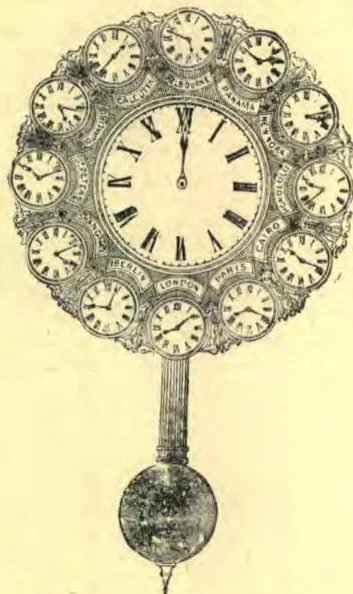
“Tick,” the clock says, “tick, tick, tick! What you have to do, do quick. Time is gliding fast away; Let us act, and act to-day.”
“If your lesson you would get, Do it now, and do not fret; That alone is hearty fun Which comes after duty done.”
“When your mother says, ‘Obey,’ Do not loiter, do not stay; Wait not for another tick, What you have to do, do quick!”
Continue reading: SHUT THE EYES TIGHT