It is frequently asked, “What need is there for sending evangelical missionaries to Spain?” Does not the following simple reply sufficiently answer the question?
It is the inalienable right of every man to own a copy of the Bible and to have the liberty to read it for himself. Every community in which the Bible is not within the easy reach of every man, or where the “word of God is bound” is a true missionary field to which the Christian missionary may not only go with propriety, but to which, from the evangelical standpoint, it is his duty to go to make known the truth. The question to be asked therefore is: “Are the masses in Spain allowed by their religious teachers to freely read and study for themselves the Word of God?” If they are, I would say: “Let the missionary go elsewhere; let him spend his money and life in taking the Bible and in explaining its message and in teaching its doctrines to people who do not have it.”
We who have the Bible in our hands are aware that the Apostle Paul intended to visit Spain, and, so far as anything to the contrary is known, he did so; and we can imagine the gospel that he must have preached! Spanish Roman Catholic tradition, however, entirely ignores Paul’s proposed journey to Spain, and it affirms that Saint James was the first apostle to visit Spain—Santiago,—who in sculptures and in paintings innumerable is represented as mounted on his white horse, and, with a lance in hand, prancing over the heads of the hapless Moors. That which interests us now, however, is not whether Paul, or James, or any other apostle or disciple in particular was the first to preach the gospel in Spain, but, rather, whether “the glorious gospel,” which either the one or the other of the apostolic band must have preached, is the Christianity of the Spanish Church of to-day. Does the “word of the Lord have free course” in Spain of to-day?
A few facts taken from a multitude that might be cited will give us the answer to that question.
The archbishop of the see of Santiago de Campostela, the capital of Galicia, one of the most important dioceses of all Spain, on one occasion promised to give to a Protestant of that parish a Roman Catholic Bible in exchange for his Protestant Bible; but after spending a long time in looking for one, he had to confess that he could not find one in the episcopal palace—that he would “have to send for it to Barcelona,” all across the peninsula!
In the city of Zaragoza, on one occasion, one of the canons of the cathedral of La Virgen del Pilar, now and for many years one of the most popular shrines in Spain, took upon himself the mission of winning back to the church of Rome a class of bright young men, members of our Evangelical Church. All testified to his trained skill as a controversialist, and to his gentle ways and winning manners both in conversation and in debate. Once and again some of these young men—after he had met them in their own hall—accepted the invitation to visit him in his private apartments, where they still further discussed, among others, the questions of justification by faith, Christ as our only mediator, and prayer—our young men ever appealing to the Bibles that they carried in their pockets. This rather piqued our good canon, and it forced him, much against his will, to refer to his Bible, which they insisted he should do. And here was his weak point. He knew that he did not know even his own Roman Catholic Bible. Once he confusedly sought a familiar New Testament passage in the Old Testament, among the books of which he foundered painfully until the Protestant boys came to his rescue. That was the end of his mission. But not long after this episode he was elevated to a bishopric, and it was no secret that it was in reward for his active efforts to reclaim the Protestants that infest that district.
If the bishops show such ignorance of the Word of God, it is not to be wondered at that the parish or village priest should be found at a still lower level. A missionary was talking with one of these when the question of the worship of images came up. Allusion was made to the second commandment; and when he quoted the words, “Thou shalt not make unto thee any graven image, or any likeness of anything that is in the heaven above, or that is in the earth beneath, or that is in the water under the earth: Thou shalt not bow down thyself to them,” the honest priest, instead of arguing, as an astuter man would have done, that Roman Catholics do not worship images, nor bow down to them, but only to the being or the spirit that they represent or that they suggest, he frankly admitted that they do worship them, and that their worship was permitted if not taught by the church; and he declared that he could not believe that the words quoted by my friend were to be found in the Bible, and much less in the Roman Catholic Bible. So a copy of the Bible sanctioned by his church was produced. He read and reread the fatal words, and could hardly believe his own eyes. At last, with hands clenched and teeth set, he turned on his heel, and with intensest feeling exclaimed: “God made a mistake when he put that in the Bible!” Poor man! he could not believe that his church could be guilty of deliberately suppressing that part of the Decalogue from its liturgies and from its catechisms; he could more easily believe that God had blundered! “And if the blind lead the blind, both shall fall into the ditch.”
The Roman Catholic Church in Spain is not merely ignorant of the Bible—of their own Bible for that matter—and indifferent to its circulation, it is actively and bitterly hostile to it. Pages could be filled with accounts of the indignities and abuses that evangelists and colporteurs are continually suffering who are engaged in this work.
It is not very long ago, and under a much more liberal government than that of to-day, that the Custom House authorities in the great and liberal city of Barcelona intercepted an invoice of Bibles that had already been examined and legally passed, and without pretense of law—but because advised so to do by the ecclesiastical authorities, who knew that they could control the civil officers to whom the case might be appealed—made a bonfire of them in the open court of the Custom House! The religious press joyously commented on the deed, and boasted with269delight of “having revived the auto da fé of Inquisitorial times!”
One of the active colporteurs of the American Bible Society in the north of Spain, a prudent and godly man, is continually reporting to me obstruction to his work, and personal violence on the part of the priests. One day he found himself a fellow-traveler in a diligence for several hours with three women and a village priest, all strangers to him. Under the folds of his ample capa he carried, concealed on his knees, his colporteur’s pack of Bibles and scripture portions. The conversation of his companions was chiefly on the success of a “mission” that had recently been held in the parish of one of the women, the most interesting feature of which seemed to have been the tearing up of several Gospels in the pulpit by one of the “missioners,” and a furious attack upon the Protestants, and especially upon a man who was going about through the district selling Bibles and Gospels to the ignorant and innocent people. If it sometimes does us good to see ourselves as others see us, our colporteur passed an edifying hour that forenoon—for it was of himself that they were unwittingly talking!
The priest was eager to meet him; he only hoped he would come into his parish, and that he should have the good fortune to meet him face to face. “I know how to rid my parish of such vermin. There is no better remedy for such than a pair of revolvers. Oh, yes, I know how to do it! It will not be the first time that I have carried them under my gown.”
At last they stopped to change the horses, and the priest and the women left the diligence for a few minutes. At that instant the thought flashed across our friend’s mind, “Put a Gospel of Luke into the priest’s bundle, that lies there loosely folded!” and no sooner thought than done. The travelers take their seats again, and before long the journey is ended and each one goes his own way—the priest with his bundle.
Three months later the colporteur is in the neighborhood of that priest. In spite of the priest’s boasting, he has made several friends there and has sold a number of Scriptures. He asks one of his friends if the priest ever talks about the Protestants. Yes, indeed. Some three months ago he fairly raved against them from the pulpit. He called them ‘the spawn of hell. Look at this,’ he cried, and he shook a little book in the face of the congregation. ‘Worse than Satan they are; for by some black art they have thrust this book upon me. And do you know where I found it? On the floor in the middle of my room! I know not who put it there, nor how he did it; but this I tell you and of this I warn him: once I come to know what Protestant has dared to pollute my room with this, I will do to him what I now do to it!’ And he wrenched the leaves from the precious Gospel, crushed them with his hands, and tore them with his teeth. And he added, ‘If ever any of you meet any of these pests of the earth, anything that you may do to them, even to the killing of them, will be well done!’”
But why multiply these cases? They are but a few taken from many that show what the attitude of the immense majority of the Spanish priesthood is toward the Word of God—a priesthood without the Bible, ignorant of the Bible, and in many cases hating the Bible.
And “like priest, like people.” Right here in this little terrestrial paradise of San Sebastian, so gently nestling by the side of the sea, surrounded by the protecting hills, that one would think that the love and the goodness of God proclaimed by nature would fill and soften every heart; right here, so recently that it seems but as yesterday, there occurred a case the memory of which makes one shudder. A member of our church, a daughter of the Basques, loved her Bible and read it as a child reads with love and reverence the treasured letters of a dear friend, which late in life have been discovered by others and have been placed in her hands. Her fanatical Roman Catholic husband took that Bible, laid it upon the block at the door of their cottage, and with his ax chopped it to pieces. When she died suddenly a little later we were not allowed to know of her illness or death until she was buried.
But, not to make this recital too long, it may be said that the immense distance that all too often separates the intelligent heartfelt worship of the evangelical Bible-loving Christian from that of the Roman Catholic of this country is strikingly manifested in the public processions for prayer and thanksgiving, and in the relation of the bull-fight to the religious fiestas.
At the time of the last epidemic of cholera in Spain, when the population of Zaragoza was nearly decimated and great numbers died in the country near about us, San Sebastian escaped almost entirely. San Sebastian is the religious center of one of the most sincere and faithful Roman Catholic communities in the world; and how did it give thanks to Almighty God for the unspeakable blessing of having been practically freed from the scourge that had wrought such havoc in so many of its sister cities and provinces?
The city government, then made up of especially Catholic and devout men, ordered the singing of the Te Deum in the principal church of the city, at which all the government officials and the entire consular force of the city attended, and which was conducted with unusual pomp. This in the forenoon of a sabbath day; and at noon, and again in the afternoon of the same day, these city fathers arranged sham bull-fights, or, as the public announcement says, “Se correrán dos bueyes bravos” (“Two fierce bullocks will be baited”).
The animals are tied with long ropes in the center of the public square, and are then tortured by a crowd of men and boys armed with pointed sticks and with goads until, in the effort to escape their tormentors, the bullocks rush one way and another, upsetting those of the rabble who may be entangled by the ropes. And this is the “thanksgiving” of Christians!
But to go no farther away than the very week in which I am writing this article. Last Sunday, the 24th of this month of May, was the Feast of Pentecost in the Episcopal and Roman Catholic Christian year. Judging from what we know of the Day of Pentecost, from the tender and stirring narrative in the Acts of the Apostles, one would suppose that any church calling itself Christian would try to celebrate the day, if it thought of doing so at all, in a truly spiritual and devout way. In the morning, it is true, there will be celebrated a mass; in rare cases, and only in the more important cities, will there be preaching; but in Madrid last Sunday there was a bull-fight, as there is there every important feast day of the year, including the Sundays—with the sole exception, I believe, of Good Friday! And the unfortunate cities that have not the money for so splendid an exhibition of their joy and thankfulness for the outpouring of the Holy Spirit on the primitive Christians on that memorable day do more humbly and economically show the fervor of their piety by worrying the baited ox in the town or the village plaza. Our dear little San Sebastian can aspire to that degree of emotion.
How far removed from all that is worthy the name of Christian must be the heart that would not be shocked by the matter-of-fact and commonplace announcement in the morning paper, received by telegraph during the night, that “The bulls of Pentecost” (los toros de Pentecostés), of Madrid, proved to be “a poor lot; dull, lazy, and not showing fight until a number of explosive darts had been fired into them which rent great holes in their sides and awakened in them a fine frenzy.” The multitude left the bull-ring quite disgusted that the pentecostal feast had been such a failure.
On the other hand, the bulls on the day of the Ascension of our Lord—some days before—were a “brave lot, and disemboweled the horses in splendid style,” and well-nigh killed the brilliant torero Reverter, who was “colossal through all the fight.” And this morning I read that in Bilbao they have taken time by the forelock and have already “engaged the bulls for Corpus Christi!”
Only one case more to close this study of the “Christianity of the Spain of to-day.” For months the country has been afflicted with a drought that has threatened the crops in a great many of the provinces. As the weeks went by and no rain fell the anxious people scanned the heavens for signs of relief; at last these appeared, as in the order of nature they were sure to do, and then, and not until then, did the ecclesiastical authorities bring out their miracle-working images, and bones, and relics to bring the rain.
San Isidro is the patron saint of Madrid. They say that they have preserved his bones in that city for centuries. For many years these had not been exposed for “veneration,” nor had they been taken out in solemn procession through the streets. Never was there greater need than now that he should work a miracle, for the farms around Madrid were parched and dry. The day was announced when the bones of the saint would be taken out, and all the faithful were urged to swell the ranks of the procession. But the clouds that had been gathering for two or three days broke up and were wafted away, and the sun looked out again from a brazen sky. It was too plain that the bringing of rain out of so dry a sky would be too much to expect of even the patron saint of Madrid. So the authorities announced that it had not occurred to them that a bull-fight had been organized for that same day and hour, and as they did not wish to force the faithful to lose the bull-fight while following the procession, they “had decided to postpone the procession,” and all Madrid laughed, and the bones of San Isidro remained undisturbed until a more propitious occasion.
Travelers waited in Madrid from day to day, wishing to see the great function that would rival the processions of the holy week in Seville. But no, the sun blazed and the saint waited. At last nature came to the help of the sorely tried managers of the show, and the heavy clouds full of water hung over the thirsty land. The procession was formed, the saint was aroused, and the miracle was performed! While they were parading the streets a gentle shower fell, and shortly after the rain poured down not only in Madrid, but in other parts of the country, until in some places the floods have drowned or have270washed away what the drought had not killed.
But while the papers are telling of this miracle wrought by San Isidro in Madrid, and by other bones or images in other places, how many really believe it? Probably a few, a very few, and those among the most ignorant. And yet the farce goes on; for no one among them all dares to be the first to voice the belief—the unbelief—in almost all their hearts.
One of the leading Roman Catholic papers laments in bitter terms the widespread national impiety mixed up in these demonstrations of loyal catholicity. It says:—
The horrible, the fearful, that which hurts and disheartens, is to see a people that is suffering the calamities that to-day weigh upon Spain, forming part in a procession of penitence and of prayer in the same spirit as they would assist at a bull-fight; to amuse themselves with the show, to laugh at the interruptions and the occurrences, not in the spirit of simple indifference and lack of religious interest, but with ostentatious impiety, the men with their hats on and making coarse fun of everything—one’s soul revolts at the shameless speeches and the blasphemies that are heard on every hand and at every step.
The word of God is first ruled out of the church and home, so that the benighted conscience shall become the slave of the priest; then upon this ignorance and docility is reared an immense fabric of man-made rites and ceremonies, confessions and penitences, that starve the mind and dwarf the soul. Superstition is heaped upon fable until the soul reacts from the very absurdity and impossibility of the old wives’ tales and the ridiculous claims of a worldly priesthood; and then naturally and inevitably follows the baldest irreligion while “following the procession” because “our fathers did so,” and because the weakened soul dares not face the sneers of a churchly infidelity that finds it easier “to take things as they are” than to commence a struggle that will not end until death.
And does one wish yet to ask, “What need is there for sending evangelical missionaries to Spain?” If the picture that I have drawn is painful it is because that is the character of the facts. I have “not set down aught in malice;” I have cited the facts only for the purpose of making clear to the reader the conditions of the country from the religious point of view. No one more quickly than myself would deprecate a censorious or polemical spirit in such a matter. It is not ours to sit in judgment on our fellows; but it is our mission, in all charity and gentleness of spirit, to give to this people the gospel of Christ; if they do not want it, to press it upon them; if they revile us and persecute us, to revile not again. REV. W. H. GULLICK.
San Sebastian, Spain.
WHY WE OPPOSE SUNDAY LAWS.
WE object to Sunday laws not because they require observance of that particular day, but because of the principle involved. Sunday laws are wrong, they work hardship and injustice, they tend to destroy free heart service to God, thus making hypocrites. For these and similar reasons we oppose and would oppose all such measures.
Disguise their motive as they may by pleas for a rest day for the laboring man, the fact remains that the great majority of those who desire such laws make the demand because they regard Sunday as a sacred day. Therefore the passage of a Sunday law is State interference in religious matters and involves the judicial decision of religious questions. It follows that by enacting such laws the State usurps a prerogative of God.
And not only so, but Sunday laws are unjust to man. There are in every State, and indeed in almost every neighborhood, three classes, namely, (1) Christians who regard Sunday religiously, (2) Christians who do not regard Sunday, but who do regard the seventh day, and (3) non-religious persons who regard all days alike. Sunday laws necessarily discriminate between these classes.
If, as is sometimes the case, the seventh-day Christians are exempted from the provisions of the law, then it is a fact that they are favored above others simply because they are Christians. They are granted certain privileges on account of their religion, and that is contrary to the spirit of American institutions. If they are not exempted and required to obey the law and refrain from Sunday work, they are deprived of one-sixth of their God-given time for conscience' sake. But in any event the non-religious are forced to observe, to some extent, a religious institution in which they have no faith.
NOT DEPENDENT UPON MAN.
Colonel Ingersoll is reported as saying, concerning the Sunday question, “We have got to destroy the Sabbath.”
The Colonel could scarcely have said a more unfortunate thing; nor one that would have better pleased the Sunday-law advocates. A fight for personal liberty is one thing, and a fight against a cherished institution is quite another. A great many men who would quite agree with Mr. Ingersoll were he to insist that personally he has a perfect right to rest, play, or work on Sunday, just as he sees fit, will have no sympathy with his expressed determination to destroy “the Sabbath.”
As a matter of fact, however, aside from the question of what day is the true Sabbath, it is impossible for any man or for any number of men to destroy it. The Sabbath is not dependent upon the will of men, the wicked colonel and the presumptuous Sunday-law advocates to the contrary notwithstanding.
Probably those who insist that “Sunday laws are necessary for the preservation of the Sabbath,” do not realize that their words are a confession that their so-called sabbath is only a man-made institution. That which man has instituted he may annul; but God’s institutions are not dependent upon the will of men. The Sabbath was made a sign between God and his people (Eze. 20:20), and so long as there remains upon the earth a single soul, loyal to his Maker, the Sabbath will serve the purpose for which it was instituted; yea, and of the new earth (2 Peter 3:13), God has declared, that “from one new moon to another, and from one Sabbath to another, shall all flesh come up to worship before” him. Isa. 66:23.
The Sabbath will survive all the attacks of both presuming and wicked men. The former may blasphemously assume that the Sabbath is dependent upon them, and the latter may endeavor to destroy it, but the event will prove them equally helpless. The Sabbath lives in the hearts and lives of God’s people, and in the facts set forth in the fourth commandment, namely, that “in six days the Lord made heaven and earth, the sea, and all that in them is, and rested the seventh day: wherefore the Lord blessed the Sabbath day, and hallowed it.” It is, therefore, equally foolish to talk of preserving or of destroying it.
THE POLITICAL “ATHEIST.”
It has ever been the custom of persons who have been fighting to maintain the crumbling theories of Church and State, to call their opponents “atheists.” It is done to-day (especially by Sunday-law advocates), and it was done by the enemies of American institutions a century ago. Our good old “fathers”—Washington and his co-laborers—had to receive the appellation over and over again.
Madison, in one of his essays, gives an illustration of the common anti-constitutional style of argument then, which sounds very like that of the religio-political reformer of to-day:—
“You are destitute, I perceive,” says the anti-republican, “of every quality of a good citizen, or rather, a good subject. You have neither the light of faith, nor the spirit of obedience. I denounce you to the government as an accomplice of atheism and anarchy.”
And so saying he (the anti-republican) let the argument drop, presumably because he thought that calling American principles “atheism and anarchy,” was at once both the strongest argument and severest chastisement that he could give them.
NOT A CHRISTIAN NATION.
It would be difficult to use language in a looser way than by calling this “a Christian nation.” In all the nation there is not a single town, nor a village even, in which the people are all Christians. A single family in which all are Christians is seldom found; and individual Christians are not abundant. We do not say these things to find fault; we are simply stating the facts in the case, as every person knows who looks at things as they are. Let any person anywhere in the land honestly ask himself the question, and honestly answer it, How many of my immediate neighbors and acquaintances actually show in the works of a godly life that they are real, consistent Christians? In the face of facts as they are, the answer only can be, Very few. How many are really separate from the world, and conformed to the will of Christ?
The trouble is that they put upon the term “Christian” a construction so loose that there is scarcely any discernible distinction between many of those who bear it and those who do not, and then spread the term over the whole mass, and thus they have a “Christian” nation. But so long as the term “Christian” means what the word of God means—so long as it means strict conformity to the precepts of Christ—just so long it will be that this is not, and cannot be, a Christian nation, except by each individual’s becoming a Christian by an abiding, working faith in Christ.
DAMAGED BOOKS.
SEND to Pacific Press Publishing Co., 39 Bond St., New York, for list of excellent books slightly damaged by handling; selling at half price.
PAPERS WANTED.
MRS. M. L. THOMPSON, 1002 Beauregard Street, Marshall, Tex., would like a few late clean Signs and SENTINELS for missionary work.
FACTS : FOR : THE : TIMES,
—CONTAINING—
Historical Extracts, Candid Admissions from Authors, ancient and modern, on the live questions, of the present hour, political and religious.
A BOOK FOR THE TIMES.
A compilation of facts that are astounding, by Students of Biblical and Historical Research.
340 pages. Wine-colored cloth binding.
PRICE, Post-paid, - - - 75 cents.
PACIFIC PRESS PUB. CO.,
39 BOND STREET, - - NEW YORK CITY
THE NATIONAL SUNDAY LAW.
Arguments in behalf of the rights of American citizens, presented by A. T. Jones in opposition to the Blair Sunday Rest Bill. A thorough catechism upon the subject of Church and State. 192 pages. Price, 25 cents. Send for Spring Catalog of Publications.
PACIFIC PRESS PUBLISHING CO.,
39 Bond Street, New York City.
Oakland, Cal.
Kansas City, Mo.
The Only Alternative of Success.
By G. H. Lyon
—By G. H. LYON.—
Some Condition of Success in the Prohibition Party is Wanting. What Is It?
The Sunday issue has become so involved with the prohibition issue, by reason of the compulsory holiday, making an idle day; and by reason of diverting of work for prohibition to one day in seven; that it behooves Prohibitionists quickly to give heed to it.
Note on pages 7 and 8. THE ABSOLUTE CONDITION.
“ 12 TESTING THE CONDITION.
“ 15 A COMPULSORY HOLIDAY WORKS EVIL.
“ 16 THE DIFFERENCE.
See page 22, “For Repeal of the Sunday Laws.” Protection for every man equally in his right to one day of rest in seven; whichever day he holds, not by compulsory Sabbath laws, but in freedom to worship God.
PRICE, 15c. 8 COPIES $1.00.
Address, G. H. LYON, Sistersville, W. Va.
Interesting Facts
Is the name of a neat little book of 96 pages, 4½ x 5 inches, bound in heavy paper, brim full of “interesting facts,” questions and answers on different subjects, religious and political;
“A Father’s Talk to a Careless Daughter,”
“How to Bring Up a Son,”
“How to Bring Down a Son,” etc., etc.
The last 21 pages are an album containing the portraits of 21 different sovereigns of Europe, and is worth alone the price of the book.
Regular price, 25 cents; we will send it post-paid for 20 cents in stamps. Address, PACIFIC PRESS PUB. CO., 39 Bond Street, New York.
TREAT YOUR CATARRH WITH THE “SUCCESS” NASAL SYRINGE
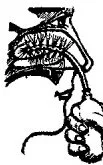
Remedies are useless unless they are applied to the disease. The “Success” will do this by means of a soft rubber tube inserted in the nasal cavity, as shown by cut. Catarrh can be CURED with this syringe by the simple use of Glycerine, diluted with water. Sent postpaid on receipt of 75c. Address, A. Mallett, 39 Bond Street, New York City.
Waterman’s Ideal Fountain Pen
Claims first attention, as it certainly is
The Best Fountain Pen on the Market.
Other makes may be good, but the WATERMAN IS THE BEST. Some points of excellence are:—
The fine quality of the gold pens;
The reliability of its feed, which has stood a ten years’ test;
The absence of any portion of the feed on the top of the pen point, whereby it is left untrammeled and acts with all the ease and grace of any first-class gold pen.
Among those who use the Waterman Pen are:—
REV. LYMAN ABBOTT, Editor “Christian Union,” New York. CHAUNCEY M. DEPEW, Pres. N. Y. C. & H. R. R. Co. HON. W. E. GLADSTONE, Hawarden, England. JOHN WANAMAKER, Ex-Postmaster General. And thousands of others whose judgment may safely be trusted, all of whom with one consent pronounce the Waterman
“THE BEST FOUNTAIN PEN.”
Among the many excellent features of this pen, to some of which we call attention, stands one of no mean value, and that is the shape of the holder. There is, in the new style, no prominent collar or shoulder to come in contact with the fingers when, writing, but the holder has the pleasing touch of any ordinary good pen holder.
The Waterman makes a most acceptable present to a parent, to a child, to a brother, to a sister, to a friend, to anybody and will be SENT AT OUR RISK to any address in America on receipt of price.
In ordering state what kind of a pen you like best. Whether stiff or flexible, fine or coarse,
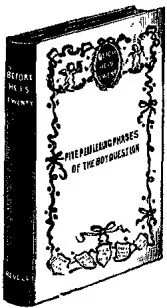
Before He Is Twenty: Five Perplexing Phases of the Boy Question
“Before He Is Twenty,” —OR— “Five Perplexing Phases of the Boy Question,” IS A VERY HELPFUL BOOK FOR PARENTS.
It is divided into five chapters, by as many different writers, each treating of a particular phase of a boy’s life.
The first chapter, “THE BOY AND HIS FATHER,” by Robert J. Burdette, is alone worth many times the price of the book to any father of a young boy.
The other chapters, “WHEN HE DECIDES,” “THE BOY IN THE OFFICE,” “HIS EVENINGS AND AMUSEMENTS,” and “LOOKING TOWARD A WIFE,” are all important and helpful.
104 pages, bound in cloth, embossed in jet and gold, price, . . . . . . . . . . . . . . . 75 cents.
PACIFIC PRESS PUBLISHING COMPANY,
43 BOND STREET, NEW YORK CITY.
THE STOMACH
By John Harvey Kellogg
Its Disorders and How to Cure Them
BY J. H. KELLOGG, M. D.,
Superintendent of the Battle Creek (Mich.) Sanitarium; Member of the British and American Association for the Advancement of Science; the American Microscopical Society; the Society of Hygiene, of France. Author of the new Health-book of Domestic Hygiene and Rational Medicine, etc.
This Book Presents in a Nut-shell What Every Person Ought to Know About the Stomach, Its Functions in Health, the Symptoms Produced by Disease, and the Best Methods of Cure
The Work is Thoroughly Practical.
The work concludes with an explanation of the new and elaborate method of investigating disorders of the stomach, in use at the Battle Creek Sanitarium, and largely the result of researches undertaken there. The following is a list of the leading sections of the book: The Organs of Digestion; Foods; the Digestive Fluids; General View of the Digestive Process; The Maladies of the Modern Stomach; Important New Discoveries Relating to Digestion; Symptoms of Dyspepsia; Quacks and Vomiting; Explanation of the Author's Graphic Mode of Representing the Results of Stomach Work, Obtainable from Examination of the Stomach Fluid by the system of investigation Employed in the Hygienic and Research Laboratories of the Sanitarium at Battle Creek, Mich., U. S. A.
The work contains over one hundred cuts, including eleven plates, several of which are colored. Price of the book, bound in fine English cloth, with embossed cover, $1.50. Half-buffing, gilt edges, $2.00.
PACIFIC PRESS PUBLISHING CO., 39 Bond Street, New York City.
Kansas City, Mo.
Oakland, Cal.
Oppressive Marriage Laws Affecting Jews in Prussia
The Catholic Review, of August 8, calls attention to the fact that there is occasion for Protestants to “sweep before the door of Protestantism” in the matter of oppressive marriage laws. It will be remembered that the chief point of complaint raised by the Methodist ministers who appealed to the pope in behalf of Protestants in South America, was that the laws of Ecuador and Peru did not recognize any marriage ceremony as valid unless performed by a Catholic priest. It appears that the Jew is under very much the same disability in Protestant Prussia. The Review cites the case of a Jew named Isaac Flatto, who was married in Prussia about eight years ago by a Jewish rabbi. “Shortly afterwards,” says that journal, “they came to the United States and settled at Pottstown, Pa. They have four children. About two years ago, Flatto deserted his wife, went to Baltimore and ‘married’ Jennie Sindlehr, on Sept. 15, 1895. The wife heard of the bigamy and instituted proceedings against her unfaithful husband.”
But it transpired that his first marriage was “not legal,” because “in Prussia, since Oct. 1, 1874, a marriage can be legally contracted only before an officer of the State.” So said the German ambassador at Washington, and “hence,” he added, “a marriage ceremony performed after that date by a Jewish rabbi is void and has no legal consequences whatever.” The Review therefore suggests that a petition be sent “to Emperor William, the head of the Protestant Church in Germany, to grant religious liberty to the Jews of Prussia.”
We would remind the Catholic Review, however, that it is only adherence to a papal principle that makes Emperor William the “head of the Protestant Church in Prussia;” and hence the petition would be as much against the Papacy in the one case as in the other.