The Youth's Instructor, Vol. LIII, No. 43

In Memoriam: J. Hudson Taylor

The Youth's Instructor

October 24, 1905

Review and Herald Publishing Assn. · Washington, D. C. · October 24, 1905

In Memoriam: J. Hudson Taylor
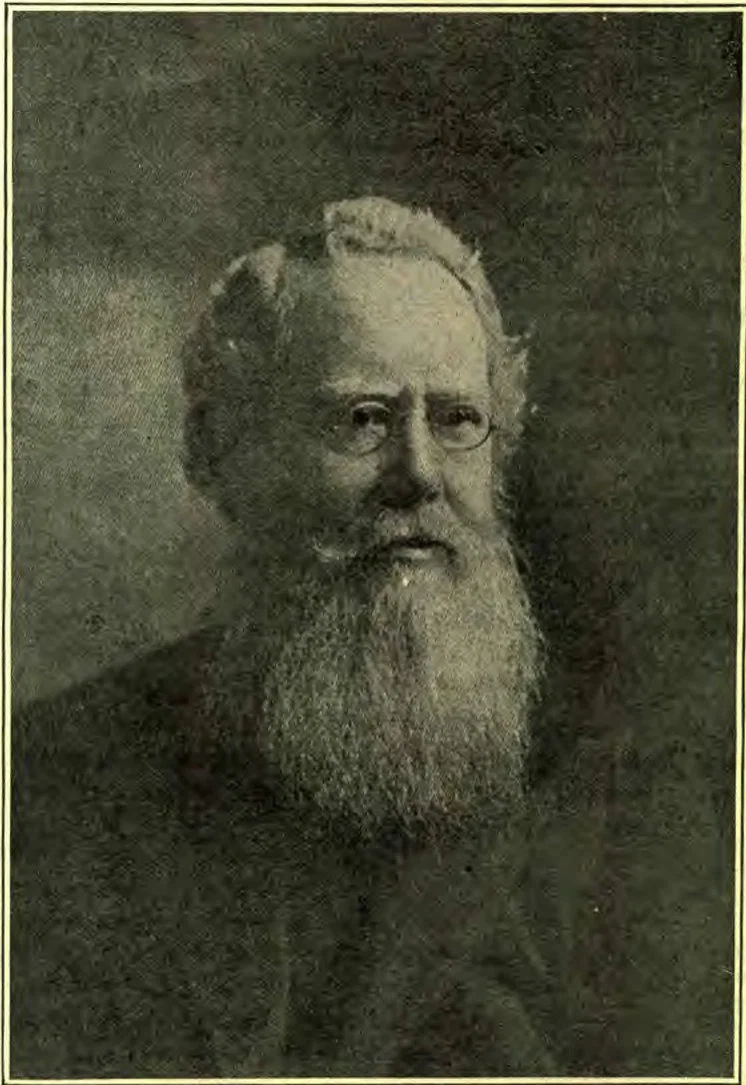
The designation, “Founder of the China Inland Mission,” is in itself an almost sufficient epitaph. When eulogy has said its last word and a full-length biography has been written, the best and the noblest epitaph of the widely beloved missionary will be, “Founder of the China Inland Mission.” The China Inland Mission is his memorial, and a nobler memorial could not be desired for any man. Wherever the work of that mission and its special characteristics are known, it will be evident that by the death of Hudson Taylor there has been removed from the sphere of earthly service one of the most distinguished missionaries ever given to the church of Christ.
Fifty-two years ago, Sept. 4, 1853, the writer of these lines went to see his friend, Hudson Taylor, shortly before he was to sail for China. During that visit Mr. Taylor accompanied himself on his concertina as he sweetly sang:—
“For China’s distant shore, Embark without delay; Behold an open door; ’Tis God that leads the way. His call is clear and loud; The missionary band Should gather like a cloud, And leave their native land.”
“Nor wilt thou grieve for home— The home that’s left behind; The thought of one to come Will wholly fill thy mind. And thou wilt bless the day When thou didst part with all, And hasten far away At thy loved Master’s call.”
He was joyfully anticipating his departure for China in a few days’ time, and the words truly represented his own feelings. About a fortnight later the writer was in Hudson Taylor’s home at Barnsley when his mother arrived from Liverpool after seeing him embark for China.
It was characteristic of that loving and greatly beloved mother that she wrote and gave to each of her two daughters her “Recollections” of the parting from their brother at Liverpool. In those days a voyage to China meant much more than it does to-day. From these “Recollections” we take the following:—
On Sunday, Sept. 18, 1853, Hudson was much blessed and strengthened by the religious services of the day. . . . Seeing his mother in tears, he said: “O mother, do not grieve! I am so happy I can not; my only sorrow is to see your sorrow. I’ll tell you what I think is the difference between you and me: you look at the parting—I look at the meeting,” alluding to our reunion in the “better land.”
The next day they and some other friends met in the cabin of the Dumfries. After a little conversation, singing and prayer were proposed, and Hudson gave out in a firm, clear voice, the beautiful hymn:—
“How sweet the name of Jesus sounds In a believer’s ear! It soothes his sorrows, heals his wounds, And drives away his fear.”
After prayer, the time came to say farewell. I stepped off the vessel, scarcely knowing what I did, and was seated on a piece of timber which lay close by. A chill came over me, and I trembled from head to foot. Seeing my distress, he leaped ashore to breathe words of consolation. “Dear mother,” he said, “do not weep; it is but for ‘a little while,’ and we shall meet again. Think of the glorious object I have in view in leaving you; it is not for wealth or fame, but to try to bring the poor Chinese to the knowledge of Jesus.” As the vessel was receding, he was obliged to return, and we lost sight of him for a minute; he had run into his cabin, and hastily writing in pencil on the blank leaf of a pocket Bible, “The love of God which passeth knowledge.—J. H. T.,” returned to the deck, and threw it to me on the pier.
While we stood waving our handkerchiefs and watching the departing ship, he took his stand at its head, and afterward got into the rigging, waving his hand in token of farewell, looking more like a victorious hero than a stripling just entering the battle-field. His figure became less and less distinct, and in a few minutes passenger and ship were lost in the distance.
After a long and tedious voyage of twenty-three weeks and two days, Mr. Taylor landed at Shanghai on March 1, 1854.
Of his work during the first six years in China nothing need here be said. One fact, however, is significant, and should be named because of its relation to later developments. Writing home in January, 1860, Mr. Taylor said:—
Do you know any earnest, devoted young men desirous of serving God in China, who—not wishing for more than actual support—would be willing to come out and labor here? Oh, for four or five such helpers! They would probably begin to preach in China in six months’ time; and in answer to prayer the necessary means for their support would be found.
These few workers were given—they were the first of a great company, of whom there are now connected with the mission more than eight hundred missionaries, including wives, most of whom were missionaries before marriage. The missionary zeal and devotion of this great company is a greater cause for thankfulness than the large number. Probably two requirements have done much to prevent unsuitable persons joining the mission; namely, a distinct understanding that there was no guarantee of income whatever by the mission, and the importance attached to proved efficiency in work already done. A good record for Christian work already done counted for much; without this the candidate had but little chance of being accepted.
How the work grew—how province after province was opened for mission work—how, without collections or personal solicitation of money, it has been sustained, until now an aggregate sum of over $5,000,000 has been given, it is not our present purpose to say. In the space available our reference must be, not to the mission and its development, but to its founder.
The purpose of his life has often been referred to, but never has it been better told than in an “In Memoriam” notice of Hudson Taylor in The Guardian. The writer of this notice has gone to the heart of things, and has grasped and stated with striking precision the object and aim of Mr. Taylor in his life-work. He says:—
He had but one aim—to preach Christ to China by any means that came to hand. With no defined views upon church order, there was nothing so real to him as the individual soul, and God in Christ for its salvation. So burning a spirit soon gathered kindred souls round him, and he launched upon China the finest missionary lance of our generation to break down in the first place opposition to the foreigner, and to make the One Name known. . . .
If any wish to realize what simple faith in God can effect in so brief a space of time, let them study the map of China in the “Student Volunteer Atlas,” and mark the stations, marvelous in number, of this mission, dotted apparently all over the western regions of the Chinese empire. The spiritual force has been so great that no church or denomination can show so imposing a mass of missionary agents in China as the Inland Mission, with the exception of the Church of Rome—with its four centuries of work behind it.
All through Mr. Taylor’s missionary life his aim was just what this writer says it was—to preach Christ to the Chinese. Nothing turned him aside from this. The desire grew, and he longed to enlist others in the work. At first, a few helpers, then more, then Protestant missionaries for each province in China in which there were none, and however impracticable at the time this project might seem, he was permitted to see the desire of his heart realized. The desire of his life was that Christ might be preached throughout the length and breadth of China. For this he labored unceasingly, and with the measure of success that has been seen.
For Hudson Taylor’s best, and all-unconsciously written, autobiography, we must read the early volumes of “China’s Millions.” The lesson taught by his experiences is that God honors faith, answers prayer, and never fails those who “attempt great things for God, and expect great things from God.”
After the many years of the most strenuous labor, there came, in 1900, a complete breakdown of health, and Mr. Taylor was compelled to withdraw from the work of active leadership. He retired for quiet and rest to Switzerland, and during his stay in that country had to bear the great sorrow of the loss of his devoted wife, whose help both in health and in sickness had been to him of inestimable value. In the beginning of 1905 he felt well enough to decide to revisit China—traveling via America to avoid the great heat of the Red Sea. After a very brief stay in Shanghai he went on to Yang-chou, to the training home for the lady missionaries of the China Inland Mission. On his way to Chin-kiang he wrote the following letter:—
April 20, 1905. My Beloved Friends: To be once again in China, and to see and hear from one another personally, is a great joy and refreshment. May I ask your prayers that we may be guided as to the employment of the short time I can remain before the great heat of summer begins? Traveling is now so much less difficult than formerly, that I may, perhaps, be able to attend a conference in Ho-nan, and visit the capital of Hu-nan, a province for which we have prayed so long. Help me by your prayers, dear friends. My strength is not what it once was, but “He giveth more grace.” He does not expect or require anything in us that he is not willing and able to impart. I have found the Lord’s word in my reading to-day so precious. “Let thine hand be ready to help me; for I have chosen thy precepts.” Gratefully yours in Christ, J. Hudson Taylor.
Mr. Taylor had set his heart on a visit to Chang-sha, the capital of the Hu-nan Province. He reached that city, and there on the third of June he died. Probably in no city in China could he have more appropriately adopted the words of Simeon. Of all the unevangelized provinces of China in which he had sought to place missionaries the province of Hu-nan was the last to receive them. It was the most violently anti-foreign province in China, and all efforts through many years to open a station had been unsuccessful up to 1898.
The faithful worker has been removed, but the lessons and influence of his life remain, and will yet mean much for the spread of the gospel in China. We close this article with some of his earnest words for China, and never were they more needed than now:—
The claims of an empire like this should surely be not only admitted, but realized! Shall not the eternal interests of one fifth of our race stir up the deepest sympathies of our nature, the most strenuous efforts of our blood-bought powers? Shall not the low wail of helpless, hopeless misery arising from one half of the heathen world, pierce our sluggish ear, and rouse us, spirit, soul, and body, to one mighty, continued, unconquerable effort for China’s salvation?—D. Broomhall.

Upward

Wouldst be noble? Study nobility. Beholding, thou shalt change; Keep the high and perfect pattern Before thy vision’s range.
Love, and the loved thing that thou claspest In joy to thy naked heart, Thou shalt be. Breathe beauty, dream it; Thy dream of thyself is part.
Look, look and live! Through glittering dew drops Bursts forth the ambient morn! Gladness holds thee, light enfolds thee, Thrills through a soul new-born!
Elvira A. Webber.

THE WEEKLY STUDY

Paul—A Review

Having reached in our study the closing days in the life of this great apostle, it will be profitable for us to spend a little time in a review of his work. The following questions will assist us in this study:—
  1. Where was Paul born?
  2. Locate the place on the map.
  3. By whom was he taught?
  4. To what tribe did he belong?
  5. What was he religiously?
  6. Give a brief account of his conversion.
  7. Name the places visited on his first missionary tour.
  8. Who was his companion in labor?
  9. Give some results of their work.

Notes

The answers to the above questions can nearly all be found in Acts, chapters 8-14. Read one of these chapters daily.
The apostles Paul and Peter were for many years widely separated in their labors, it being the work of Paul to carry the gospel to the Gentiles, while Peter labored especially for the Jews. But in the providence of God, both were to bear witness for Christ in the world’s metropolis, and upon its soil both were to shed their blood as the seed of a vast harvest of saints and martyrs.
About the time of Paul’s second arrest, Peter also was apprehended and thrust into prison. He had made himself especially obnoxious to the authorities by his zeal and success in exposing the deceptions and defeating the plots of Simon Magus the sorcerer, who had followed him to Rome to oppose and hinder the work of the gospel. Nero was a believer in magic, and had patronized Simon. He was therefore greatly incensed against the apostle, and was thus prompted to order his arrest.
The emperor’s malice against Paul was heightened by the fact that members of the imperial household, and also other persons of distinction, had been converted to Christianity during his first imprisonment. For this reason he made the second imprisonment much more severe than the first, granting him little opportunity to preach the gospel; and he determined to cut short his life as soon as a plausible pretext could be found for so doing. Nero’s mind was so impressed with the force of the apostle’s words at his last trial that he deferred the decision of the case, neither acquitting nor condemning him. But the sentence was only deferred. It was not long before the decision was pronounced which consigned Paul to a martyr’s grave. Being a Roman citizen, he could not be subjected to torture, and was therefore sentenced to be beheaded.
Peter, as a Jew and a foreigner, was condemned to be scourged and crucified. In prospect of this fearful death, the apostle remembered his great sin in denying Jesus in the hour of trial, and his only thought was that he was unworthy of so great an honor as to die in the same manner as did his Master. Peter had sincerely repented of that sin, and had been forgiven by Christ, as is shown by the high commission given him to feed the sheep and lambs of the flock. But he could never forgive himself. Not even the thought of the agonies of the last terrible scene could lessen the bitterness of his sorrow and repentance. As a last favor he entreated his executioners that he might be nailed to the cross with his head downward. The request was granted, and in this manner died the great apostle Peter.—“Sketches from the Life of Paul,” pages 328, 329.

Work Young People Can Do

“We have an army of youth to-day who can do much if they are properly directed and encouraged.” The object of the Young People’s work is to win souls. “Let all be so trained that they may rightly represent the truth, giving the reasons of the hope that is within them, and honoring God in any branch of the work where they are qualified to labor.” Children and youth can not do every line of work, but there is work for all, and they “can do much.” Below are pointed out several lines of work in which young people have been successful, and it is hoped that these brief discussions will awaken in many young hearts a desire to work for the Master.

Personal Work

M. E. KERN
“Why did you not tell him it was none of his business?” said a man to his wife concerning an earnest Christian worker who had spoken to her about her soul’s salvation. “O husband,” said this usually thoughtless woman, “if you had seen the expression on his face and heard the earnestness with which he spoke, you would have thought it was his business.”
When we become thoroughly imbued with the spirit of the message, we shall cause those about us to know that it is our business to speak to others of their soul’s salvation, and tell them of the soon return of Jesus.
Young people often look forward to the time when they shall do some public work, omitting the opportunities all about them. The true plan of the gospel work, and that plan which is the basis of all others, is for each one whose heart God has touched to seek out some other soul to win for Christ. The success of our “army of youth” depends on each individual’s doing his duty.
“All should realize that they are to seek counsel of God, that by well-directed personal efforts they may save souls for whom Christ died.” This was Jesus’ method. He had a profound respect for the one-soul audience, and some of his greatest discourses were spoken to one individual. In the hearts of his followers there will be a passion for souls which will find its satisfaction only in earnest labor for the salvation of others. It was reported against the Waldenses by a papal inquisitor in the thirteenth century that “he who has been a disciple for seven days looks out some one whom he may teach, so that there is a continual increase.” So it should be with us.
The following scripture gives the secret of success in personal effort: “The Lord God hath given me the tongue of the learned, that I should know how to speak a word in season to him that is weary: he wakeneth morning by morning, he wakeneth mine ear to hear as the learned.” Isa. 50: 4.

Sabbath-School Work

MRS. FLORA V. DORCAS
Our Young People’s Societies may find a broad field for missionary work in the Sabbath-school Department of the church. “The Lord calls for young men and women to gird themselves for lifelong, earnest labor in the Sabbath-school work.”
There are different lines of Sabbath-school missionary work which they might undertake, and expect blessings therefrom. Special effort might be made for the children of the neighborhood. Some of the young people might be delegated to visit the homes, and in a friendly, sociable way, invite the children to attend the Sabbath-school. “Parents who can be approached in no other way, are frequently reached through their children. Sabbath-school teachers can instruct the children in the truth, and they will, in turn, take it into the home circle.”
But few teachers seem to understand the importance of this branch of the work. If the mothers feel that they are too busy to get the children ready, let the visitor offer to come and help them prepare. It may be necessary to do some Christian Help work and supply clothing and other things to some families. Then let all be actively interested in making the school attractive and helpful. It would be well for those undertaking this work to meet together regularly for prayer and counsel, also to study that very helpful book, “Testimonies on Sabbath-school Work.”
After such a school is started, it will be necessary to be continually active to keep up the interest and attendance.
Another line is the Home Department work; this has impressed me as being especially important. One cause of our spiritual weakness is our neglect to study the Scriptures. Anything we may do to encourage regular study of the Scriptures is certainly good missionary work. The plan is to have those who can not attend the Sabbath-school regularly, keep up the study of the Sabbath-school lessons in the home. Lesson pamphlets and report blanks should be furnished such members, and the young people might do good work in visiting or corresponding with these lonely ones.
Good work can also be done each week in visiting absent members of the Sabbath-school, and encouraging them to more regular attendance by letting them know they are missed when absent.
If the officers of the Sabbath-school and the Young People’s Society work together to advance these lines of work, we feel sure that a new life will come into the church.

Distribution of Literature

JAMES COCHRAN
Speaking of comparative results from spoken and written words, Mr. Whittier once said,—
“Words spoken are like the air, But words written are always there.”
The truthfulness of this expression is verified by recent statistics which indicate that one third of all the people who accept the truth do so by reading alone. This is a remarkable truth. Under our system of circulating literature the opportunities for service are unbounded. Our youth especially form a great factor in carrying out this line of work. We can best tell how work can be done by telling you what many are doing, and how they are doing it. I have in mind a young woman who is attending high school in one of our large cities, and is using one hundred copies of The Signs of the Times weekly. She devotes two evenings each week to the sale of this paper.
A young man whose daily avocation is that of a stenographer is using fifty copies of the Signs weekly, and seventy-five of Life and Health a month. A Young People’s Society secured the names of twenty-five prominent people living in a town that had never been entered with the truth, and mailed the Signs to them each week. This opened the way for a tent-meeting, and to-day thirty-one souls are rejoicing in the truth in that place. Some of the Young People’s Societies are carrying on systematic house-to-house work with tracts and papers. This has proved to be a very effective method of working, as it brings the worker into personal contact with the reader, and affords opportunity to answer questions and to help in other ways.
Our young people in rural districts can carry on effective missionary work by mailing tracts and papers each week to interested persons. An excellent work can also be done by our young people in sending clubs of papers to our missionaries to use in foreign fields.
We could relate some most wonderful results coming from this kind of work. The incidents related above are only a few of the many ways work can be done with our small literature. The work of circulating our large books is a means ordained of God to reach thousands of homes with the truth where otherwise it would not be known. It is a business large in its money requirements, yet so arranged that the world furnishes the capital, and we are asked to conduct the business. Thousands of young men and women who are to-day giving their strength and powers of intellect to the promotion of worldly enterprises would find the book work just as remunerative in dollars and cents and a thousand times more so in spiritual blessings.

What Can Be Done for Christ?

MRS. C. C. LEWIS
As many of us must always be home workers, only a limited number being called into professional lines of work, it is a pertinent question to ask ourselves, What can we do for Christ just where we are?
There is only one thing that can cut us off from Christian work,—lack of missionary spirit. We all have an influence, and if we have the spirit of Christ, and are watching for souls as they that must give account, we shall find some way to help those about us to a higher plane of living. So often the excuse is made that we do not have time, or there is no one near us who needs our help. But Christ said, “For ye have the poor with you always.” This suggests one line of work for our young people.
But you say that you are poor yourself, or they do not belong to our church set. The Saviour pronounced a blessing upon even a cup of cold water that was given in his name. Paul said that we should do good unto all men. We can visit the sick, and sometimes read to them, or write letters for them, or prepare a dainty dish of food to tempt the failing appetite. We can visit old people, take them flowers, or comfort them in some other way. Many aged persons are glad to have some one read to them; it rests their eyes, and makes them happy to know that some one cares for them.
We can make garments for the poor. We can sell tracts and papers, and supply the depot or jail in our town with literature. We can be sure to read the church paper, and keep our own souls alive by the reports that come from other lands.
In this missionary campaign, a great work could be accomplished through correspondence.
What a wave of inspiration would be started among our young people if every one would write a letter once a week to some isolated person, and interest him in education and personal work for souls. Who can estimate the good that could be accomplished in this way alone?
Dear young people, let us not sleep as do others, but let us be up and doing. Soon our opportunities to work for Christ will be past. Let us sow beside all waters. Satan is seeking every possible chance to hinder us in this work; but let us live close to the blessed Master, who has done so much for us. Let us gather up every ray of light ourselves, and then shed it abroad to gladden other hearts and cause some soul to walk in the right way.

Bible Work

MRS. LORETTA V. ROBINSON
Many young people excuse themselves from engaging in the Bible work because of inexperience and a conscious lack of knowledge of the Word of God. But what excuse have our youth for being thus inexperienced and ignorant of the truth? God has expressed his desire for them in these wonderful words, “That our sons may be as plants grown up in their youth.” Ps. 144: 12. Grown to the full stature of men and women in Christ Jesus while still young in years!
To the youthful Jeremiah, the Lord said, “Say not, I am a child; for thou shalt go to all that I shall send thee.” From a child Timothy had known the Holy Scriptures, and was admonished by Paul, “Let no man despise thy youth; but be thou an example of the believers.” In order to be this, he must give attendance to reading, to doctrine, and “meditate on these things.”
John says, “I have written unto you, young men, because ye are strong, and the word of God abideth in you, and ye have overcome the wicked one.” Notice that the secret of this strength and victory is “The word of God abideth in you.”
At the age of twelve years we find Jesus in the temple, asking and answering questions. “With the humility of a child he repeated the words of Scripture, giving them a depth of meaning that the wise men had not conceived of.” The youthful modesty and grace disarmed their prejudices. Unconsciously their minds were opened to the Word of God, and the Holy Spirit spoke to their hearts. So God would work through the young followers of Jesus to-day.
A beginning might be made with The Family Bible Teacher. Each week a printed Bible reading could be left in as many homes as time would permit. During the week make that reading a study. If you have a friend who is interested with you in the work, give the readings to each other, until their truths are perfectly familiar to you. When you visit the people with the next reading, some may ask questions. From your previous study and by the aid of the Holy Spirit, you will be prepared to answer them, and ways will open for personal Bible study. The childlike humility, modesty, and grace with which Jesus taught the Scriptures may again be seen. Prejudice will give way, and the Holy Spirit will speak to their hearts, and souls be given you as your reward.

Help for Foreign Missions

W. A. SPICER
The cause of foreign missions appeals to the hearts of the youth. Here are a few of the many ways in which our young people may help the cause of missions:—
1. By agitation. All believers in this truth ought to talk the missionary idea—the final gospel message to all the world in this generation. It is the life and hope of this people to quickly reach the whole world with the advent warning. Study the fields and their needs, watch the reports from our missionaries, with the map before you, and be ready always to speak a word for the foreign missionary hope that is in you. The young people can easily add to the interest of the regular second-Sabbath missionary service by coming to the meeting with some incident or fact of missionary progress to report. Information and knowledge of mission fields and conditions beget interest and sympathy.
2. By working up means. In many cases the Young People’s Societies have raised considerable sums for missions by devising ways of securing funds and keeping the idea of saving and giving before the members. And this work encourages the adult members to do more. Some have taken on the support of special cases in the fields; but the best of all missionary giving is that of keeping a steady flow going into the common missionary treasury, to be distributed over all the fields as the work moves forward.
3. By dedication of the life to service. As the work advances, the calls will come more and more frequently for young people of experience in the work at home to go into the foreign fields. Press into the ranks and learn how to do work for souls just where you are; and depend upon it, in the Lord’s own time; if it is his will, the call will come. And wherever one works at home, he is to be a teacher and a preacher of the missionary idea. Only the message to all the world can accomplish the work to which we are called in these last days. Talk for it, give for it, pray for it, and be ready to endure hardness, getting an experience that will qualify for far-away service.

Work for Our Own and Other Young People

K. C. RUSSELL
There is no other missionary field that has been so long neglected, that is in such dire need, and that promises such great returns, as earnest work for our own and other young people. It is true that we have shown some interest in them, but how much systematic effort has been made to win these precious souls to the truth as it is in Jesus? The Lord has spoken to our young people along this line very definitely:—
“Will the young men and young women who really love Jesus organize themselves as workers not only for those who profess to be Sabbath-keepers, but for those who are not of our faith?”
It will be noted that the foregoing shows that our young people should organize for a twofold purpose: first, to labor for those who profess to be Sabbath-keepers; second, to labor for those not of our faith. The question may be asked, How much real effort have you or your organization put forth in reaching young people who profess to be Sabbath-keepers? To reach professed Sabbath-keeping Adventists requires more than a simple knowledge of the theory of the truth, for this they already possess. Those who labor for this class of young people must have a real burden for souls, and be thoroughly consecrated to the service of the Master. What could be a greater incentive than to labor for those whose minds are more active and hearts more susceptible to the impressions of the Holy Spirit than others more advanced in years? and besides, there is the prospect of their quickly becoming active workers in the Lord’s service. Another important reason why we should respond to God’s call to service for the youth is because Satan is exerting a great influence upon them. In Amos 8:13 the Lord, in speaking of the great famine for the Word of God which is soon to come, says, “In that day shall the fair virgins and young men faint for thirst.” Does not this text teach that many young people will not be able to pass through the time of trouble? In view of this warning of the danger that awaits them, should not our young people make a most desperate effort to rescue them before it shall be forever too late?

Suggestive Lines of Work

Labor for other young people’s societies in circulating literature on various phases of the message.
Let our Young People’s Societies select discreet young men and women to attend the meetings of other young people’s societies.
Let those who are qualified engage in correspondence with the officers of other young people’s societies and their members as opportunity affords.
We are glad to say that a tract is being prepared by the Religious Liberty Bureau, addressed to the various Young People’s Societies, presenting in a kind and forcible way the true and false ideas on the themes of Christian citizenship.

Giving Earnest Heed to What We Have Heard

“THEREFORE we ought to give the more earnest heed to the things which we have heard, lest at any time we should let them slip.” Heb. 2:1.

Object of Young People’s Organization

Do you have a Young People’s Society in your church? Do you belong to it? Why do you belong to it? What is the object of the Society?
If I can understand the messages sent to young people concerning organization, God has just one object for which we are to organize. Jesus had only one object in coming to our world. He came to seek and save the lost. Luke 19:10.
Our work is to co-operate with him. This is the very same work that was given to God’s people in every age. This is the work for which the church was organized.
“The work of all believers is to co-operate with Christ in seeking those who are lost. Christ has given this work to his followers, and the members of the church stand arraigned before God as unfaithful, unless they undertake this work disinterestedly and thoroughly.”
The special call to our children and youth is not a call to organize something separate from the church. It is a call to awake and unite in doing the terribly neglected work of winning souls to Christ.
Settle it, then, that the one object of young people’s organizations is work,—work for the lost. “Let young men, and women, and children go to work in the name of Jesus.”
Please read again carefully the messages asking us to organize, and see how that word “work” is emphasized.
“Young men and young women, can not you form companies, and as soldiers of Christ enlist in the work, putting all your tact and skill and talent into the Master’s service, that you may save souls from ruin?”
“Let there be companies organized in every church to do this work.”

Who should organize?

“Young men and women and children who really love Jesus.”
“Christian youth.”
“Armies of consecrated workers.”

For whom are we to work?

“Reach out for the unconverted.”
“Laboring for the salvation of their fellow youth.”
“For those who profess to be Sabbath-keepers.”
“For those who are not of our faith.”

What are the steps in this work?

First, make sure that Jesus is your personal Saviour. “If you do not realize that he is yours, by all means make him yours. Then, without delay, teach others what you have experienced in the Christian life.”
Second, “seek counsel of God.”
“Consult with men who love and fear God, who have experience in the work.”
Third, “unite with others upon some plan and order of action.”
“Form a band of workers.”
“Form plans and develop methods by which you may work in earnest and for certain results.”
Fourth, “have set times to pray together.”
“Why do not two or three meet together and plead with God for the salvation of some special one?”
Fifth, “put forth united action.” Make “well-directed personal efforts” to save souls.
To sum up, then, the one object of young people’s organizations is to crown Jesus as King of our own lives, and then put all our tact, skill, and talent into the work to induce others to do the same.
“To the work! To the work! We are servants of God. Let us follow the path That our Master has trod. With the Word of his counsel Our strength to renew, Let us do with our might What our hands find to do.”
LUTHER WARREN.
Onaway, Mich.

God's Army

“Fair as the moon, clear as the sun, and terrible as an army with banners.” Cant. 6:10.
What doest thou, O sleeper? Awake! awake! The last scenes of the judgment Before thee break. “Cut off” he’ll be whose sins now Are unconfessed. “Prepare to meet thy God,” for “here Is not your rest.”
When was the sixth seal broken? Long, long ago. War’s winds from every quarter Erelong must blow. Now every moment’s precious Our work to haste. Come, fill thy empty vessel With oil of grace.
Put on thy strength, O Zion! Awake! awake! Put on thy beauteous garments, The dust forsake! Rend chains of worldly habit Thy neck that bind; Cast off each weight, forgetting The things behind.
Thou lovest truth, weak believer, But dread’st the loss Of worldly friends and triumphs That side the cross. Come, walk and talk with Jesus, And find a “sphere” Far higher, a surer, breathing Heaven’s atmosphere.
Yes, lift the cross; ’twill lift thee! To these take heed: Thyself first, then the doctrine. Go, sow the seed Of truth beside all waters, Let every thought And word into obedience To Christ be brought.
“Fair as the moon” God’s people Must now appear, Fair through his beautifying Of character; “Clear as the sun,” O, utter Hiding in Truth! Living epistles written And read as proof
Of God’s redeeming power. Sin and disease Fall by the faith of Jesus, Which in them is. Terrible as an army With ensign high; God’s law their lives triumphant Exemplify.
HELEN M. SMOUSE.

Home Reading Circle

FORM a home reading circle, in which every member of the family shall lay aside the busy cares of the day, and unite in study. Fathers, mothers, brothers, and sisters, take up this work heartily, and see if the home church will not be greatly improved. Take time to read to the children from health books, as well as from books treating more particularly on religious subjects.—Mrs. E. G. White.
Continue reading: Our Little Women